I am a STEM workshop educator and I work with children from 6 to 10 years old mostly. Over the years, I encountered few difficulties which I tried to solve with this project. A specific difficulty was teaching children code blocks in scratch when they still didn't learn how to read, so that was my initial inspiration. Second difficulty was being able to check on each individual child if I had groups bigger than 10. Also, son of my close friend is legally declared blind (80% reduction or something like that
). That made me think also in the direction of visually impaired people.
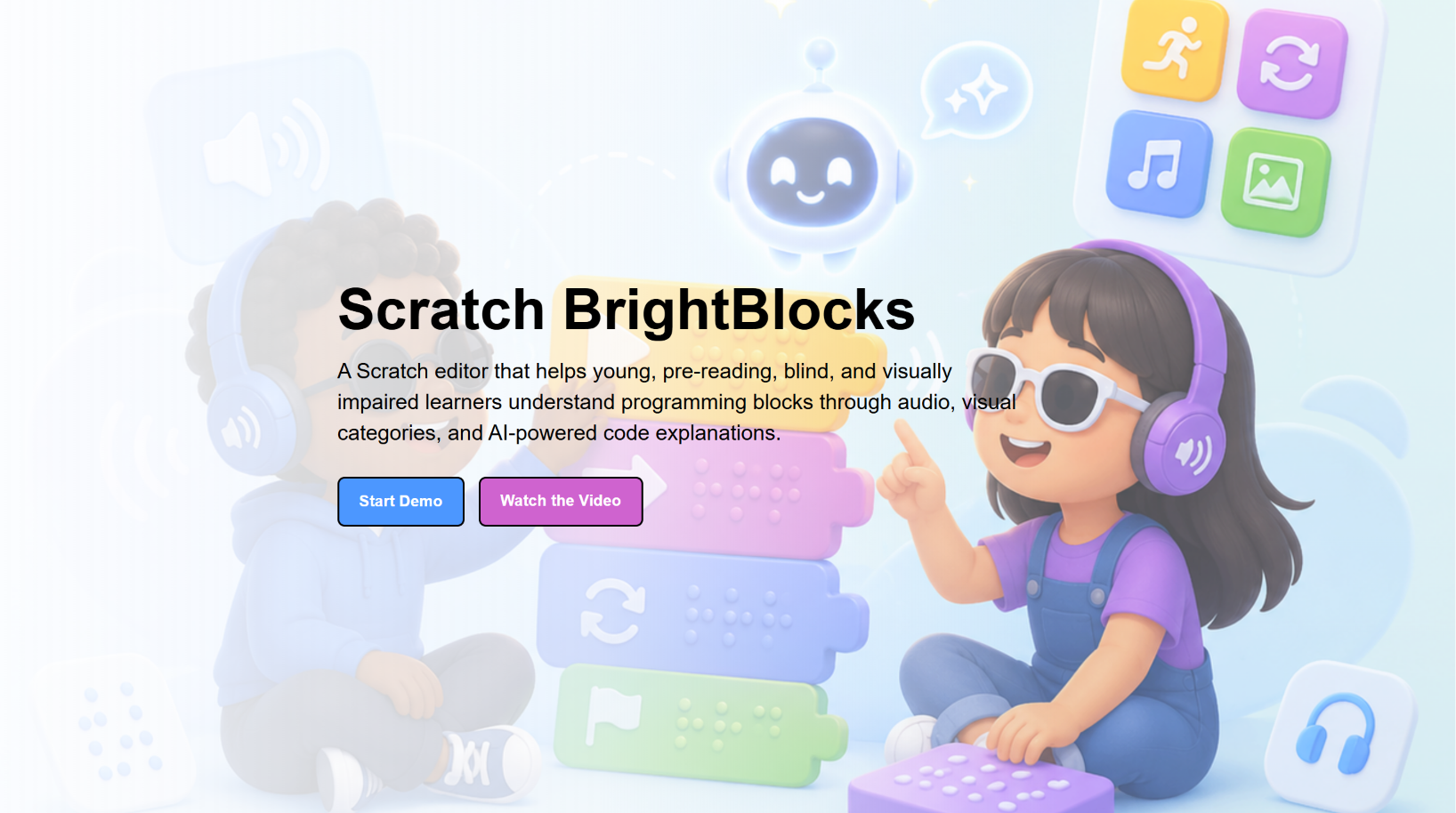
So Scratch BrightBlocks is my attempt in making coding more accessible to children and a helpful tool for teachers.
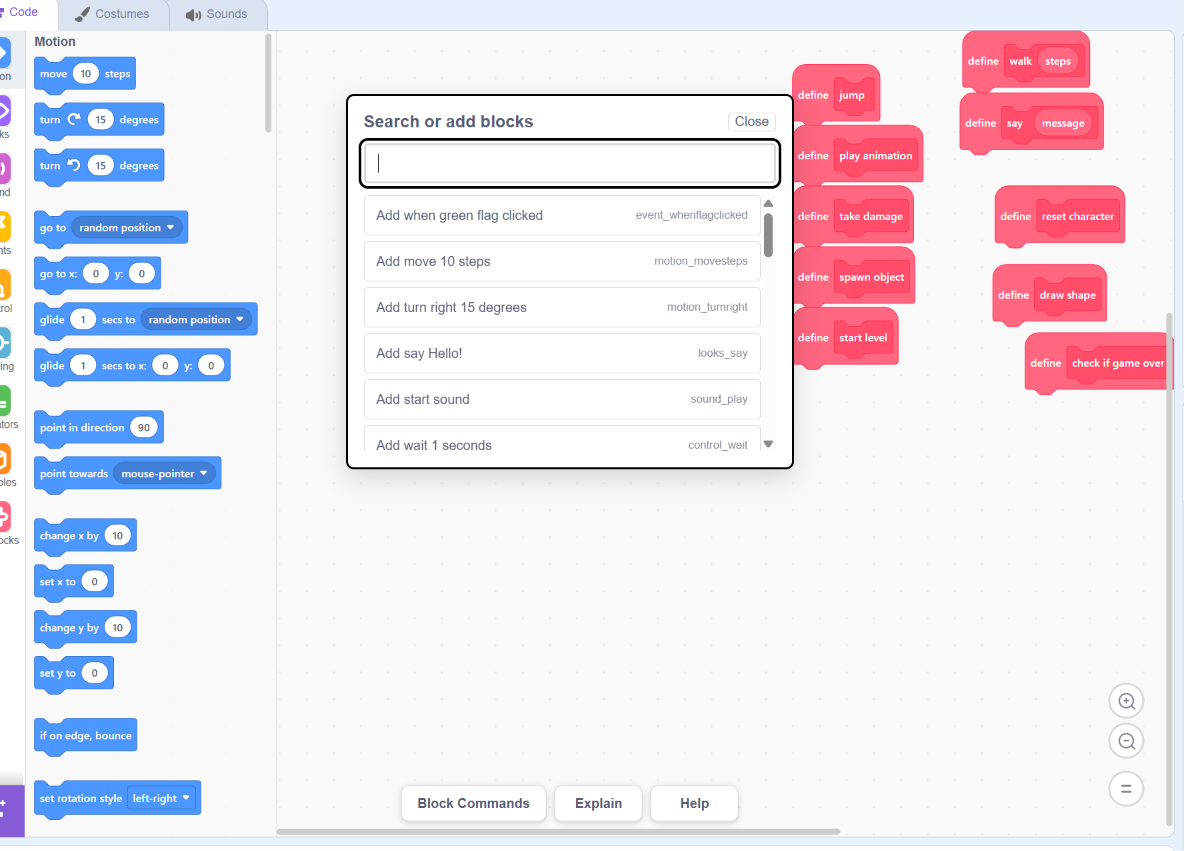
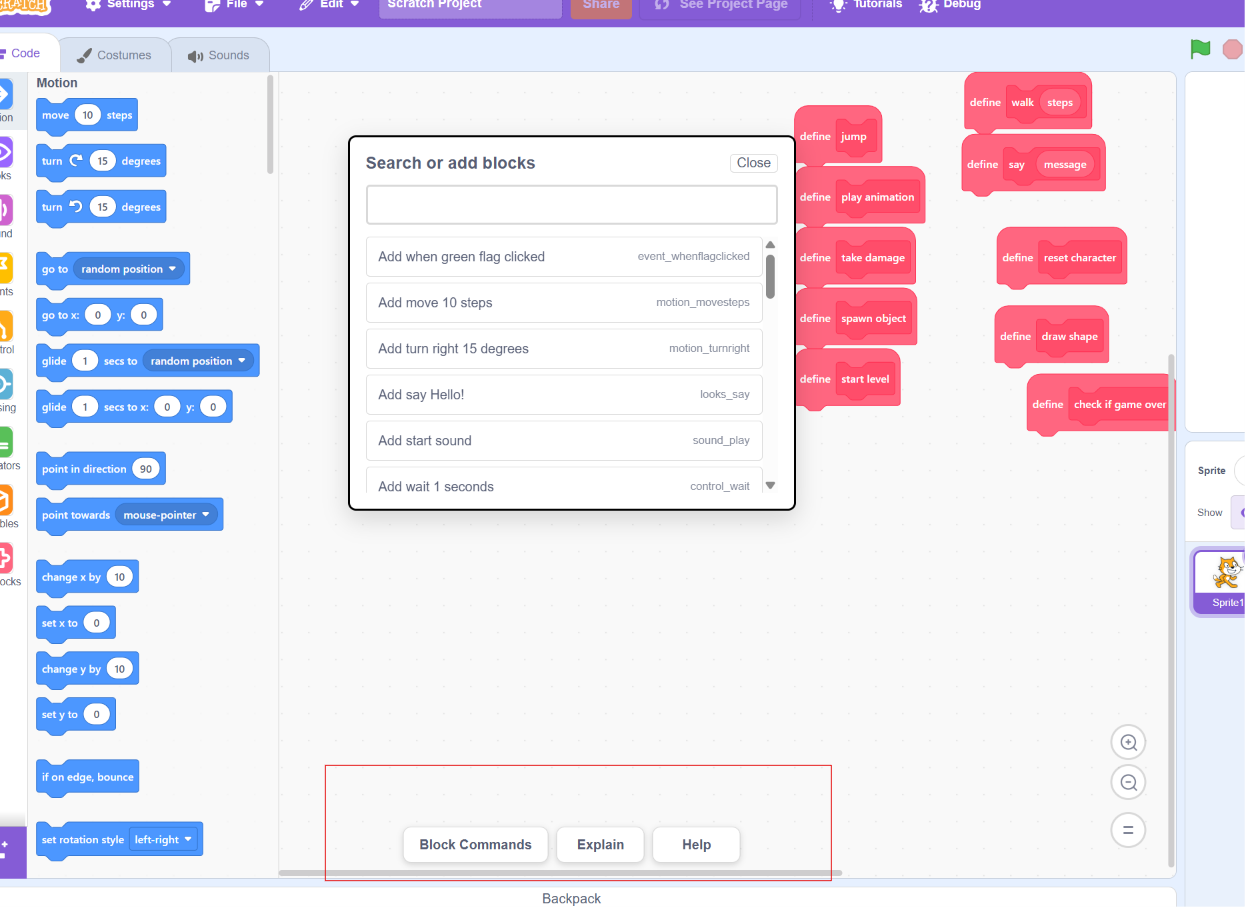
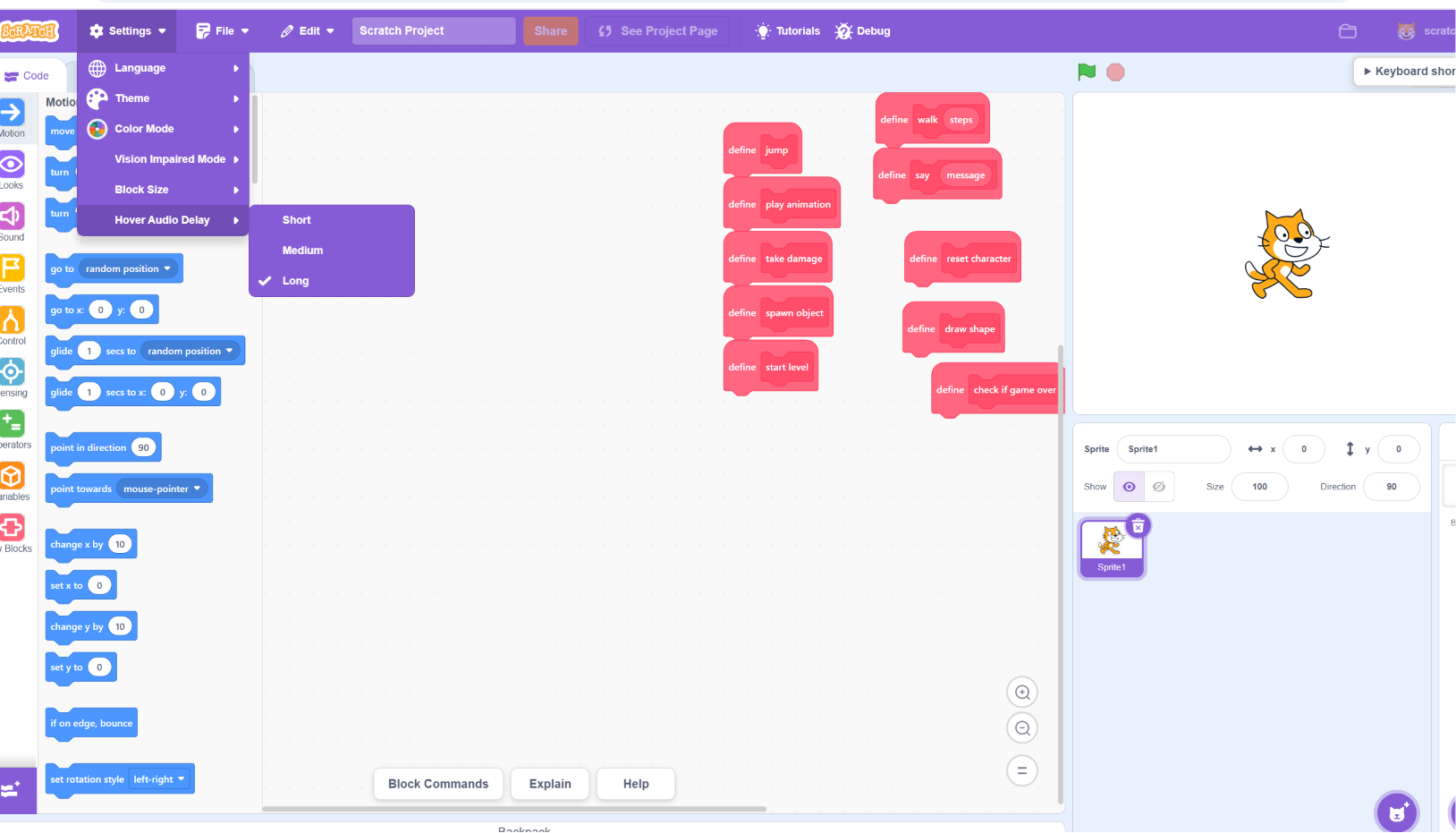
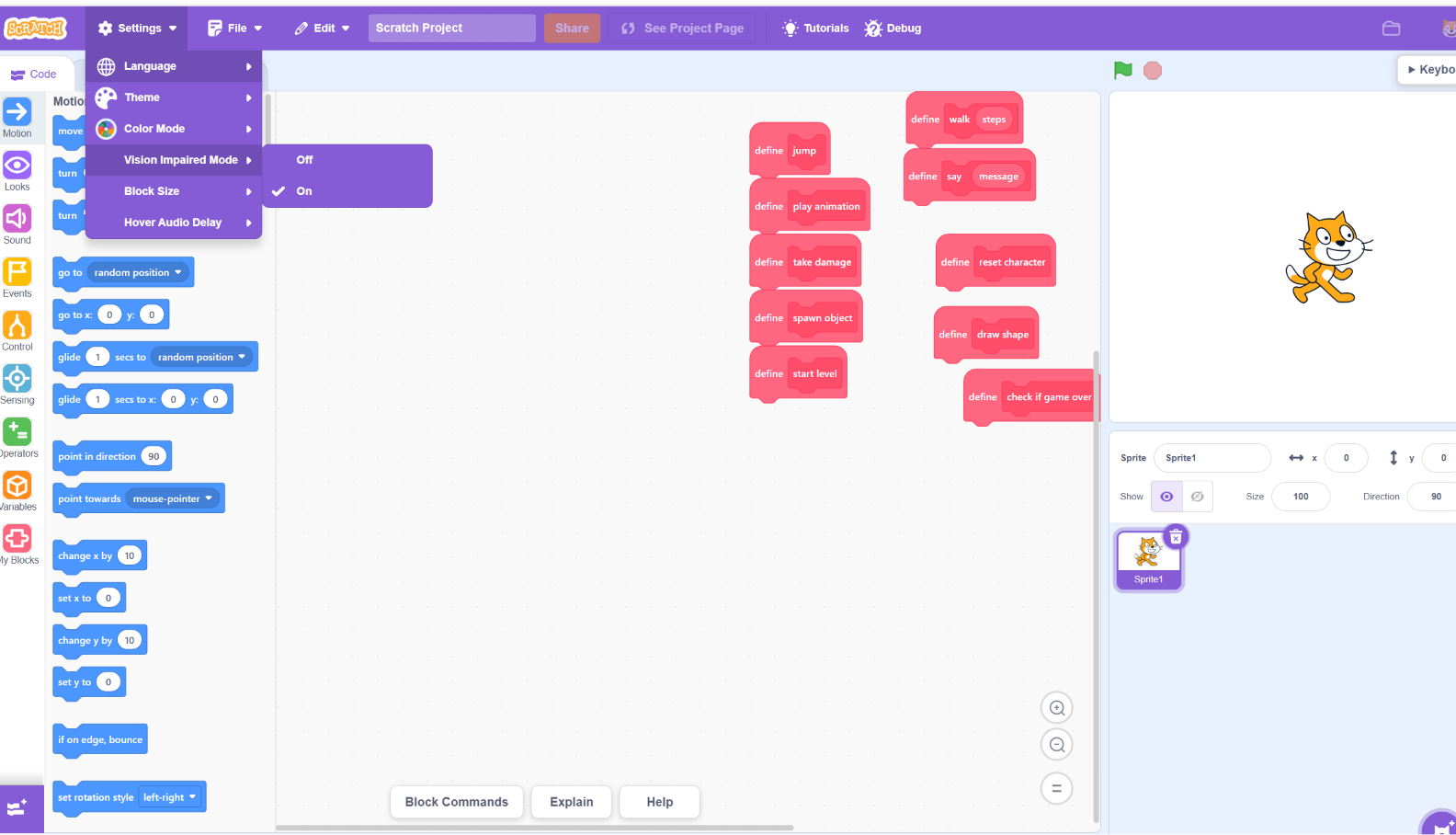
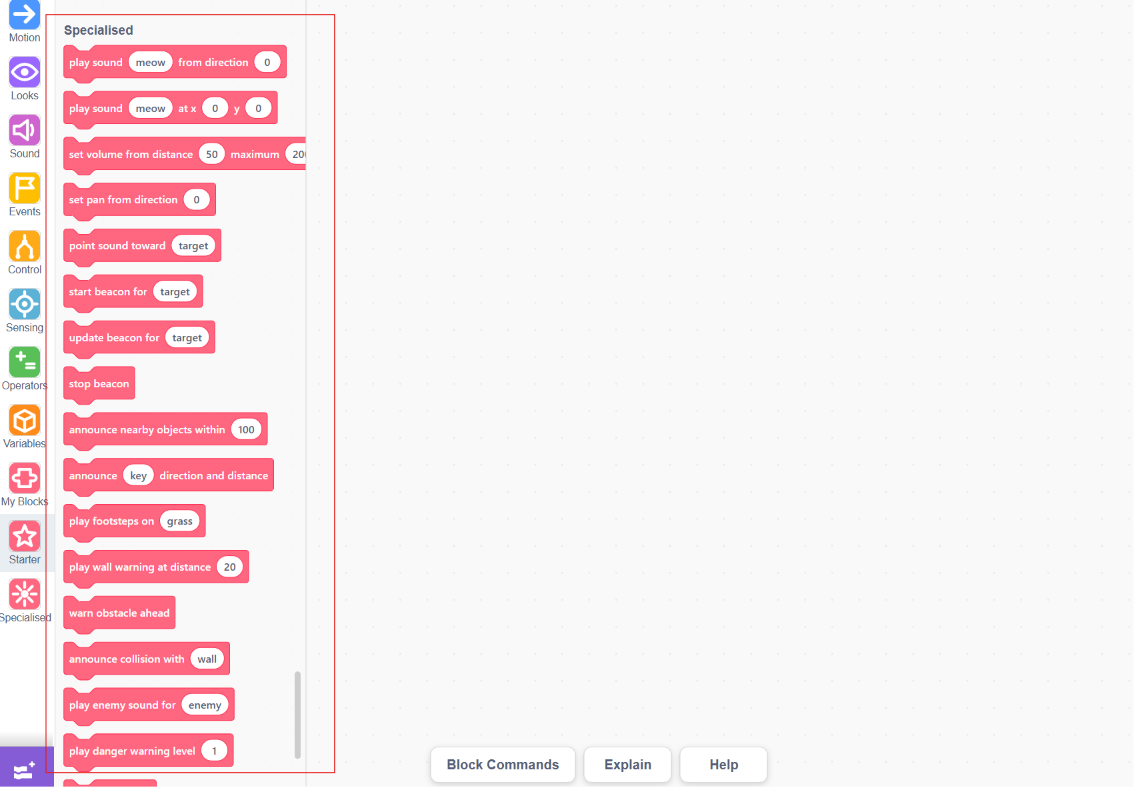
BrightBlocks is an accessible, AI-assisted version of Scratch designed for children who are blind, visually impaired, unable to read, or need alternative ways to learn programming. It identifies and explains coding blocks through speech, helps users understand complete scripts, supports keyboard-based navigation, and provides audio feedback when help is needed. Its goal is to make block-based programming easier to understand, navigate, and create for every learner.
By using scratch open source files, I had a good base. I brainstormed solutions and prompt design with CHATGPT, then used Codex to build the actual project.
The biggest challenge was finetuning the blocks and functions explanations, as I use AI only for the more complex tasks.
Well I am really proud I managed to make this project in only 2 days and will be very happy if it helps a lot of people. I found out about it quite late so, expectations were low but codex was of great help.
What we learned
A lot actually about visually empaired people. I started the project with an idea of helping someone in mind, without even being aware of the whole range of people who could be helped with it.
What's next for Scratch BrightBlocks
Since I used open source software, which I already use at the workshops with children, I will offer BrightBlocks for free to use as well - to keep it in the spirit of open source. I will look for further improvements in accessibility and making the AI really helpful. AI in this case should just give tips, hints like a teacher does - not just give ready solutions.
Hopefully you will still consider it, even though it's not a for-profit project, as the money will be well spent on starting the STEM workshop for children in a rural town.

Log in or sign up for Devpost to join the conversation.