Inspiration
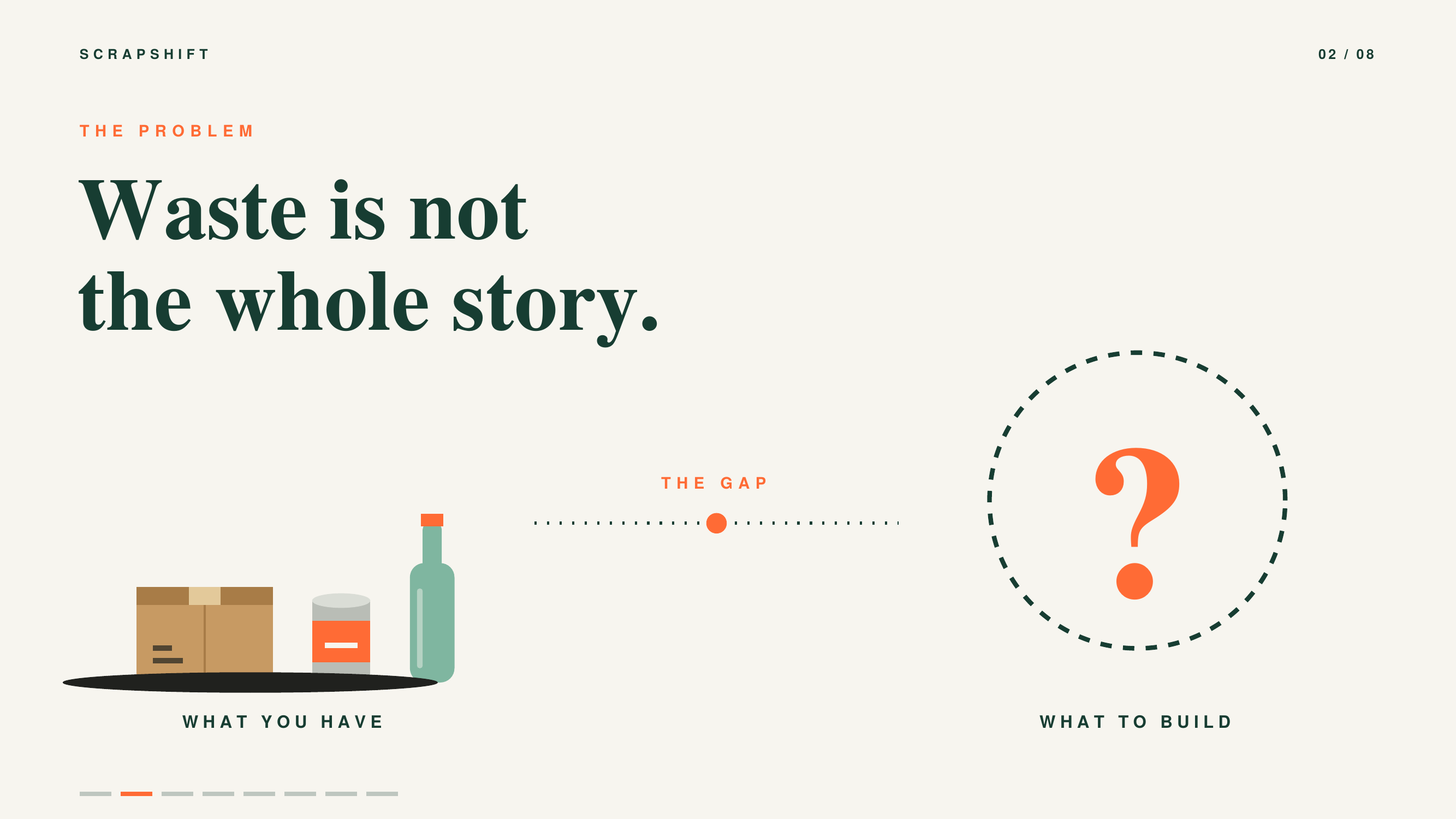
I kept thinking about two things: useful materials get thrown away every day, and people often have problems they could solve if they knew how to use what they already had.
Imagine having plastic bottles, old fabric, or pieces of cardboard at home, needing to solve a real problem, but having no idea where to start. A typical idea generator might give you another craft project that looks nice but serves no real purpose.
I wanted to explore something more useful. What if discarded materials could become the starting point for practical inventions? And what if a failed attempt could teach the system something that makes its next recommendation better?
That idea became SCRAPSHIFT.
What it does
SCRAPSHIFT is built around a simple idea: your available materials should shape what you build, and your experiences should shape what you try next.
The goal is to help people move from a pile of unused materials to a possible solution for a real problem.
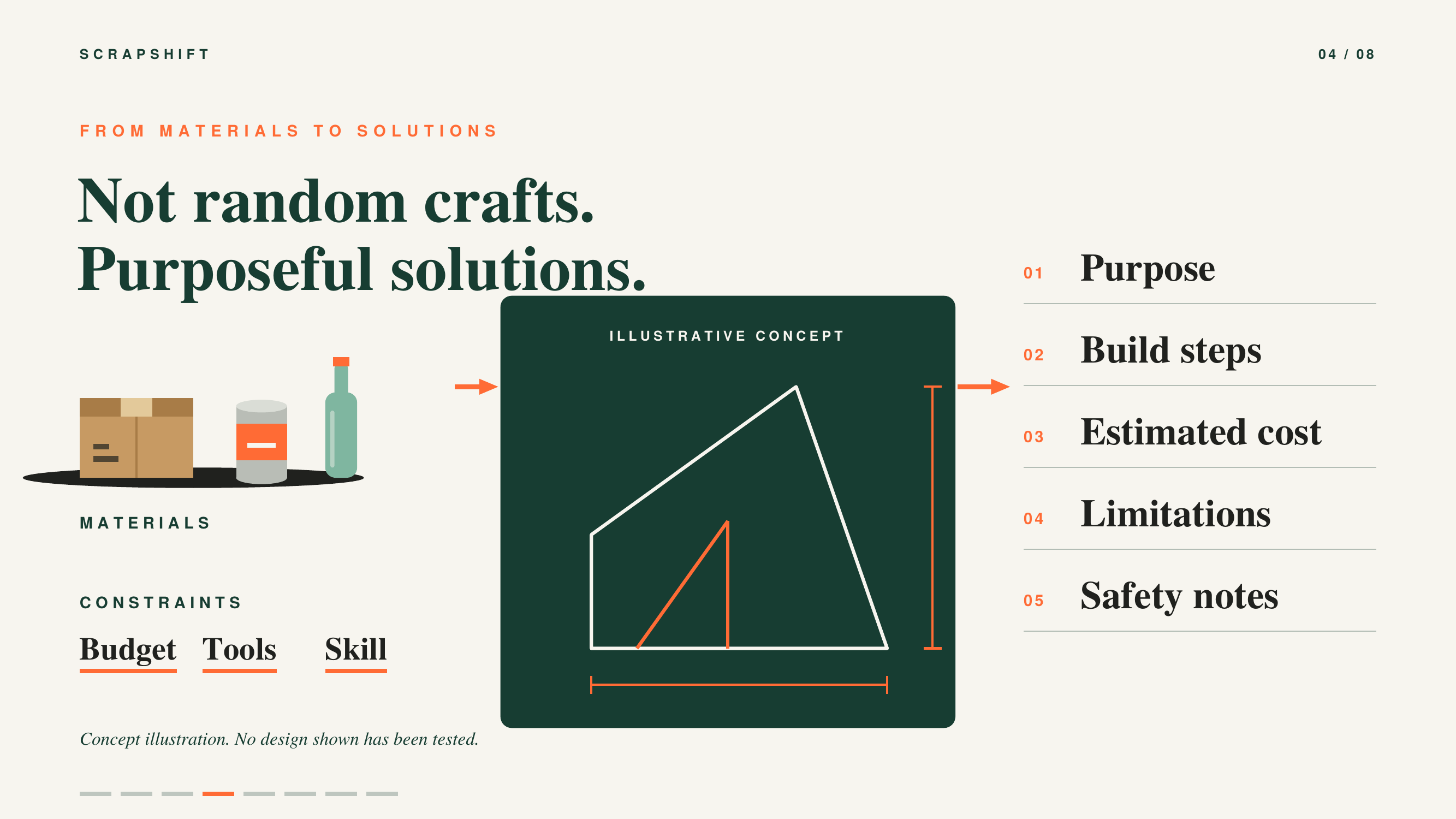
Instead of suggesting random crafts, SCRAPSHIFT considers the materials available, the intended purpose, and practical constraints such as budget and tools.
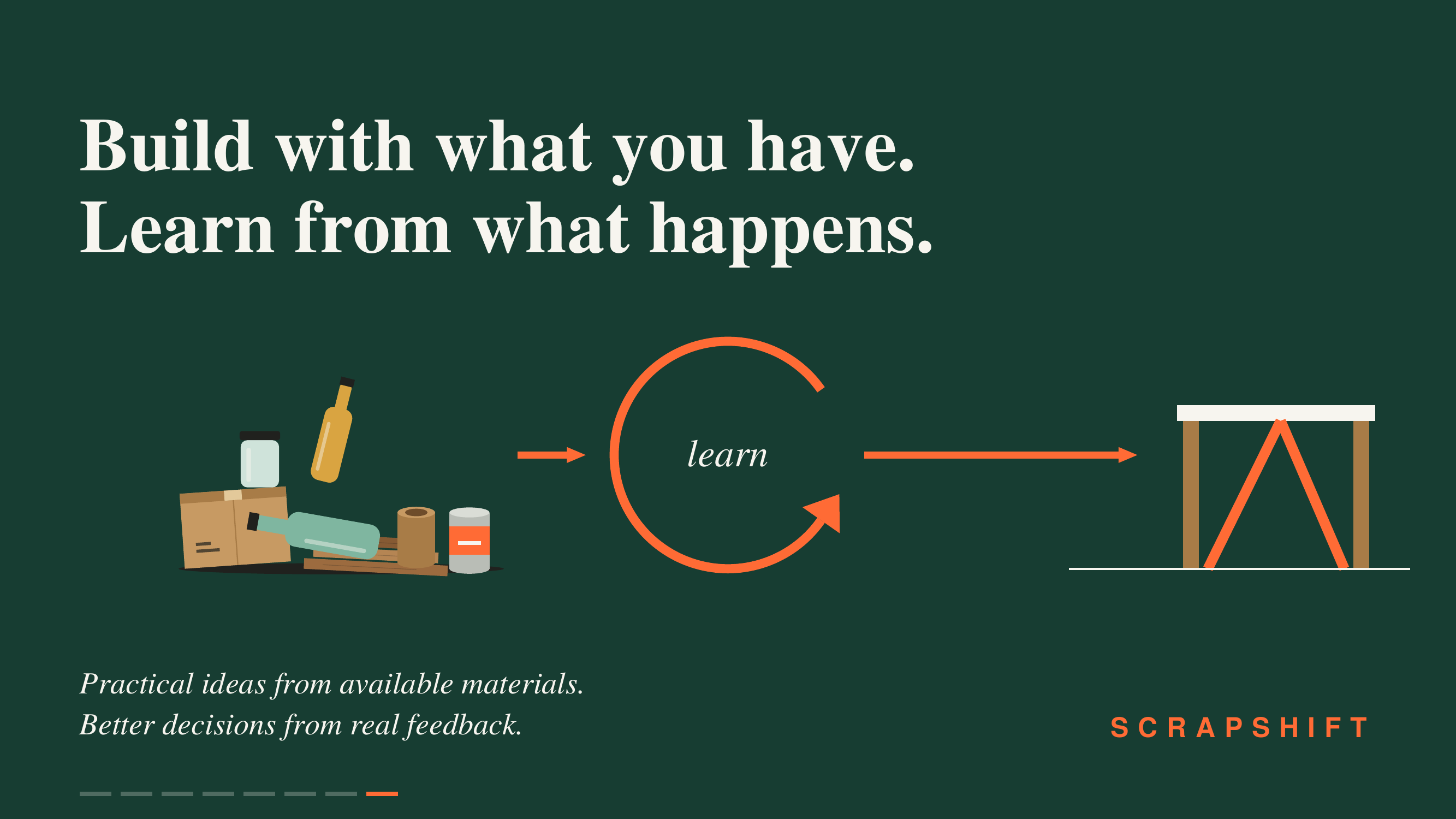
But the part I care about most is what happens after someone tries an invention. If a design fails, that experience should not just disappear. It should become a lesson that can inform similar recommendations in the future.
I want SCRAPSHIFT to encourage people to experiment, solve problems with what they have, and learn from the results.
How I built it
I approached SCRAPSHIFT as a problem-solving tool rather than just another AI application.
My focus was on connecting three things: the materials a person has, the problem they want to solve, and the knowledge gained from previous attempts.
I used AI-assisted development to help turn the concept into a working project, with GitHub as the home for the code. I also thought carefully about how recommendations should be useful beyond simply sounding creative. They need to consider feasibility, explain the steps involved, and acknowledge their limitations.
I designed the learning process around feedback from actual build attempts. The long-term goal is to preserve those experiences and use relevant lessons to influence future suggestions, rather than treating every new request as if nothing has been learned.
Challenges I ran into
The biggest challenge was making sure SCRAPSHIFT would solve the problem I had in mind instead of becoming another generic idea generator.
It is easy to suggest something that sounds innovative. It is harder to suggest something that makes sense for the materials available, the problem being solved, and the person's budget.
I also had to think about what learning should actually mean in this project. Saving feedback is one thing. Making that feedback relevant to a future recommendation is another. I want the connection between a previous failure and a new suggestion to be meaningful, not just a claim that the system is getting smarter.
Time was another challenge. I had to prioritize getting the core idea ready for submission while leaving room to improve the implementation.
Accomplishments that I'm proud of
I'm proud that I pushed myself to develop an idea beyond simply asking AI to generate things.
SCRAPSHIFT has a purpose beyond producing suggestions: helping people see possibilities in materials they already have and treating failed experiments as opportunities to learn.
I'm especially proud of the feedback-learning concept because it changes how I think about invention. A failed build does not have to be wasted effort. If its lesson is captured and applied appropriately, it can help someone make a better decision next time.
I'm also proud that I took the idea from my head into a project with a clear direction, even with limited time and resources.
What I learned
I learned that generating an idea is only the beginning of solving a problem.
A recommendation can sound impressive and still be useless if someone cannot build it, afford it, or apply it to their situation. Context matters.
I also learned to think more carefully about feedback. A system should not claim to learn from experience just because it stores information. The real test is whether a relevant lesson can influence a later recommendation in a way the user can understand.
Most importantly, I was reminded that innovation does not always begin with expensive equipment or brand-new materials. Sometimes, it begins with looking at what is already around you differently.
What's next for SCRAPSHIFT
I want to make SCRAPSHIFT more practical, reliable, and genuinely useful outside a demonstration.
My next priorities are to improve how it matches materials to real problems, make its construction instructions more specific, and account for safety and feasibility more carefully.
I also want to strengthen the feedback system so that users can record what happened during a build, revisit those lessons, and see how relevant past experiences influence future recommendations.
Another important step is testing the suggestions against real build attempts. That would help me understand which ideas work, which fail, and what needs to change.
Ultimately, I want SCRAPSHIFT to help people become more resourceful problem-solvers, not just consumers of AI-generated ideas.
Build with what you have. Learn from what happens.

Log in or sign up for Devpost to join the conversation.