Inspiration
As college students, we spend a lot of money going to markets like Trader Joes, Walgreens, and Safeway for ingredients and groceries. We want to meal-prep and make good meals so that we do not have to use money going out to eat, but truthfully. a lot of these ingredients only end up being partially used before it goes past its expiration date and we throw it out. College campuses/universities in the United States throw away over 22 million pounds of food per year and in the U.S. 120 billion pounds of food per year are discarded, nearly 40% of the U.S. food supply.
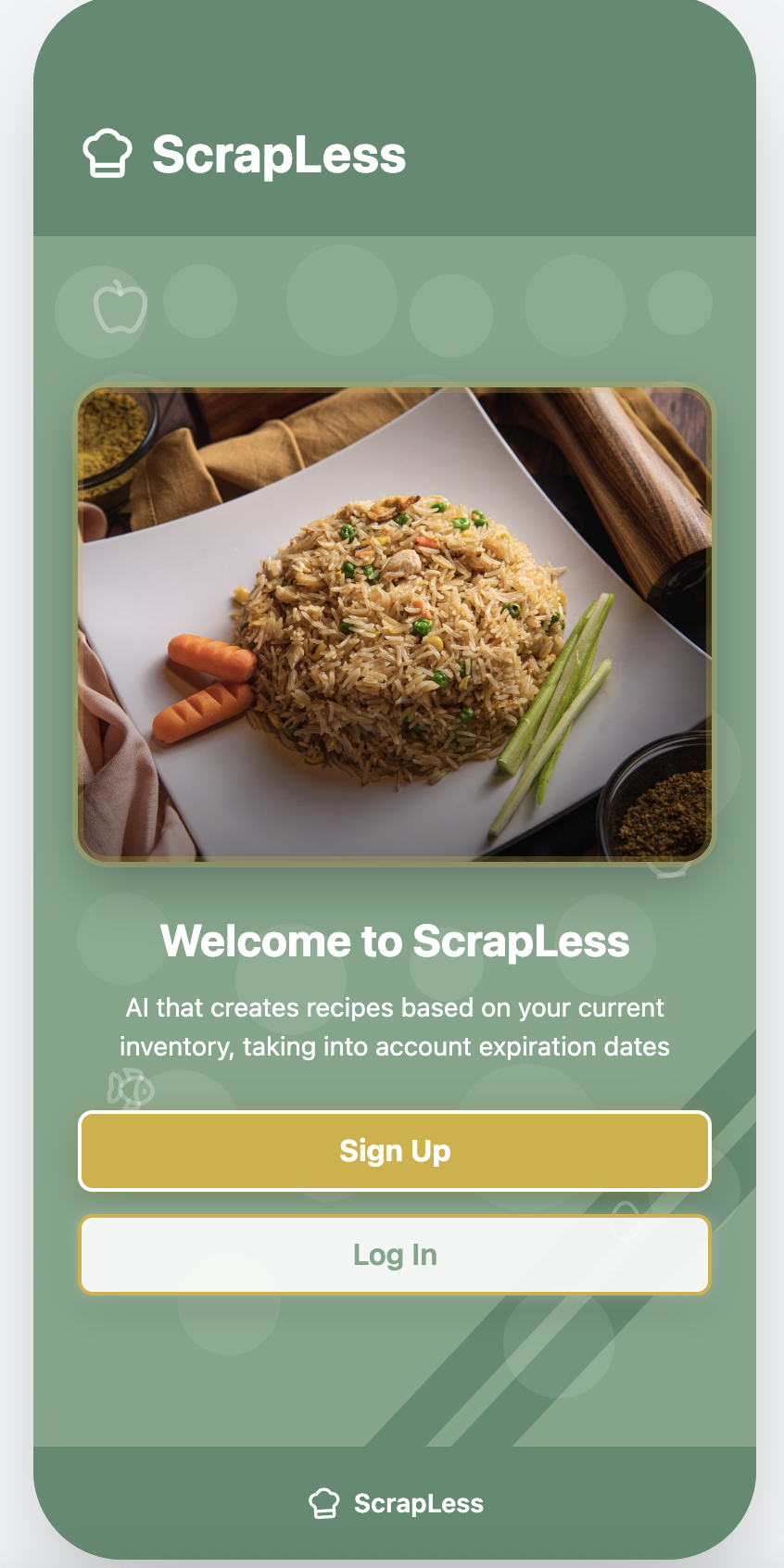
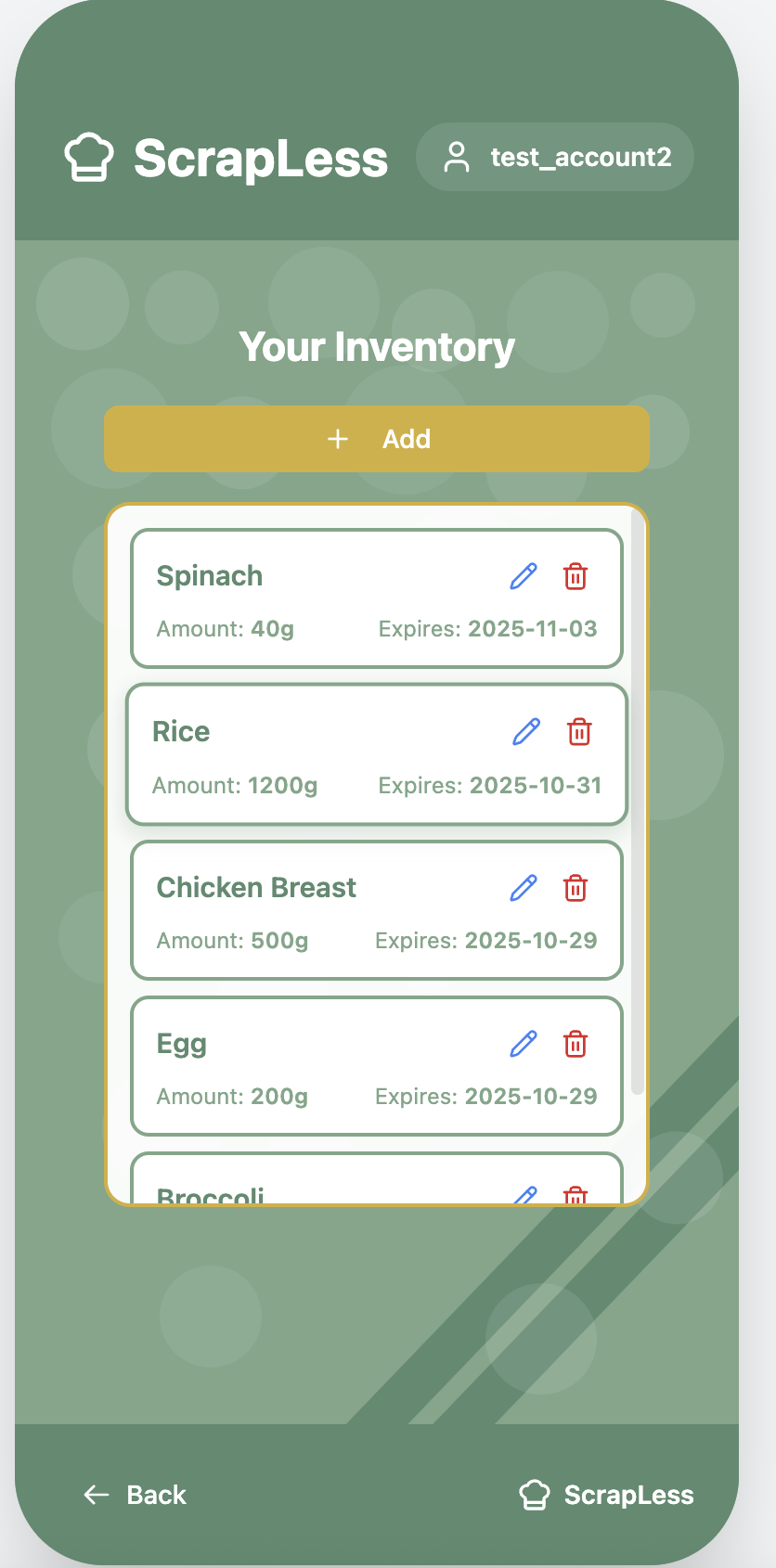
Our team aimed to make it easy for the users to input the ingredients they have and let the app output a recipe for the user to cook based on the expiration dates.
I know that it may seem difficult to find a recipe when there are only a limited amount of ingredients remaining so we wanted to simplify that process and reduce the amount of food thrown away every year, one person at a time.
What it does
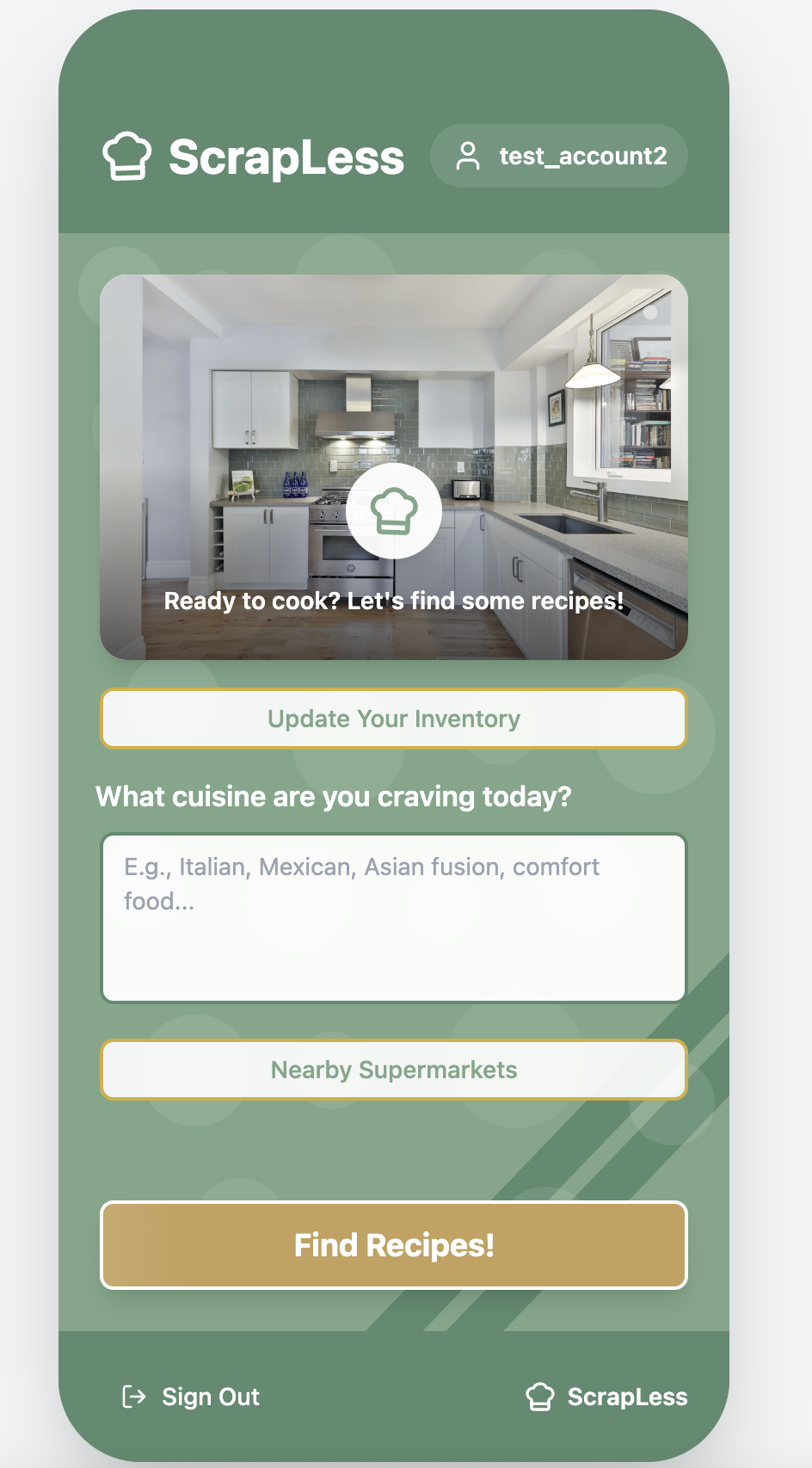
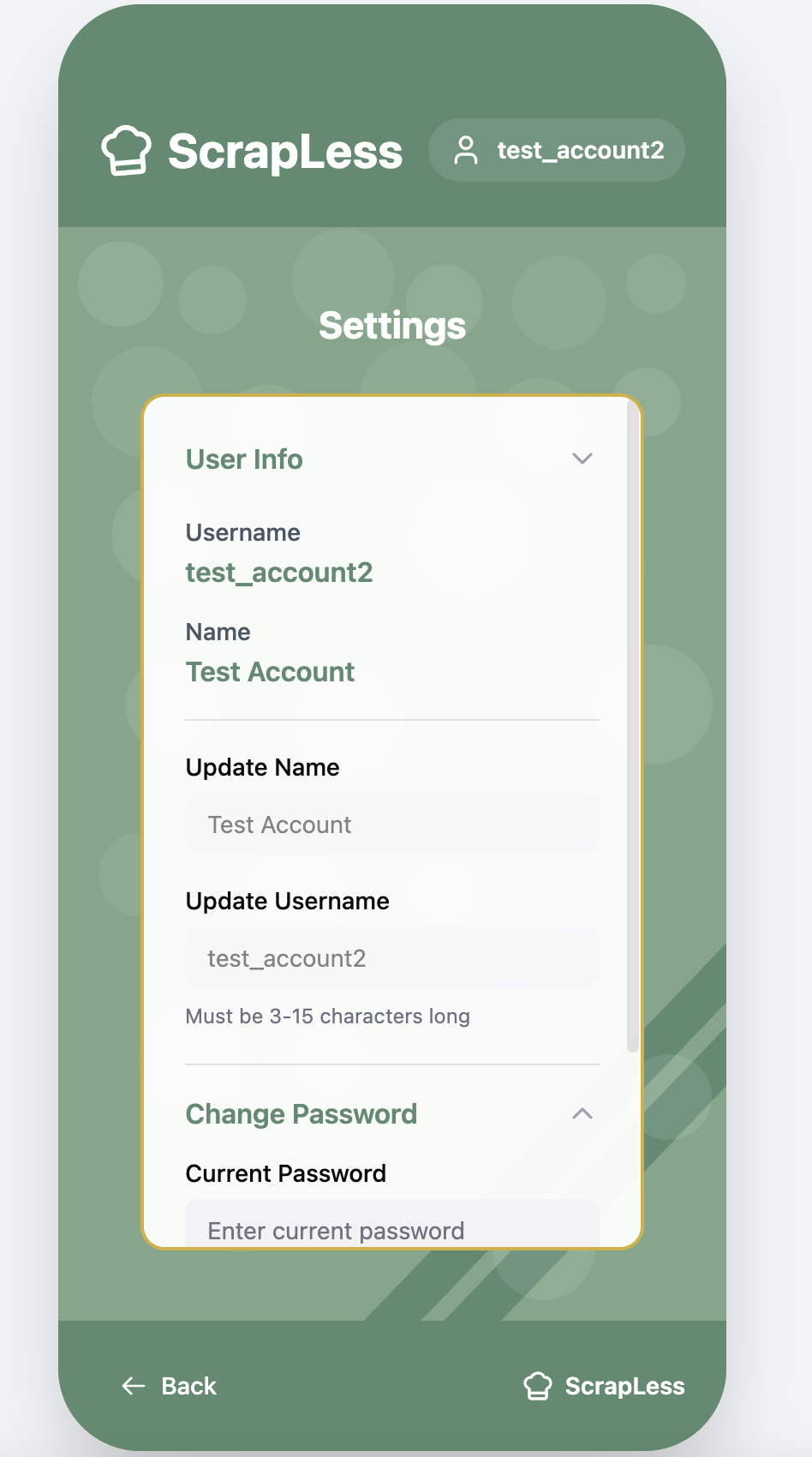
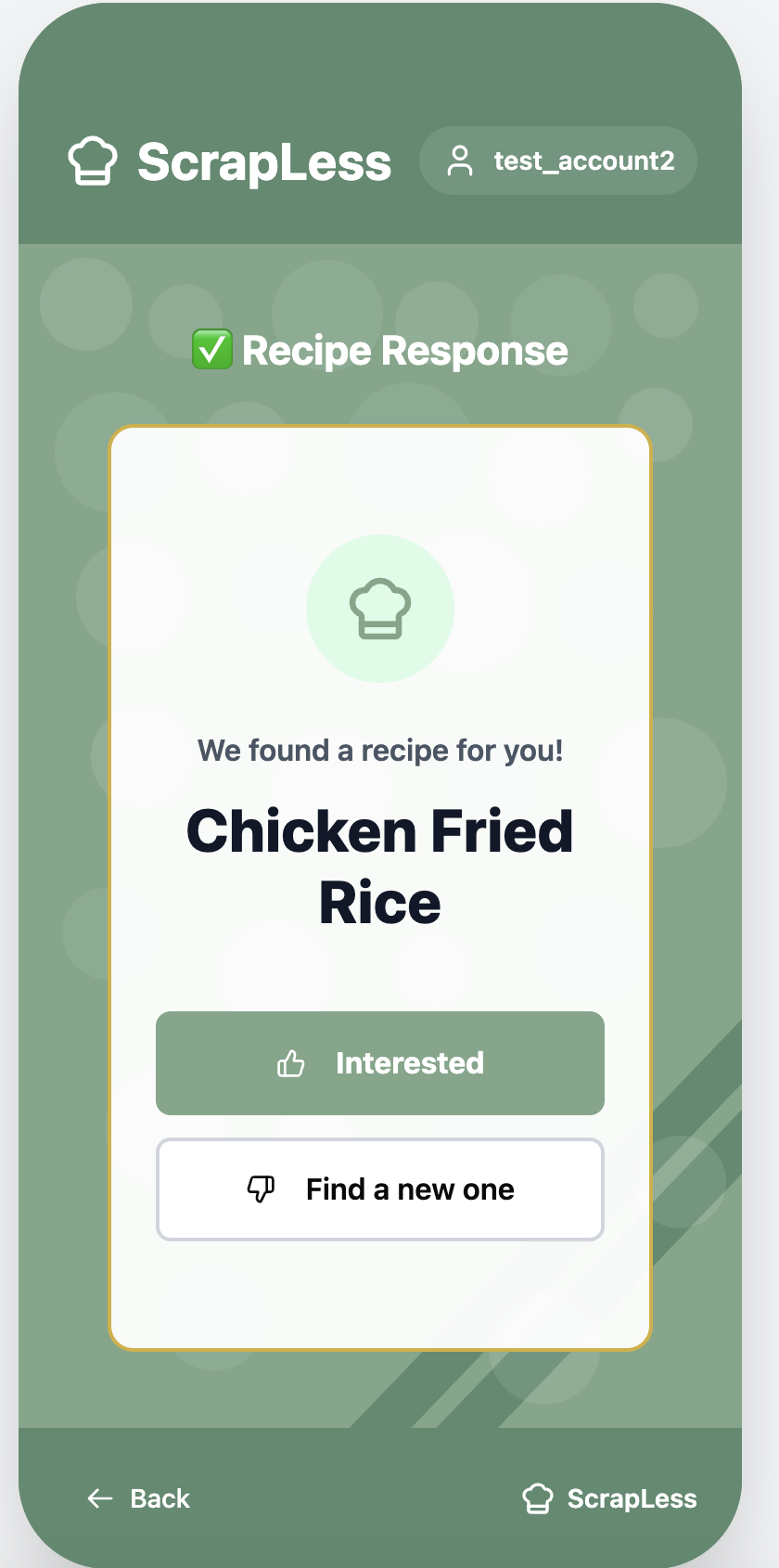
Our app keeps track of our user's grocery data using Supabase. Using this data, ScrapLess suggests a recipe based off ingredients and user preferences, taking into account expiring ingredients heavily. Users can pick which dish they prefer and generate precise recipes for their chosen dish. Our app comes with features such as nearest supermarket finder, functioning user accounts, and more!
How we built it
We began by researching real-world data and identifying key problems related to food waste, focusing on how poor food tracking and purchasing habits lead to the unnecessary disposal of still-edible items. From this research, we designed a digital solution aimed at reducing household and student food waste. Chad led the UI/UX design using Figma Make, creating a sleek, iOS-style interface modeled after the iPhone 15. Tyler implemented interactive animations to make the app smoother, more intuitive, and engaging for users. On the technical side, Chad also connected the Postman API to integrate backend services directly with Figma, allowing for live app testing and efficient development. For our division of work, Chad handled frontend design and integration, focusing on layout and usability. Bronz contributed to data analysis and machine learning, helping the app predict spoilage and optimize grocery usage. Tyler managed backend development, ensuring that the app’s data handling and user tracking systems functioned seamlessly. Together, our team combined design, technology, and personal experiences with food waste to create an app that is both practical and impactful. Our goal is to help students make smarter, more sustainable choices when it comes to their food.
Challenges we ran into
One of the main challenges we faced was with the recipes database, which was malfunctioning during development. When we tried to search for a specific type of dish, the database often failed to return the correct recipes or provided incomplete results. We tried to tackle this issue with Spoonacular API, however, we had a hard time being able to input dishes within the Spoonacular API database 100% of the time. This issue slowed down our progress since our app relied heavily on accurate recipe data to help users make use of their leftover ingredients. We had to spend extra time debugging the database connections and refining our search functionality to ensure the recipes matched the user’s input accurately. In the end, we used Postman to send an API request to Open AI, leveraging prompt engineering and optimization to ensure the fastest runtimes possible.
Accomplishments that we're proud of
We’re proud that we successfully created a fully functional app from start to finish. We leveraged Figma Make to save time in programming front-end style. We used Postman to create flows which allowed us to develop API calls quickly into the start of the project. This allowed us a lot of time to work on key features, including editing and tweaking animations, text displays, buttons, and screen transitions to ensure a smooth and visually appealing experience. Overall, we’re proud of how our teamwork and technical skills came together to turn our initial concept into a polished, working product.
What we learned
We learned that tools, such as Postman, are great tools for calling/making APIs. Especially in a hackathon environment, leveraging tools such as Figma Make and Postman Flows was vital in finishing our project. This was also our first hackathon, so we learned to code in a high-pressure environment!
What's next for ScrapLess
A feature we would've loved to add but did not get time to do was automatically update user ingredient data in supabase when a user cooks a meal. We would also love to launch the app through a cloud provider such as AWS, and would love to make new designs to suit different mobile devices.
Postman Challenge Submission Link: https://app.getpostman.com/join-team?invite_code=99e80871c894d194400517598947a3eca5146fcf107ce9fc5fce4db851f67e71&target_code=1108d02da16804af505730eb5935b37e
Built With
- api
- figma
- openai
- postman
- react
- supabase
- visual-studio


Log in or sign up for Devpost to join the conversation.