Why Should I Care?
The average person in the US produces nearly 5 pounds of municipal solid waste each day, and globally, we generate 2 billion metric tons of it annually.
Just think about it—tackling a problem this massive can feel impossible. Reducing our waste footprint through recycling and composting is a goal we all share, but achieving it fully could take decades.
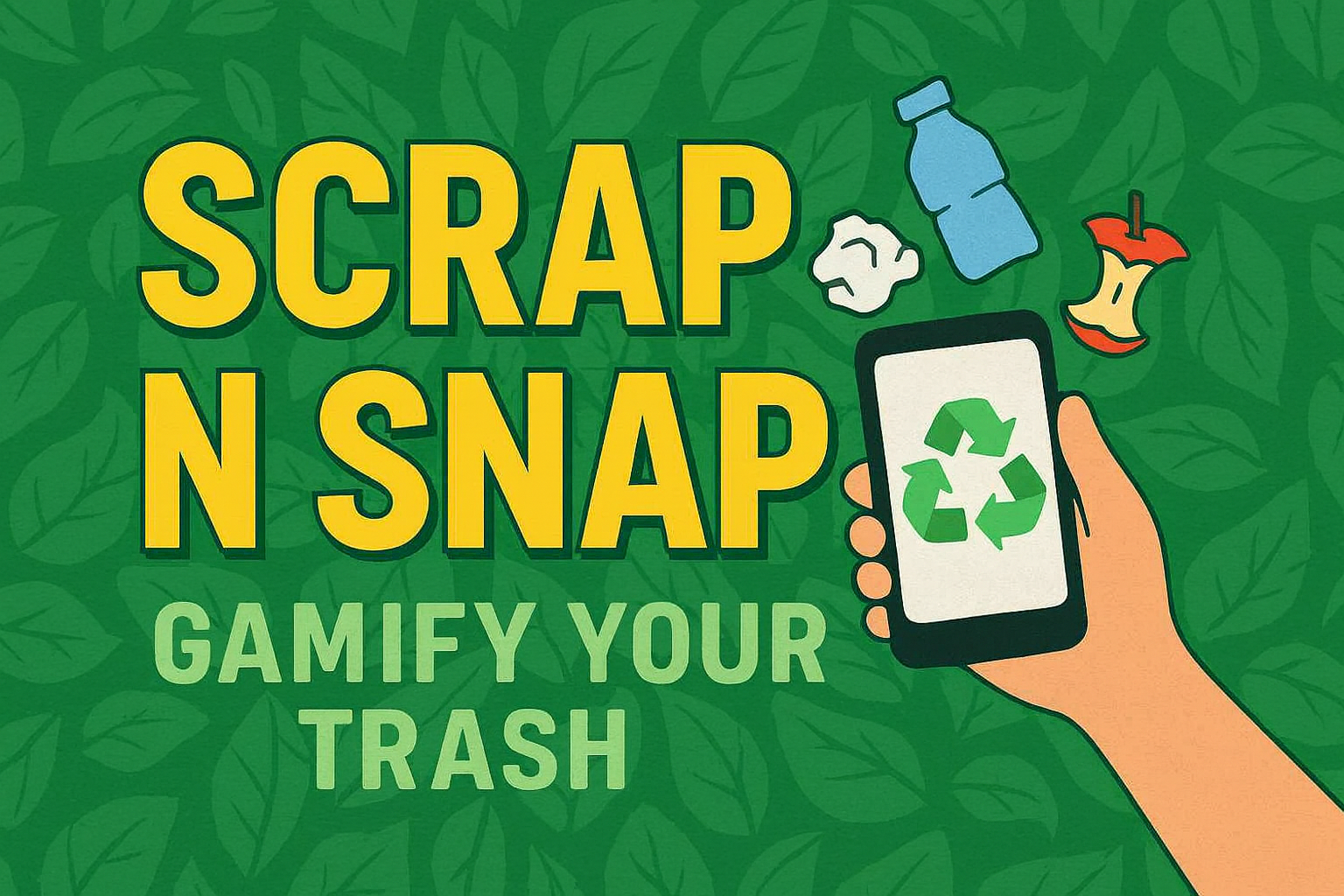
While no single solution can solve this problem overnight, Scrap N Snap introduces a simple, engaging practice anyone can adopt—making sustainability accessible and fun, one step at a time.
What Does It Do?
Many apps help you track food waste and trash, but entering the weight manually every time isn’t much fun.
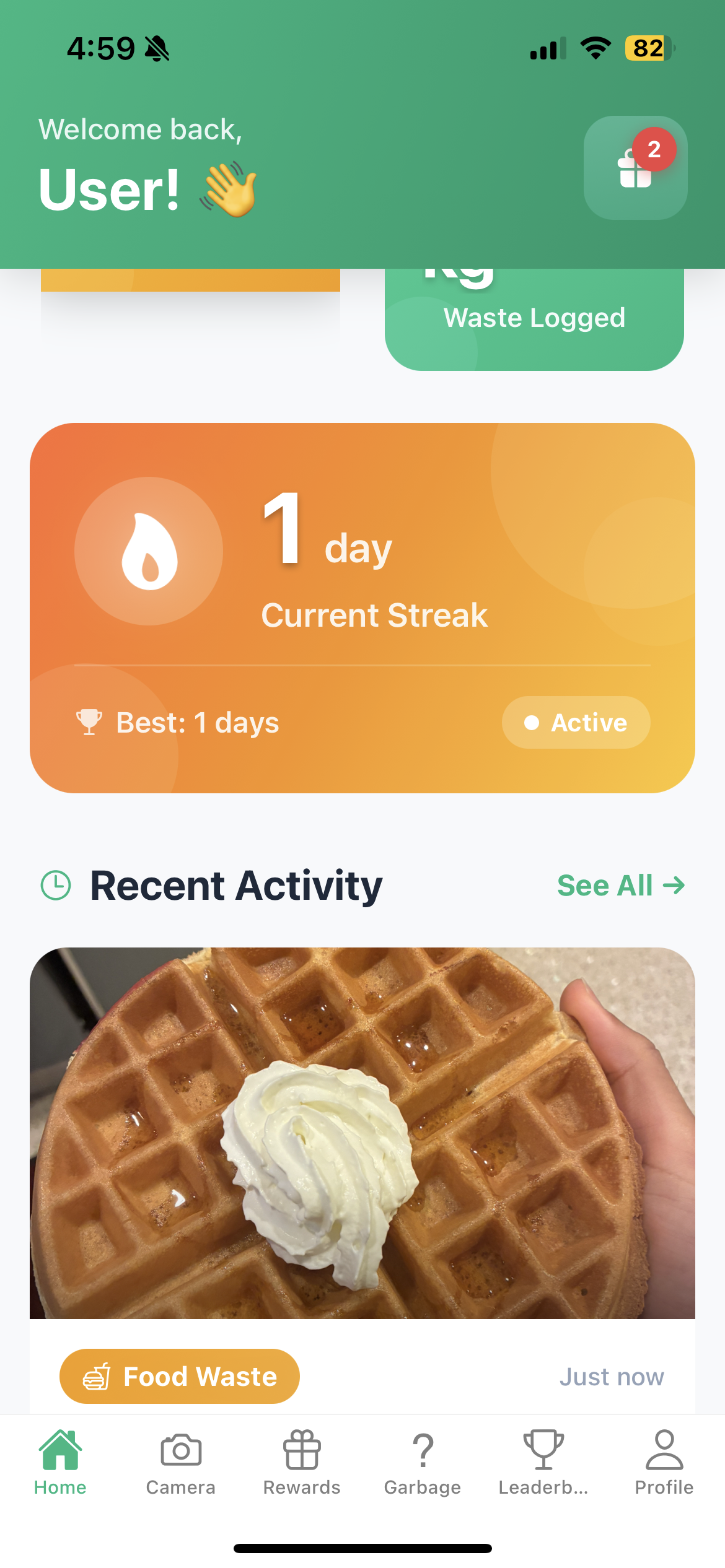
With just a snap of a photo, Scrap N Snap lets you effortlessly log your daily waste, earn points, and see how much you recycle, compost, or throw away—while competing and connecting with others online.
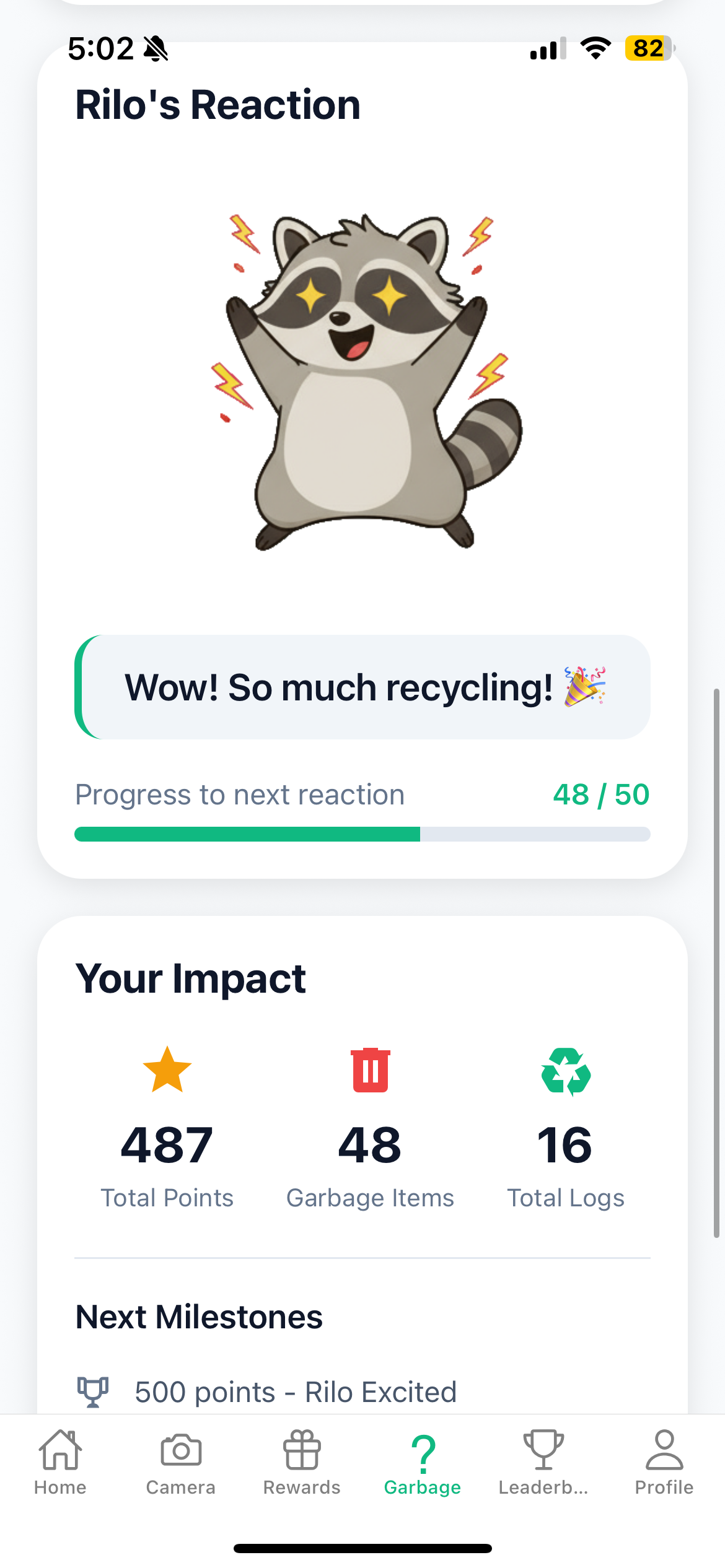
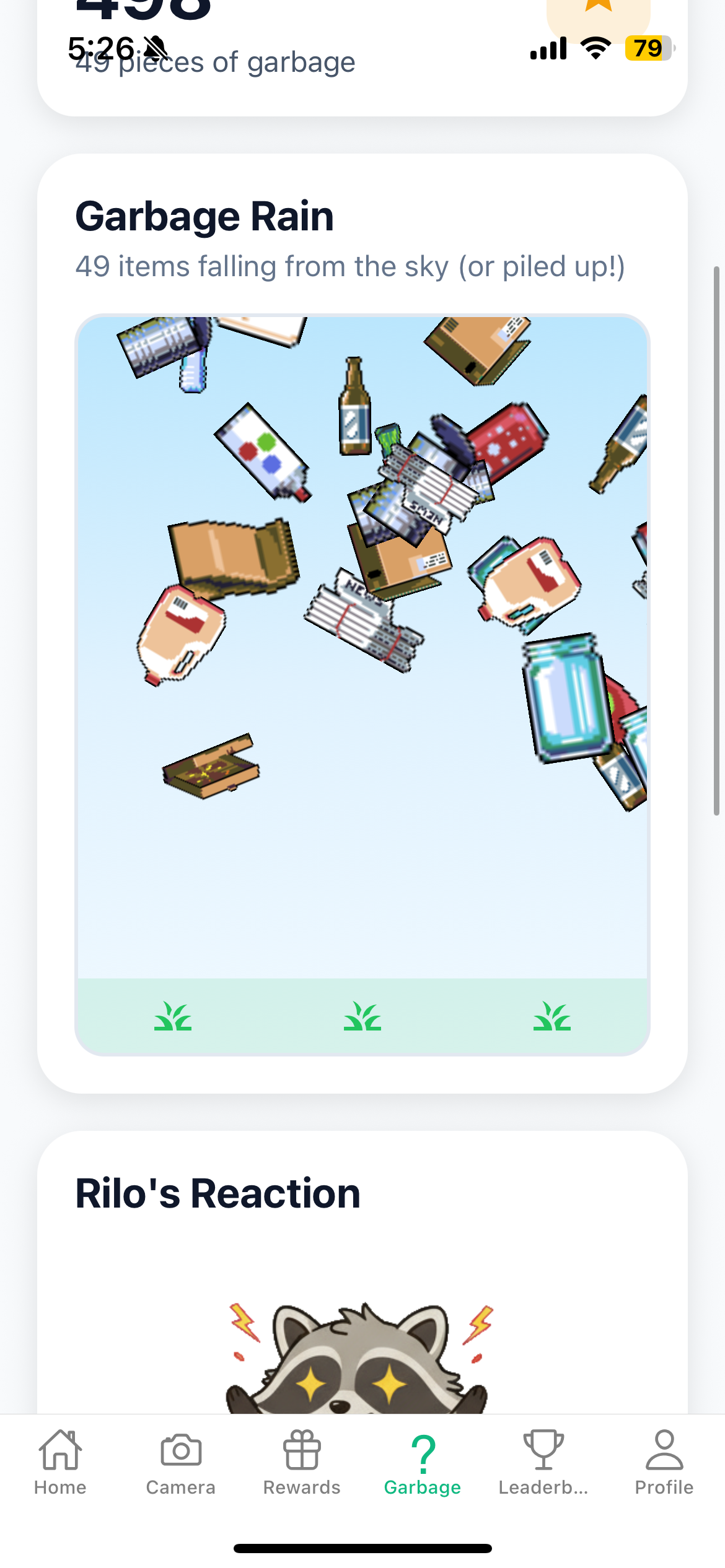
Not enough? Meet Rilo the raccoon! Each time you log a disposal, Rilo cheers you on, and the game visually updates your trash pile to show your weekly progress, before he burns it all.
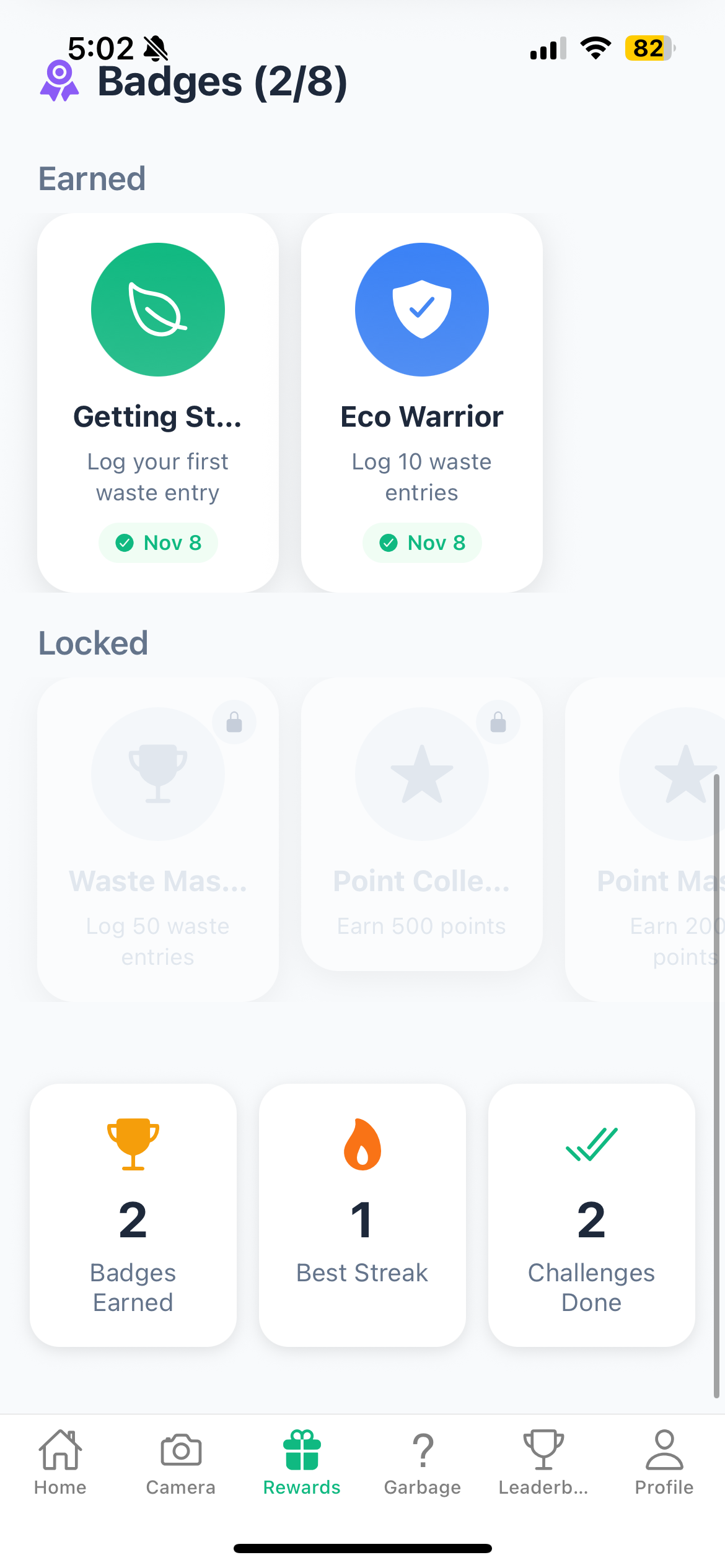
Complete special tasks, earn badges, and compete in themed waste-reduction events with others for extra rewards and game upgrades.
How We Built It
Utilizing TensorFlow object recognition, we trained a custom AI model to categorize trash based on its recyclability. The front end was built was React Native and custom game assets.
Challenges
Combining multiple features into a single app was challenging. In less than a day, we integrated a custom object detection model, interactive events, and unique assets into a deployable app accessible on most mobile devices.
Accomplishments
We made sustainability fun and accessible by creating an app that uses AI for easy waste tracking and global data comparisons. With unique challenges, interactive events, and Rilo the raccoon cheering users on, our app encourages everyone to build better habits and learn more about waste worldwide. Any organization, government, or household can put the data to use for their own research, practices, and more.
What we learned
Since our team mostly has experience in web development, building and deploying a mobile app was a new challenge for us. This project pushed us to approach development from a new perspective, focusing on how we could incorporate sustainability into our work rather than just creating something people would find appealing. In general, we gained valuable skills in mobile deployment, user interaction, and machine learning tools beyond the web.
What's Next?
We hope to expand this project by including information on how waste reduction translates into environmental impact (e.g., CO₂ saved, landfill space reduced). In general, this live-game service could be proven to be more interactive and engaging, through an in-game shop to spend points and unlock new avatars, custom assets, or power-ups—motivating users to continue building sustainable habits while personalizing their experience.
Built With
- firebase
- flask
- javascript
- keras
- python
- react-native
- tensorflow
- typescript


Log in or sign up for Devpost to join the conversation.