-
-
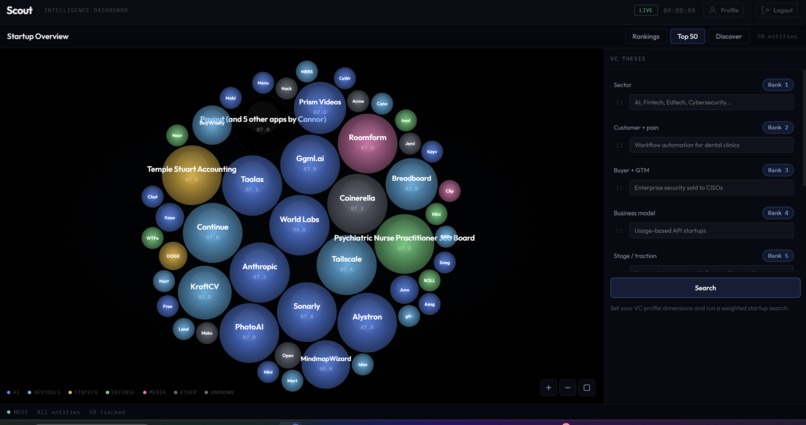
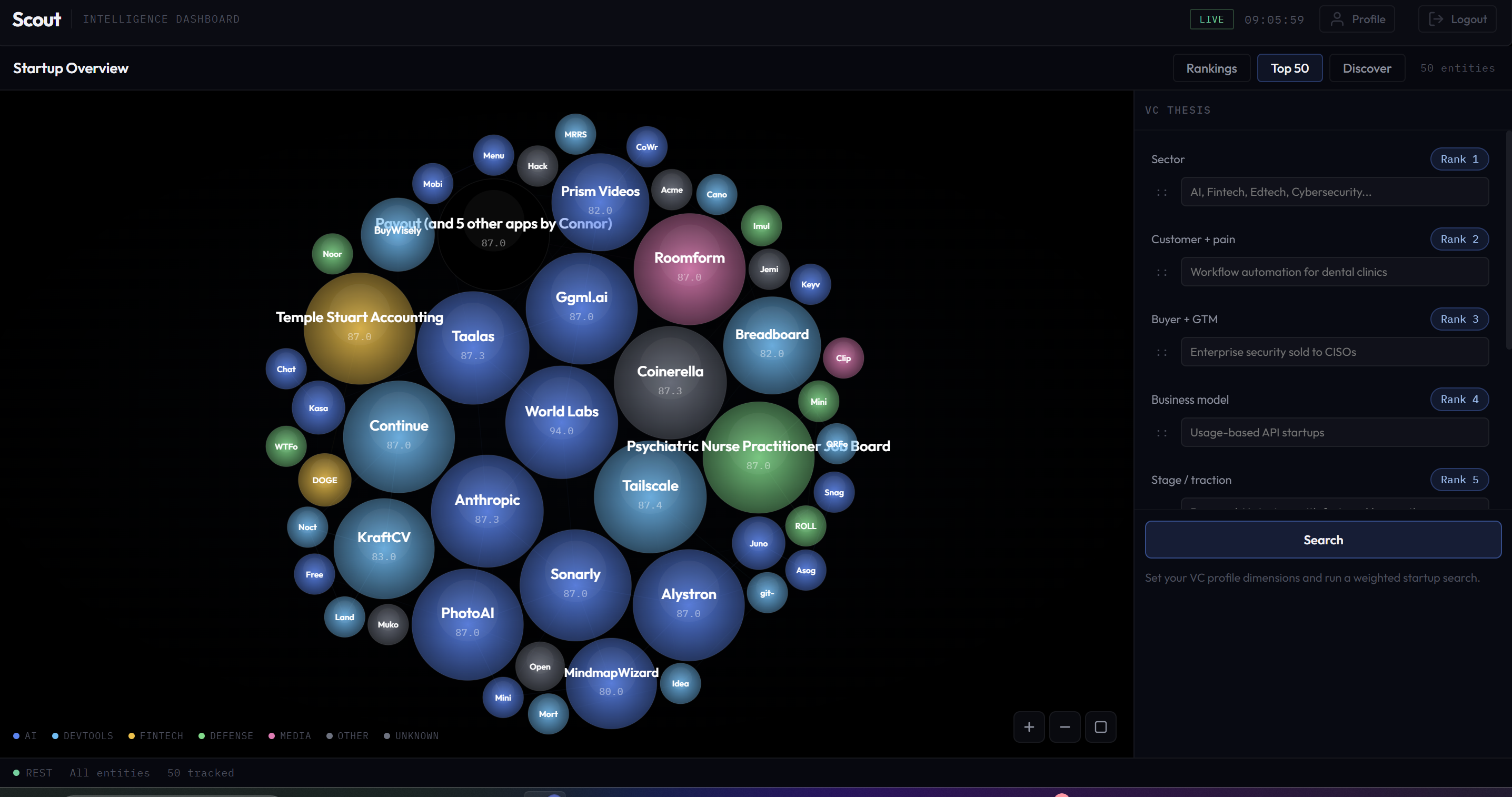
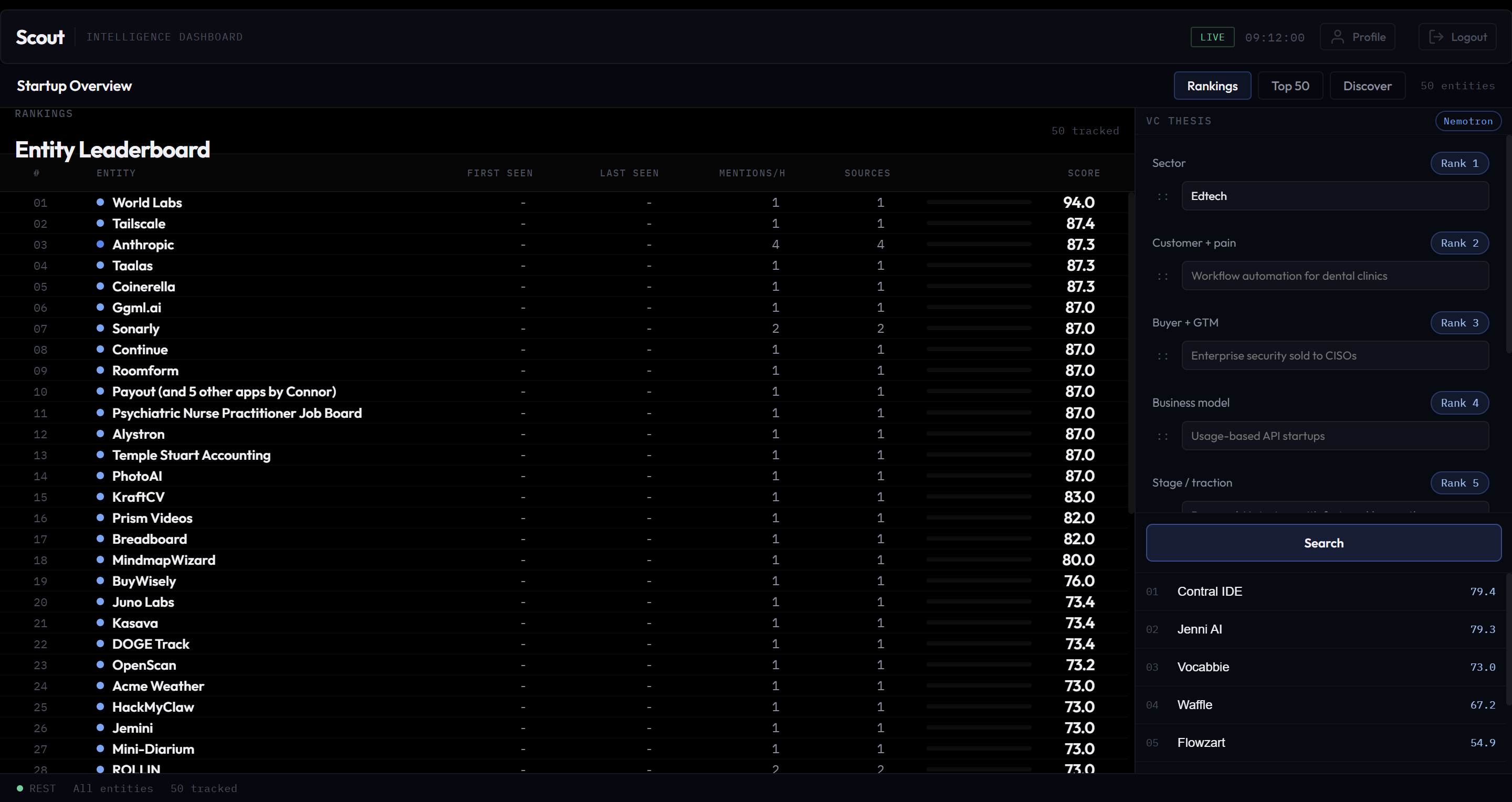
Scout Top 50 Companies Dashboard
-
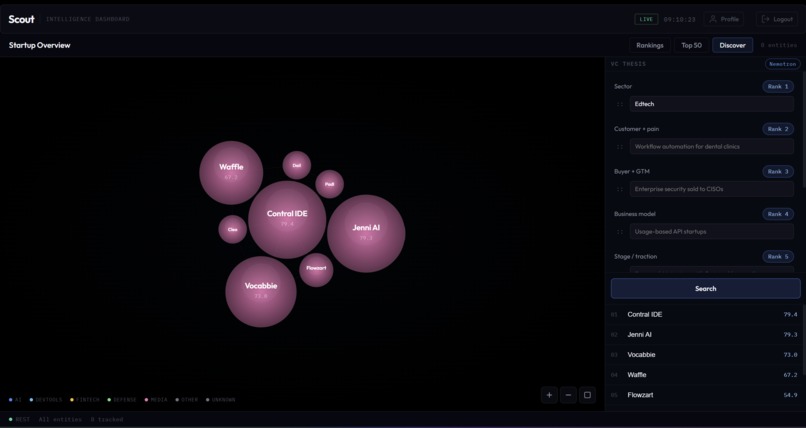
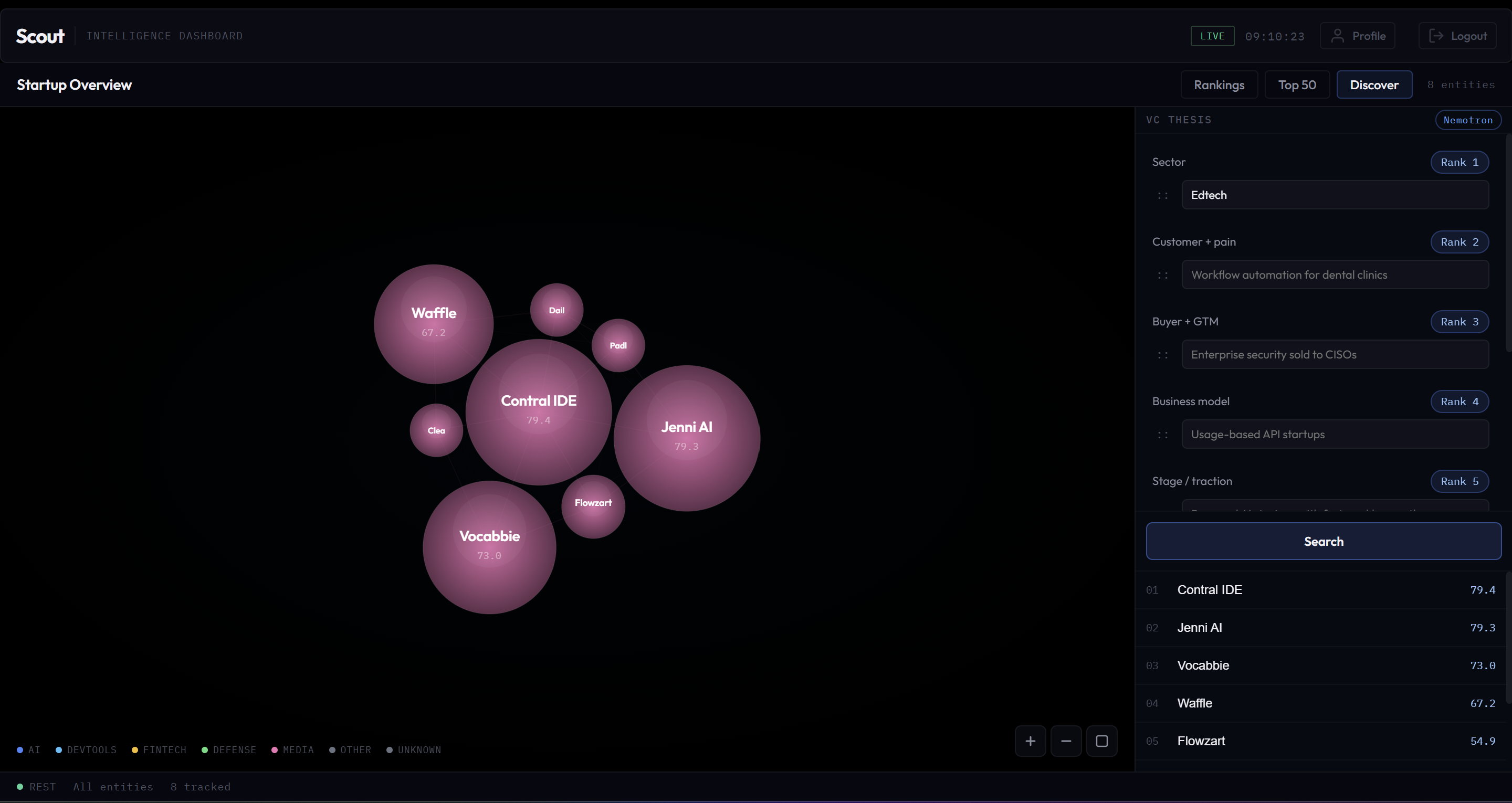
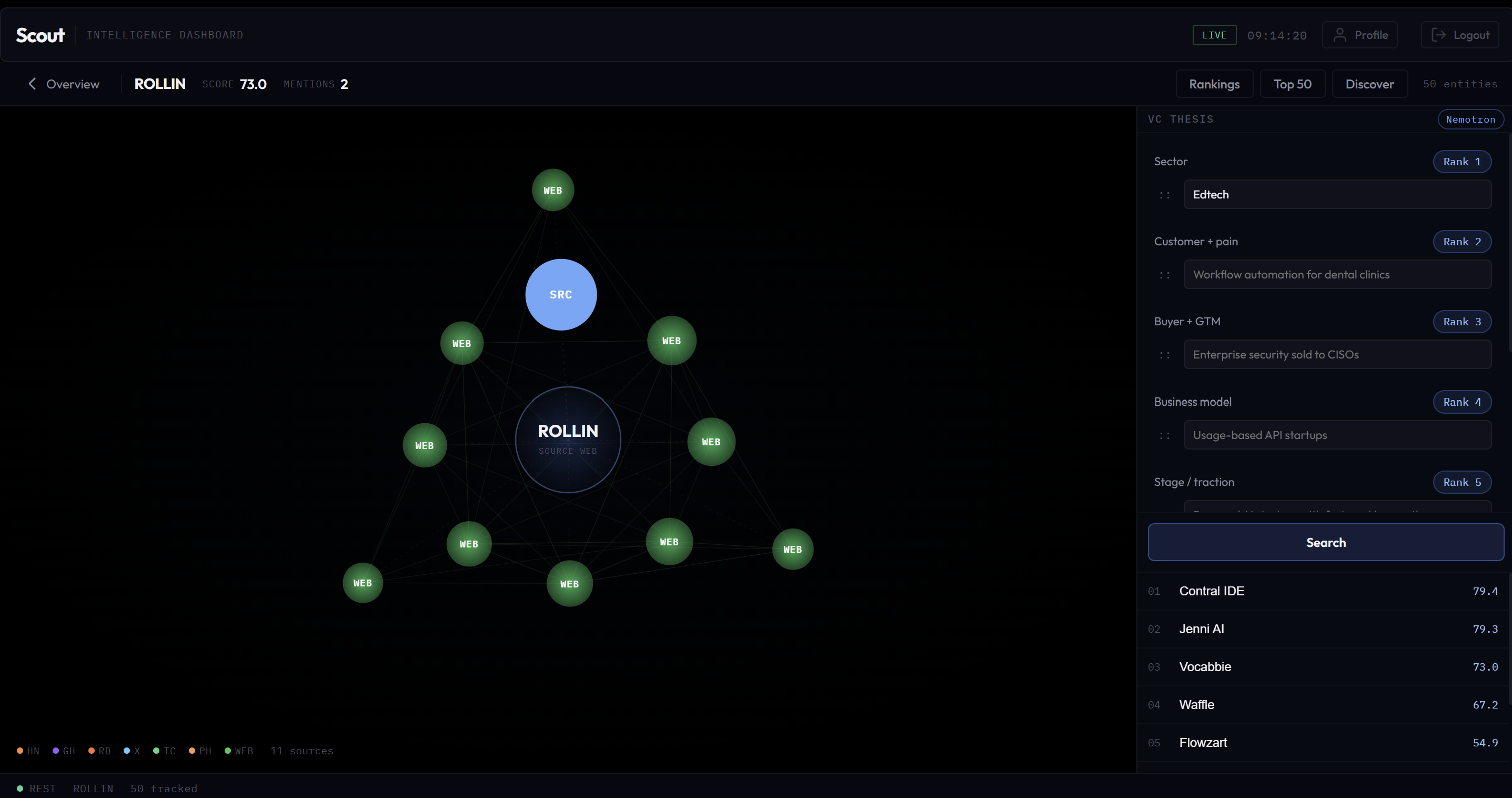
Niche Search Query Results (Edtech Example)
-
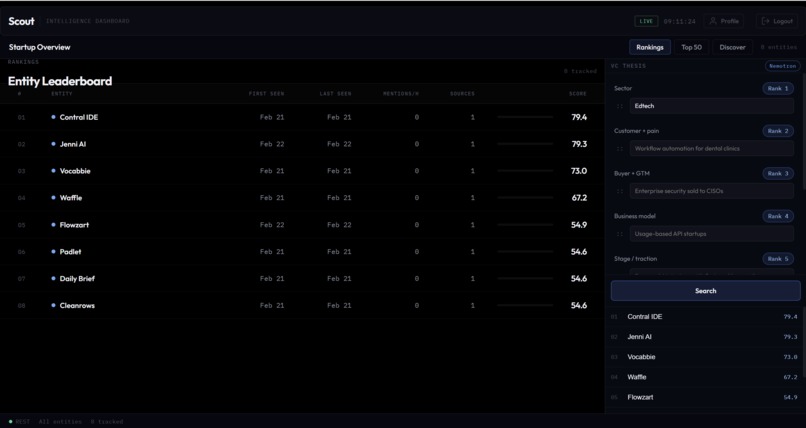
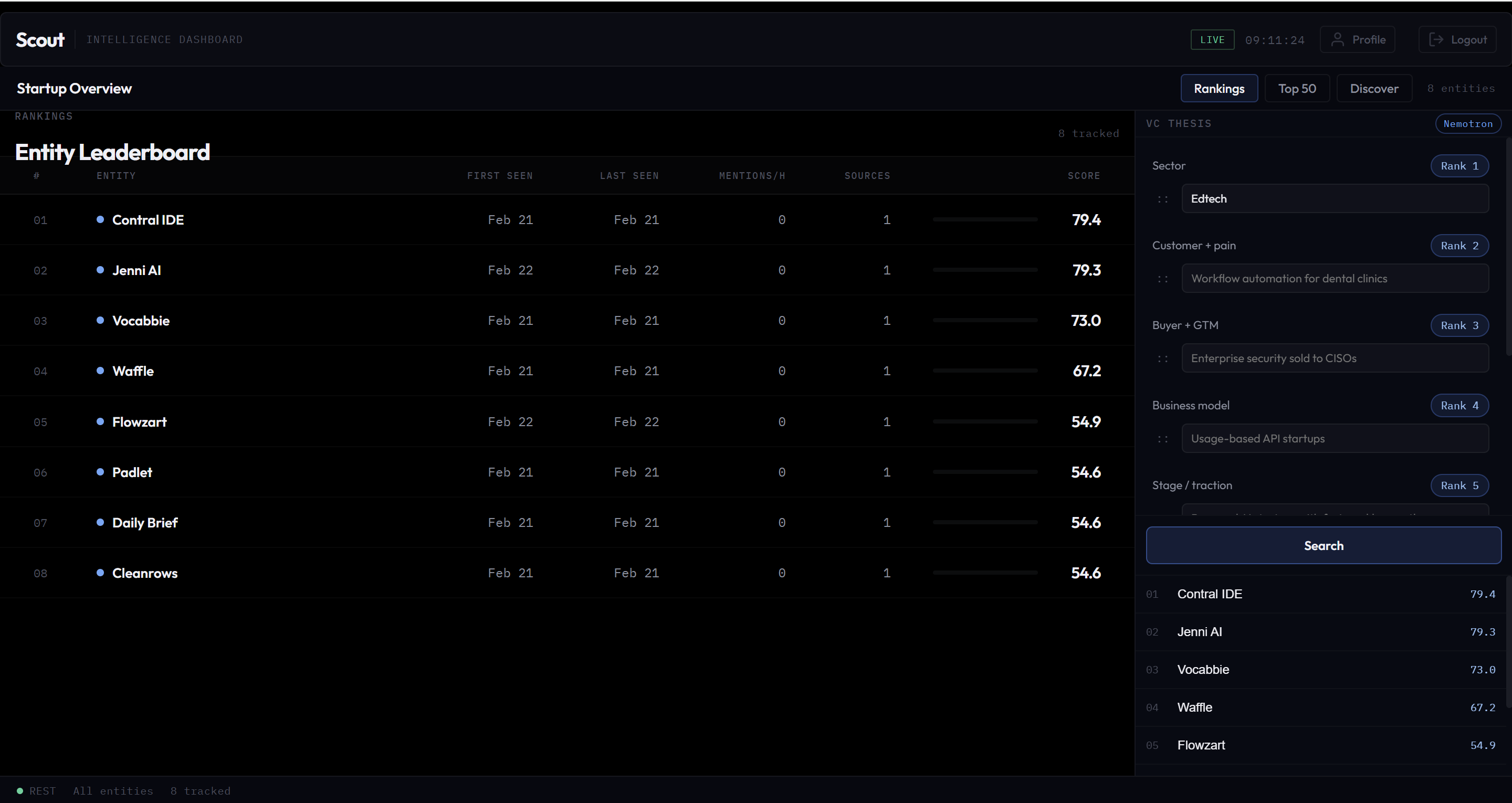
Niche Rankings
-
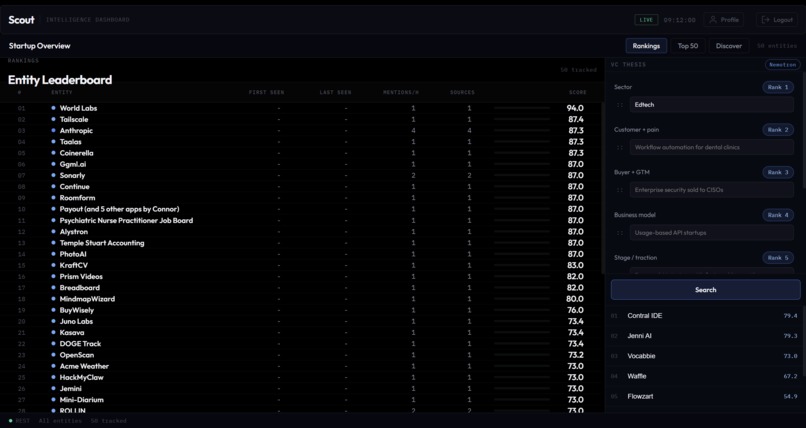
Overall Startup Rankings
-
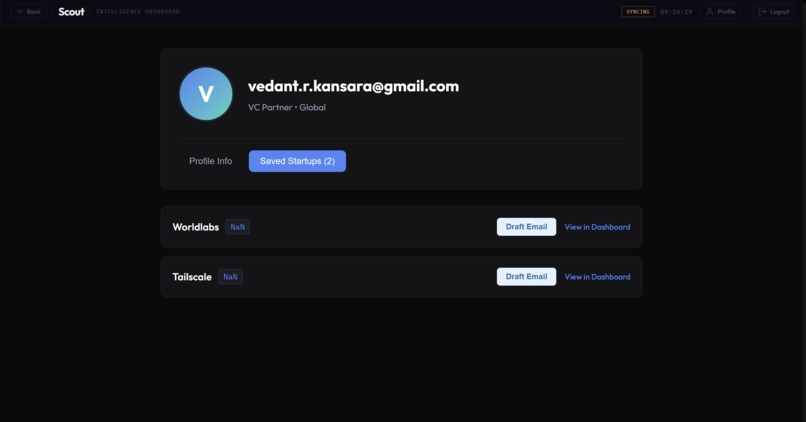
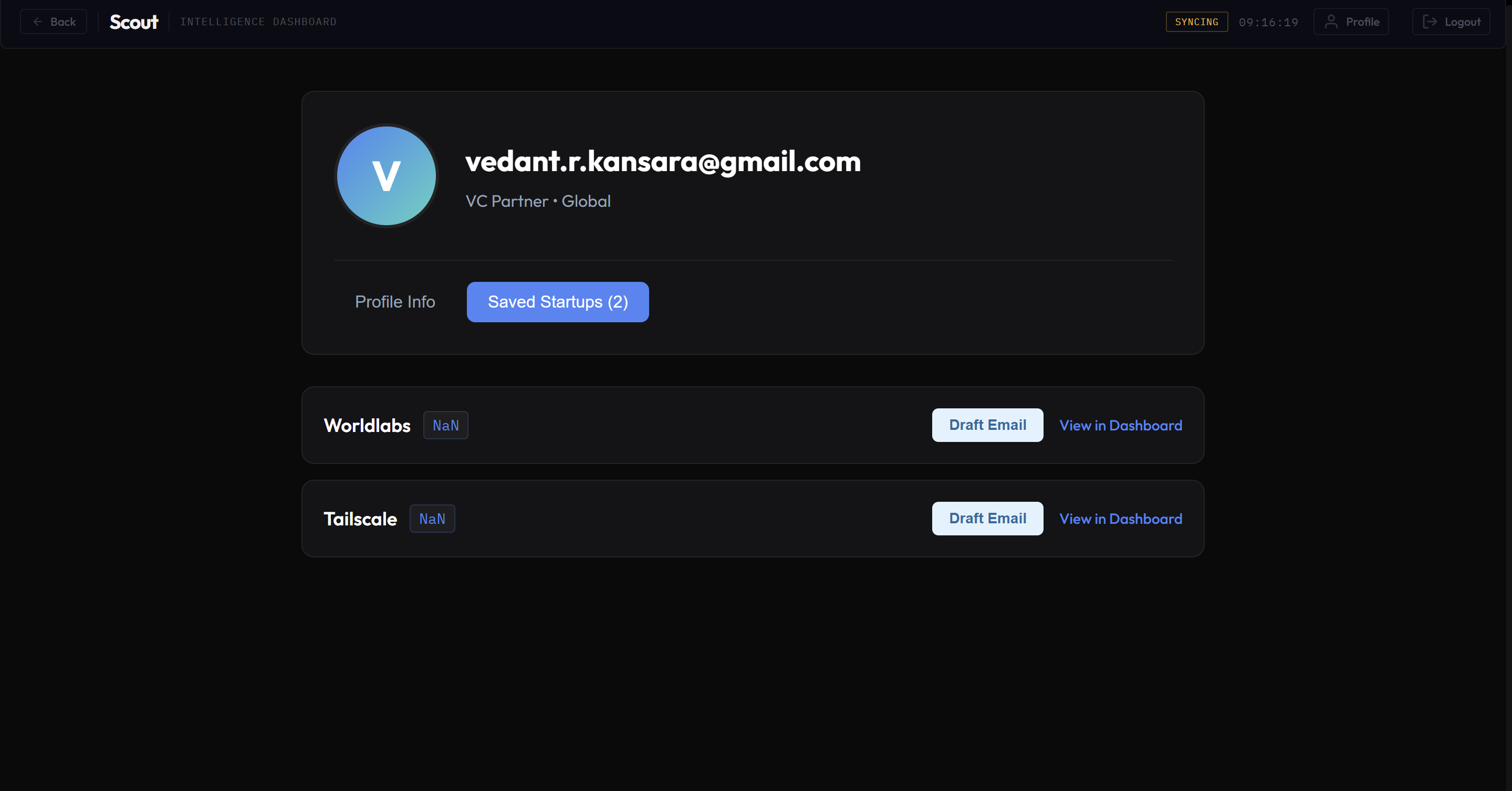
Profile Saved Startups
-
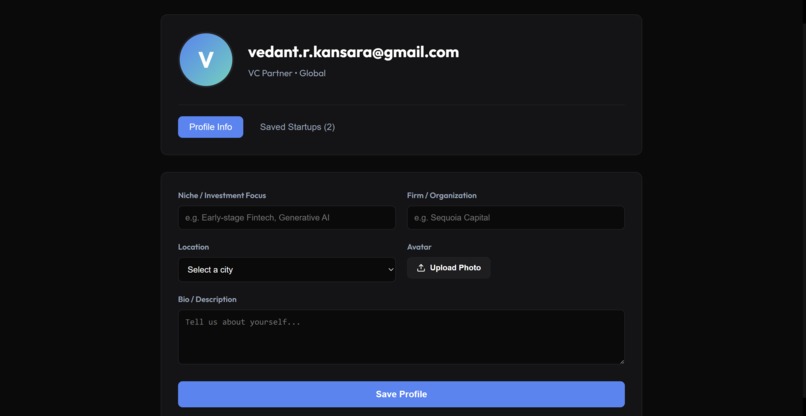
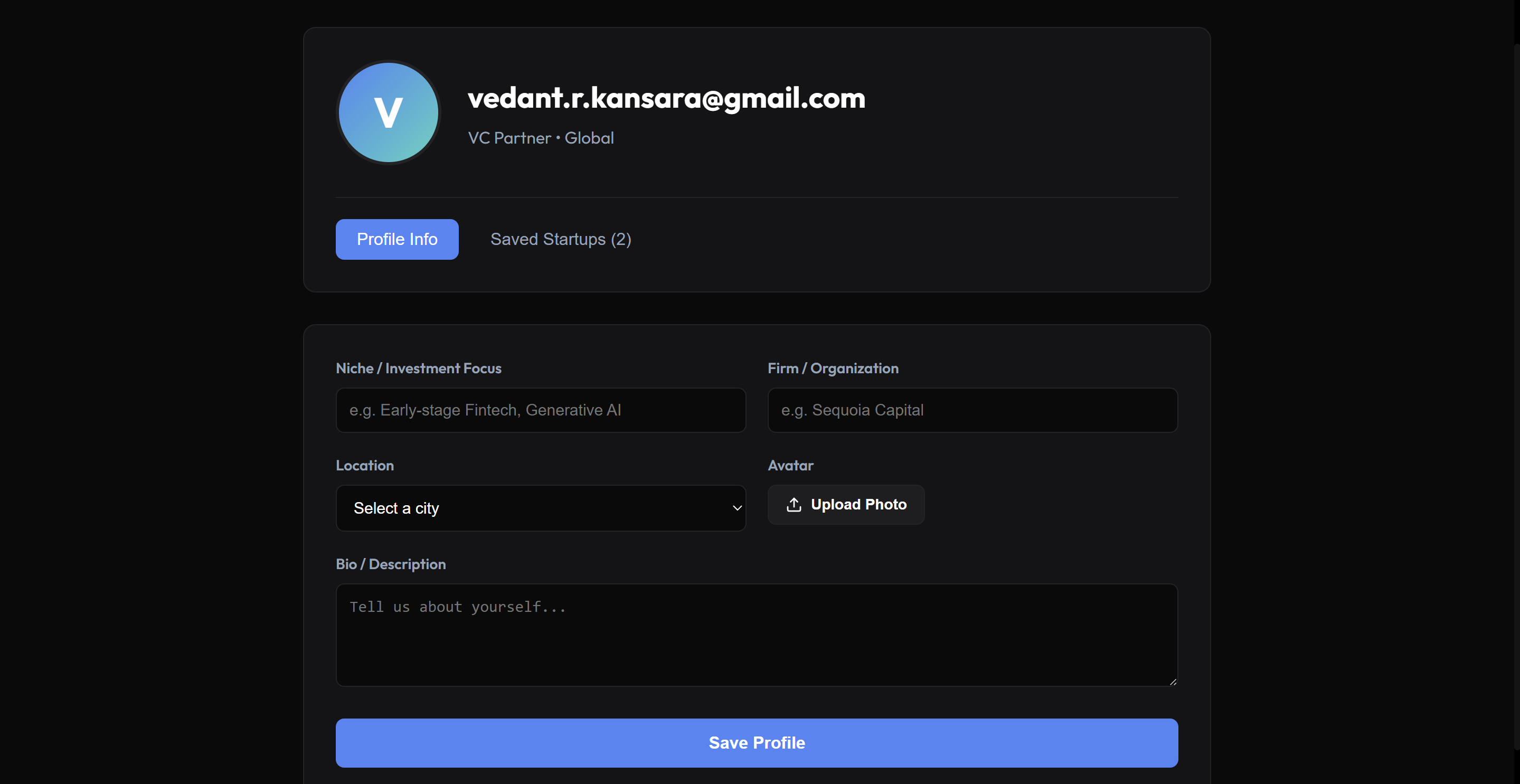
Profile Overview
-
Login Page
-
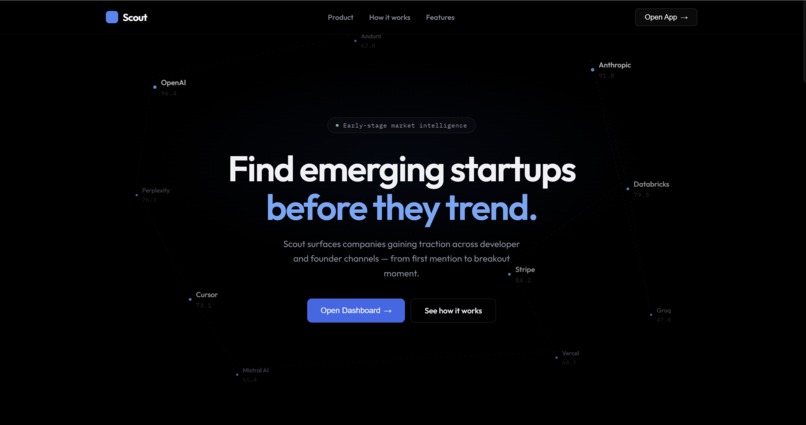
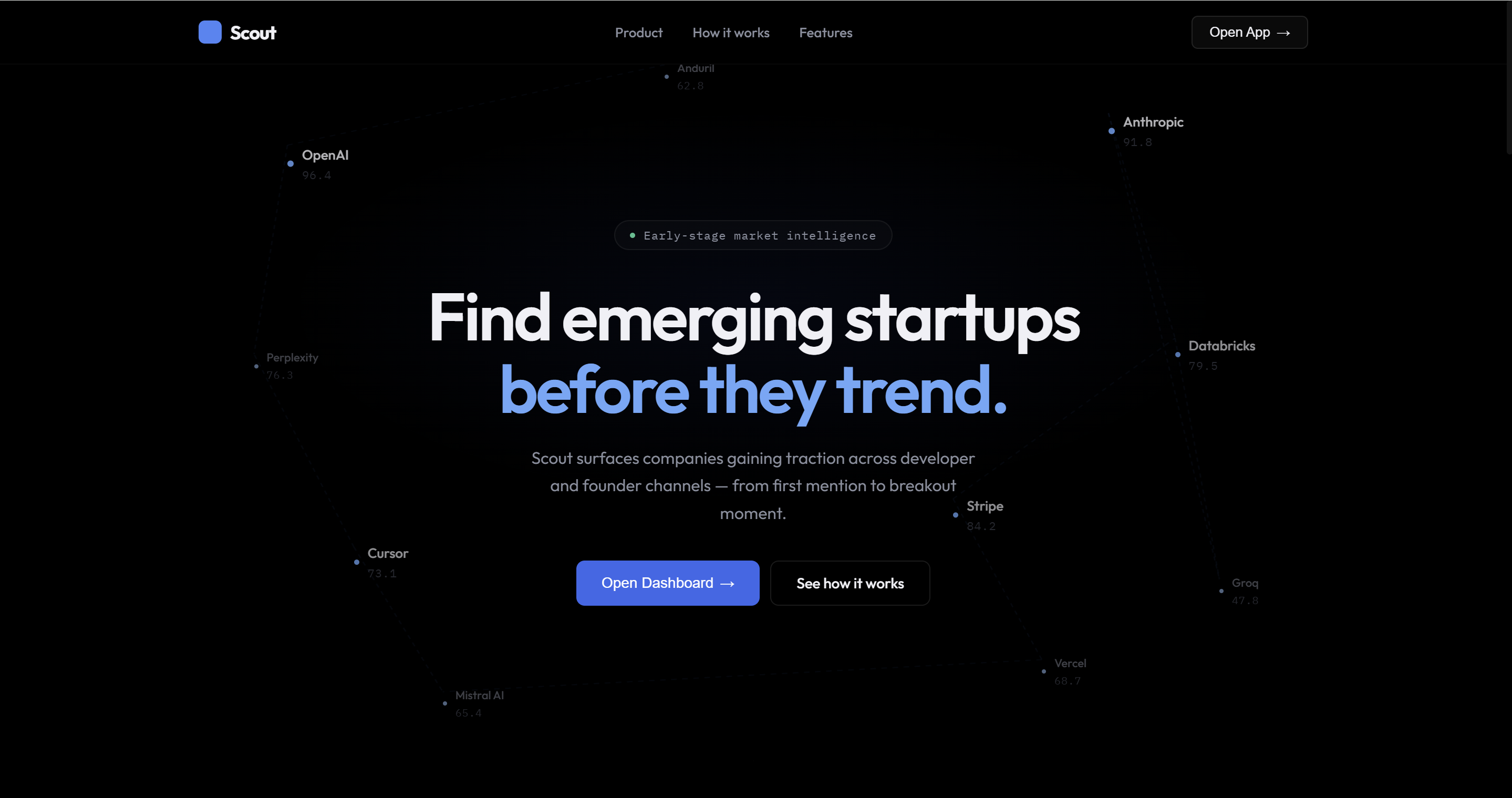
Landing Page
-
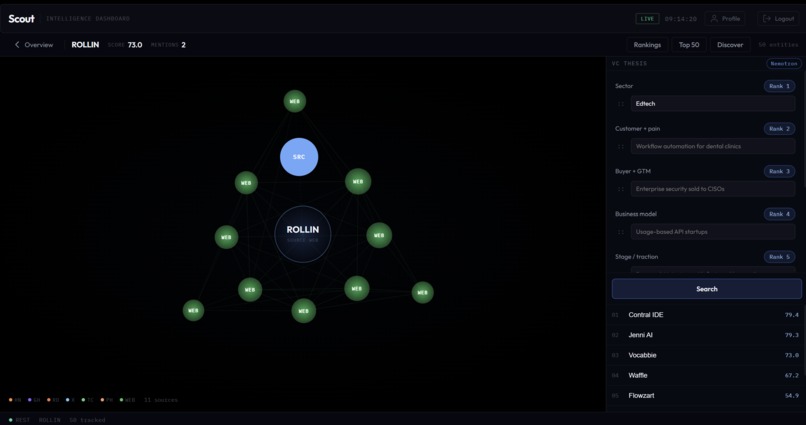
Example Node Web For Startup
Inspiration
Our inspiration came from two places. First, our team has been deeply immersed in the startup world through building our own projects, attending pitch competitions, and visiting business expositions. Across all of these experiences, one question kept coming up: how do you actually identify the most promising ideas early?
Second, we've closely followed the startup space on social media and noticed something compelling: online discussion and community hype seem to correlate with a project's success. We also noticed a growing trend of founders "building in public" by routinely sharing their progress across platforms. That kind of authentic, real-time signal felt both underutilized and incredibly promising. Scout was created from the idea of synthesizing that discussion into something actionable.
What it does
Scout gives venture capital investors early insight into emerging startups by converting niche tech forum discussions into quantifiable signals. Additionally, it lets VC users query specific niches they care about, using RAG-powered AI to surface the most relevant matches instantly.
How we built it
We split development across three core pillars:
- Webscraping We identified which platforms contained the richest startup-related discussions and built scrapers to access that data reliably. (Vedant)
- Niche Search We built a query system that lets users search by interest area, integrating NVIDIA Nemotron's RAG functionality to intelligently surface relevant startup matches from our scraped data. (Felix)
- UI/UX & Ranking Engine We designed an interface tailored for VC workflows, built out individual startup profile views, and developed the signal-scoring algorithm that powers our rankings and delivers insight. (Parth)
Challenges we ran into
One of our earliest hurdles was determining which platforms we could actually scrape effectively. Many of the most relevant communities are protected by paywalls, restrictive terms of service, or simply don't offer accessible APIs, so we had to be strategic about where we sourced our data.
The other major challenge was developing our ranking algorithm. Deciding which signals matter most, and how much, required significant experimentation. Is a mention on Product Hunt worth more than one on Hacker News? How do we weigh interactions across different platforms to produce rankings that are genuinely meaningful? We iterated extensively on our statistical models to arrive at results that felt accurate and useful.
Accomplishments that we're proud of
Our biggest accomplishment is shipping a fully working product within the hackathon timeframe. Users can browse a live Top 50 ranking of the most promising startups we've surfaced, and can run niche queries that return relevant, ranked results powered by our RAG pipeline. Beyond the product itself, we're proud of how much we grew technically, diving into webscraping infrastructure, integrating Nemotron, and advancing our UI design skills, all under tight time constraints.
What we learned
Building Scout gave our team meaningful experience across several domains. On the technical side, we deepened our skills in webscraping and AI integration, both of which were central to gathering data and extracting insights at scale. We also grew as UI developers, working across React, HTML, and CSS to deliver a polished product. On a personal level, two of our three team members were participating in their first hackathon, so we also learned how to build fast and smart, leaning on AI tools to accelerate our workflow without sacrificing quality.
What's next for Scout
The immediate next step is getting Scout in front of real investors. We want to conduct user testing with VCs to validate our approach, gather feedback on what signals and features matter most to them, and iterate based on what we learn. Ultimately, Scout is only as valuable as the decisions it helps investors make, and we're excited to find out how it holds up in the real world.


Log in or sign up for Devpost to join the conversation.