-
-
Scout QA
-
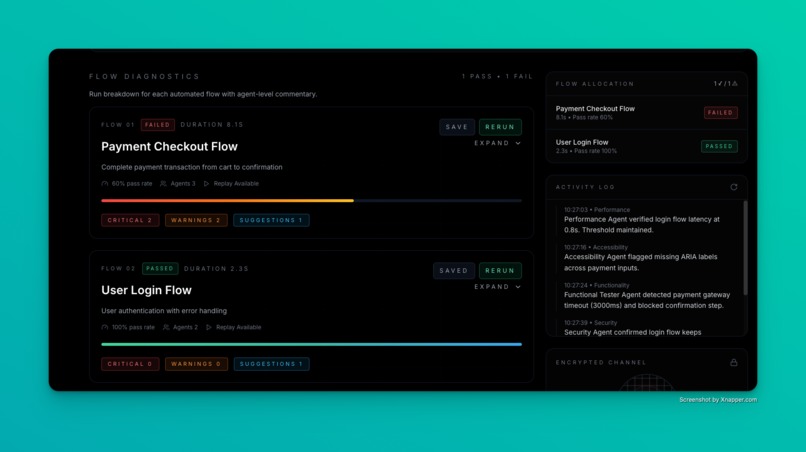
reusable-test-flows
-
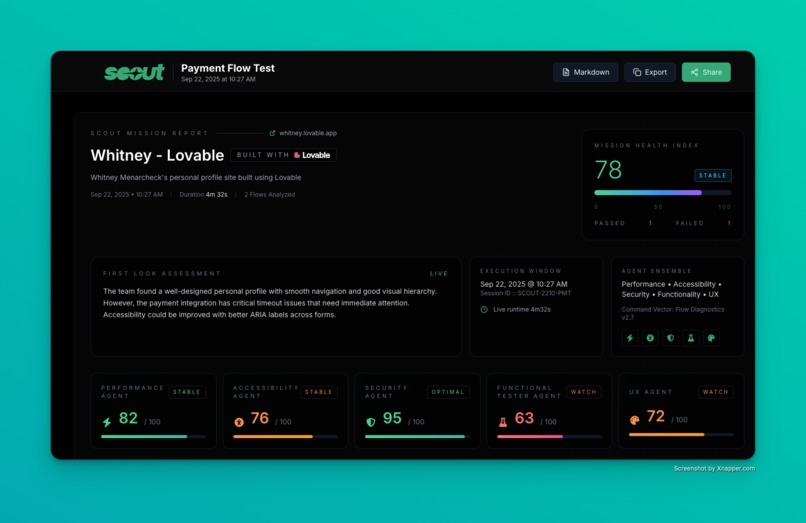
Agent-report
-
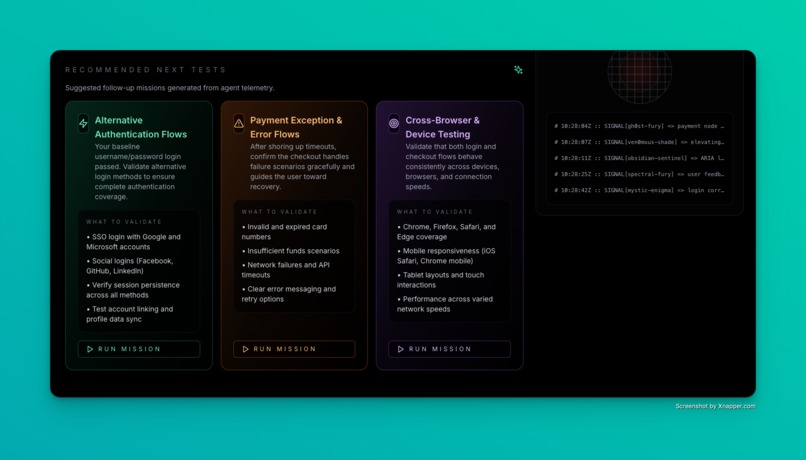
suggested-next-step
About the project
Inspiration
The explosion of AI coding tools like Cursor, Replit, and Amazon Q has democratized software development - anyone can ship an app in hours. But there's a critical gap: quality assurance hasn't kept pace with AI-powered development speed.
Traditional testing tools are built for enterprise QA teams, not for builders moving at AI velocity. We saw developers and no-code creators shipping fast but struggling to catch bugs before users did. We asked ourselves: What if testing could be as intelligent and fast as the AI tools building the apps?
Scout was born from this vision - an AI Quality Companion that matches the speed and style of modern development.
What it does
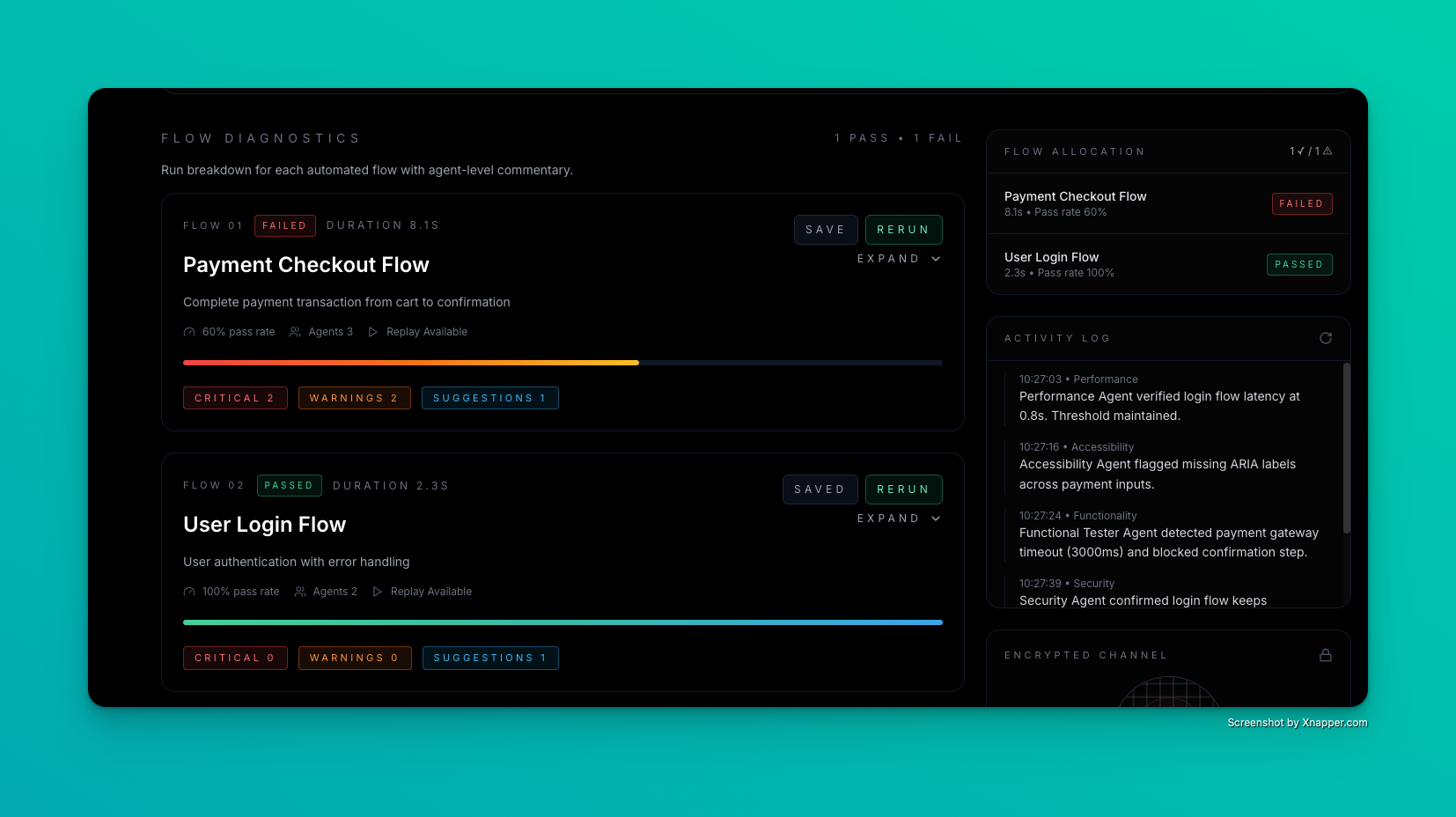
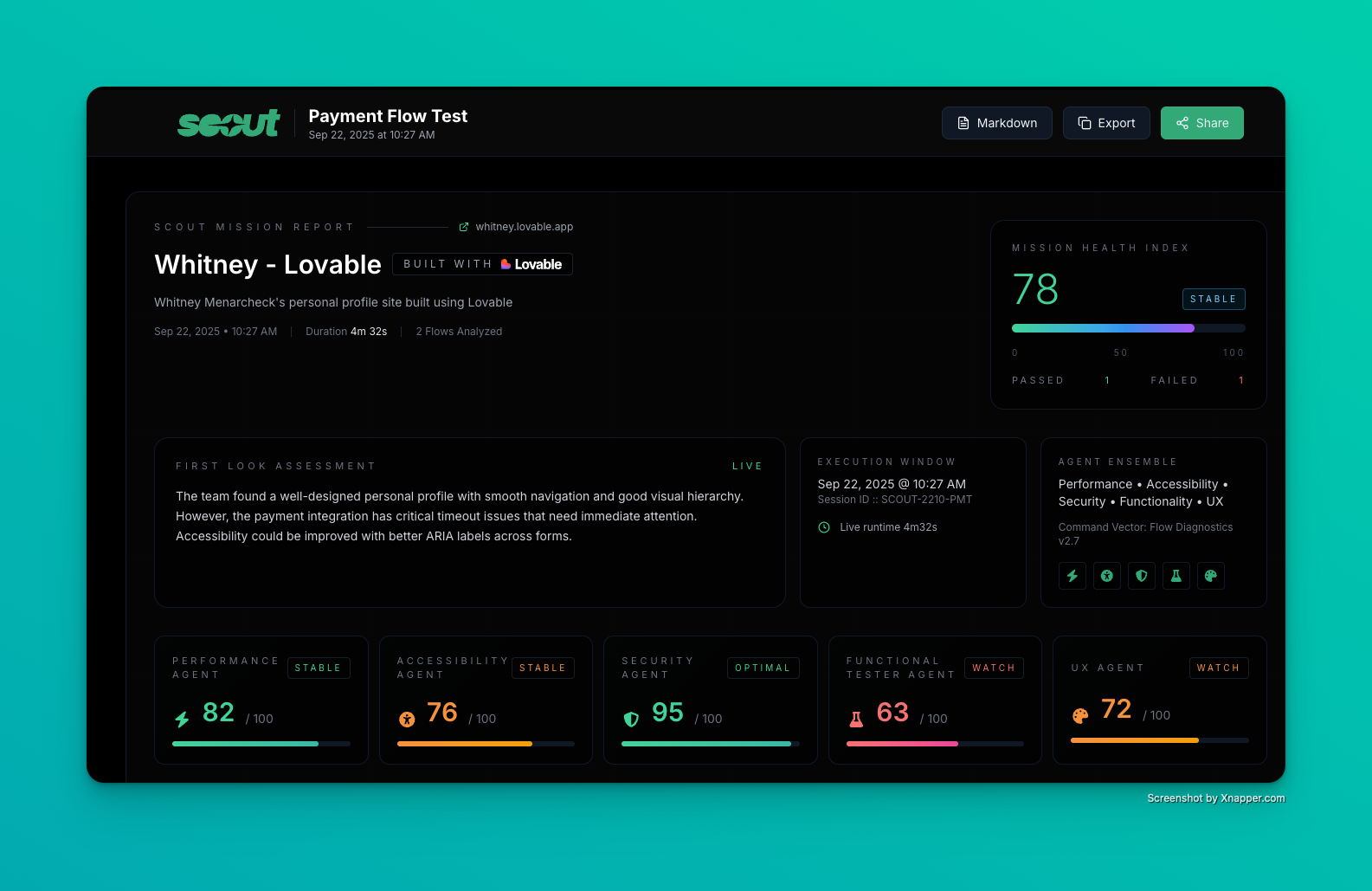
Scout is an AI-powered testing companion for applications built with AI coding tools and no-code platforms. Here's how it works:
- 🚦Traffic Light Reports: Visual, intuitive test results anyone can understand - green means go, yellow means caution, red means stop.
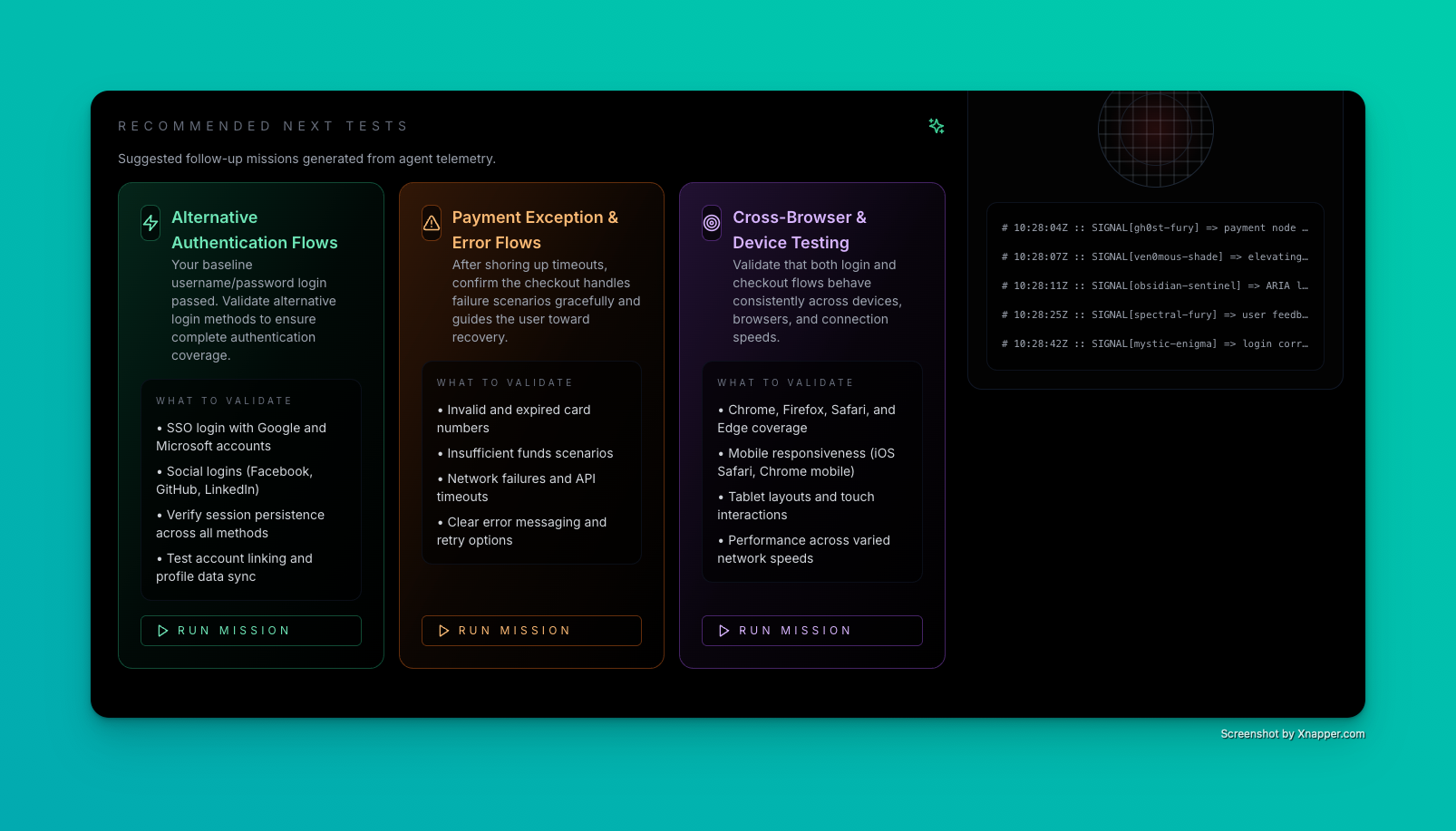
- 🤖 AI Fix Prompts: When issues are found, Scout generates natural language prompts you can paste directly into your AI coding tool to fix them instantly.
- 📊 Evolution Tracking: Track how your application changes over time and catch regressions automatically as you iterate.
- 🔄 Platform-Agnostic Testing: Works with apps built on Replit, Cursor, Lovable, Amazon Q, and more - if you can ship it, Scout can test it. Scout doesn't replace manual QA - it's a companion that scales testing for teams building at AI speed.
How we built it
Core AWS Services:
- Amazon Bedrock: Powers Scout's intelligent test generation and analysis
- Amazon Nova Act: Enables Scout to interact with applications like a real user
- AWS Lambda: Serverless execution for scalable test runs
- Amazon S3: Stores test results, screenshots, and evolution history
Architecture:
- Platform-agnostic web testing engine that understands modern application patterns
- Natural language processing to convert test results into actionable insights
- Visual regression detection to catch UI issues automatically
- Real-time feedback loop between testing and AI coding tools
- Designed with future CLI and MCP (Model Context Protocol) integration in mind for deeper AI tool workflows
Challenges we ran into
- Understanding AI-Generated Code Patterns: AI coding tools produce unique patterns that traditional testing tools miss. We built custom heuristics to understand and test these effectively.
- Speed vs. Thoroughness: Balancing comprehensive testing with the need to give feedback in seconds, not minutes. We optimized for the most critical checks first.
- Making Testing Accessible: QA jargon confuses non-technical builders. We redesigned everything around intuitive concepts (Traffic Lights, not pass/fail rates).
- Platform Diversity: Every AI coding tool and no-code platform works differently. We architected Scout to be truly platform-agnostic while still providing deep insights.
- Native AI Tool Integration: Designing an architecture that can evolve from web-based to deeply integrated CLI/MCP experiences for tools like Amazon Q and Kiro.
Accomplishments that we're proud of
✨ Vietnamese Innovation on Global Stage: Built by a Vietnamese team, showcasing what's possible when you combine deep testing expertise with cutting-edge AWS AI services. 🎯 Truly AI-Native Design: Not just "AI features added" but built from the ground up for the AI development era. 🌍 Platform-Agnostic Success: Works seamlessly across multiple AI coding platforms without requiring custom integrations. 💡 Intuitive for Everyone: No QA expertise needed - developers, no-code builders, and QA teams all find value immediately. 🔮 Future-Ready Architecture: Designed to scale from web UI to CLI and MCP integrations for next-generation AI coding workflows.
What we learned
- The AI development ecosystem moves incredibly fast - building for it requires flexibility and rapid iteration Simplicity is powerful - reducing complex test results to Traffic Lights made testing accessible to entirely new audiences
- AWS Bedrock + Nova Act is a game-changing combination for building agentic applications The future of testing is collaborative - AI companions working alongside humans, not replacing them Model Context Protocol (MCP) represents the future of AI tool integration - building with this in mind from day one is crucial.


Log in or sign up for Devpost to join the conversation.