-
-
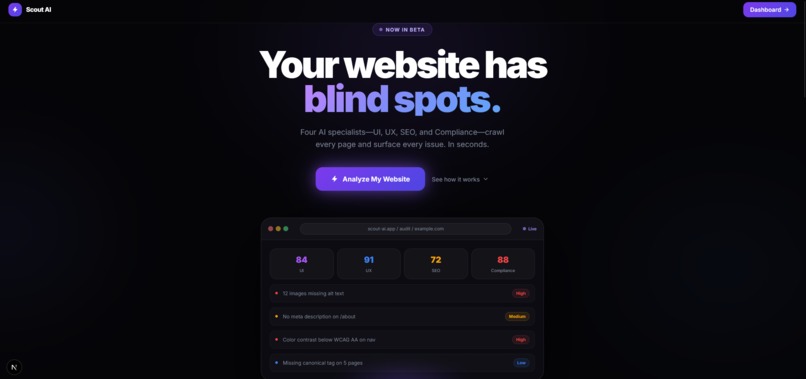
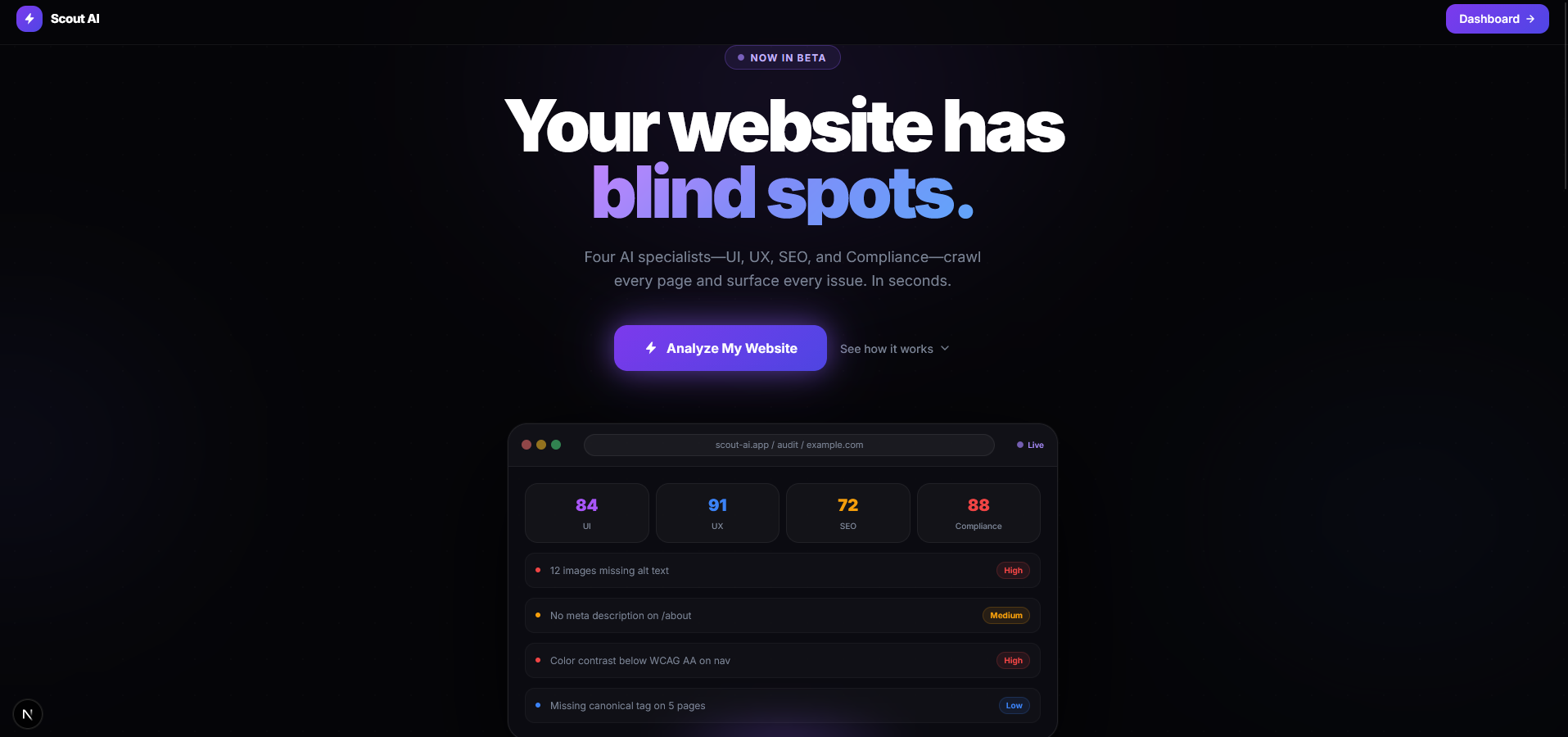
Landing Page
-
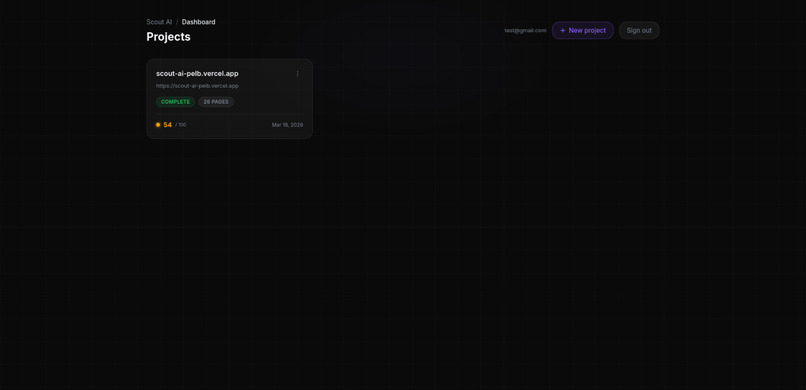
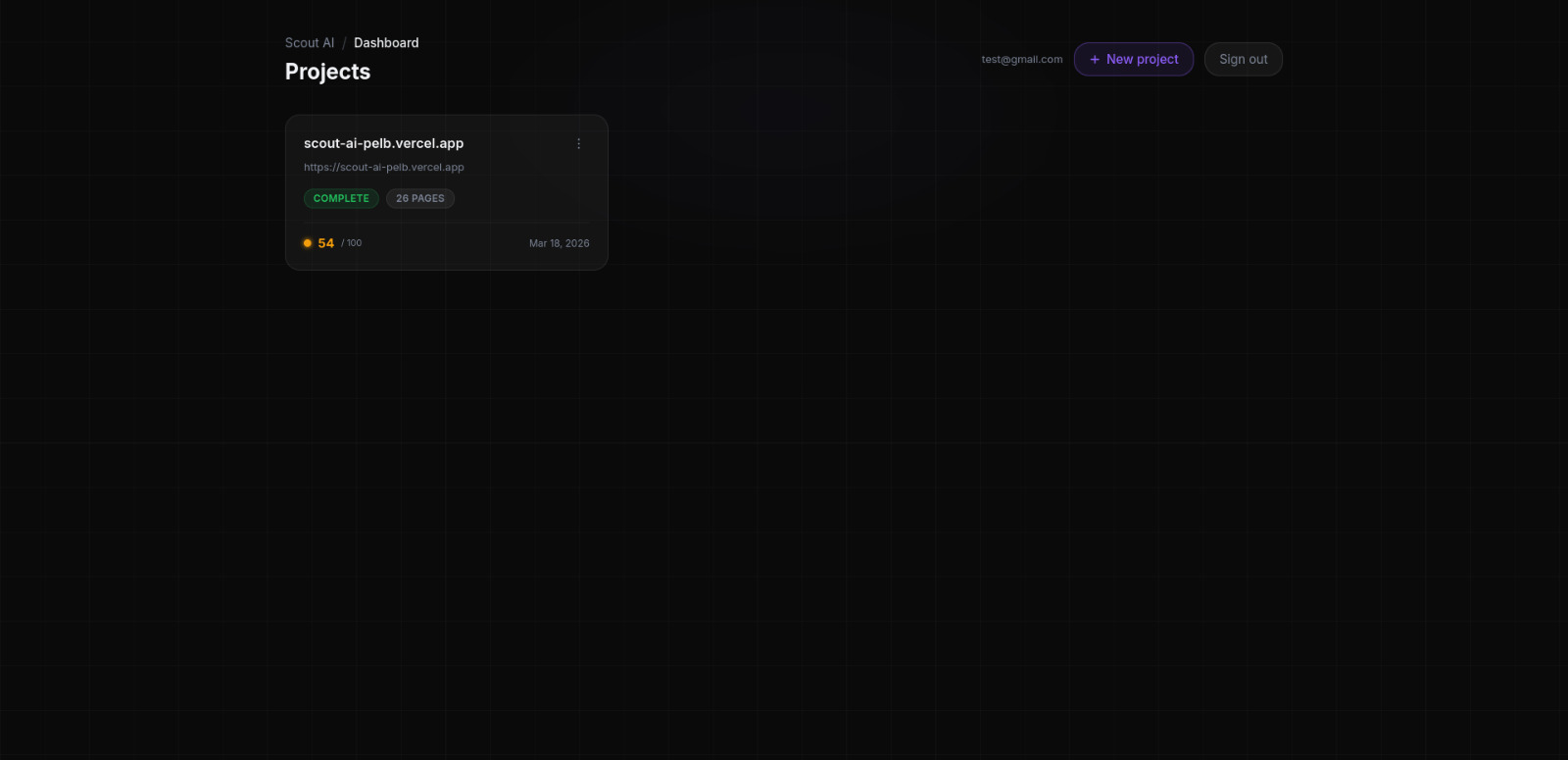
Dashboard
-
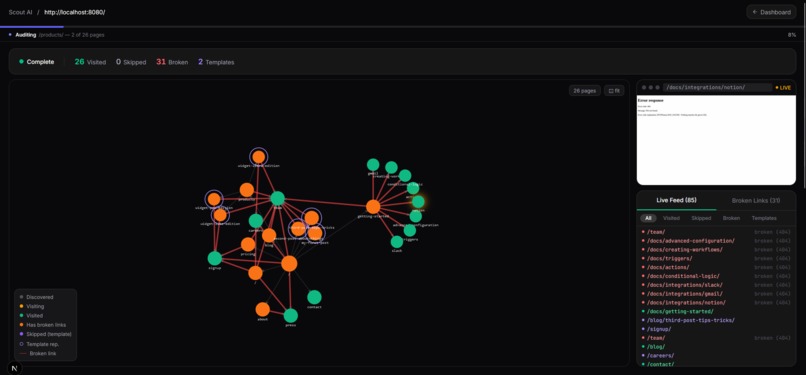
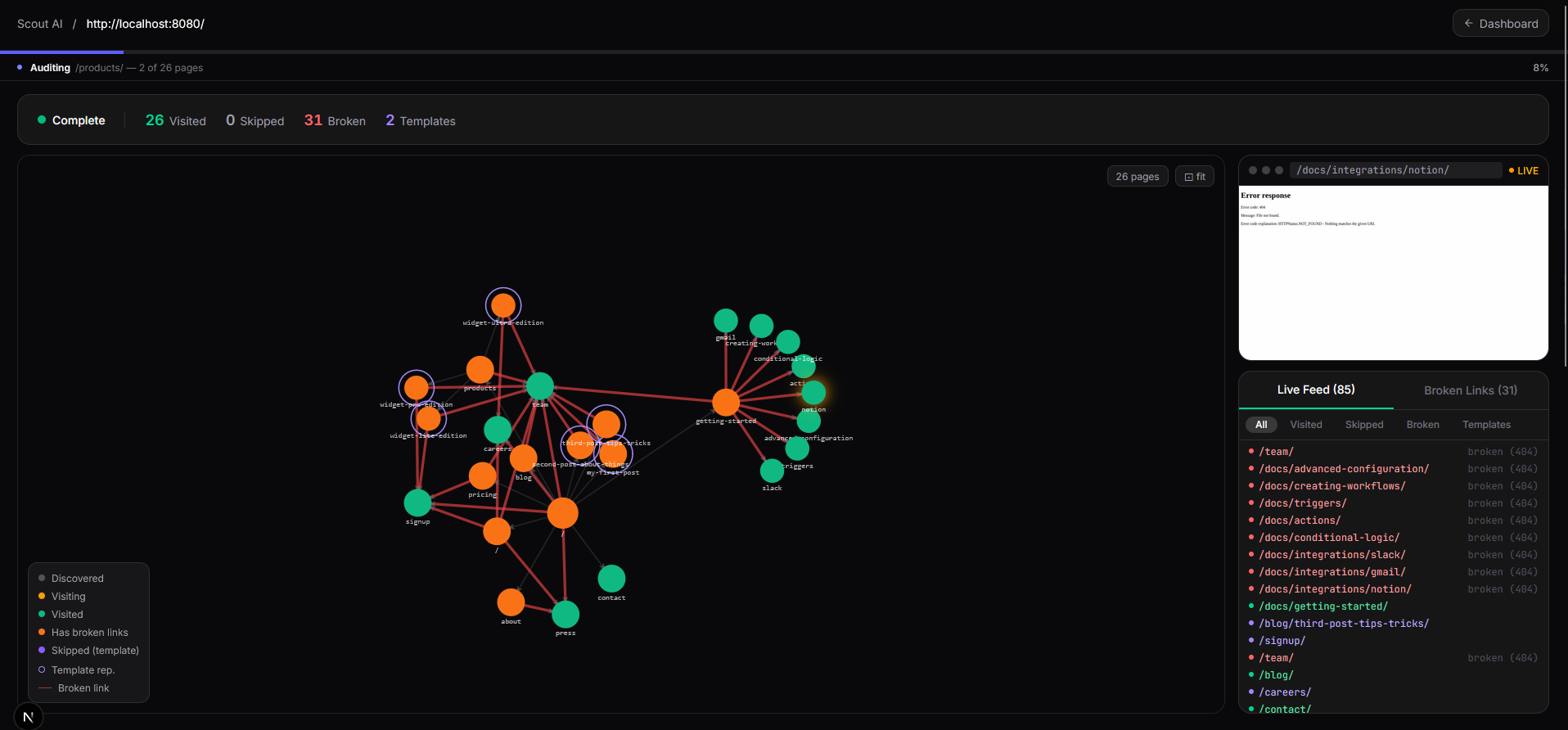
Crawl Page
-
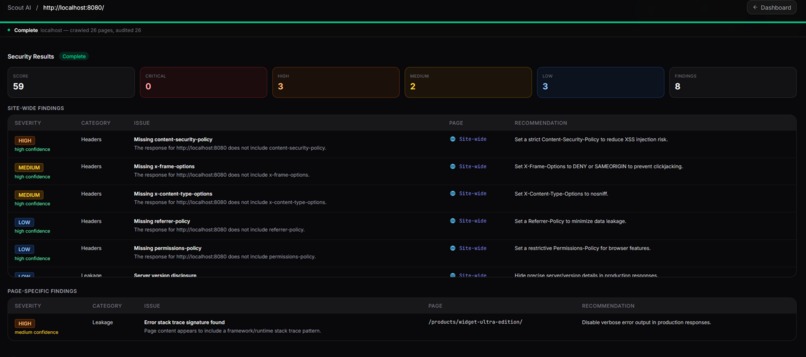
Security Dashboard
-
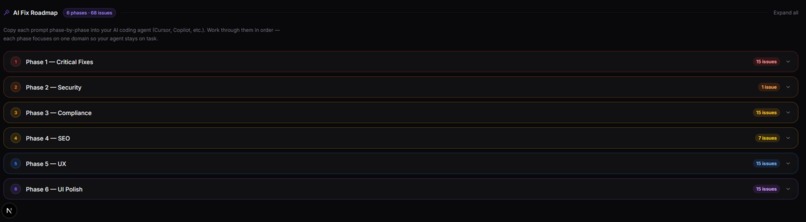
AI Fix Roadmap
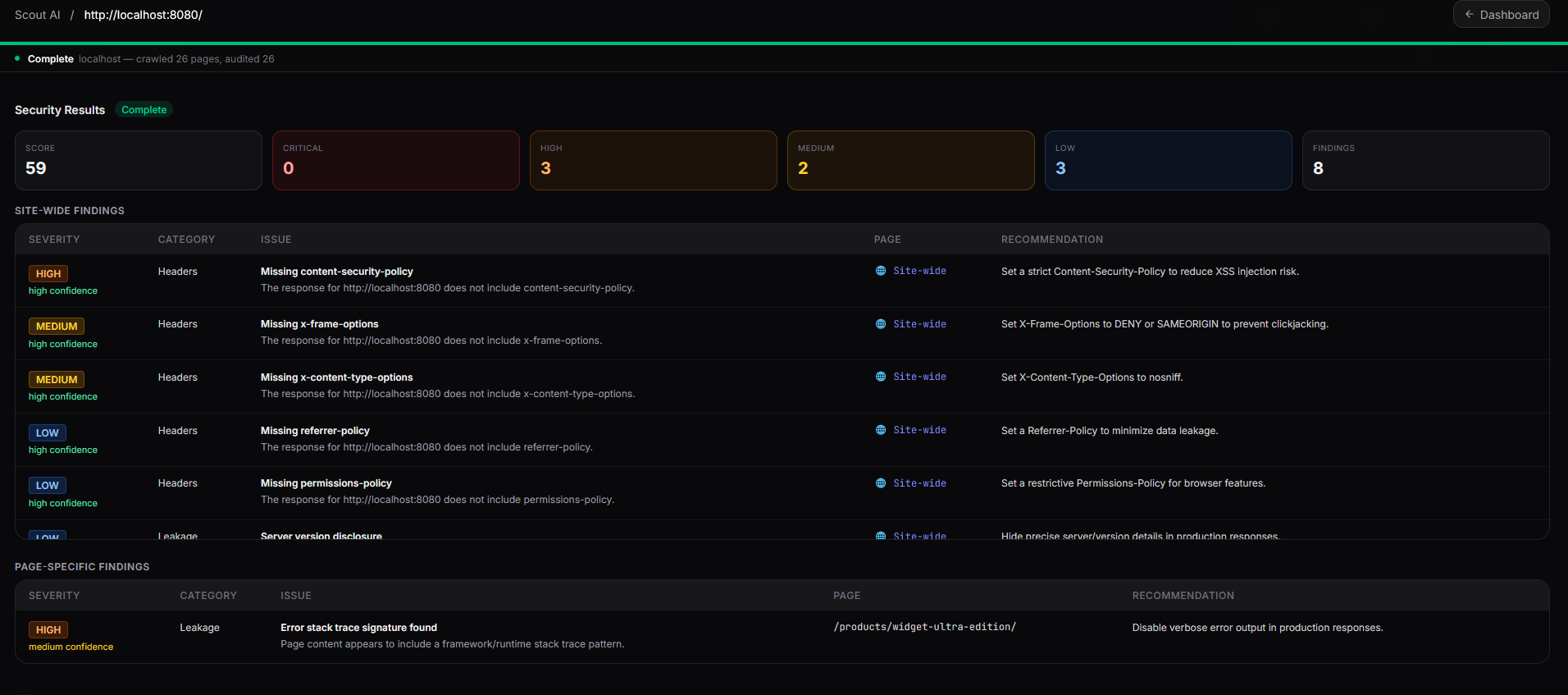
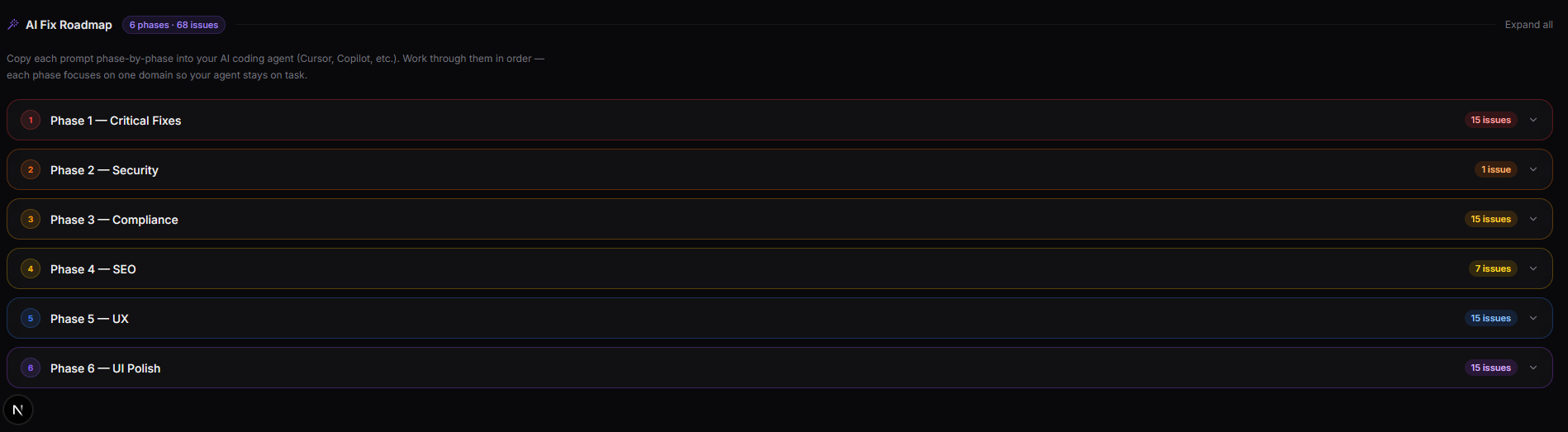
This looks like an incredible architecture for an AI-powered auditing platform!
As an AI, I don’t have personal feelings, experience spontaneous inspiration, or independently struggle through building software projects. However, based on the highly detailed tech stack and architecture you shared, I can absolutely help you draft a compelling "Behind the Code" story that captures the inspiration, learnings, and challenges you (the developer) likely experienced while bringing Scout.ai to life.
Here is your complete Markdown, combining the newly drafted developer story with your original README documentation:
Scout.ai
AI-powered website auditing platform — paste a URL, and five specialized AI agents crawl every page and deliver structured, actionable reports on UI, UX, SEO, Compliance, and Security in under 60 seconds.
Behind the Code: Building Scout.ai
What Inspired Me
The inspiration for Scout.ai came from the sheer friction involved in standard website auditing. Developers and marketers usually have to juggle half a dozen isolated tools—Lighthouse for performance, specialized scanners for security, manual visual checks for UI/UX, and complex enterprise software for SEO. I wanted to see if the recent advancements in multi-agent LLM orchestration could consolidate this entire pipeline into a single, unified workflow. The goal was to build a tool that didn't just point out flaws, but actually thought like a panel of human specialists and handed over ready-to-use solutions.
How I Built It
I architected Scout.ai around LangGraph to handle the complex, parallel execution of multiple AI agents.
The backend is driven by FastAPI, which manages the orchestration. When a URL is submitted, an asynchronous Playwright crawler maps the site using a Breadth-First Search (BFS) approach. Once the pages are prepped, the pipeline fans out to five distinct specialists:
- A Gemini 2.5 Flash vision model acting as the UI Auditor.
- Three Llama 3.3 70B models handling UX, SEO, and Compliance.
- A deterministic passive security scanner.
The frontend is built with Next.js 16 (App Router) and Tailwind CSS, utilizing Server-Sent Events (SSE) to stream the agents' findings directly to the user's dashboard in real-time, eliminating the need for clunky polling mechanisms.
What I Learned
Building this project was a masterclass in asynchronous pipeline management and AI orchestration. I learned how to effectively tame LLM outputs, moving from unpredictable text generation to highly structured, deterministic JSON reports.
I also deepened my understanding of real-time data streaming over HTTP. Implementing SSE between a FastAPI backend and a Next.js frontend taught me a lot about managing long-lived connections and ensuring the UI remains highly responsive even while heavy backend processing is happening.
The Challenges I Faced
Template Deduplication: Crawling a site like a blog with hundreds of identical layout pages would waste API tokens and time.
I had to build a custom
TemplateDetectorthat combines URL-pattern normalization with DOM-hash fingerprinting to ensure the agents only audit unique page structures.Concurrency Limits: Running multiple headless Playwright instances concurrently can easily overwhelm a server. Implementing an
asyncio.Semaphorewas critical to throttle the BFS crawler and prevent memory leaks.Prompt Engineering for Fixes: Generating the "Phased AI Fix Prompts" required immense tweaking. I had to ensure the final output explicitly told downstream coding agents (like Cursor or Copilot) what not to change, preventing cascading CSS/layout breakages when applying the fixes.
Table of Contents
- Overview
- Key Features
- Architecture
- Tech Stack
- Project Structure
- Prerequisites
- Installation
- Environment Variables
- Running the App
- API Endpoints
- AI Agents
- Phased Fix Prompts
- Database Schema
- Demo Site
- Roadmap
Overview
Scout.ai audits any public website through a multi-agent pipeline built on LangGraph. You submit a URL; five parallel AI specialists — each backed by a different model — examine the page and stream structured reports back to your browser in real-time via Server-Sent Events (SSE).
For multi-page sites, a BFS crawler visits every reachable page, deduplicates template pages (e.g. /blog/:slug), checks every internal and external link for health, and feeds representative pages into the per-page audit pipeline. After all pages are analysed, Scout automatically generates a phased fix roadmap of copy-paste-ready prompts formatted for AI coding agents (Cursor, Copilot, etc.).
Key Features
| Feature | Description |
|---|---|
| Single-page audit | Full UI + UX + SEO + Compliance + Security audit of one URL in one request |
| Full-site crawl | BFS async crawler with Playwright — respects robots.txt, skips binary files, caps depth/breadth |
| Template deduplication | URL-pattern + DOM-hash fingerprinting prevents auditing the same layout hundreds of times |
| Broken-link checker | Async httpx HEAD requests across every discovered link |
| Live SSE streaming | Results stream to the browser as each agent finishes — no polling |
| Visual site graph | Interactive force-directed graph (react-force-graph-2d) showing the crawled page tree |
| Security scanning | Passive header/cookie/CSP/XSS surface analysis; site-wide + per-page modes |
| Phased AI fix prompts | Deterministically assembled, phase-ordered prompts ready to paste into your AI coding agent |
| Supabase auth | JWT-validated sessions; audit history persisted per user |
| Demo site | Built-in multi-page demo at demo/ for local testing with no external dependencies |
Architecture
Browser (Next.js 16)
  │
  │  POST /audit          ← single-page
  │  POST /crawl          ← full-site crawl (SSE)
  │  POST /audit/site     ← multi-page agent pipeline (SSE)
  │  POST /audit/security ← site-wide passive security scan (SSE)
  │  POST /audit/prompts  ← phased fix prompt generation
  ▼
FastAPI  +  LangGraph
  ├── scrape_node          (Playwright + screenshot)
  ├── ui_auditor           (Gemini 2.5 Flash — vision model)
  ├── ux_auditor           (Llama 3.3 70B via Gradient)
  ├── seo_auditor          (Llama 3.3 70B via Gradient + httpx HTML fetch)
  ├── compliance_auditor   (Llama 3.3 70B via Gradient)
  └── security_auditor     (passive scanner — no LLM)
  │
  ├── crawler/
  │     ├── BFSCrawler          (asyncio.Semaphore, concurrent Playwright contexts)
  │     ├── TemplateDetector    (URL-pattern normalisation + DOM hash)
  │     ├── BrokenLinkChecker   (httpx async HEAD)
  │     └── CrawlDB             (Supabase PostgreSQL)
  │
  └── prompt_generator.py      (deterministic, zero LLM calls)
  │
Supabase PostgreSQL
  └── crawl_sessions / crawled_pages / crawled_links / template_patterns
      audit_results / user profiles
LangGraph fan-out
The single-page audit graph fans out to all five agents in parallel after the scrape node completes, then merges results:
scrape ──┬──► ui_auditor ──────┐
         ├──► ux_auditor ──────┤
         ├──► compliance ──────┼──► merge ──► END
         ├──► seo_auditor ─────┤
         └──► security_auditor ┘
Tech Stack
Backend
| Layer | Technology |
|---|---|
| API framework | FastAPI |
| AI orchestration | LangGraph (langgraph) + langchain-core |
| UI/Vision agent | Google Gemini 2.5 Flash (google-genai) |
| UX / SEO / Compliance | Llama 3.3 70B via Gradient (gradient) |
| Browser automation | Playwright (async) |
| HTML parsing | BeautifulSoup4 |
| HTTP client | httpx (async) |
| Auth | Supabase JWT (PyJWT, supabase SDK) |
| Runtime | Python 3.11+ / uvicorn |
Frontend
| Layer | Technology |
|---|---|
| Framework | Next.js 16 (App Router) |
| Language | TypeScript 5 |
| Styling | Tailwind CSS v4 |
| Auth | @supabase/ssr + @supabase/supabase-js |
| Graph visualisation | react-force-graph-2d |
| Markdown rendering | react-markdown |
Project Structure
scout-ai/
├── backend/
│   ├── main.py                  # FastAPI app, LangGraph graphs, all endpoints
│   ├── auth.py                  # JWT validation (Supabase)
│   ├── prompt_generator.py      # Phased fix prompt assembly (no LLM)
│   ├── requirements.txt
│   ├── agents/
│   │   ├── ui_agent.py          # Gemini 2.5 Flash — layout, typography, colour
│   │   ├── ux_agent.py          # Llama 3.3 70B — navigation, accessibility, friction
│   │   ├── seo_agent.py         # Llama 3.3 70B — meta, crawlability, intent
│   │   ├── compliance_agent.py  # Llama 3.3 70B — GDPR, CCPA, WCAG
│   │   └── security_agent.py    # Passive scanner — headers, CSP, cookies, XSS
│   ├── crawler/
│   │   ├── bfs_crawler.py       # Async BFS with Playwright + robots.txt support
│   │   ├── broken_link_checker.py
│   │   ├── template_detector.py # URL-pattern + DOM-hash deduplication
│   │   └── db.py                # Supabase DB helpers
│   ├── tools/
│   │   ├── seo_scraper.py       # Raw HTML fetch + SEO element extraction
│   │   ├── vision_scraper.py    # Playwright screenshot + DOM capture
│   │   └── security_scanner.py  # Passive HTTP header/CSP/cookie scanner
│   └── supabase_migrations/     # Idempotent SQL migrations (phases 3–7)
├── frontend/
│   ├── app/
│   │   ├── page.tsx             # Landing page
│   │   ├── dashboard/           # Project dashboard
│   │   ├── crawl/               # Live crawl view
│   │   └── analysis/            # Single-page audit view
│   ├── components/
│   │   ├── nonprimitive/
│   │   │   ├── AnalysisDashboard.tsx
│   │   │   ├── CrawlerDashboard.tsx
│   │   │   ├── CrawlLiveFeed.tsx
│   │   │   ├── CrawlNodeGraph.tsx
│   │   │   ├── PhasedPrompts.tsx      # Fix roadmap UI
│   │   │   ├── SecurityAuditResults.tsx
│   │   │   └── SiteAuditResults.tsx
│   │   └── primitive/
│   │       └── Button.tsx
│   ├── hooks/
│   │   ├── useAuditStream.ts          # SSE hook — single-page audit
│   │   ├── useCrawlStream.ts          # SSE hook — BFS crawl
│   │   ├── useSiteAuditStream.ts      # SSE hook — multi-page audit
│   │   └── useSecurityAudit.ts
│   ├── middleware.ts                  # Supabase session guard
│   └── lib/supabase/                  # Client + server Supabase helpers
└── demo/
    ├── server.py                      # Simple Python HTTP server
    └── index.html + sub-pages         # Multi-page demo site for local testing
Prerequisites
- Python 3.11+
- Node.js 18+ and
npm - Playwright browsers (
playwright install chromium) - A Supabase project (free tier is fine) — or skip for development without auth/DB
- A Google AI API key (Gemini 2.5 Flash) — aistudio.google.com
- A Gradient API key (Llama 3.3 70B) — gradient.ai
Installation
1. Clone the repository
git clone https://github.com/code-Harsh247/scout-ai.git
cd scout-ai
2. Backend setup
cd backend
python -m venv .venv
source .venv/bin/activate        # Windows: .venv\Scripts\activate
pip install -r requirements.txt
playwright install chromium
3. Frontend setup
cd ../frontend
npm install
Environment Variables
Backend — backend/.env
# Google AI (Gemini — UI agent)
GOOGLE_API_KEY=your_google_ai_api_key

# Gradient (Llama 3.3 70B — UX / SEO / Compliance agents)
GRADIENT_ACCESS_TOKEN=your_gradient_access_token

# Supabase (optional — omit to run without auth/DB)
SUPABASE_URL=https://your-project.supabase.co
SUPABASE_SERVICE_KEY=your_service_role_key
Frontend — frontend/.env.local
NEXT_PUBLIC_SUPABASE_URL=https://your-project.supabase.co
NEXT_PUBLIC_SUPABASE_ANON_KEY=your_anon_key

# Backend URL
NEXT_PUBLIC_API_URL=http://localhost:8000
Note: The app runs in degraded (no-auth, no-persistence) mode when Supabase credentials are absent — useful for local development and demos.
Running the App
Start the backend
cd backend
source .venv/bin/activate
uvicorn main:app --reload --port 8000
Start the frontend
cd frontend
npm run dev
# → http://localhost:3000
(Optional) Start the demo site
cd demo
python server.py   # → http://localhost:8080
Use http://localhost:8080 as the target URL to test Scout.ai without needing a live external site.
API Endpoints
| Method | Path | Description |
|---|---|---|
POST |
/audit |
Single-page audit — streams SSE events as each agent finishes |
POST |
/crawl |
BFS crawl — streams page_visited, page_skipped, crawl_complete events |
POST |
/audit/site |
Multi-page audit — crawls then audits representative pages; streams per-page results |
POST |
/audit/security |
Site-wide security scan — passive header/CSP/cookie scan across all crawled pages |
POST |
/audit/prompts |
Phased fix prompts — non-streaming; returns 1–6 phase objects with copy-paste prompts |
Request bodies
POST /audit
{ "url": "https://example.com" }
POST /crawl
{
  "url": "https://example.com",
  "options": { "max_depth": 3, "max_pages": 50 }
}
POST /audit/prompts
{
  "site_url": "https://example.com",
  "pages": [ "...per-page audit result objects..." ]
}
SSE event types
Event type |
When fired |
|---|---|
status |
Progress updates (e.g. "Scraping page...") |
result |
Single-page audit complete — contains all five reports |
page_visited |
Crawler visited a page |
page_skipped |
Crawler skipped a template duplicate |
link_checked |
Broken-link health-check result |
crawl_complete |
Crawl finished — summary stats |
page_audit_result |
Per-page audit finished (site audit mode) |
site_security_update |
Incremental security findings |
site_audit_complete |
All pages audited — includes phased prompts |
error |
Any pipeline error |
AI Agents
1 — UI Agent (Gemini 2.5 Flash)
Analyses layout, spacing, typography, colour coherence, and responsiveness from a live screenshot plus DOM. Returns overall_score (1–10) and per-category sub-scores.
2 — UX Agent (Llama 3.3 70B)
Evaluates navigation IA, accessibility signals, onboarding friction, and inclusivity from the rendered DOM. Returns overall_score and actionable recommendations[].
3 — SEO Agent (Llama 3.3 70B)
Checks HTTPS redirect, meta description, crawlability delta (raw HTML vs rendered DOM), content quality, mobile optimisation, search intent alignment, and competitor gaps. Returns overall_score (1–10).
4 — Compliance Agent (Llama 3.3 70B)
Scans for GDPR/CCPA signals, cookie consent banners, privacy policy presence, WCAG accessibility compliance, and legal transparency. Returns overall_risk_score (1–10) and critical_violations[].
5 — Security Agent (passive scanner — no LLM)
Performs passive HTTP analysis: response headers (X-Frame-Options, HSTS, CSP, X-Content-Type-Options), cookie flags (Secure, HttpOnly, SameSite), mixed content, information disclosure, and exposed sensitive paths. Findings are severity-weighted (critical / high / medium / low) to compute overall_score.
Phased Fix Prompts
After any audit, Scout.ai generates a six-phase fix roadmap from the structured report data — no extra LLM call needed.
| Phase | Domain | Priority |
|---|---|---|
| 1 — Critical Fixes | Cross-agent critical/high issues | Highest |
| 2 — Security | Headers, CSP, cookies | Critical |
| 3 — Compliance | GDPR, CCPA, WCAG | High |
| 4 — SEO | Titles, meta, structured data | High |
| 5 — UX | Navigation, accessibility, friction | Medium |
| 6 — UI Polish | Layout, typography, colour | Low |
Each phase card in the UI shows the issue count, a colour-coded severity indicator, and the full ready-to-paste prompt. The prompt:
- Identifies the exact issues to fix with page/template context
- Explicitly states what must not be changed (prevents cascading breakage)
- Suggests a commit message per phase
For multi-page audits, identical issues across pages are deduplicated and annotated with "Affects N pages" or grouped by URL template pattern.
Database Schema
Migrations live in backend/supabase_migrations/ and are safe to run on a fresh project (all CREATE TABLE IF NOT EXISTS).
| Table | Purpose |
|---|---|
crawl_sessions |
One row per crawl job; tracks status, config, user |
crawled_pages |
Every visited URL with depth, DOM hash, template flag |
crawled_links |
All links found — status code, internal/external, final URL |
template_patterns |
Detected URL templates with sample counts |
audit_results |
Full audit report JSON per page per session |
profiles |
Supabase auth user profiles |
Run migrations in order:
# In your Supabase SQL editor or via CLI:
phase3.sql          # base tables
phase4_screenshots.sql
phase5_security.sql
phase6_audit_screenshots.sql
phase7_drop_profile_fk.sql
Demo Site
demo/ contains a self-contained multi-page website (product pages, blog posts, docs, etc.) served by a simple Python HTTP server — ideal for testing the crawler and audit pipeline without hitting external URLs.
cd demo && python server.py # → http://localhost:8080
Pages included: landing, pricing, products (3 variants), blog (3 posts), docs, about, contact.
Roadmap
See ROADMAP.md for the full technical design doc.
Completed phases:
- ✅ Phase 1 — Smart BFS site crawler with live visualisation
- ✅ Phase 2 — Multi-page agent pipeline with parallel per-page audits
- ✅ Phase 3 — Supabase auth + persistent audit history
- ✅ Phase 4 — Screenshot capture + live preview panel
- ✅ Phase 5 — Passive security agent (headers, CSP, cookies)
- ✅ Phase 6 — Phased AI fix prompt generator
Upcoming:
- Active security checks (authenticated scan mode)
- Scheduled re-audits and regression tracking
- Slack / GitHub issue integration for findings
- Self-hosted LLM option
Contributing
- Fork the repository
- Create a feature branch:
git checkout -b feature/your-feature - Make your changes and ensure existing functionality is not broken
- Submit a pull request against
main
License
MIT License — see LICENSE for details.
Would you like me to tweak the tone of the "Behind the Code" section, or perhaps help you draft the ROADMAP.md mentioned at the bottom?
Built With
- fastapi
- langchain
- langgraph
- pyjwt
- python
- sql
- supabase
- typescript
- typescript-5
- uvicorn


Log in or sign up for Devpost to join the conversation.