


ScotiaStart
Inspiration
Scotiabank already has strong relationships with young Canadians through everyday banking, but many young customers still choose fintech platforms when they start investing. The case showed us that the issue is not just access to investment products — it is confidence, clarity, and habit-building.
Young investors often feel overwhelmed by financial jargon, unsure where to begin, and influenced by social media advice. At the same time, Scotiabank has major advantages that fintechs cannot easily copy: trust, advisors, registered accounts, Smart Investor, iTRADE, and an existing mobile banking relationship.
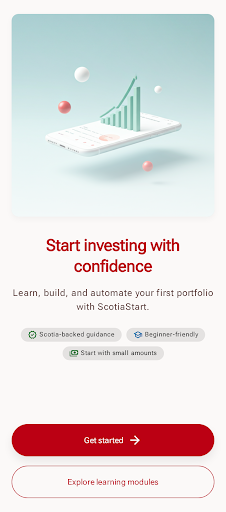
That inspired us to build ScotiaStart, a beginner-first investing experience inside the Scotia app that helps young Canadians move from everyday banking to confident, long-term investing.
What it does
ScotiaStart helps users learn, build, automate, compete, and stay supported.
The app includes:
- ELI5 learning modules that explain investing concepts like ETFs, risk, TFSAs, RRSPs, FHSAs, and market trends in simple language.
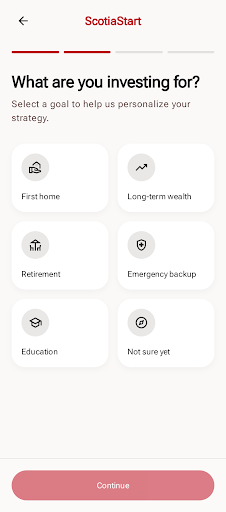
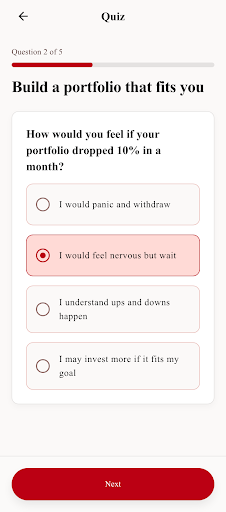
- A goal and risk quiz that helps users understand what type of investment path may fit their needs.
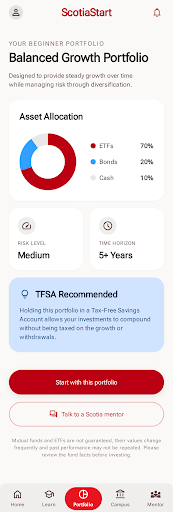
- A beginner portfolio recommendation flow connected to Scotia’s existing investment ecosystem.
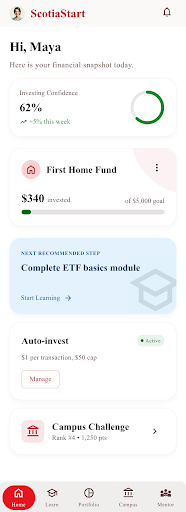
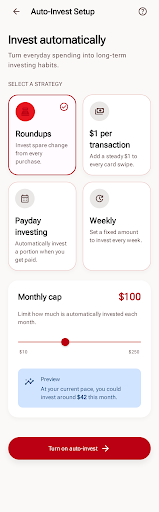
- Automatic micro-investing, where users can invest through roundups,
$1per debit transaction, payday contributions, or weekly deposits. - A monthly investing cap so users can build habits without feeling like they are losing control of their spending.
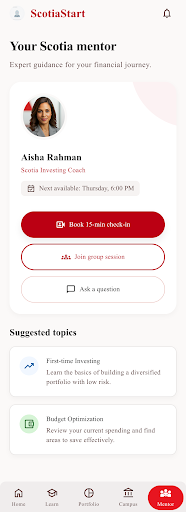
- Scotia mentor support, including group sessions, check-ins, and educational guidance.
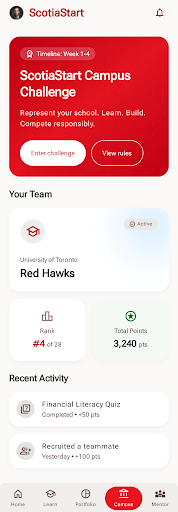
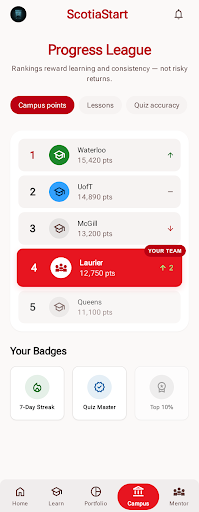
- ScotiaStart Campus Challenge, a university-based simulated investing competition that engages Gen Z through learning modules, safe leaderboards, and team-based challenges.
Our goal was to make investing feel less intimidating while still keeping the experience responsible, educational, and bank-safe.
How we built it
We designed ScotiaStart as a mobile-first Android prototype using a clean fintech-inspired interface with Scotiabank-style trust and professionalism.
Our product flow focuses on the user journey from first interest to long-term engagement:
- The user opens ScotiaStart inside the Scotia app.
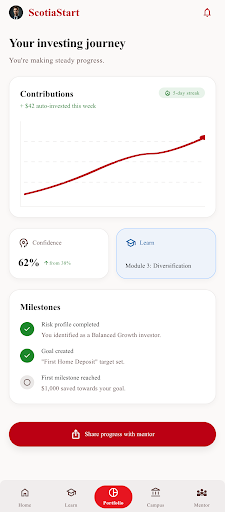
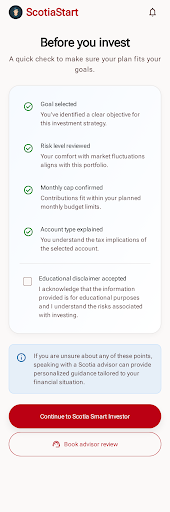
- They choose an investment goal.
- They complete a short risk quiz.
- They receive a beginner-friendly portfolio path.
- They turn on automatic micro-investing.
- They complete short learning modules.
- They join campus challenges and safe leaderboards.
- They can connect with a Scotia mentor for support.
We intentionally avoided features that could encourage risky investing. For example, our leaderboard does not rank users by highest returns or biggest trades. Instead, it rewards responsible actions like completing lessons, improving quiz scores, maintaining contribution streaks, and participating in simulated challenges.
Challenges we faced
One of the biggest challenges was balancing Gen Z engagement with financial responsibility.
Gamification can make investing more exciting, but it can also encourage risky behaviour if designed poorly. We had to rethink the leaderboard and campus competition so they rewarded learning and consistency instead of speculative trading.
Another challenge was making the product feel simple without making it unrealistic for a bank. Since Scotiabank operates in a regulated financial environment, our design had to avoid language like “buy now,” “guaranteed returns,” or “copy this investor.” Instead, we focused on educational guidance, risk awareness, and advisor-supported decision-making.
We also had to make sure our solution was feasible. Rather than creating a completely separate investing app, we designed ScotiaStart as a layer inside the existing Scotia mobile banking ecosystem, connected to tools like Smart Investor, iTRADE, registered accounts, and Scotia advisors.
What we learned
We learned that a strong fintech product is not just about having a clean interface. It needs to solve a real behavioural problem.
For young Canadians, the barrier to investing is often not just money. It is uncertainty:
- “Where do I start?”
- “What account do I use?”
- “What is an ETF?”
- “How much should I invest?”
- “What if I make a mistake?”
We also learned that trust is a major advantage for Scotiabank. Fintechs may win on simplicity, but Scotiabank can win by combining simplicity with credibility, education, advisors, and long-term banking relationships.
Impact
ScotiaStart is designed to help Scotiabank convert young deposit customers into long-term investment clients.
Success could be measured through:
- Funded investment account rate
- First investment completion rate
- Recurring contribution setup rate
- 30/90/180-day engagement
- Learning module completion
- Confidence score improvement
- Campus Challenge participation
- Growth in assets invested by 18–34-year-old customers
The long-term goal is to make Scotiabank the trusted first step for young Canadians beginning their investing journey.
What’s next
If we continued building ScotiaStart, we would focus on:
- Expanding the learning module library
- Testing the Campus Challenge with one university pilot
- Adding more portfolio education screens
- Improving mentor matching
- Building stronger personalization based on user goals
- Connecting the prototype to real Scotia Smart Investor flows
ScotiaStart combines Wealthsimple-level simplicity with Scotiabank’s trust, advisors, and full banking ecosystem.
Our vision is simple:
Turn everyday banking into confident investing — one small step at a time.
Built With
- android-ui-prototyping
- google-stitch
- material-design-3
- mobile-app-wireframing


Log in or sign up for Devpost to join the conversation.