-
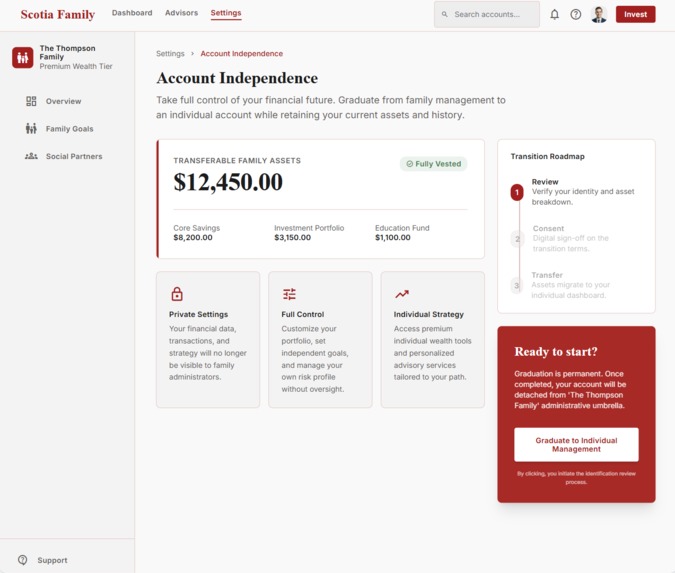
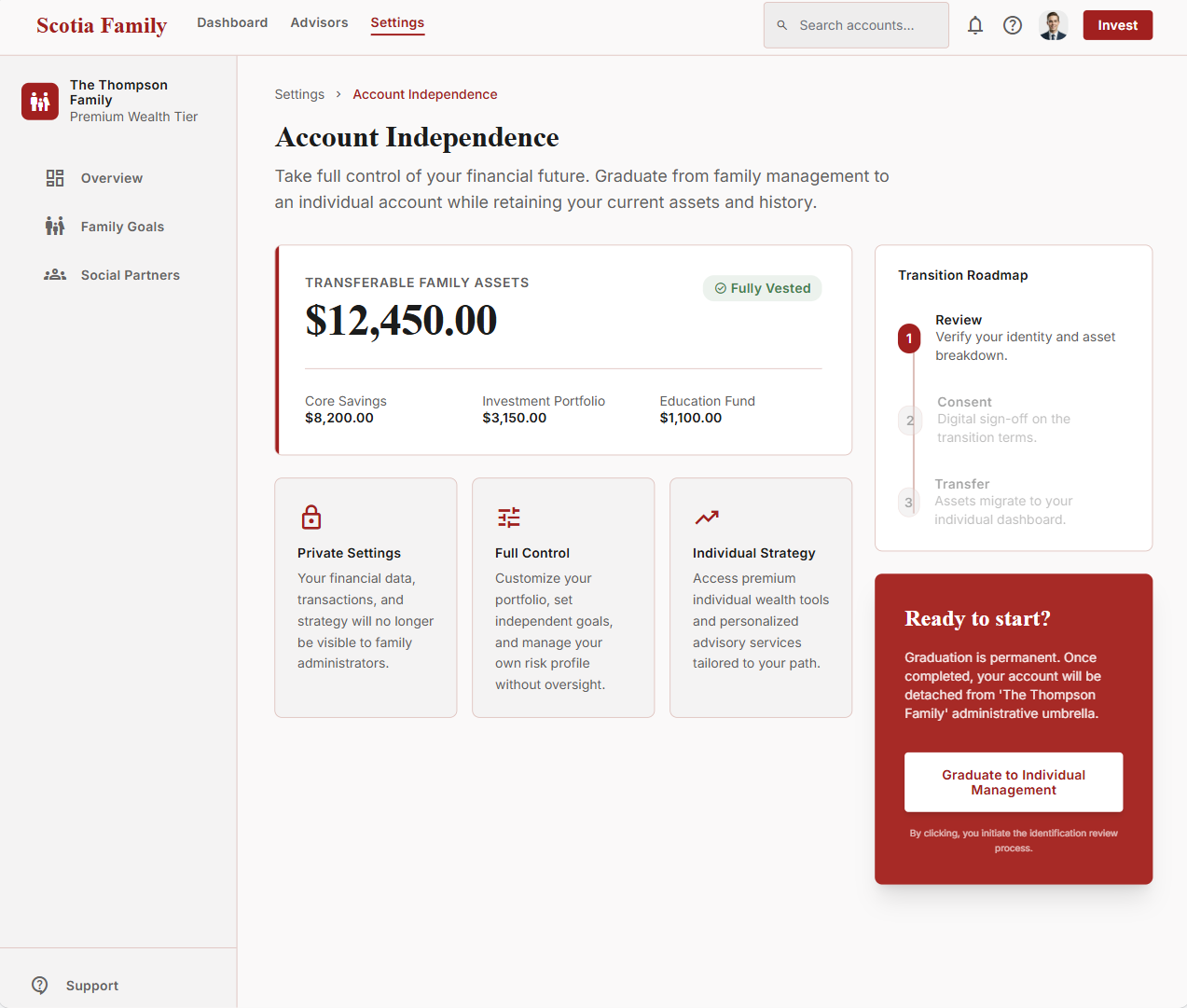
Account Independence
-
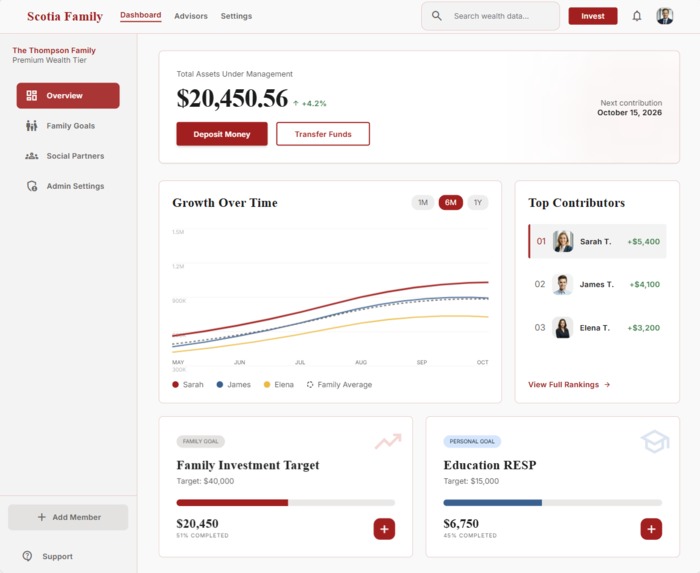
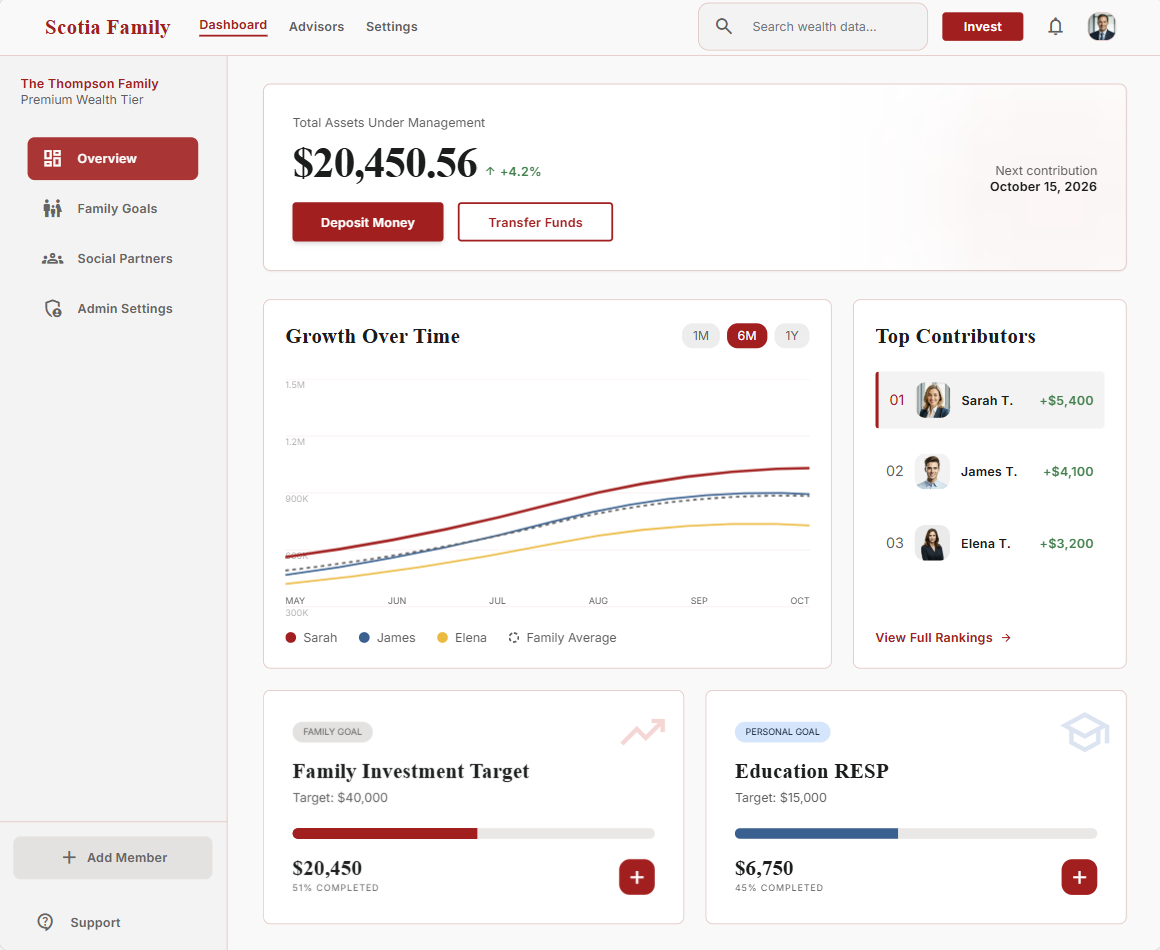
Home Page
-
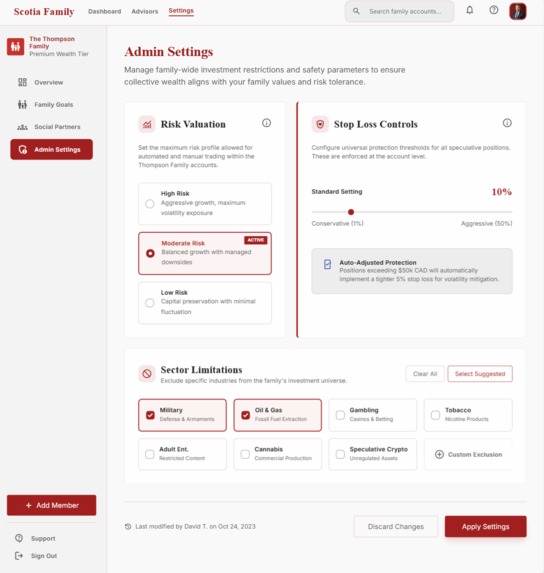
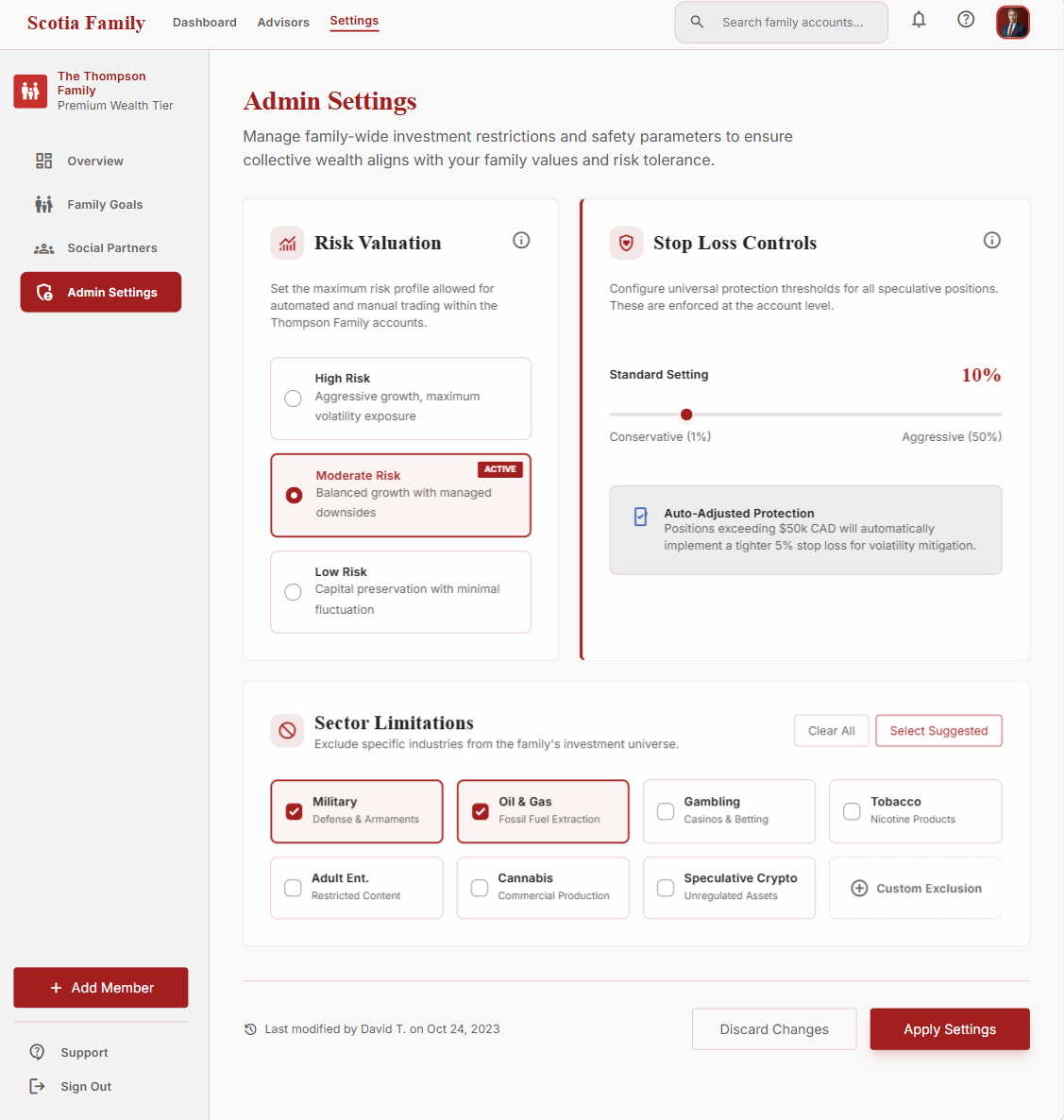
Admin Settings
-
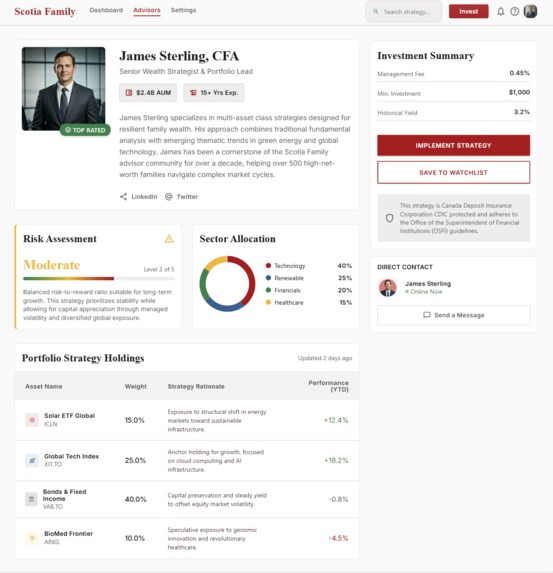
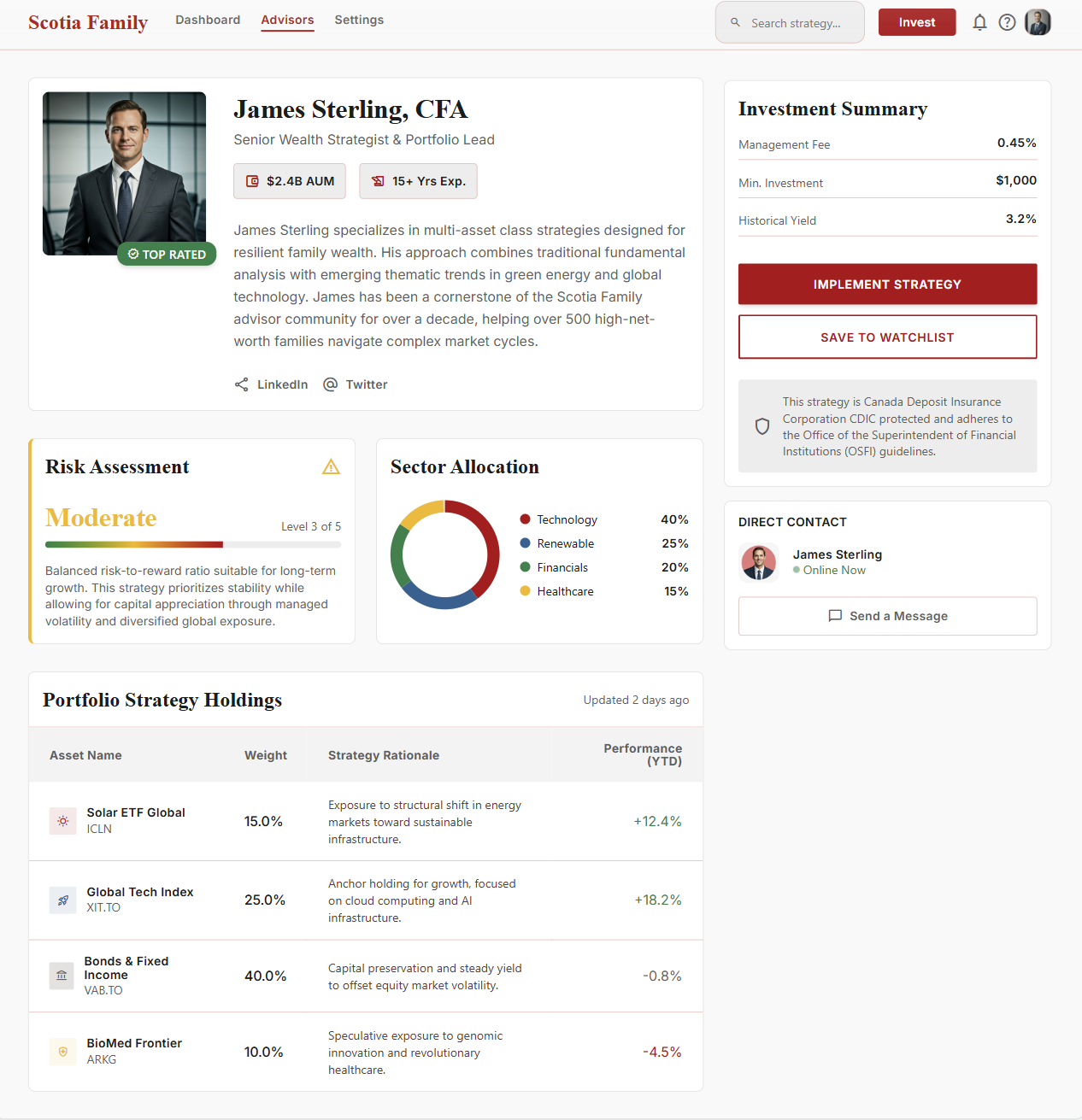
Social Partner Profile
-
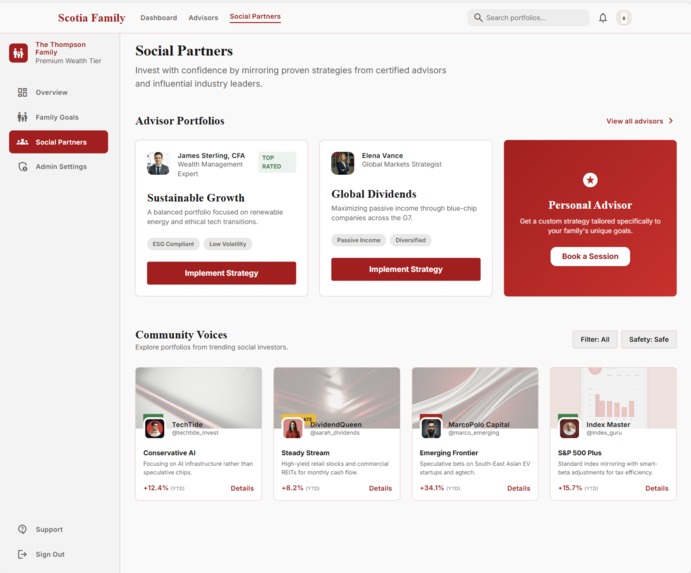
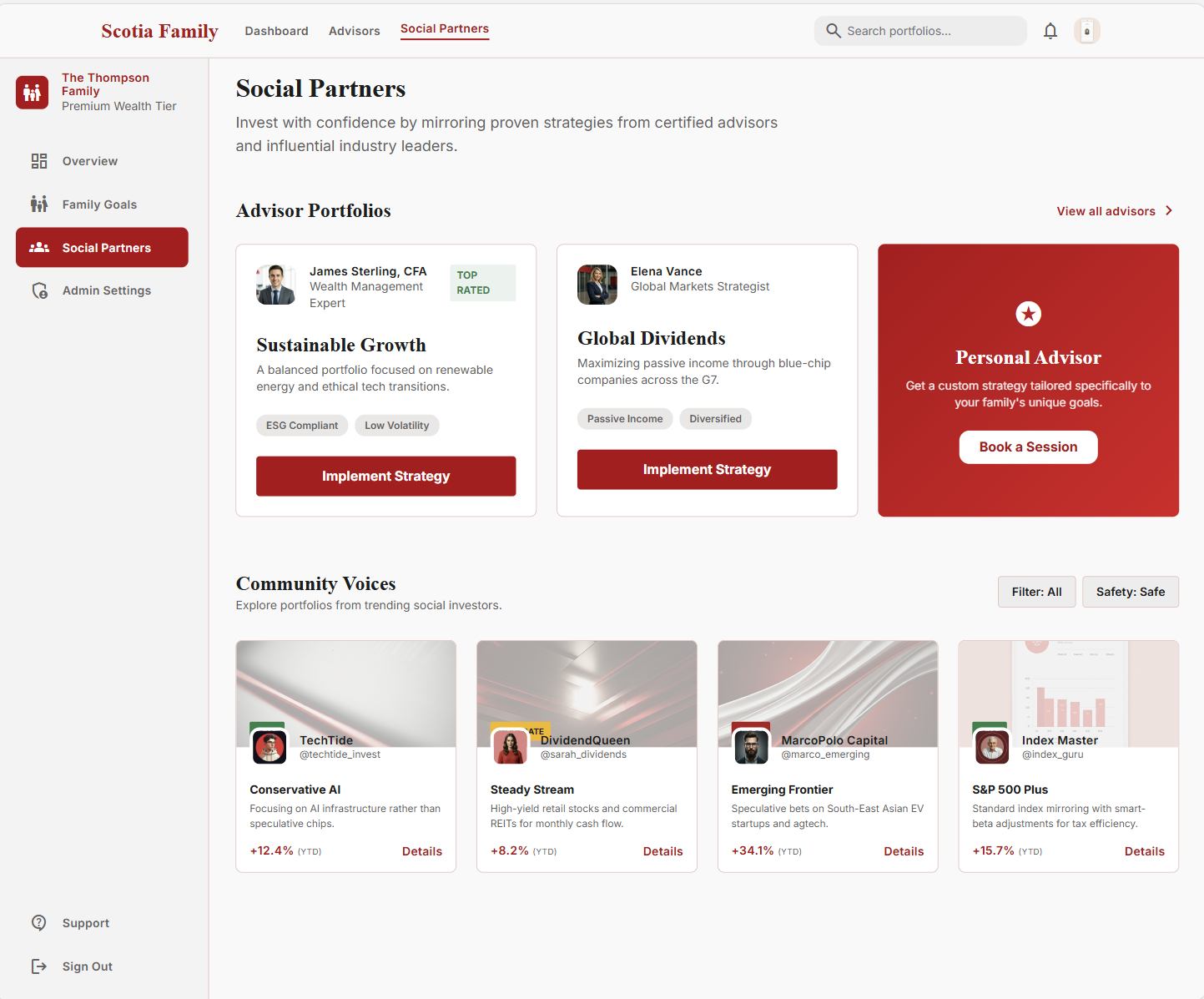
Scotia Social Partners
Inspiration
We started with a simple question: why would a young Canadian who already banks with Scotiabank go somewhere else to invest? The answer wasn't products or technology; it was ease of access. Nothing in the traditional banking experience was designed to make that first investment feel safe or approachable. Then we noticed something hiding in the research: younger Canadians already turn to family first for financial guidance. Scotia Family was built on that foundation.
What it does
Scotia Family is a feature extension built on Scotia iTRADE and Scotia Smart Investor that lets existing Scotiabank clients invite younger family members into a shared investment environment. Families can contribute funds, set risk tolerance, and open registered accounts — TFSA, FHSA, RRSP, RESP — guided by Smart Investor's existing recommendation engine. Scotia Social Partners complements this with advisor-reviewed financial education content delivered through the social media platforms that younger Canadians already use.
How we built it
We built Scotia Family by working backwards from the customer, anchoring every feature decision to a documented barrier from the research. The solution was then stress-tested against Scotiabank's three constraints: regulatory compatibility, 18-month viability, and sustained engagement over mere account openings. Building on existing infrastructure made all three achievable.
Challenges we ran into
As a team of first-time competitors, we had no idea what to expect going in, and that uncertainty showed up most in how we approached the solution. Our biggest challenge was narrowing down our ideas into something that could realistically be considered an MVP. Making Scotia Social Partners feel credible rather than gimmicky was equally difficult, given the reputational risks of influencer partnerships in financial services. The answer was reframing it as a content trust layer, not a marketing campaign.
Accomplishments that we're proud of
We're proud that Scotia Family competes on a vector no fintech can replicate. It builds on existing household relationships, institutional trust, and registered account infrastructure. We're equally proud of how cleanly it maps onto Scotiabank's own four strategic pillars, making it feel less like an external idea and more like a natural extension of the bank's own stated direction.
What we learned
We walked away with a much better understanding of how business-technology hackathons work and the amount of strategic groundwork that goes into it before engineers ever write a single line of code. Coming from a majority engineering/CS background, working through this case gave us firsthand experience of the ideation process that large corporations go through when solving real business problems.
What's next for Scotia Family
As younger members grow their portfolios, the progressive independence model evolves with them, eventually transitioning them into fully self-directed or advisor-supported clients within Scotiabank's broader wealth ecosystem. The next steps of development are going to focus on enhancing the transition experience so novice investors can become outstanding ones!
Built With
- canva
- claude
- google-stitch
