Inspiration
Every freelancer has had the same argument. The work is delivered, the invoice goes out, and the client says "that isn't what we agreed." Nobody is lying. The brief was three sentences in an email, and "done" was never written down. Payment tools start at the invoice. The fight starts earlier.
What it does
New: Scope watch: paste the client thread and it is shown as a timeline with the out-of-scope asks highlighted. Each ask becomes a card you mark in scope or change order, with a drafted price and "Ready when" line, and the accepted ones roll into one PayPal request. ScopeSignal turns a client's brief into a short list of priced deliverables, each with a finish line, and ties every payment to one of them.
Paste the brief and a budget. A local AI model proposes deliverables, and every suggestion keeps the client's own sentences beside it.
A person adds, renames and prices them, then locks the scope.
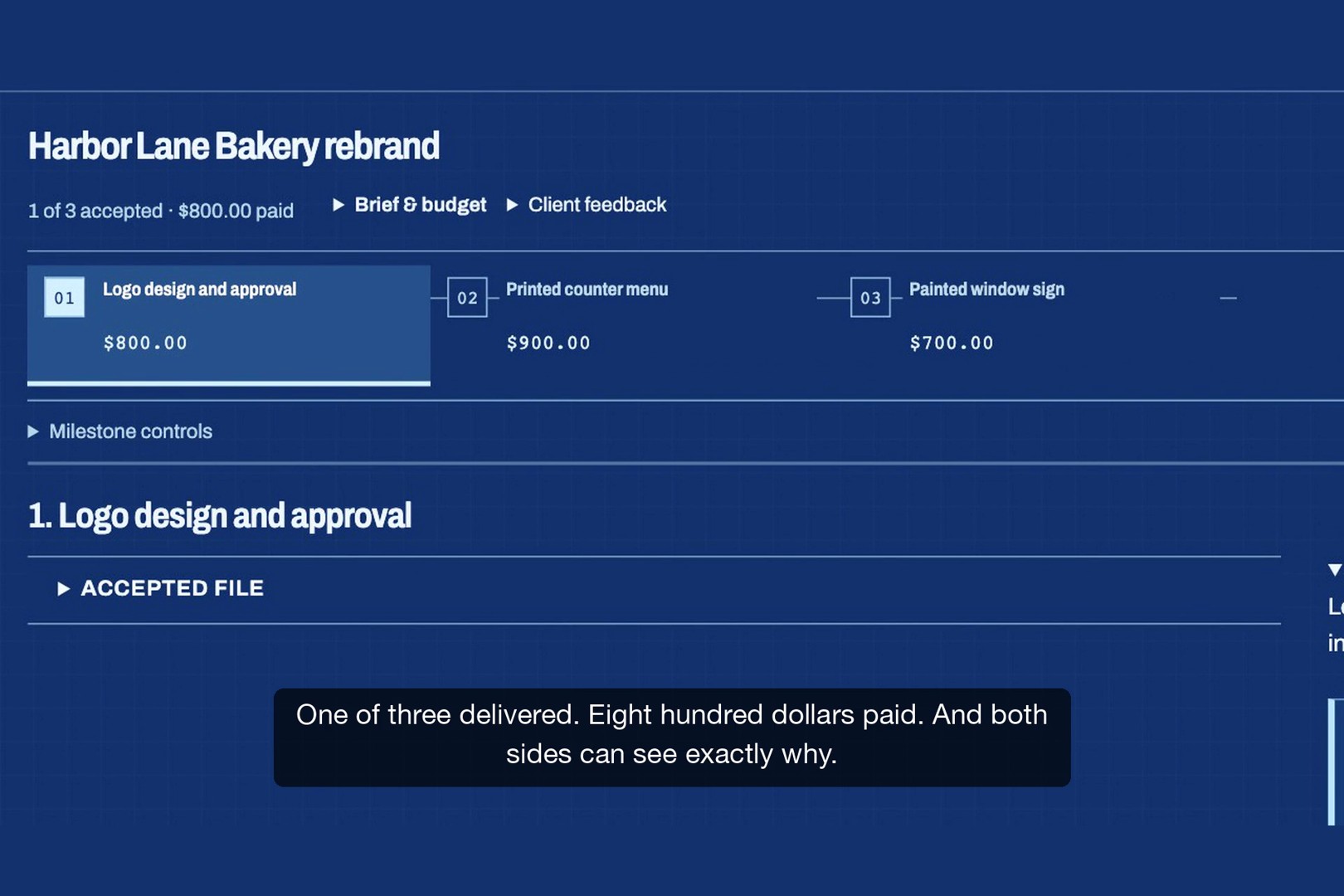
When work arrives, the delivered file sits next to what was agreed. A person accepts it or asks for changes.
Only an accepted delivery can be paid. ScopeSignal creates one PayPal order for that milestone, the client pays on PayPal, and the capture is a separate explicit confirmation.
If a capture response is lost, the payment is treated as unknown and reconciled against the same order. It is never sent twice.
How we built it
A dependency-free Node.js server and a plain HTML, CSS and JavaScript front end. PayPal runs on the REST API in Sandbox: OAuth on the server, Orders v2 create, buyer approval on PayPal's page, then capture. The AI step calls a local model through Ollama (built and tested with qwen2.5:7b) with a strict JSON schema, and the reply is validated against the original brief so the model cannot invent a requirement.
Challenges we ran into
Keeping the model in its place. Early versions let the suggestion feel like a decision. Now the model only groups the client's own words, and a human does everything that costs money. The other hard part was the unhappy path: a capture whose response never arrives must not become a double charge.
Accomplishments that we're proud of
The whole journey works for real in PayPal Sandbox: brief, AI proposal, locked scope, accepted delivery, PayPal order, buyer payment, capture, and a paid milestone both sides can explain.
What we learned
Trust in a payment product comes from the boring states: unknown, awaiting buyer, already captured. Designing those first made the happy path simpler.
What's next
A shared client view so the buyer reviews and pays from their own link, partial acceptance, and scope change requests that reprice a milestone with both sides' consent.
Built With
- css
- html
- javascript
- node.js
- ollama
- paypal
- paypal-orders-api
- paypal-sandbox
- qwen
