-
-
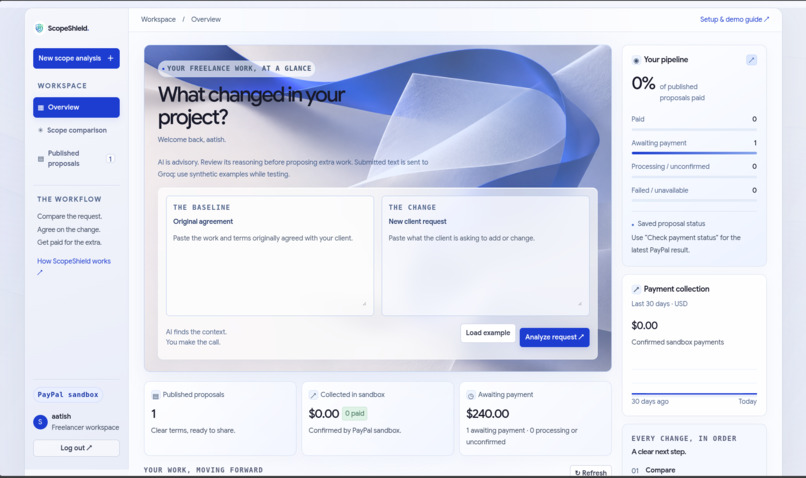
Dashboard
-
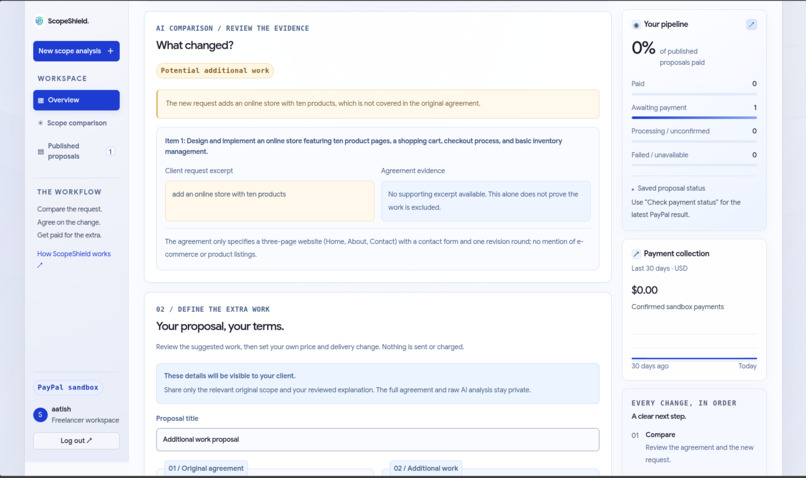
Review
-
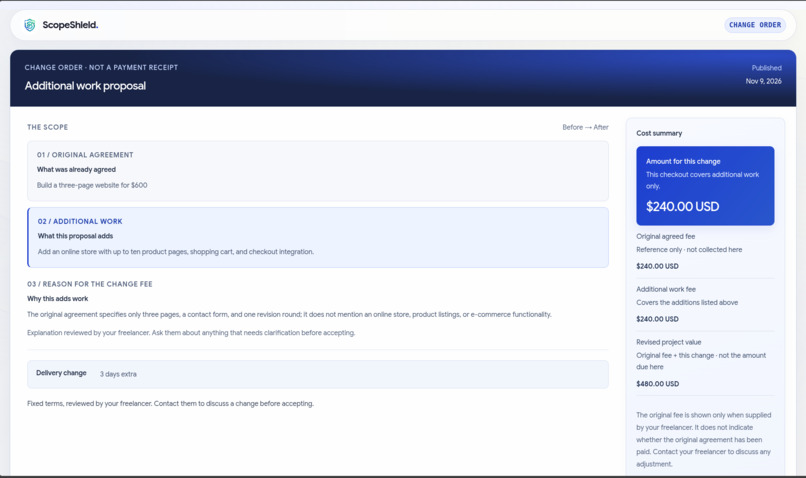
Payment link with proposed changes
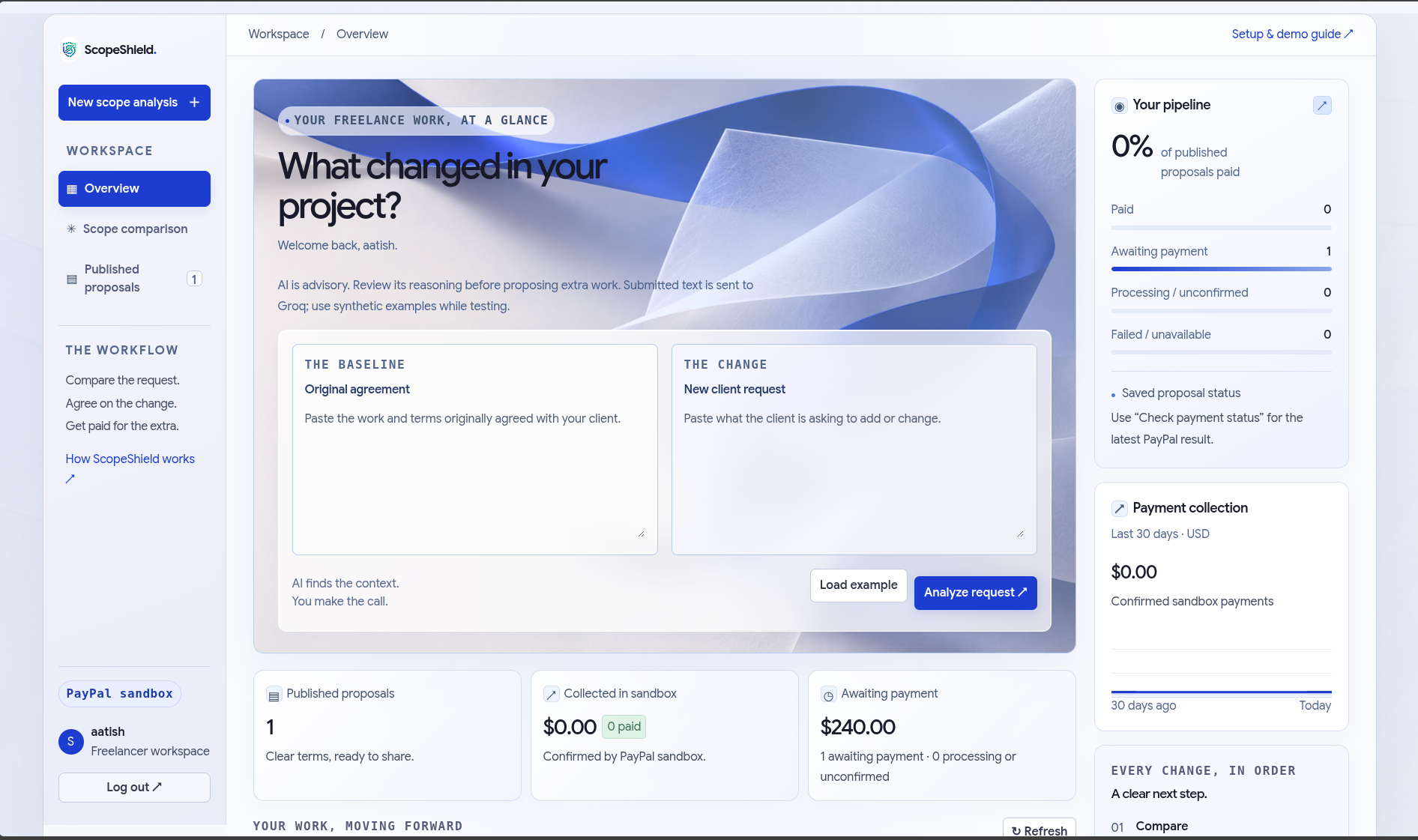
“Could you add just one more thing?”
For freelancers, a small client request can turn into new features, extra testing, and a longer delivery timeline. The difficult part is explaining that change clearly while keeping the client relationship positive.
ScopeShield grew from a simple idea: make the difference between the original agreement and additional work visible, then connect that understanding to an agreement and payment.
What it does
ScopeShield helps freelancers turn changing requirements into clear, reviewed change orders.
- Compare the request. Paste the original agreement and the client’s new request.
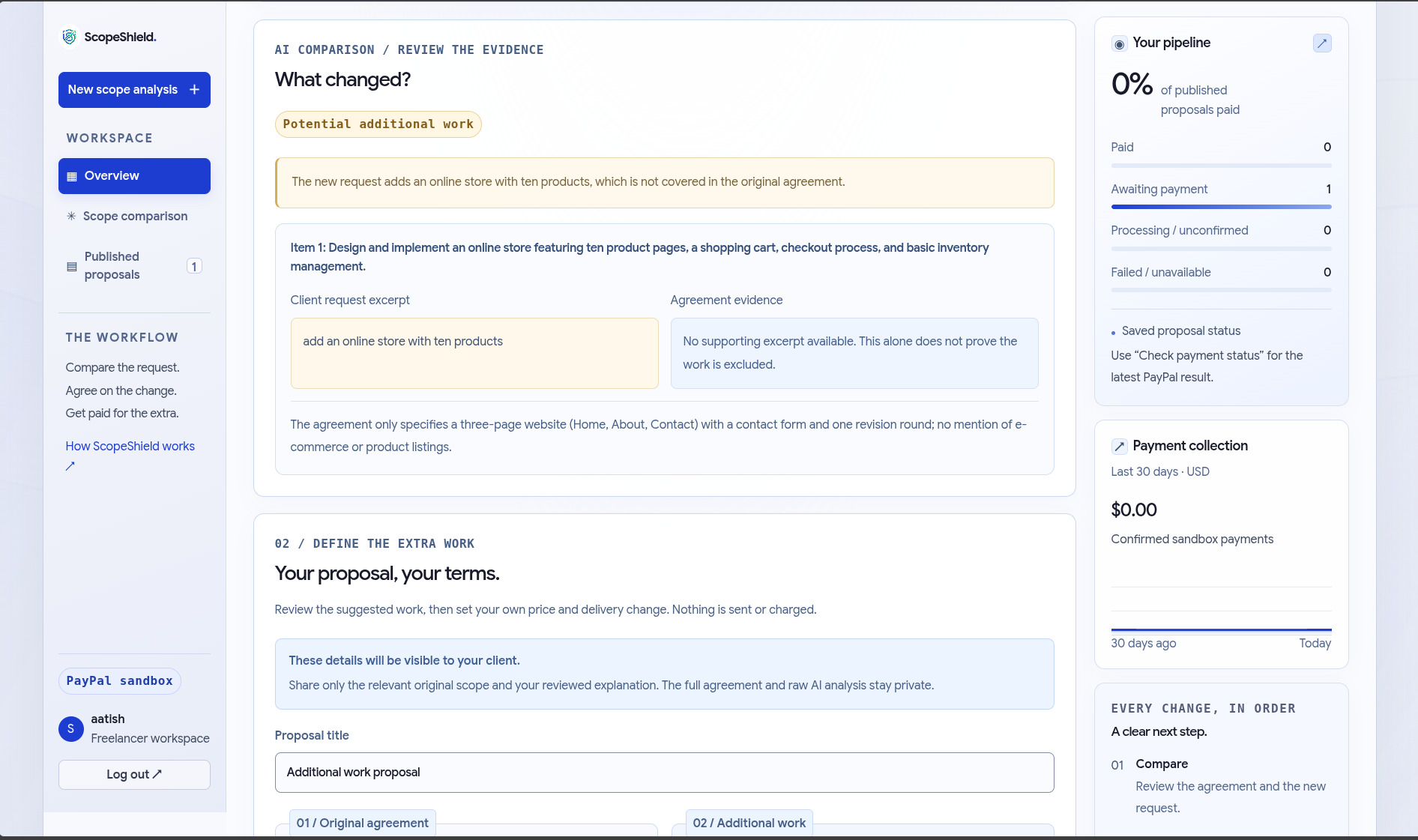
- Review the evidence. AI identifies potential additional work, work that appears included, or requests needing clarification—with source excerpts and an explanation.
- Define the terms. The freelancer reviews the original scope, additions, reason for the extra effort, price, and delivery change.
- Share the proposal. Publish a fixed change order through a client link.
- Accept and pay. The client reviews the terms and continues to PayPal sandbox checkout without needing a ScopeShield account.
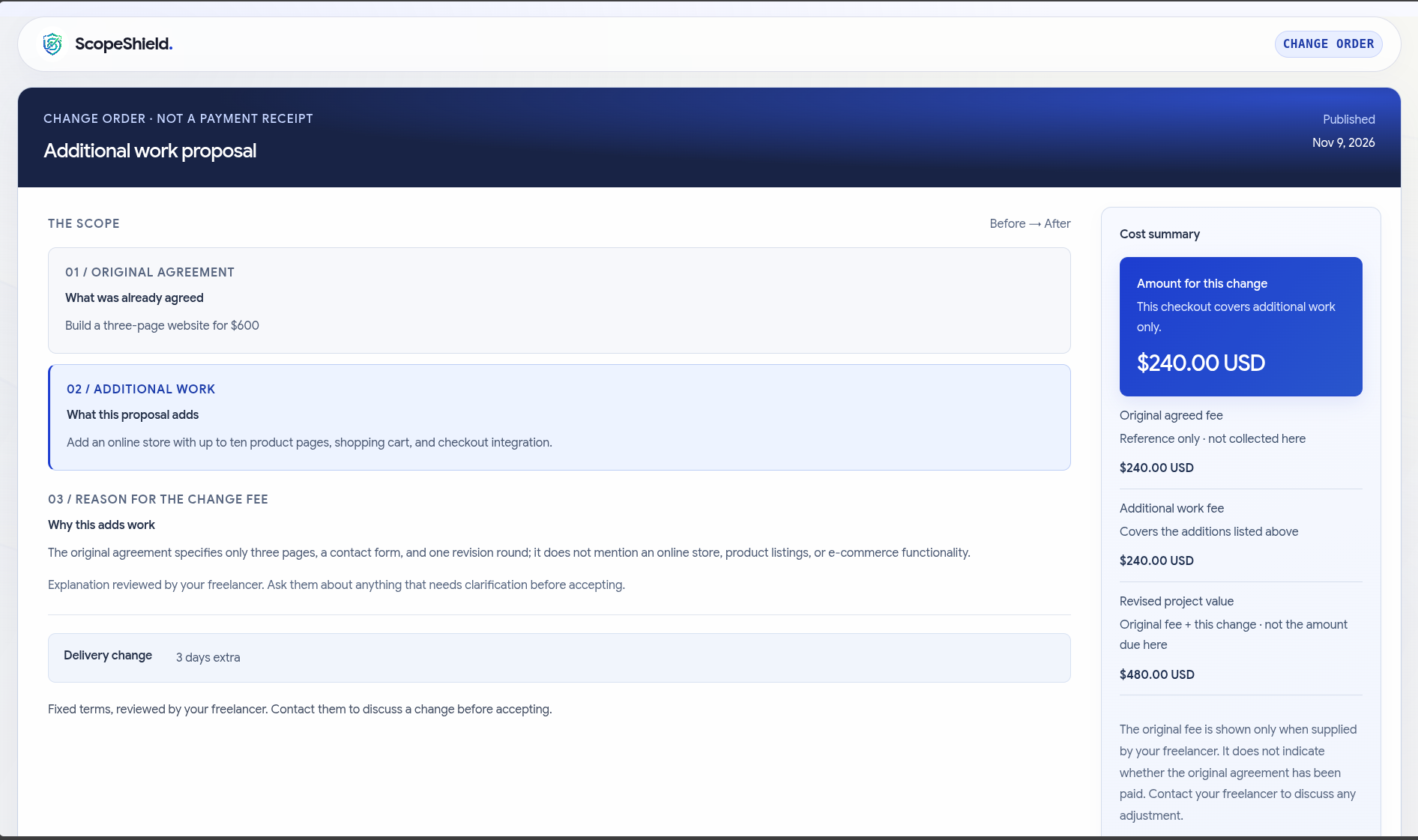
For example, a three-page website might become a request for an online store. ScopeShield helps explain what changed and present an additional fee separately from the original project price.
AI provides advice. The freelancer decides what to propose and approves the final terms.
How I built it
The interface uses HTML, CSS, and JavaScript, with Google Sans, glass surfaces, animated backgrounds, and a cobalt visual identity.
The backend uses Node.js and Express, with SQLite for accounts, published proposals, and payment records.
Groq powers the scope comparison. The application requests structured results and checks that the supporting excerpts actually appear in the submitted text. Invalid evidence receives one corrective attempt before the application rejects it.
PayPal Orders v2 connects the proposal to sandbox order creation, buyer approval, capture, and payment-status reconciliation. The server uses the published fee rather than trusting an amount supplied by the browser.
The dashboard brings saved proposals, payment states, and activity into one workspace.
Challenges I faced
Making AI explanations trustworthy
An explanation can sound convincing while quoting evidence incorrectly. I added source-excerpt validation and kept uncertainty visible instead of treating every new request as chargeable work.
Handling payment uncertainty
Returning from checkout does not prove that a payment succeeded. I built server-side verification and recovery around the stored order, amount, currency, merchant, and capture status.
Making the proposal understandable
The client needs more than a price. I redesigned the proposal as a receipt-style document showing the original scope, additions, effort explanation, delivery change, and cost summary.
Protecting account and project data
I implemented salted password hashing, server-managed sessions, account-scoped records, server-side secrets, and text-safe rendering. Published terms remain fixed so the agreement cannot quietly change after sharing.
What I learned
I learned that the hardest part of combining AI and payments is defining what each system is allowed to decide.
AI can help interpret a request, but the freelancer must approve the commitment. A payment provider can process an order, but the application must verify the outcome.
I also learned how much clear interface design matters: the client should understand what changed, why it adds effort, and exactly what this checkout covers.
What’s next
ScopeShield currently focuses on pasted agreements, USD pricing, and PayPal sandbox payments through one configured merchant.
Next steps include independent merchant onboarding, account recovery, document imports, and background payment-status updates.
The goal remains simple: help freelancers and clients agree on changes before more work begins.
Built With
- css3
- express.js
- gpt-oss
- groq
- html5
- javascript
- node.js
- paypal
- paypal-orders-api
- rest
- sqlite
