-
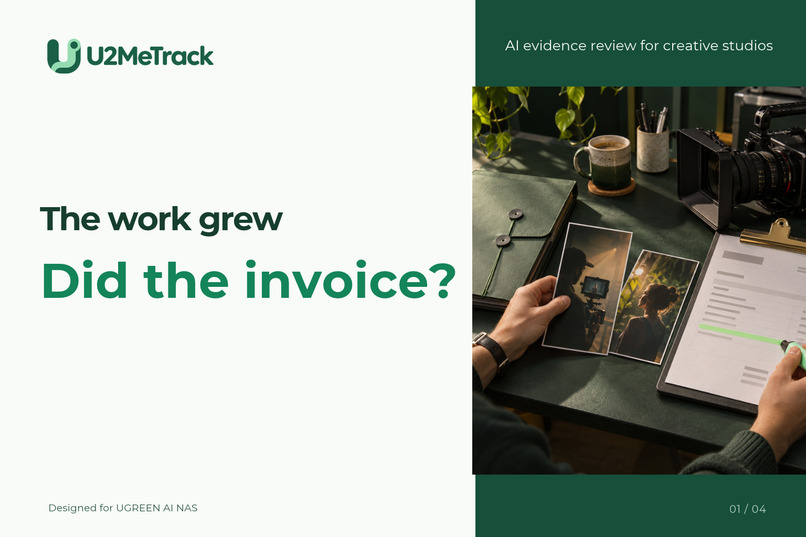
The billing gap
-
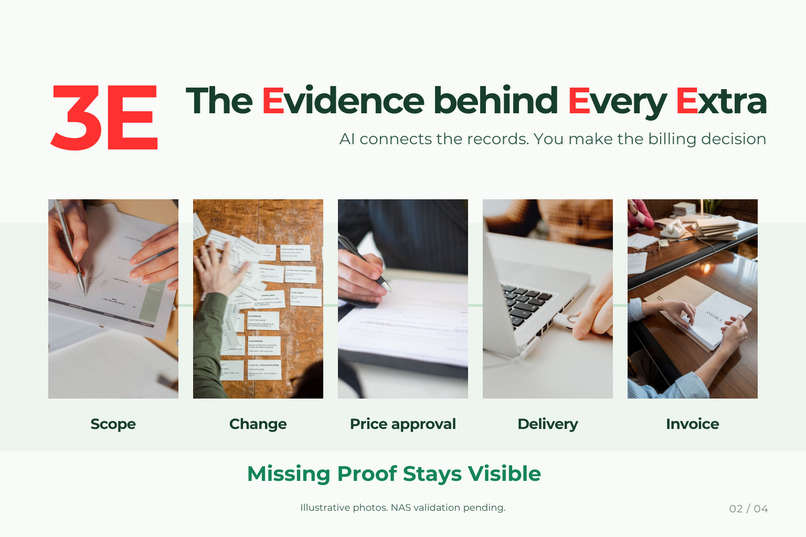
The evidence chain
-

The U2MeTrack workspace
-
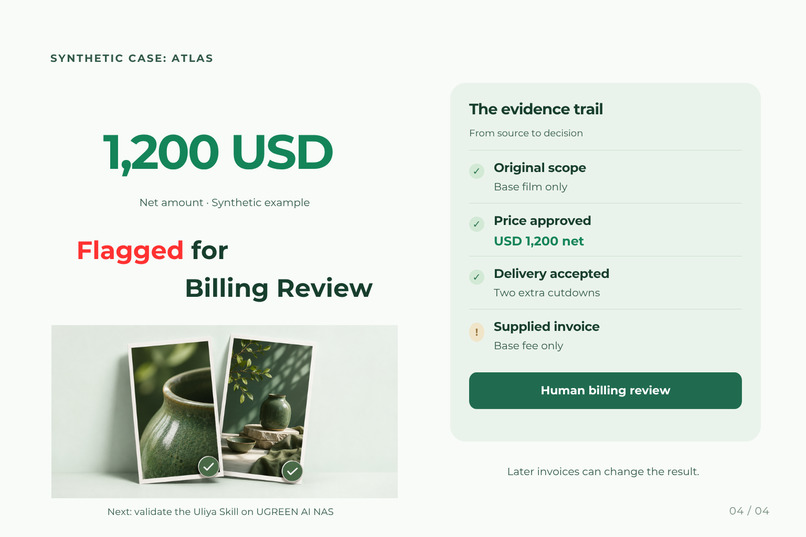
Synthetic example: USD 1,200 for review
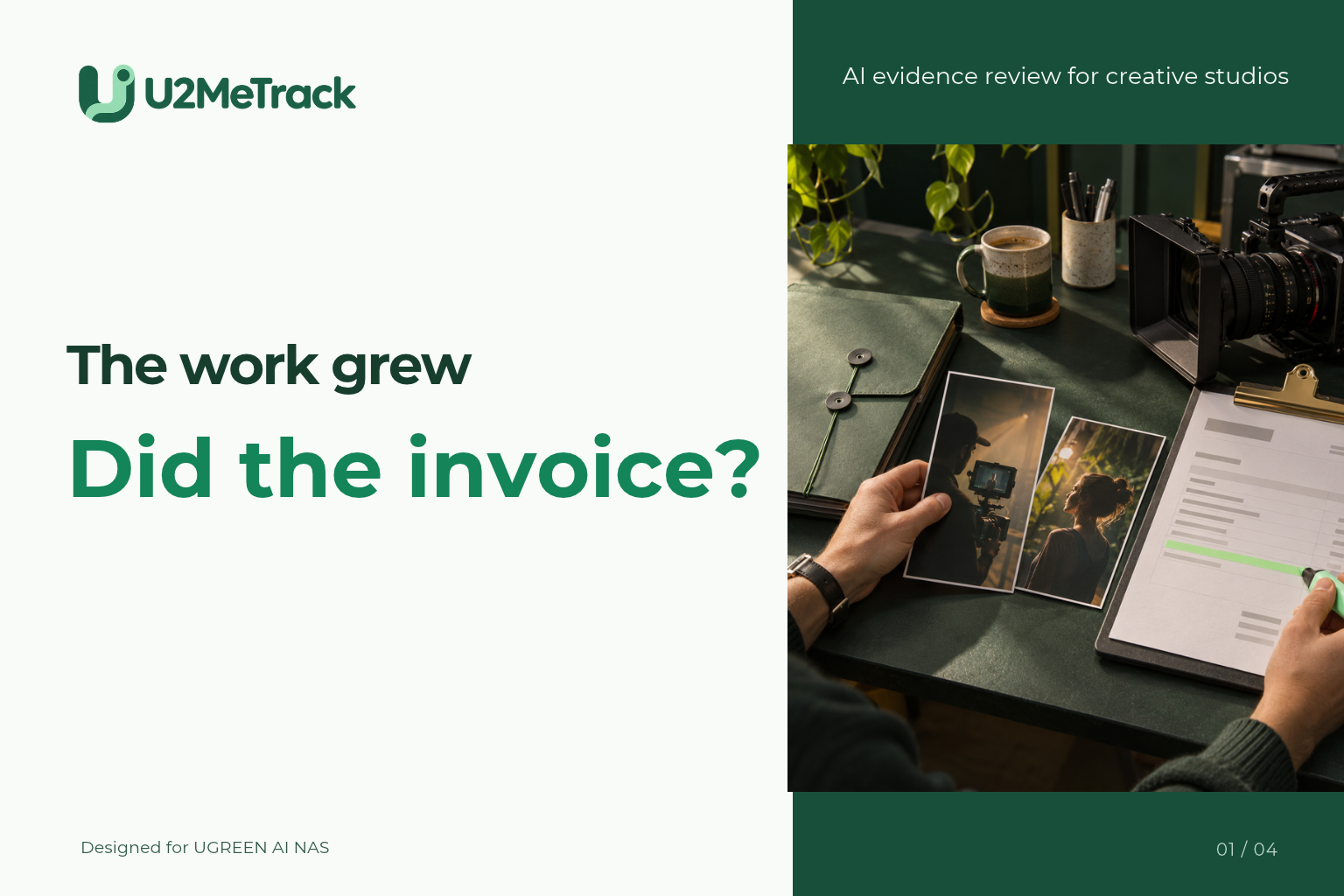
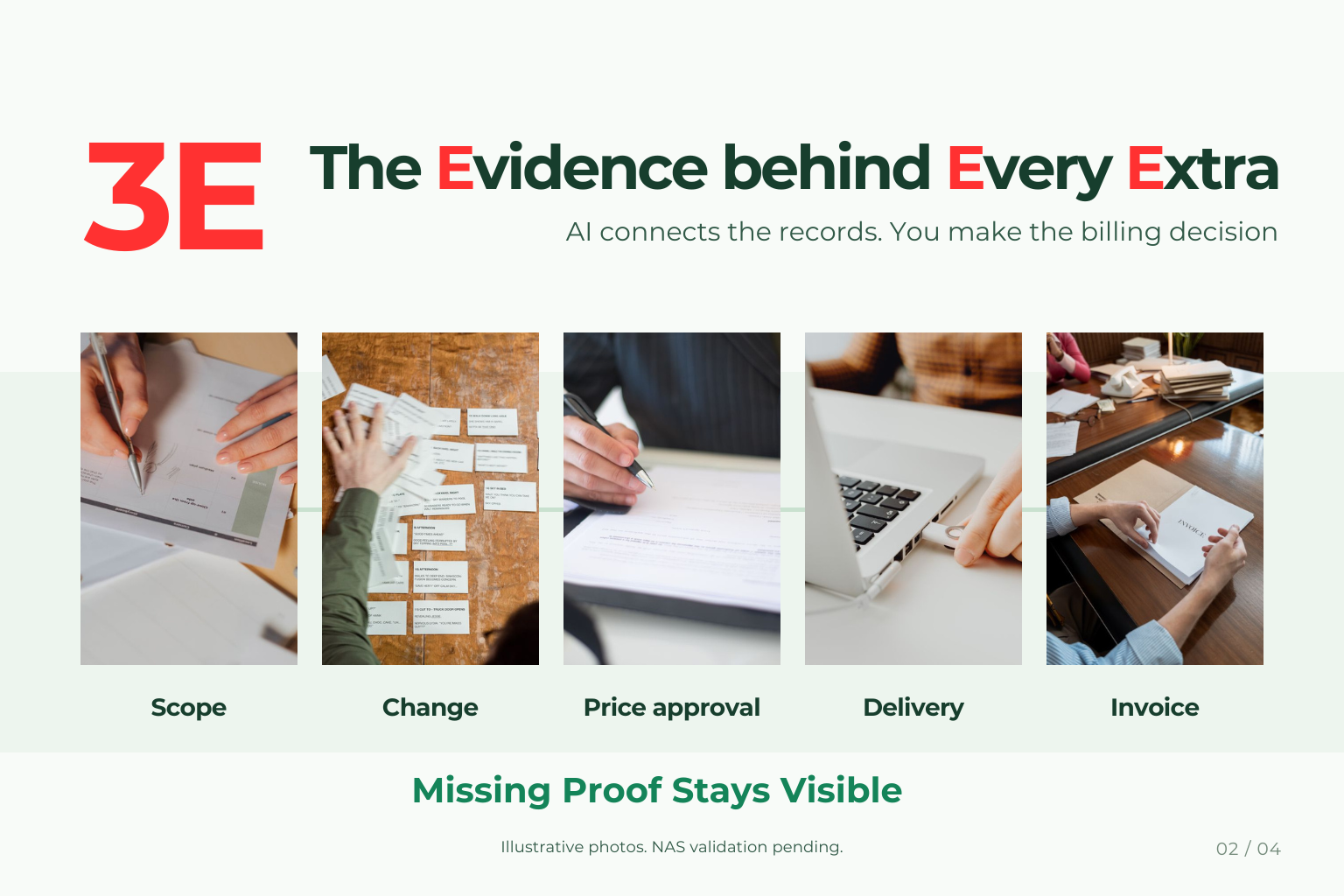

U2MeTrack helps creative and video studios spot approved extra work that may be missing from the final invoice, with evidence to support every billing review.
Inspiration
A client asks for two extra cutdowns. The team agrees on a price, delivers the work and moves on to the next project. But the final invoice still reflects the original brief.
At project closeout, a producer has to piece together agreements, change approvals, delivery records and invoices to understand what happened. Some extras were already billed. Others were never priced or were offered as goodwill.
I built U2MeTrack to help answer a practical question: Does the invoice reflect the work we agreed to deliver?
What U2MeTrack does
U2MeTrack turns scattered project records into a review the producer can inspect and act on:
- Add the evidence. Create a project and upload its scope, change requests, price approvals, delivery records and invoices.
- Run the review. AI connects each change to its agreed price, approval, delivery and invoice coverage, with source references for inspection.
- Make the decision. Review the cited passages, mark an item for billing review, request more evidence or keep it as goodwill, then export the reviewed report.
Findings are grouped as Potential omission, Already covered or Needs evidence. Missing approval, conflicting records and incomplete coverage remain visible. Partial charges, credits and replacement invoices are considered before an amount is presented.
Follow the USD 1,200
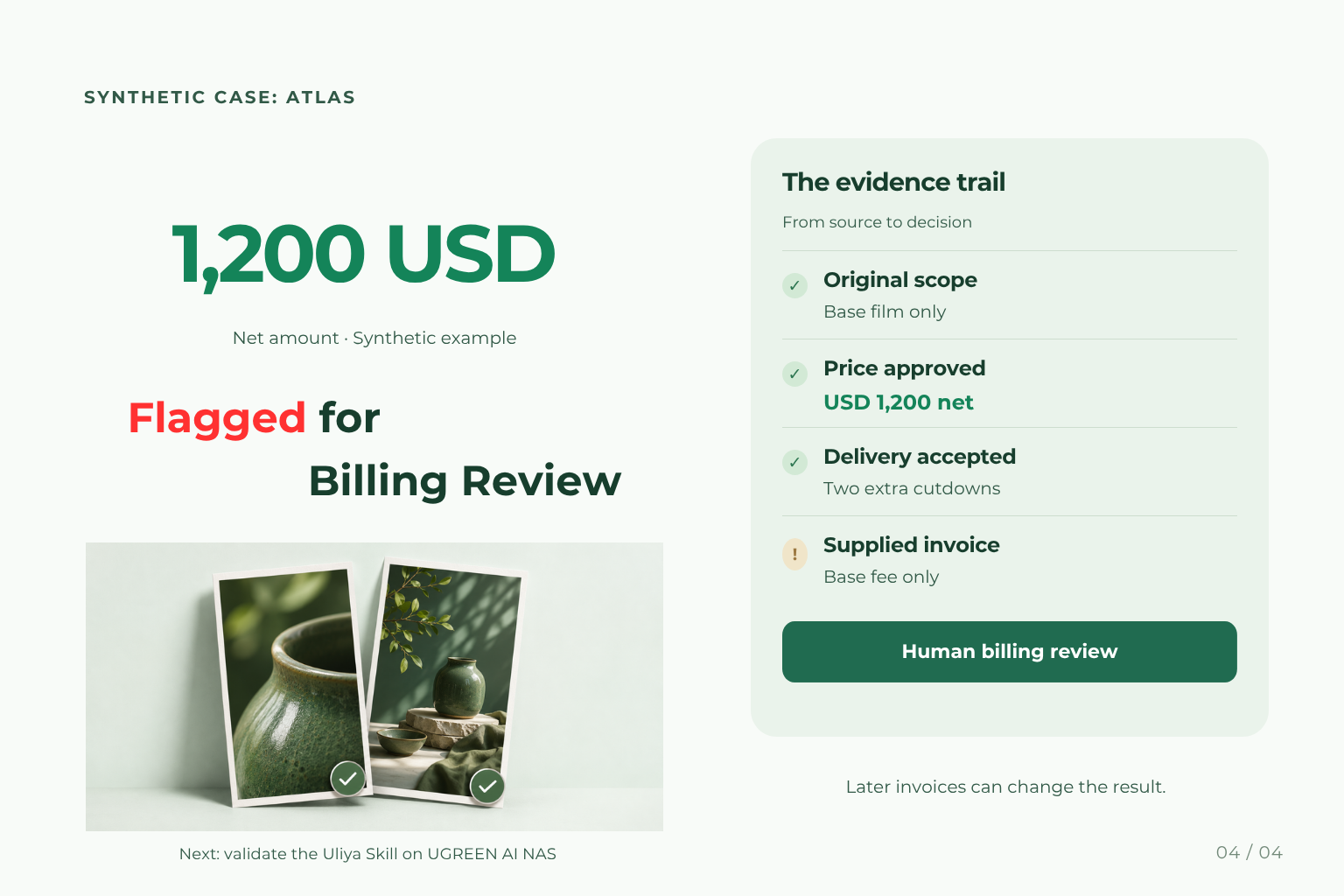
In the synthetic Atlas demo, the client approves USD 1,200 for two additional vertical cutdowns and accepts their delivery. The supplied invoice covers the original film.
U2MeTrack flags the extra for review and links it to the agreement, approval, delivery record and invoice, including PDF page references. The producer can inspect the basis for the finding before deciding what to do. This is a review candidate, not confirmed debt or recovered revenue.
Why UGREEN AI NAS
For a studio that keeps its project archive on a NAS, the records needed for this review are already together. The intended Skill brings billing review to that archive and keeps the approved report beside its evidence.
Authored using the official UGREEN Skill Developer Package and Uliya standard, the Skill defines three stages: discover files in an authorized project folder, review the documents through the expert agents, and save the report after human approval.
The Skill is authored; execution on a real UGREEN AI NAS still needs validation.
How I built it
The deployed web companion uses React, TypeScript, Vite and Node.js/Express. OpenAI produces structured findings, while server checks validate source quotations, locations, explicit amounts and consistency before showing potential omissions.
Users can manage projects, inspect documents, save review decisions, track activity and export reports. Changing the source files marks an earlier review as stale, so users know when to run it again.
The hosted demo sends extracted document text to OpenAI when a user starts a review; uploaded PDFs stay in private hosted storage. Use synthetic or anonymized documents. This hosted workflow is separate from the intended NAS runtime.
What I learned
The hardest part was deciding when to withhold an amount. A request, a delivered file or a similar invoice total cannot establish the whole billing history on its own.
The useful result is a finding that someone can trace, question and resolve. That shaped the evidence checks and human review workflow.
What's next
The web prototype has been exercised with synthetic documents, saved decisions and exported reports. Automated tests cover document handling, evidence checks, persistence and review history.
If selected as a finalist, I will test the Skill on the assigned NAS with an approved, priced omission; a later invoice that clears an apparent omission; and an edge case with missing price approval that must remain inconclusive. I will also check permissions, unreadable files and report read-back, then measure citation accuracy, false omissions and review time.