Inspiration
ScopePilot was inspired by real freelance software projects where the client request sounds simple at first, but the actual scope is hidden underneath.
A client might say, “Please move the domain,” or “Can you fix the website?” But behind that request, there may be domain ownership problems, DNS changes, hosting migration, broken links, SSL issues, backups, redirects, unclear access, and business risk.
ScopePilot was built to help freelancers and small teams slow down, analyze the request properly, and turn messy client communication into a clear project plan.
What it does
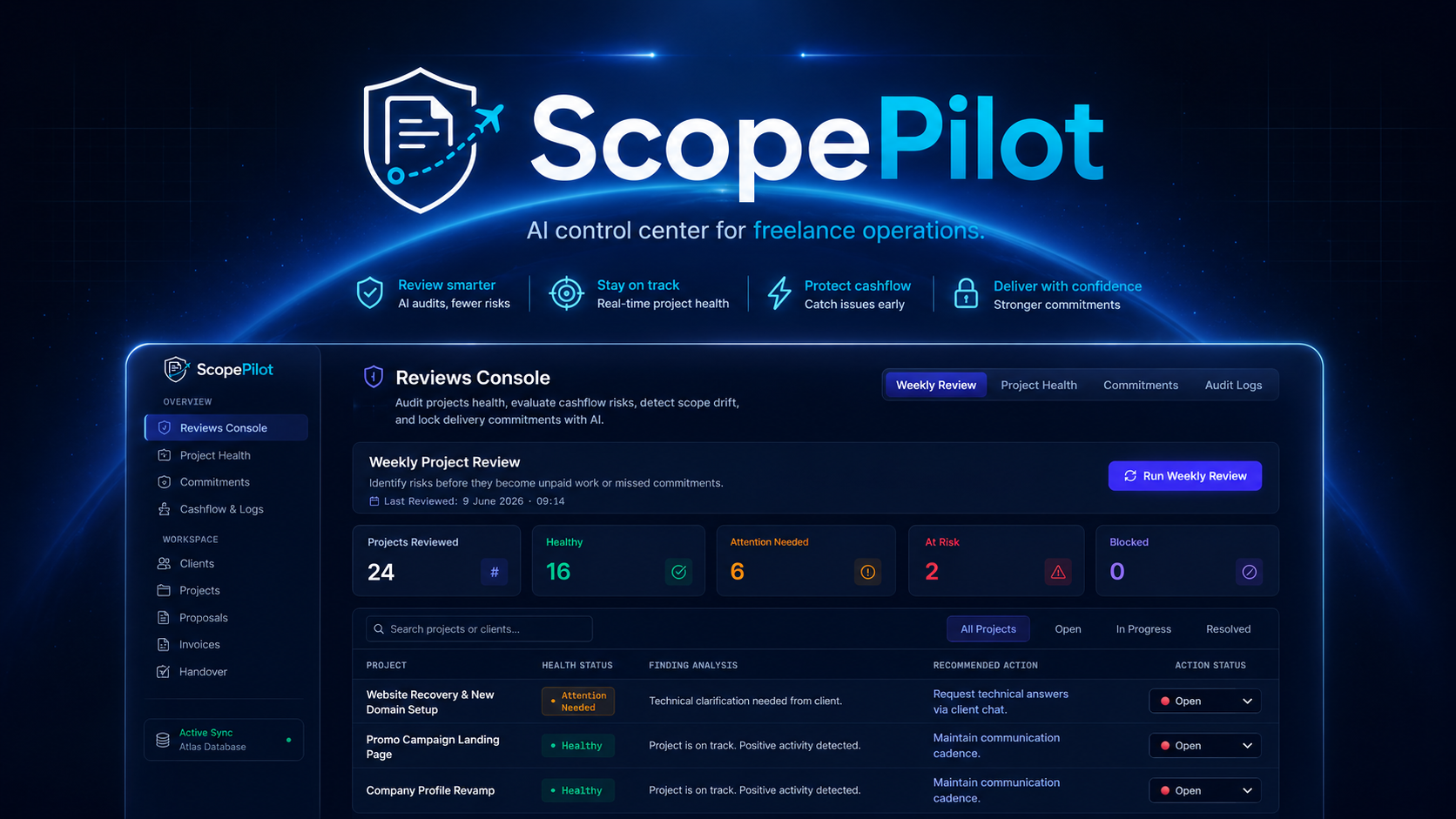
ScopePilot is an AI scoping agent that transforms vague client requests into structured project planning documents.
It can help generate:
- Clear project scope
- Missing questions to ask the client
- Technical risks
- Timeline estimation
- Pricing phases
- Client-ready response drafts
- Next action steps
Instead of only giving a generic answer, ScopePilot acts like a project-thinking assistant. It helps the user understand what needs to be done, what could go wrong, and how to communicate it professionally.
How we built it
The project was built around a simple but practical workflow:
- The user enters a messy client request.
- The AI agent analyzes the request.
- The agent identifies hidden tasks, risks, and missing information.
- The result is converted into a structured scope document.
- The user can use the output to prepare a proposal, reply to the client, or plan the work.
The core focus was not to create another chatbot, but to create an agent that supports real decision-making for freelance and software project work.
Challenges we ran into
The main challenge was deciding how much the agent should assume and how much it should ask back.
In real client work, assuming too much can create scope creep. But asking too many questions can slow the project down. ScopePilot tries to balance both by separating confirmed scope, possible hidden work, risks, and clarification questions.
Another challenge was making the output useful for real freelancers. The result needed to be practical, clear, and client-ready, not just technically correct.
What we learned
We learned that scoping is not just a technical process. It is also communication, risk management, pricing strategy, and expectation control.
A good AI agent for freelancers should not only answer questions. It should help the user think more clearly, protect their time, and communicate with confidence.
What's next
Next, ScopePilot can be improved with project memory, previous proposal references, reusable scope templates, and integrations with tools like databases, issue trackers, or document generators.
The long-term goal is to make ScopePilot a reliable project planning companion for freelancers, agencies, and small software teams.


Log in or sign up for Devpost to join the conversation.