-
-
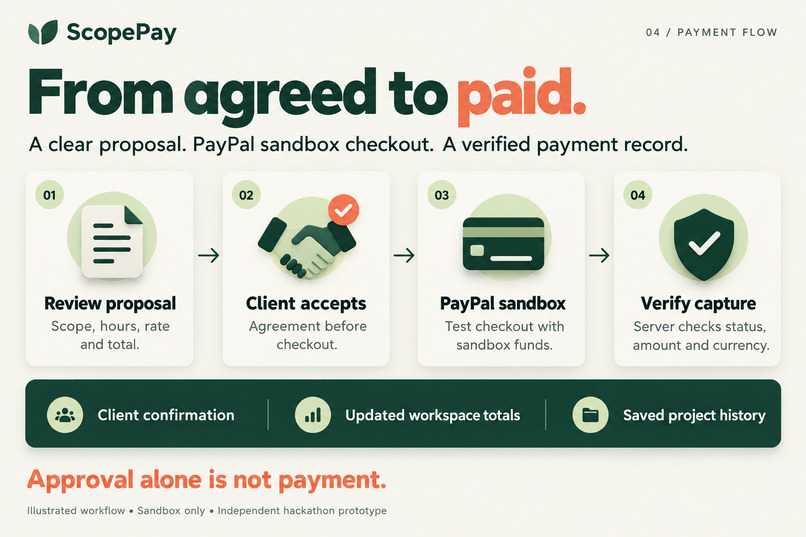
ScopePay product concept — illustrative artwork.
-
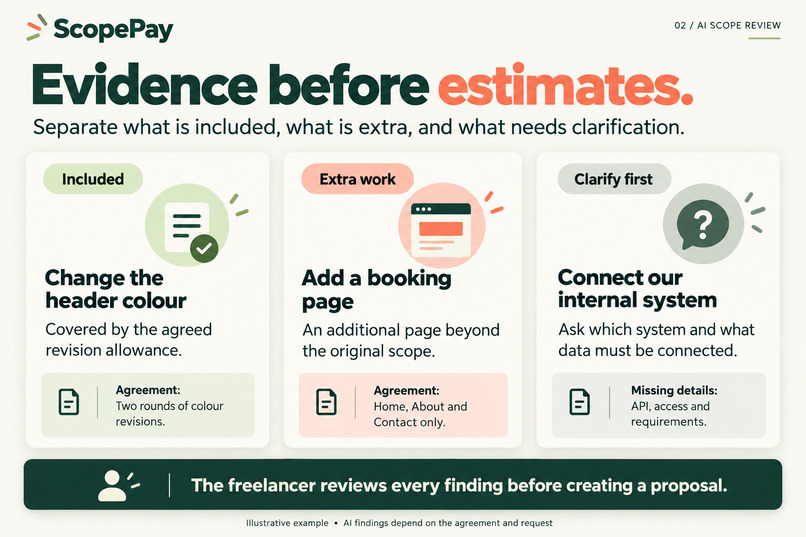
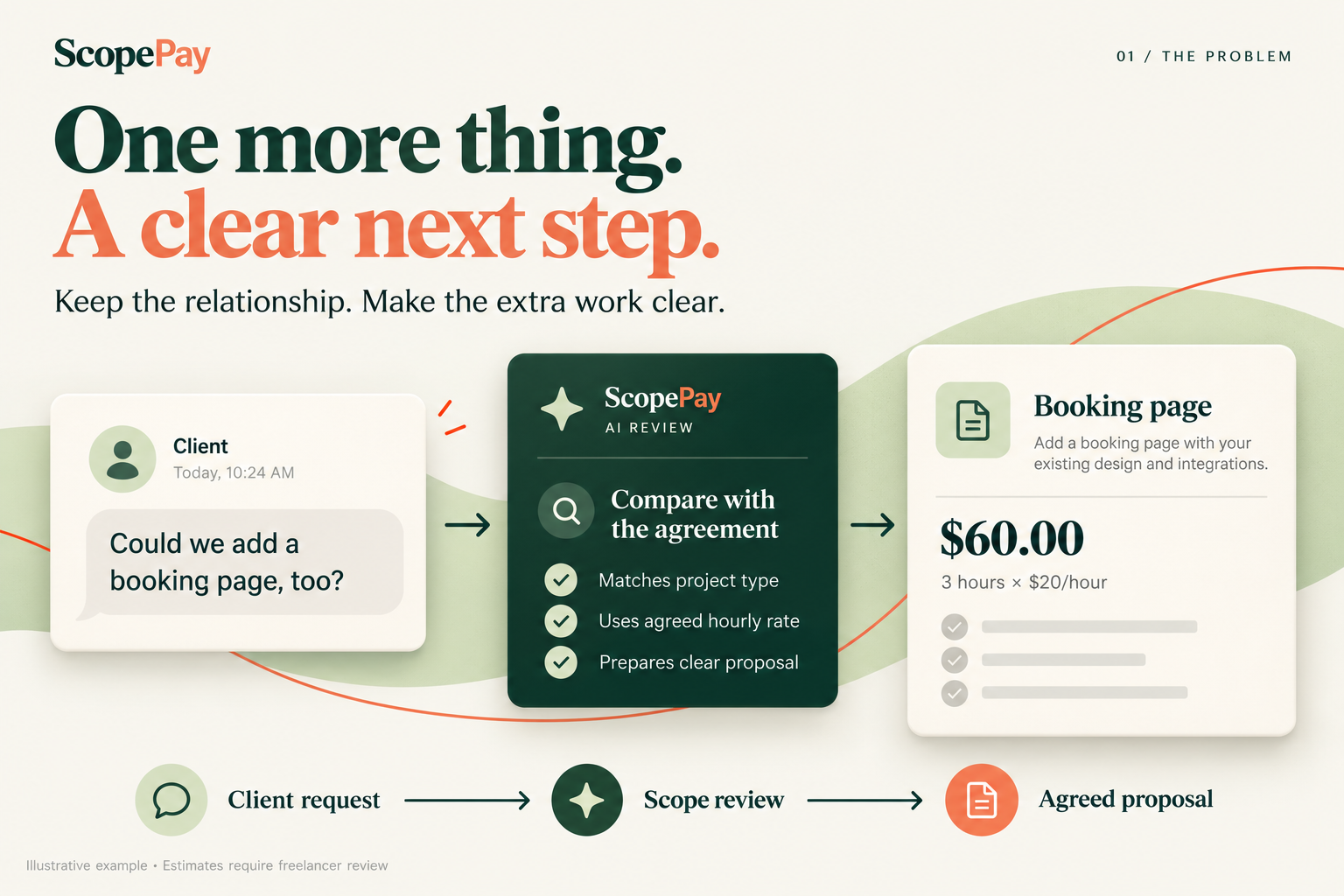
ScopePay workflow concept — illustrative artwork.
-
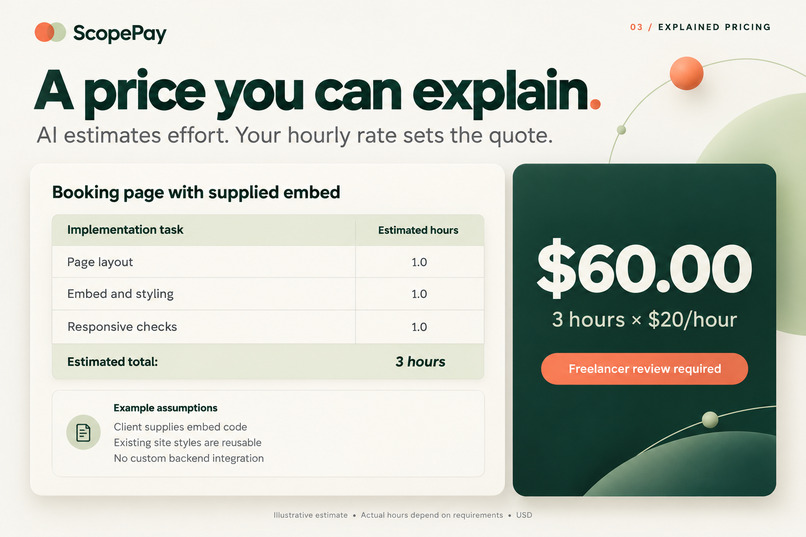
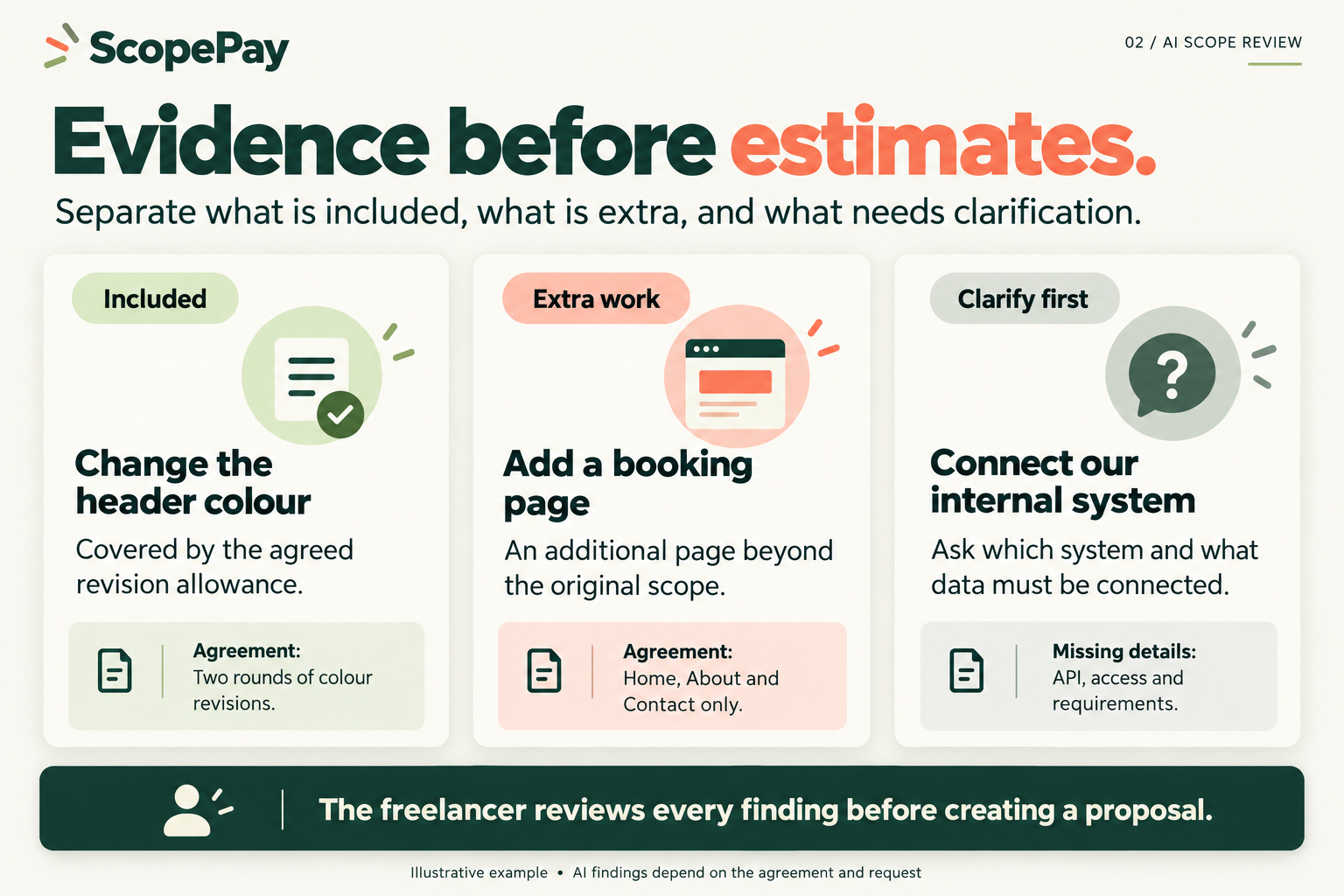
ScopePay scope-review concept — illustrative artwork.
-
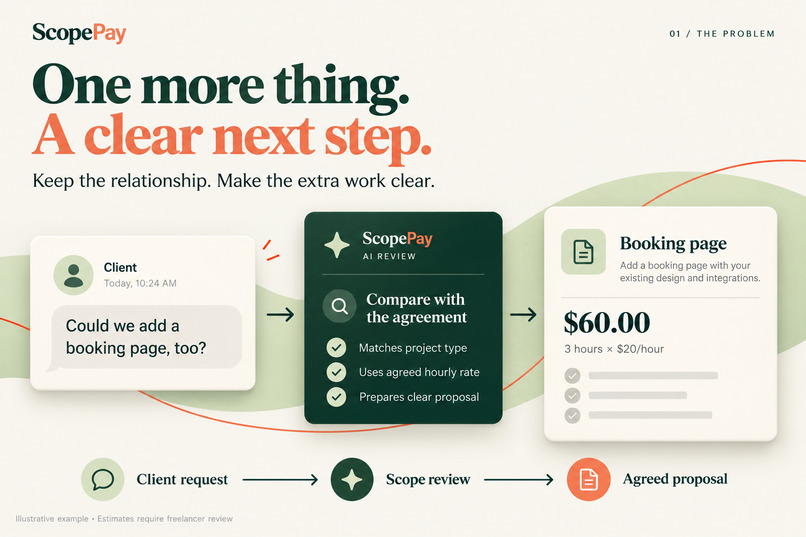
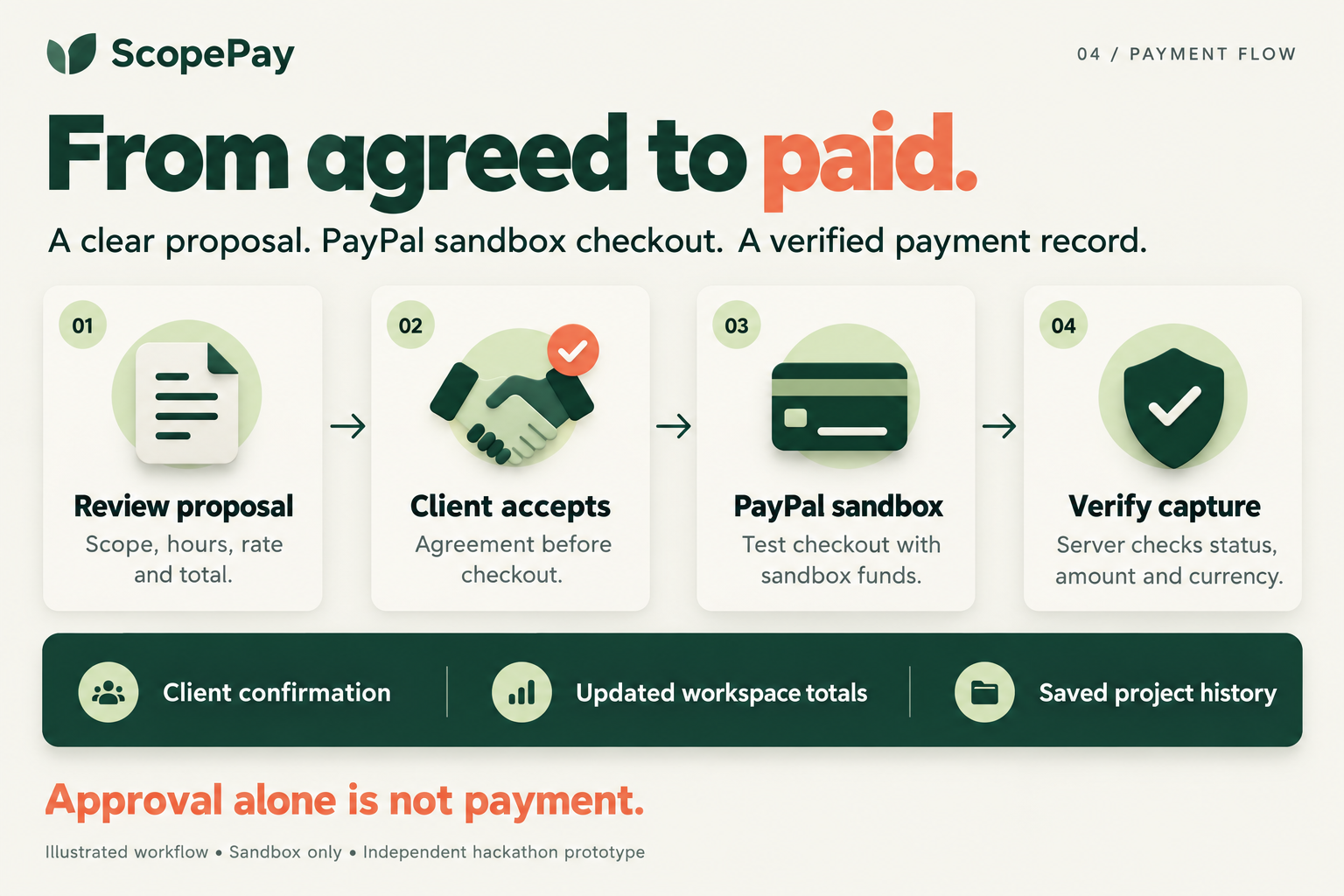
ScopePay payment concept — illustrative artwork.
Inspiration
“Could you add just one more thing?” can turn a small freelance project into hours of unpaid work. Freelancers need a clear way to explain what was originally agreed, what has changed, and what the additional work will cost.
We built ScopePay to turn a client request into an explained scope addition that both sides can review, agree on, and pay for.
What it does
- The freelancer creates a project with the original agreement and an hourly rate.
- Gemini compares a new client request against the agreement and separates included work, additional work, and requirements needing clarification.
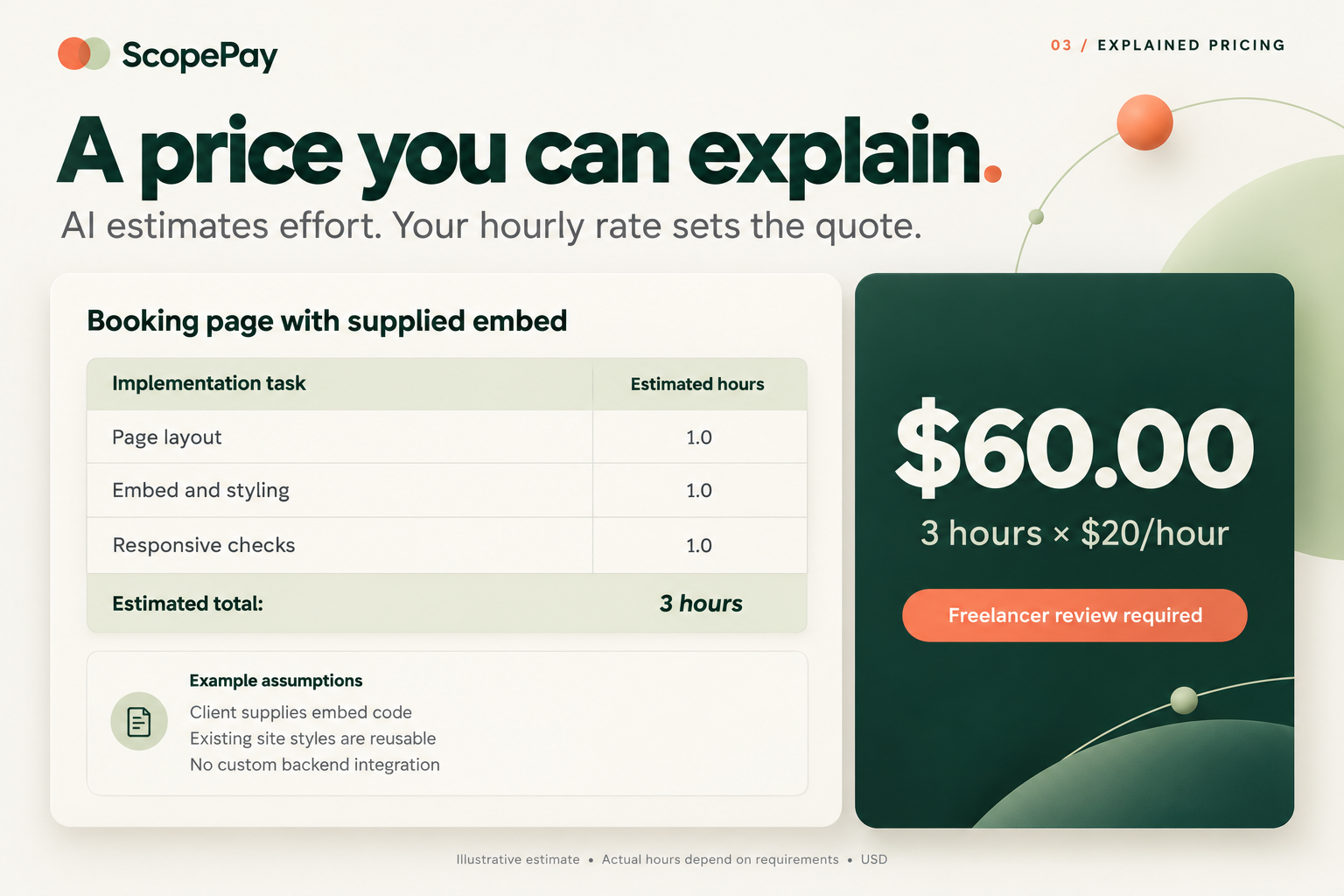
- Additional work receives implementation tasks, estimated hours, and explicit assumptions.
- ScopePay calculates the proposed price using estimated hours × the freelancer’s hourly rate.
- The freelancer reviews the additions before creating a proposal.
- The client opens a private proposal link, reviews the scope and price, accepts, and pays through PayPal sandbox checkout.
Agreement evidence and pricing assumptions remain visible. The AI suggests estimates; the freelancer makes the final decision. Accounts, projects, reviews, proposals, and payment records persist separately for each user.
How we built it
The interface uses JavaScript modules, HTML, and custom CSS, including responsive layouts, light and dark themes, and an animated landing page. A Node.js backend handles authentication, project ownership, AI requests, proposals, and payments.
Gemini provides structured scope analysis and effort estimates. The application calculates prices in integer cents rather than trusting an AI-generated total.
PayPal’s JavaScript SDK and sandbox Orders API handle checkout. The backend verifies the completed capture, amount, and currency before marking a proposal as paid. Automatic status checks keep the client page and workspace updated, with recovery after interrupted responses.
Render hosts the Node.js application on its Free web service. Neon PostgreSQL stores hosted records, while SQLite supports local development. Provider secrets stay on the server. Render Workflows is not used.
Challenges we ran into
Distinguishing additional work from unclear requirements required agreement evidence, explicit assumptions, and clarification. Overlapping deliverables also needed checks to avoid duplicate charges.
Payment approval is different from a completed capture. We implemented server-side verification and recovery for pending outcomes, repeated requests, and lost responses.
Free hosting required durable external storage so records would survive service restarts and deployments.
Accomplishments that we’re proud of
ScopePay connects an explainable AI review to a practical payment workflow. Freelancers can explain a quote, clients can review the addition, and both sides retain a record.
All 40 automated tests passed in the final checks, covering authentication, account isolation, storage, pricing, and payment behavior. Automated payment tests use mocked providers and do not move money.
Demo and testing
The public YouTube demo shows actual website recordings with AI narration and synchronized English captions. The hosted example estimates 3 hours × $25/hour = $75. The payment-confirmation screenshots are labelled as an earlier local sandbox test of a separate $60 proposal; they do not show a new capture of the hosted $75 proposal.
Try the hosted app at https://scopepay.onrender.com. Choose Get started and create a normal account; no Render account, owner setup token, or payment is required. Set an hourly rate, save an original agreement, and review a client request. Free hosting may take a minute to wake after inactivity. The public repository includes complete local setup, provider configuration, and testing instructions. PayPal checkout requires a separate sandbox Personal buyer account; use test funds only.
The gallery contains illustrative product artwork. The video shows the working website and labels the earlier payment evidence.
What we learned
Useful AI needs clear boundaries. Agreement evidence, visible assumptions, and human review make estimates more useful than an unexplained price. Reliable payment experiences also need durable records, server-side verification, and recovery paths.
What’s next for ScopePay
We plan to compare estimates with actual completion times, add verified payment webhooks and refund reconciliation, improve account recovery, and support individual merchant onboarding. Future integrations could bring client requests in from the tools freelancers already use.
ScopePay is an independent hackathon prototype, not an official PayPal product. Payments use PayPal sandbox funds only. Live payments and verified webhooks are outside this version.
Built by The Dev Crew.
Built With
- css3
- gemini
- github-actions
- html5
- javascript
- neon
- node.js
- paypal
- postgresql
- render
- sqlite

Log in or sign up for Devpost to join the conversation.