-
-
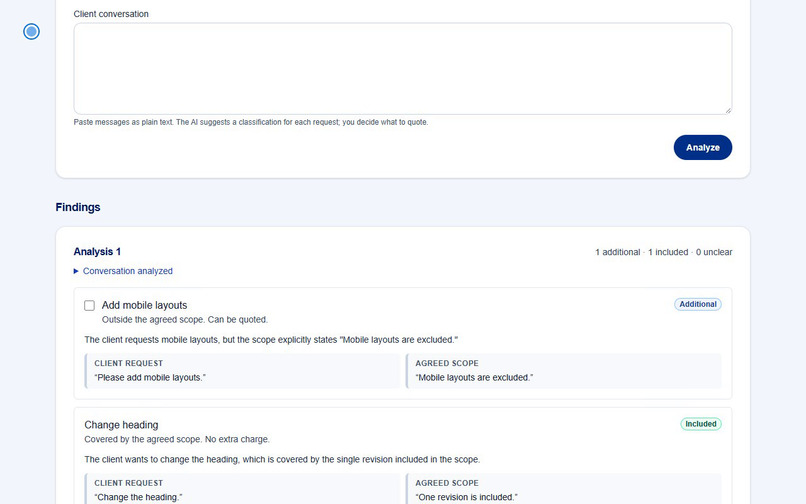
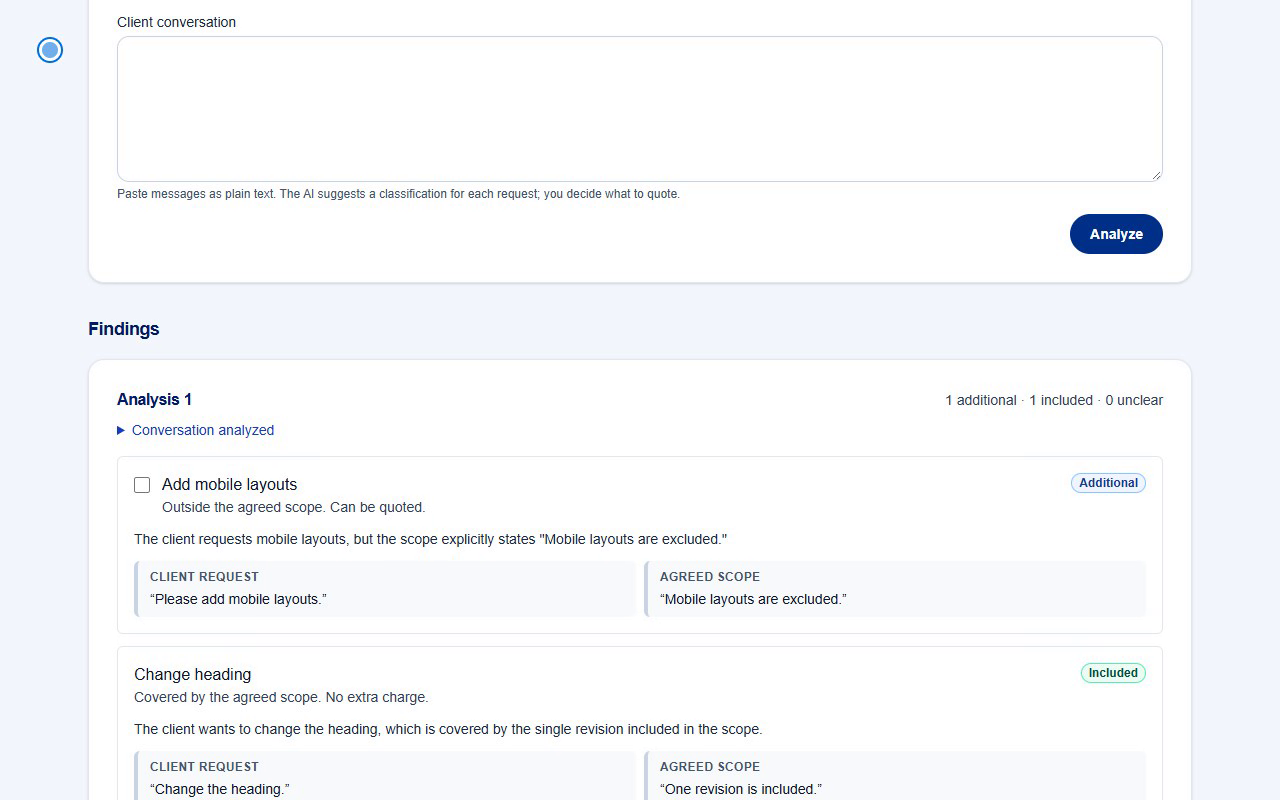
AI Analysis Findings
-
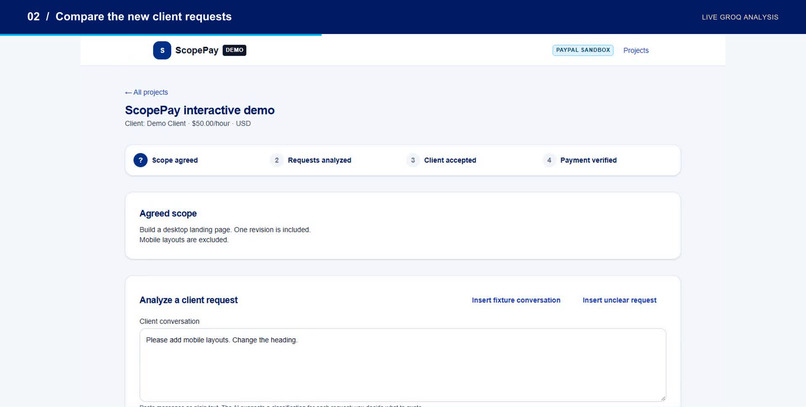
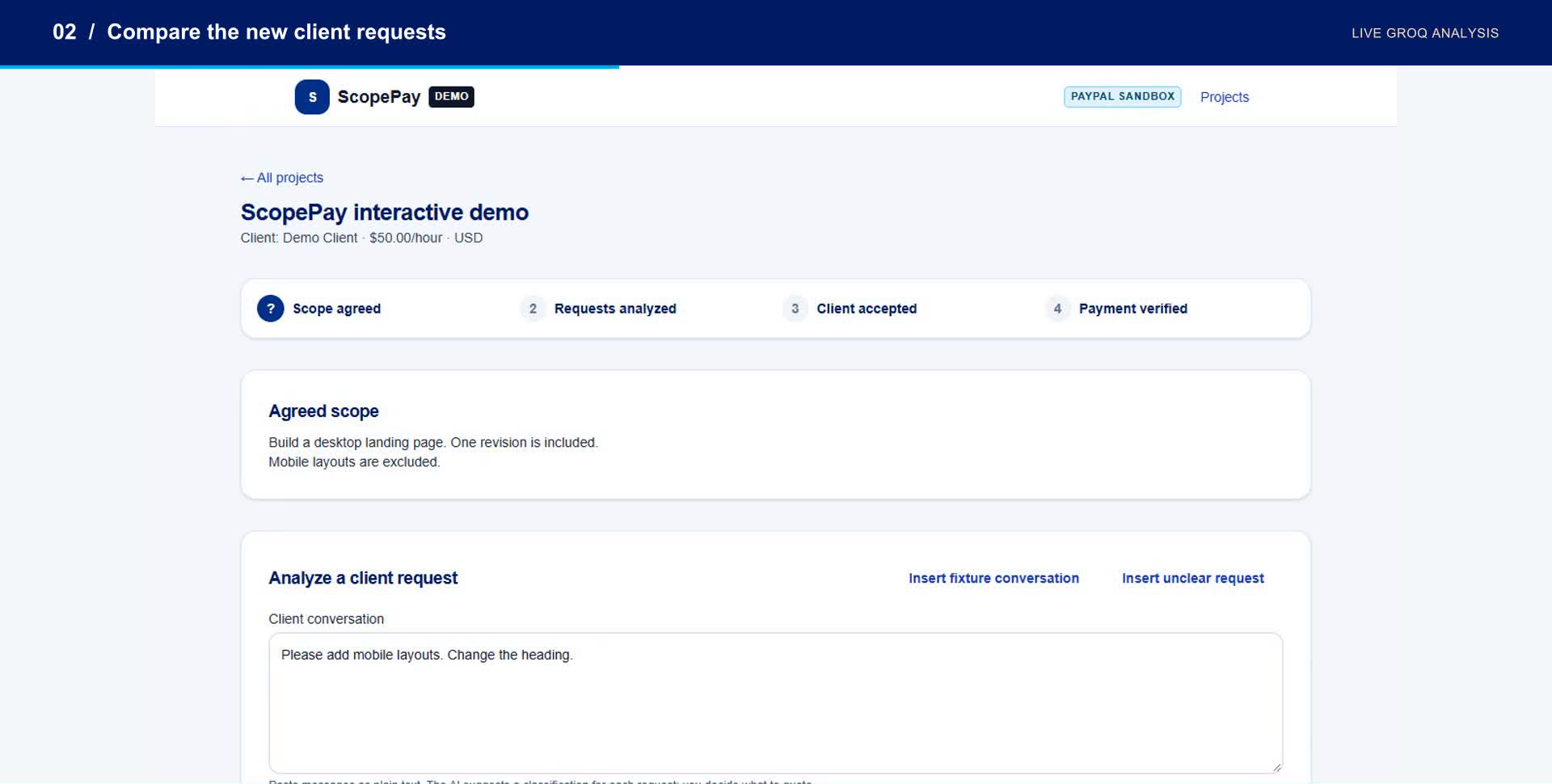
Scope and Client Request
-
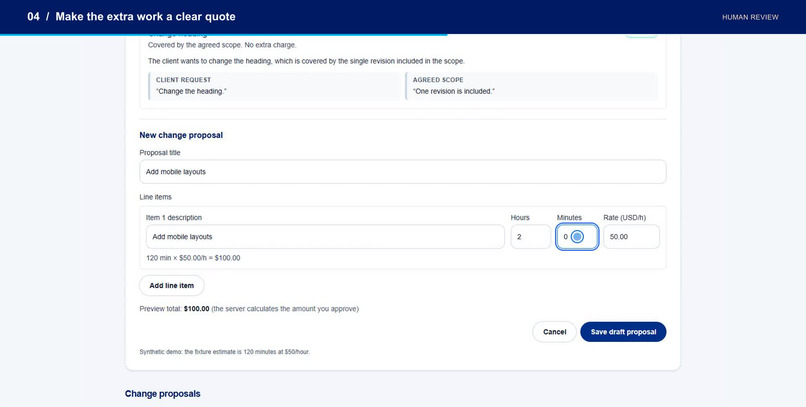
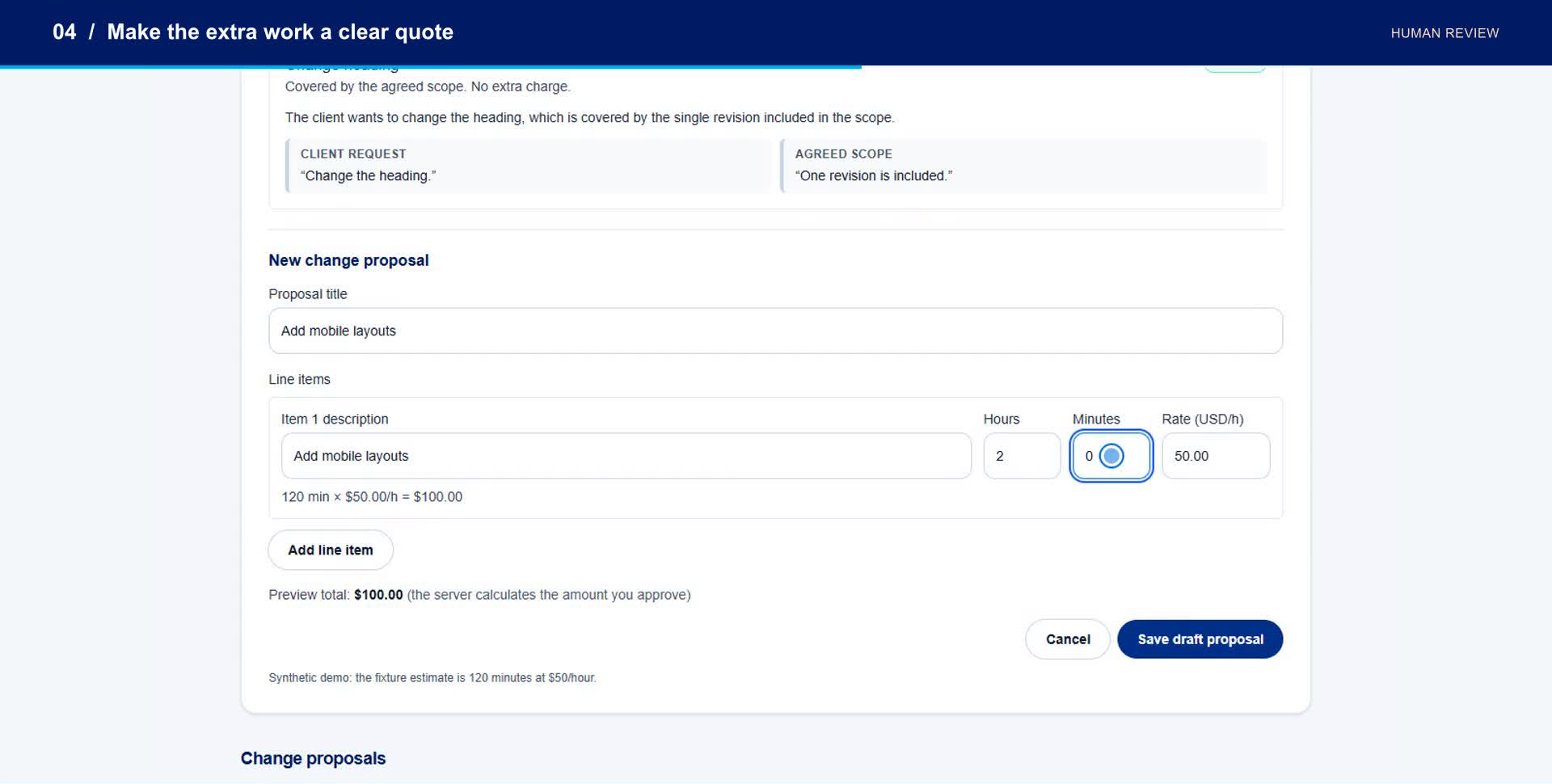
$100 change proposal
-
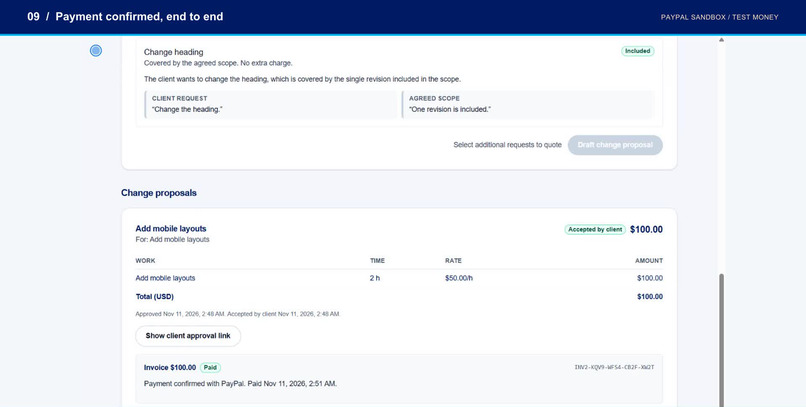
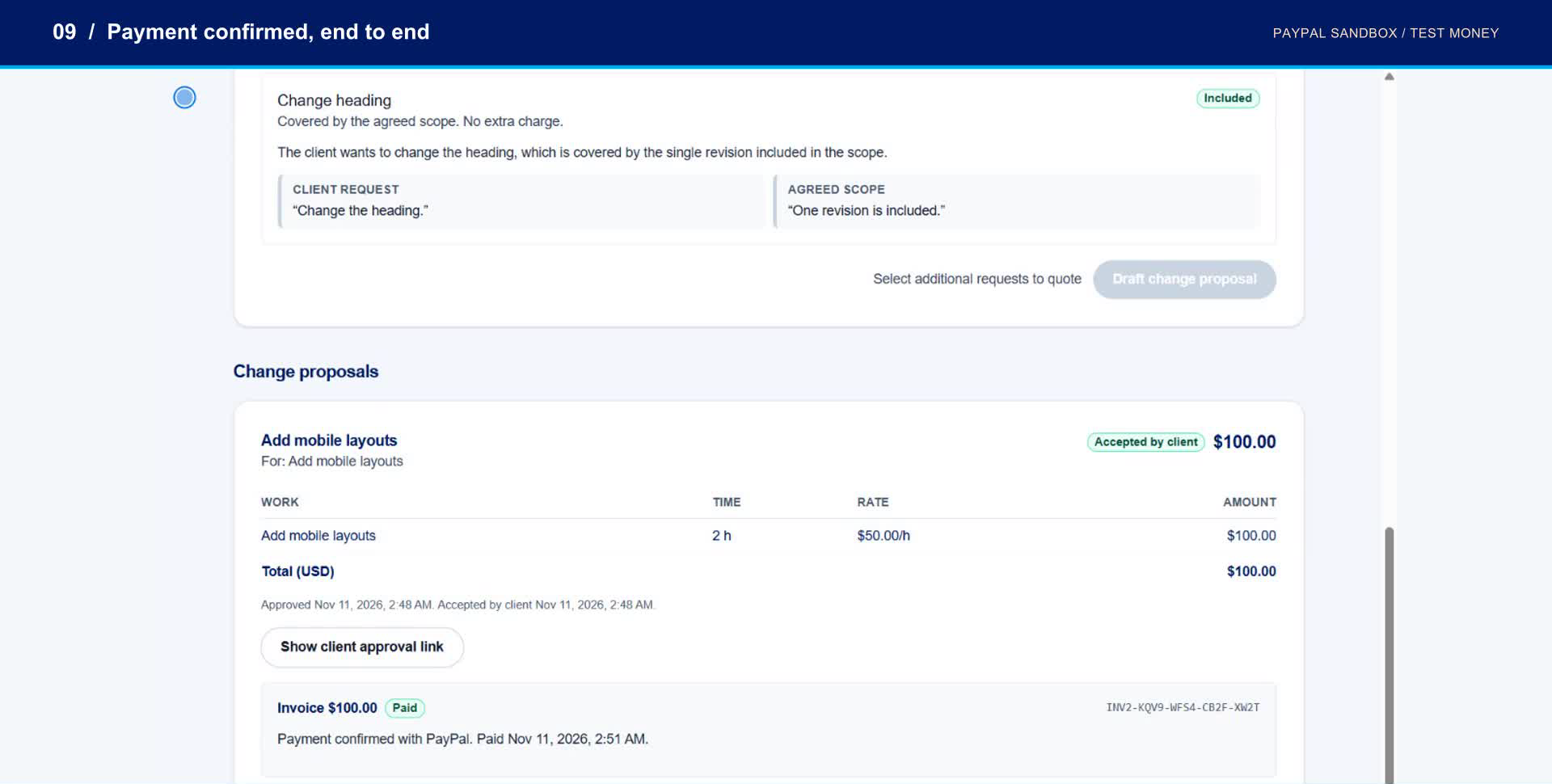
Verified PayPal sandbox payment
Inspiration
“Could you add just one more thing?”
For freelancers, a small client request can mean hours of work beyond the original agreement. When those changes stay buried in messages, expectations become unclear and extra effort can go unpaid.
We built ScopePay to turn scope creep into a clear agreement and a traceable payment request.
What it does
ScopePay compares a project’s agreed scope with new client messages and helps the freelancer identify what is included, additional, or unclear.
Each AI finding includes quotations from the original text. The freelancer reviews the evidence, selects additional work, and creates a proposal with estimated time and pricing.
The proposal is then approved, shared through a scoped client link, and explicitly accepted by the client before a PayPal sandbox invoice can be created.
The workflow is:
Agreed scope → AI analysis → Freelancer review → Change proposal → Client acceptance → PayPal invoice → Verified payment
AI supports the review; the freelancer controls the estimate and approval.
How we built it
We built the application with Next.js, React, TypeScript, and Tailwind CSS. Prisma connects the backend to PostgreSQL hosted on Neon.
Groq runs the scope analysis using structured JSON output. The backend validates the response and checks that every citation appears exactly in the supplied source text.
PayPal’s Invoicing API handles sandbox invoice creation, hosted payment links, and payment-status retrieval. Invoice amounts come from the stored, accepted proposal and are calculated on the server in integer cents.
Approved proposals become immutable. Client links provide access to the relevant proposal without exposing source conversations or other projects.
Challenges we ran into
Connecting analysis, approval, acceptance, and payment required careful state management. We needed to prevent changes to approved proposals, duplicate invoices, and incorrect payment confirmations.
We also encountered model availability and API quota issues while testing AI providers, eventually verifying live analysis through Groq.
PayPal sandbox testing taught us that successful authentication does not guarantee Invoicing permission. We also encountered a restriction on India-to-India invoicing and completed the walkthrough with an India sandbox merchant and a US sandbox buyer.
Accomplishments we’re proud of
We verified the complete workflow with a real AI request and a completed PayPal sandbox payment.
In our demonstration, mobile layouts were excluded from a desktop landing-page agreement. ScopePay identified the mobile request as additional work and a heading revision as included. The freelancer quoted two hours at $50 per hour, the client accepted $100, and the backend verified the completed $100 USD sandbox payment.
We also implemented citation validation, immutable approvals, scoped client access, duplicate-invoice safeguards, and automated integration tests using PostgreSQL and synthetic provider responses.
What we learned
A useful AI payment workflow needs clear evidence, human decisions, and reliable payment verification.
We learned to treat AI output as a suggestion requiring validation, client acceptance as a separate step from payment, and PayPal’s backend records as the authority for payment status. A successful browser redirect alone must never mark an invoice paid.
What’s next for ScopePay
Our current version is a shared-workspace hackathon MVP using USD and PayPal sandbox payments.
Next, we want to add individual freelancer accounts, public deployment, clearer recovery options for provider errors, document-based scope uploads, and payment reminders. Production payment support would require further account setup, security work, and operational testing.
Built With
- groq
- neon
- next.js
- node.js
- paypal
- postgresql
- prisma
- react
- tailwind-css
- typescript
