-
-
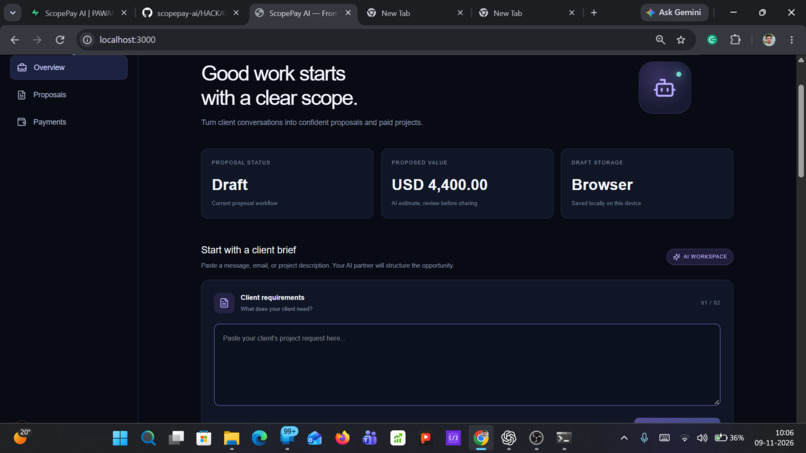
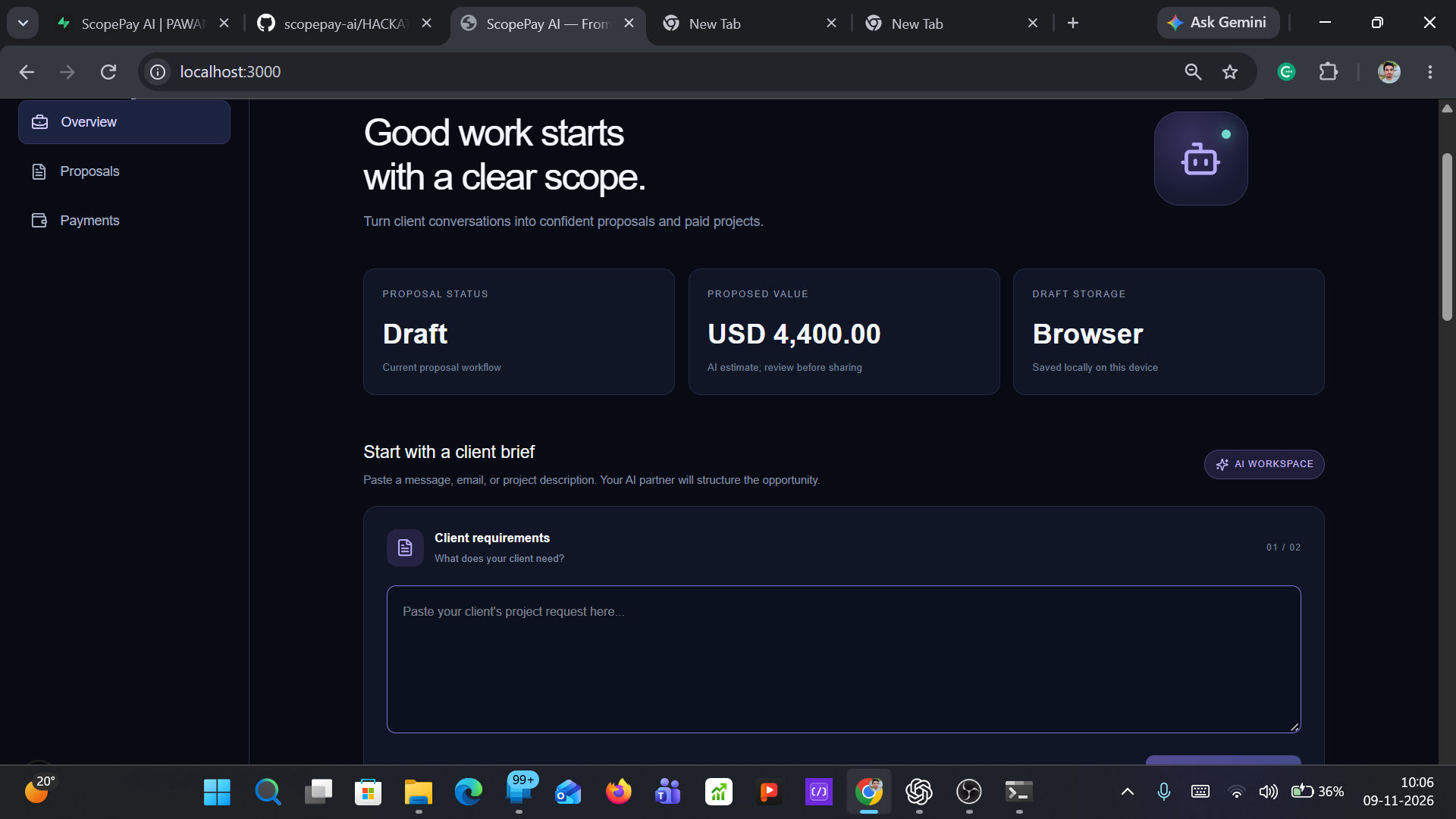
ScopePay AI workspace for turning client briefs into structured proposals.
-
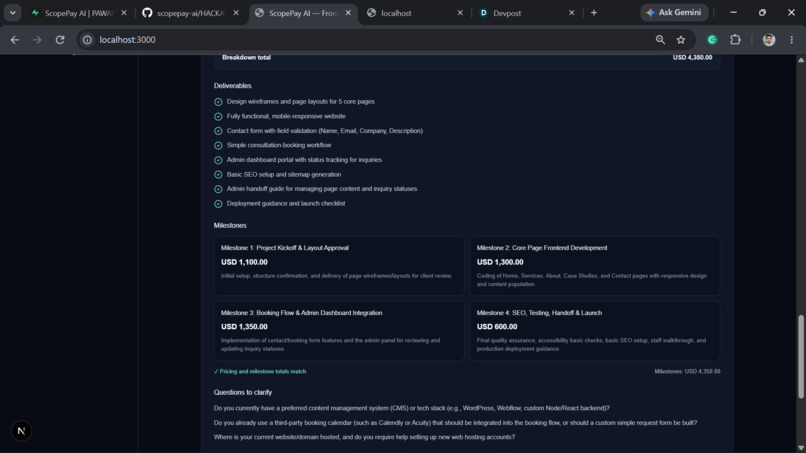
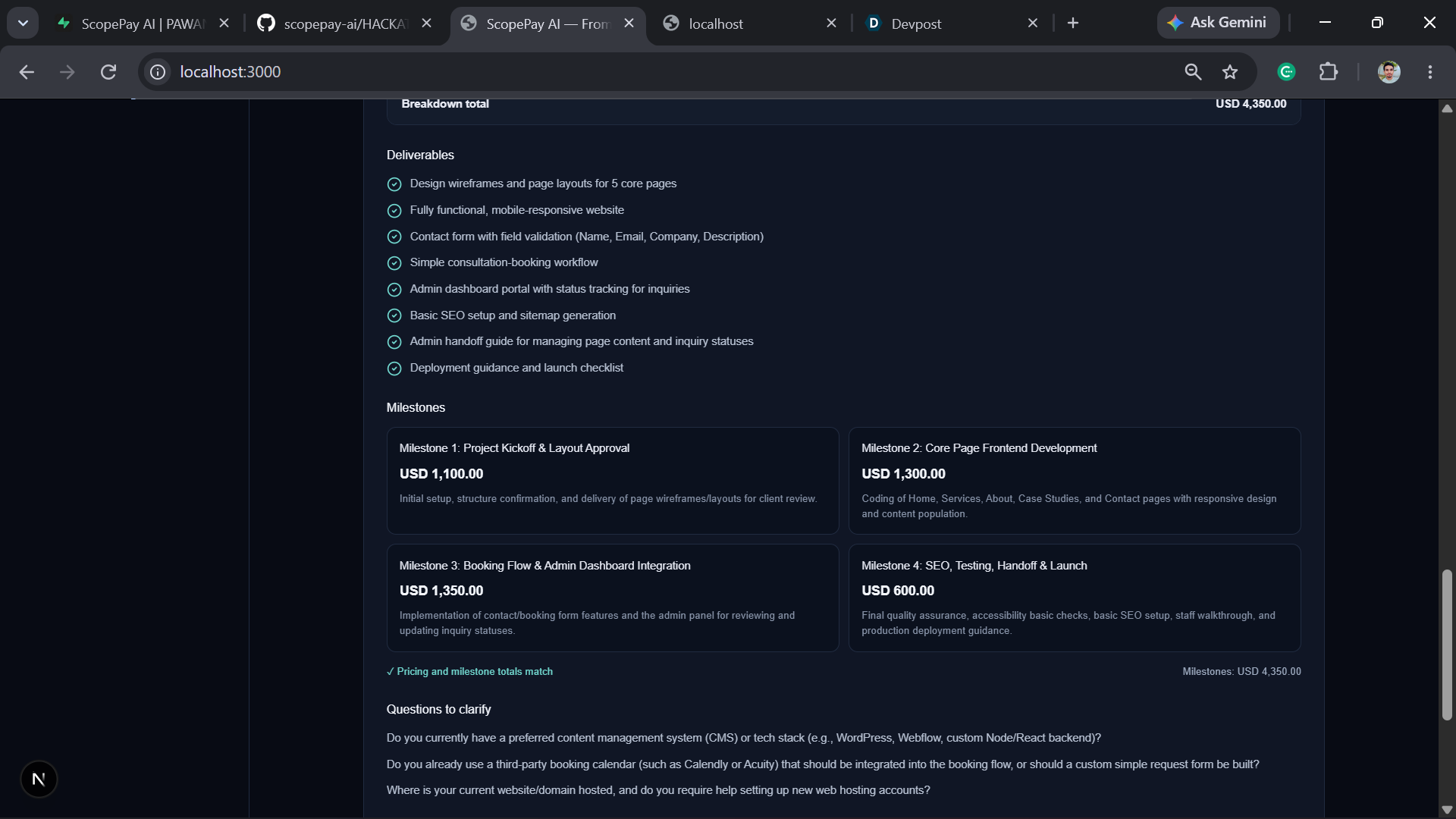
AI-generated scope, deliverables, pricing, and milestones based on the client brief.
-
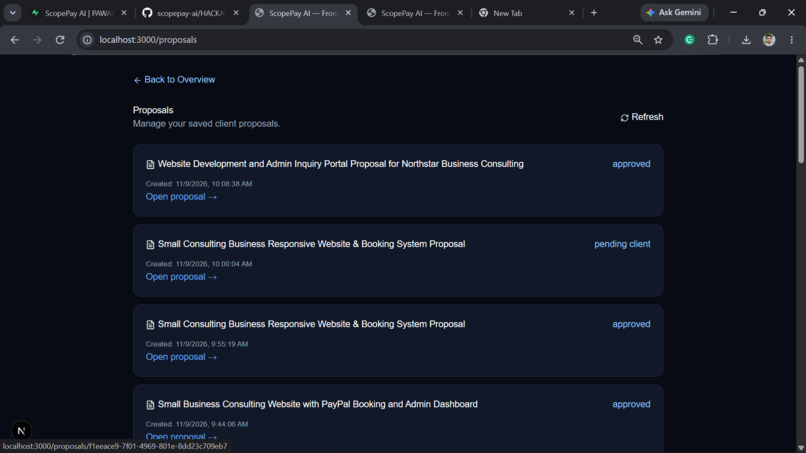
The client reviews and approves the proposal through a secure link.
-
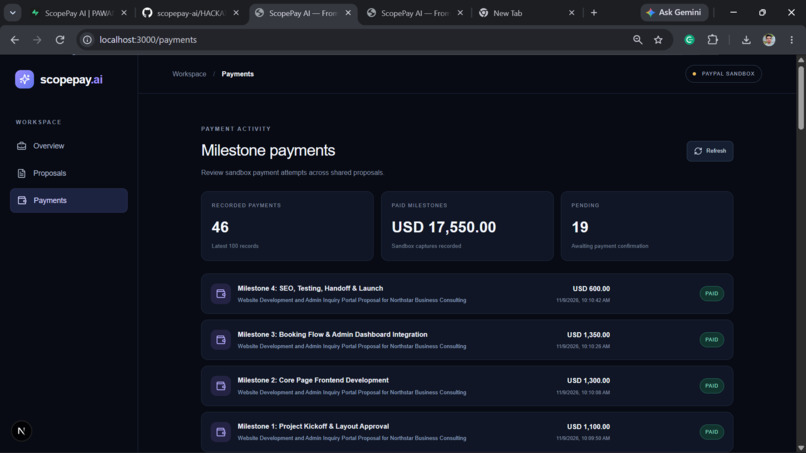
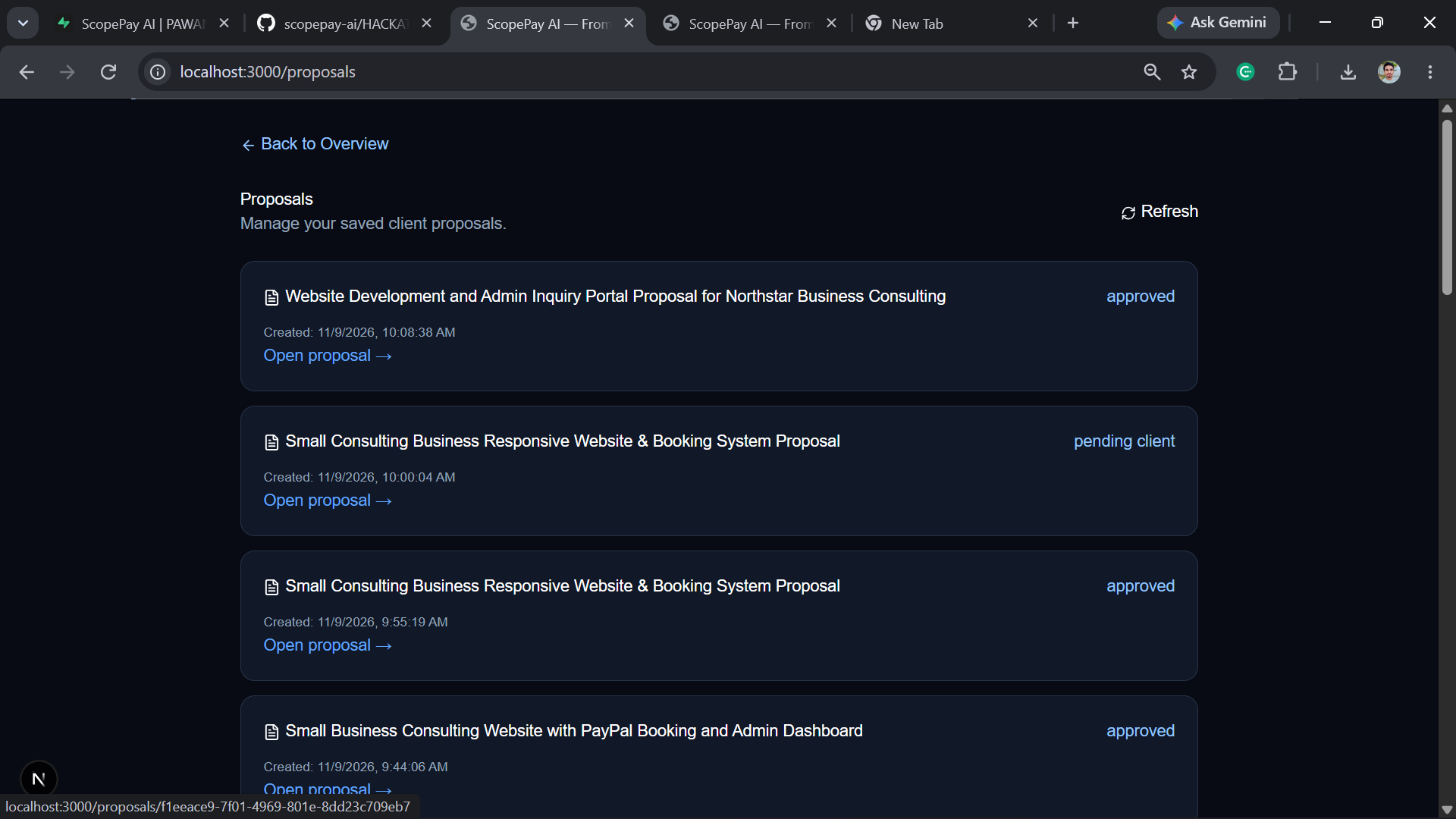
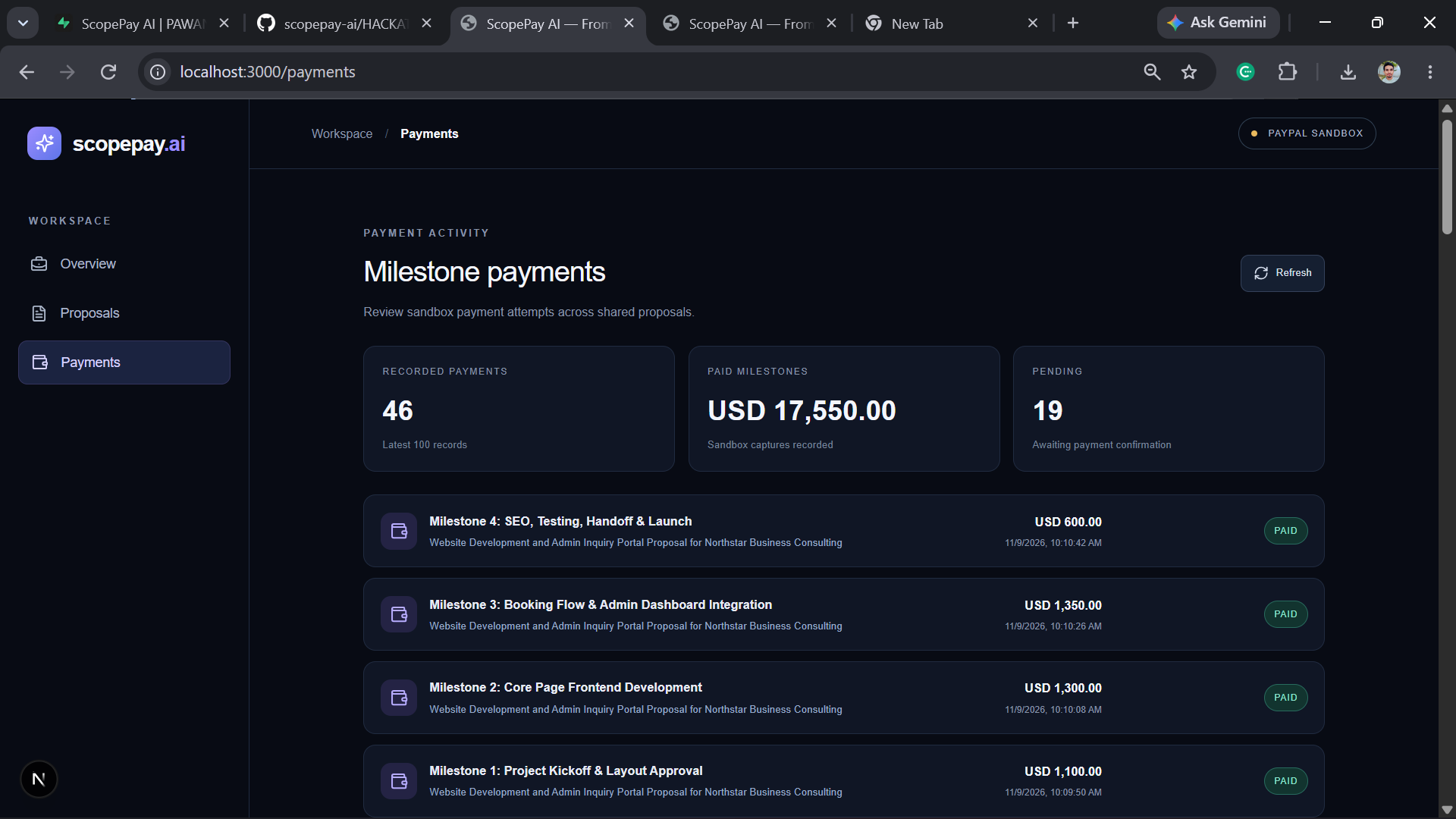
Track milestone payment status and PayPal Sandbox activity in one dashboard.
-
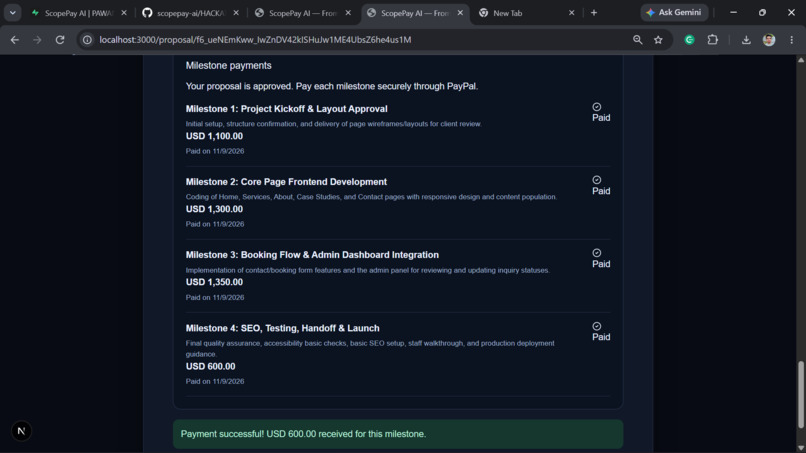
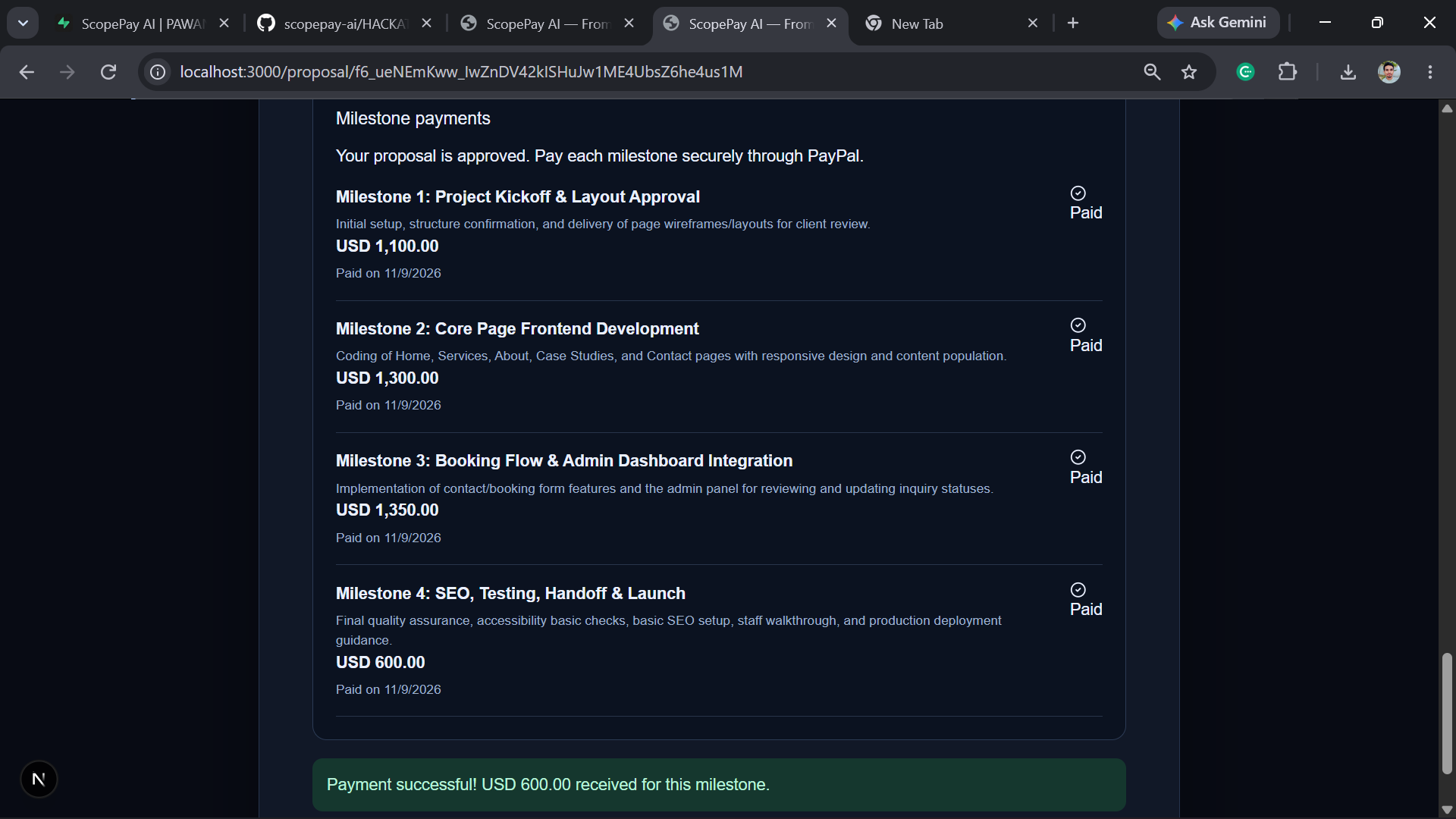
Track milestone payment status for client side
Inspiration
Freelancers often receive project requests as informal messages or emails. Turning those into a clear scope, realistic milestones, and payment terms takes time—and misunderstandings can lead to scope creep or delayed payments. We built ScopePay AI to make that process more structured and easier to review with a client.
What it does
ScopePay AI turns a client brief into a structured freelance proposal, including project scope, deliverables, pricing, timeline, and payment milestones. The freelancer can review the proposal and share it through a secure client link. The client can review and approve it, then pay milestones through PayPal. A workspace dashboard shows proposal and payment activity.
How we built it
The app uses Next.js and TypeScript. An AI model helps structure the client brief into proposal content. Supabase stores proposal and payment records, and PayPal’s Sandbox supports the milestone checkout flow. The interface brings proposal creation, client review, and payment tracking into one workflow.
Challenges we faced
A key challenge was making payment status reliable. A PayPal order can be approved while its capture is still pending review, so the app must distinguish a completed payment from one that is still processing. We also worked through dependency setup on Windows PowerShell and configured the PayPal Sandbox integration for the demo.
What we learned
We learned that AI-generated proposals need to remain reviewable by the freelancer, and that payment workflows require careful status verification rather than relying only on the checkout redirect. Building the full flow helped us connect AI-assisted proposal creation with a practical payment experience.
What’s next
Next, we’d improve payment-status reconciliation, add more robust webhook handling, and continue testing the workflow across different project briefs and payment outcomes.
Built With
- next.js
- openai
- paypal
- supabase
- typescript
