-
-
Image
ScopeMint AI — Clarity before checkout
Tagline: Turn messy freelance briefs into clear, human-approved PayPal milestone payments.
Inspiration
Freelancers and small teams often start work from informal emails and chat messages. When deliverables, revisions, timing, and payment amounts are vague, misunderstandings grow. We wanted to tackle the gap between agreeing on a project and getting paid, while keeping AI decisions explainable and human-controlled.
What it does
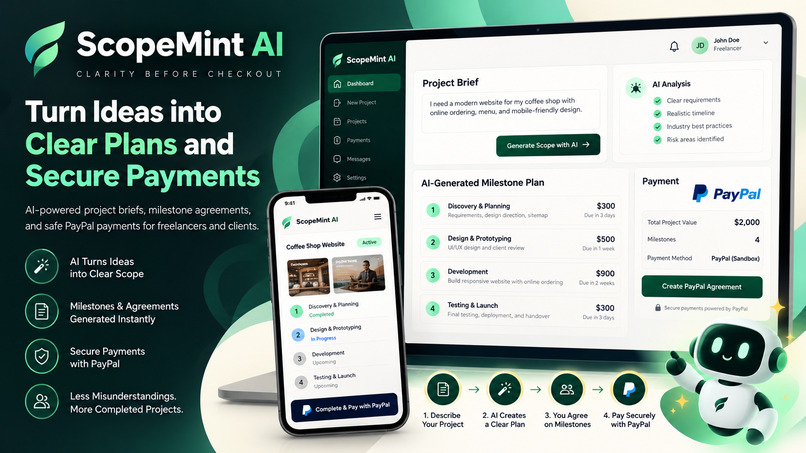
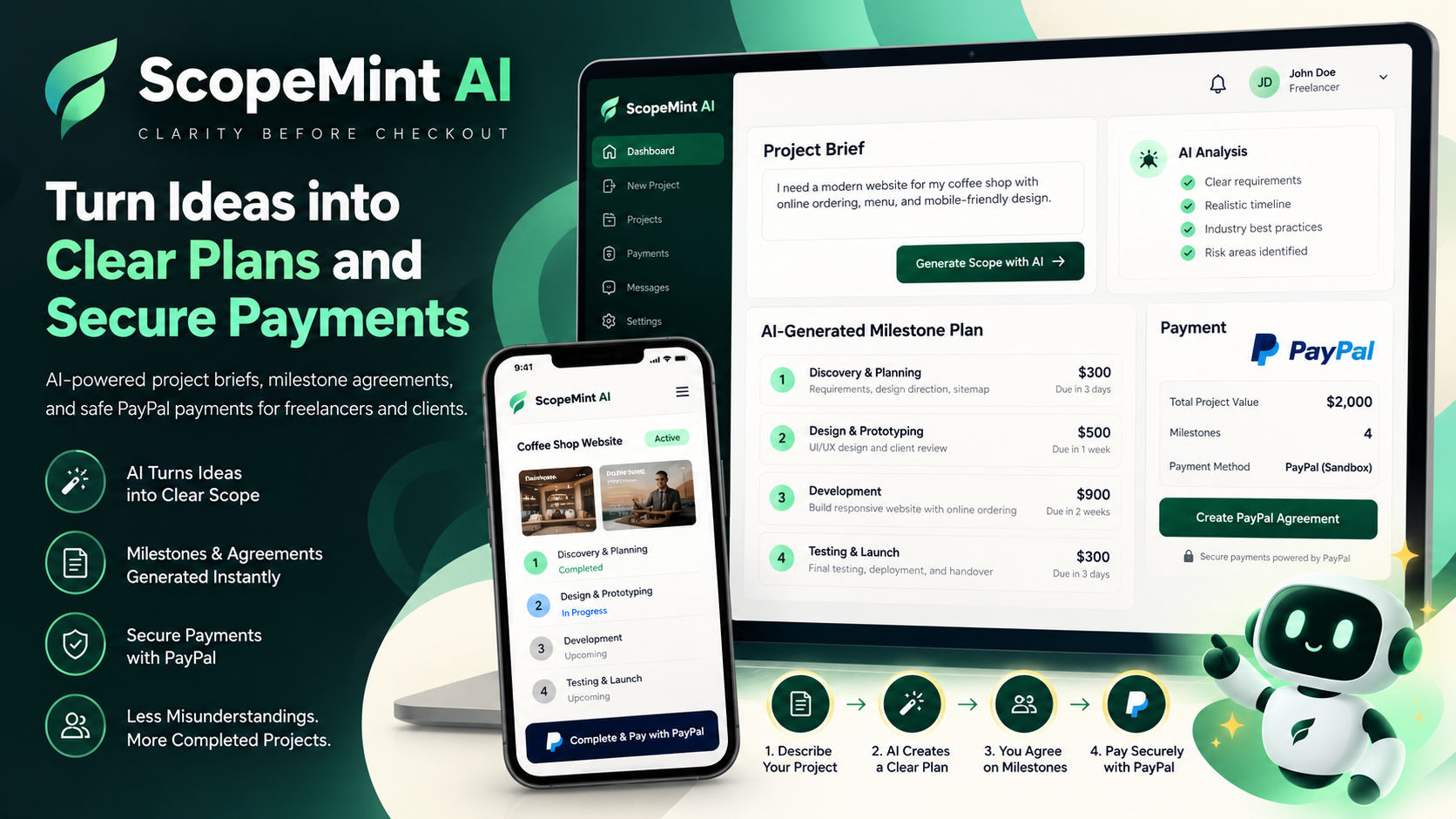
ScopeMint AI turns an unstructured project description into a reviewable three-milestone agreement. A trained text classification model identifies the work category, and the app derives an appropriate milestone structure. Clarity checks flag missing delivery windows, undefined deliverables, unbounded commitments and revision ambiguity. The user reviews the exact terms and manually chooses each milestone before starting a PayPal Sandbox checkout. PayPal Orders v2 creates the order, guides payer approval, and captures the test payment after approval. The app distinguishes successful sandbox captures from simulations, so judges can see what actually happened.
How we built it
We built a dependency-light Node.js application with a responsive web UI, a transparent Multinomial Naive Bayes text classifier trained on labeled synthetic project briefs, explicit contract-clarity checks, an optional OpenAI text-enrichment route, and PayPal REST APIs. PayPal OAuth 2.0 is handled server-side. The checkout uses PayPal Orders API v2 CAPTURE intent and a sandbox payer-approval redirect. Each step has error and review states. We use local browser storage for demo history, not as a production payment ledger.
Challenges
It is easy to build an AI that proposes spending money. It is more important to build an experience that communicates financial decisions correctly. We separated AI analysis from payment authorization, kept sandbox and simulation flows distinct, and avoided the false promise of escrow. We also built an AI path that works without any external API key, so the prototype remains testable by more judges.
Accomplishments
- Complete responsive agreement-builder interface and client review journey.
- Runnable AI work classification and contract clarity-check engine without external keys.
- PayPal Sandbox OAuth / Orders create / buyer approval / capture backend integration.
- Explicit human approval at every paid milestone and visible simulated-vs-sandbox labeling.
- Exportable agreement JSON, accessible reading mode, local activity history, and automated tests.
What we learned
Trust comes from clear boundaries: AI can help people structure a payment, but an understandable consent step must remain central. Strong product design isn't a layer added to the API; it makes the risks and limitations visible at the moment they matter.
What's next
Move to authenticated merchant and client workspaces, add signed PayPal webhooks, persistent audit records, client approval links, multilingual agreement support, and legally reviewed agreement templates. A real deployment would also require production security, consent and compliance review.
Built with
JavaScript, Node.js, HTML, CSS, Multinomial Naive Bayes ML classifier, optional OpenAI API, PayPal Sandbox OAuth 2.0, PayPal Orders API v2, Vercel-compatible serverless functions.
Built With
- css3
- html5
- javascript
- naive-bayes-ml
- node.js
- openai-api-(optional)
- paypal-orders-api-v2
- paypal-rest-api
- paypal-sandbox
- vercel

Log in or sign up for Devpost to join the conversation.