Inspiration
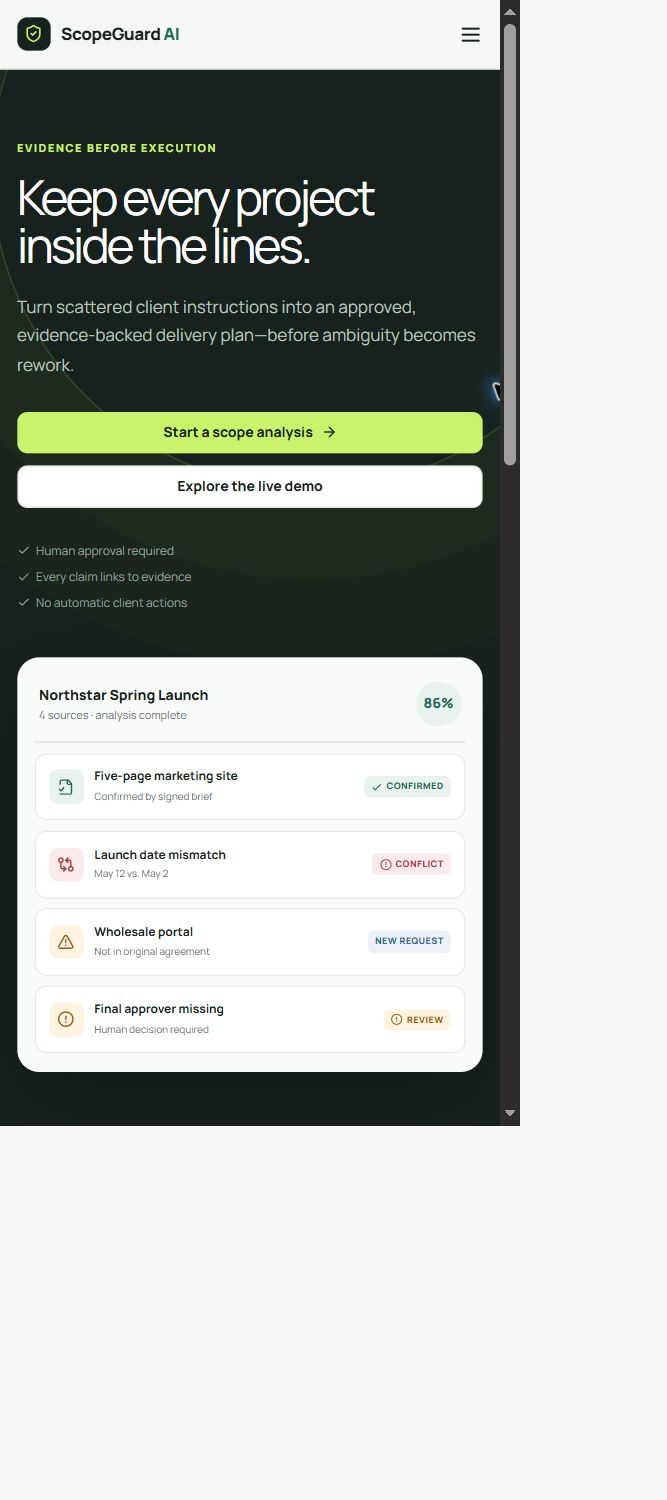
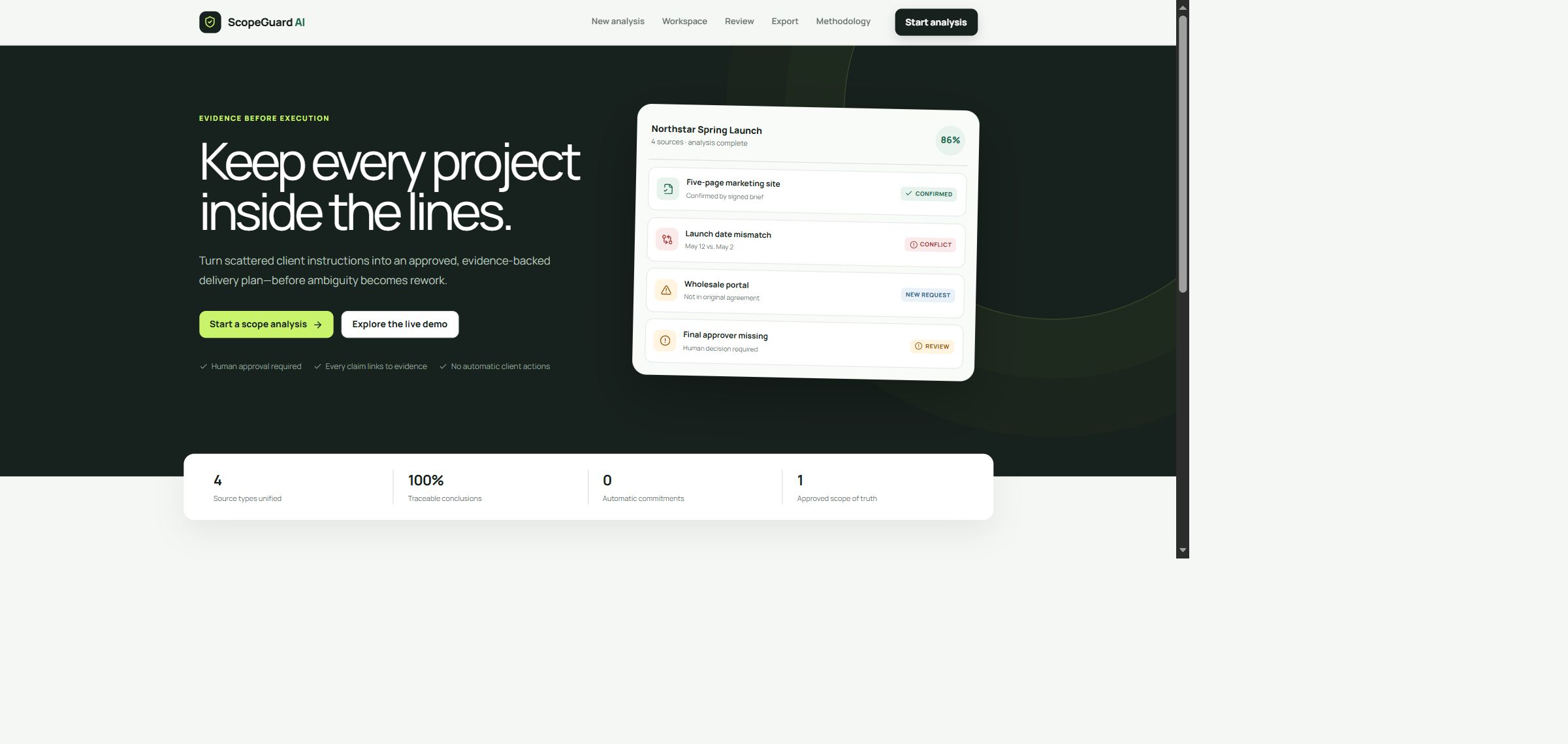
ScopeGuard AI helps agencies, development teams, production teams, and operations managers understand what a client actually requested.
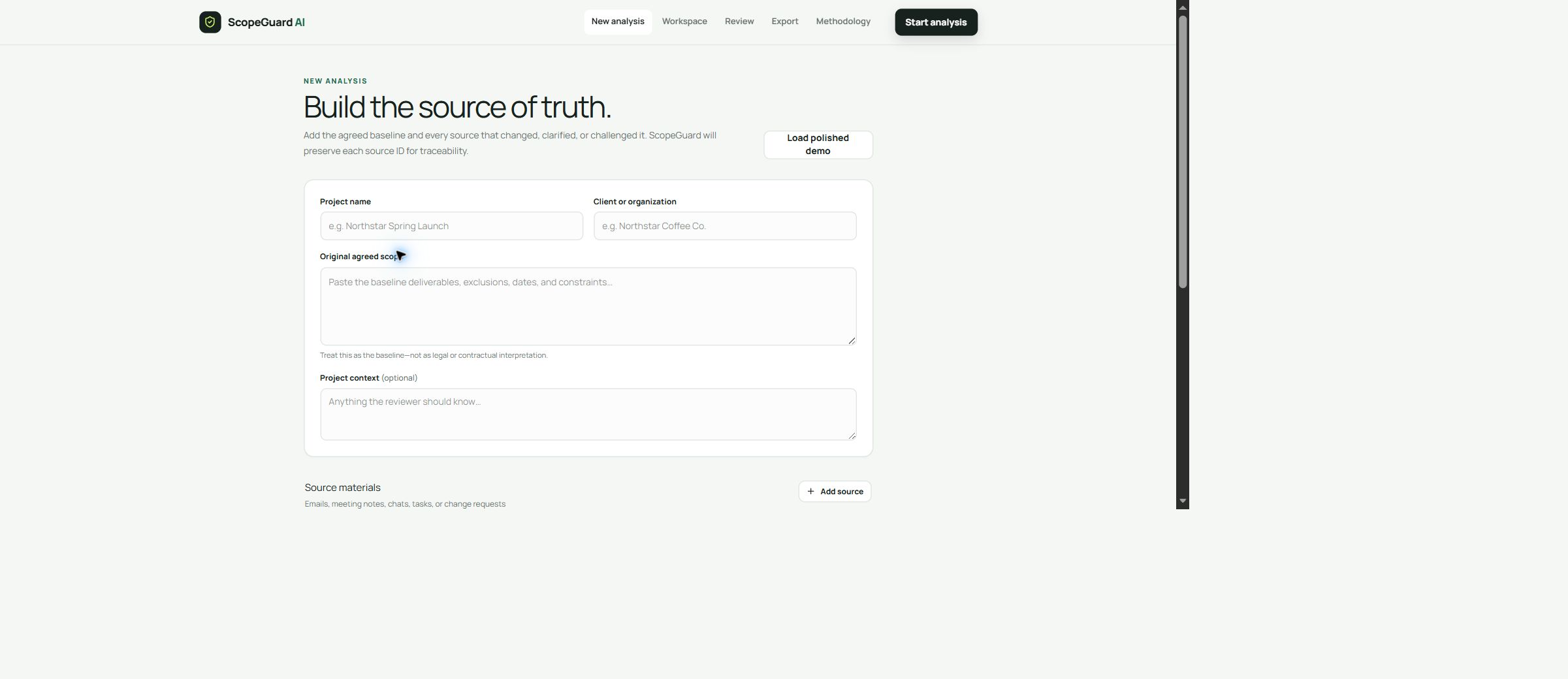
Project requirements often arrive through briefs, emails, meetings, chat messages, and later change requests. These sources can conflict, omit important decisions, or introduce extra work that was never included in the original agreement.
What it does
ScopeGuard AI brings those sources together and analyzes them as one evidence set.
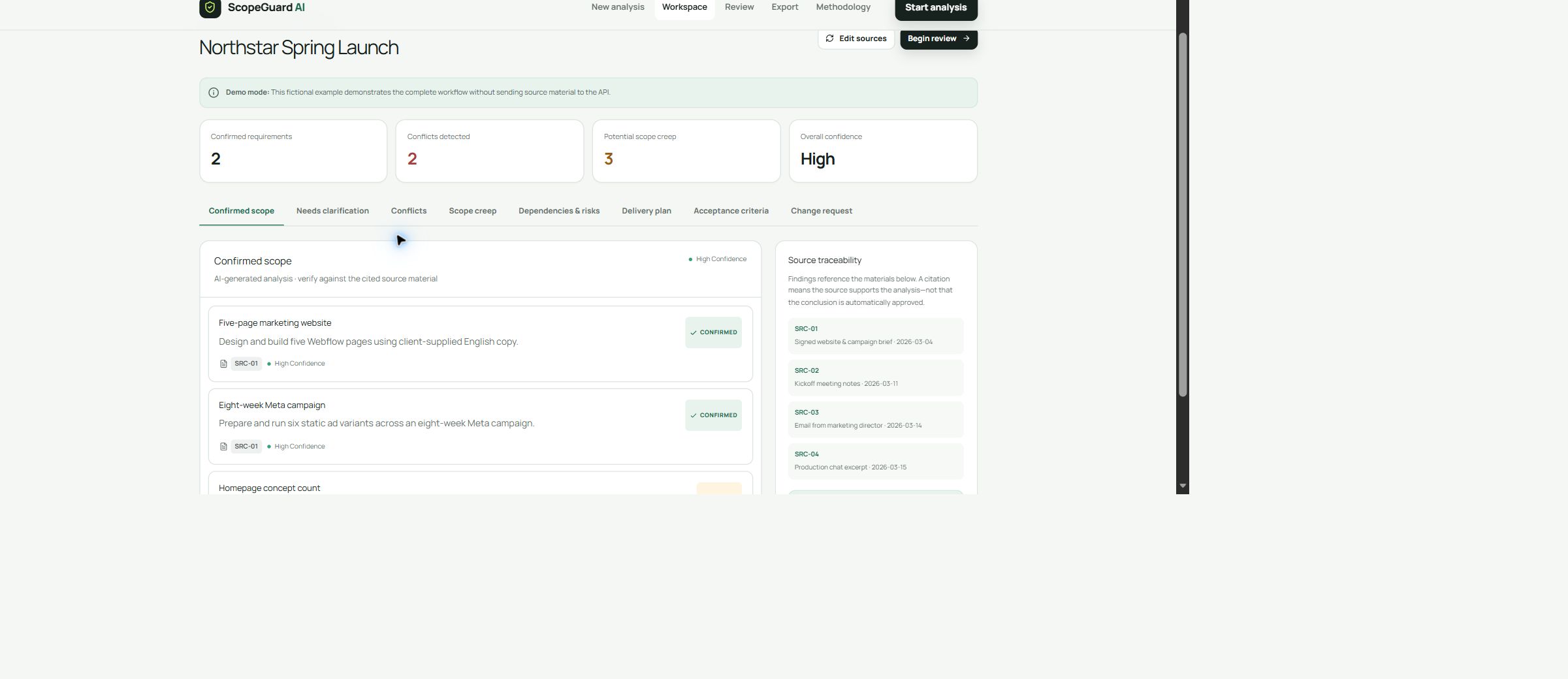
It identifies confirmed requirements, contradictions, missing decisions, assumptions, potential scope creep, risks, dependencies, delivery tasks, and acceptance criteria.
Every important conclusion includes traceable source evidence, such as the original BASELINE or a specific source ID.
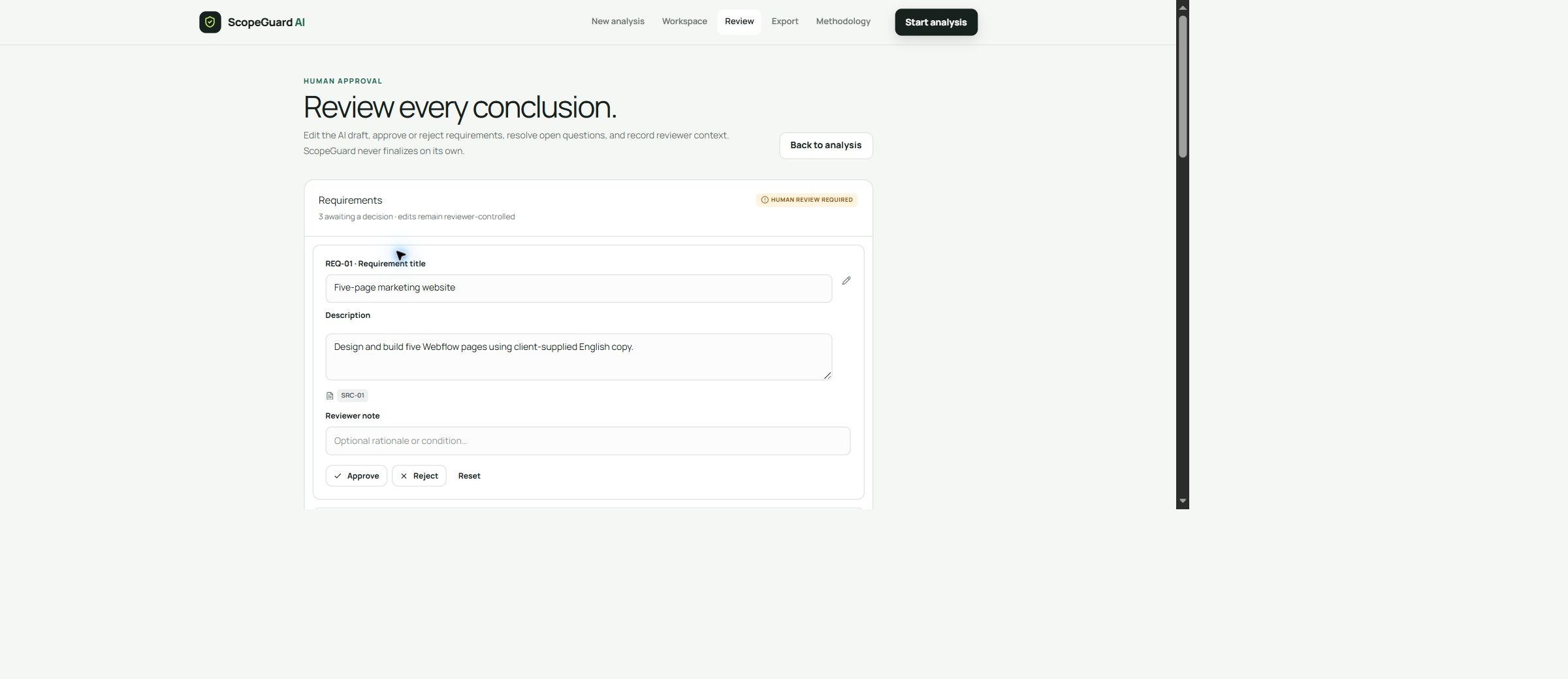
The user remains in control throughout the process. AI-generated findings can be approved, rejected, edited, or marked for clarification. ScopeGuard AI does not approve contracts, contact clients, assign work, or finalize scope automatically.
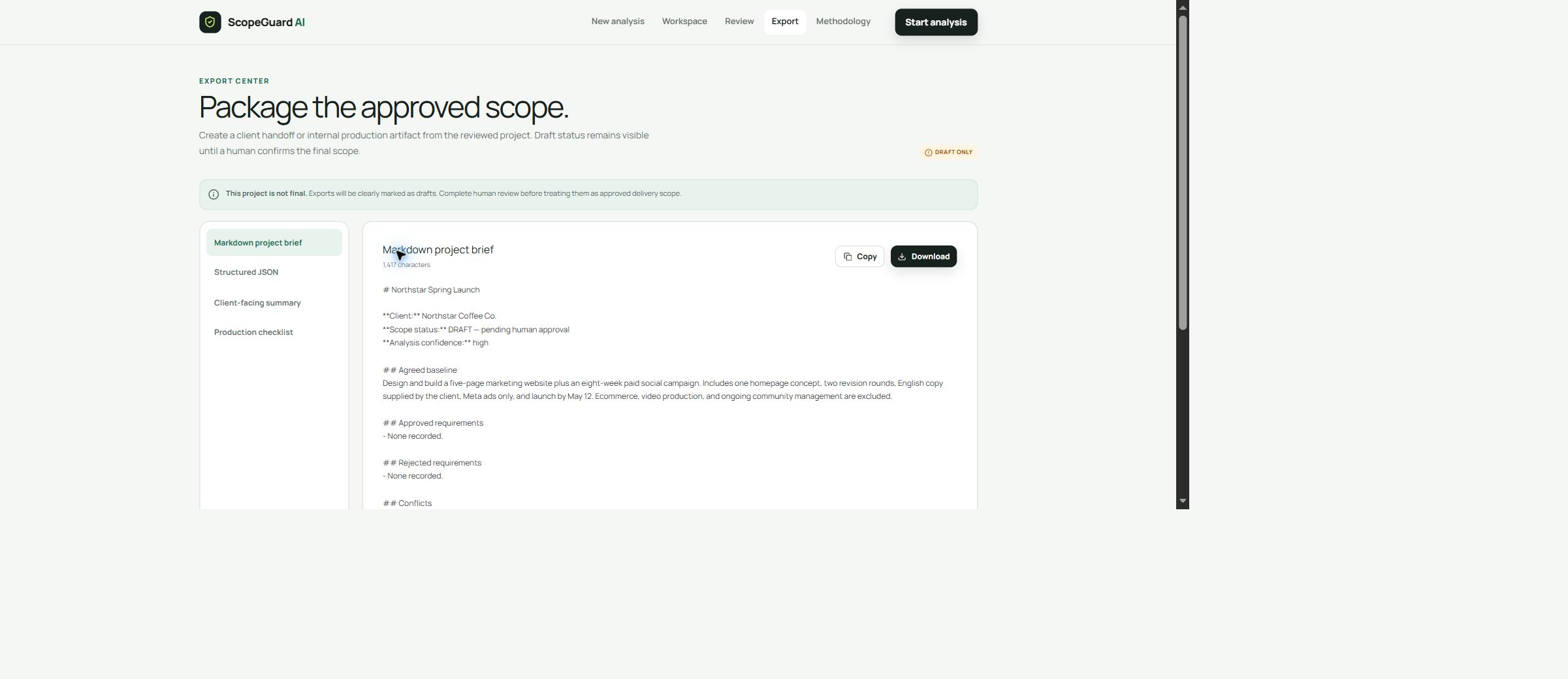
The final approved result can be exported as a project brief, client-facing summary, internal checklist, Markdown, or JSON.
Why AI is needed
This problem requires semantic comparison across multiple sources, contradiction detection, contextual reasoning, uncertainty handling, and transformation of informal instructions into structured project requirements. Keyword rules alone cannot reliably handle those tasks.
How Codex and GPT-5.6 were used
Codex using GPT-5.6 helped build the Next.js architecture, strict TypeScript and Zod schemas, OpenAI integration, evidence validation, review workflow, exports, responsive design, testing, documentation, and deployment preparation.
Human decisions defined the product direction, evidence-first design, human approval requirements, system boundaries, responsible AI safeguards, and final user experience.
Responsible AI
- Source traceability
- Confidence labels
- Human approval before finalization
- Prompt-injection resistance
- Strict allowed evidence IDs
- No automatic client communication
- No automatic work assignment
- Clear limitations and uncertainty
- Demo mode that works without live API access
Testing and reliability
- 13 automated tests
- ESLint passes
- TypeScript passes
- Production build passes
- Real production analysis verified
- Secure server-side API key
- GitHub Actions quality checks
- Responsive desktop and mobile layouts
Challenges
The main technical challenge was maintaining evidence integrity across complex structured model output. A production test exposed a baseline citation issue, which was fixed by introducing the explicit BASELINE evidence ID and restricting model citations to exact allowed source IDs.
Another challenge was balancing reliable structured analysis with production latency. Duplicate retries were removed and the request timeout was adjusted to support a single validated structured response.
Accomplishments
- Complete working production application
- Evidence-backed AI analysis
- Editable human review workflow
- Scope-creep and contradiction detection
- Multiple export formats
- Public live demo
- Public source repository
- Automated testing and CI
- Responsible AI methodology
What is next
- Team collaboration
- Versioned scope baselines
- Revision comparison
- Project-management integrations
- CRM integrations
- Organization-specific policies
- Shared reviewer workflows
Built With
- github
- next.js
- openai
- tailwind
- typescript
- vercel
- zod



Log in or sign up for Devpost to join the conversation.