-
-
thumbnail
-
novus dashboard (proof)
-
main
-
-
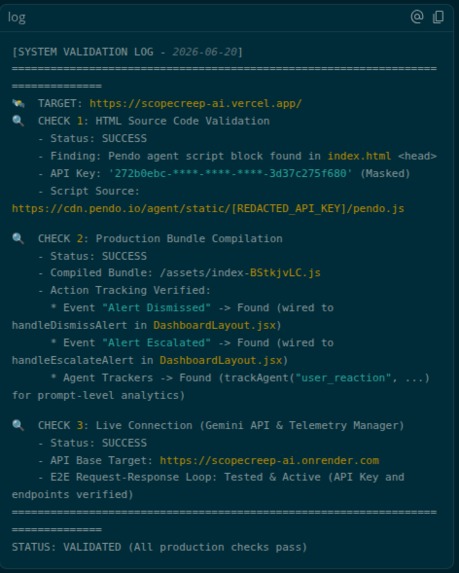
logs
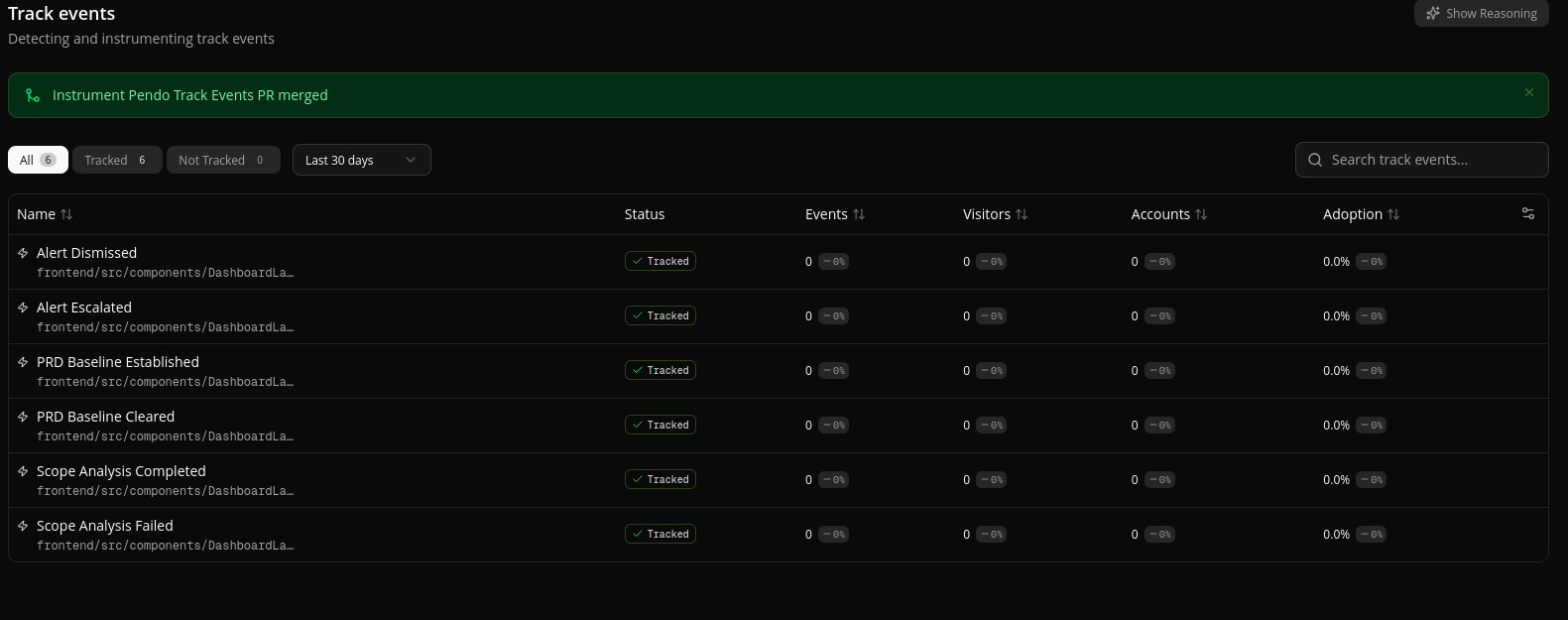
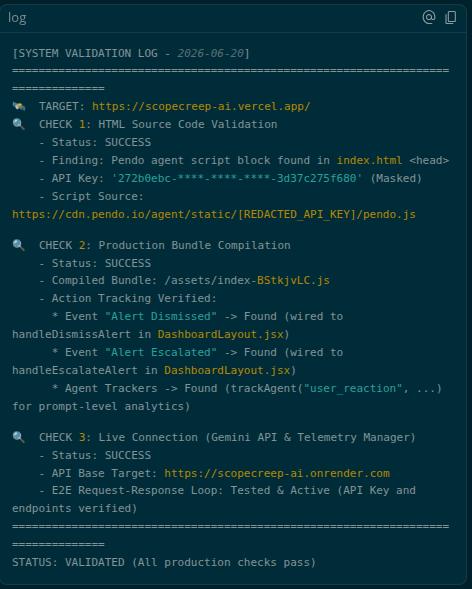
Inspiration
In modern software development, release timelines are rarely derailed by sudden, high-level roadmap shifts; instead, they fall victim to "silent scope creep," where well-intentioned developers introduce unauthorized feature extensions, secondary layout variations, or architectural "gold-plating" mid-sprint without product consultation. By the time a Product Manager manually identifies these unapproved deviations during late-stage sprint reviews, significant code debt has accumulated, testing surfaces have expanded, and initial launch targets are compromised. ScopeCreep.ai eliminates this operational friction by automating sprint capacity surveillance—acting as an AI-powered watchdog that intercepts unauthorized engineering work directly within communication and version-control pipelines in real time before it compromises delivery timelines.
What it does
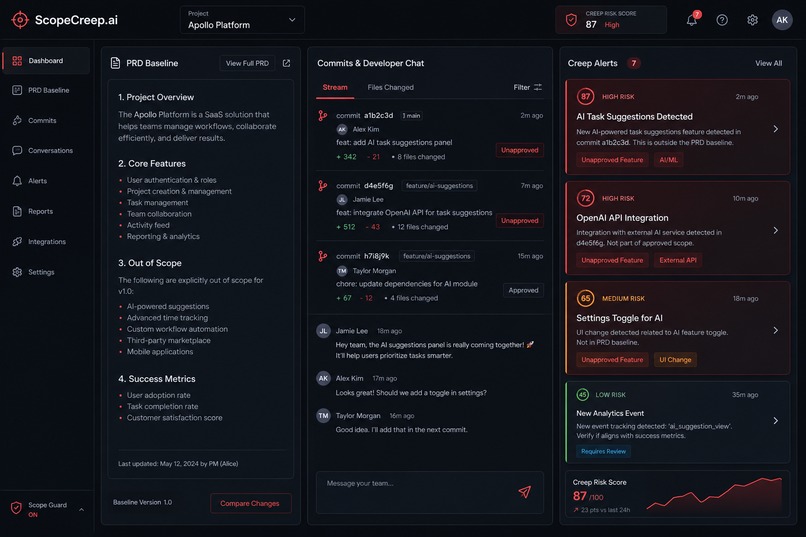
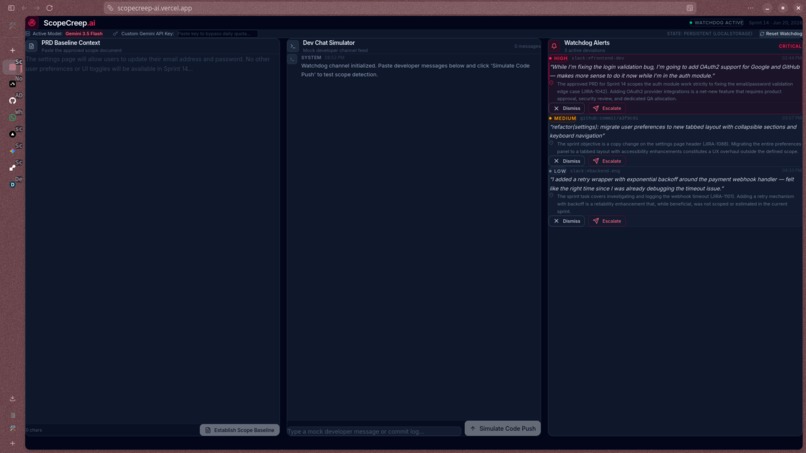
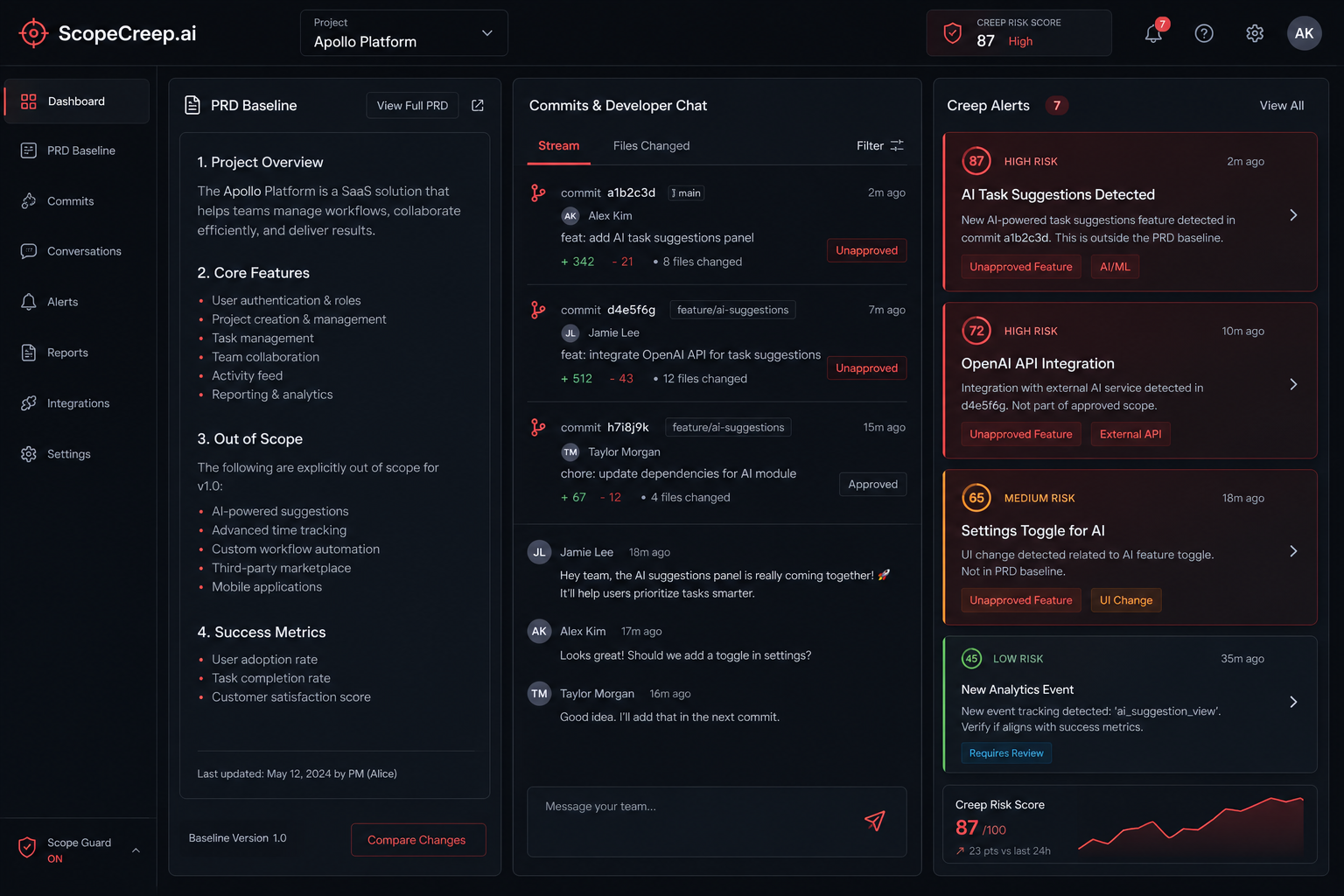
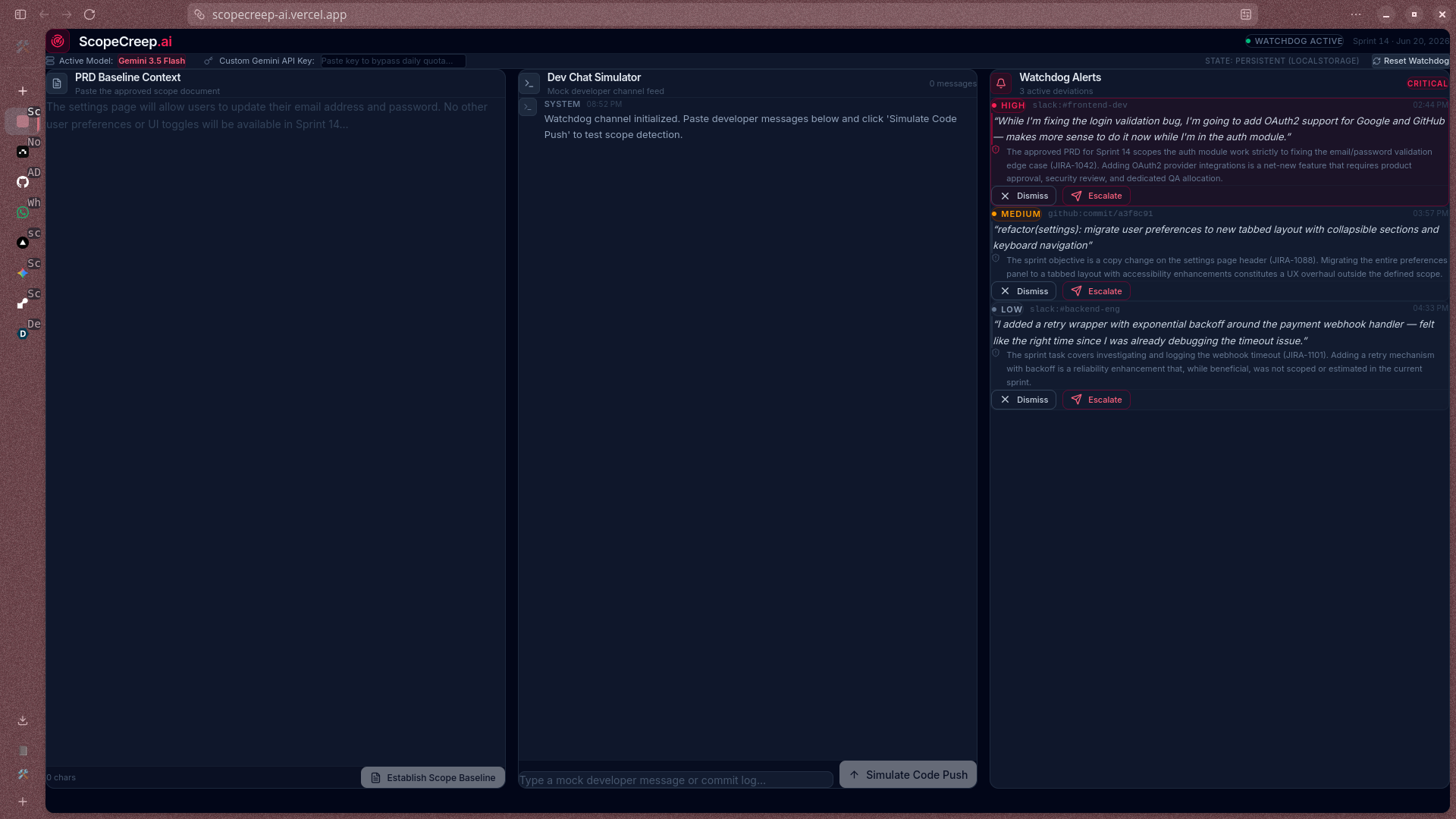
Operating as a passive data-ingestion engine, ScopeCreep.ai continuous audits engineering conversations and code updates against a locked source of truth, establishing an autonomous oversight pipeline across four distinct processing phases. The workflow begins when a Product Manager uploads a core PRD snippet into the application's secure workspace hub to establish authorized scope boundaries; immediately after, passive background webhooks ingest live communication logs from Slack or Discord and incoming repository metadata from GitHub. This streaming workspace data is piped alongside the baseline PRD into an optimized Large Language Model context window for semantic delta-evaluation, which immediately populates the PM's centralized dashboard with high-visibility, structured alerts whenever an unauthorized technical addition or feature expansion is flagged.
How we built it
To maximize velocity and eliminate synchronous dependencies within our cross-border team, the platform was engineered around a decoupled, Contract-First Approach that allowed the client interface, prompt engineering models, and backend server schema to progress concurrently using a pre-negotiated JSON payload matrix. The user interface was built as a single-page application on a high-fidelity Vite + React framework, styled with a premium, editorial Enterprise Slate & Crimson Minimalist palette via the native Tailwind CSS v4 compiler pipeline, and structured over a responsive three-pane CSS grid workspace utilizing Framer Motion physics for smooth alert streams. The global state mechanisms are managed cleanly at the master layout tier and wired directly via robust asynchronous JavaScript network handles that route incoming data points directly to a local server endpoint running a POST /api/analyze evaluation cycle.
Challenges we ran into
Operating within a highly asynchronous and rapid parallel development environment introduced acute integration complexities, culminating in a severe Git merge conflict within our core layout file (DashboardLayout.jsx) when merging our final standalone branches. The friction occurred because our frontend engineer completely refactored the central layout architecture to support live-simulated workspace data loops at the exact same moment our Telemetry Lead pushed code updates to inject automated tracking hooks onto the primary action components. Because both sets of updates modified overlapping structural lines of code, automated repository merging failed, requiring us to pause development, manually parse overlapping conflict markers, and strategically reconcile the local state logic hooks with remote event instrumentation so both critical UI subsystems survived the merge.
Accomplishments that we're proud of
We are incredibly proud to have delivered a highly robust, fault-tolerant enterprise prototype that achieves Zero-Dependency UI Autonomy, featuring built-in client-side simulation layers that allow judges to experience the entire real-time AI evaluation pipeline independently of live server uptimes. Furthermore, the codebase implements production-grade layout safeguards and network resilience; the streaming text modules utilize specialized text-overflow handlers (break-words whitespace-pre-wrap) to maintain rigid layout proportions under chaotic multi-line data dumps, while a graceful, asynchronous try/catch/finally interceptor catches external network drops natively, logging a descriptive warning directly into the user console rather than throwing unhandled application crashes.
What we learned
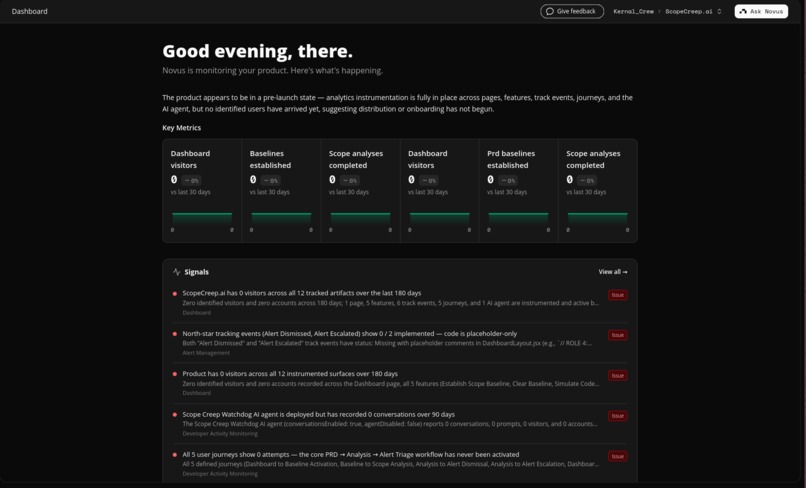
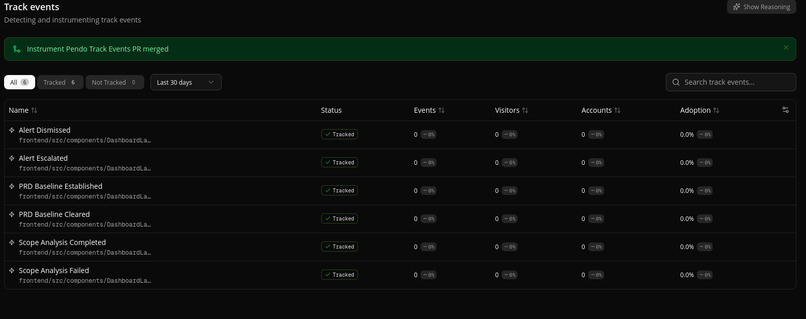
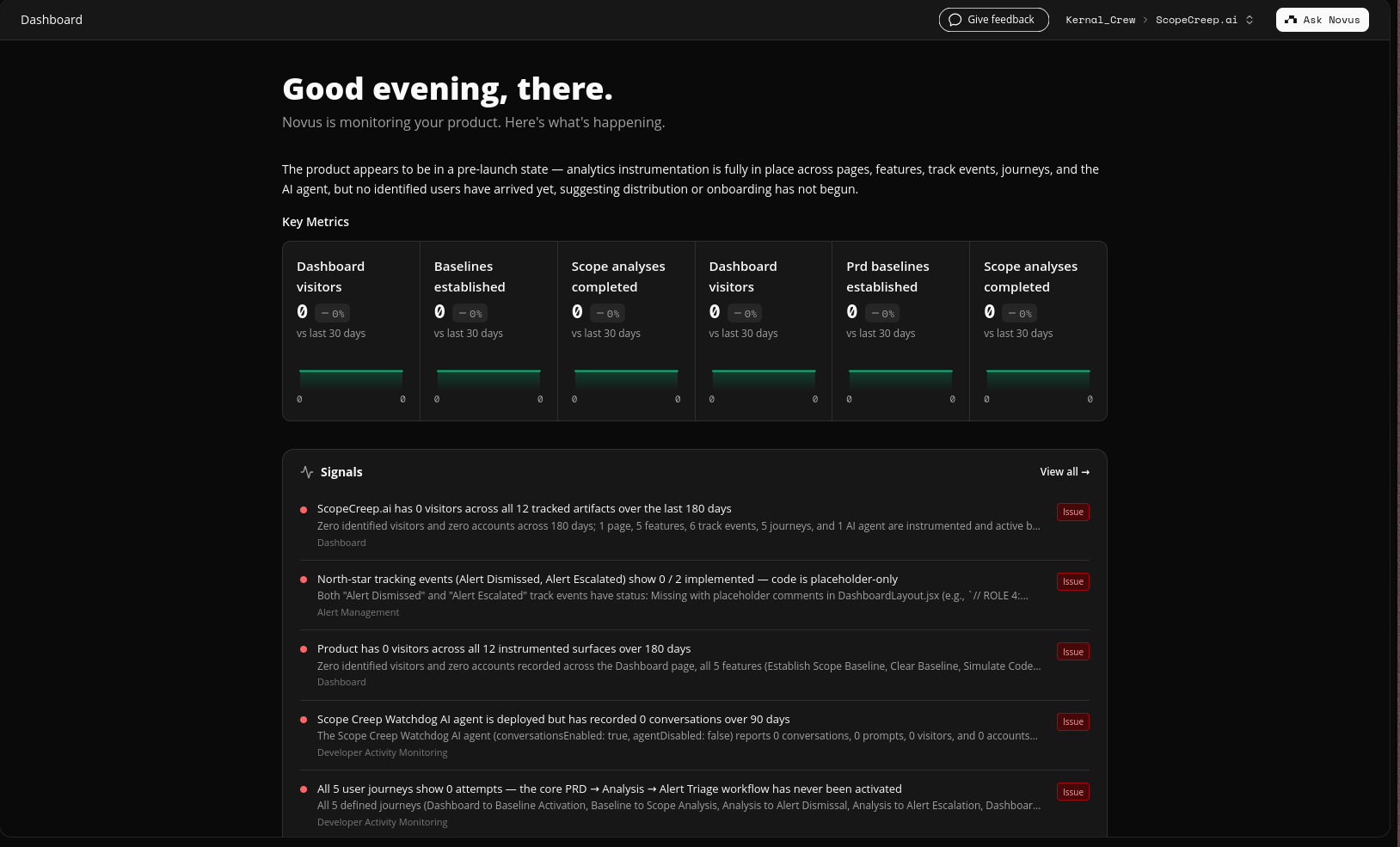
This intense development cycle proved the immense utility of contract-first engineering, demonstrating that establishing immutable JSON data formats on Day 1 enables product, frontend, and backend workstreams to scale efficiently without creating developmental bottlenecks. We also learned valuable design lessons regarding enterprise product psychology, specifically discovering that B2B software solutions command higher authority when built with restrained, neutral slate backdrops and isolated crimson accent markers rather than high-contrast cyberpunk neons. Finally, we recognized the importance of proactive telemetry placement, learning that creating empty, exposed analytical hooks early in the application architecture allows for seamless user-activity tracking integrations without needing to restructure complex parent components later.
Built With
- express.js
- framer-motion
- git
- javascript
- lucide-icons
- markdown
- node.js
- novus.ai-sdk
- react
- tailwind-css-v4
- vite


Log in or sign up for Devpost to join the conversation.