-
-
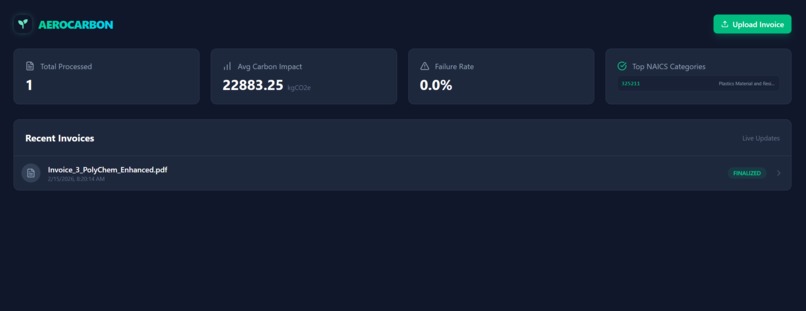
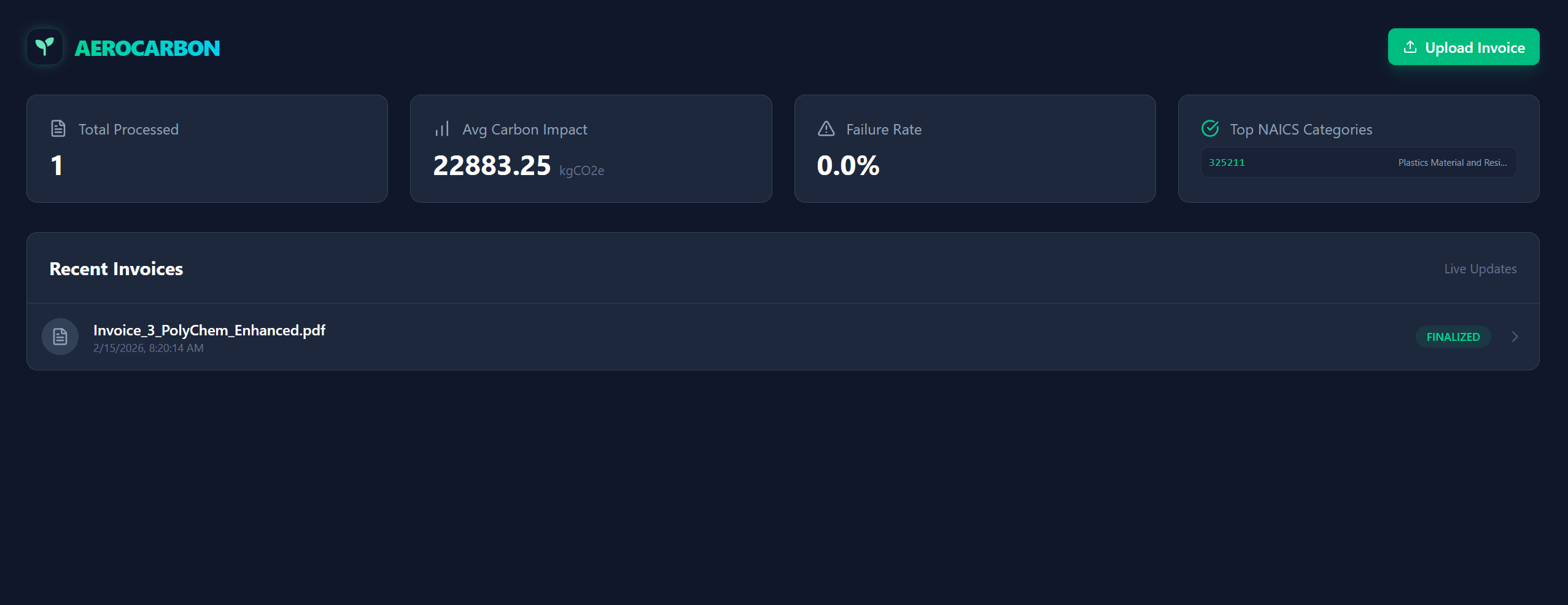
Dashboard
-
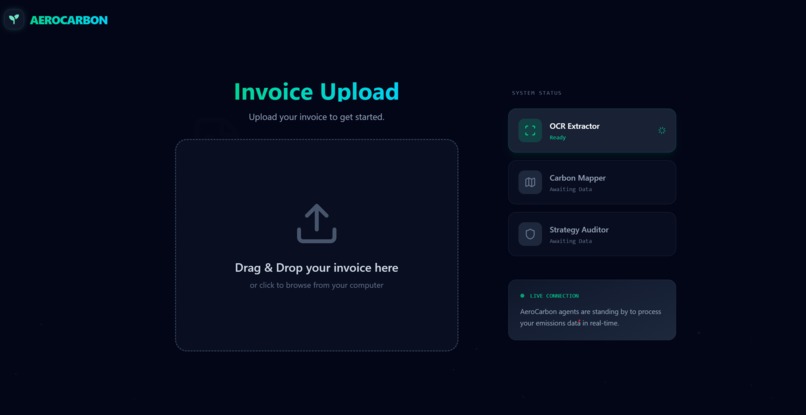
Agent Logs
-
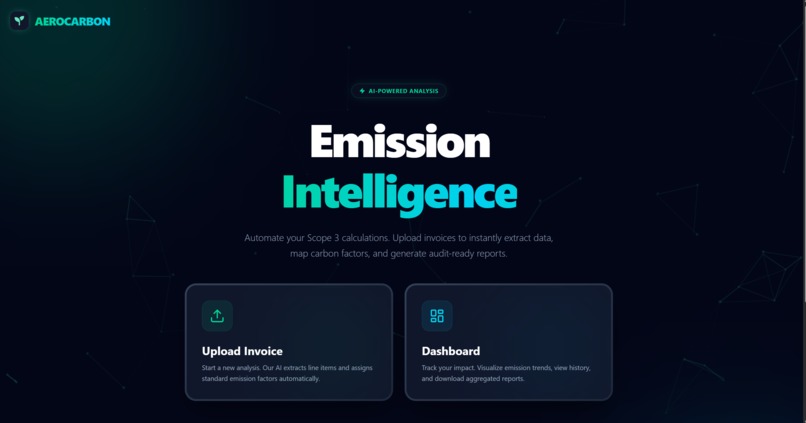
Landing Page
🌍 Inspiration
We realized that the most accurate Scope 3 data already exists inside ordinary supplier invoices. These documents capture real purchasing activity, materials, quantities, and suppliers — the exact signals that determine supply-chain emissions.
Traditional Scope 3 accounting depends on delayed reports and broad sector averages. We wanted emissions grounded in real transactions, visible instantly, and traceable to actual procurement behavior.
AeroCarbon emerged from this shift: treating routine business documents as live climate data rather than static financial records.
We fell in love with the hidden climate truth inside invoices.
🌿 What it does
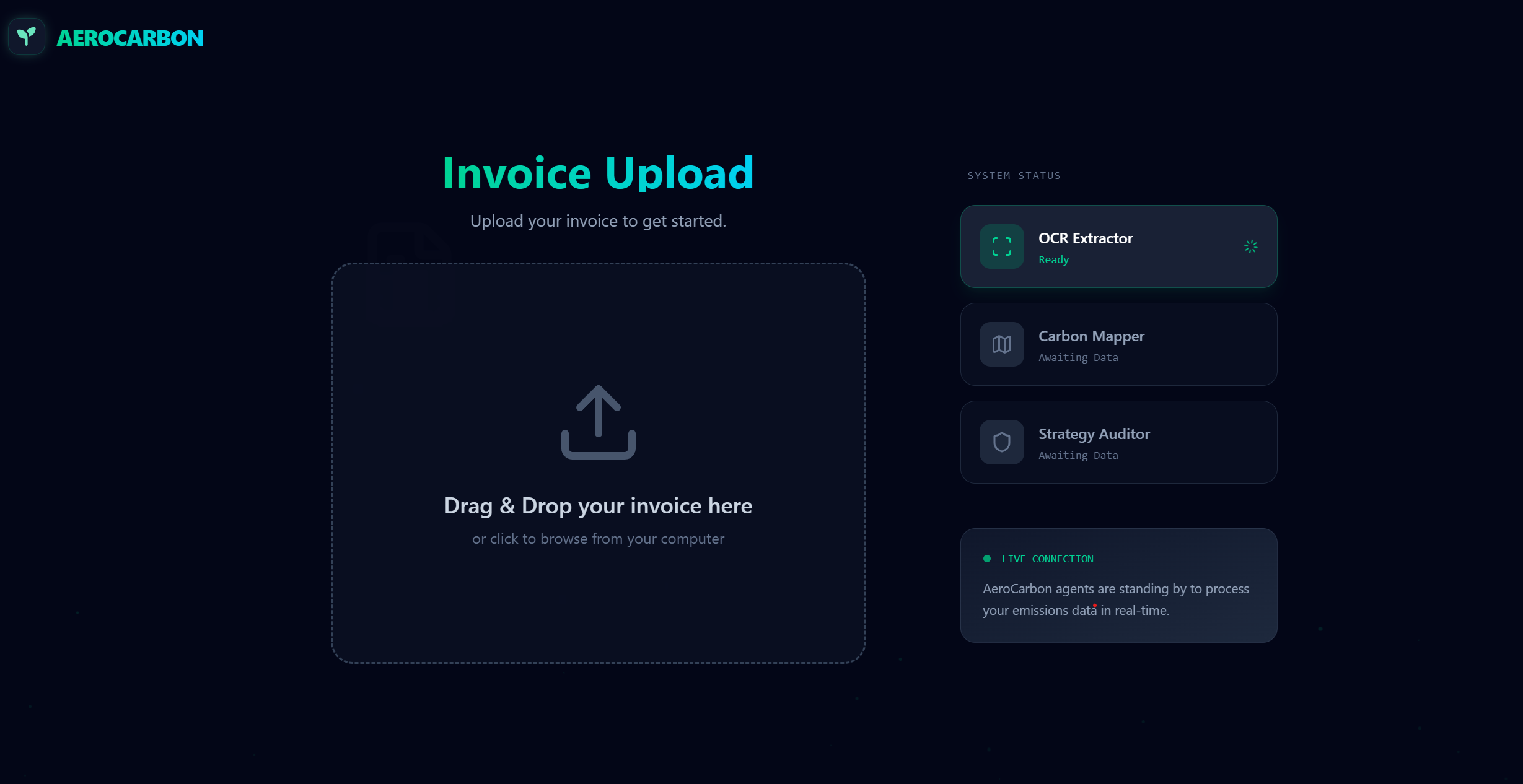
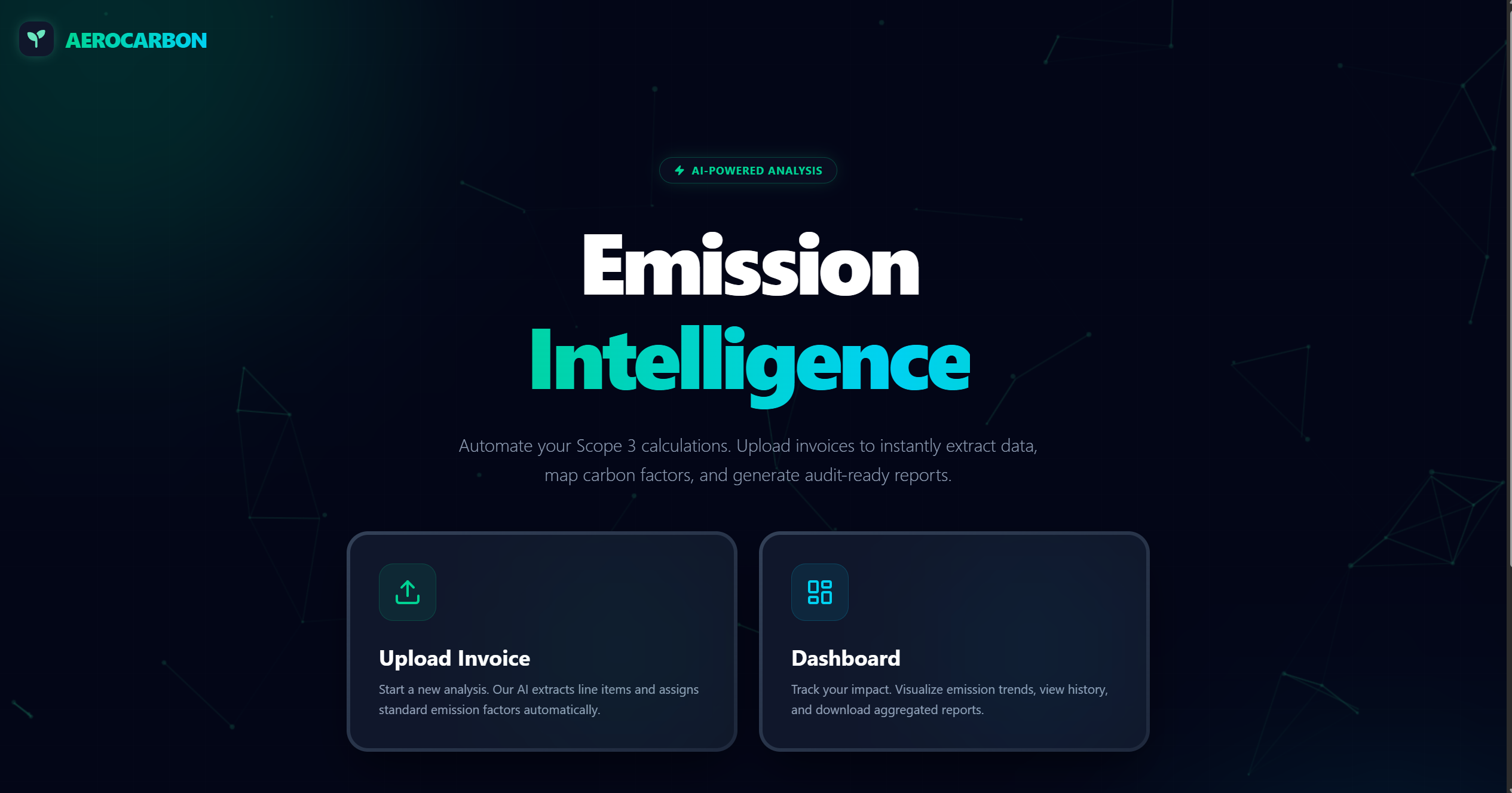
AeroCarbon converts supplier invoices into measurable Scope 3 emissions and clear sustainability insight.
A user uploads an invoice and the system extracts purchasing details, maps them to emission factors, calculates CO₂e, and expresses impact in intuitive equivalents such as trees required for offset.
Pipeline
Invoice → Procurement Data → Emission Factors → CO₂e
Offset translation
Trees needed = CO₂e (kg) / 21.77
Procurement activity becomes a live environmental signal, turning everyday purchases into measurable climate awareness.
🛠️ How we built it
We designed AeroCarbon as a clean multi-stage intelligence pipeline that feels simple while performing deep analysis underneath.
The frontend uses React, TypeScript, and Tailwind to provide a fast dashboard for upload and emissions exploration.
The backend uses FastAPI to orchestrate extraction, mapping, and calculation.
Structured storage ensures every emission result remains traceable.
AI is invoked selectively for complex invoice layouts and ambiguous product descriptions.
Processing journey
Upload → Extraction → Mapping → Carbon Calculation → Dashboard Insight
This architecture directly resolves known Scope 3 limitations:
- Invoice-level activity instead of industry averages
- Supplier attribution instead of sector estimates
- Near-real-time calculation instead of annual lag
- Full audit trace instead of opaque spreadsheets
- Product-level mapping instead of coarse spend buckets
🚧 Challenges we ran into
Invoices vary widely in layout, terminology, and units, making consistent extraction difficult.
Product descriptions rarely match emission taxonomies, requiring semantic normalization.
Carbon values needed full traceability to avoid black-box estimation.
Reliable ingestion required idempotent processing to prevent duplication.
🏆 Accomplishments that we're proud of
- Autonomous Scope 3 estimation directly from invoices
- Clear environmental equivalents such as trees offset
- Real-time emissions dashboard
- End-to-end audit traceability
- Robust automated processing pipeline
AeroCarbon converts routine procurement data into immediate climate intelligence.
📚 What we learned
Scope 3 accounting is primarily a data interpretation problem.
Invoices contain high-fidelity environmental signals.
Grounding emissions in transaction data improves trust and specificity.
Hybrid deterministic plus selective AI pipelines achieve both reliability and flexibility.
Embedding emissions inside operational workflows shifts sustainability from reporting to awareness.
🚀 What's next for AeroCarbon
Next steps focus on decision intelligence beyond measurement.
Planned directions include:
- Supplier emission profiles
- Reduction guidance
- Scenario simulation such as vendor or material switching
- ERP integration for continuous monitoring
The long-term vision is a live Scope 3 twin of supply chains where environmental impact updates automatically with procurement activity.
Built With
- gemini
- python
- react
- snowflake
- typescript


Log in or sign up for Devpost to join the conversation.