-
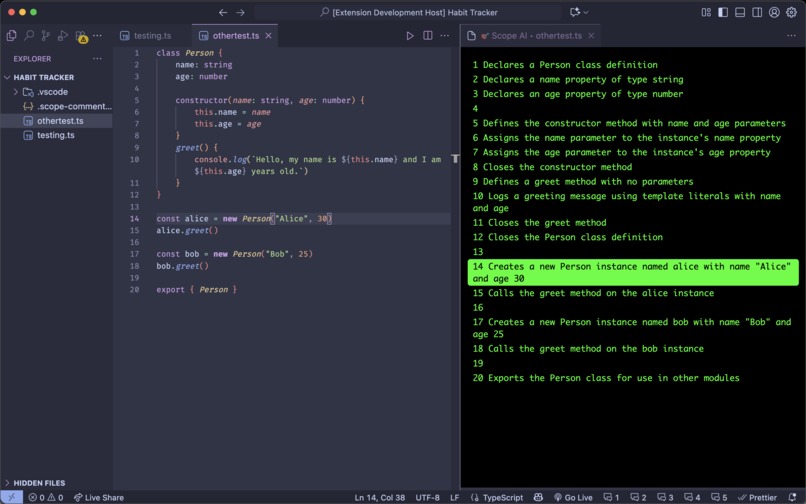
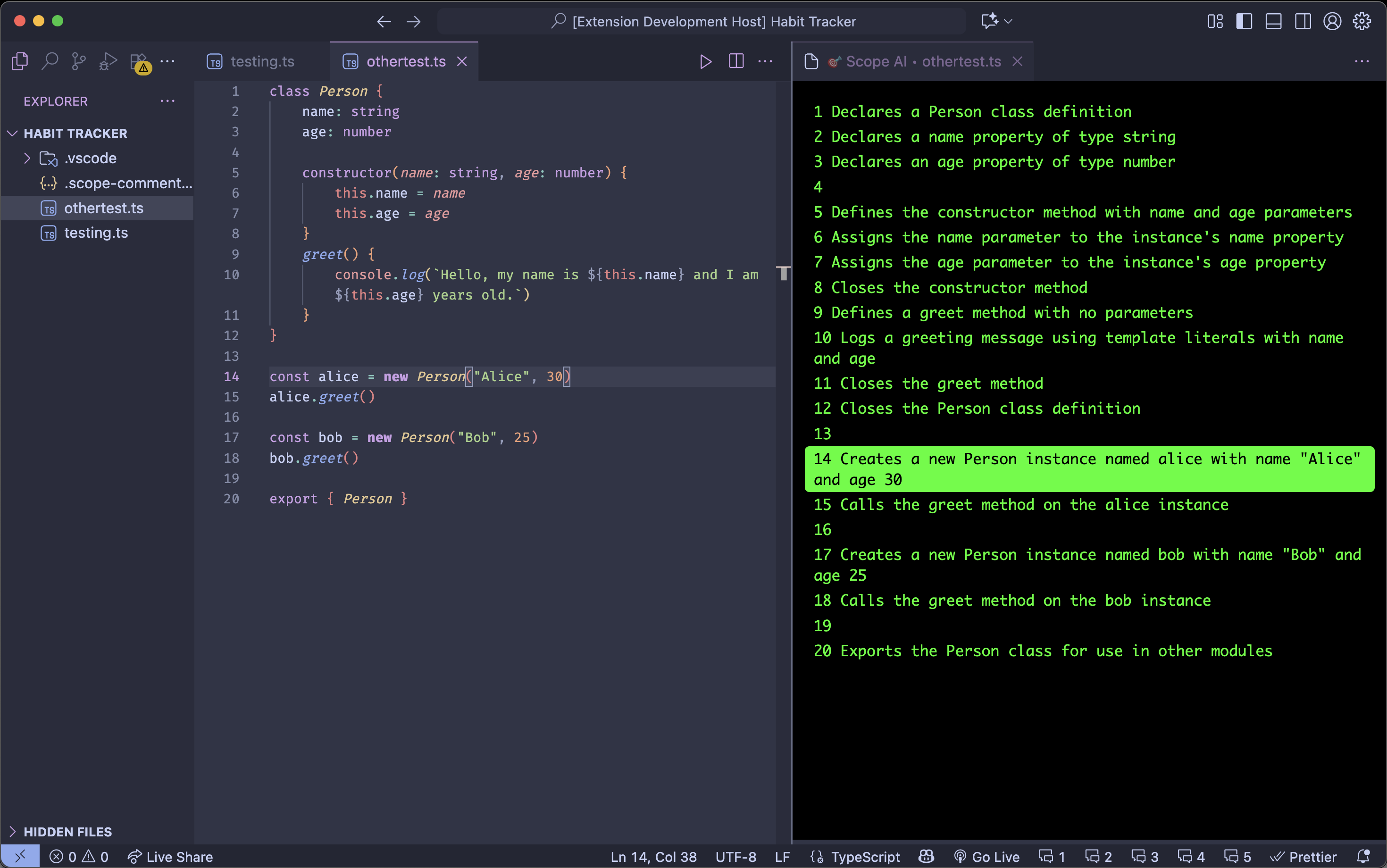
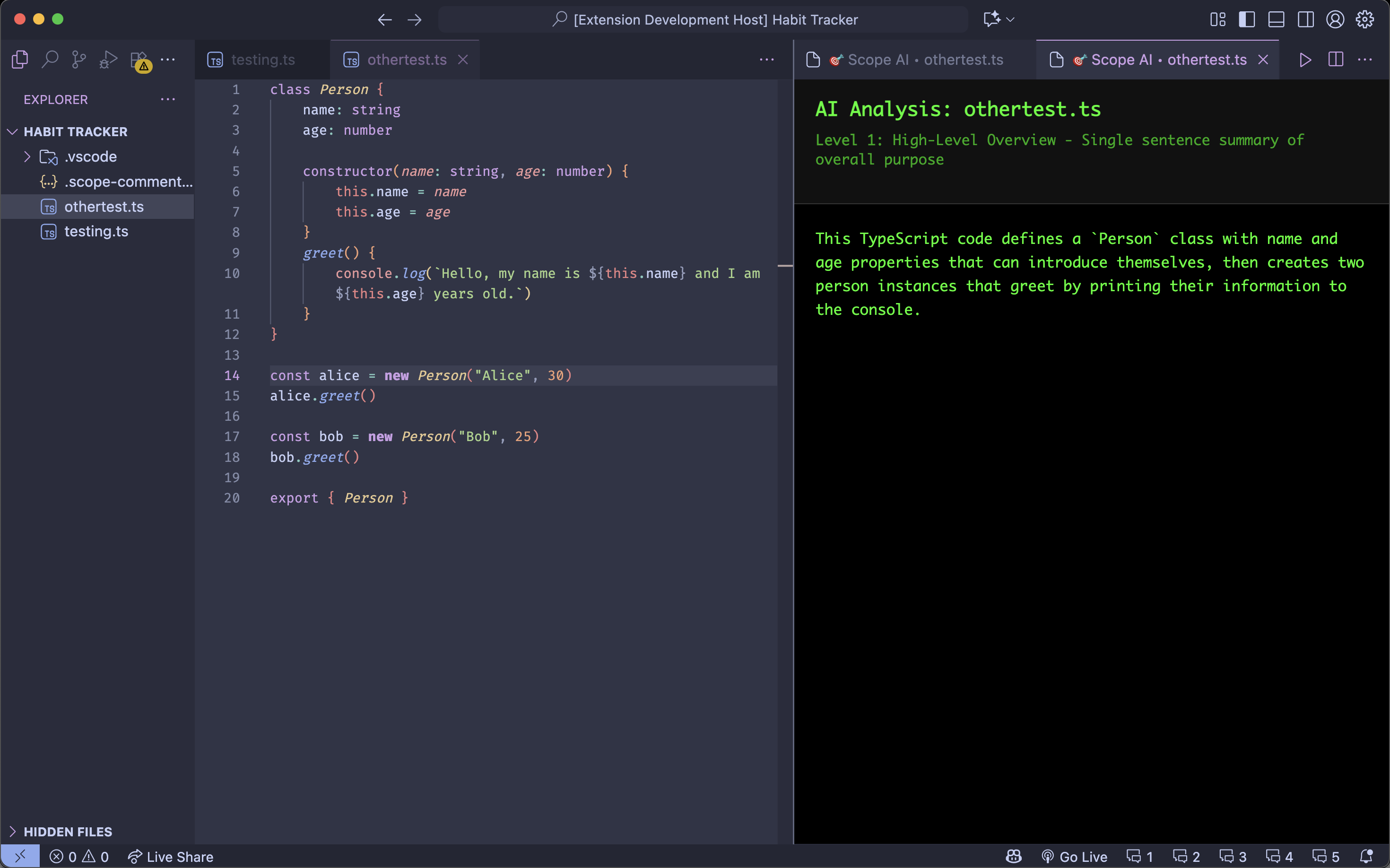
A line-by-line code-to-comment matching view
-
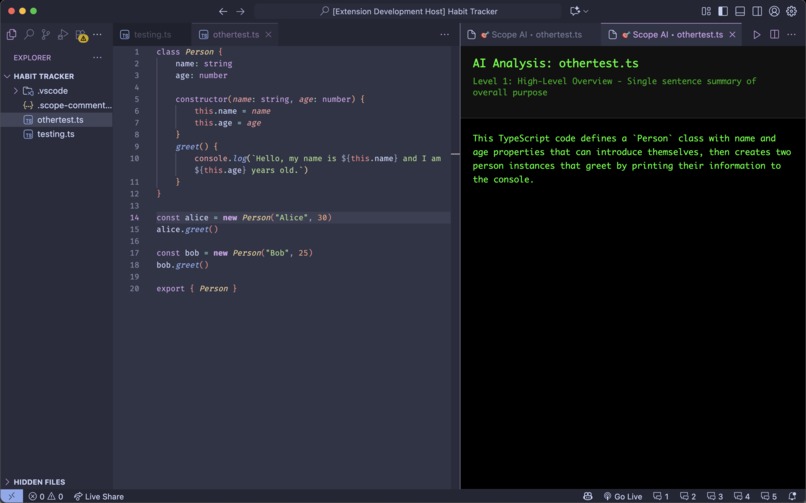
A high level snapshot of a file
-
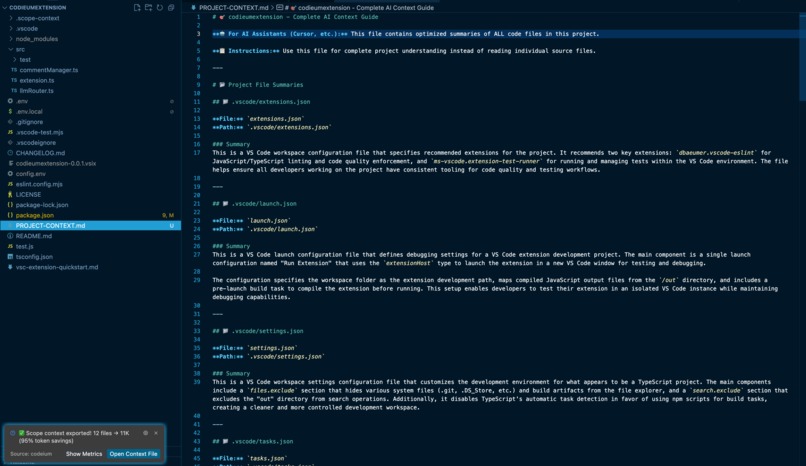
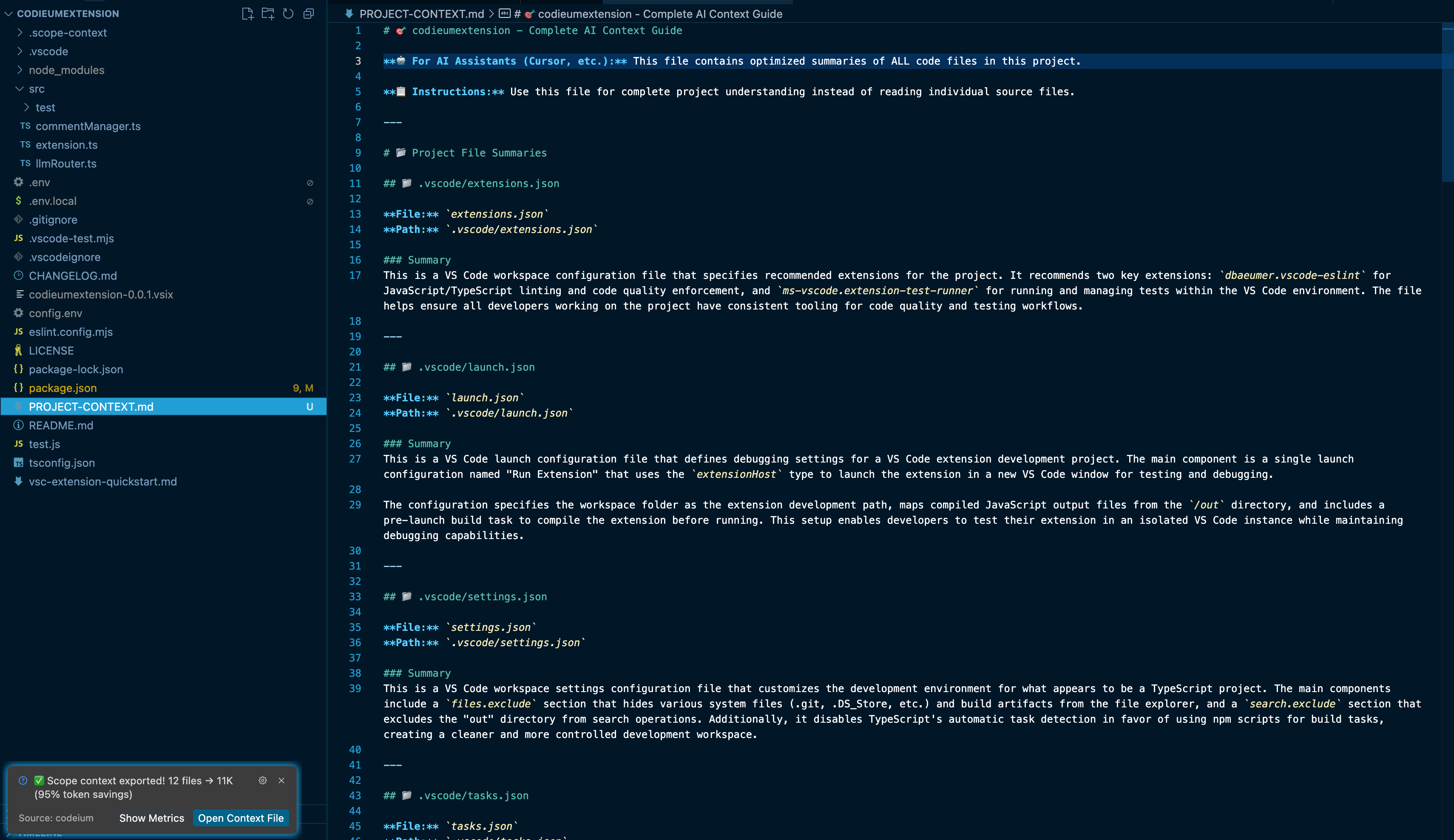
Cursor Context Optimizer — Up to 95%
VIDEO DEMO ON LOOM https://www.loom.com/share/a6096a5c0ac14224a3782d738bbf6e2c
Inspiration
Every developer knows the frustration of a codebase with scattered comments. Traditional IDEs treat documentation as an afterthought - comments are buried in files, context is lost across different scopes, and understanding complex systems requires endless scrolling and mental mapping. We realized that code comprehension hasn't been innovated on, even with new AI tooling.
What it does
Scope is a code editor that displays comments and documentation at multiple levels of your codebase simultaneously. The side-by-side comment system shows relevant context for whatever scope you're working in - whether that's a single line, function, class, file, or entire module. Instead of hunting through files to piece together understanding, developers can see the full documentation picture in one organized panel.
Why it does it
Having a comment engine integrated into your IDE is an asset for a lot of different purposes and people. For example, as Vibe Coding becomes more powerful, it's important that the people doing so (even if they're not inclined to read the pure code) understand what different functions do, and the meanings behind complicated lines that LLM's generate.
Scope also vastly improves the onboarding experience. Instead of quickly feeding the codebase into Cursor, engineers can now open Scope's interface, and read through file contents quickly.
Another major benefit of using Scope is context management for our LLM coding assistants. Instead of feeding entire codebases into LLM's like Claude, we instead feed higher-level abstractions and let the LLM decide when it wants to climb down the abstraction latter into the pure, and oftentimes lengthy code.
How we built it
We chose to extend VS Code to leverage its ecosystem, plugin architecture, and developer experience. The core innovation is our side-by-side comment engine that we integrated into VS Code's layout system. Our natural language processing component builds on Martian's model routing service, with higher levels of abstraction being generated with more expensive models, while common line-to-line comments are generated with lower tier, cheaper models.
Challenges we ran into
The biggest challenge was creating a comment categorization system that could understand code structure across different programming languages. We also struggled with extending VSCode. None of us do a lot of web development, and considering VSCode is built directly on Chromium, the tech stack definitely didn't match any of our past experiences.
Accomplishments that we're proud of
Getting through all the Typescript, environment issues, and building directly on another product was something we spent time learning this weekend.
What we learned
We learned that context is everything when working with AI coding assistants; better context leads to dramatically better suggestions and fewer iterations. Considering the potential for better context management, we'll continue working towards.
What's next for Scope
We would love for user's to also be able to edit comments within Scope, which would require complex comment generation patterns for LLM's. Scope's user interface could still use some tweaking, and there are definitely places where background tertiary systems would be cool to use. We
Built With
- martian
- typescript
- vscode


Log in or sign up for Devpost to join the conversation.