Inspiration
Agreements often begin as simple conversations — a client explains what they need, a developer agrees on the price and timeline, and everyone moves forward. Later, important details can be forgotten or misunderstood.
ScopeLock was built to bridge that gap: turning everyday agreements into clear, structured documents without requiring a complicated contract-management platform.
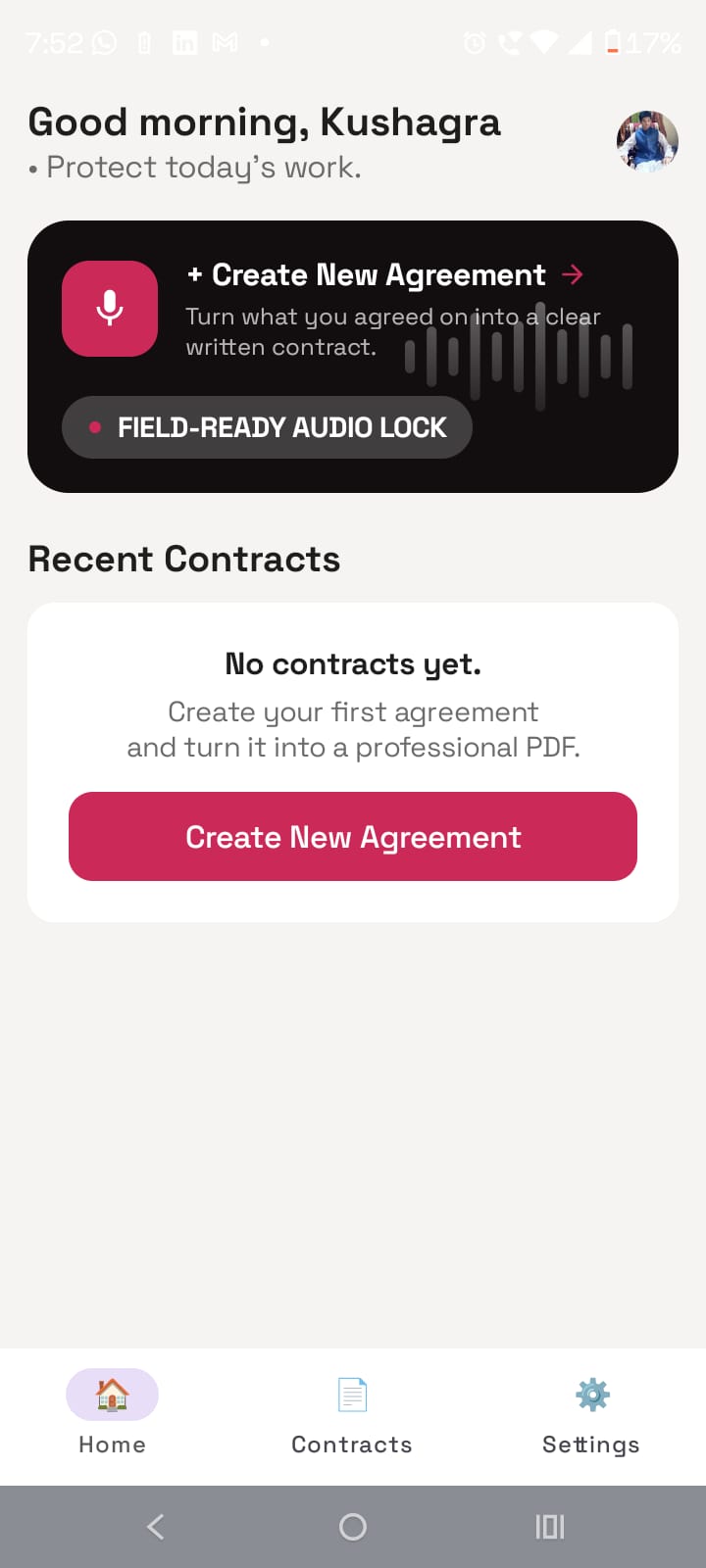
What it does
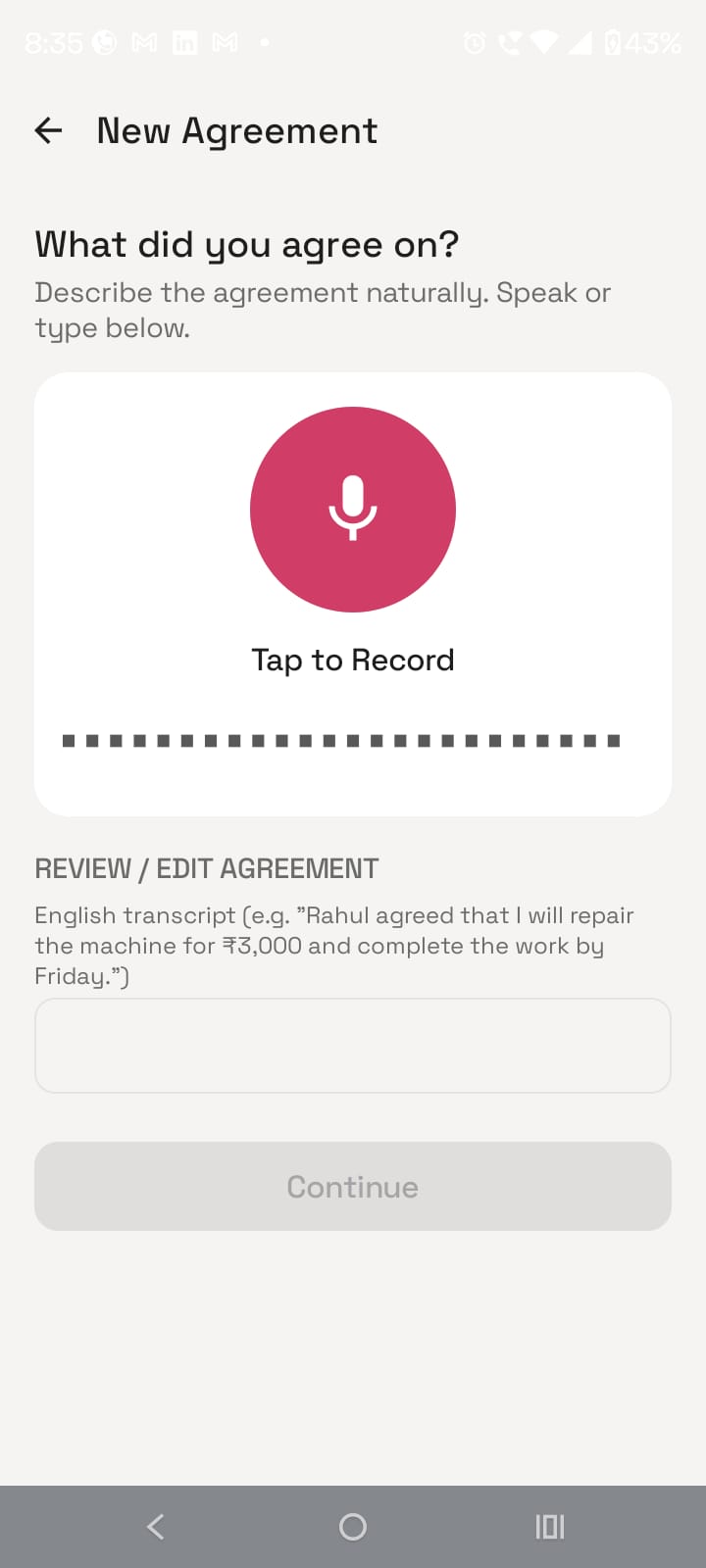
ScopeLock lets users speak or type an agreement, then uses AI to turn it into a structured contract.
Users can:
- 🎙️ Speak or type their agreement
- 🤖 Generate a structured contract with AI
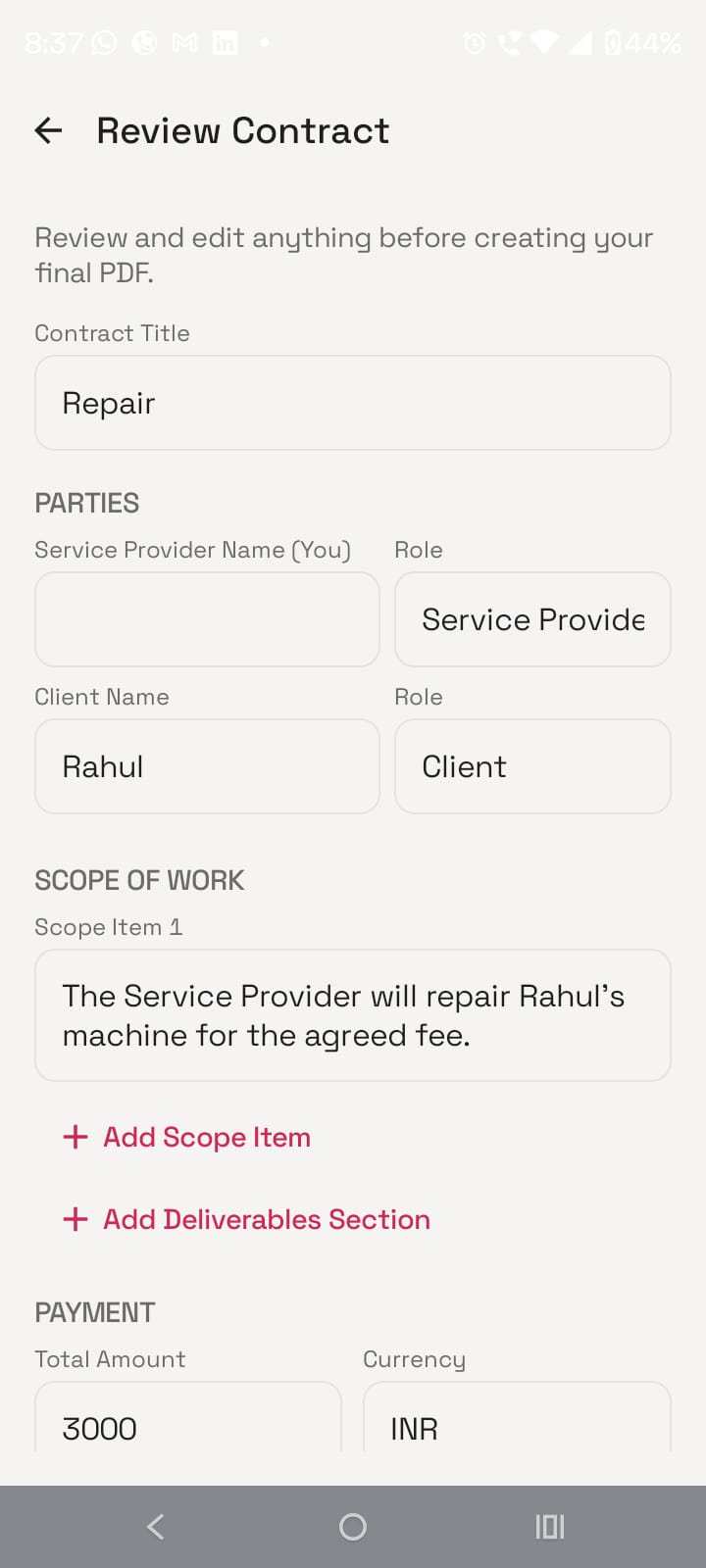
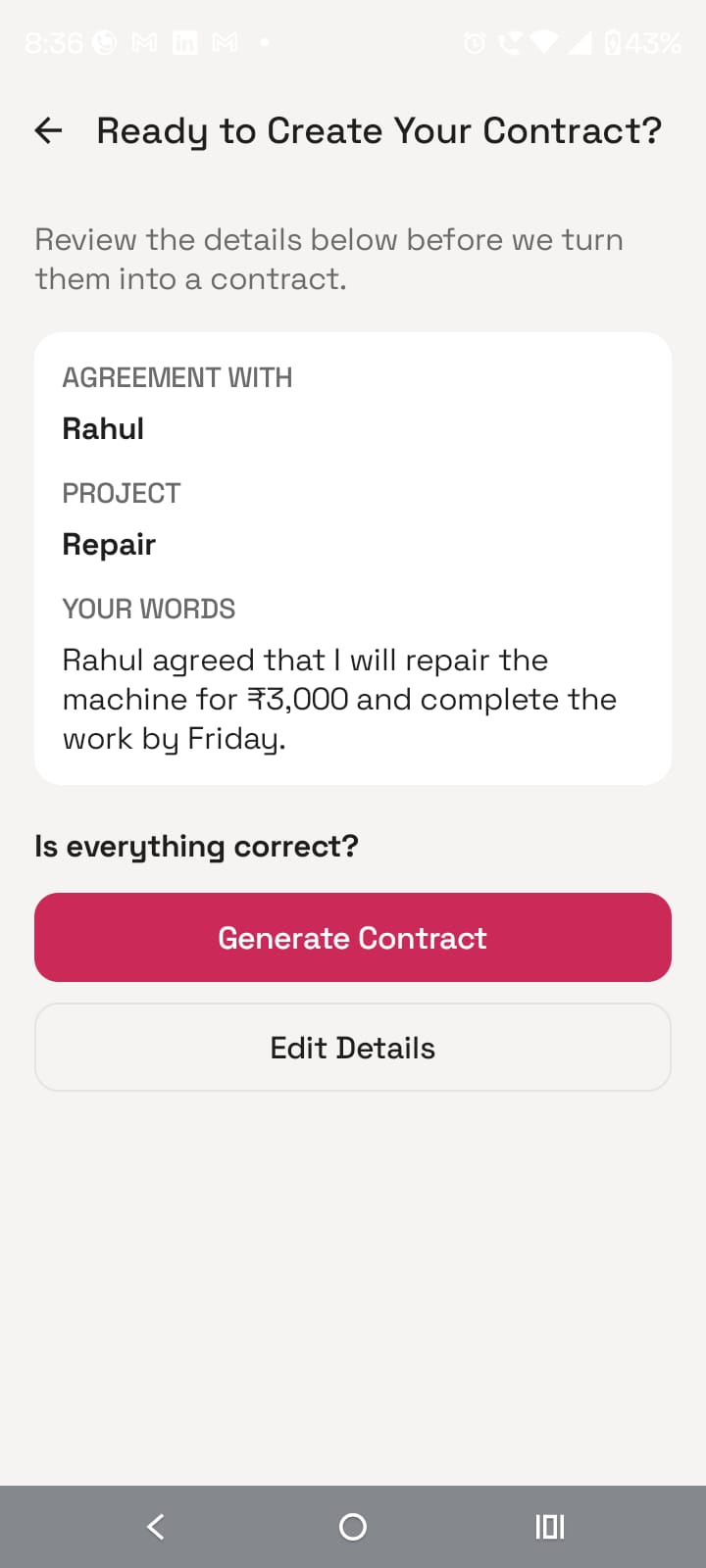
- ✏️ Review and edit the generated content
- 📄 Generate a professional PDF
- 📤 Share the final document
The core workflow is:
Speak / Type → AI Contract → Review → Edit → PDF → Share
How we built it
ScopeLock is an Android application built with Kotlin and Jetpack Compose.
The app uses Android's SpeechRecognizer for voice input and ML Kit for language identification and translation when required. The backend is built with Node.js, Express, and TypeScript, with Firebase Authentication, Firebase Admin, and Firestore handling authentication and application data.
The AI layer transforms natural-language agreements into structured contract data instead of directly generating an uncontrolled document. This allows users to review and modify the result before creating the final PDF.
PDF generation is handled natively on Android, giving us control over the document layout and allowing the generated file to be shared directly through Android.
Challenges we ran into
The biggest challenge was making AI useful without allowing it to invent information.
Real agreements are rarely structured. A user might say:
"I'll build Sherly a website for $4,000 and finish it in five months."
The system needs to understand the implied structure while preserving exactly what the user actually agreed to.
We therefore designed the AI workflow to handle incomplete information, natural language, missing details, and editable structured output.
Another challenge was keeping the first version focused. Instead of building a complete contract-management platform, we focused on one core problem:
Turn an agreement into a professional document quickly.
Accomplishments we're proud of
We're proud to have built an end-to-end workflow connecting:
Natural Language → AI → Structured Contract → Editing → PDF → Sharing
We also designed ScopeLock so that AI acts as a drafting assistant, while the user remains in control of the final content.
What we learned
ScopeLock taught us that building an AI product is about much more than generating text.
The important questions became:
- What should AI infer?
- What should it never invent?
- How should missing information be handled?
- How does the user correct the AI?
- How do we turn AI output into a reliable product?
We also learned the importance of keeping a first release focused on one complete workflow rather than many incomplete features.
What's next for ScopeLock
V1 focuses on:
Create → Review → Edit → Generate → Share
Future versions can expand this into a broader agreement workflow with contract tracking, customer-side review, digital approval/signing, notifications, and workflow automation.
The goal is to make the journey from "this is what we agreed on" to "this is exactly what we agreed on" simple and accessible.
Built With
- ai
- android
- api
- compose
- development
- express.js
- firebase
- generative
- jetpack
- kotlin
- language
- learning
- machine
- ml
- mobile
- natural
- node.js
- okhttp
- processing
- recognition
- rest
- retrofit
- revenuecat
- speech
- typescript

Log in or sign up for Devpost to join the conversation.