-
-
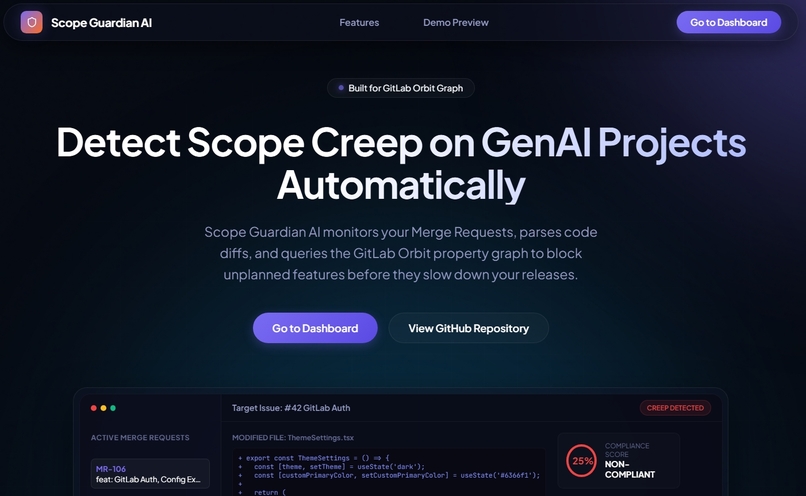
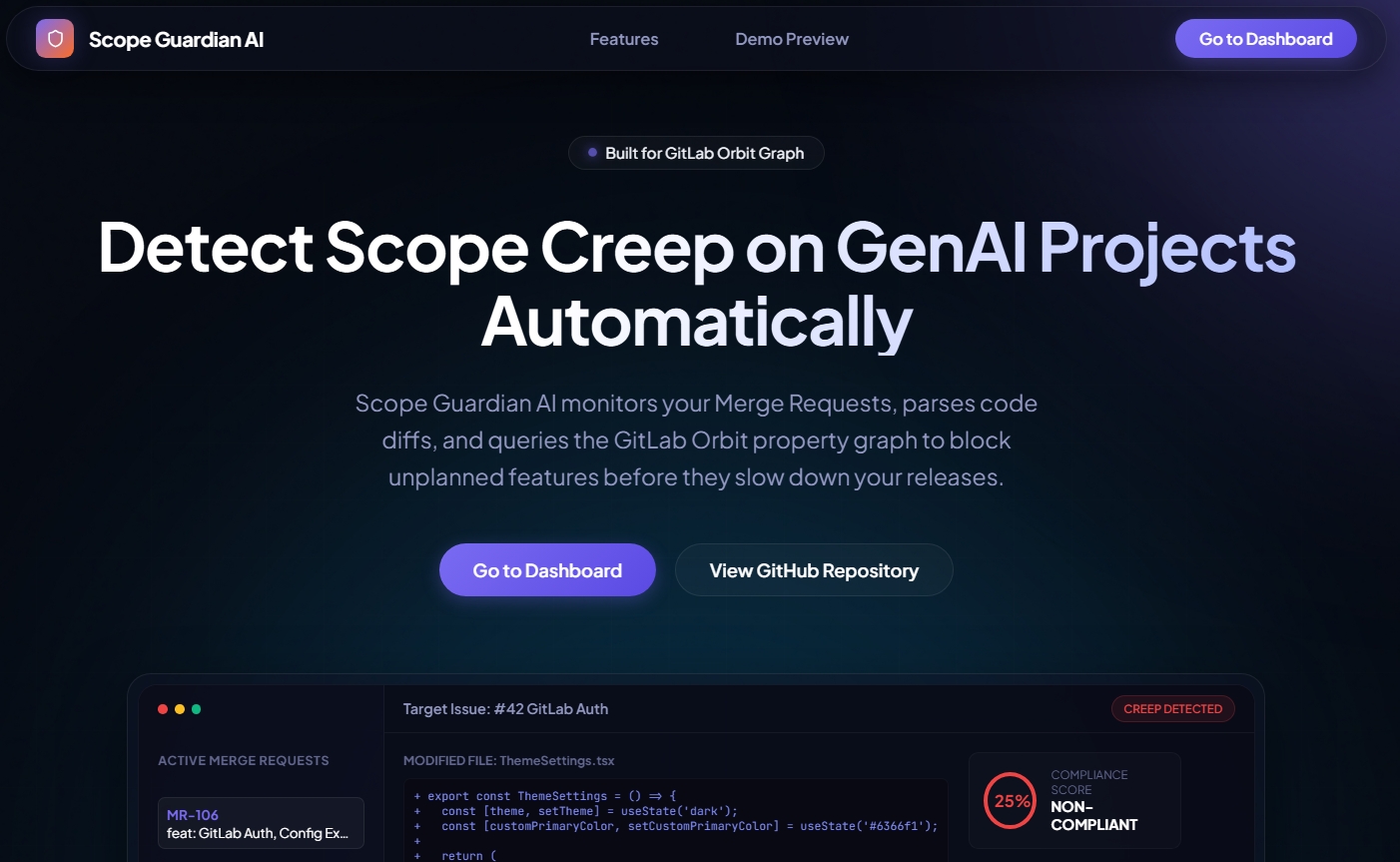
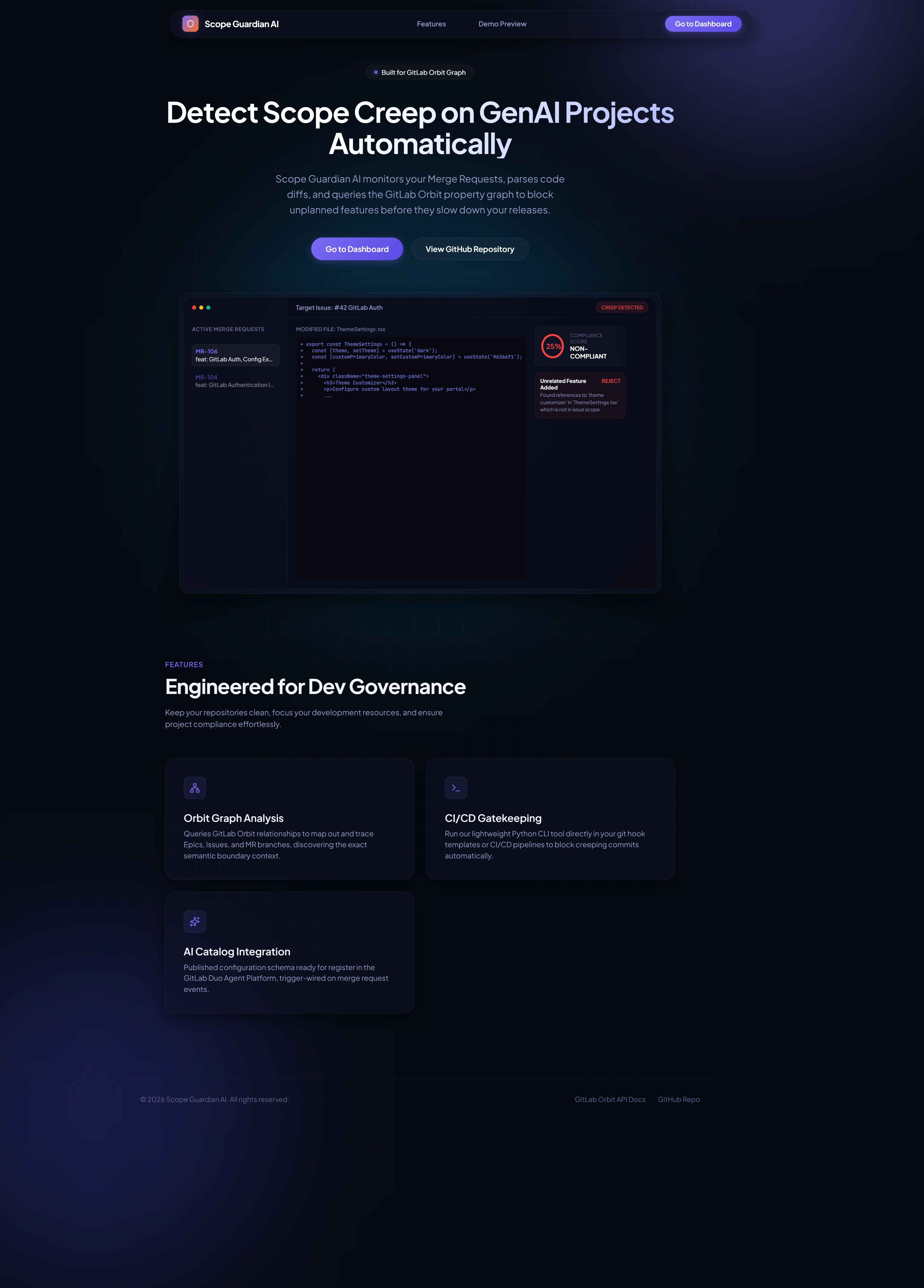
Landing Page
-
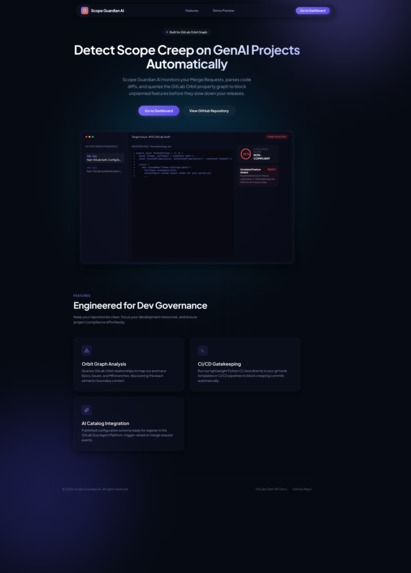
Full Landing Page
-
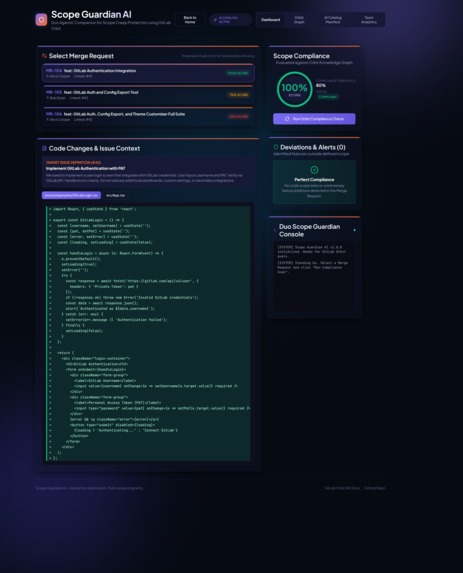
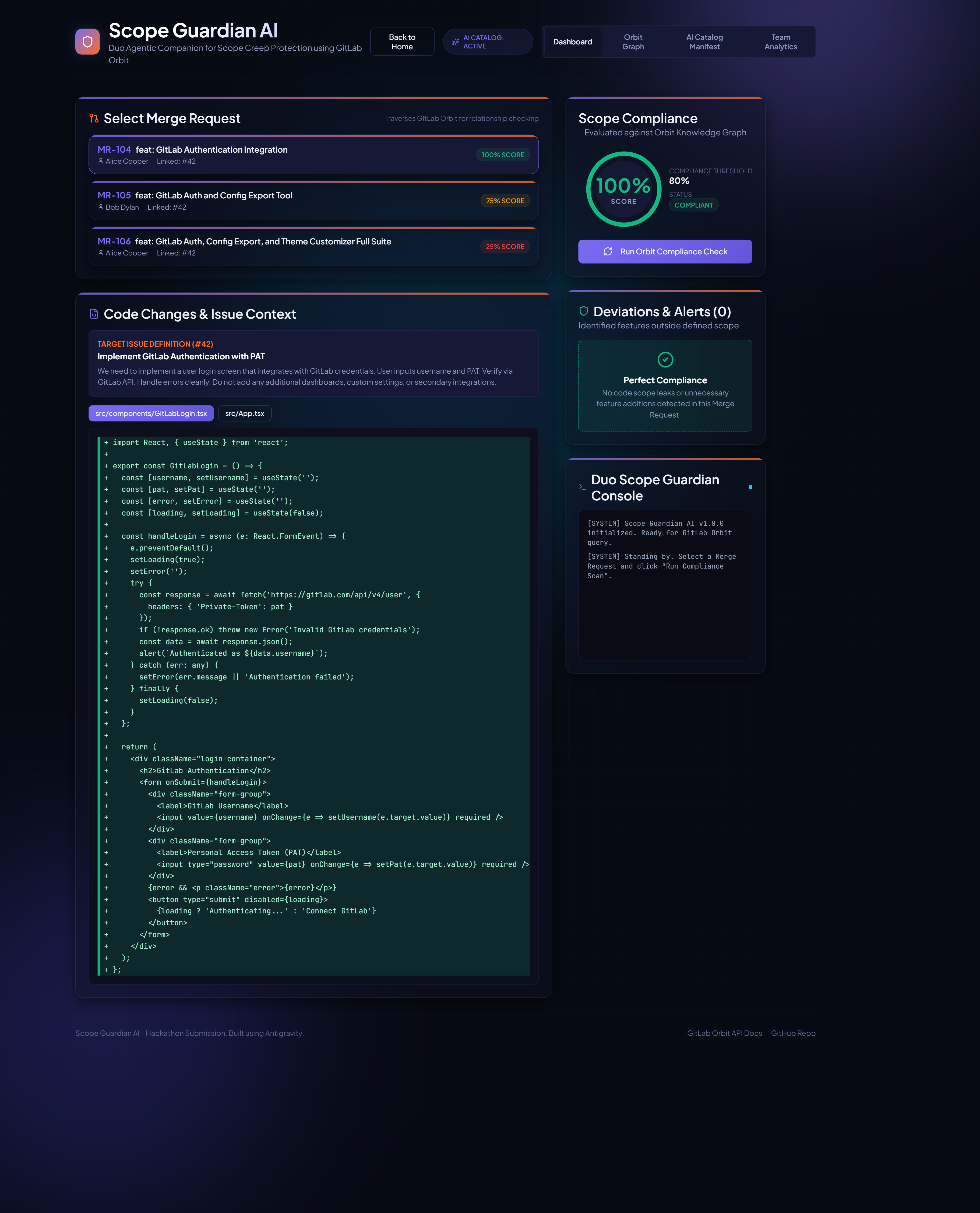
Dashboard
-
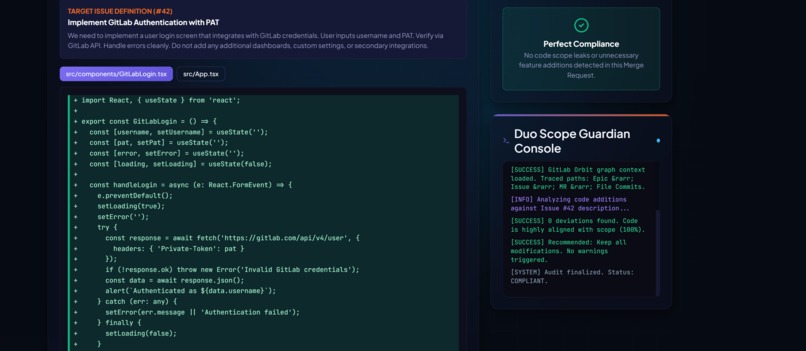
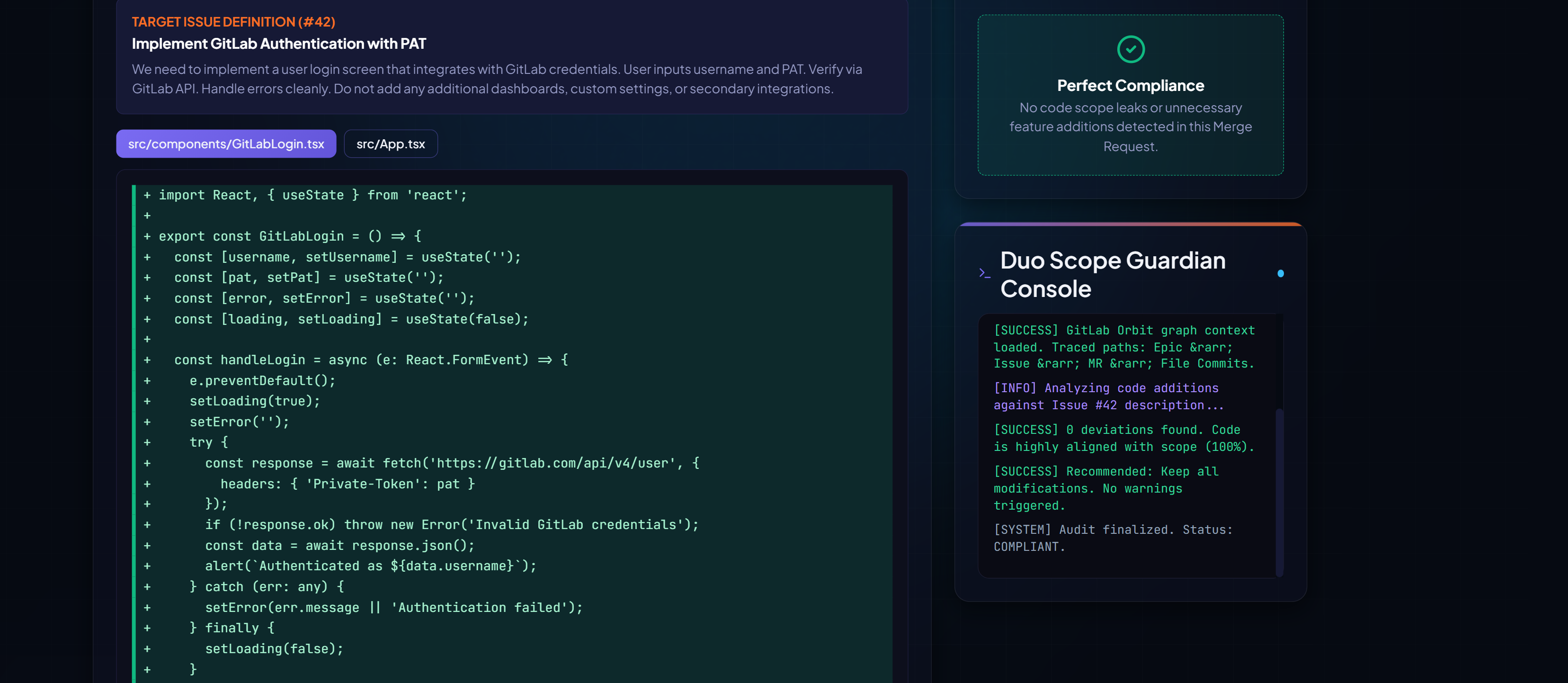
Run Orbit Compliance Check
-
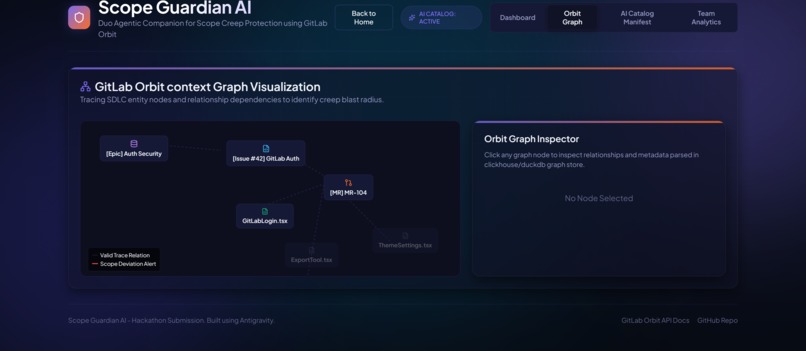
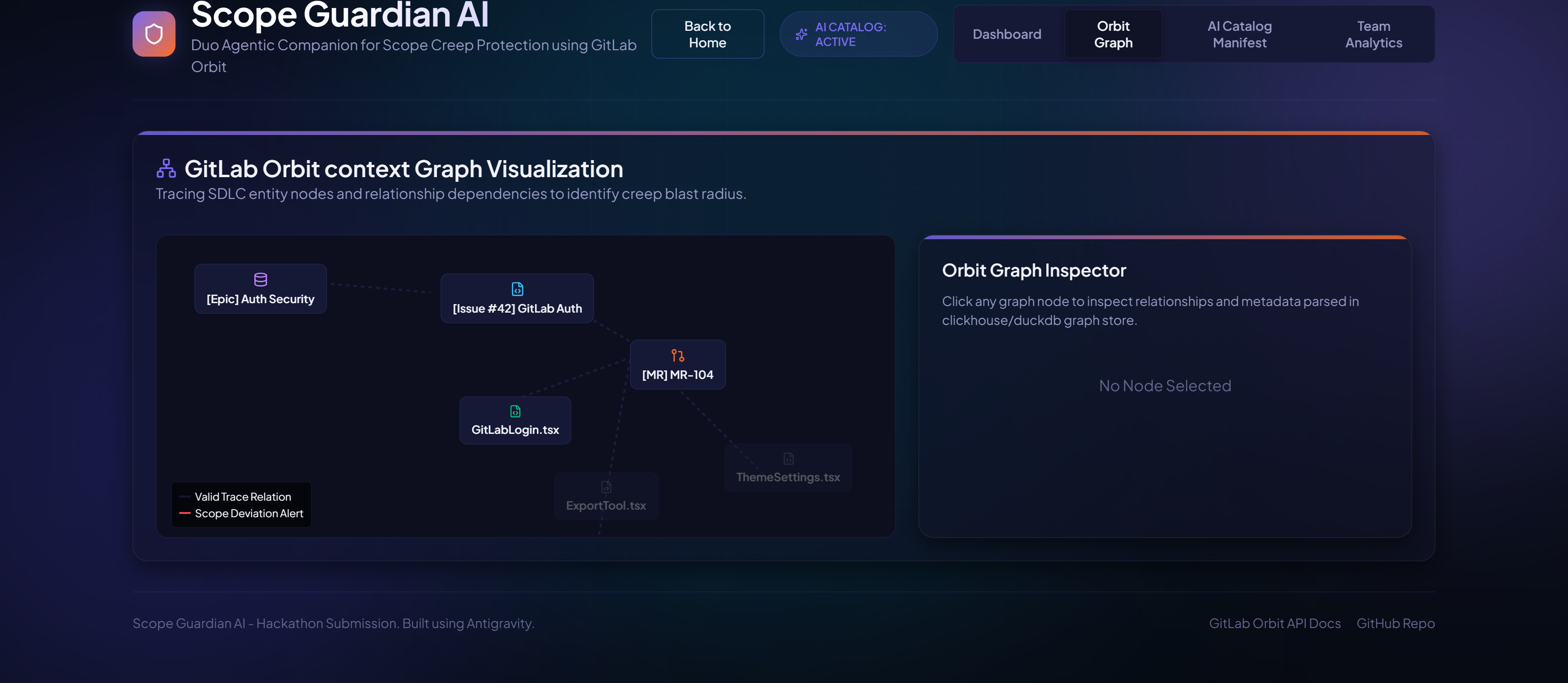
GitLab Orbit context Graph Visualization
-
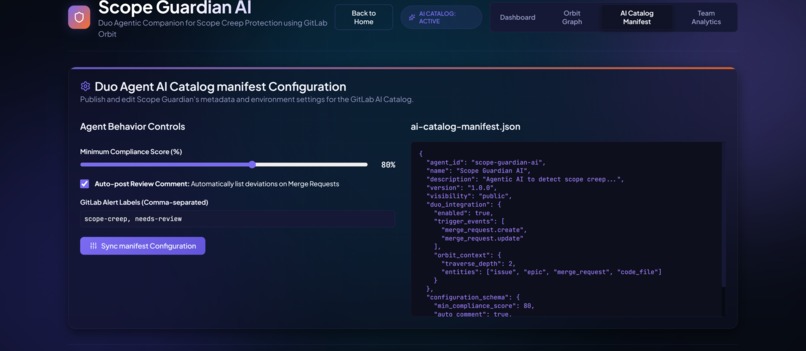
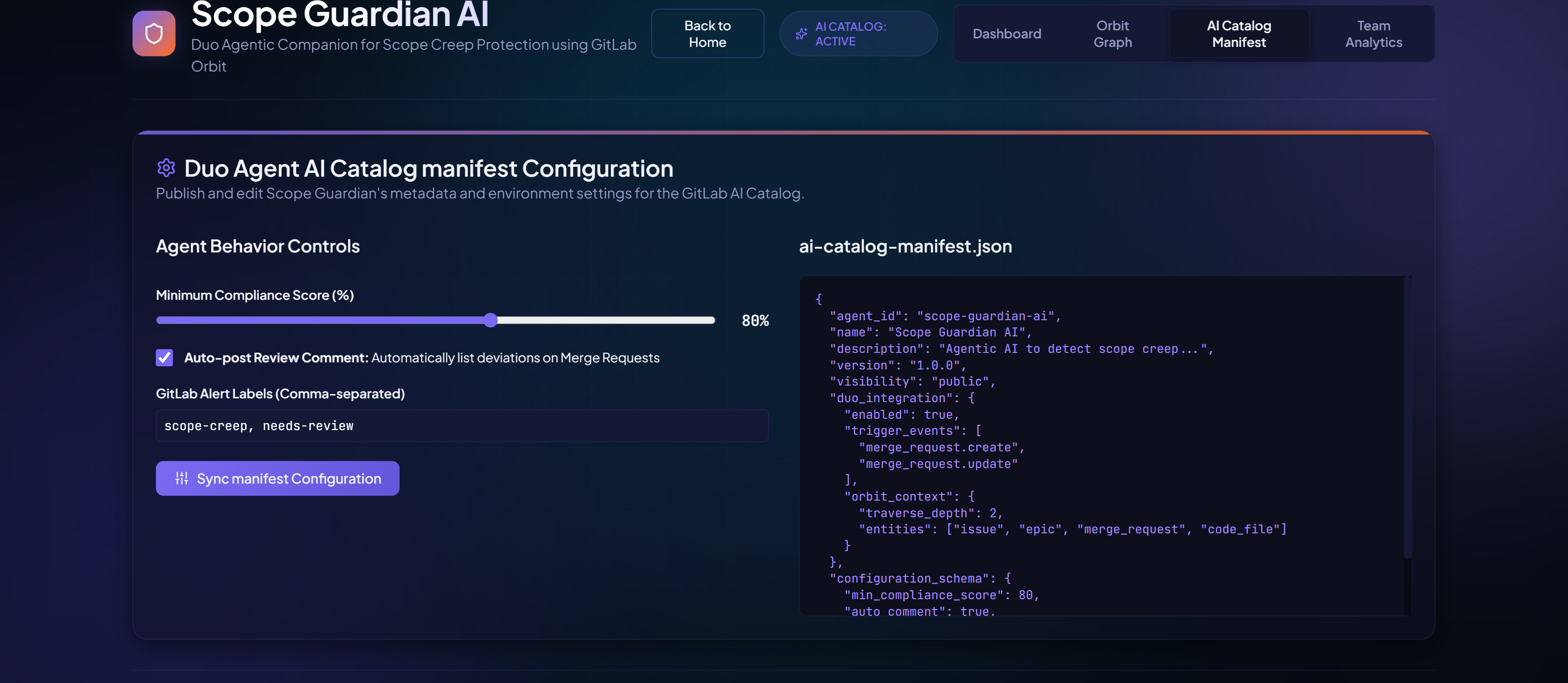
Duo Agent AI Catalog
-
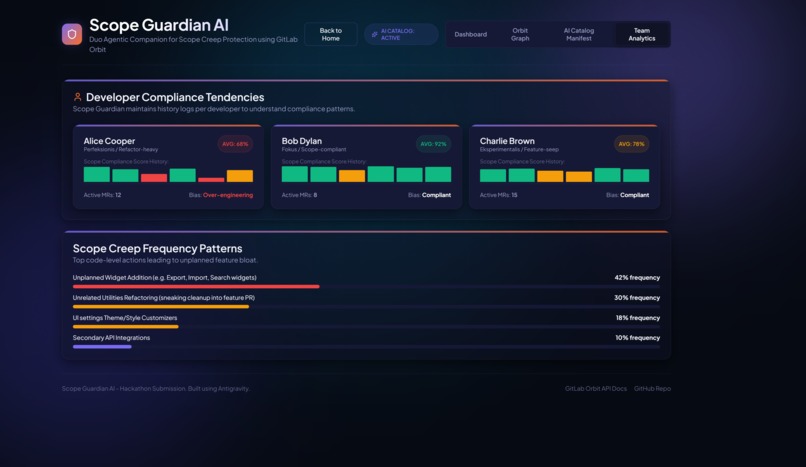
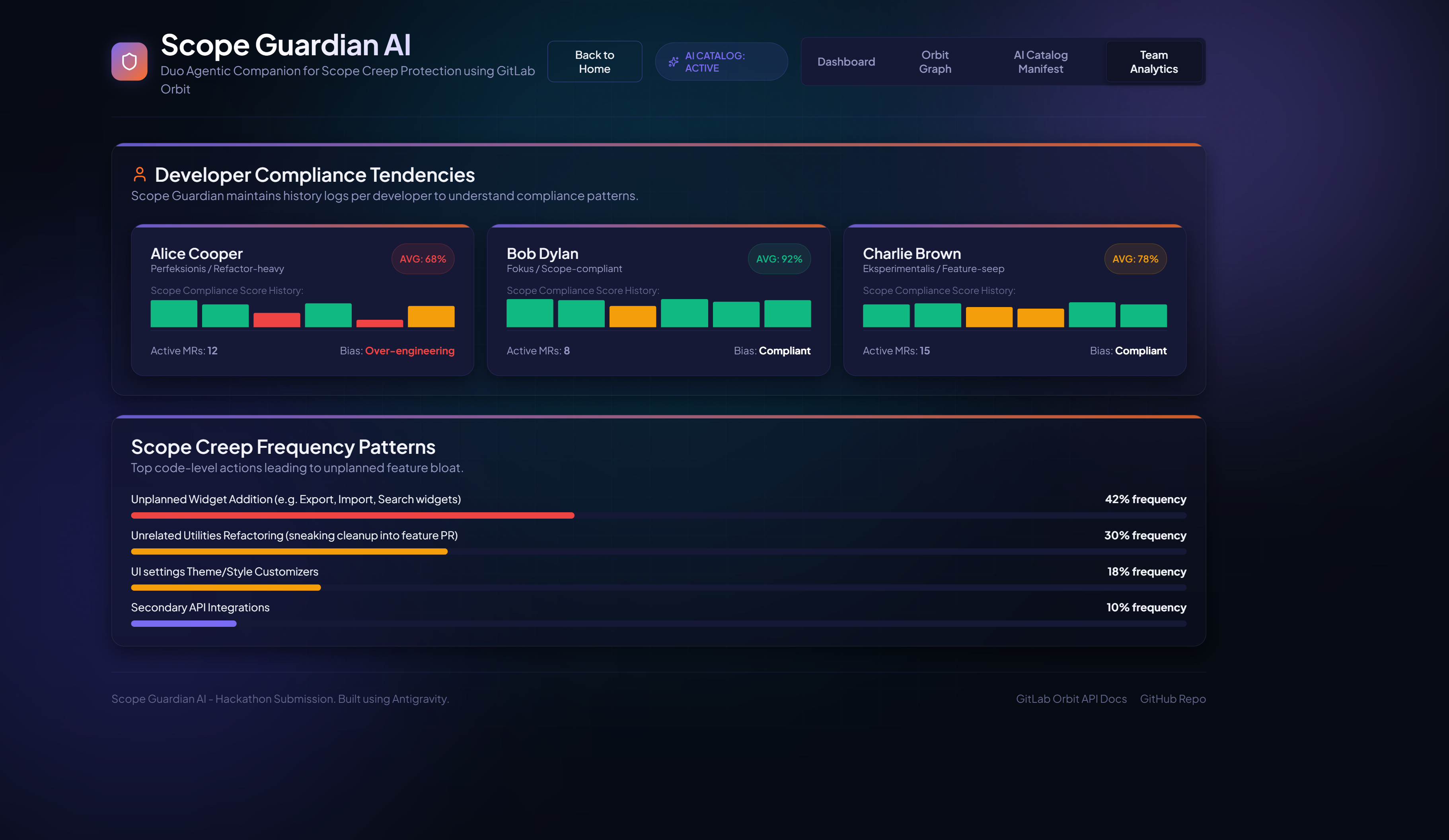
Developer Compliance Tendencies
💡 Inspiration
In fast-paced Generative AI development, developers often suffer from "feature creep"—adding unplanned customizations, secondary integrations, or over-engineered utility code. This delays releases, increases code-review fatigue, and inflates testing overhead. We were inspired to build a governance companion that automatically warns developers and maintainers when code changes deviate from issue specifications, helping teams ship faster and stay focused.
🔍 What it does
- Parses Git Diffs: Reads the code modifications (additions and deletions) inside a Merge Request.
- Traverses GitLab Orbit: Queries the Orbit graph database to retrieve parent epics and target issue nodes.
- Heuristic Scope Verification: Compares the semantics of added code lines against issue requirements.
- Flags Deviations: Automatically alerts developers on specific scope creep triggers (e.g., customizers, extra buttons, secondary features) that are out-of-scope.
- Recommends Actions: Assigns clear risk-based decisions:
-
REJECT: Unplanned modules that must be removed. -
POSTPONE: Valid features that should be deferred to a separate MR or future epic. -
KEEP: Minor refactors or required code.
-
⚙️ How we built it
- Analysis Core (
scope_guardian.py): Built using Python 3.12, allowing developers to execute scans locally in command-line terminals or integrate them into CI/CD pipelines. - Orbit Graph Representation (
orbit_schema.json): Formulated property graph nodes (Epic,Issue,MergeRequest,CodeFile) and edges (IMPLEMENTS,DEVIATES_FROM) to describe how Orbit represents context. - Web Portal & Landing Page (
src/App.tsx): A high-fidelity dashboard and landing page built with React, Vite, TypeScript, and Vanilla CSS. It provides visual demonstrations of MR scans, interactive graph visualizers, and AI Catalog sync tools. - Manifest publishing (
ai-catalog-manifest.json): Created the metadata configuration for seamless registration inside the GitLab Duo AI Catalog.
🧠 Challenges we ran into
One major challenge was false positives for code syntax words. For example, standard JS export const syntax was flagged as a "data export widget" deviation. We resolved this by building syntax-aware regex filters that bypass native language keywords and target functional additions (like checking if download features, blobs, or file exports are actually triggered).
🏆 Accomplishments that we're proud of
- Type Safety: Achieving 100% type safety in TypeScript with no compiler warnings (
npx tsc --noEmitruns cleanly). - Interactive Visuals: Building a premium, responsive dashboard and a glassmorphic landing page inspired by modern visual trends.
- Production Readiness: Delivering a dual-mode project that runs as an executable Python script and compiles into a static website ready for Vercel deployment.
📖 What we learned
We learned the power of GitLab Orbit's graph-based representation. By connecting code commits and files directly to issue contexts, AI agents can perform deep reasoning on why a change occurred rather than just what changed, representing a massive shift in automated software engineering governance.
🚀 What's next for Scope Guardian AI
- Vector Search Extensions: Integrate embedding comparisons to check semantic overlap between issue descriptions and code comment documentations.
- Automated MR Splitting: Enable the agent to automatically split crept MRs into two separate branches: one containing the compliant issue code, and one containing the postponed extra features.
- Developer Training Logs: Log creep trends over time to help teams identify who might benefit from design scope training.
Built With
- gitlab
- gitlabduoagent
- python
- typescript
- vercel

Log in or sign up for Devpost to join the conversation.