Inspiration
Every day, people receive dozens of notifications, yet today's smartphones treat them all with the same level of importance. A scholarship deadline can appear beside a shopping offer, and an interview invitation can easily be lost among social media updates. We wanted to rethink notifications from the perspective of human attention, not just information delivery. This inspired us to build Scope—an intelligent attention management system that helps users focus on what truly matters while respecting their privacy.
What it does
Smart Context Oppurtunity & Priority Engine
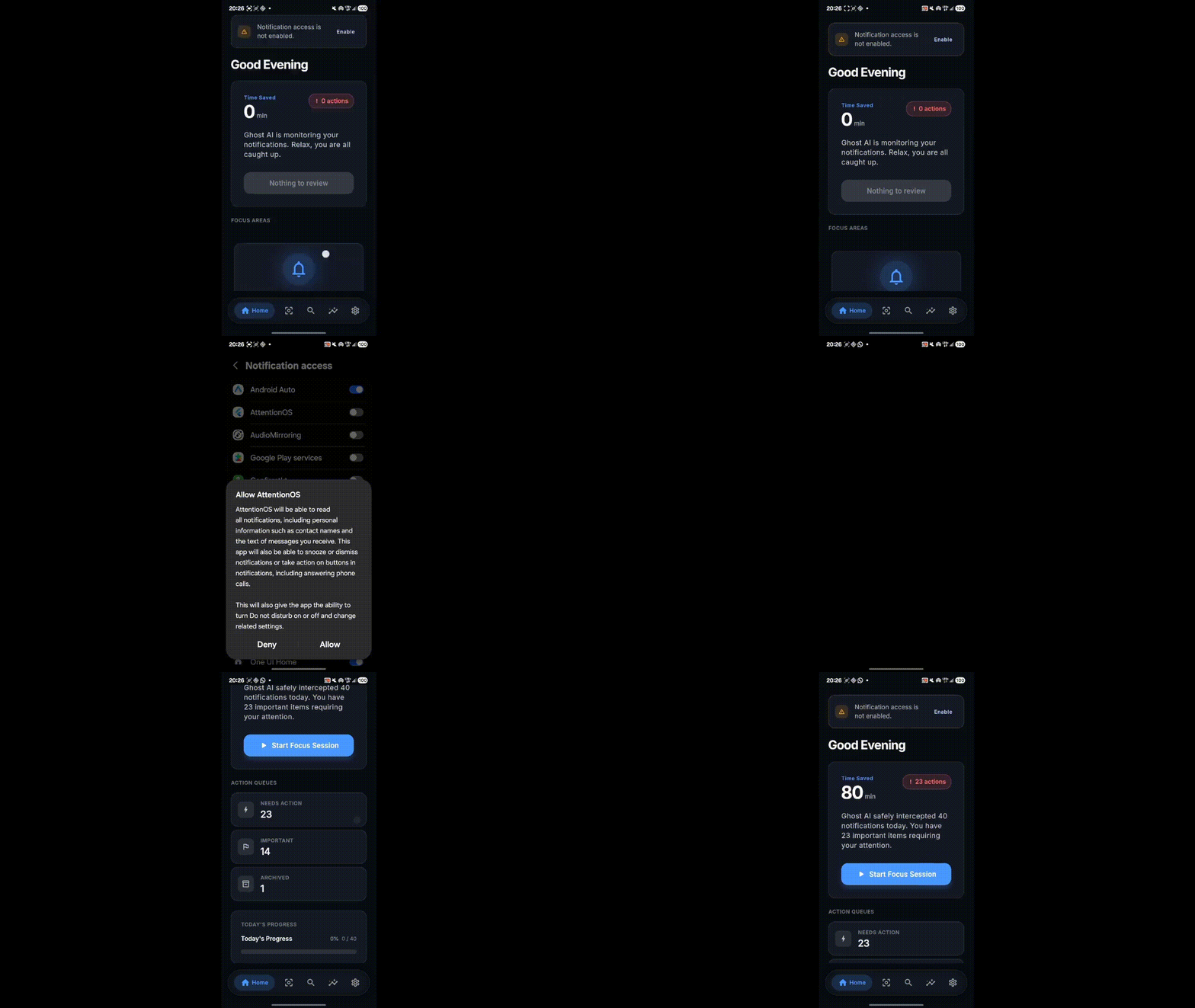
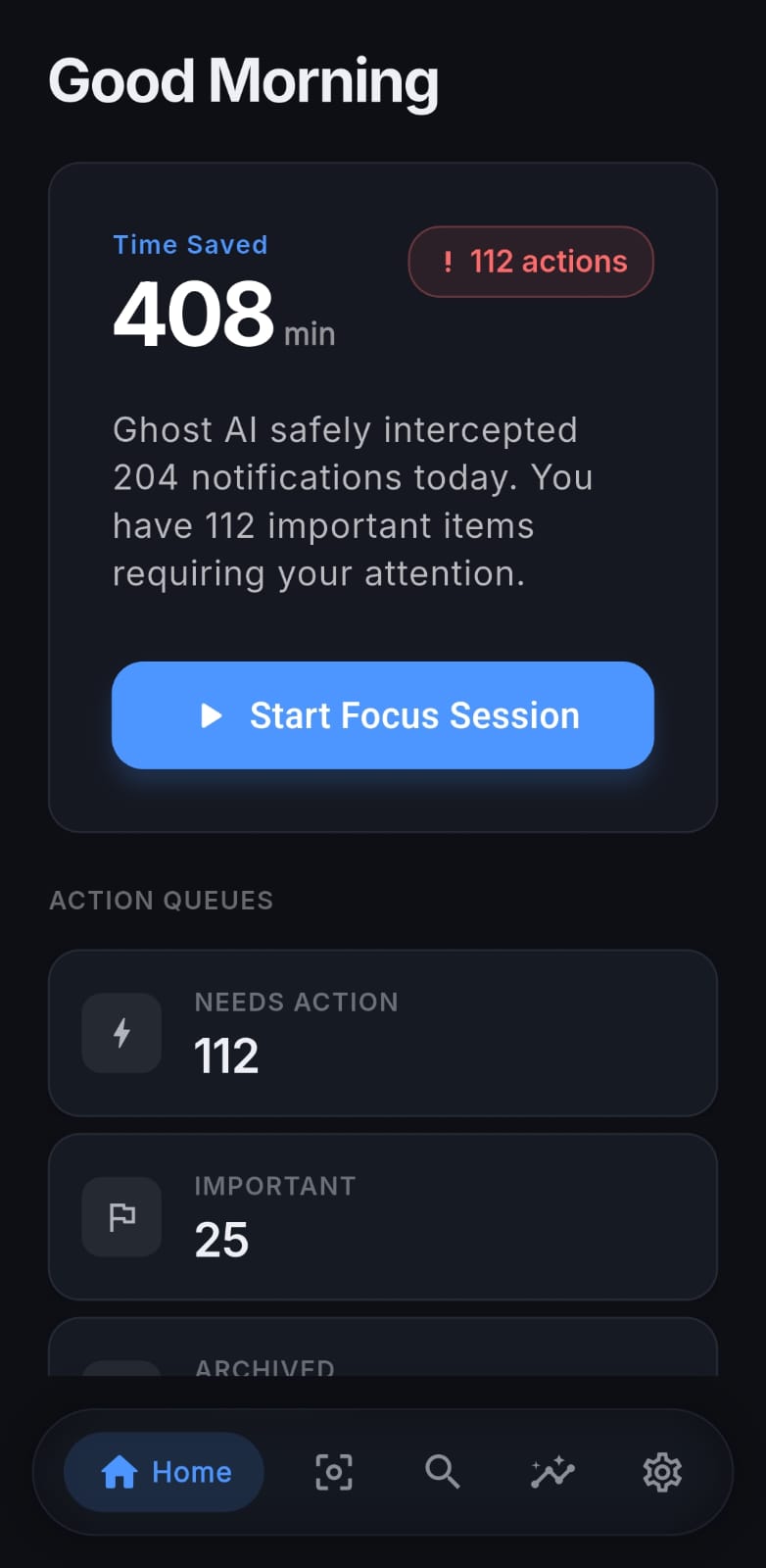
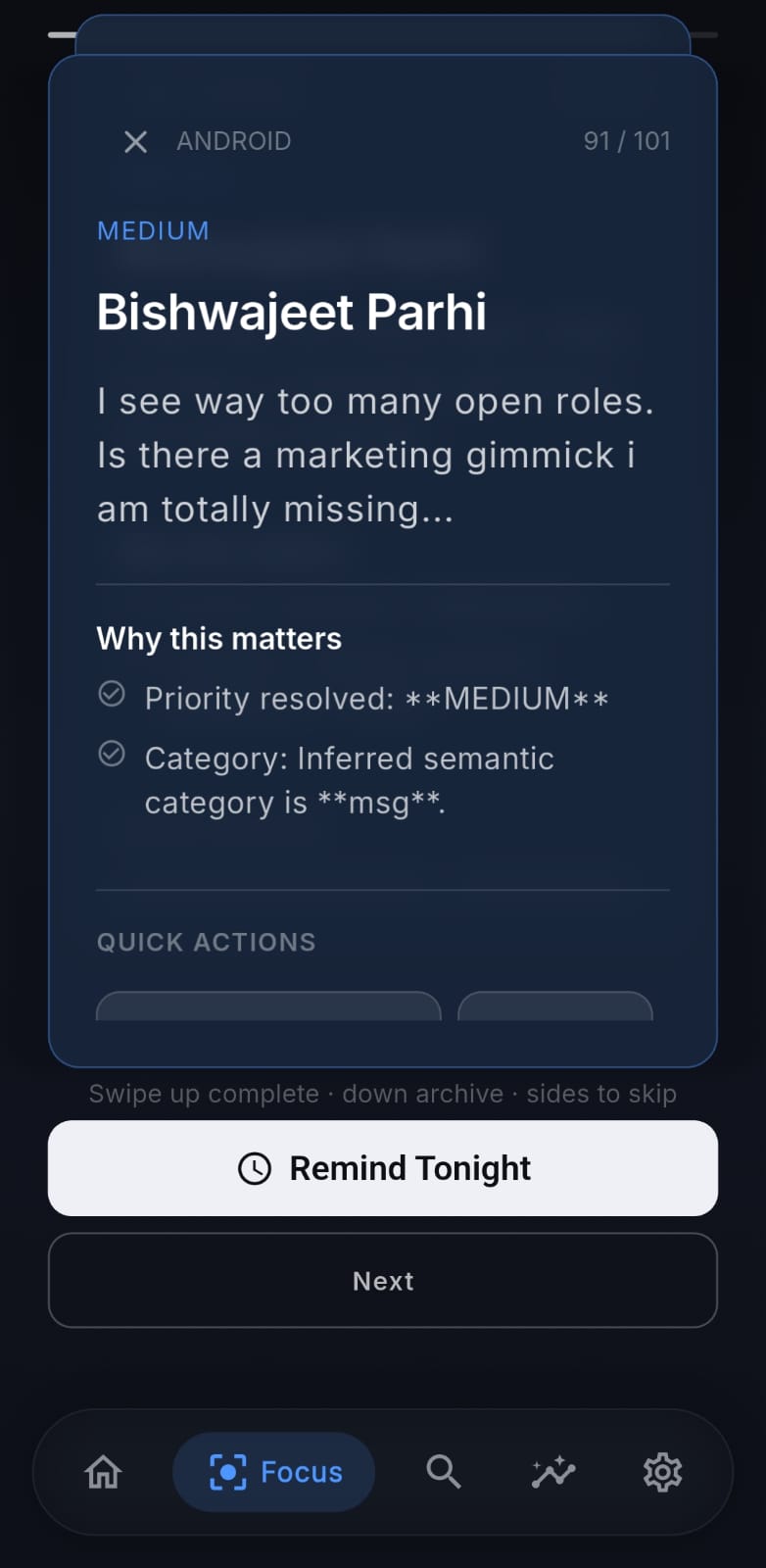
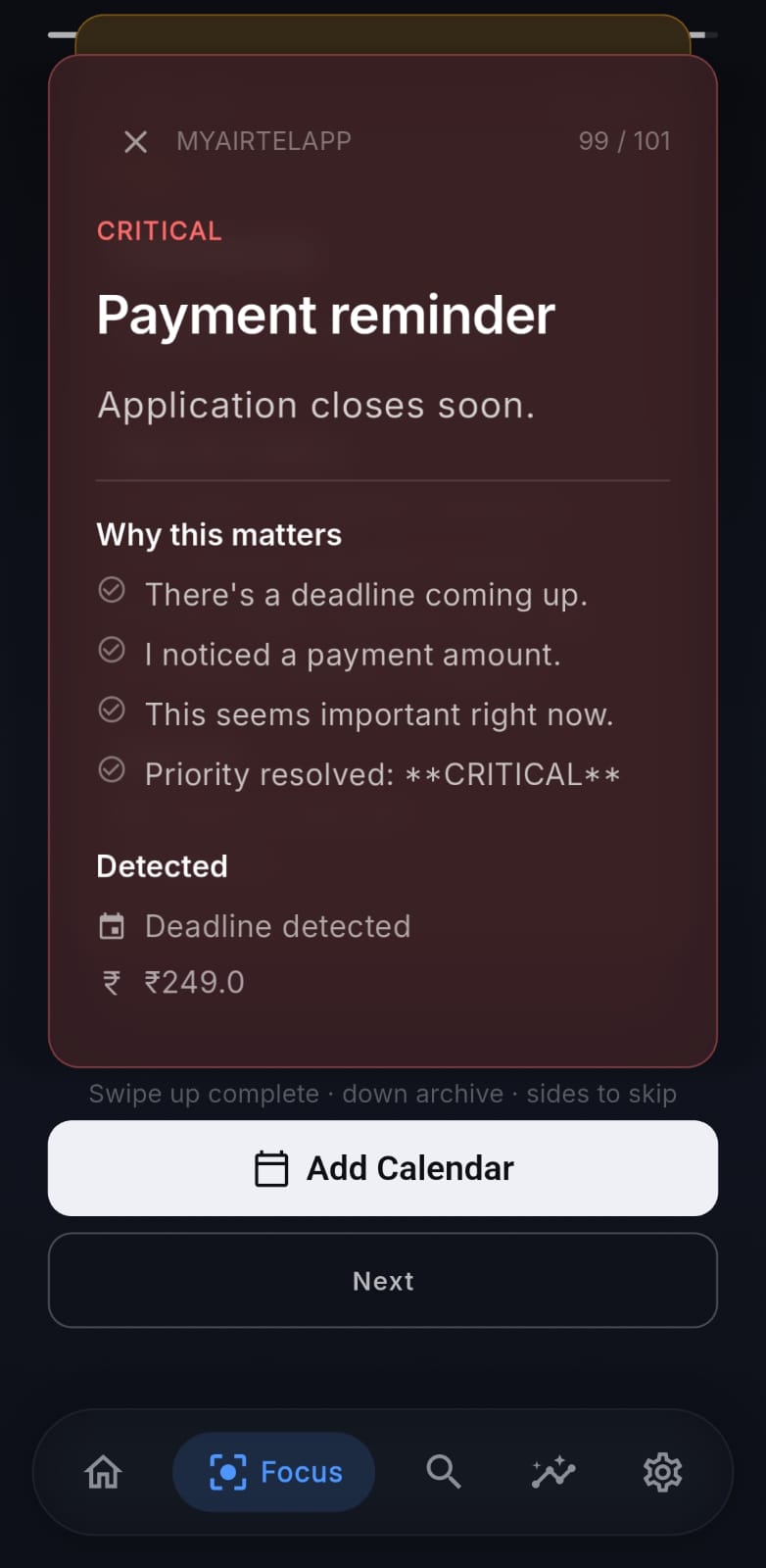
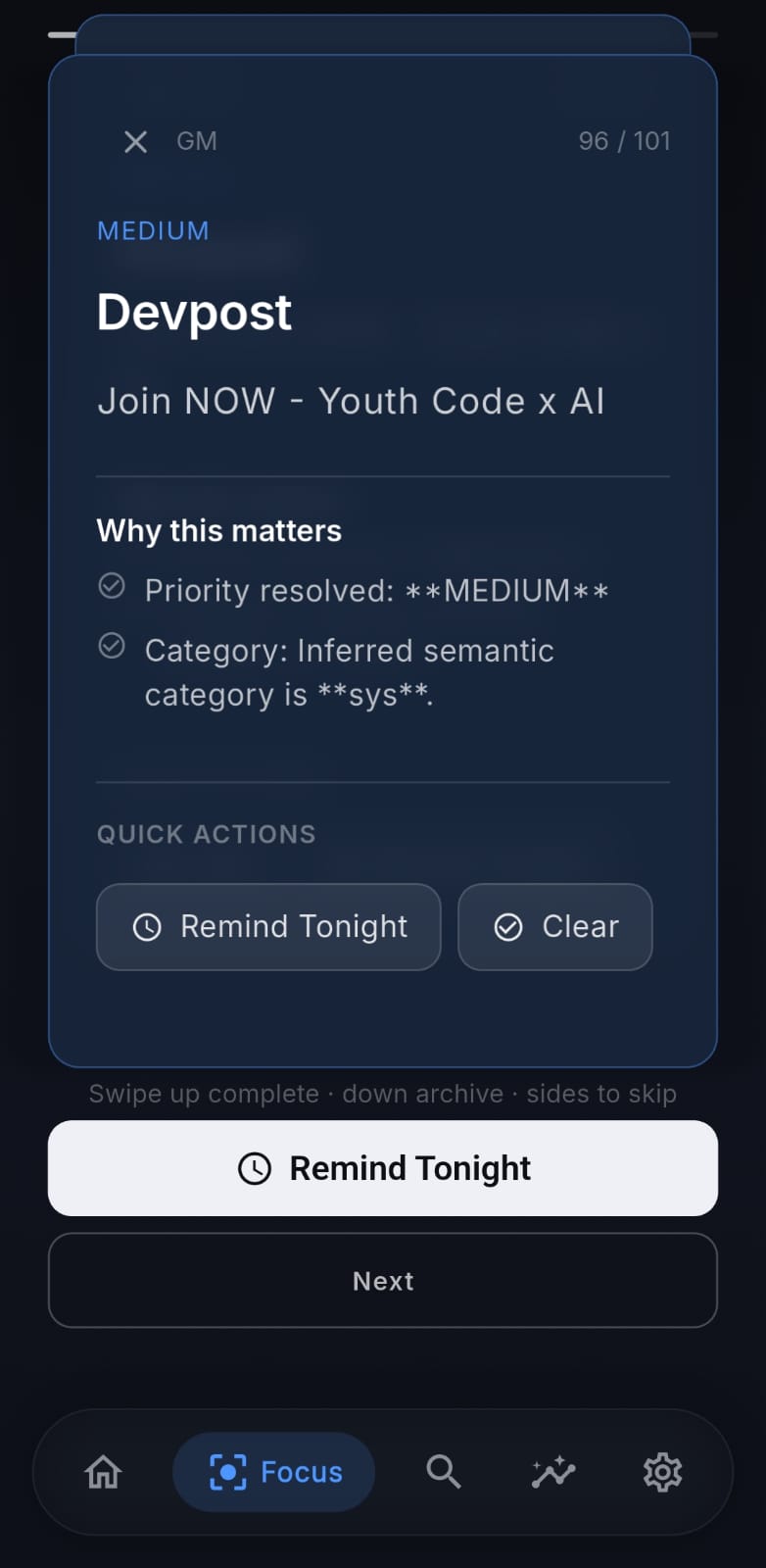
Scope is an AI-powered notification intelligence layer for Android. It captures notifications in real time, analyzes them using an on-device hybrid AI pipeline called Ghost AI, assigns a priority level, explains why the notification matters, and recommends contextual actions such as replying, joining a meeting, or adding an event to the calendar.
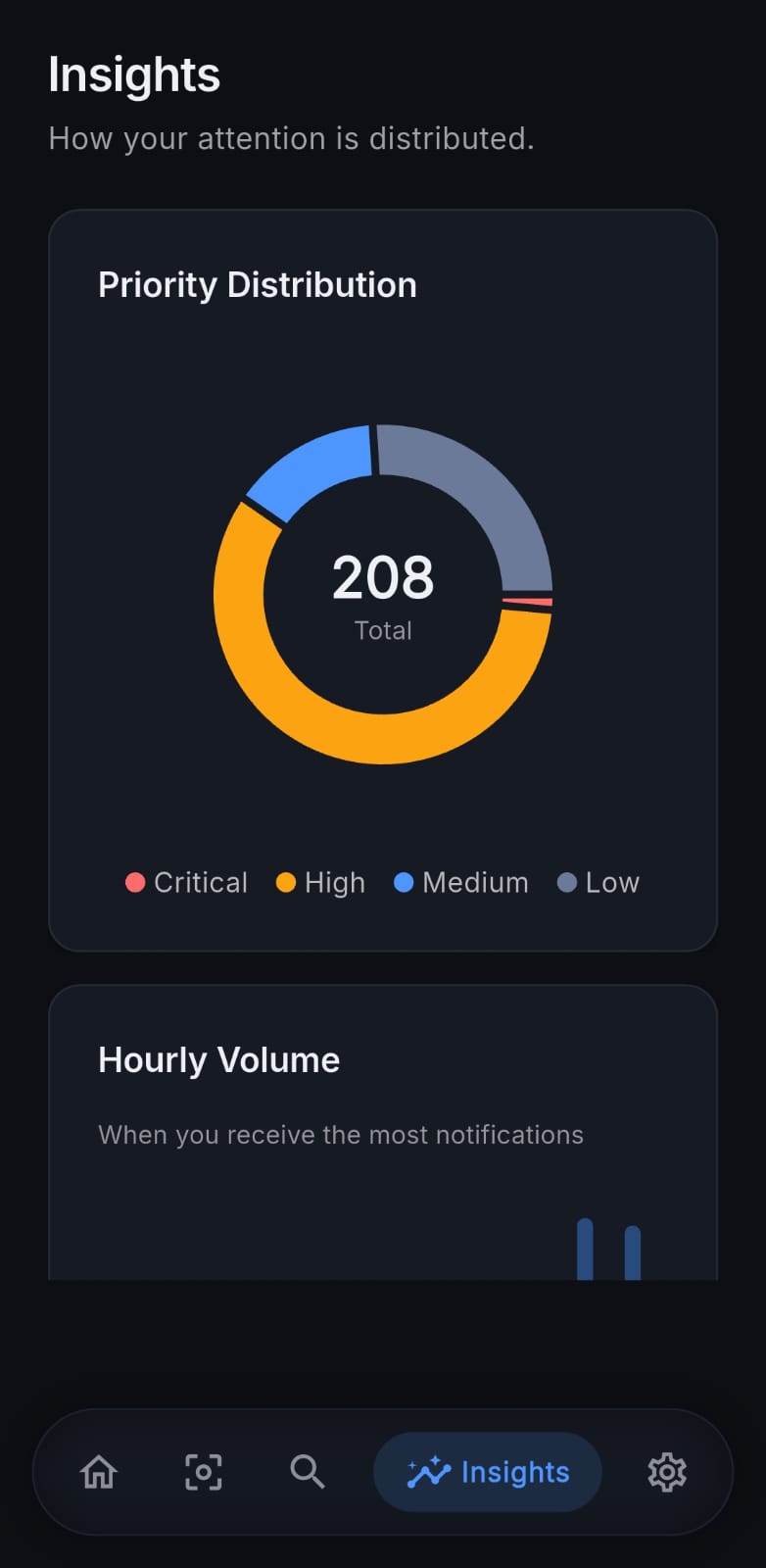
Instead of overwhelming users with endless notification lists, Scope introduces Focus Sessions, Review Queue, Smart Actions, AI Insights, and powerful filtering to create a calmer and more productive notification experience.
How we built it
Scope was built with Flutter and Dart, using Android's NotificationListenerService and a Kotlin bridge to capture notifications in real time. The intelligence layer, Ghost AI, combines feature extraction, rule-based reasoning, and a lightweight TensorFlow Lite classifier to determine notification priority while keeping all processing on the device.
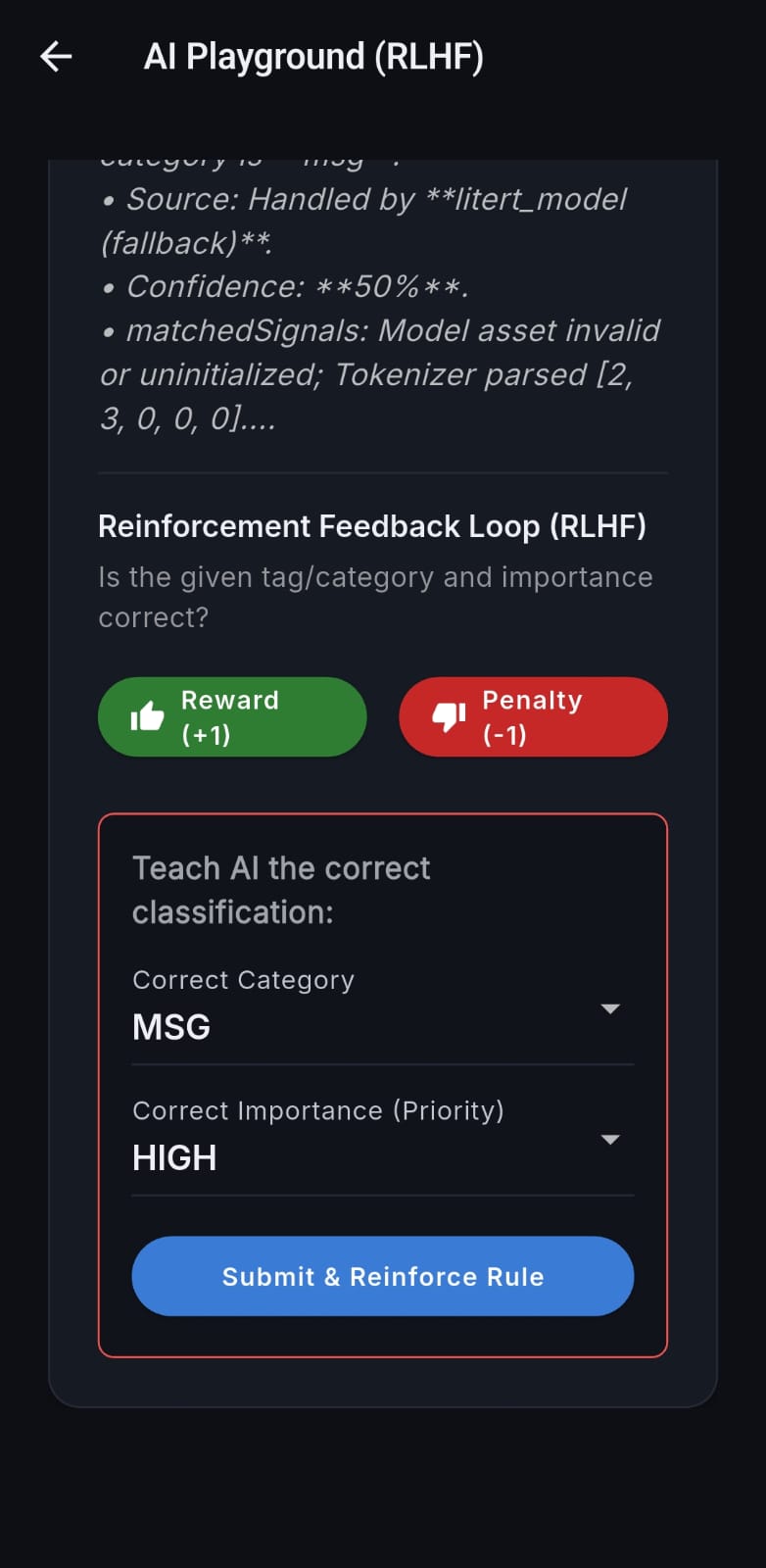
Notification data is stored locally using Drift (SQLite), with Riverpod providing reactive state management. We also built developer tools such as the Ghost AI Playground for inspecting AI decisions and testing different notification scenarios.
Challenges we ran into
Building a reliable notification pipeline while maintaining a smooth user experience was one of our biggest challenges. We also had to design an AI system that was not only accurate but explainable, ensuring users understood why notifications were prioritized. Another challenge was balancing automation with user control, leading us to create features like Smart Actions, Focus Areas, and the AI Playground. Finally, achieving a clean, premium interface required multiple iterations of motion design, interaction patterns, and visual hierarchy.
Accomplishments that we're proud of
- Built a complete on-device AI notification intelligence system.
- Designed Ghost AI, a hybrid explainable AI pipeline.
- Created a distraction-free Focus Session experience.
- Developed contextual Smart Actions for actionable notifications.
- Implemented a privacy-first architecture with no cloud dependency.
- Built a premium Material 3 interface with smooth interactions.
- Developed an AI Playground for debugging and improving AI decisions.
- Successfully integrated Android system notifications into a Flutter application.
What we learned
This project taught us that effective AI is not just about making predictions—it is about building trust. Users are far more likely to adopt AI when they understand why decisions are made and remain in control. We also gained valuable experience integrating Flutter with native Android services, designing explainable AI systems, optimizing on-device machine learning, and creating user experiences that reduce cognitive overload rather than add to it.
What's next for Scope
Our vision is to make Scope a complete attention management platform. Future plans include personalized on-device learning, adaptive attention scoring, calendar and email integration, Wear OS support, richer Smart Actions, predictive attention insights, and continuous improvements to Ghost AI. We want Scope to evolve from a notification manager into an intelligent assistant that helps people make better decisions about where they spend their attention—while keeping all their data private.


Log in or sign up for Devpost to join the conversation.