-
-
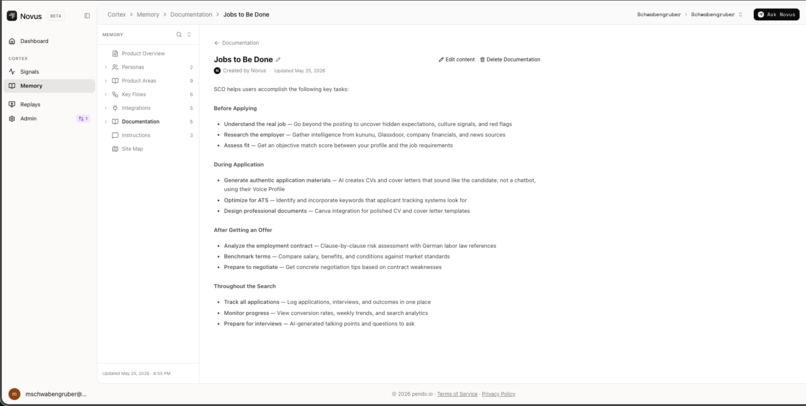
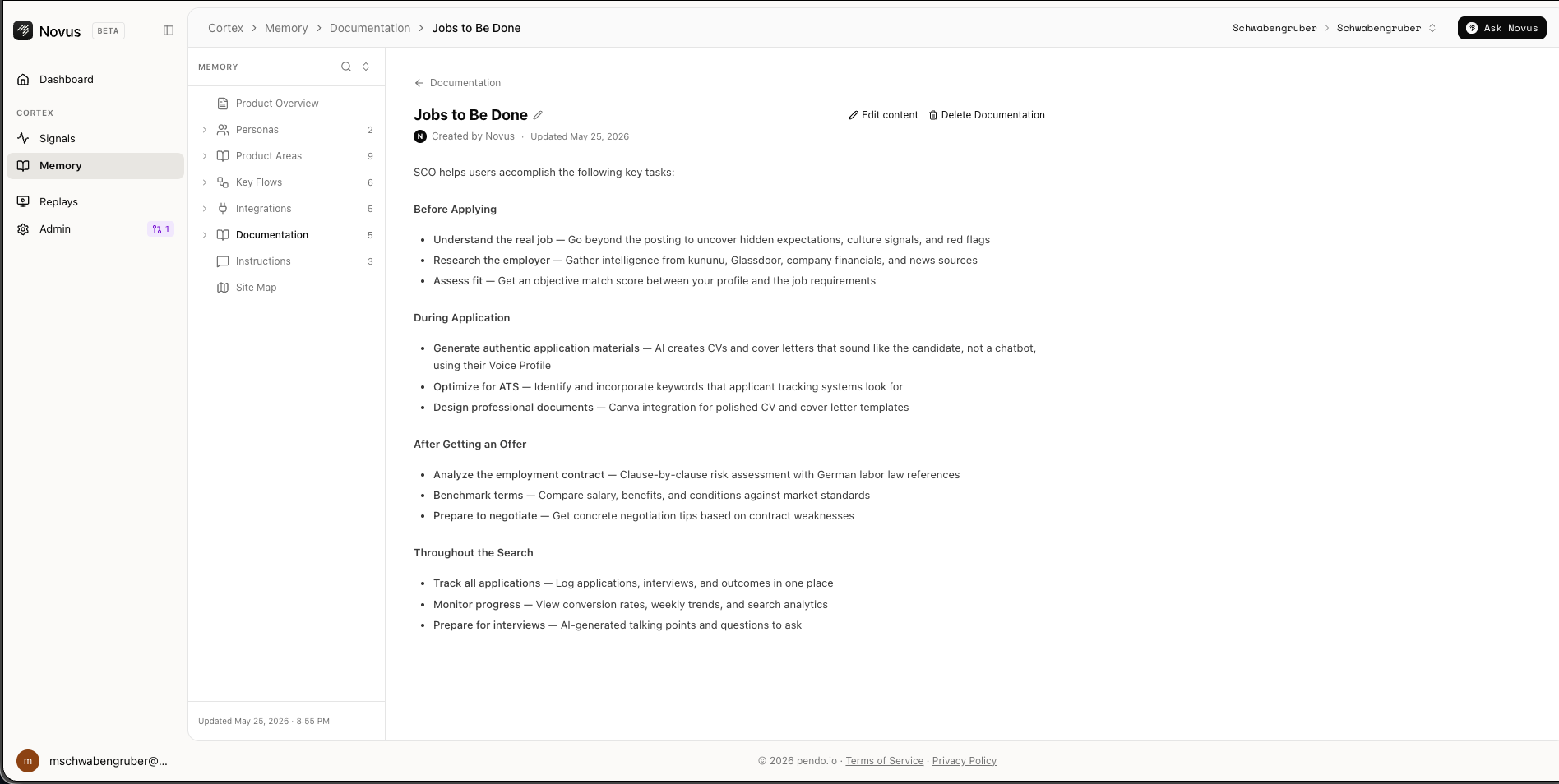
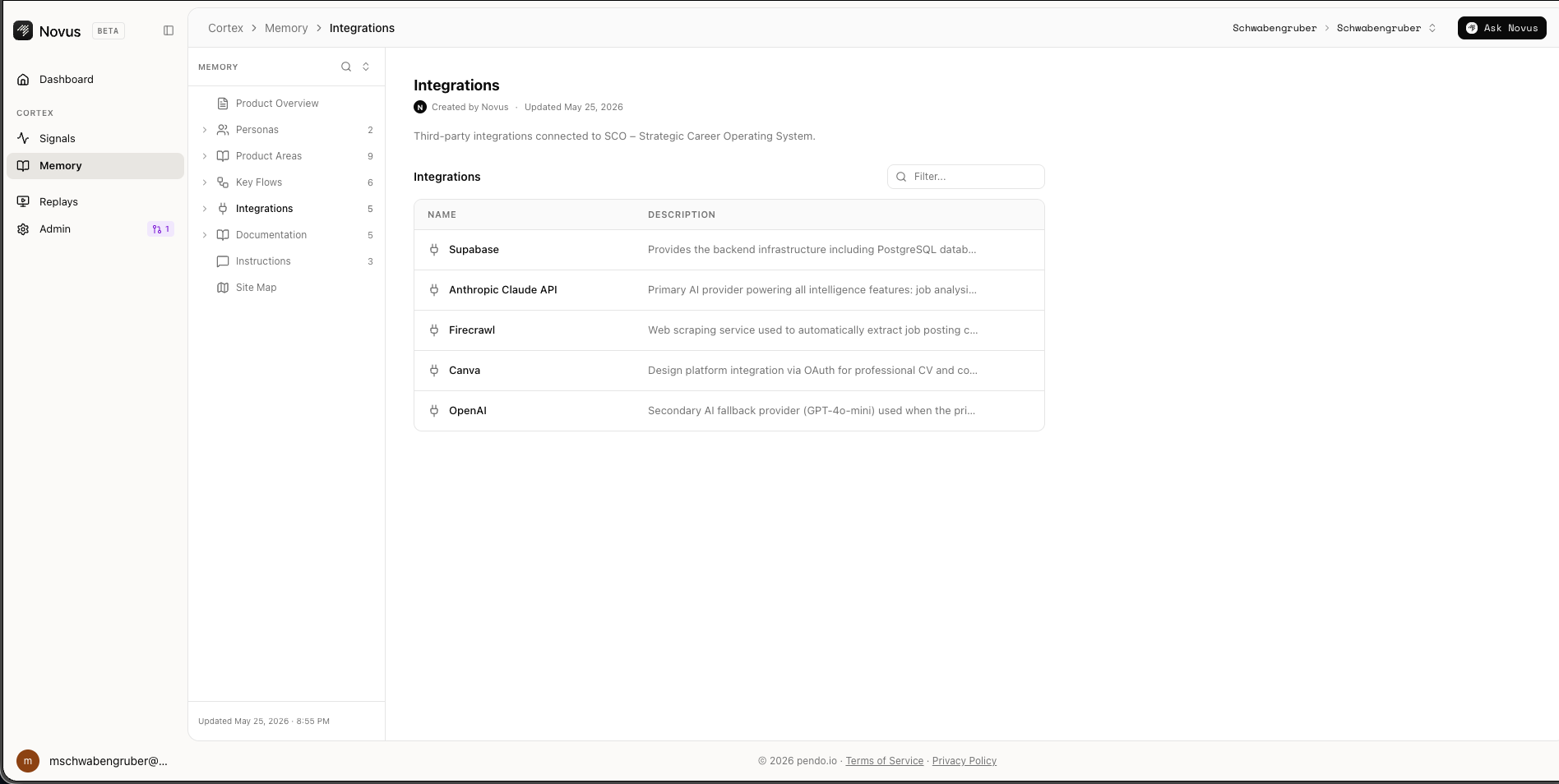
Job to be Done
-
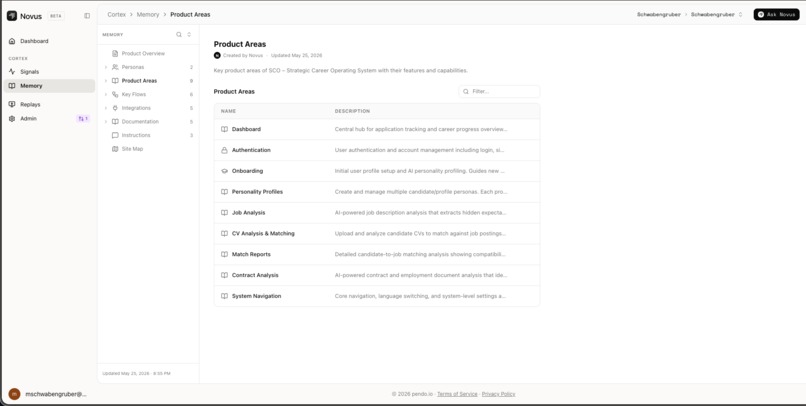
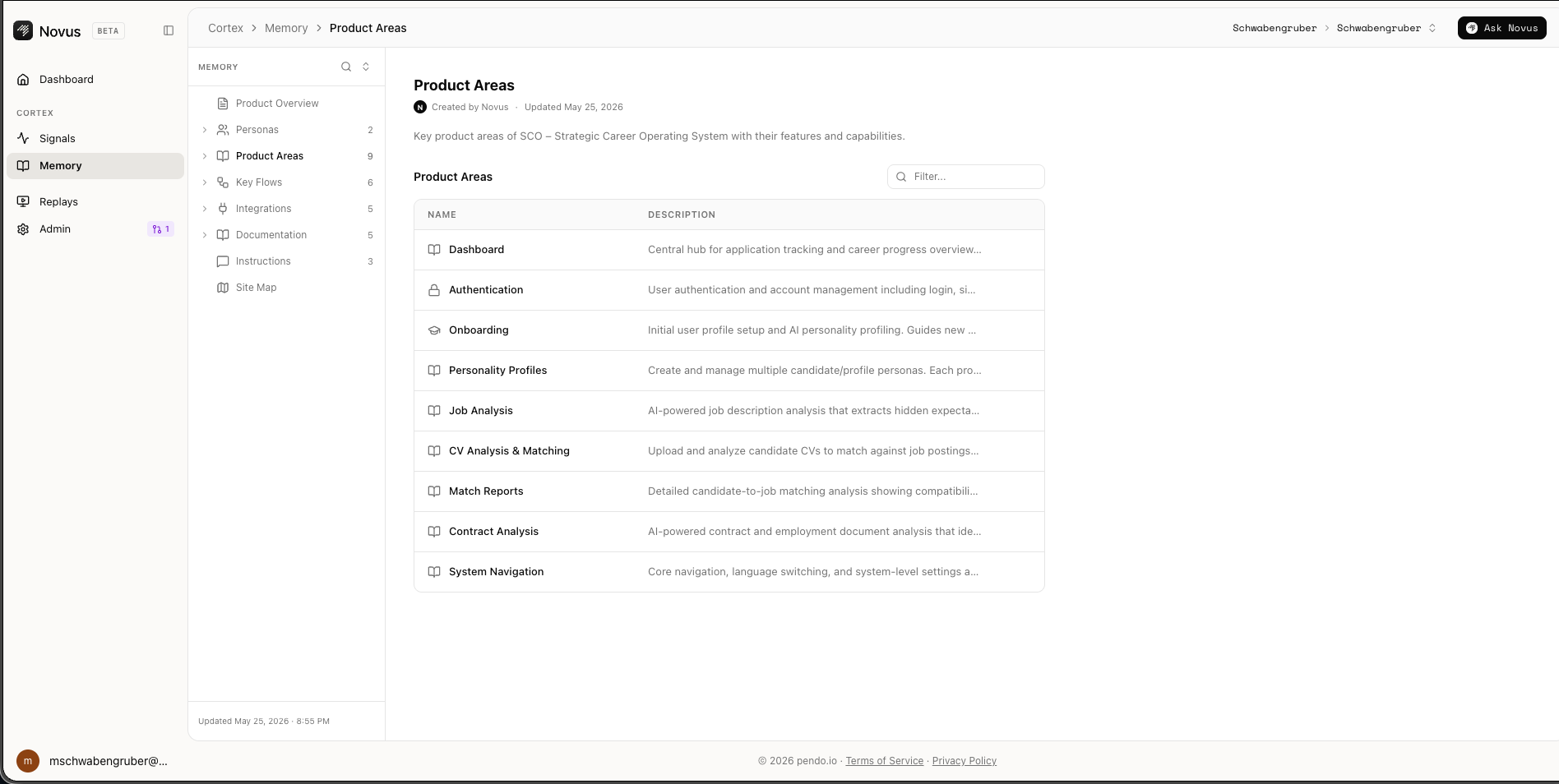
Product Areas
-
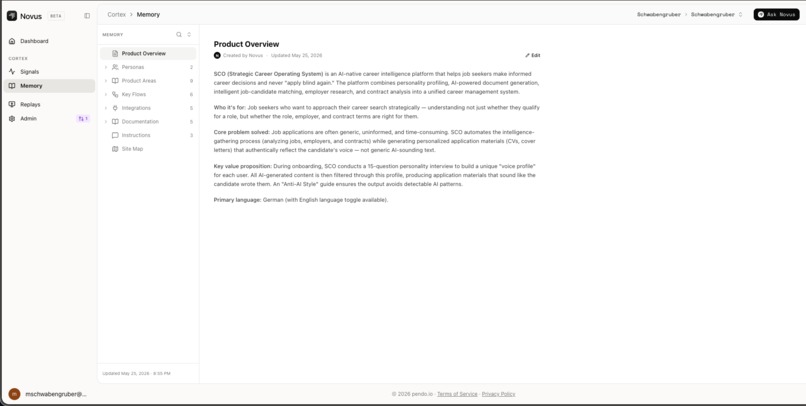
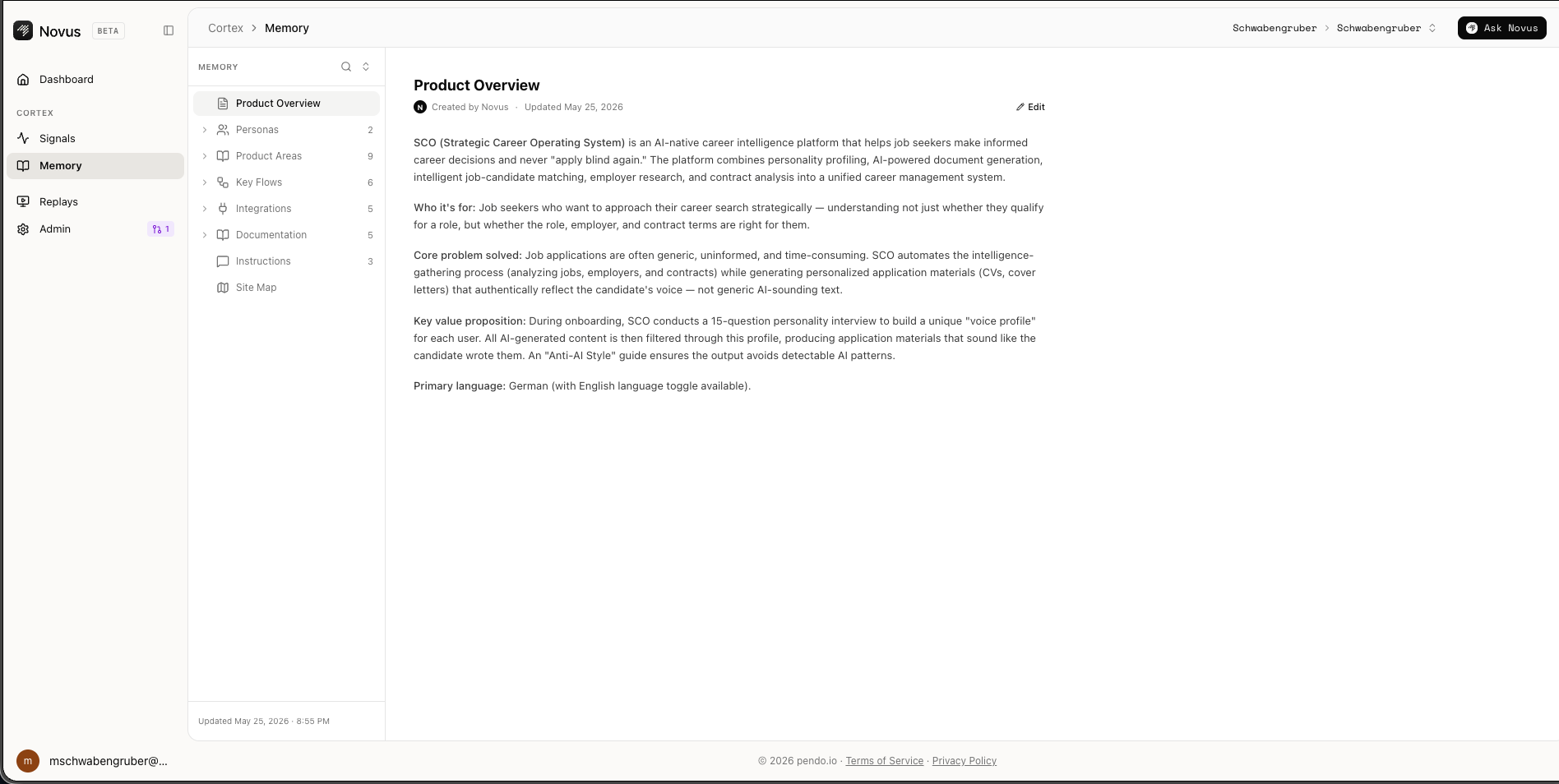
Product Overview
-
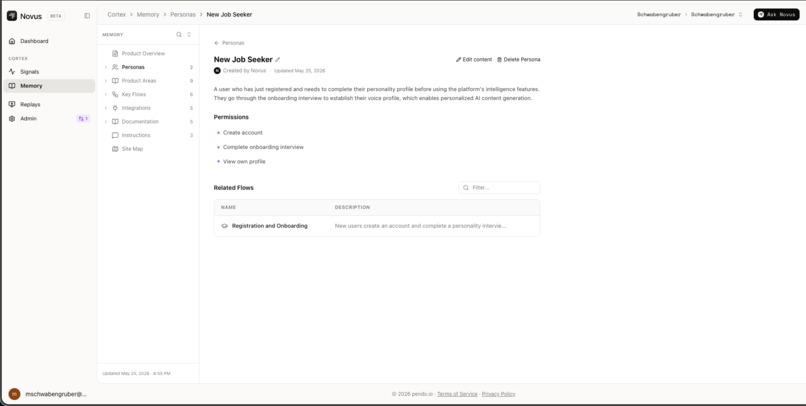
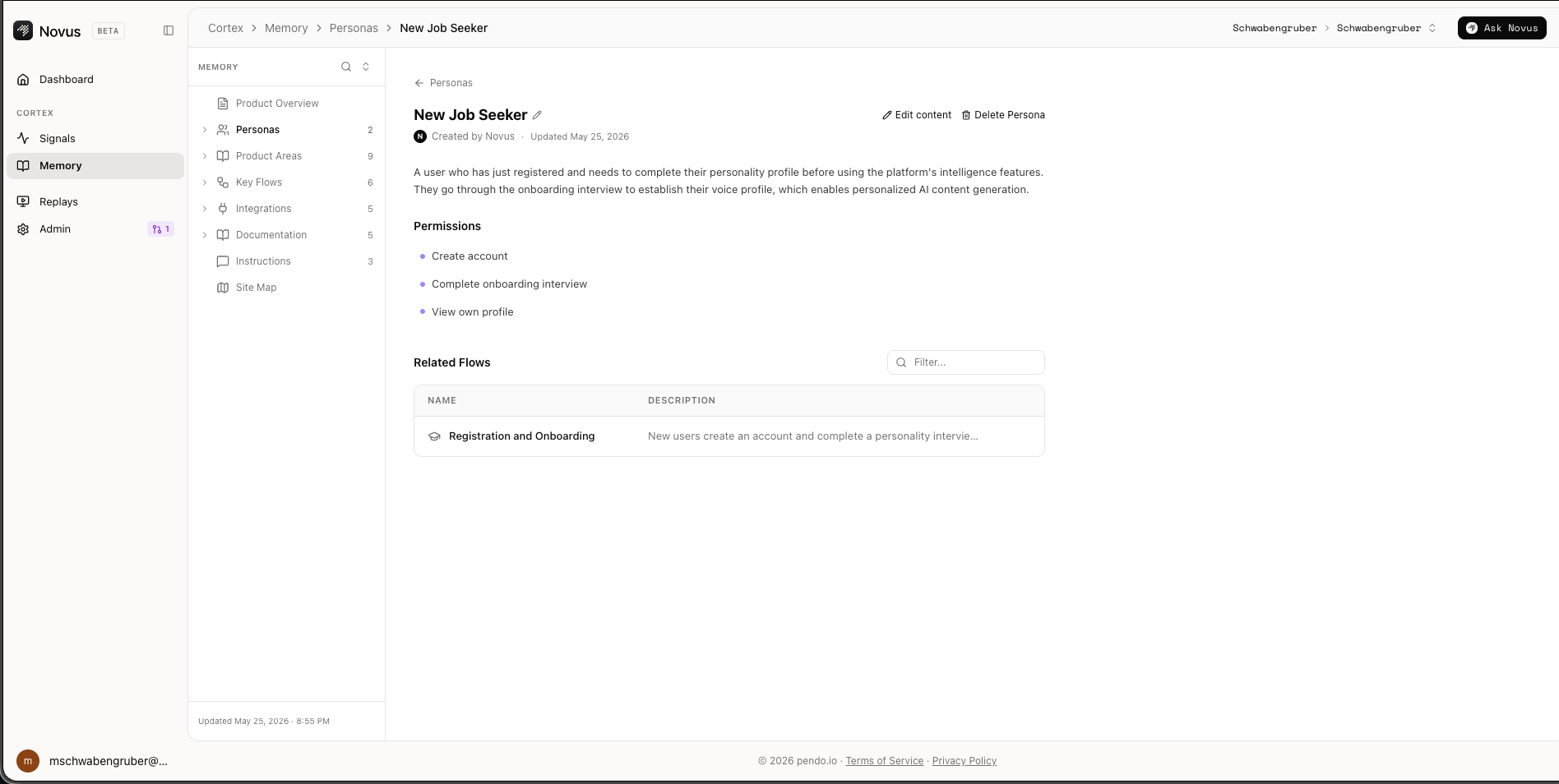
Profile
-
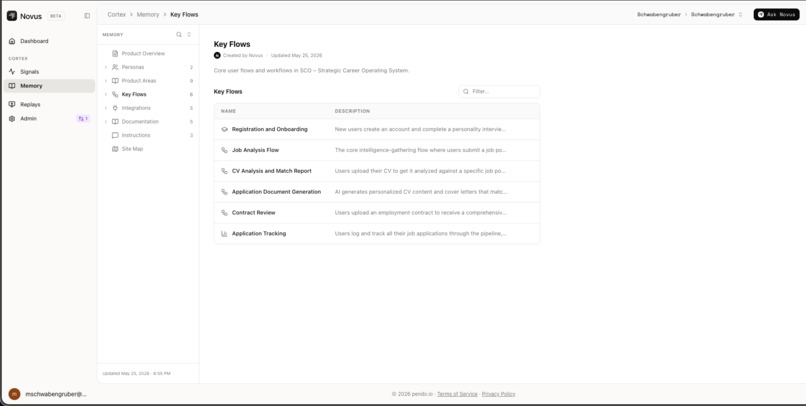
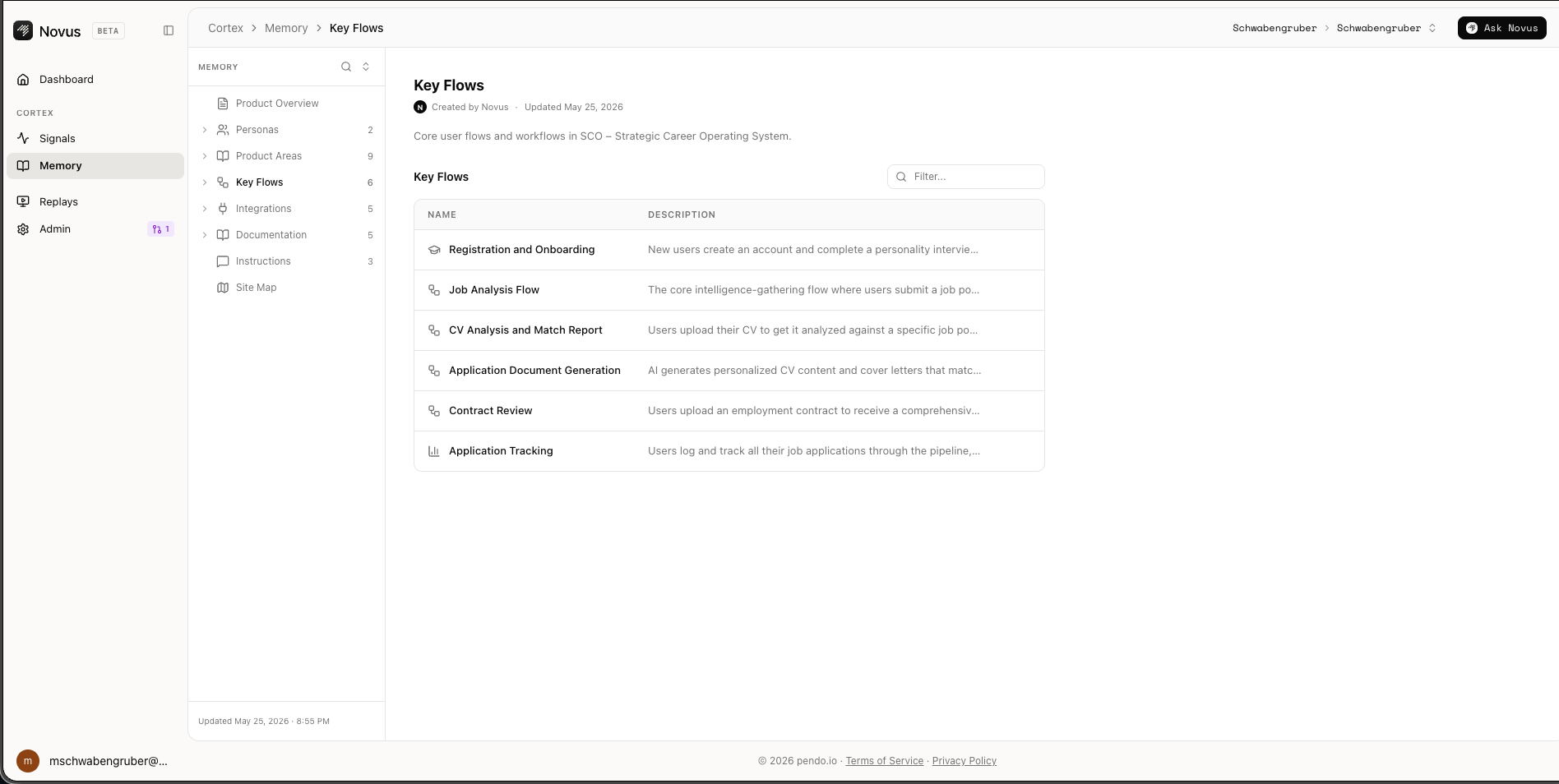
Key Flow
-
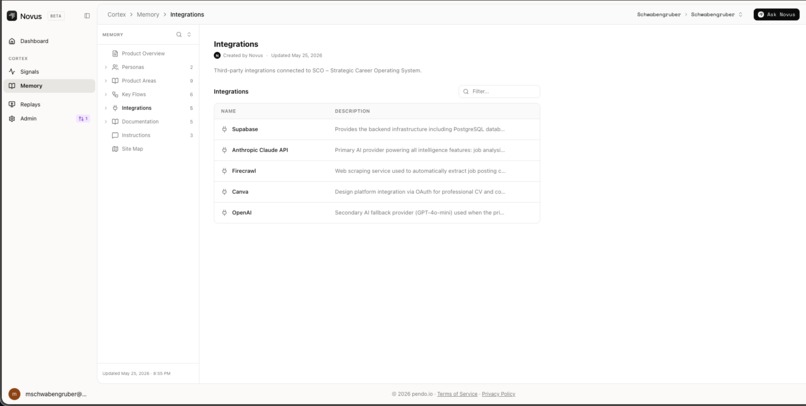
Integration
-
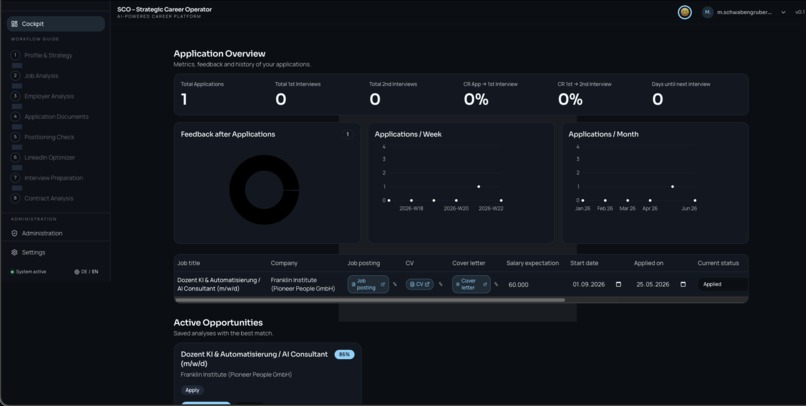
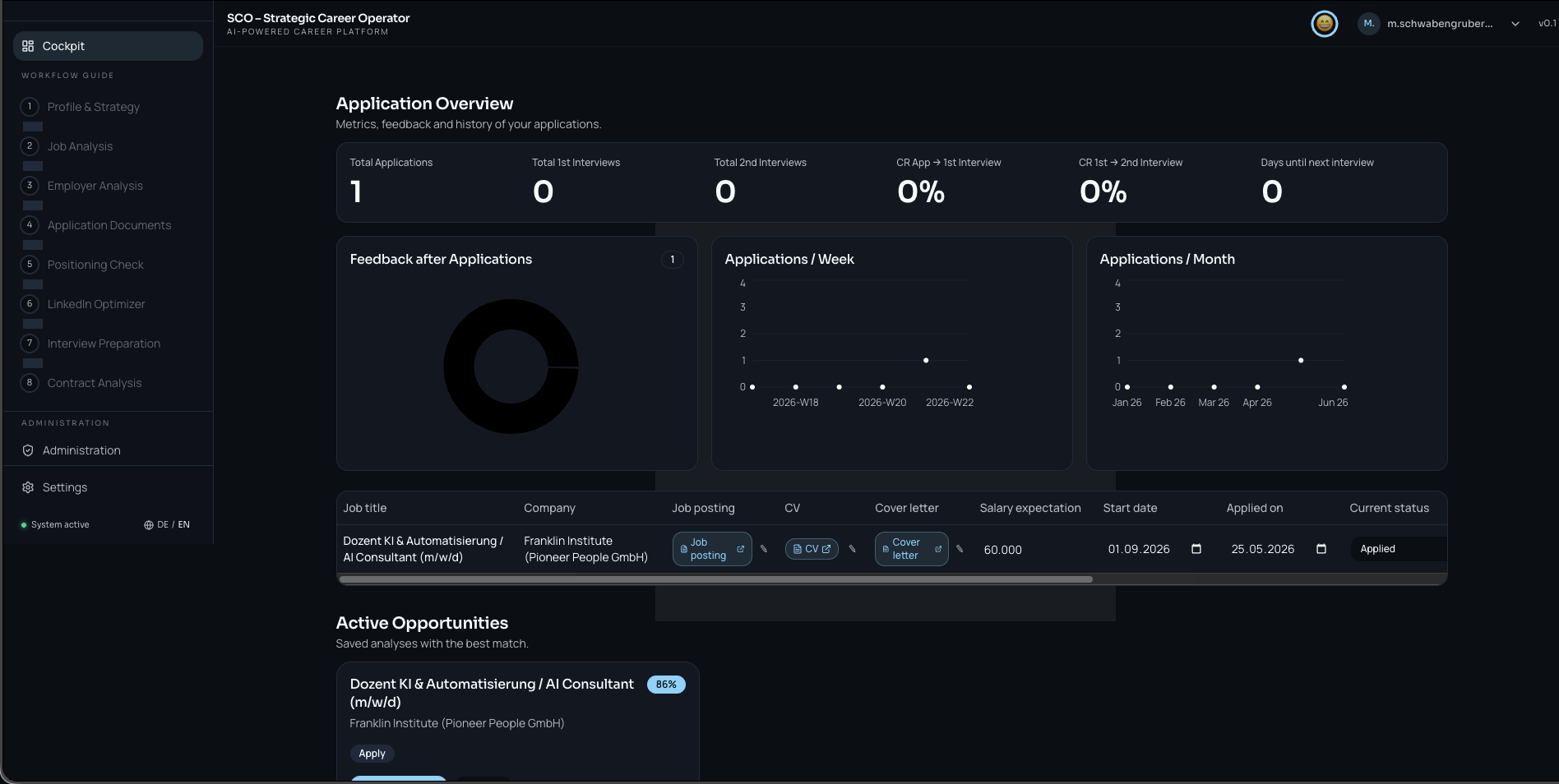
Cockpit
-
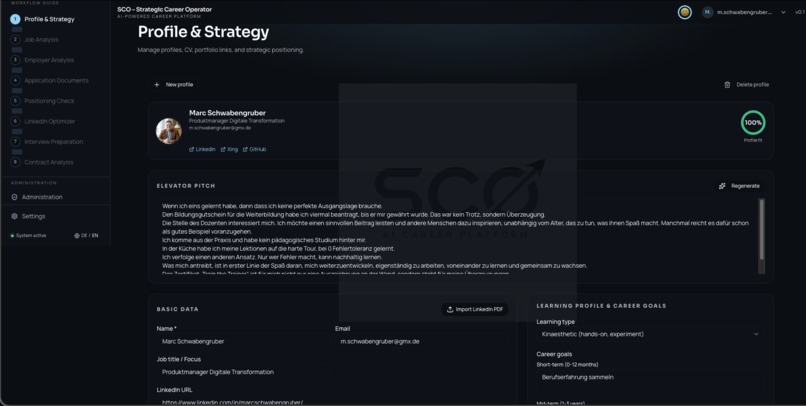
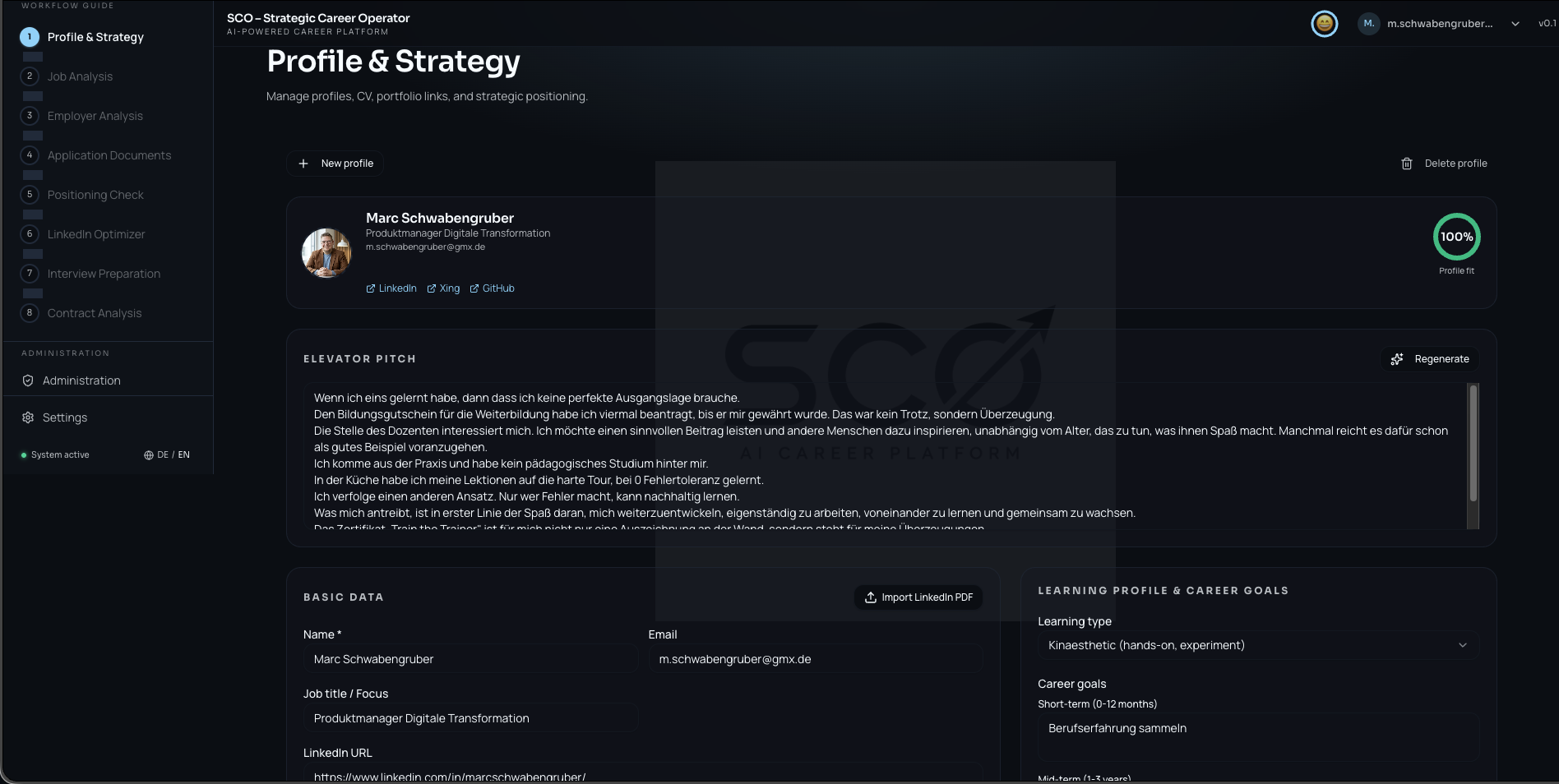
Profil
-
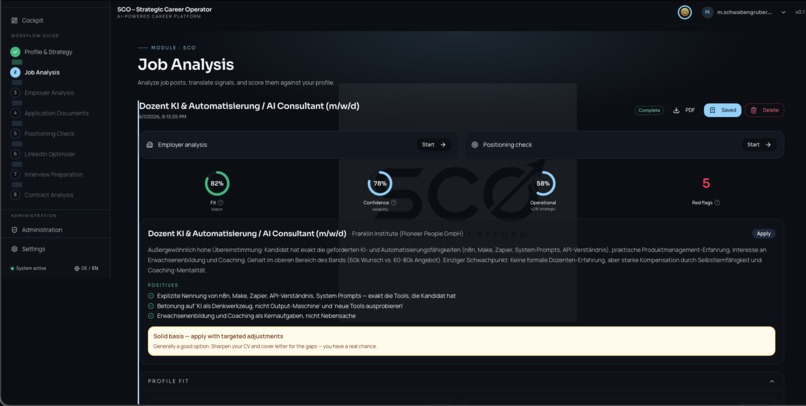
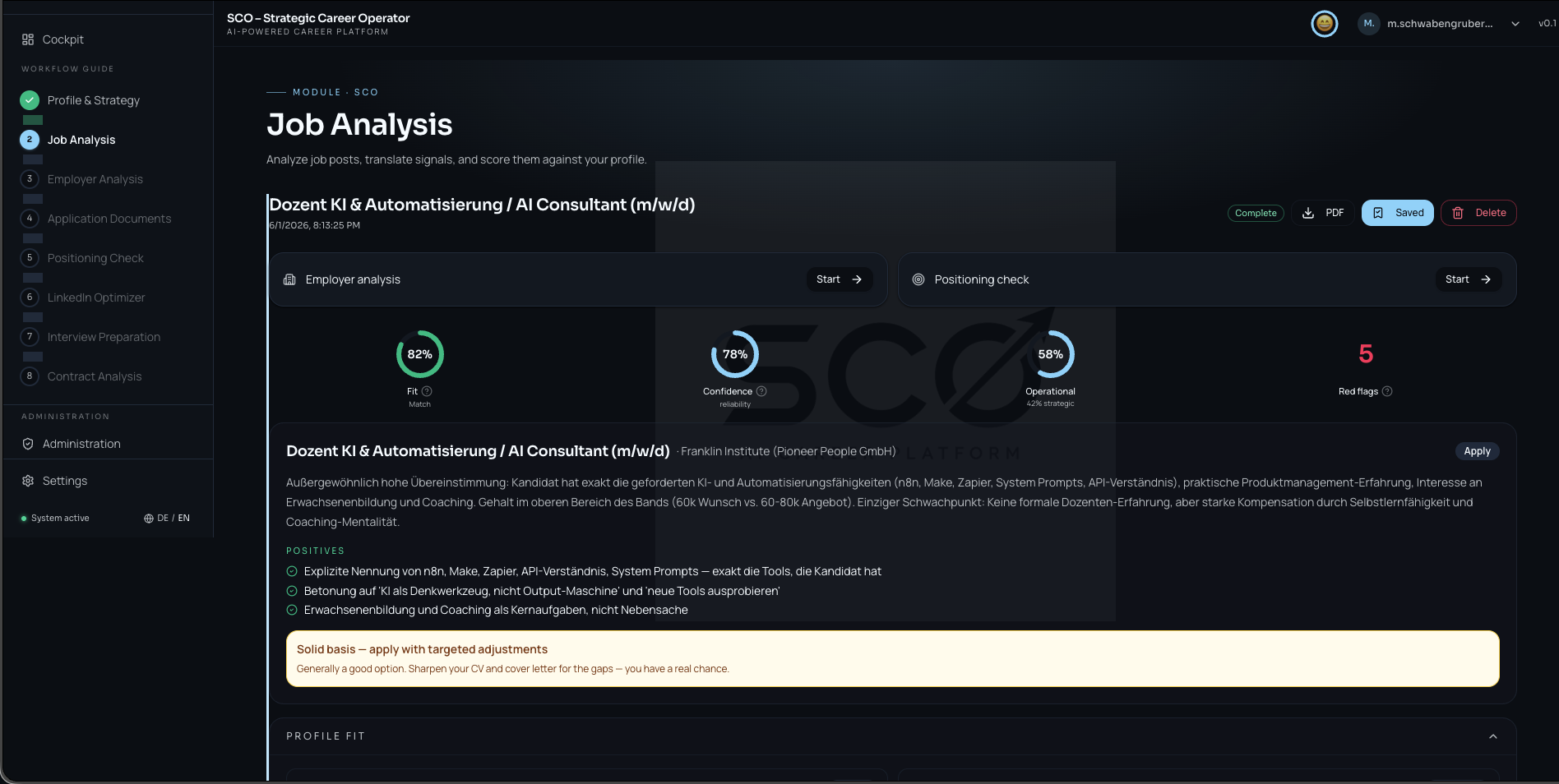
Job Analysis
-
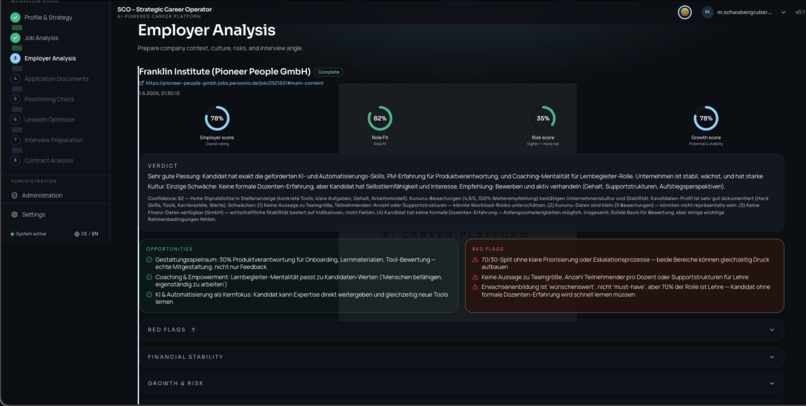
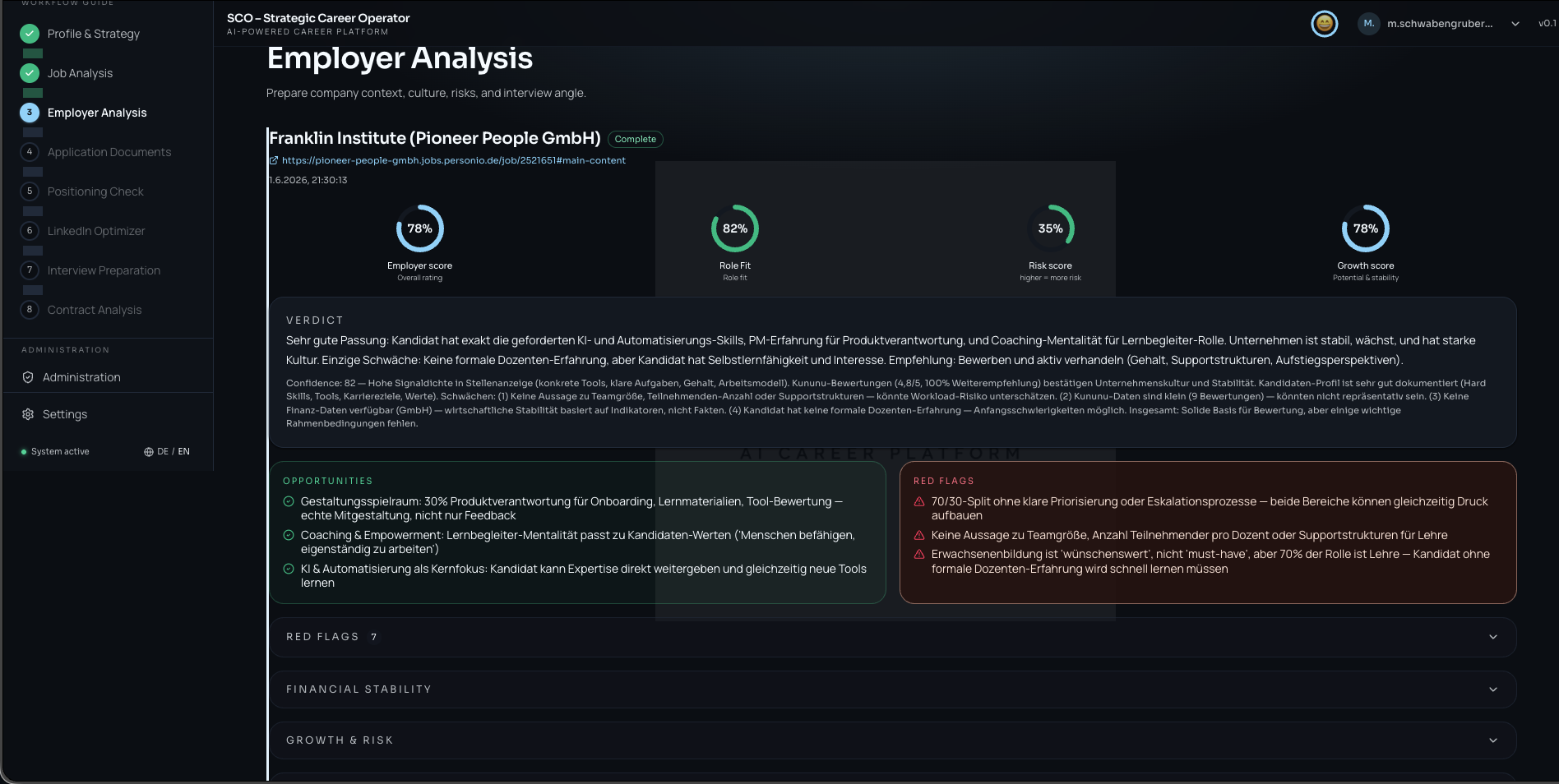
Employer Analysis
-
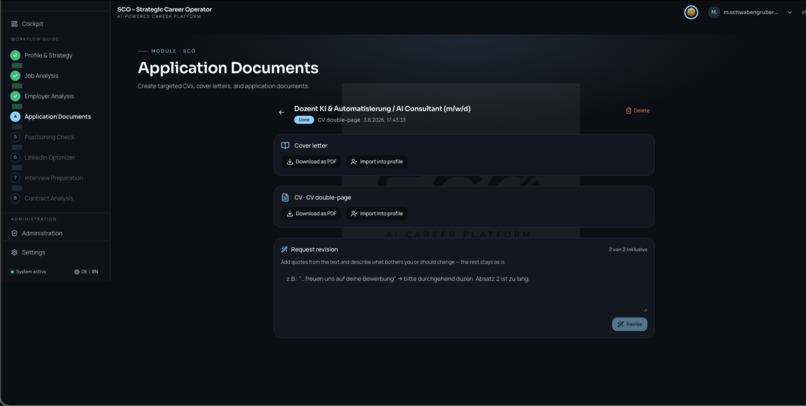
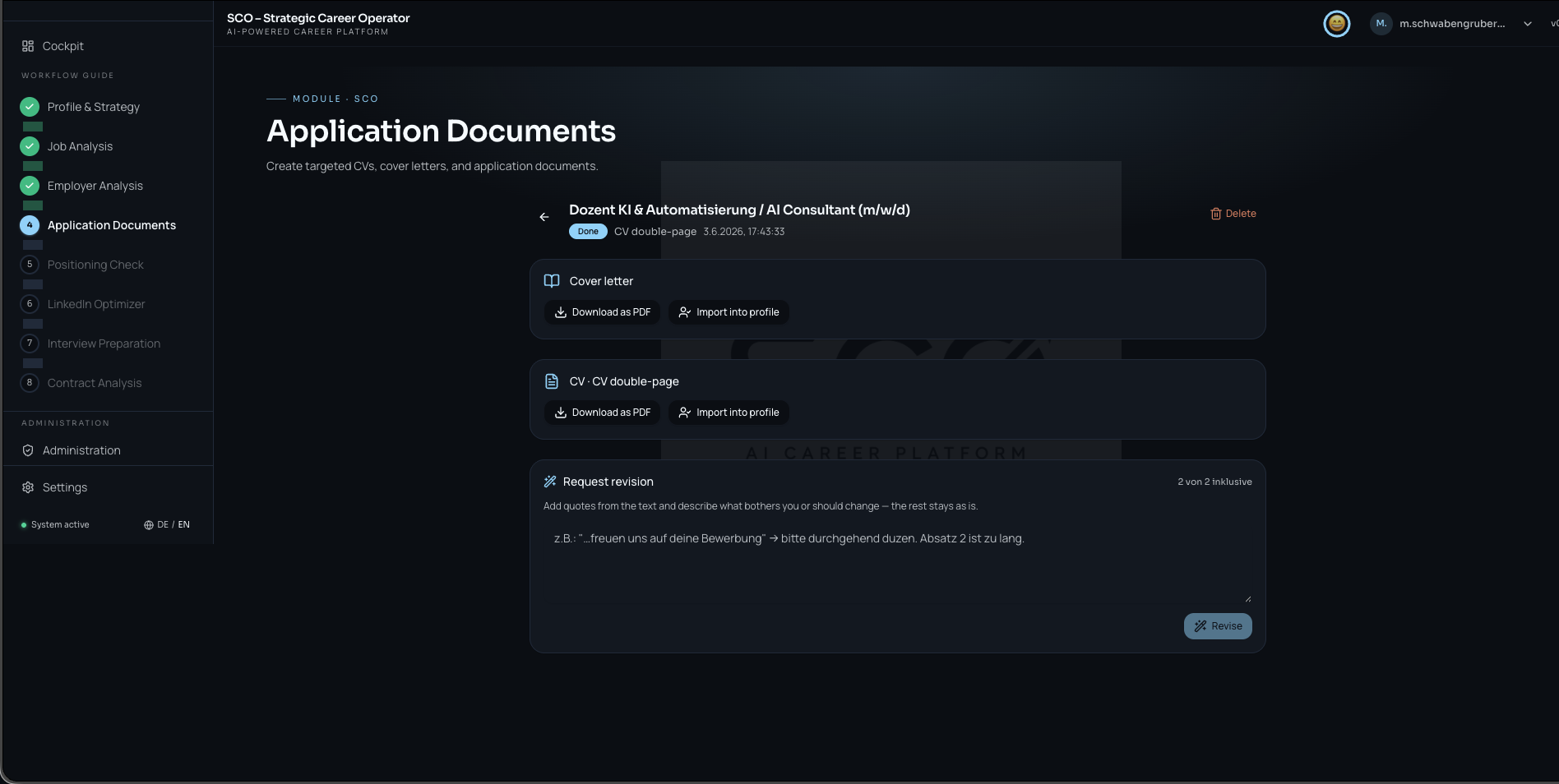
Application Documents
-
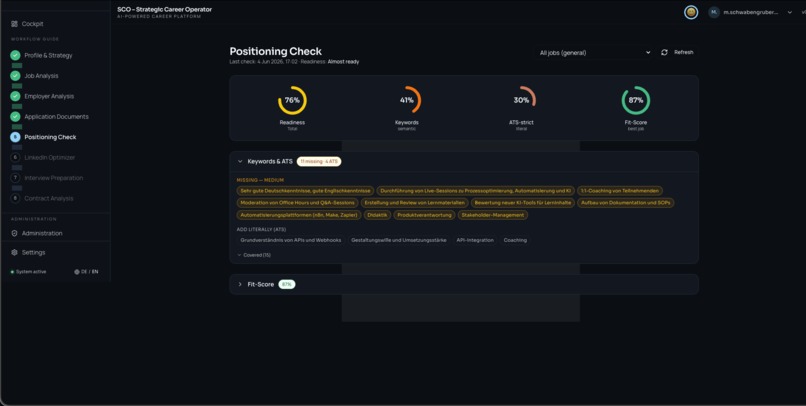
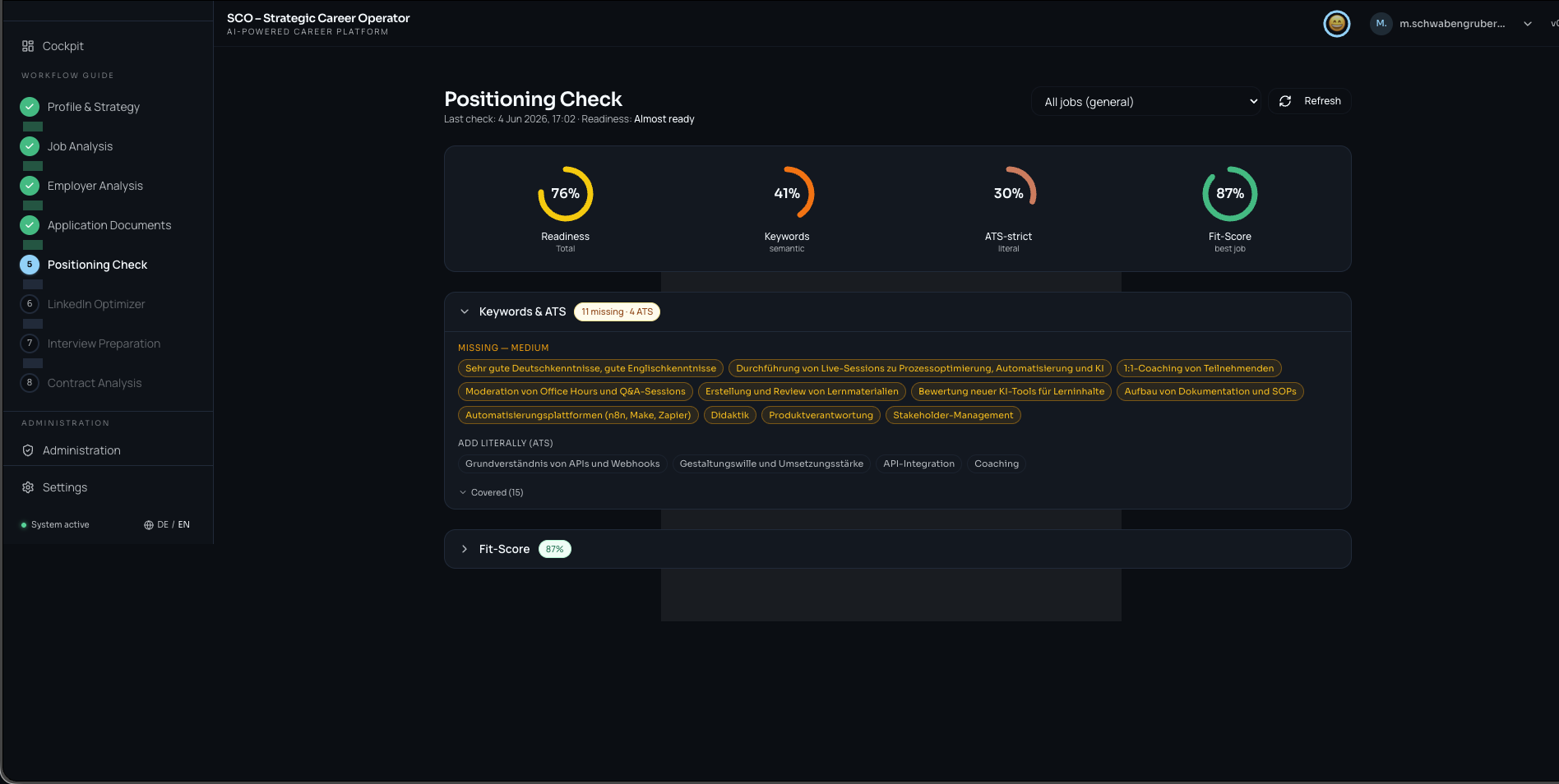
Positioning Check
-
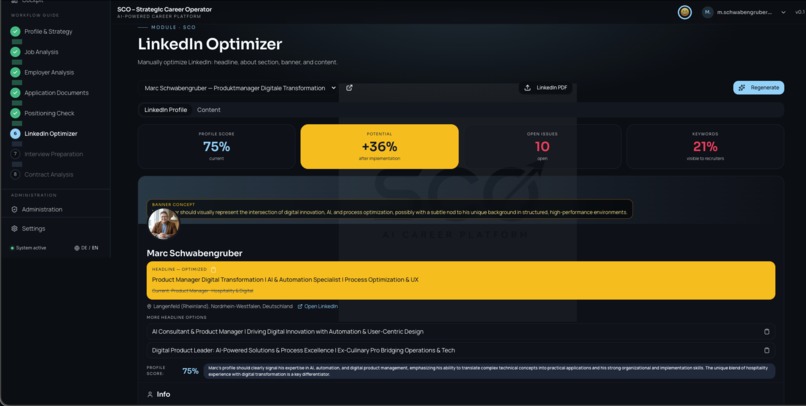
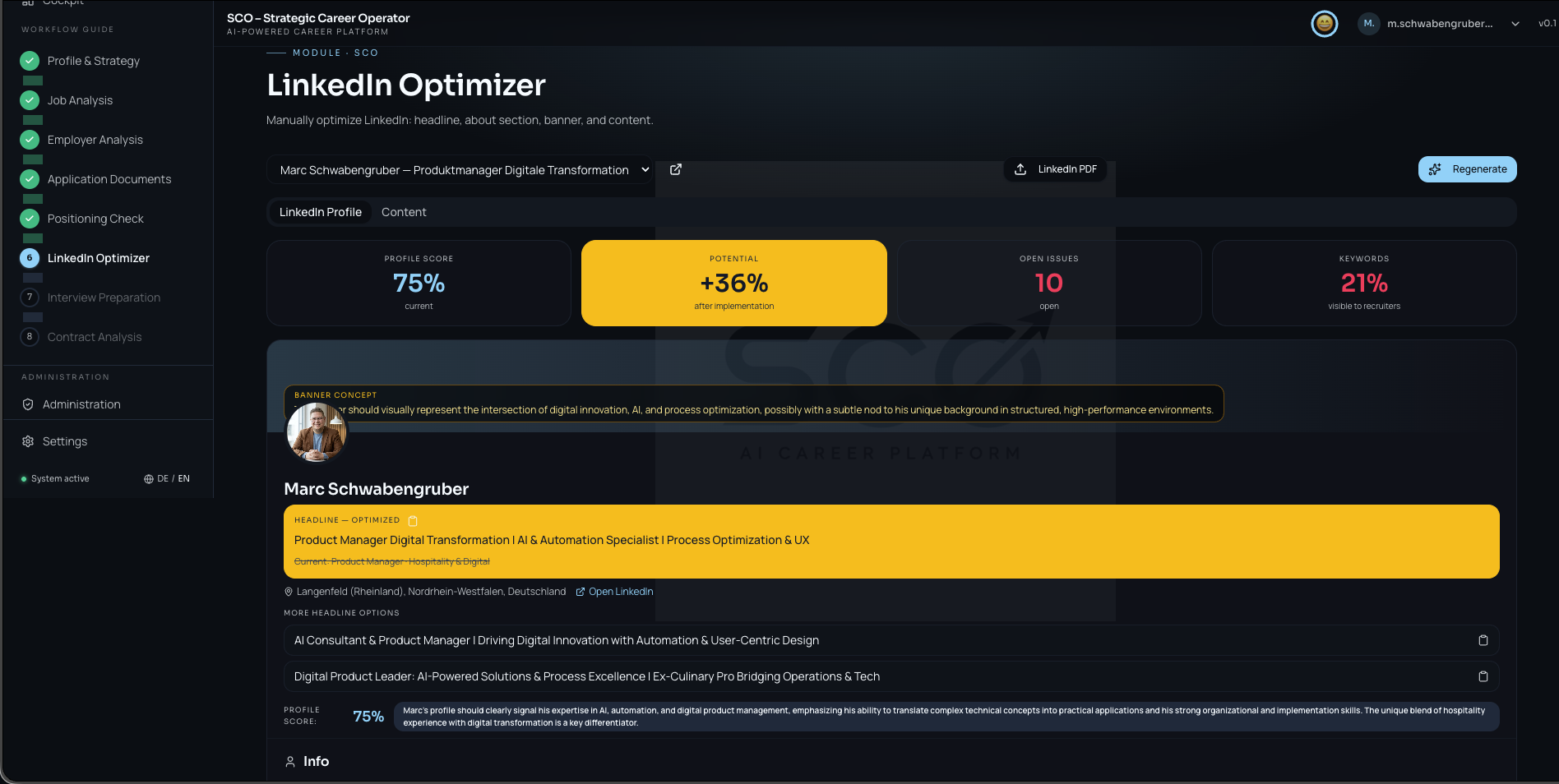
LinkedIn Optimizer
-
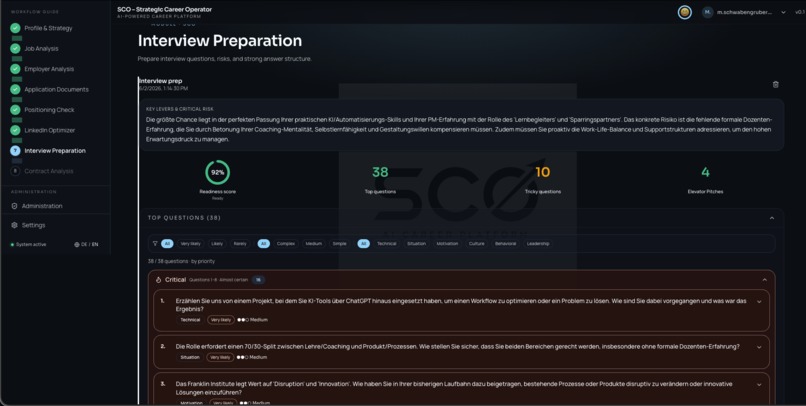
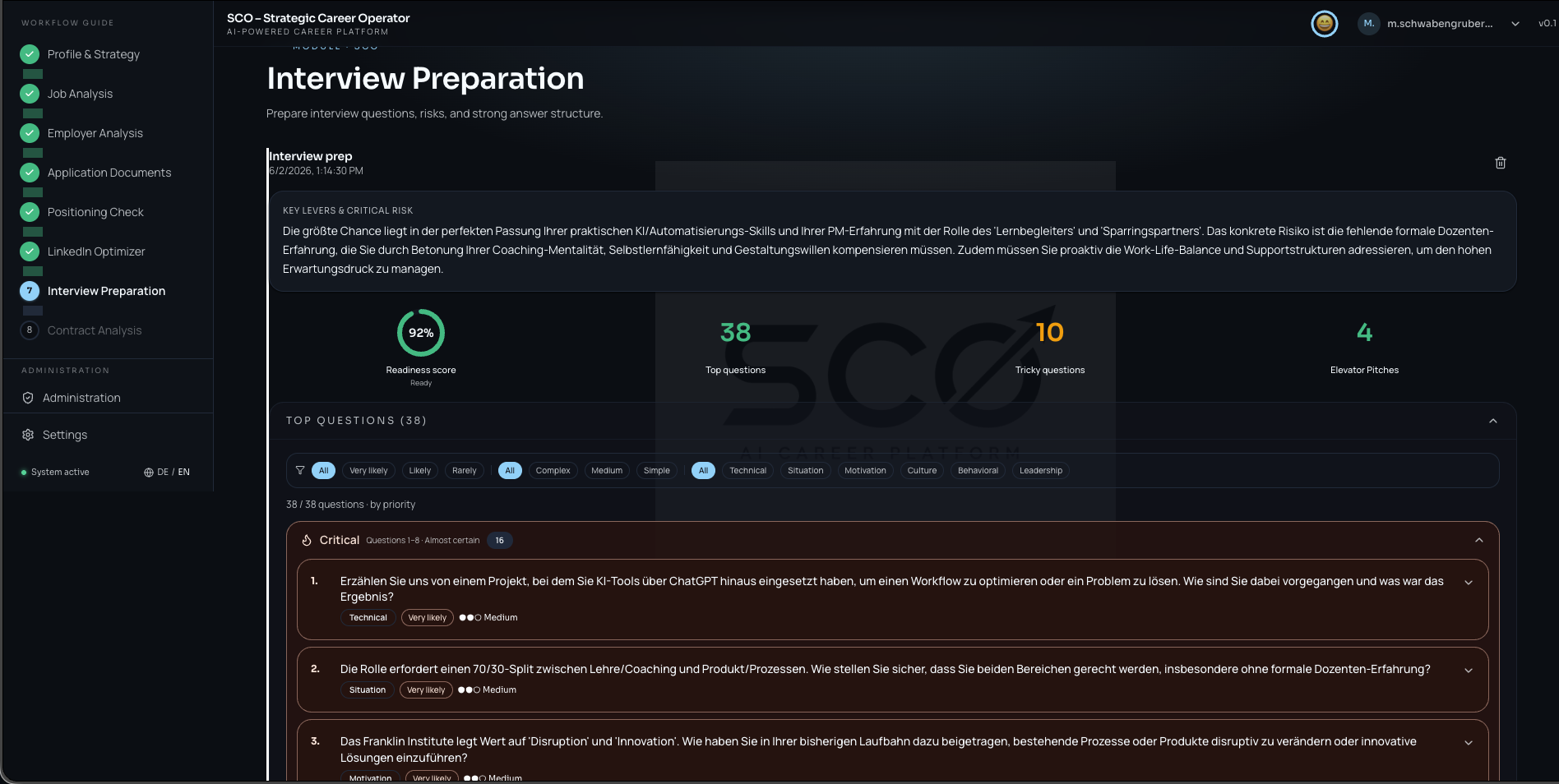
Interview Preperation
-
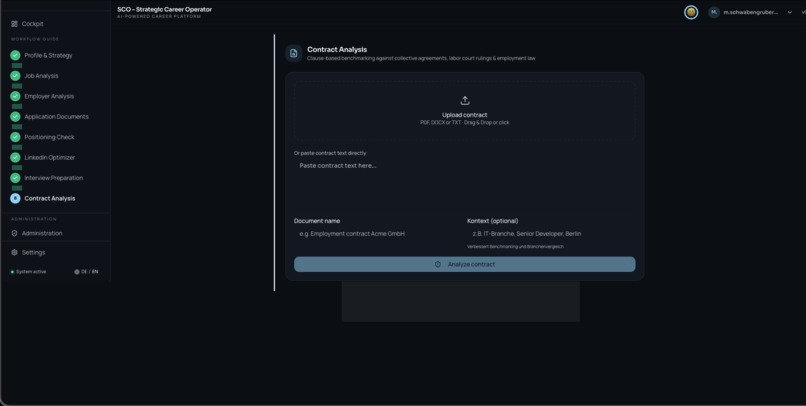
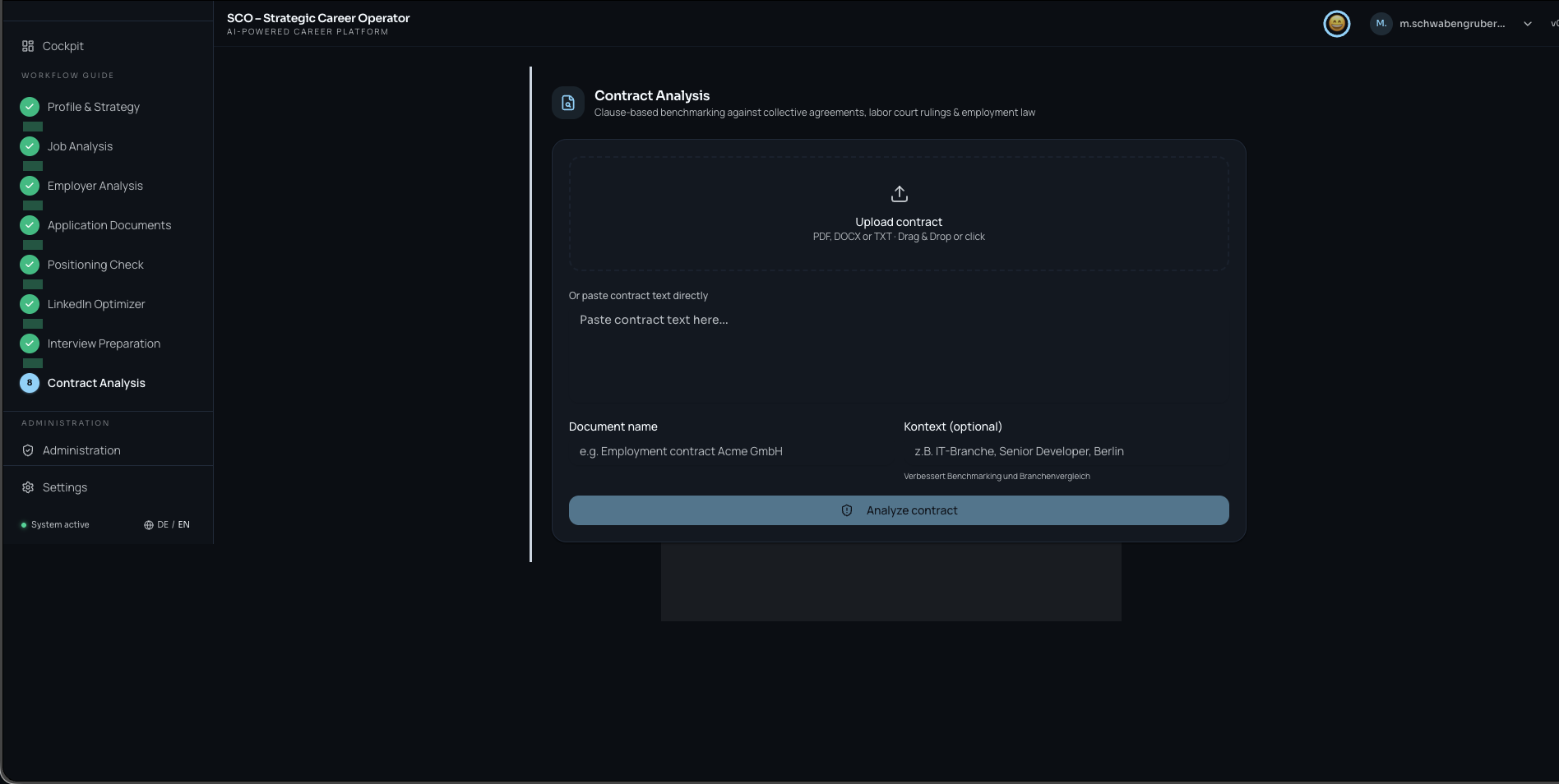
Contract Analysis
Inspiration
I'm currently in the middle of my own job search after completing a product management certification. Every tool I tried gave me visibility but no guidance — I could track applications, but nothing helped me understand what a role actually demanded, who the employer really was, or whether a contract was fair. SCO was built out of that frustration. Not as a side project, but as a direct response to a process I was living through.
What it does
SCO guides job seekers through the entire application process. Users build a profile with their CV and LinkedIn data, post a job URL, and SCO analyses the match — including what the posting signals between the lines. It generates tailored CVs and cover letters, tracks every application in a structured dashboard, prepares candidates for interviews with role-specific questions and elevator pitch variations, and screens contract offers against industry standards.
How we built it
Built with Lovable as the primary development and deployment environment, React with TanStack Router on the frontend, Supabase as backend. Claude and Claude Code handled orchestration and development logic. ChatGPT and Codex for targeted code generation. GitHub for version control. The product side ran in parallel: Figma for the initial prototype, Notion to develop and structure the idea, Jira to break down epics and user stories and drive incremental delivery, Perplexity for market research, competitor analysis, JTBD framework, and positioning.
Challenges we ran into
The hardest problem is also the most important one: making the generated CV and cover letter sound like the person, not like an AI that read their CV. The onboarding interview that feeds the profile needs to extract enough signal to make that possible — and the output needs to follow defined templates without losing the personal tone. Both are unsolved. The documents work, but they are not yet at a standard where a candidate could submit them without significant manual editing. That gap is what we are actively closing.
Accomplishments that we're proud of
Building something that creates real opportunity — not just another tool that tracks what you already know. The job analysis layer shifts the balance: candidates stop guessing what an employer wants and start responding to what they actually mean. That is what standing out requires, and that is what SCO enables.
What we learned
The MVP works. That is the baseline everything else builds on. Every addition since has come from using the system and seeing what the next logical step is — not from a feature list, but from the workflow itself surfacing what it still needs. A product is never finished — and that is not a weakness, it is the signal that it is still relevant. Prioritization is what keeps that process from becoming chaos. You listen, you build, you test. When a product stops needing to change, the market has moved on without it.
What's next for SCO – Strategic Career Operating System
The immediate priority is getting the document output where it needs to be — personalized, submission-ready, no manual cleanup required. Once that is solved, the MVP goes live and real user feedback takes over. From there, the next significant step is a Career Hunter mode: an automated job search agent that scans platforms based on defined parameters and surfaces relevant roles the user would never have found manually. Most candidates limit themselves to two or three platforms and miss hundreds of positions in the process. SCO closes that blind spot. The rest will follow from what users tell us they actually need. ;D
Built With
- anthropic-claude-api
- bun
- canva-connect-api
- chatgpt/codex
- claude-code
- cloudflare
- figma
- firecrawl-api
- github
- jira
- lovable-ai-gateway
- notion
- openai-api
- perplexity
- postgresql
- react
- supabase
- supabase-auth
- supabase-storage
- tailwind-css
- tanstack-router
- tanstack-start
- typescript
- vite


Log in or sign up for Devpost to join the conversation.