-
-
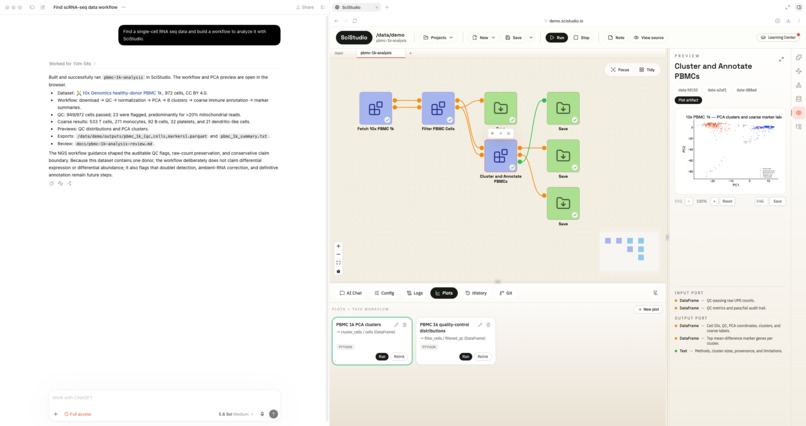
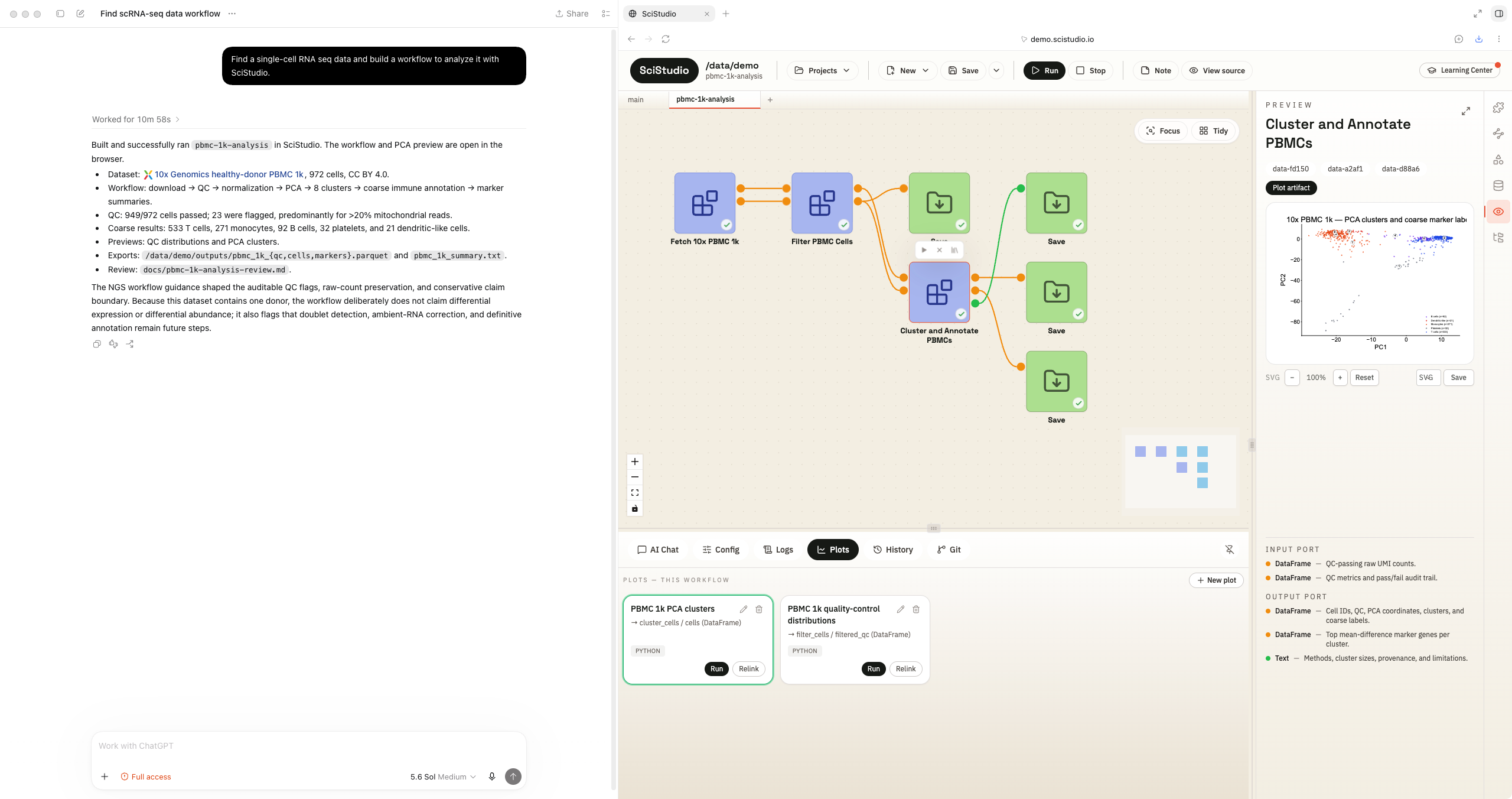
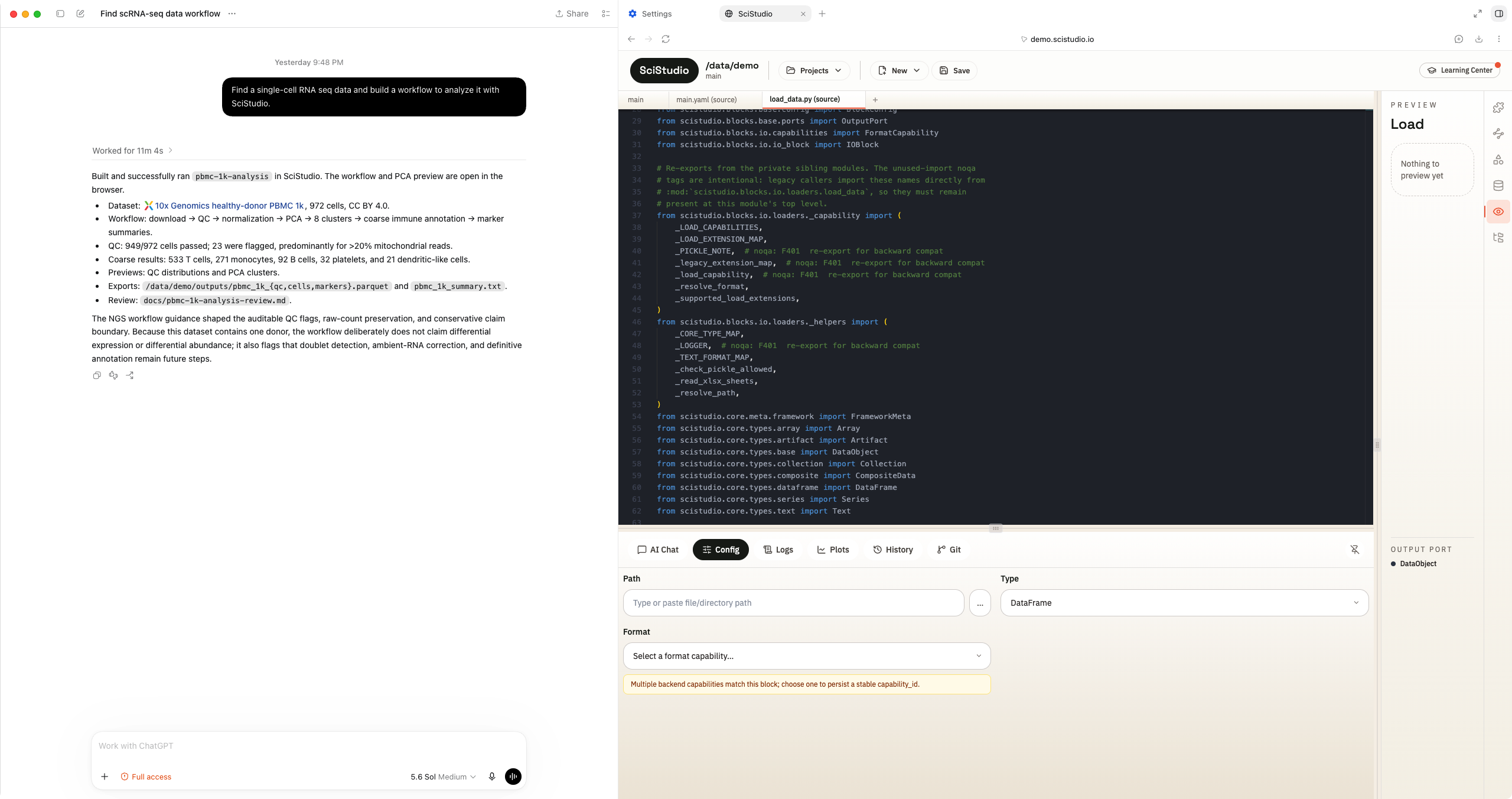
AI help you build and run data analysis workflows
-
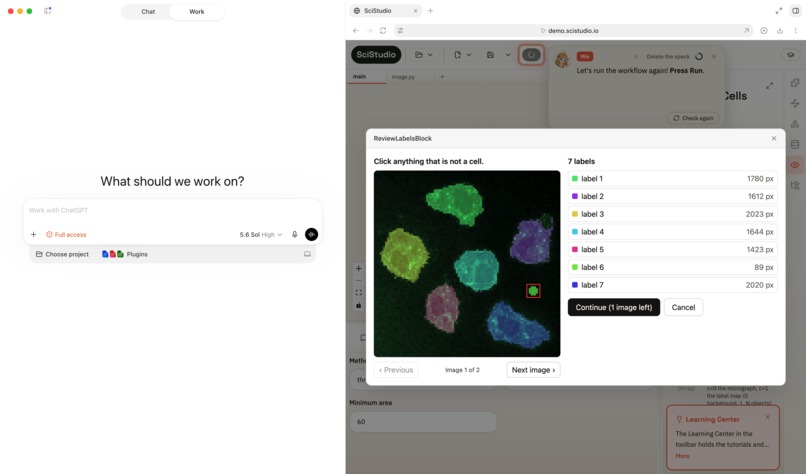
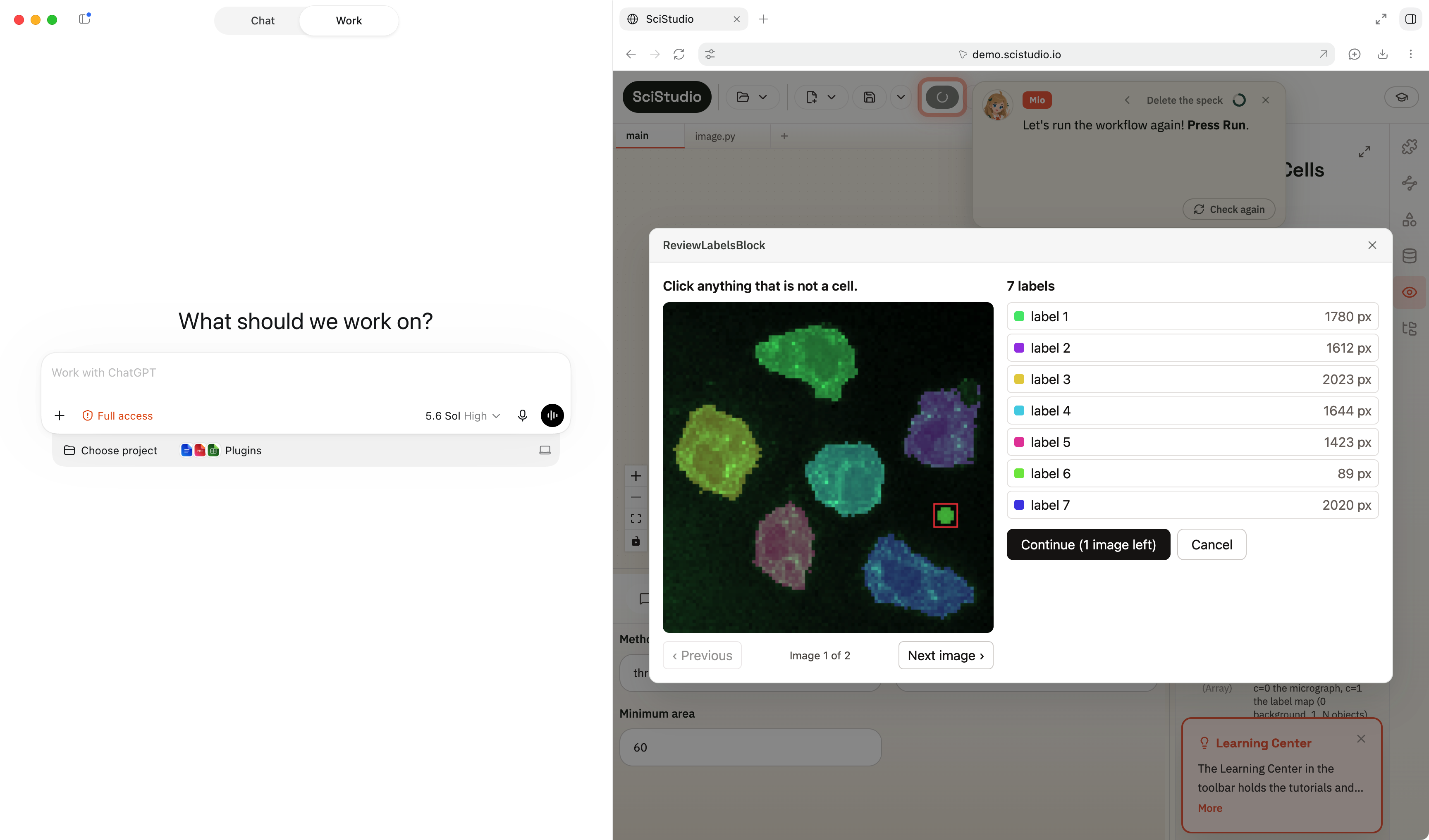
A workflow can pause in the middle for your decisions with interactive blocks! Just ask AI to make one!
-
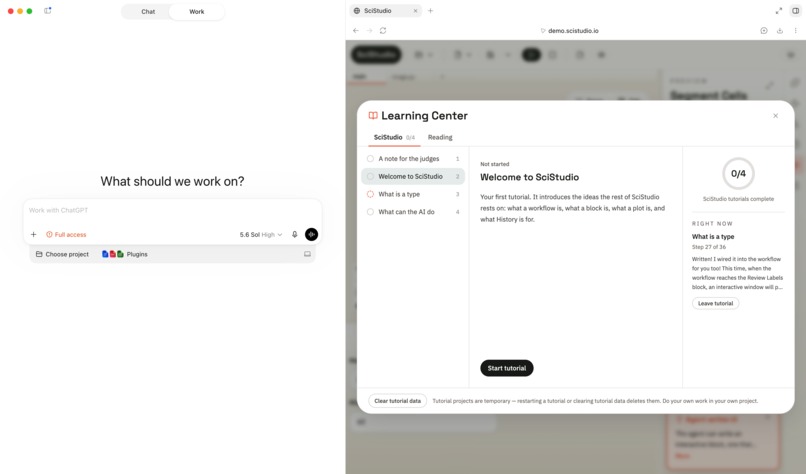
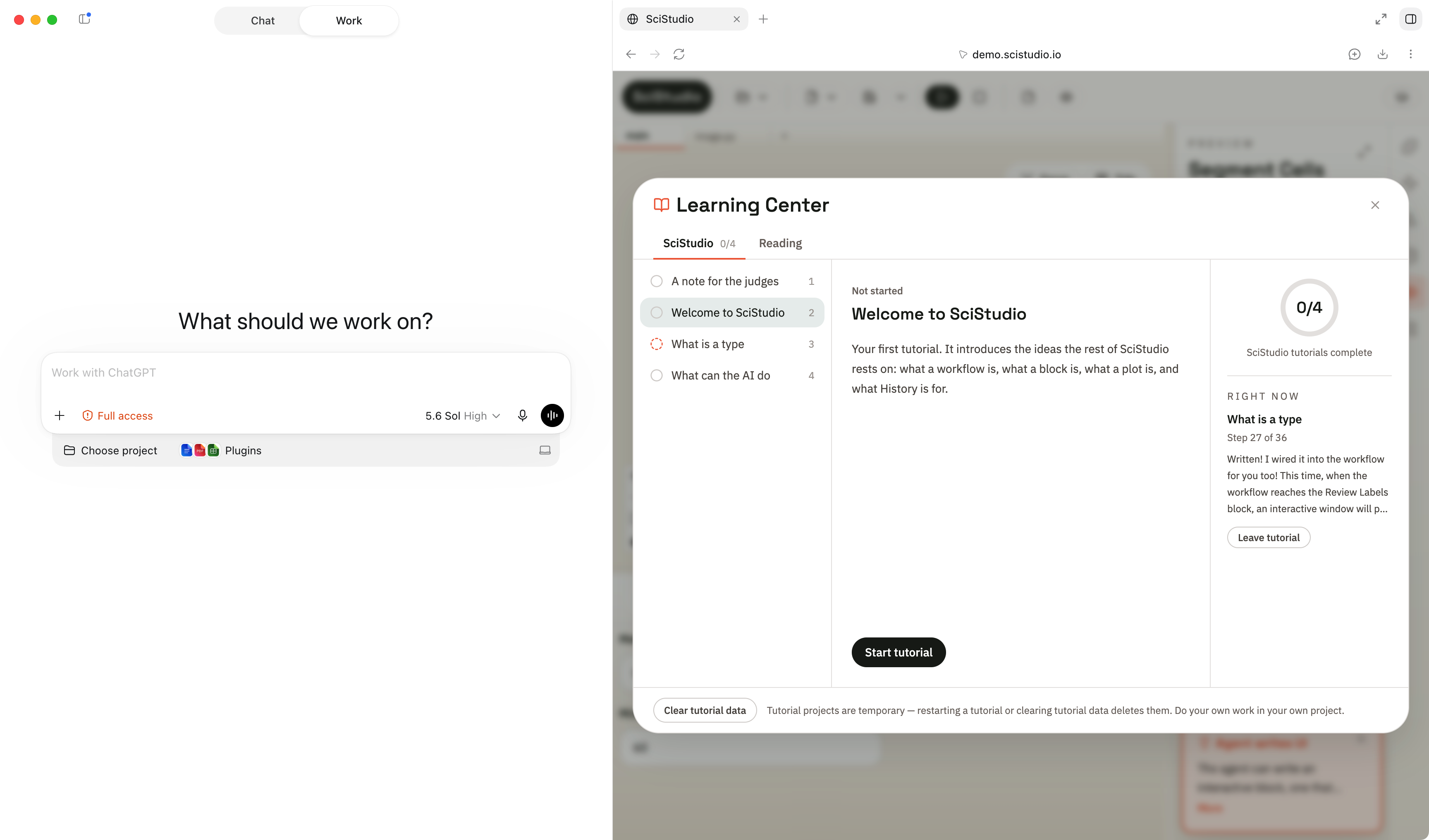
We have great and fun tutorials like a video game!
-
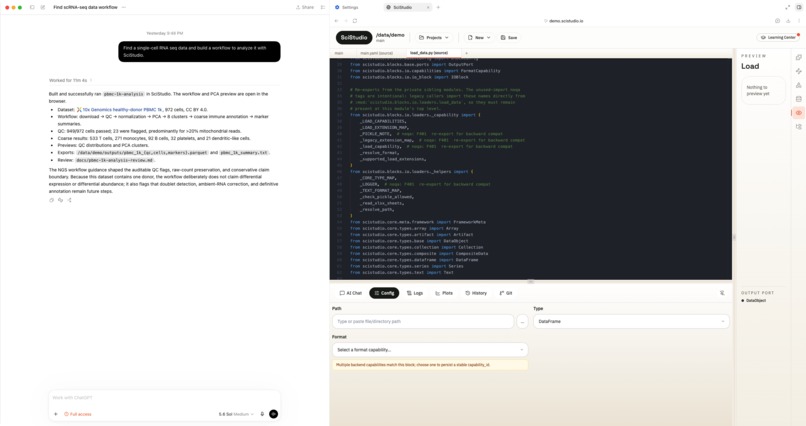
Editing codes for blocks with your AI partner!
-
Our branding
Inspiration
I built SciStudio because I wasn't satisfied with scientific agents like Rosalind or Claude Science. Scientists find them hard to use because they are AI-chat centered. But scientists want to see the data the whole way through — every intermediate step, all the way to the result. Sometimes interacting with data with a GUI is also important. And I throw away the analysis script every time a session ends, because I have no good way to reuse or automate it. As biological research moves toward multimodality, this shape makes cross-modal data analysis difficult. This made me want to build SciStudio: a standardized workflow system for multimodal data analysis that integrates the capabilities of AI agents. You, and your agent, work together.
For AI integration, SciStudio's solution before this hackathon was a desktop application plus a PTY running the codex CLI. But for wet-lab scientists, CLI tools are quite off-putting — I watched them struggle with the various buttons on top, not knowing that it can only be operated with the keyboard, and so on. Another problem is that users (I wish I had...) tend to stick with what they know; therefore, an AI interaction system they're already familiar with would greatly increase the product's appeal. Apps like ChatGPT are the perfect choice. After seeing WebMCP, I realized that our current AI system and prompts could be easily migrated to WebMCP and would naturally gain the ability to integrate the various scientific tools that ChatGPT has. After I ran the protein design tool with my data analysis workflow together within the same session with AI, Bang! That is why I chose to join this hackathon.
What it does
SciStudio-web is an interactive workflow orchestration system for multimodal scientific data analysis. The unit of data processing here is the block; scientists can get hands-on and use building blocks to create workflows, make plots, and automate their data-analysis work. Combined with a powerful AI agent, they can build workflows, carry out the steps of data analysis, and work through an interactive data-analysis interface, turning it all into assets that individuals and labs can reuse. We hope SciStudio has the chance to become the running partner of AI agents. The scenario I hope to see is one where the user prompts, and ChatGPT, through WebMCP, works together with the user to process data — combining all the other powerful biology tools — and ultimately delivers data visualization, interactive analysis, and a personal/lab asset system.
How we built it
It's a long story, and I can't believe I could go this far. I'm good at coding in data science, but I actually know nothing about software engineering (I'm a biologist). I started with an idea and asked AI agents to build it directly, then realized it didn't work. I asked why, and the AI told me we needed an architecture. So I wrote the architecture file and let the AI build it, only to realize it still didn't work... This happened for several rounds until I had built a robust software-engineering system for AI coding: architecture, specs, implementation, testing, documentation maintenance, and CI/build QA tools to maintain code quality. Honestly... I learned a lot.
Challenges we ran into
Failed to deploy, lots of frontend troubles, submission documents (hate it!)
Accomplishments that we're proud of
The old SciStudio called ChatGPT agents by providing an MCP server and a PTY for CLI apps to run in. During the submission period, I migrated our MCP server system to WebMCP, enabling us to run SciStudio's agentic features directly inside ChatGPT. I also optimized the frontend for a better user experience in ChatGPT. Finally I explored and built some demo projects to show the power of SciStudio.
This gives me the benefits of modern scientific agent harnesses and the integration of other agentic tools, plus our reproducible workflow runtime and data-interaction capabilities. SciStudio will surface the hardest question of working with AI: "What did the AI do to my data???"
This change is groundbreaking to me, honestly. I struggled with the limited resources I could access as a solo developer. I thought SciStudio was limited because I lacked access to big-data resources and collaborations with other tools and apps. The WebMCP integration changed everything. (I'm also proud that my old SciStudio migrated pretty easily.)
What we learned
Finding people to use a product is more difficult than building it.
What's next for SciStudio-web
I don't know, let me get some users first...
New & existing work
SciStudio is a pre-existing open-source project (desktop app, workflow runtime, MCP server). Everything in this submission repo was built during the WebMCP Challenge submission period: the MCP→WebMCP bridge, the Docker/Cloudflare public deploy, the ChatGPT-facing frontend rework, and the demo case. The full scope is visible in this repo's git history (jiazhenz026/scistudio-web-demo), which starts at the time I joined the hackathon (Sept.3!! Almost missed it!!).
Built With
- fasiapi
- python
- react
- typescript
- webmcp


Log in or sign up for Devpost to join the conversation.