Inspiration
As former science educators, we saw students struggle with limited lab access and outdated paper reports. We wanted to create a safe space for curious learners to experiment freely – no broken equipment, no safety risks, no attempt limits. Watching teens hesitate to test "what if" in physical labs sparked the vision for a platform that lets exploration drive learning, aligned with the curricula our students use daily (AP, IB, GCSE).
What it does
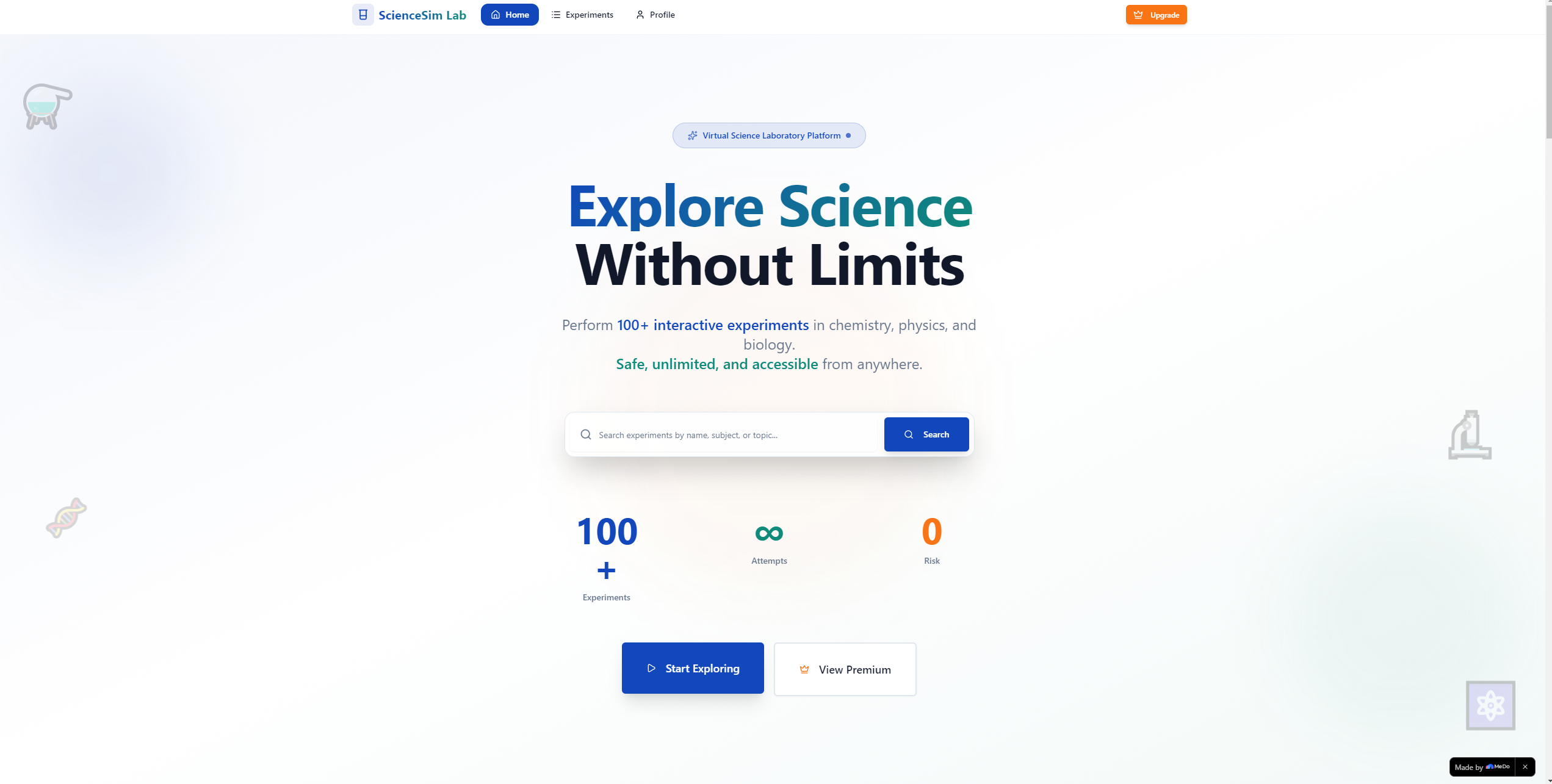
ScienceSim Lab is a virtual science lab for middle/high school and undergrad students, plus educators. It offers 100+ interactive chemistry/physics/biology experiments with 3D visuals, real-time data tracking, and automated lab reports. Free tier users get core access, while premium unlocks unlimited experiments, offline mode, and customizable report formats (PDF/Word/Google Docs).
How we built it
We started with curriculum alignment – mapping experiments to NGSS, AP, IB, and GCSE standards. The core team built the 3D visualization layer with Three.js for immersive lab interactions, then integrated Firebase for user progress sync. We used Swift/Kotlin for mobile apps, React for web, and leveraged Apple/Google Play APIs to manage subscriptions. Data analysis features were built with Chart.js, and report generation with PDFKit/Word APIs for multi-format export.
Challenges we ran into
The biggest hurdle was balancing scientific accuracy with intuitive UX – 3D animations of chemical reactions needed to match real-world kinetics while being easy for 11-year-olds to interact with. We also struggled with cross-device sync conflicts (resolved by prioritizing recent data) and ensuring ad display rules for free tier users didn’t disrupt experiment flow.
Accomplishments that we're proud of
We built a platform where 60 FPS smooth animations power real-time experiment visuals, aligned with global science curricula. Free tier users get equitable access to 15 core experiments, and premium features (offline mode, custom reports) make it scalable for educators. We also implemented strict safety guardrails for "dangerous" experiments, ensuring learning without risk.
What we learned
We deepened our understanding of edtech compliance (COPPA/GDPR/CCPA) and how to design for diverse learning styles – guided mode for beginners, free play for advanced learners. We also learned that subscription tier balance is critical: free access drives adoption, while premium features (unlimited attempts, multi-format reports) provide sustainable value.
What's next for this project
We plan to add AR experiment previews, integrate with Google Classroom/Canvas for educator tools, and localize the platform for more regions. We’re also building an AI tutor to personalize experiment guidance and expanding the experiment library beyond the initial 100+. A family subscription plan and school license pricing are in the works to make it accessible for more households and institutions.

Log in or sign up for Devpost to join the conversation.