-
-
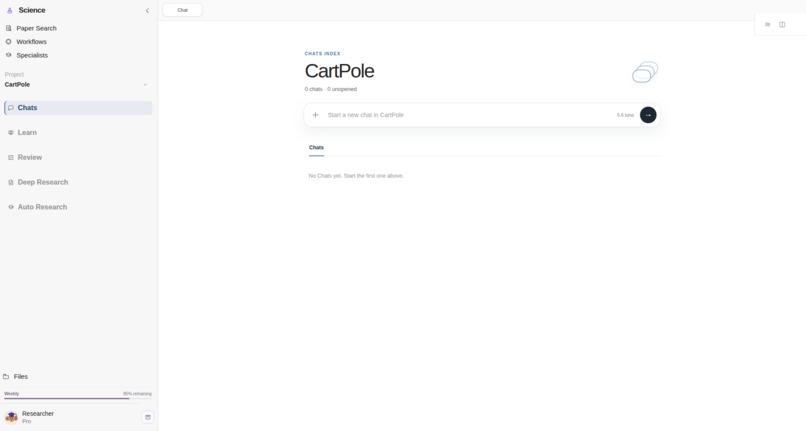
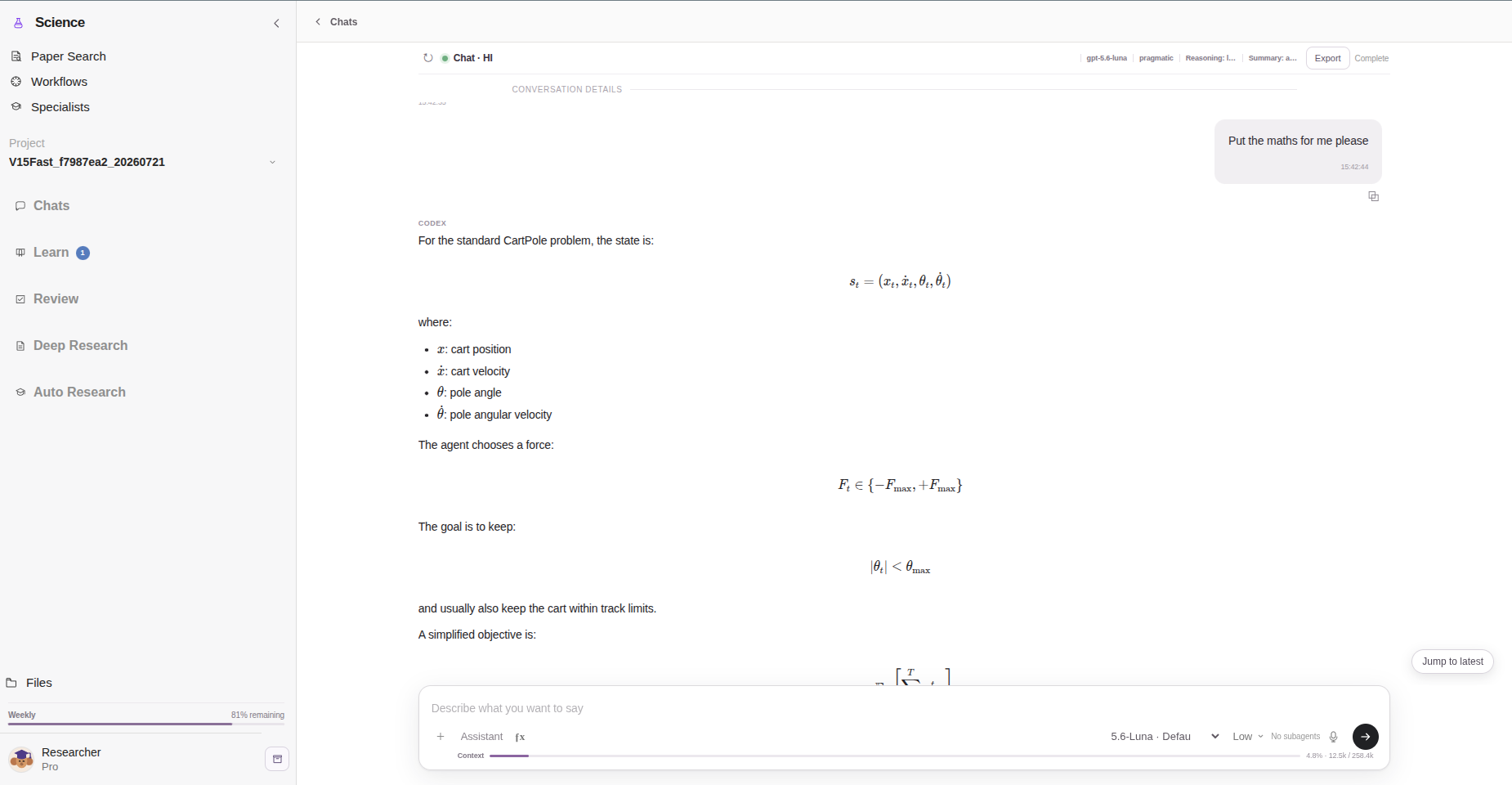
Chat
-
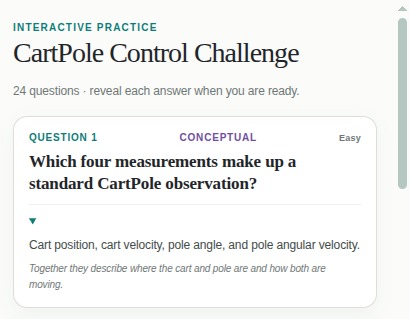
Quizzes Learning
-
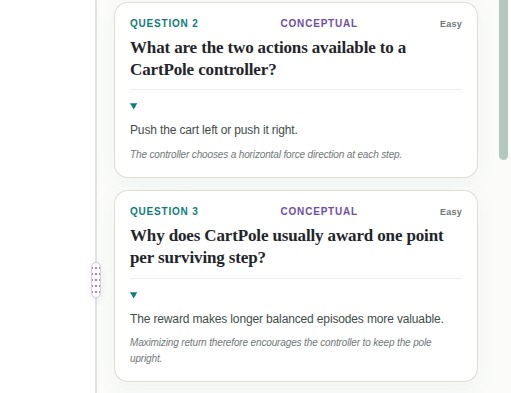
Quizzes
-
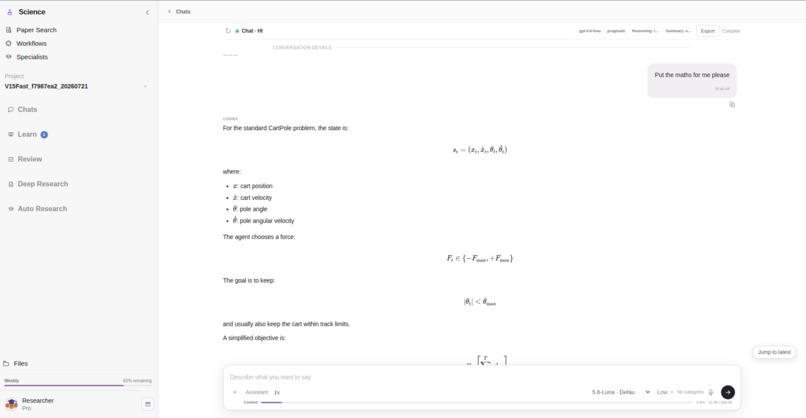
Chatting
-
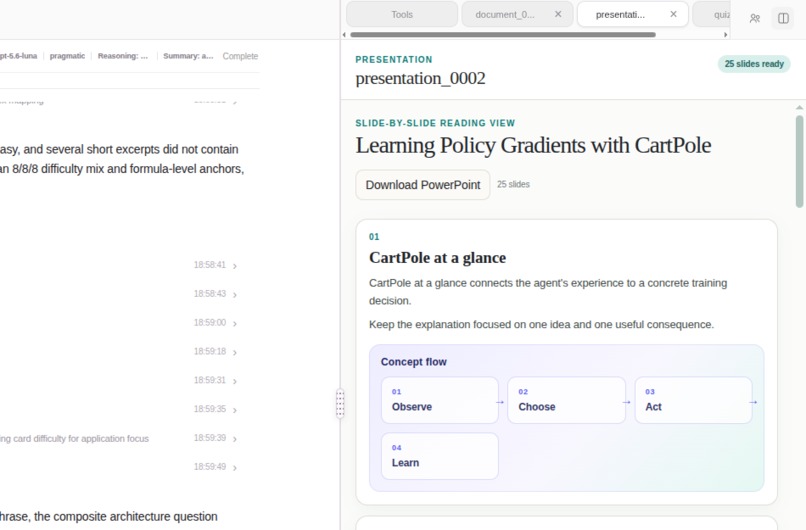
Presentations Learning
-
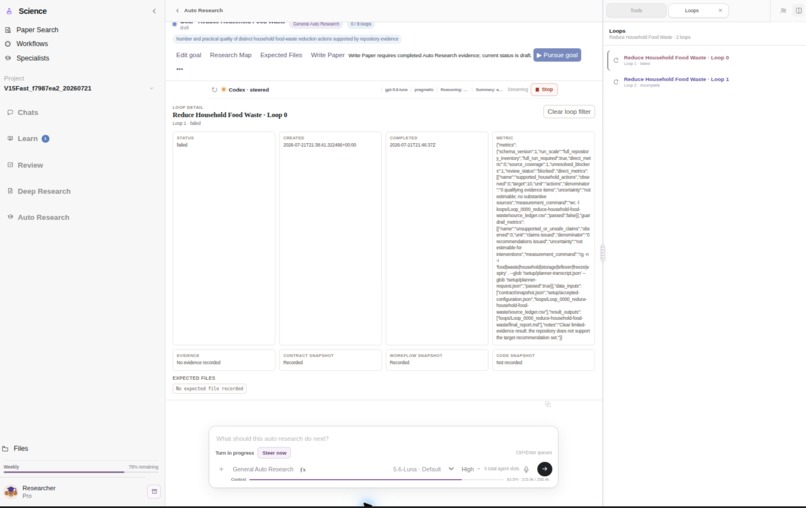
Loop traces
-
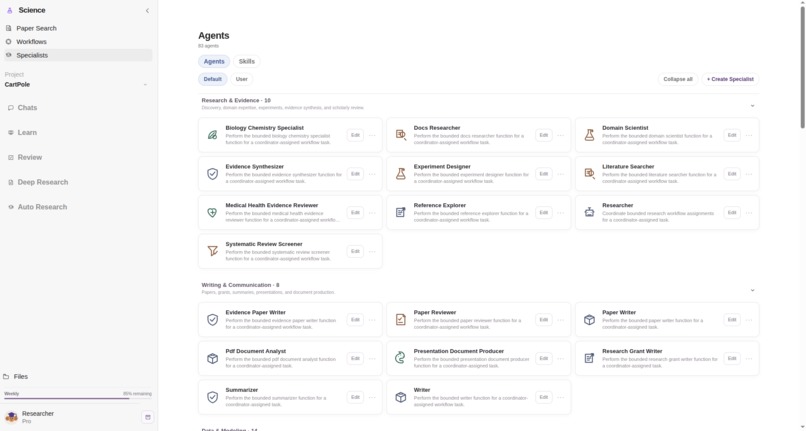
Specialists
-
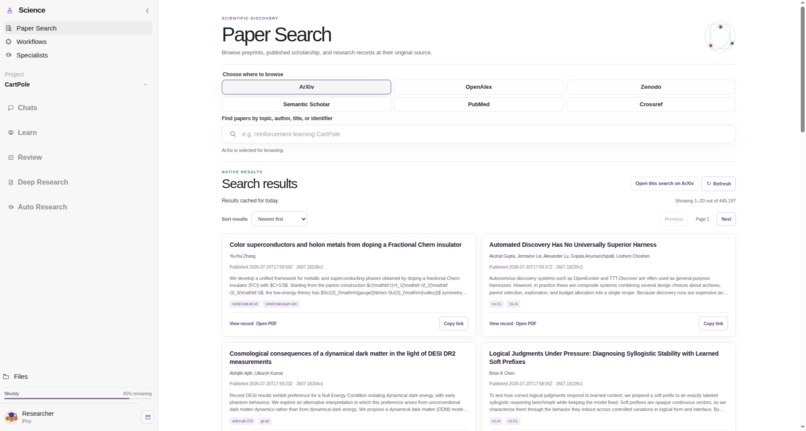
Paper search
-
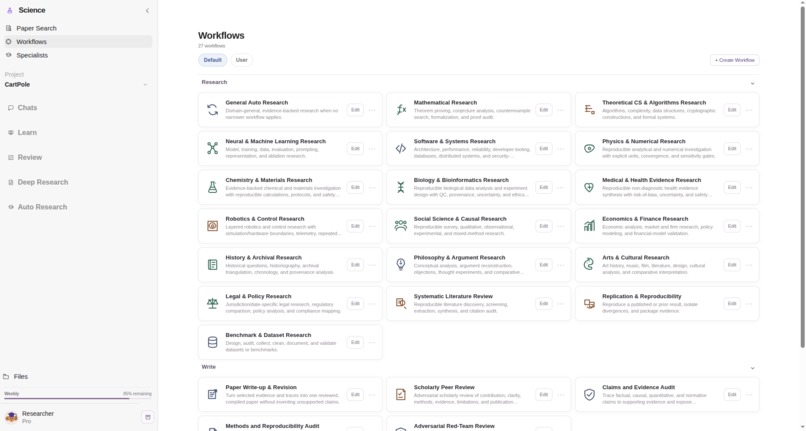
Workflows
-
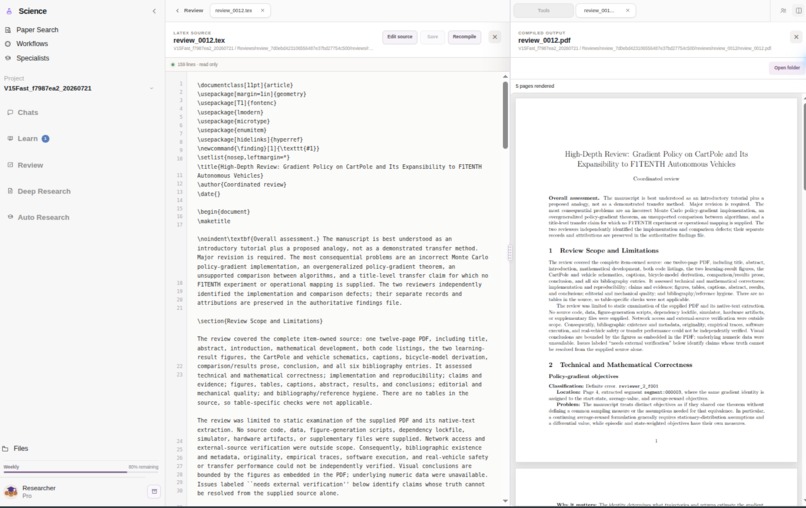
Latex editor
-




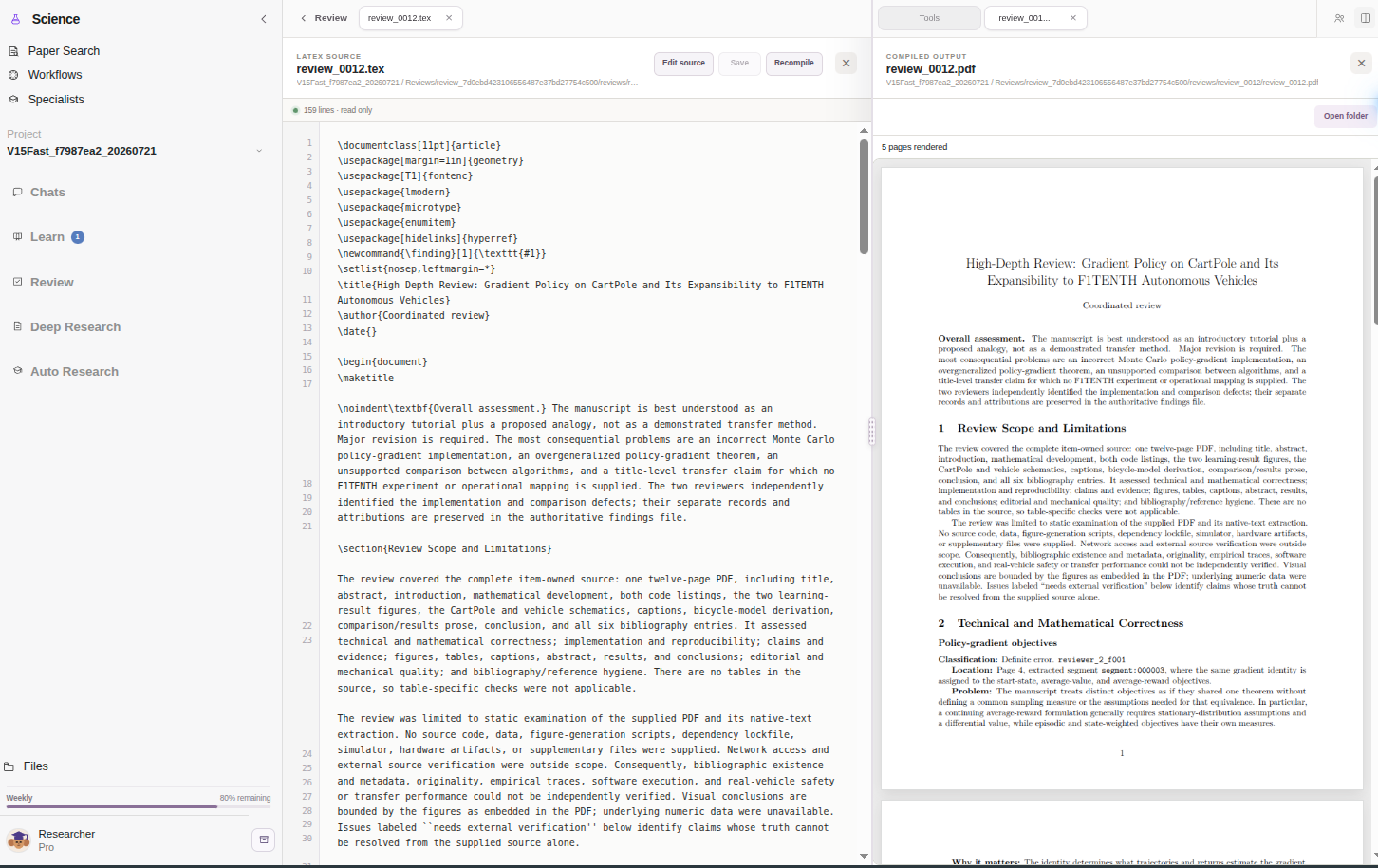
Science is a local research workspace powered by Codex/GPT5.6
Inspiration
Most AI research tools begin and end with a chat box. That is convenient, but serious work quickly becomes difficult to inspect, especially for users who are new to this. What files were used? How did the research happen?
I built Science/Retrace to explore a different approach: an AI research workspace that is approachable for non-coders without hiding stuff keeping it inside folders, with a guided approach, but also with tools like latex contained inside.
My goal was to let someone learn from source material, review a paper, develop a research document, or run some autoresearch program without manually managing items
(Still not all the features that I would have wanted are there, as it was a larger project than anticipated.)
What it does
It provides one local workspace with five ways to work:
- Chat provides project-aware discussion and inspection while keeping project files read-only.
- Learn turns up to ten local source files into items to ask questions about, make presentations, and quizzes.
- Review runs structured, independent reviews of a PDF, DOCX, TXT, or LaTeX document and produces findings, annotations, and a revised LaTeX/PDF report.
- Deep Research creates a research document with editable LaTeX source, compiled PDF output, about the topic we want.
- Auto Research lets a user define an objective, measurable success contract, resource budget, permissions, workflow, required outputs, and stopping conditions before an agentic research loop begins.
All of this is built on top of Codex CLI, and uses features of GPT Sol 5.6 and subagents (Namely Luna medium)
How we built it
Everything was built with the help of GPT 5.6, giving it the idea, asking it for a document of how to implement it, and finally going to Codex and setting up loops to build it. Over the course of the project, I added annotations and comments to get the project the way I wanted it to be. I also used a package manager called Pixi to run everything on my computer, and I had some dependencies installed to use it properly. (Also, I used a lot of Codex for browser use and testing, to see if anything was broken, as I've never made something like this) No manual coding was done. And it's built to be used fully by GPT Sol and Luna subagents
Challenges we ran into
The first challenge was making the agents stay in the stream and only show the information I needed, I worked back and forth with codex until we got that working.
Another challenge was isolation. Chat, Learn, Review, Deep Research, and Auto Research have different permissions and outputs, but a lot of the info kept leaking between chats; luckily, now it's working slightly better.
A third challenge was making the startup process, but with the inspiration of planning mode asking questions, I got to have a similar process for Learn, Review, Deep Research, and Auto Research, so the tasks start with questions.
Accomplishments that we're proud of
We got a LaTeX interface working when we got outputs from some of our research, and we also managed to get decent enough results across the different modes. (I'll try to do an initial cartpole project fully with autoresearch at some point)
What we learned
The biggest lesson was that reliable agentic software is not only a prompting problem, but also that there needs to be a lot of product design involved. And that ideas can change constantly over the process of building.
What's next for Science/Retrace
An easier way to package the project, start improving the individual modes, so all our different "Specialists" and Workflows are tried at least once by someone with knowledge in those fields, and see if we can a get a document that they are happy with. Testing in other PCs, and not only on Ubuntu, and adding a new tab for "Open problems" that connects to a community that might have some interesting open research questions, that we can try Science/Retrace on. (Many other things I thought of to do also)

Log in or sign up for Devpost to join the conversation.