
Inspiration
We both read papers in biology/medicine for our coursework and still find it difficult to read the heavy jargon without a lot of time and effort. It made us think about how people without a science background would be even more isolated from these essential discoveries. Through progress in implementing tools like these, we believe that cutting-edge scientific research could benefit members of society more directly and immediately than ever before, helping us all move past pressing issues such as the anti-vaccination movement.
What it does
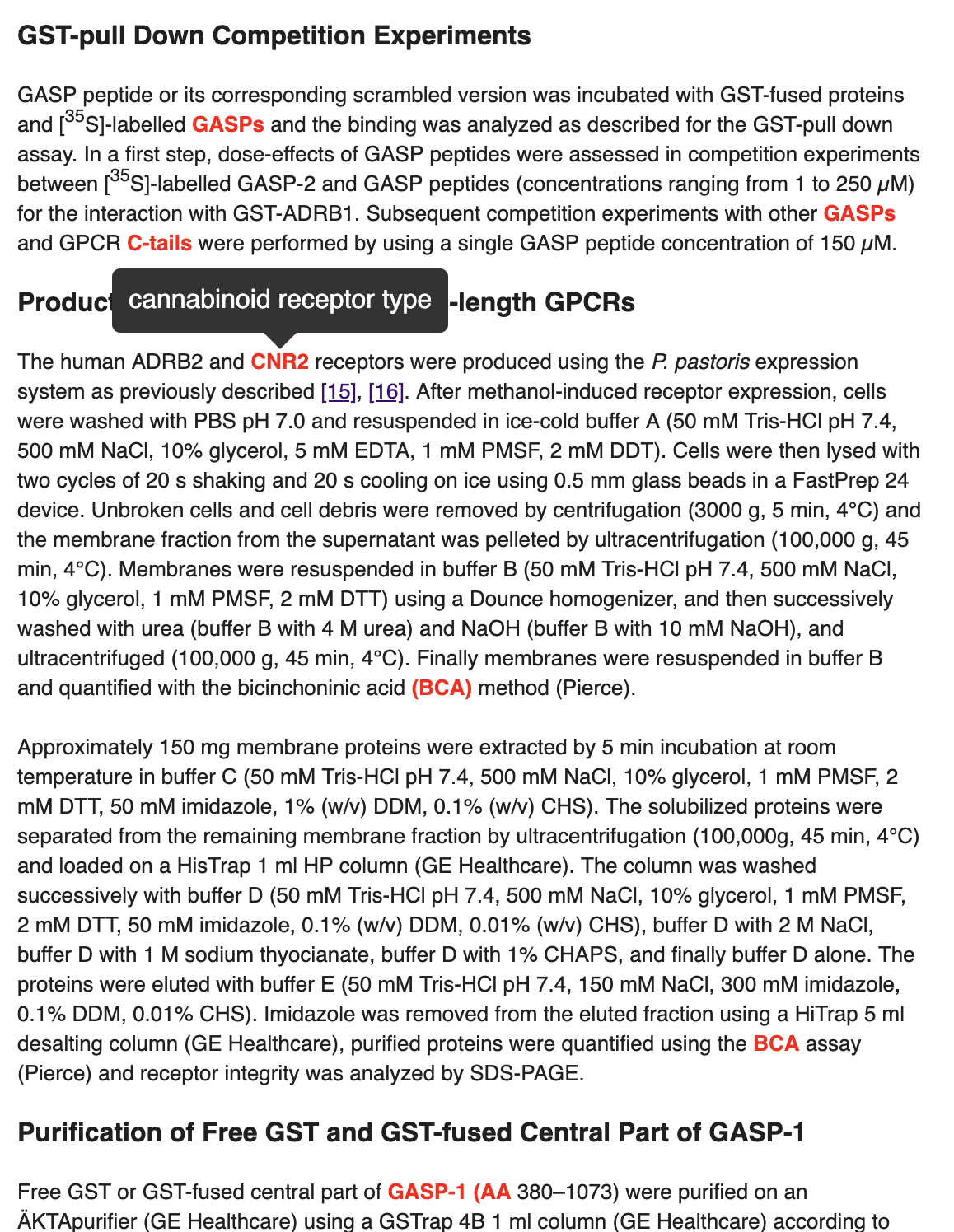
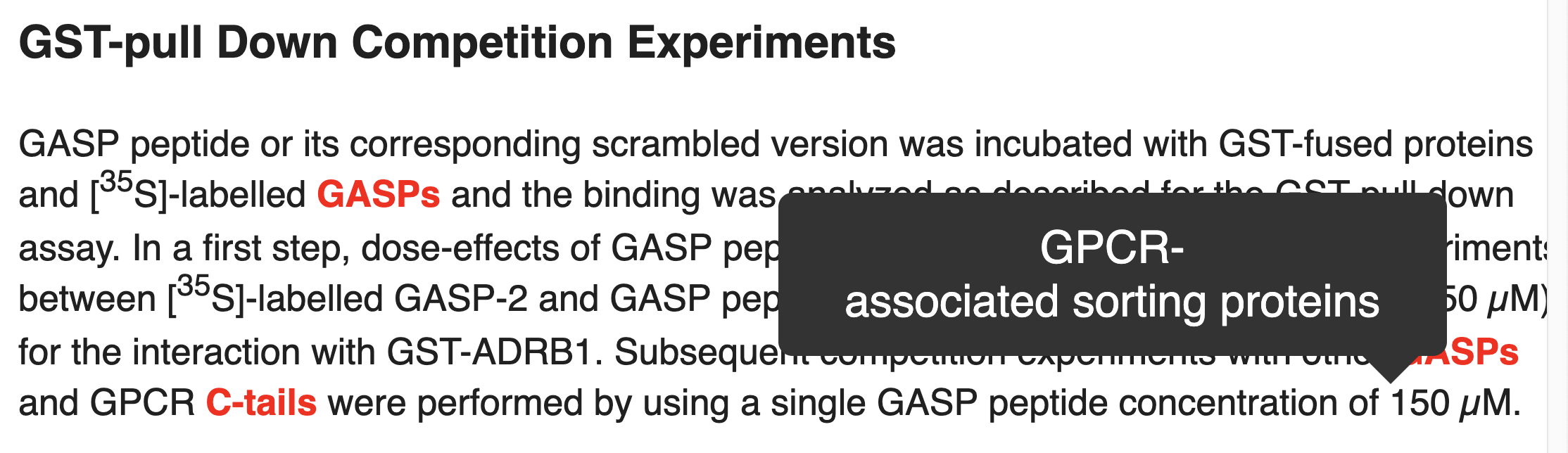
SciDefine is a Google extension that recognizes, highlights, and shows long forms of biological abbreviations present in open access scientific journals.
How we built it
We used a Java implementation of the Schwartz-Hearst algorithm to process text from the paper and create a dictionary of abbreviations. The definitions were added to the DOM via JavaScript to generate interactive, responsive tooltips.
Challenges we ran into
We attempted to produce a fully-functional extension that would show our modifications directly on the journal article using AJAX in Javascript, but were unable to finish this in the limited time frame.
Accomplishments that we're proud of
This was our first hack-a-thon and despite not having much of a coding background, we are proud of creating something from start to finish.
What we learned
We've both taken theory-based classes in CS before, but we learned over the course of this event that applying your skills towards real projects is a different and very rewarding experience.
What's next for SciDefine
We will try to include one-sentence summaries of each term (sourced from Wikipedia or a similar database) in the tooltips. We are also planning to refine the Java implementation of the algorithm to prevent erroneous results.


Log in or sign up for Devpost to join the conversation.