-
-
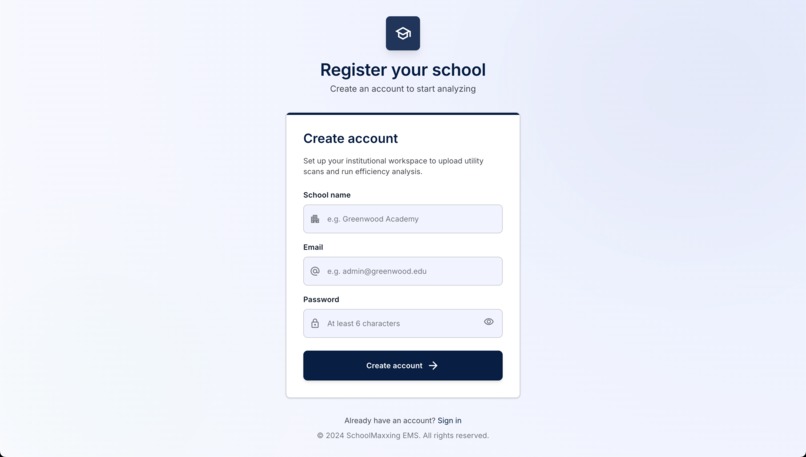
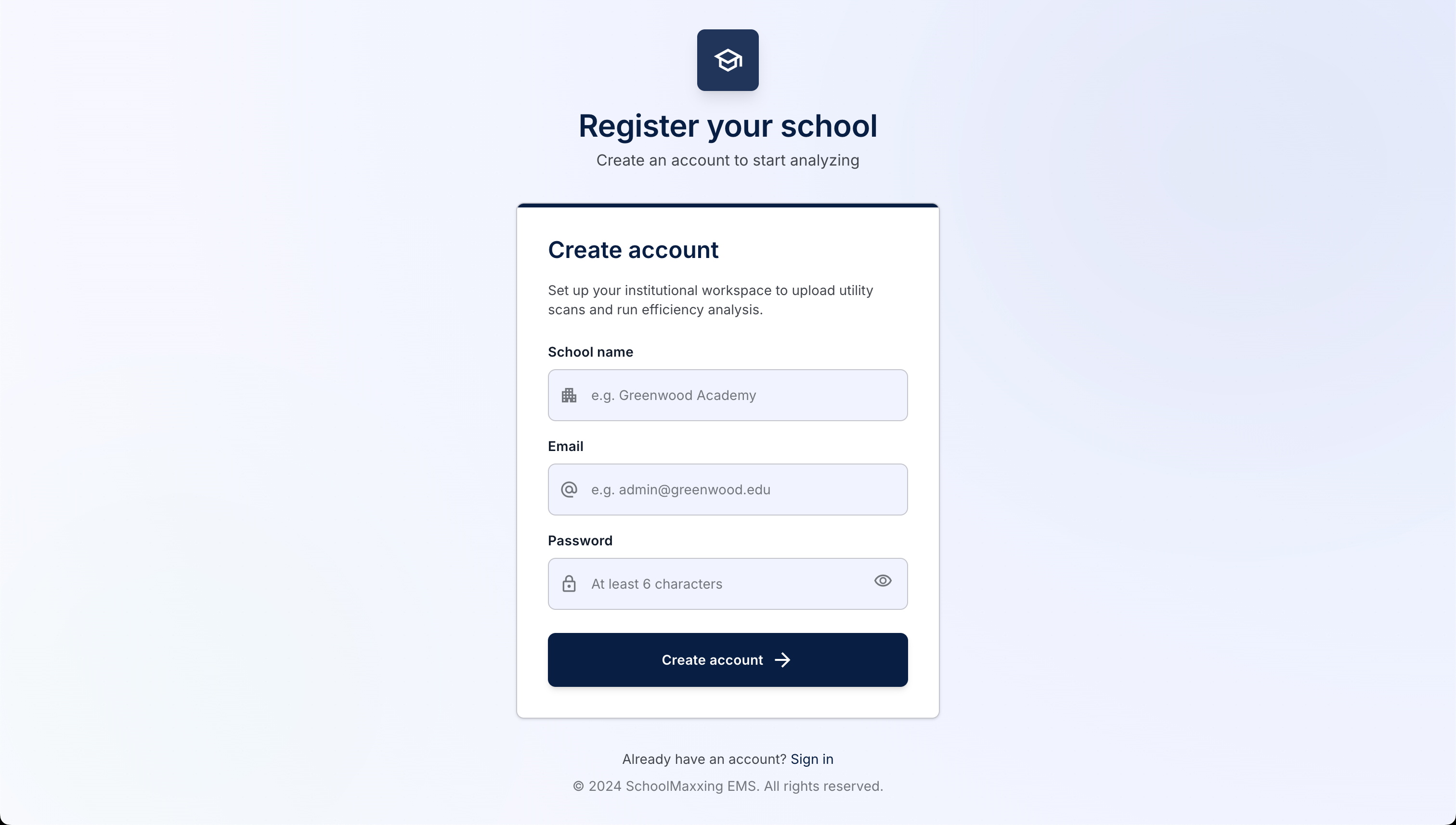
Register page
-
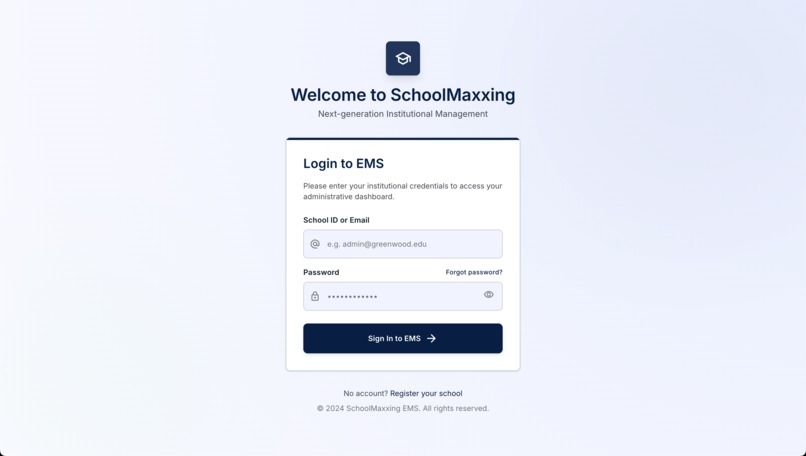
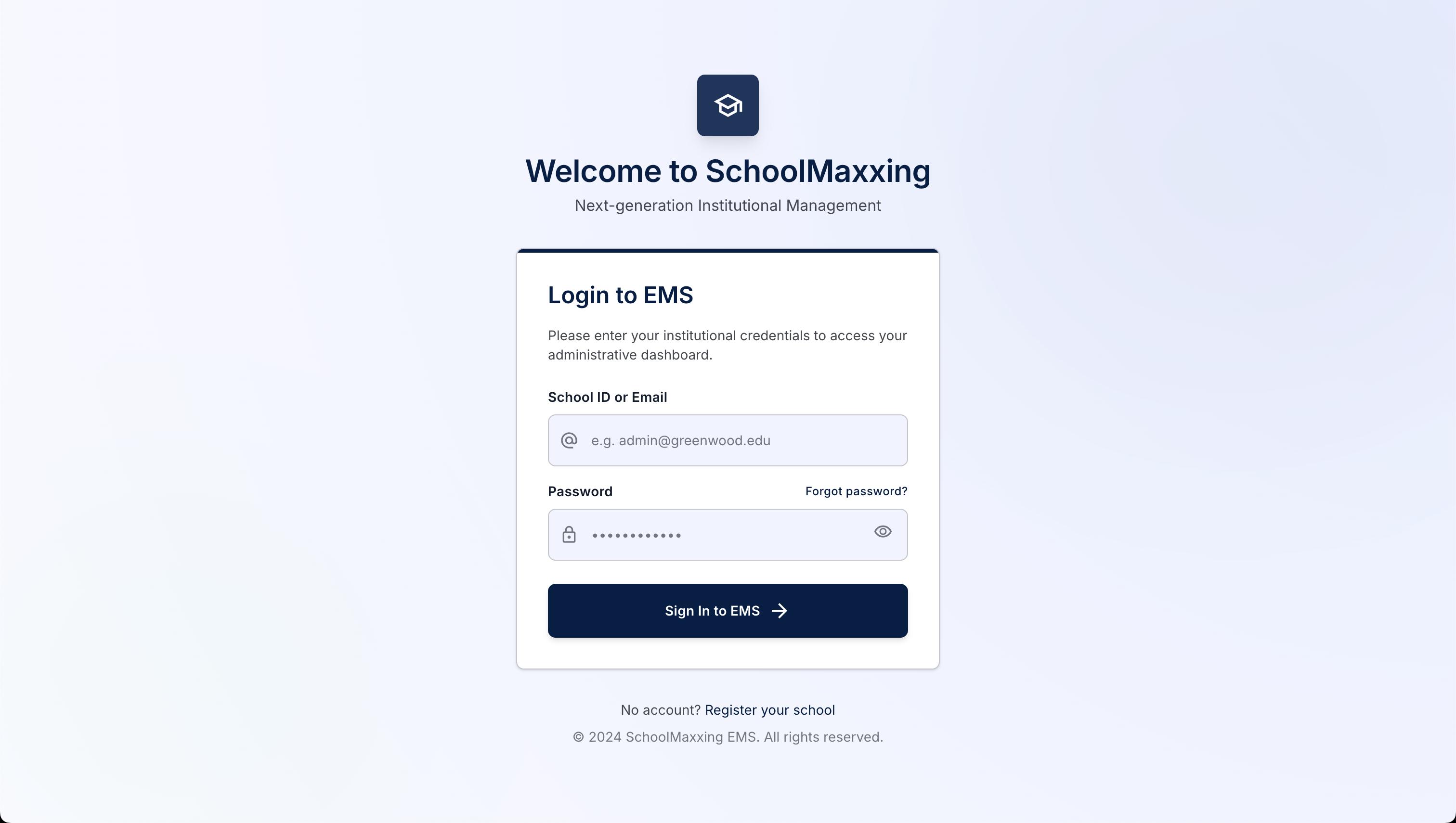
Login page
-
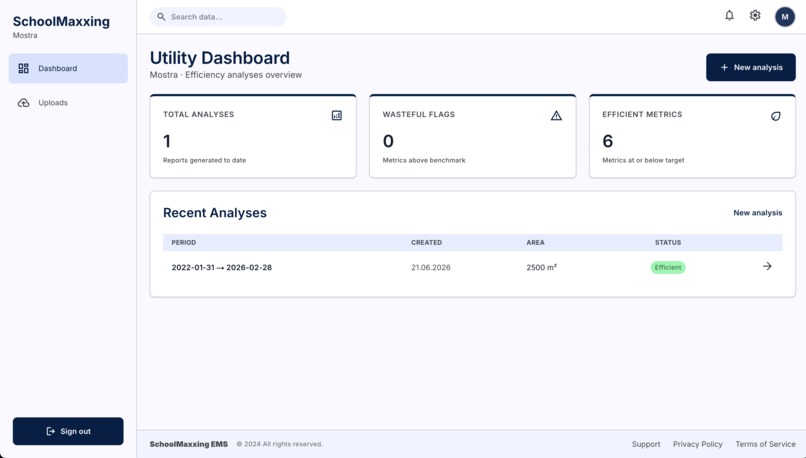
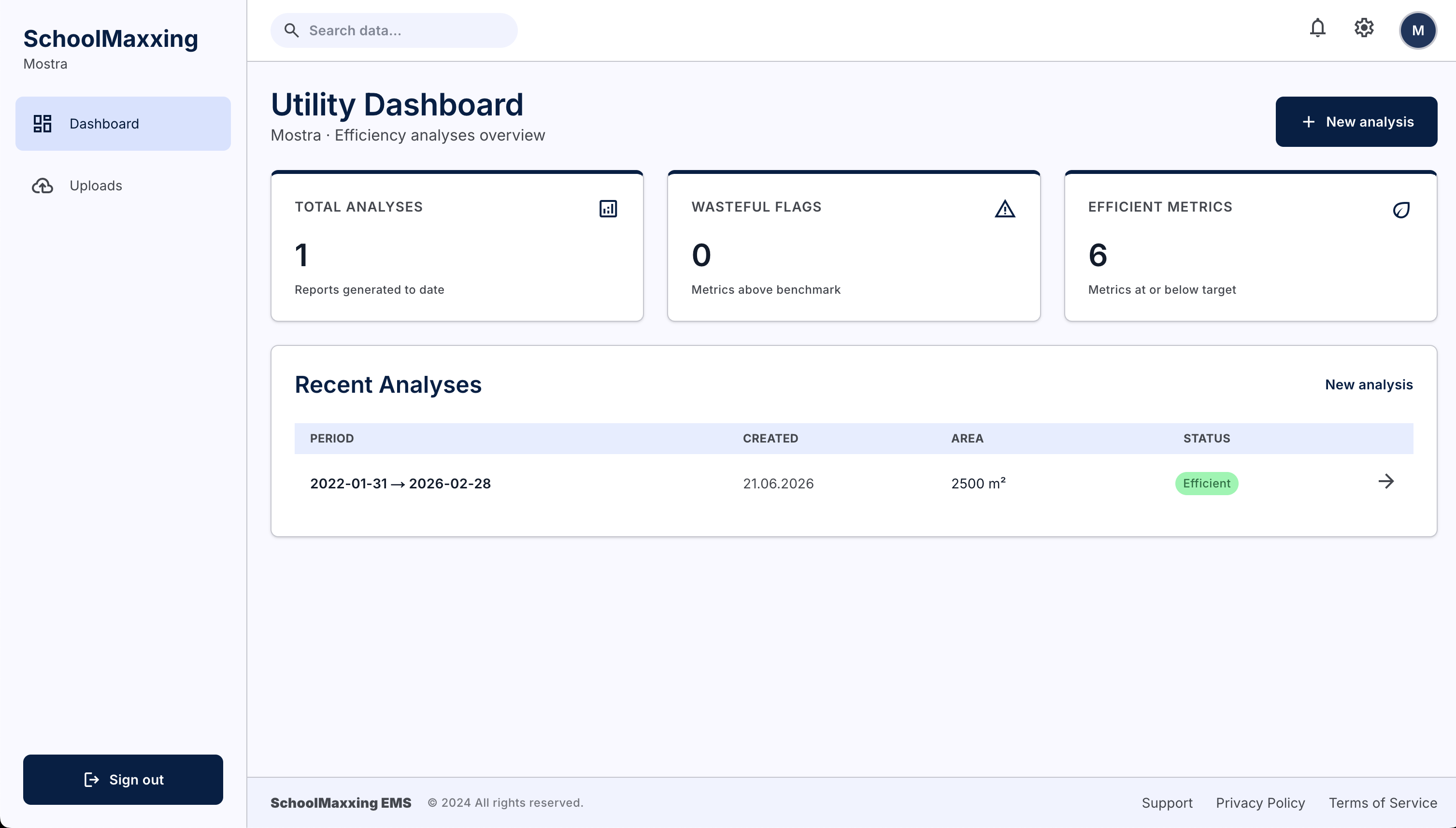
Panel home page
-
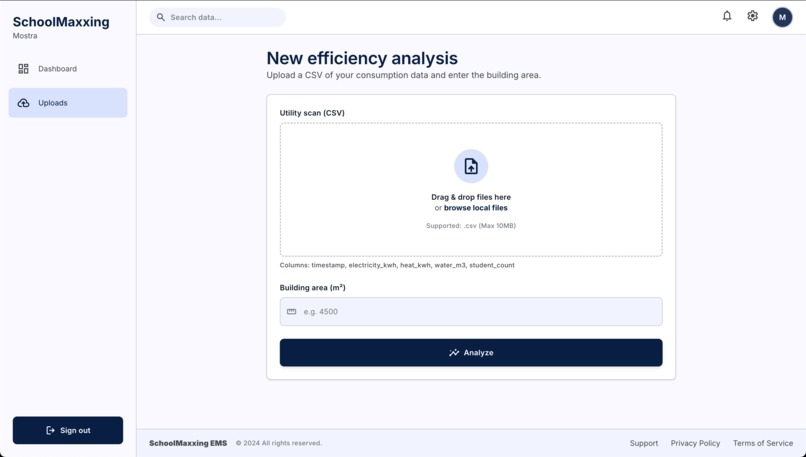
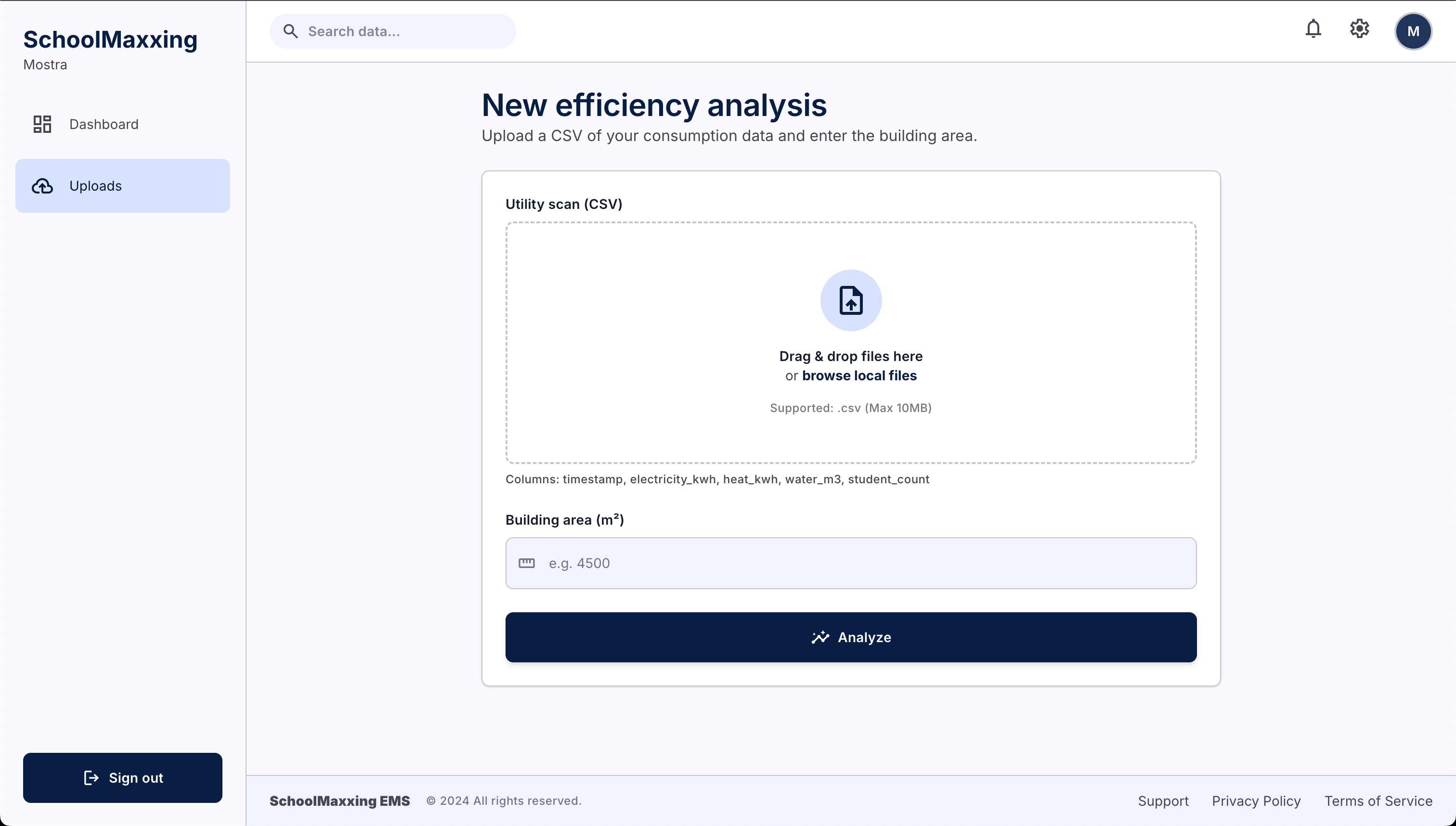
Upload page
-
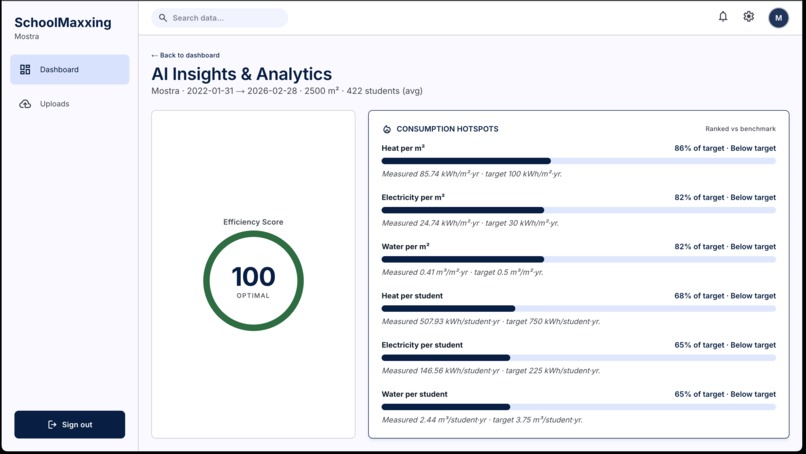
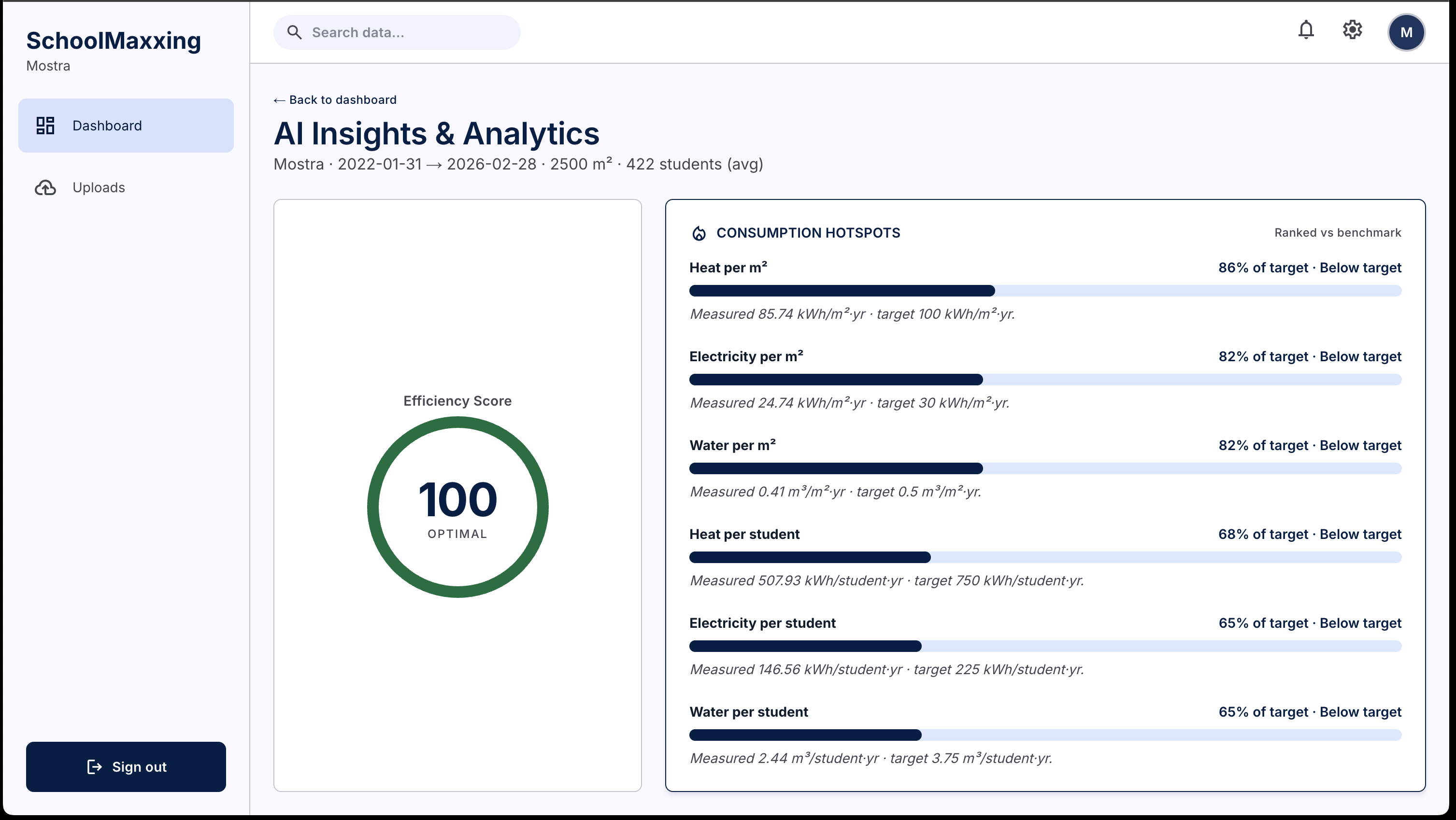
Report page part 1
-
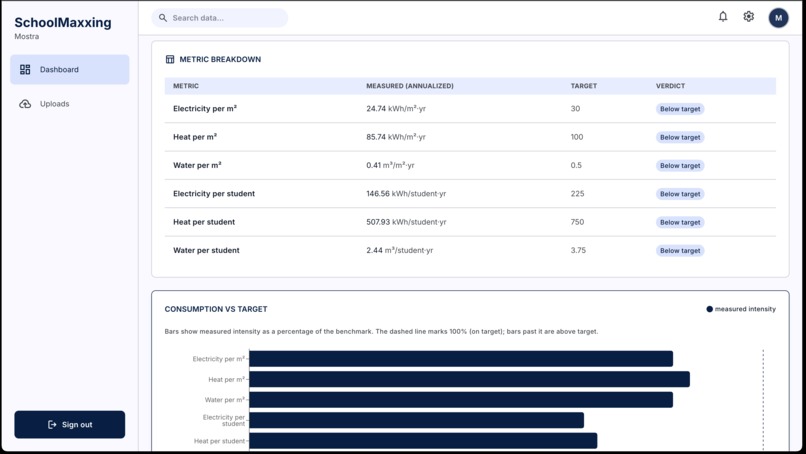
Report page part 2
-
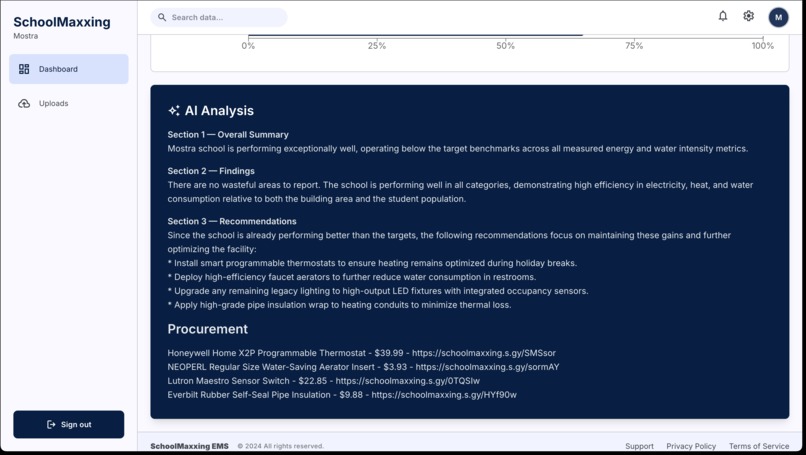
Report page part 3
Inspiration
Our team consists of students from different schools in Istanbul with unique experiences of our own. With our observations, we have realized that not every school has the same approach to sustainability or even the knowledge to attain a sustainable school policy. While some school makes their priority to have a greener school while sustaining a budget, other schools are evaluating their option and have a lot more to go to take action. However, the critical point in evolving our schools is that we can not wait any longer. Environmental crises are at a point where we are already late and need to make changes urgently. Our sense of urgency has led us to start tackling this issue from the base unit of society, which is youth. Developing a practice of sustainability in early ages of life will be a mindset that they will lean on throughout their life.
What it does
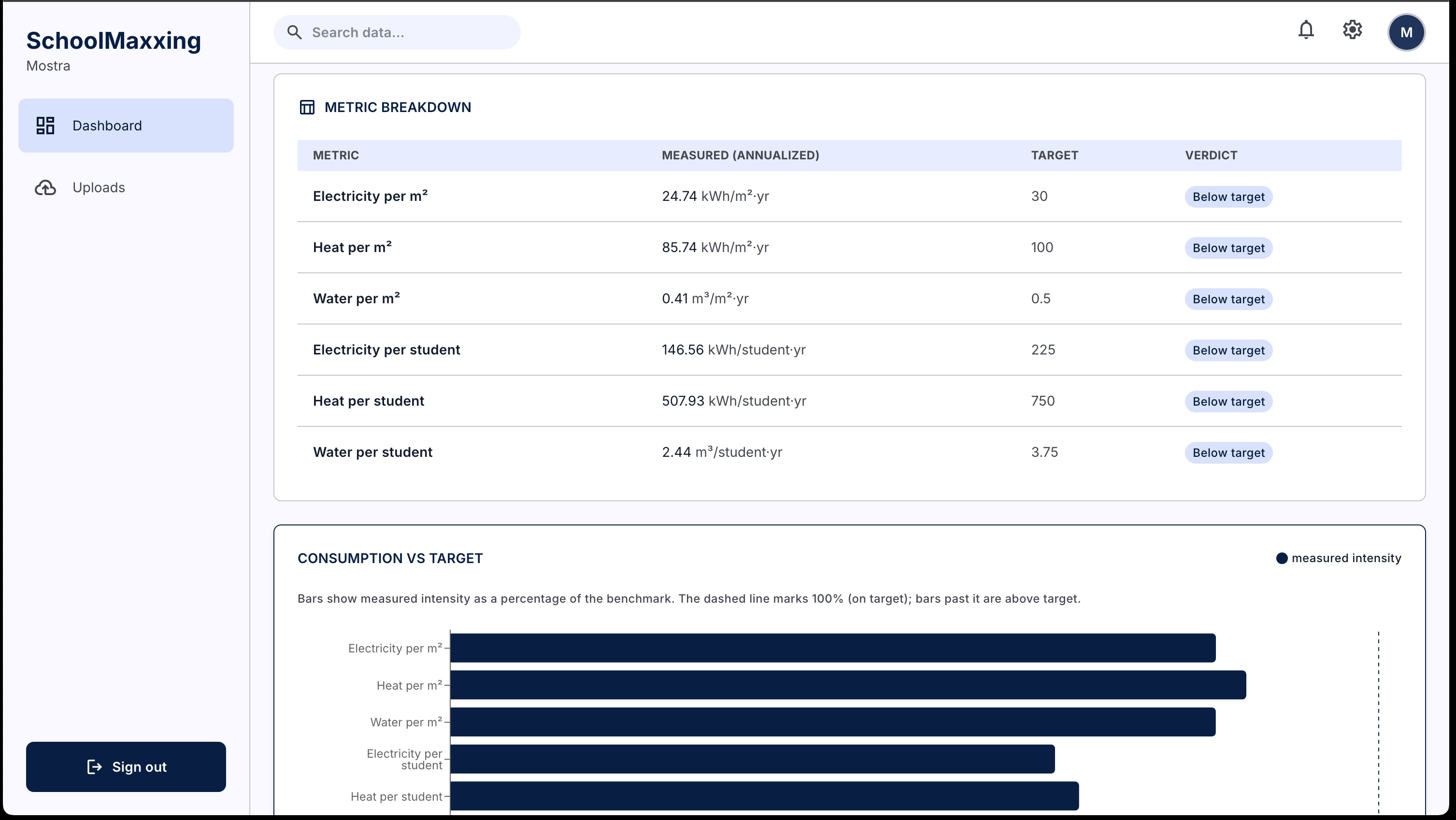
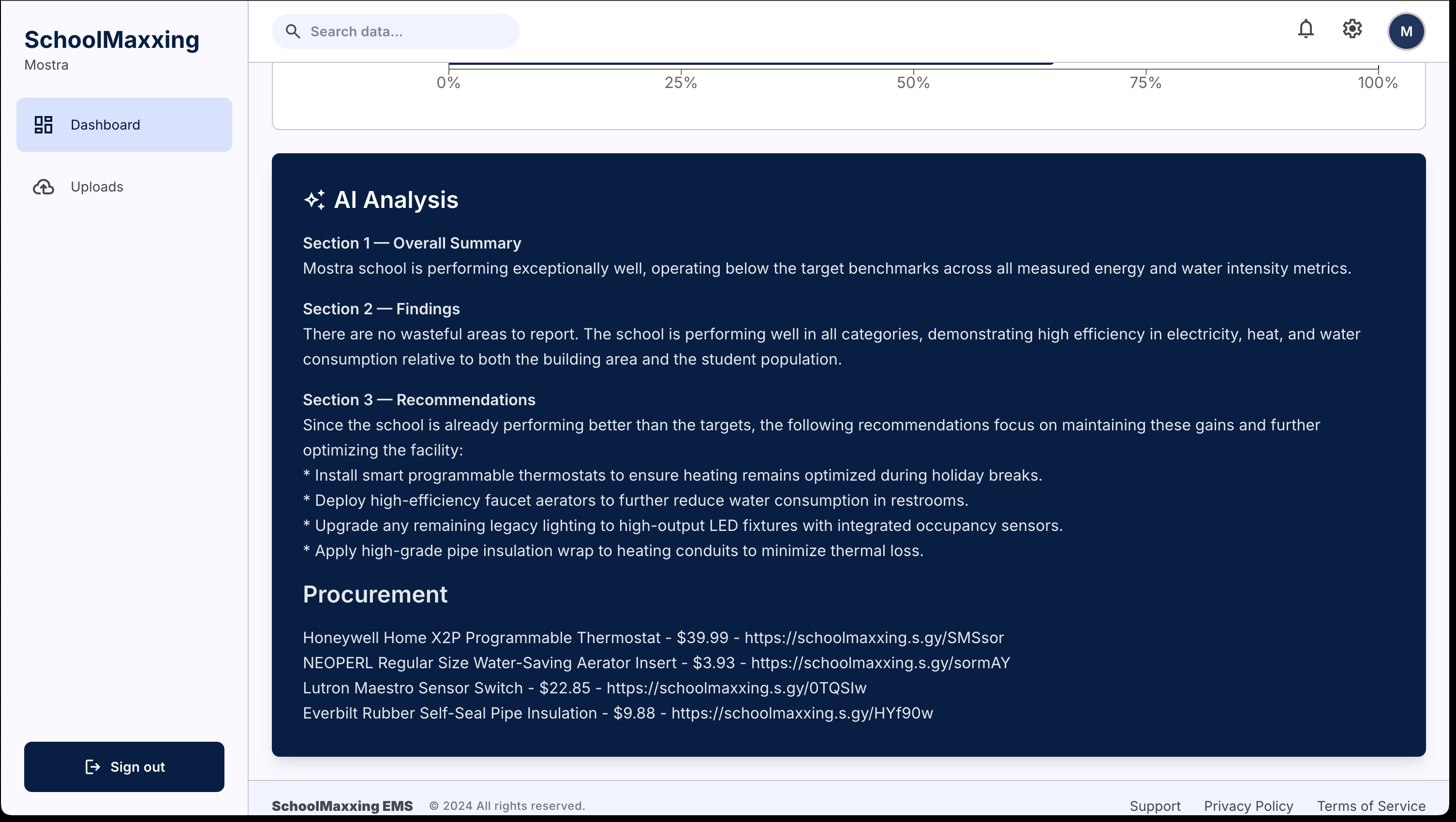
SchoolMaxxing allows schools to upload their electricity, heat, and water consumption into the system and analyze their performance efficiency through an AI-powered decision support system. After uploading to the system, the CSV file is transformed into a standard format of annualized data. The system computes six different sustainable metrics. These metrics contain the consumption data, the school's surface area and the number of students. The results of these metrics are then compared to benchmark values and classified as “efficient”, “over (wasteful)” or “under”. The built-in AI gives out explanations and some recommendations. The verdict is illustrated with graphics, tables, and summaries to the user. The user can evaluate the verdict and would be able to adapt to their school. Finally, the recommendation that is confirmed by the user is turned into an action plan and implemented to use the resources of the school sustainably.
How we built it
We built SchoolMaxxing using Next.js, Firebase, and Gemini. Implemented Firebase Authentication so that schools can confidently register, sign in, and use the system. Used Firestore to store each school's uploaded data and analysis results. Created a CSV upload system where schools submit their electricity, heating, water consumption, and student population data, along with their building area (m²). Developed a data processing pipeline that parses and annualizes the data to ensure fair comparisons between schools with different reporting periods. Built a deterministic analysis engine that calculates six sustainability metrics. We defined optimal threshold benchmarks for each sustainability metric to enable objective and consistent performance evaluations across different schools. Compare these metrics against predefined benchmark values to classify each category as efficient, over-consuming, or under-consuming. Integrated Gemini AI to convert numerical results into easy-to-understand explanations and actionable sustainability recommendations. Designed a dashboard that displays charts, tables, and AI-generated insights. Implemented a human-in-the-loop approach, where school administrators, teachers, or eco-club leaders review AI recommendations before taking action. Prioritized Responsible AI by ensuring AI explains and recommends actions rather than making decisions autonomously.
Challenges we ran into
It was difficult to determine what qualifies as “efficient” electricity, heating, and water consumption, especially per m² and per student. We had to research and establish realistic sustainability benchmarks that could be applied fairly across different schools. Real school consumption data is often private or inaccessible, so we had to rely on carefully designed synthetic datasets. Schools report data over different time periods, so we had to annualize and normalize the data to make comparisons meaningful. Gemini has usage limits and can occasionally generate inconsistent recommendations, so we restricted its role to explanations rather than decision-making. We needed to ensure that AI supports decision-making without replacing human judgment. We had to translate technical metrics into clear and actionable insights for non-technical users.
Accomplishments that we're proud of
Developed realistic sustainability benchmarks by researching and defining optimal threshold values for electricity, heating, and water efficiency. Created a meaningful metric system that fairly compares schools using both per m² and per student measurements. Reduced AI misinformation by preventing Gemini from making decisions and limiting its role to generating explanations and recommendations. Verified benchmark values using reliable sources (e.g. Google Shopping/Search and public sustainability references) instead of allowing AI to generate arbitrary numbers. Built a transparent and trustworthy system where all efficiency scores are generated deterministically rather than by AI. Successfully integrated Human-in-the-Loop principles to keep humans responsible for all final decisions.
What we learned
Finding good data is often harder than building the AI itself. AI is most effective as a decision-support tool rather than an autonomous decision-maker. Reliable benchmark values are essential for making fair sustainability comparisons. Normalizing data (per m² and per student) creates more meaningful and accurate evaluations. Responsible AI is not only about using AI, but also about knowing its limitations and keeping humans involved. Public and synthetic datasets can be powerful alternatives when real-world data is unavailable. Clear visualizations and simple explanations help non-technical users understand complex sustainability data. Building trustworthy AI systems requires transparency, deterministic calculations, and human oversight.
What's next for SchoolMaxxing
Generate more personalized and complex solutions by considering factors such as weather conditions, school events, occupancy levels, and seasonal patterns. Introduce short-term forecasting to predict electricity, heating, and water consumption for the next day, week, or month. Expand the recommendation engine to provide more targeted and high-impact sustainability actions. Add real-time data integration through smart meters and IoT sensors instead of relying only on CSV uploads. Develop a sustainability score so schools can track their progress over time.

Log in or sign up for Devpost to join the conversation.