-
-
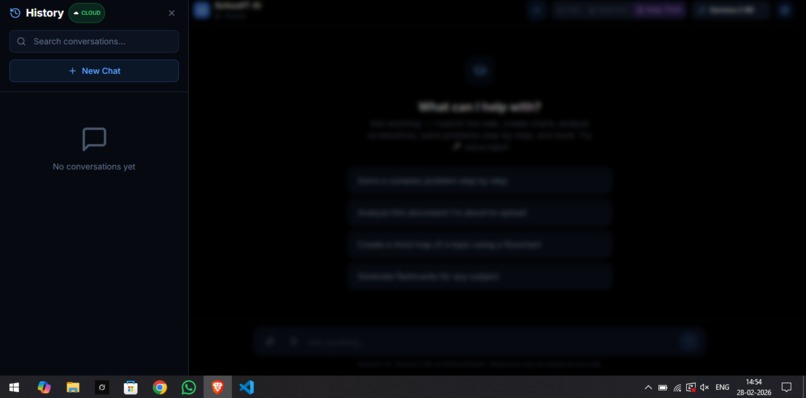
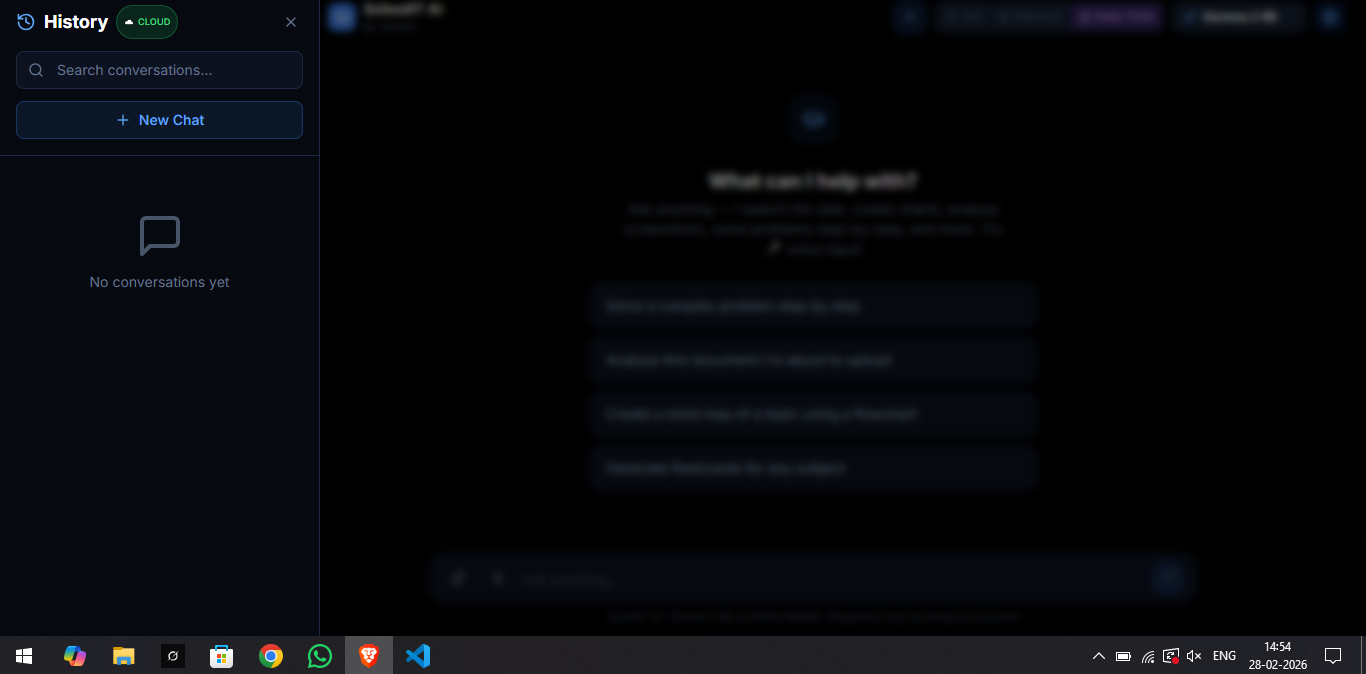
Saves History
-
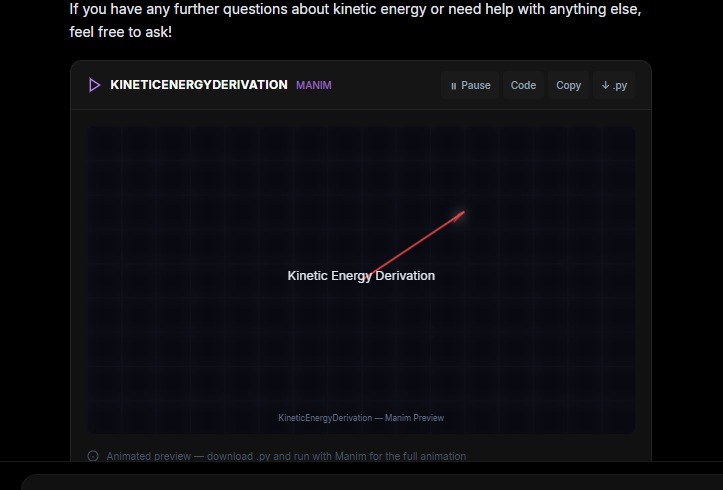
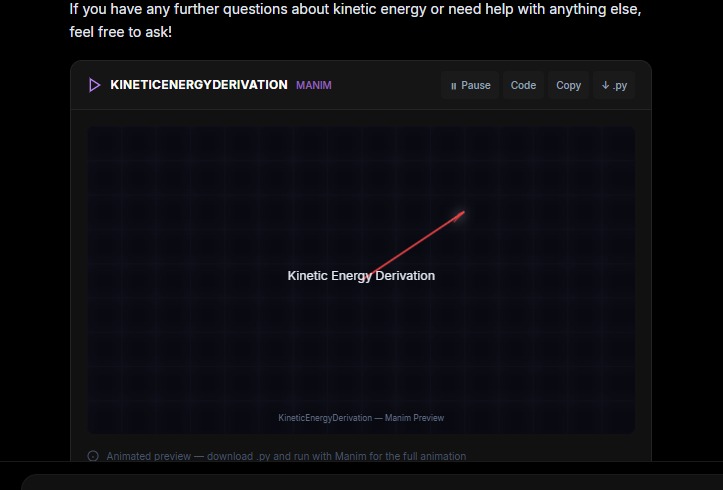
Manim rendering(preview for now
-
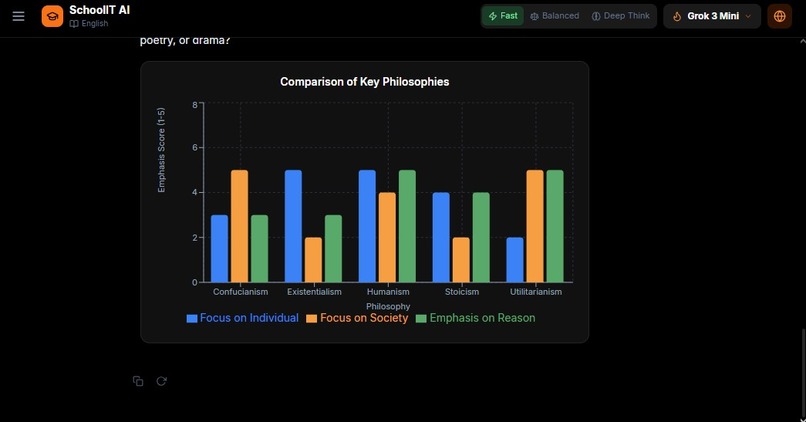
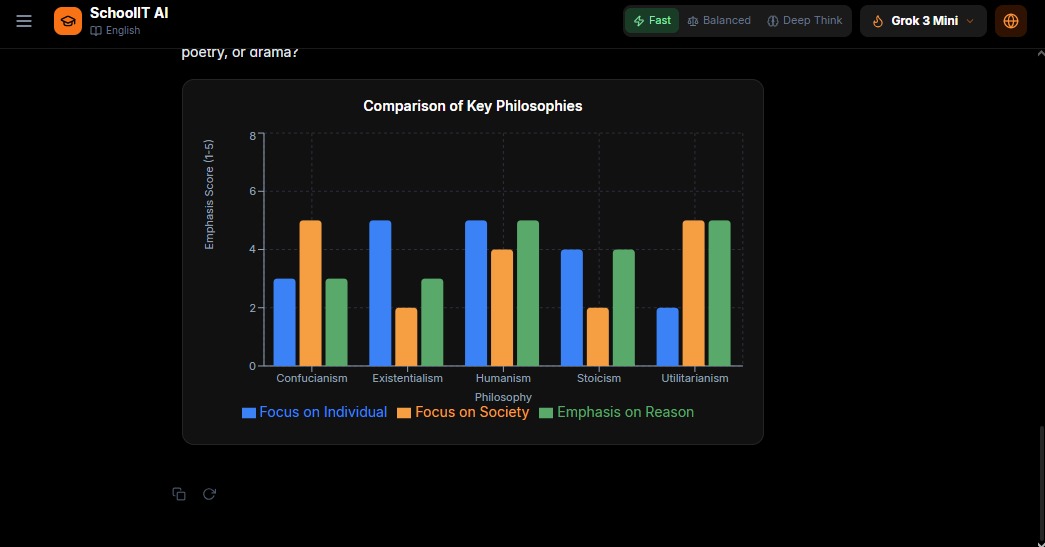
charts
-
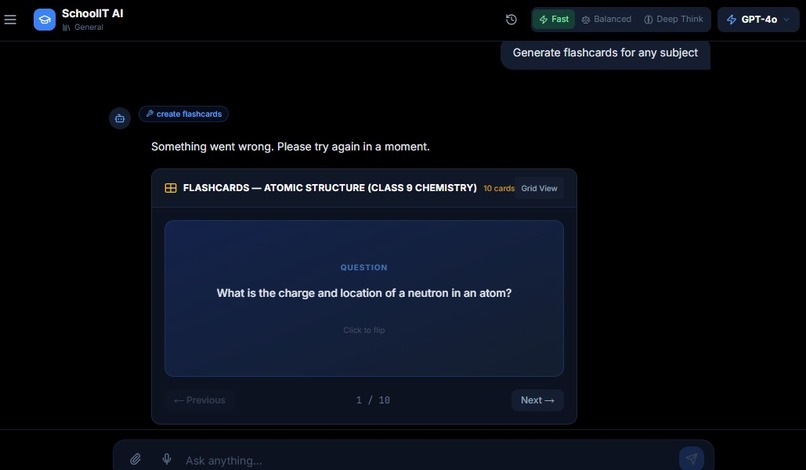
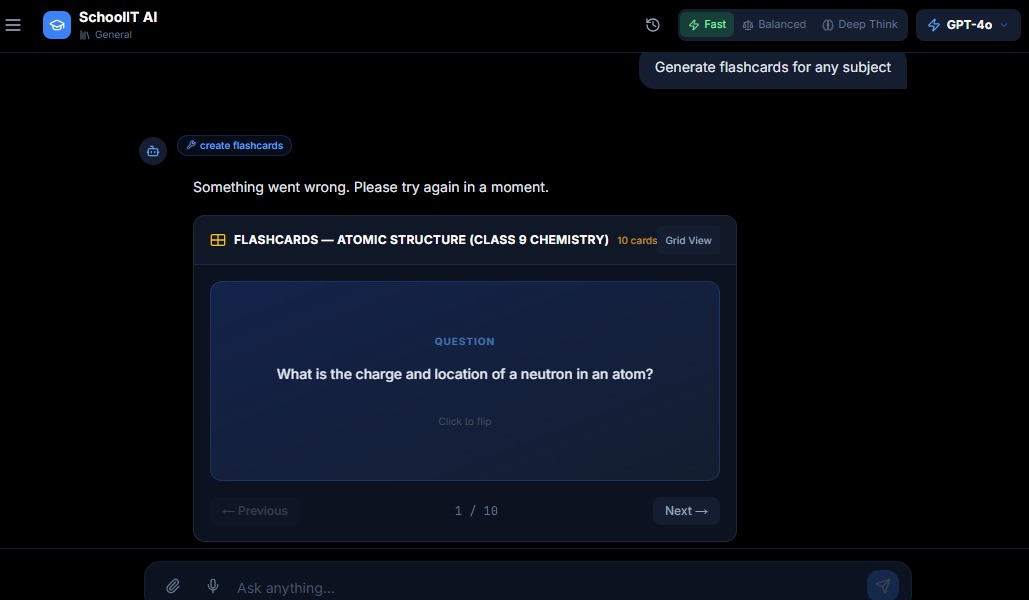
flashcards
Inspiration
I'm a 9th grade student from Maharashtra, India. Every time I opened ChatGPT or any AI tool with a question from my NCERT textbook, I got answers built for American classrooms — wrong examples, wrong exam patterns, wrong framing entirely.
India has 300 million school students. We study from NCERT textbooks, prepare for CBSE board exams, and learn Physics through derivations that no Western AI tool has ever seen. Yet every AI study tool in existence was built for someone else.
So at 14, I built one for us.
SchoolIT AI is a free, AI-powered study platform built ground-up for Indian students — NCERT-aware, CBSE-aligned, and designed to work for a student with a slow phone and a slow internet connection, not just someone with a MacBook in Silicon Valley.
What It Does
SchoolIT AI is a conversational AI study assistant that actually understands how Indian students learn.
Core Features:
NCERT Doubt Solver — Ask questions directly from your Class 9–10 textbooks across Math, Physics, Chemistry, Biology, History, Computer Science, and English. Get answers framed the way your teacher and textbook would frame them.
Exam Mode — Generates practice questions aligned to CBSE paper patterns, with mark-weightage awareness. Not generic MCQs — actual board-style questions.
Multi-Model Intelligence — Switches between fast, balanced, and deep-thinking modes using GPT-4.1, GPT-4o, Llama 3.3, Gemma 2, and Gemini 2.0 Flash depending on the complexity of your doubt.
Agentic Tools — Web search for real-time info, step-by-step math solver, flashcard and quiz generator, chart and flowchart creation, and image generation — all within one interface.
File Analysis — Upload images, PDFs, diagrams, or CSVs. It reads them. Ask it to explain a Physics diagram from your textbook and it will.
Fully Free — No paywalls, no subscriptions. Built on zero-cost infrastructure so every Indian student can use it regardless of economic background.
How I Built It
Built solo under the banner of Prolai, SchoolIT AI runs on:
- Framework: Next.js 14 (App Router) with TypeScript 5.7
- Styling: Tailwind CSS 3.4, Framer Motion, Lucide React
- AI Layer: OpenAI SDK via GitHub Models, Groq API (Llama 3.3, Gemma 2), Gemini API (2.0 Flash, 1.5 Flash) — multi-model routing in
app/api/chat/route.ts - Agentic Tools: Defined in
lib/server/tools.ts— web search, math solver, quiz generator, image gen - Auth: NextAuth.js 4 with Google Provider
- Rendering: KaTeX for equations, Recharts for charts, Mermaid for diagrams
- Deployment: Vercel with hardened security headers (CSP, HSTS) via
vercel.json
The entire platform costs ₹0 to run — free APIs, free hosting, free tooling. Because if the product is for students with no money, the infrastructure has to match.
Accomplishments
- Built a full-stack AI platform solo at 14, deployed and live at schoolit-ai.vercel.app
- Architected a zero-cost production stack that handles real educational workloads
- Implemented agentic multi-model routing — the right model gets picked for the right task automatically
- Achieved a polished, mobile-optimized UI that works on low-end Android phones common among Indian students
- Open-sourced the entire codebase — because knowledge should be free
Challenges
Every part of this was hard.
Getting multiple AI models (GitHub Models, Groq, Gemini) to behave consistently on NCERT-specific content required extensive prompt engineering — each model hallucinates differently on Indian curriculum problems. Rate limiting was a constant balance — too strict kills UX, too loose burns through free tier limits. Vision support across models hit file size walls that required custom optimizations. Vercel deployment introduced CSP header conflicts that took days to debug. And doing all of this on an i3 processor with 4GB RAM, on Windows 10, without a paid API key, taught me more about constraints-driven engineering than any tutorial ever could.
What I Learned
That the most important skill in development isn't knowing every framework — it's shipping despite every obstacle.
I learned Next.js deeply by building this, not by studying it. I learned that ethical AI means building disclaimers into the UI, not just saying "use AI responsibly." I learned that open-sourcing your work multiplies its impact beyond what you can do alone.
Most importantly — I learned that a real problem, solved by someone who actually lives it, beats a polished product built for a problem you read about in a Medium post.
300 million Indian students needed this. I am one of them. That's why I built it.
What's Next
- Expand NCERT coverage to Classes 6–12
- Add vernacular language support (Marathi, Hindi) for rural students
- Build a teacher dashboard for classroom integration
- Monetize for sustainability while keeping the student tier permanently free
SchoolIT AI isn't a hackathon project. It's the beginning of what Indian edtech should look like.
Built With
- nextjs
- tailwind
- typescript


Log in or sign up for Devpost to join the conversation.