Inspiration
School can be overwhelming, not because students don't know what they need to do, but because important information is scattered everywhere. Assignments, tests, project deadlines, teacher announcements, and reminders can come through different messages, notices, worksheets, and conversations.
I wanted to build something that solves this everyday problem for students. Instead of expecting students to remember and organize everything themselves, I imagined an AI assistant that could understand the information they receive and turn it into a simple, actionable plan.
That idea became SchoolBuddy.
What It Does
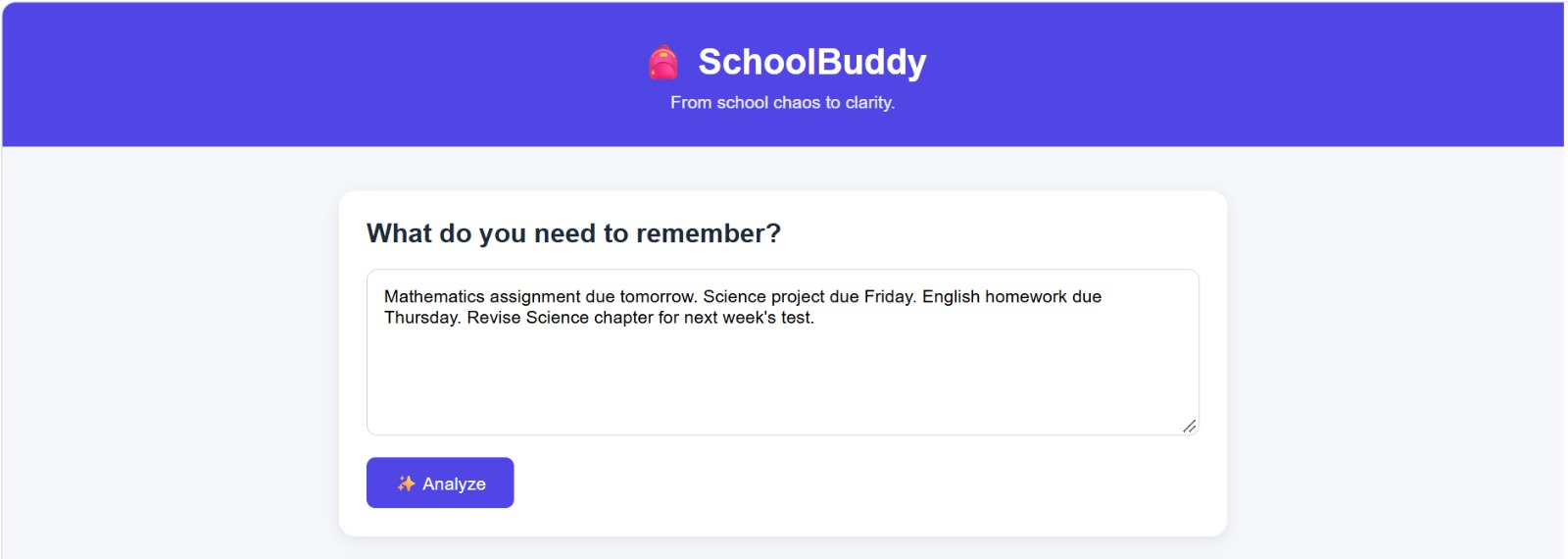
SchoolBuddy is an AI-powered school productivity assistant that helps students organize their academic workload.
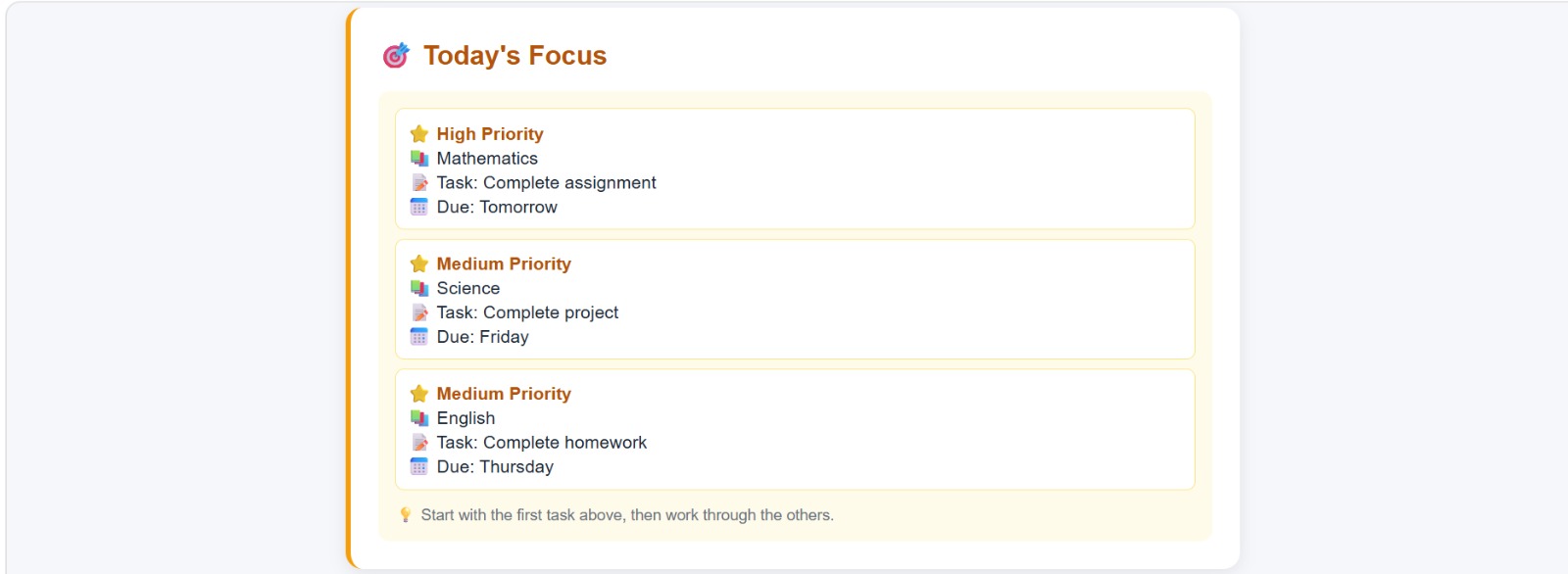
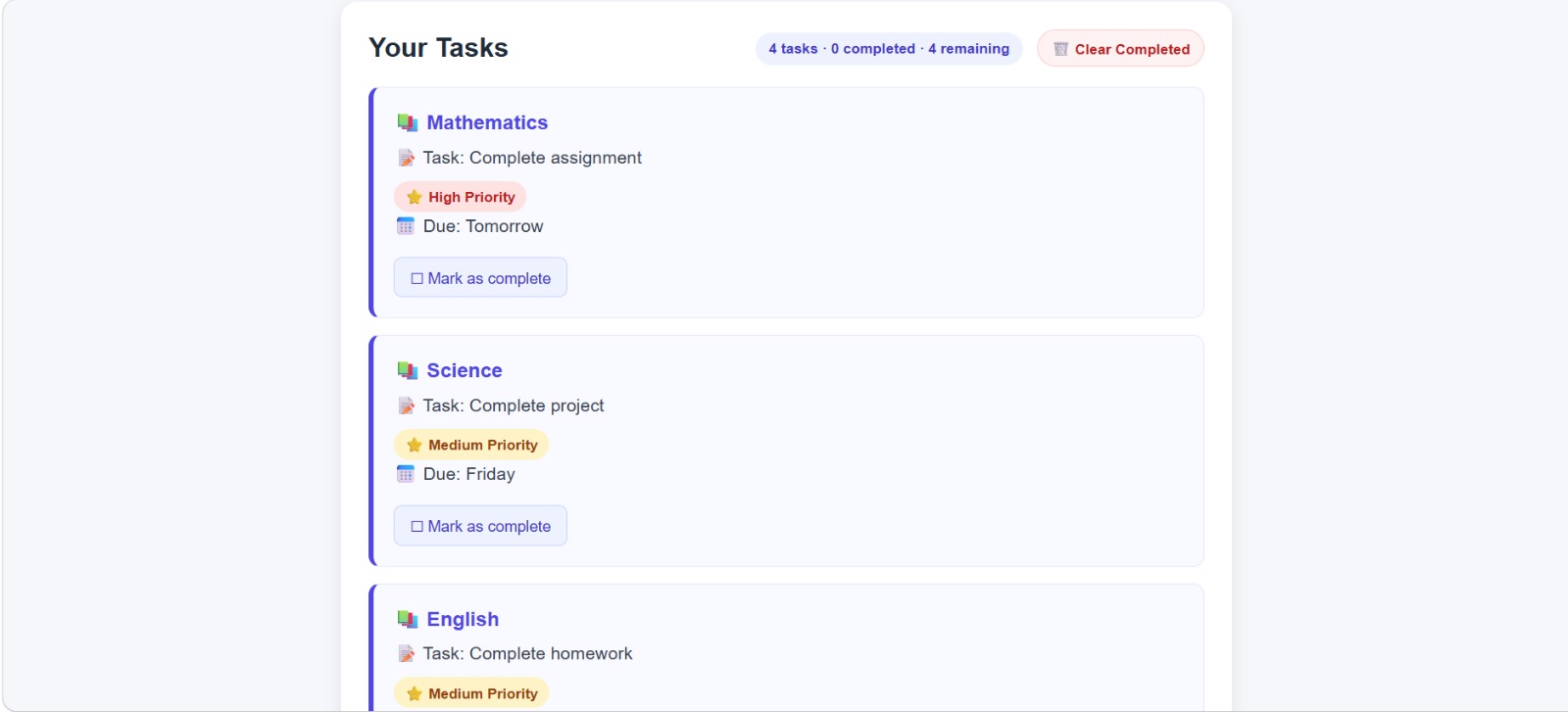
Students can give SchoolBuddy unstructured information such as a teacher's announcement, assignment instructions, or exam reminder. The AI identifies important details such as the subject, task, deadline, and priority, and converts them into organized tasks.
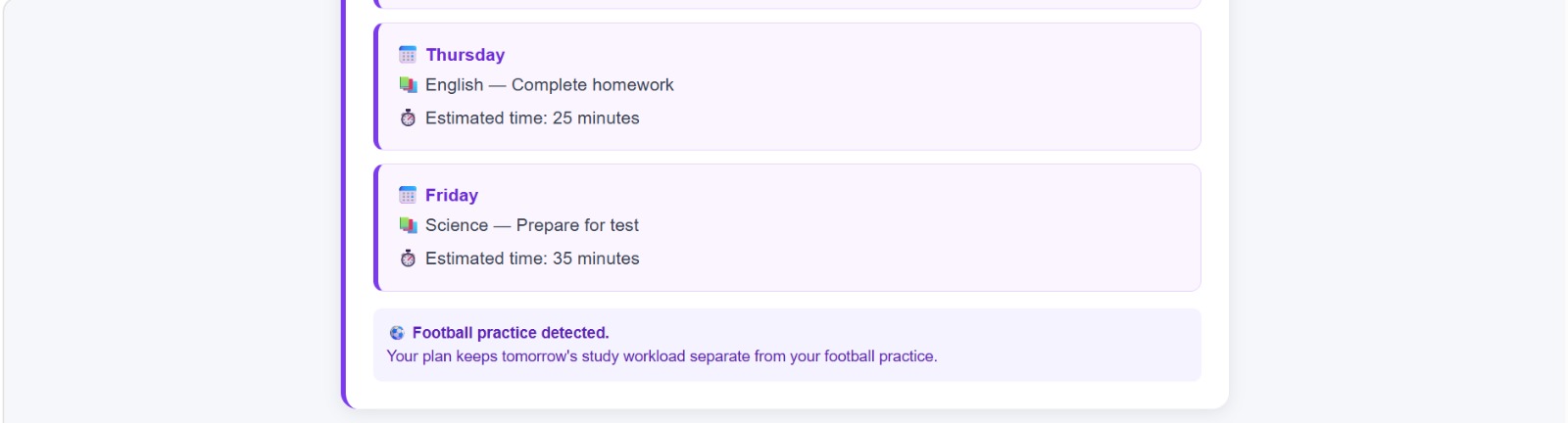
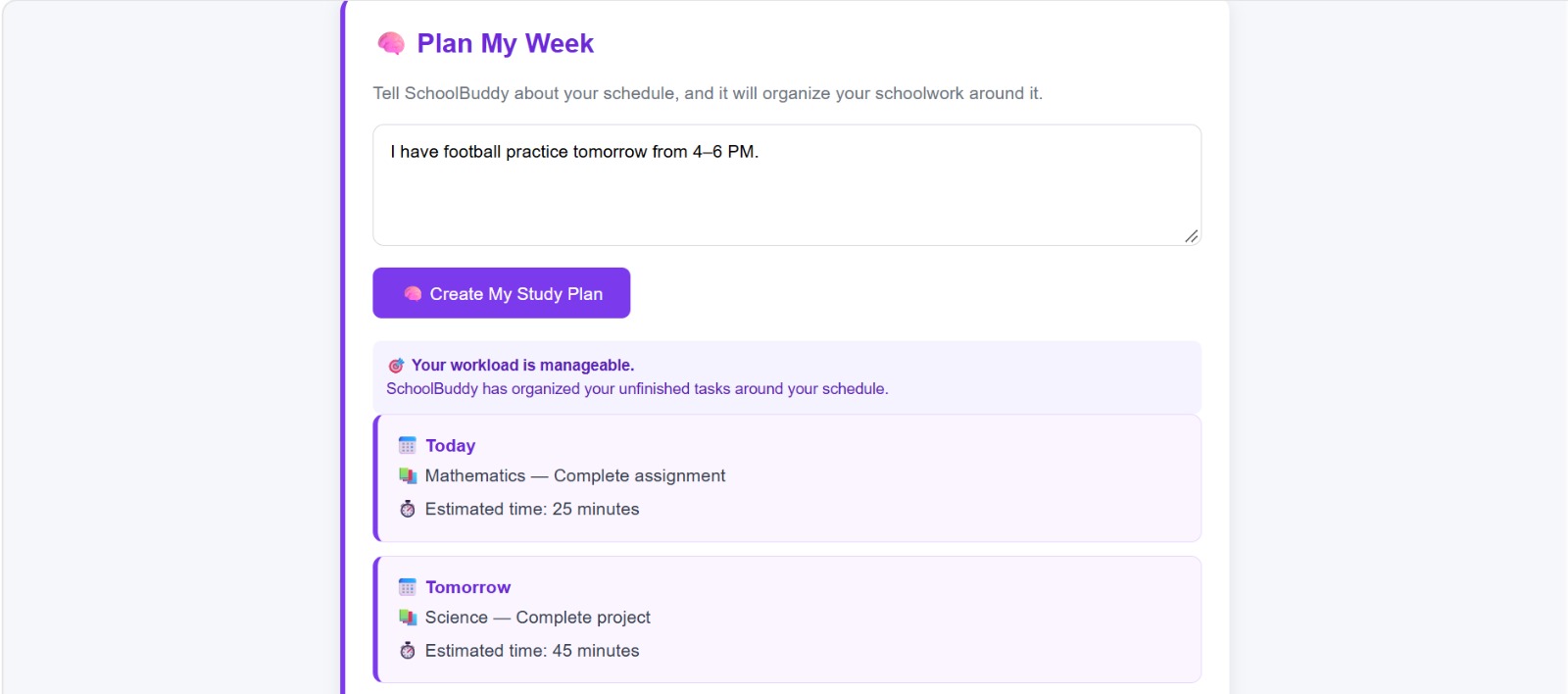
SchoolBuddy can then present these tasks in a clear dashboard and help students create a realistic plan around their schedule.
For example, instead of seeing:
"Complete Maths exercises 1–10 by Wednesday. Science test on Friday. Bring chart paper tomorrow."
SchoolBuddy turns it into:
- 🔴 Tomorrow: Bring chart paper — Social Science
- 🟠 Wednesday: Complete Maths exercises 1–10
- 🟡 Friday: Prepare for Science test
The goal is simple: turn school chaos into clarity.
How I Built It
I built SchoolBuddy as a web application using a simple and lightweight technology stack.
The frontend uses HTML, CSS, and JavaScript to create the interface and dashboard. A Python backend handles the application logic and communicates with the AI model.
The AI is responsible for understanding natural-language school information and extracting useful structured data from it. That information is then used to create tasks, organize deadlines, and generate personalized study plans.
I intentionally kept the architecture simple because I am building the project independently. Rather than trying to build a huge platform, I focused on creating a small working prototype that demonstrates the core idea effectively.
Challenges I Ran Into
One of my biggest challenges was developing the project as a solo developer while having limited experience with web development. My programming background was primarily in C, so moving into HTML, CSS, JavaScript, Python, and AI APIs required learning several new technologies at once.
Another challenge was making AI output useful rather than just generating text. The AI needs to identify the actual task, deadline, subject, and priority from messy human-written instructions. Designing the interaction around that problem required thinking carefully about what information students actually need.
I also had to balance ambition with the limited time and resources of a solo hackathon project. There were many features I could have added, but I learned to prioritize the core experience and make that work well first.
Accomplishments I'm Proud Of
I'm most proud that I was able to take an everyday problem that students experience and turn it into a working technical solution.
Building a project that combines a web interface, backend logic, and AI functionality was also a significant learning experience for me, especially because I started with primarily C programming knowledge.
I'm particularly proud of the idea of transforming unstructured school information into structured, actionable tasks. It demonstrates a practical use of AI rather than using AI simply as a chatbot.
What I Learned
This project taught me that building a useful product isn't just about writing code.
I learned how important it is to start with a real problem, define a focused solution, and avoid adding unnecessary features. I also learned how different technologies can work together to create something larger than any one component.
Most importantly, I learned that not knowing a technology shouldn't stop me from building something. Starting with C gave me a foundation in programming logic, and I was able to apply that knowledge while learning new tools along the way.
What's Next for SchoolBuddy?
SchoolBuddy is currently focused on helping students manage assignments, deadlines, and school announcements, but there is much more it could become.
Future versions could include:
- 📸 Image and document understanding for worksheets, notices, and timetables
- 📅 Calendar integration for automatically scheduling tasks
- 🎤 Voice input for quickly adding homework
- 📊 Learning analytics to identify subjects where students need more practice
- 👥 Collaboration tools for group projects
- 🔔 Smart reminders based on deadlines and workload
- 🏫 School-specific knowledge so the AI can understand a student's actual timetable, subjects, and school resources
My long-term vision is for SchoolBuddy to become more than a homework tracker. I want it to be an AI companion that helps students understand their workload, manage their time, and spend less energy worrying about what they might have forgotten.

Log in or sign up for Devpost to join the conversation.