Inspiration
We watched a generation of students stand at the edge of the most significant technological shift since the internet — and watched schools freeze. Teachers were told to "prepare kids for an AI world" with no scripts, no rubrics, no safety rails. Parents worried their children were either falling behind or quietly outsourcing their thinking to a chatbot. School leaders wanted to act but couldn't risk privacy violations, uneven implementation, or yet another shiny tool that died after one PD session.
The inspiration was simple and urgent: AI literacy can't wait for the perfect curriculum committee. Kids in Grade 8 today will graduate into a workforce where prompting, verifying, and building with AI is as foundational as reading was in 1995. We refused to accept a future where only well-funded private schools knew how to teach this. Scholesa was born from one conviction — every child deserves to walk into an AI-shaped world as a builder, not a bystander.
What it does
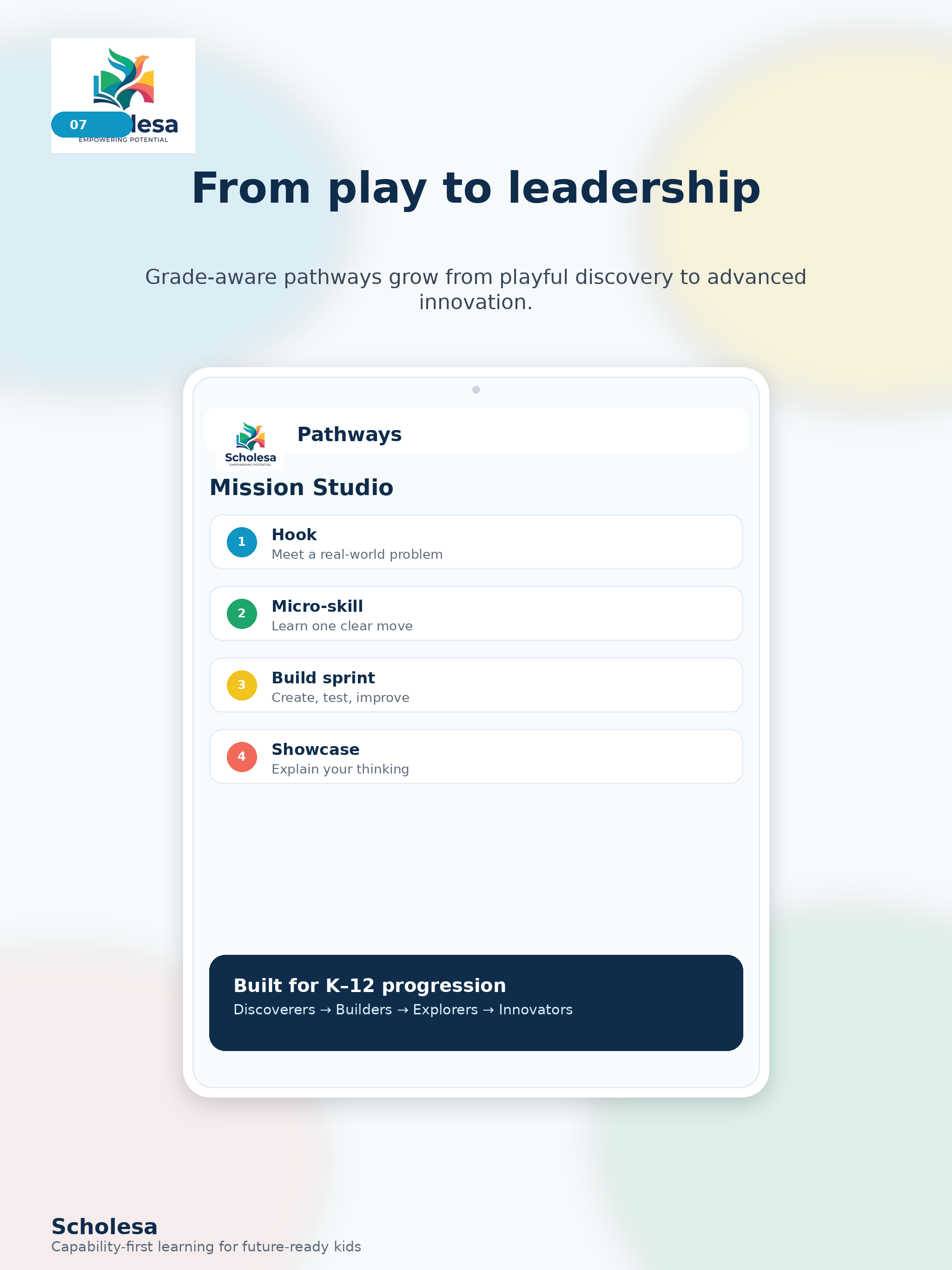
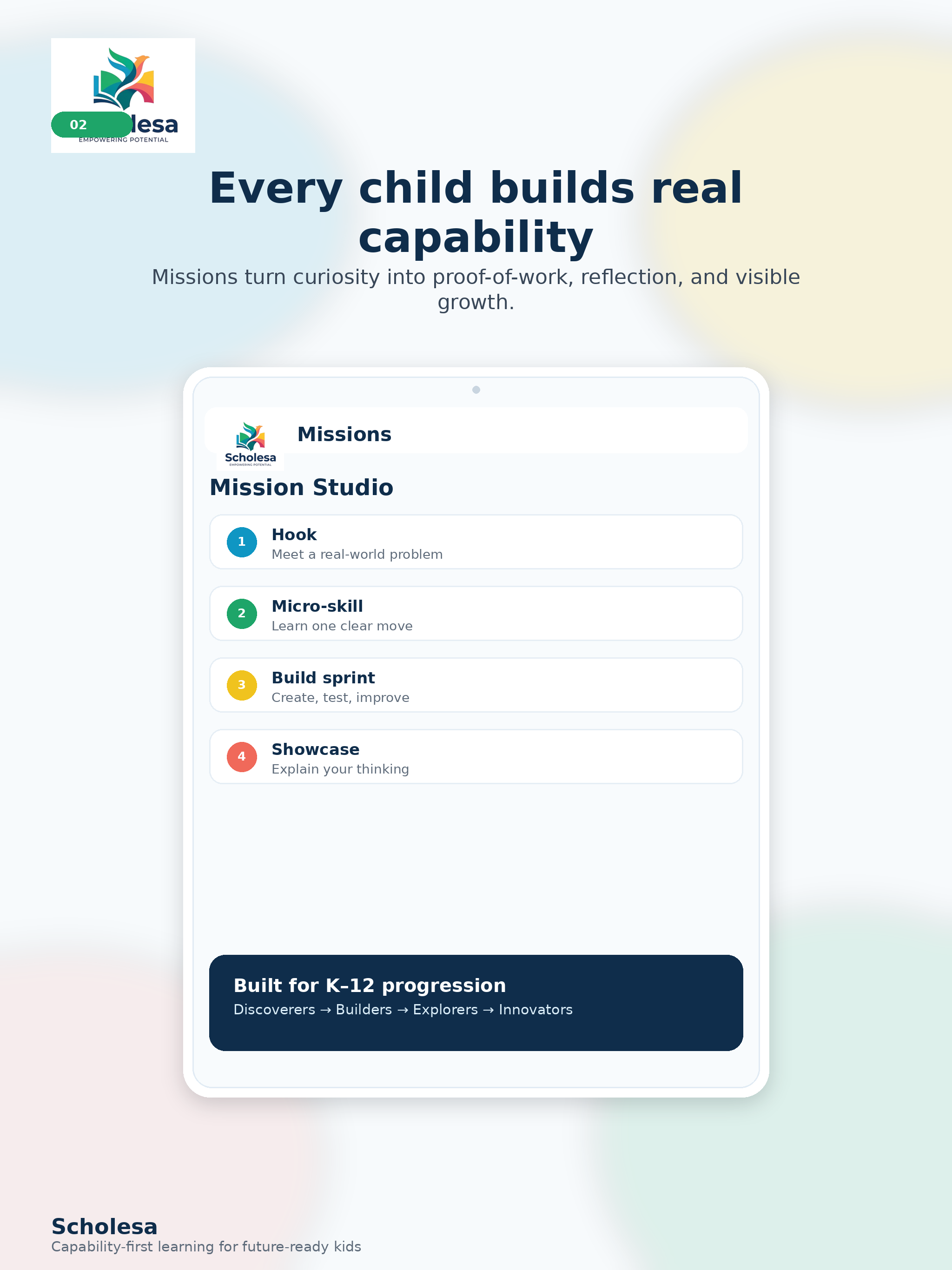
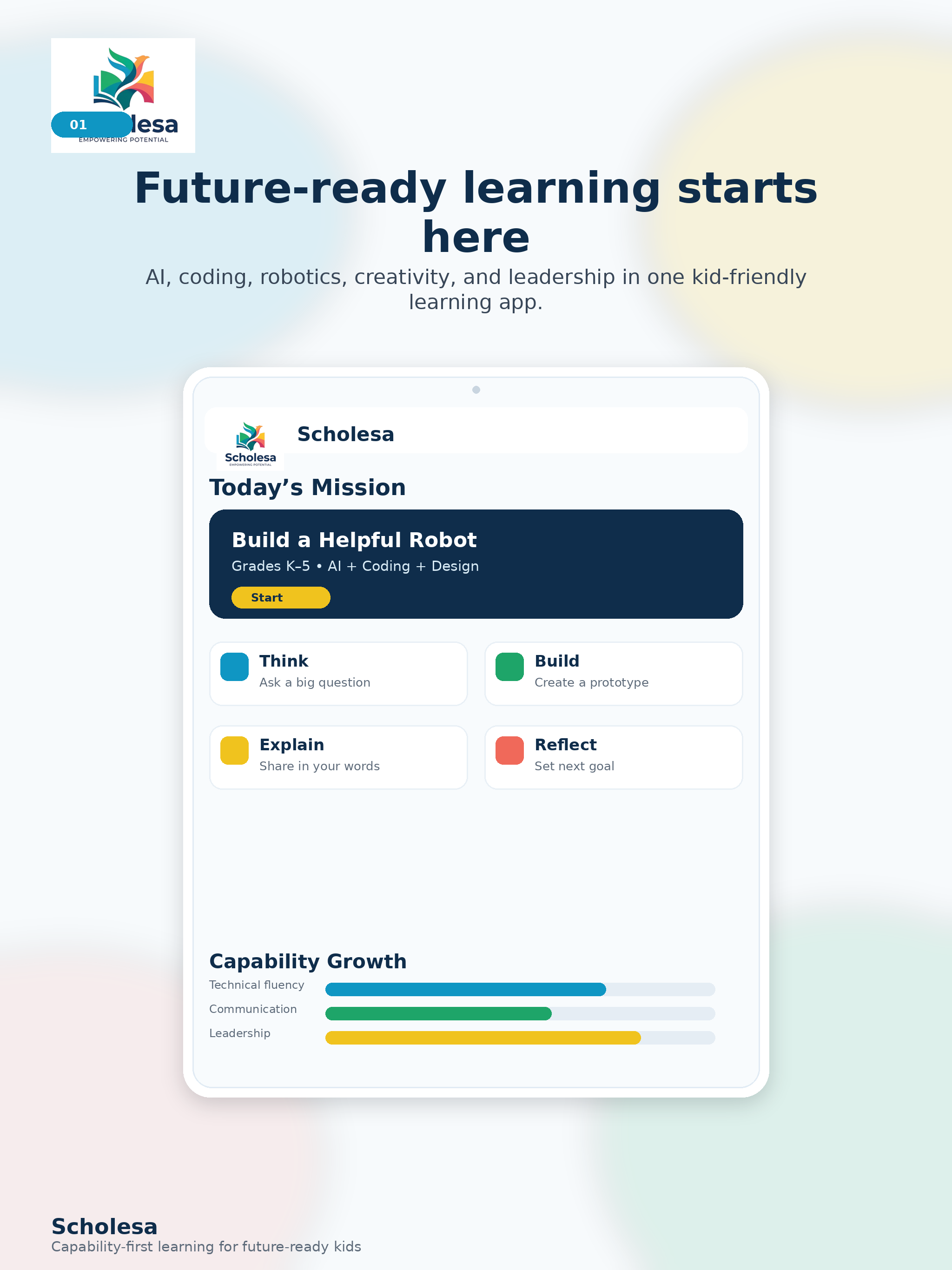
Scholesa is a capability-first AI literacy and innovation platform for K–12 schools. We hand teachers fully scripted, ready-to-run units — slides, rubrics, worksheets, showcase formats — across four grade bands:
- Grades 1–3 — My Helpful Invention Studio: early problem-finding and prototyping
- Grades 4–6 — Eco-Smart City Lab: community challenge design with data and evidence
- Grades 7–9 — AI Media Detective Lab: claims, evidence, bias, and model limitations
- Grades 10–12 — Venture Sprint: MVP testing, unit economics, and investor-style pitches
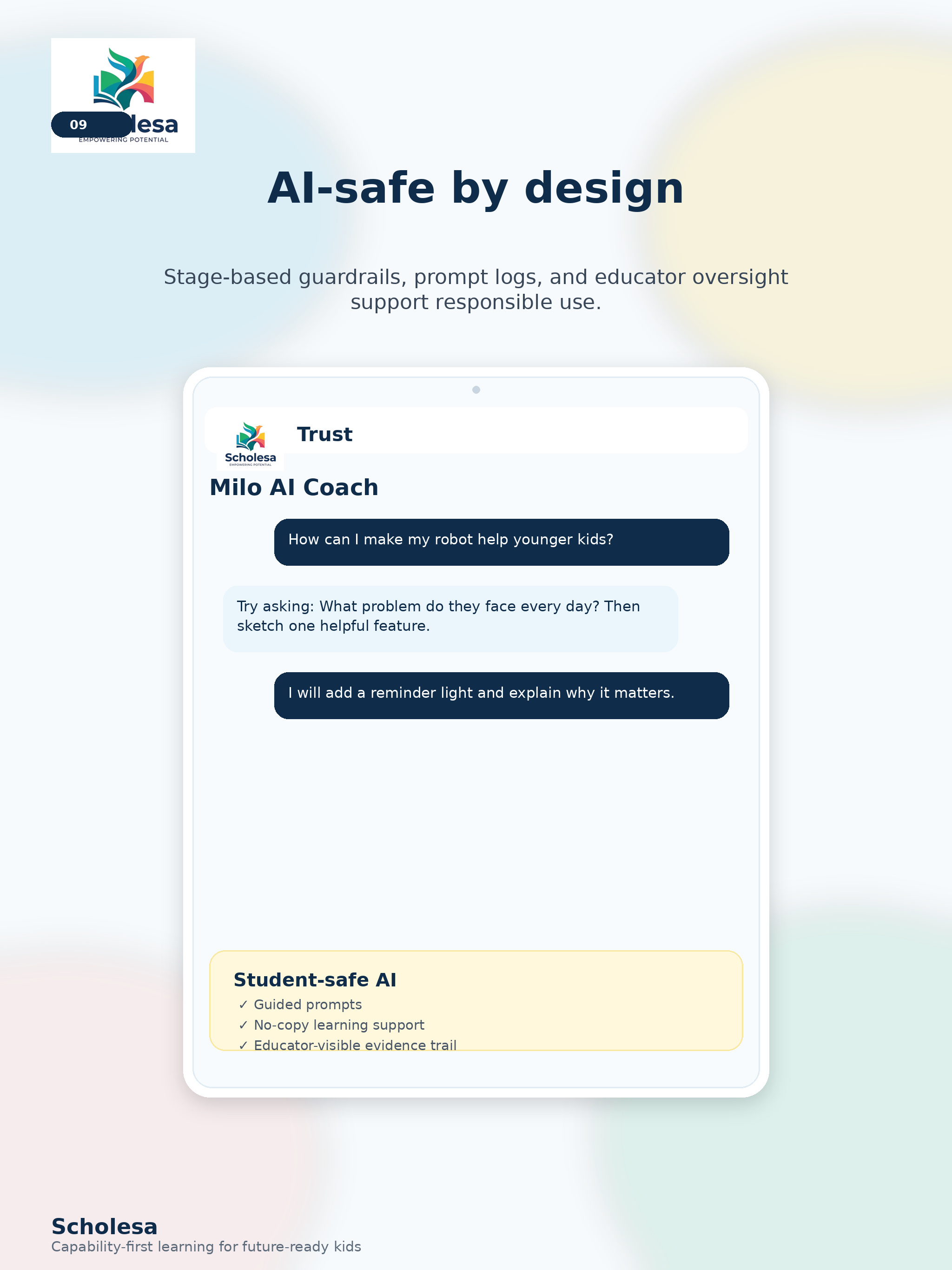
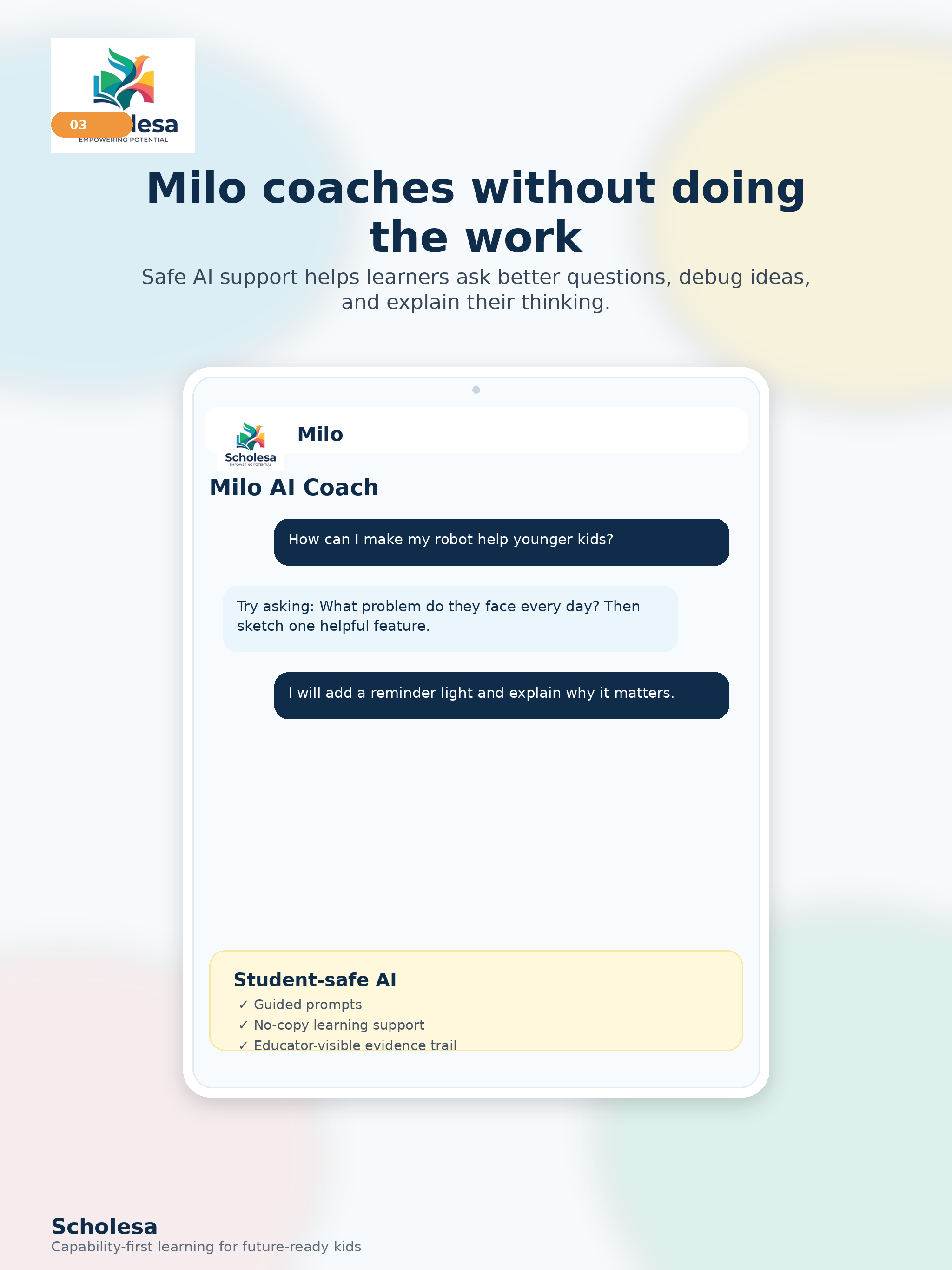
The core promise is "AI as a coach, not a copier." Every unit builds proof-of-work into the design — version history, explain-it-back routines, and ethical-use reflection — so students produce visible, defensible work that families, admissions officers, and future employers can actually see. Schools run pilots at $10–15K, hardware-light, with portfolio-based outcomes that turn AI literacy into measurable capability growth.
How we built it
We built backwards from the classroom, not forward from the technology.
- Pedagogy first. Every session was designed around evidence-aligned principles — belonging, autonomy, retrieval practice, spacing, formative assessment, and Universal Design for Learning — before a single AI tool was named.
- Teacher-readiness as a design constraint. If a unit required more than 20 minutes of prep, we rewrote it. Scripts, slides, and rubrics are shipped together, not as add-ons.
- AI integrity baked into the architecture. Proof-of-work expectations, version history requirements, and explain-it-back routines are structural, not optional.
- Vendor-agnostic tooling. The curriculum runs on common school devices and any major LLM (OpenAI, Anthropic, Gemini) — so schools never get locked in and we never get blindsided by model changes.
- Founder credibility as infrastructure. Simon's 25 years across regulated sectors (banking, healthcare) shaped our privacy and safeguarding posture from day one. Shen-Yu's decade of international BD shaped the pilot-first, relationship-led sales motion.
Challenges we ran into
- The "future skills" noise problem. The EdTech category is drowning in vague promises. Standing out meant building real, defensible artifacts — not slide-deck claims.
- Teacher time scarcity. Teachers don't need more inspiration; they need fewer decisions. Every iteration of the curriculum had to reduce cognitive load, not add to it.
- AI integrity vs. AI usefulness. Designing units where students genuinely use AI without letting it replace their thinking required entirely new pedagogical patterns — there were no templates to copy.
- Long school sales cycles in a short startup runway. Schools buy slowly; startups burn fast. We had to engineer a pilot-first model that respected school decision-making without starving the company.
- Building a two-person company that looks ready to schools. Privacy documentation, contracts, safeguarding policies — all the trust infrastructure of a large vendor, shipped by two founders.
Accomplishments that we're proud of
- A complete K–12 curriculum already exists — four full grade-band units, scripted end-to-end, with rubrics and showcase formats. Most pre-seed EdTech companies pitch a deck. We pitch a product.
- A defensible pedagogical moat. "AI as a coach, not a copier" isn't a slogan — it's an architecture, and it's ours.
- Founder-led credibility. A university CS professor and an international BD operator building the company themselves — capital efficiency from day one.
- A clear, honest beachhead. 364 B.C. independent schools, named buyer personas, realistic pilot pricing, and a 60% conversion-to-license target grounded in conversation-based assumptions.
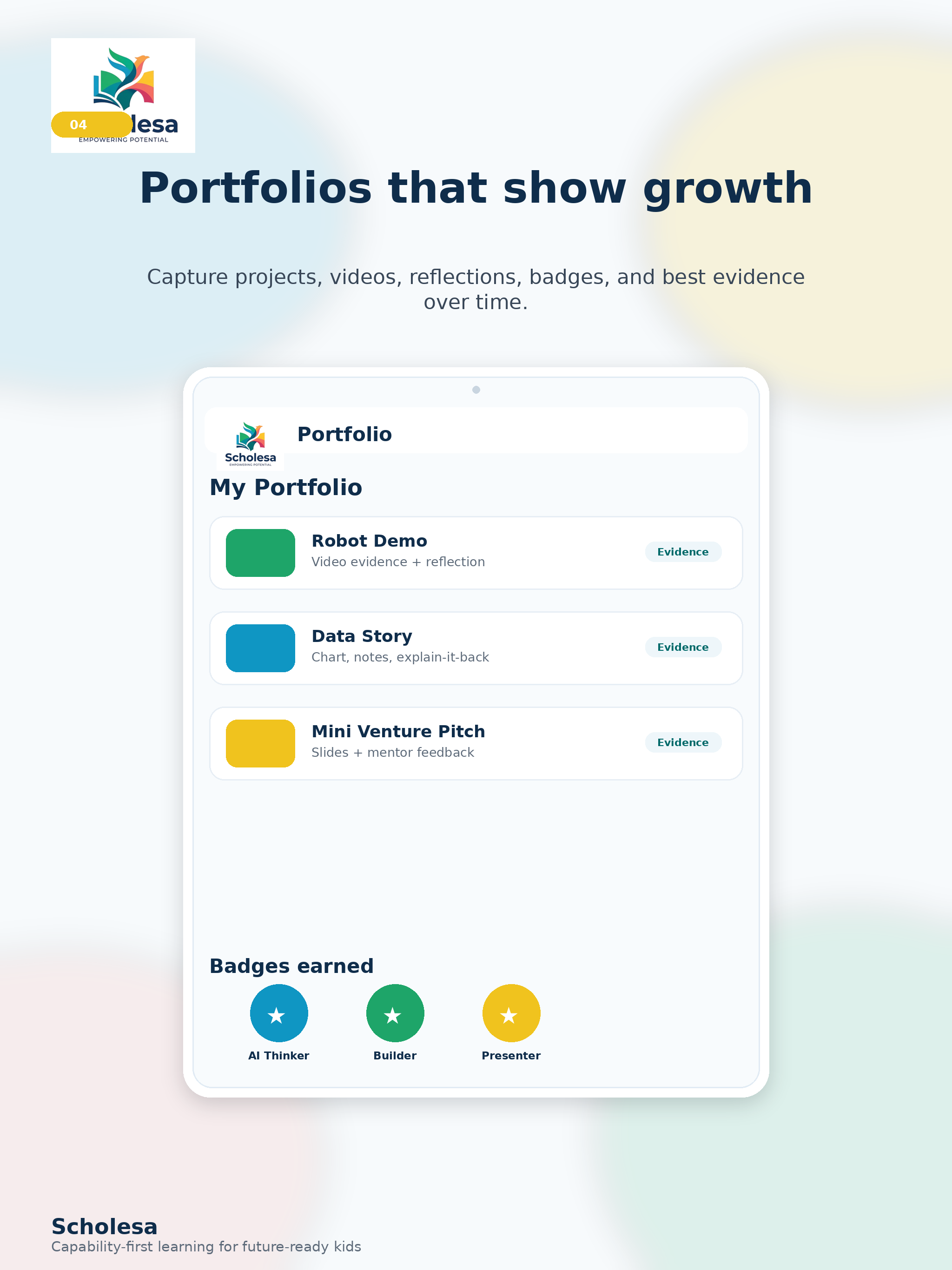
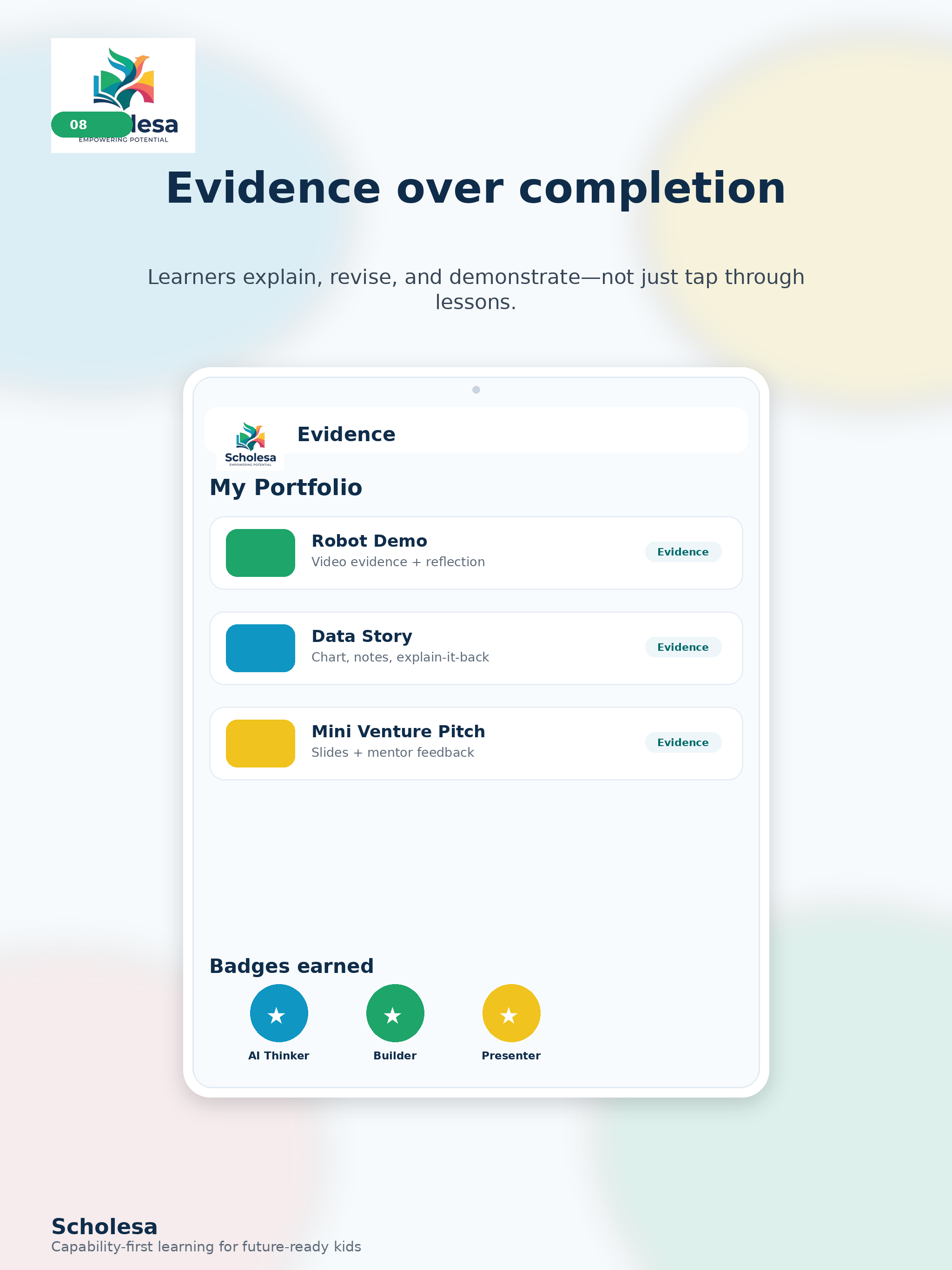
- A portfolio-first definition of success. We measure outcomes by what students can show — photos, videos, code, lab books, decks — not by completion checkboxes.
What we learned
- Schools don't buy curriculum. They buy implementation. The product isn't the lesson plan — it's the confidence that a teacher can run it on a Tuesday morning without a specialist standing next to them.
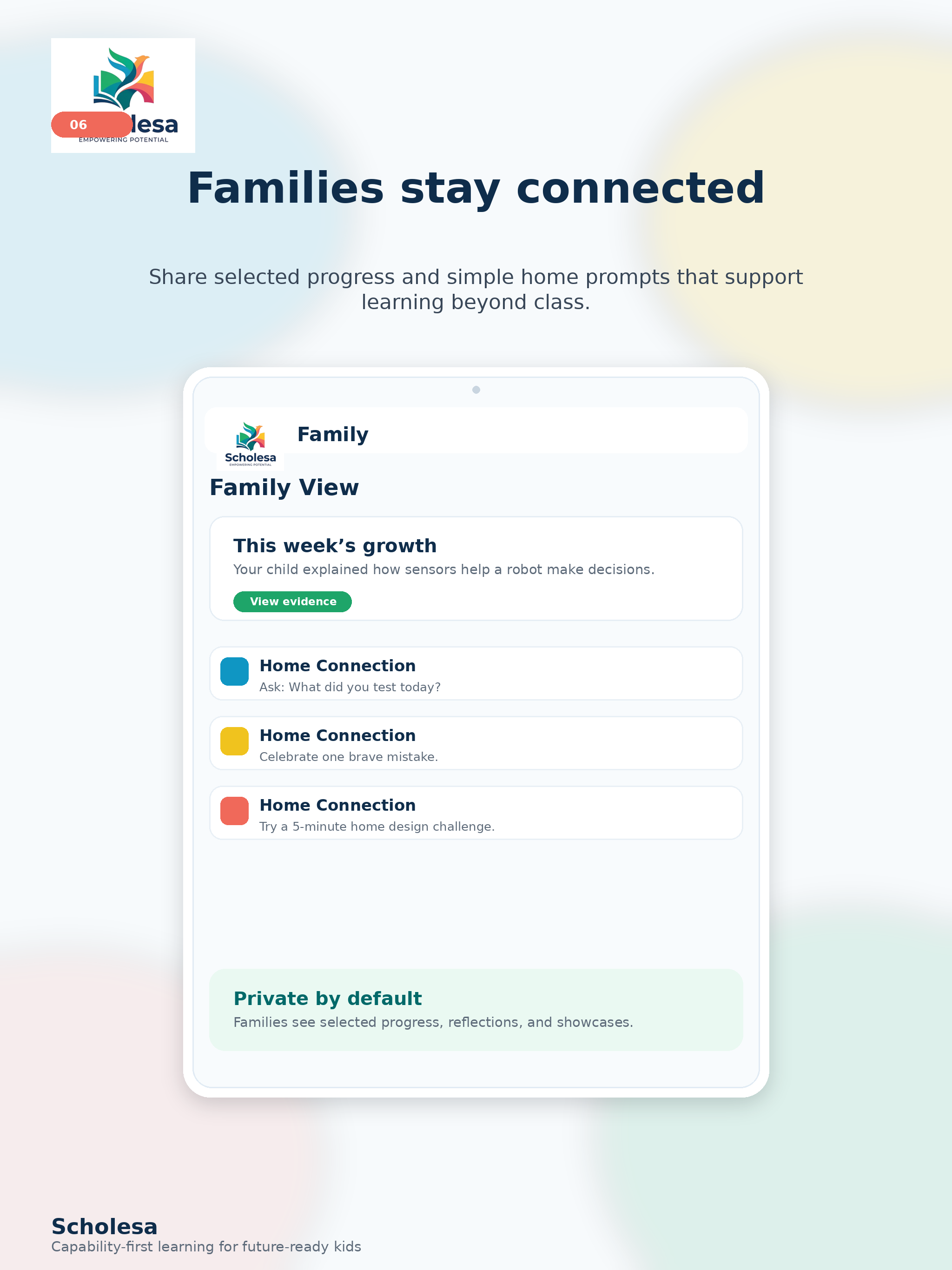
- Parents are the silent power buyers. Visible student work moves families faster than any test score. Showcases convert better than brochures.
- "AI safety" is a procurement word, not a pedagogy word. Schools need our privacy posture before they care about our learning outcomes. Trust comes before transformation.
- Pilot economics teach you everything. A $10–15K pilot reveals more about a school's decision process, internal politics, and renewal logic than ten discovery calls.
- Founder-led sales is the moat in education. This is a relationship market. Outsourcing trust doesn't scale — earning it does.
What's next for Scholesa Education
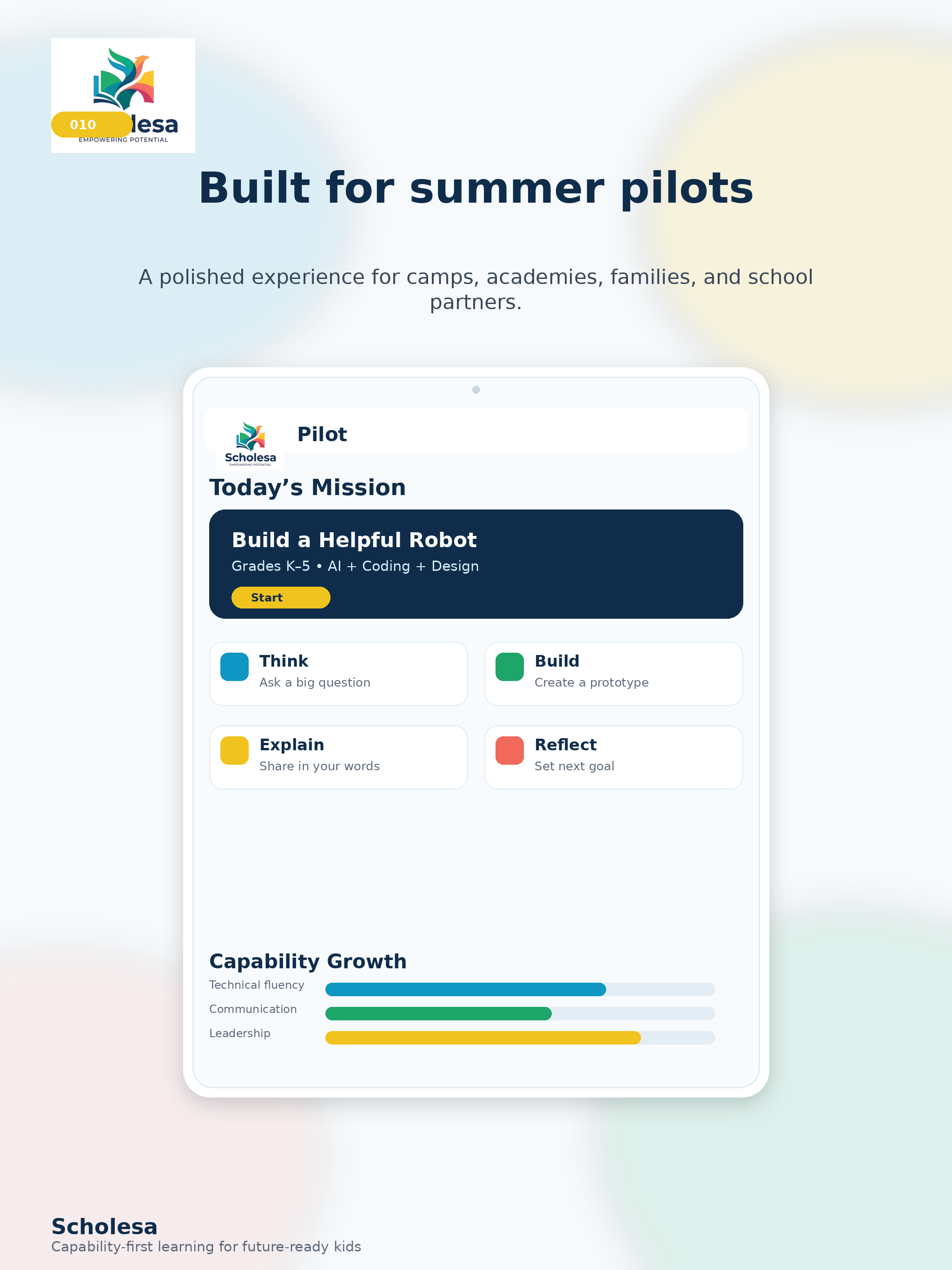
- Convert warm interest into signed pilots. Close the first paid B.C. pilots in the next 60 days, with showcase-quality delivery and reference-able case studies. Pilot this summer in July.
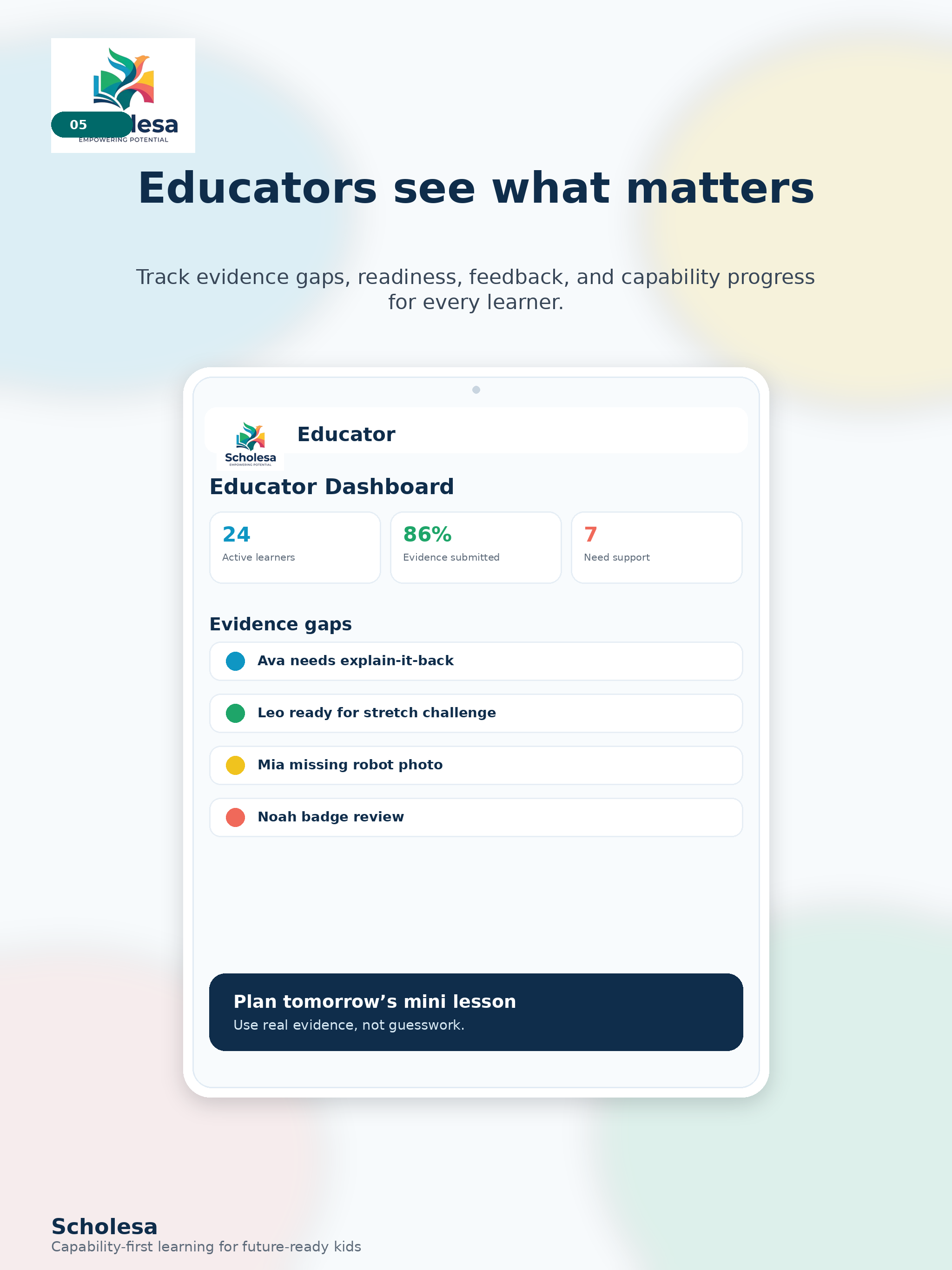
- Build the teacher dashboard and assessment layer. Move from scripted units to a platform that reports student capability growth back to schools and families.
- Expand the wedge. Deepen the Grades 7–9 AI Media Detective Lab and Grades 10–12 Venture Sprint into multi-year tracks with badges and portfolio credentials.
- Open the partner channel. After-school operators, enrichment networks, and innovation partners as a non-school distribution layer.
- Year-2 international expansion. Documented GTM path into England and United States, leveraging Shen-Yu's cross-border BD experience.
- The bigger vision. Become the credentialing layer for the AI generation — the place where a student's capability to think, build, and ship alongside AI is captured, verified, and recognized by schools, universities, and employers worldwide.
Built With
- antigravity
- gcp
- gemma
- personal-modeling
- postgresql

Log in or sign up for Devpost to join the conversation.