-
-
-
-
-
-
-
-
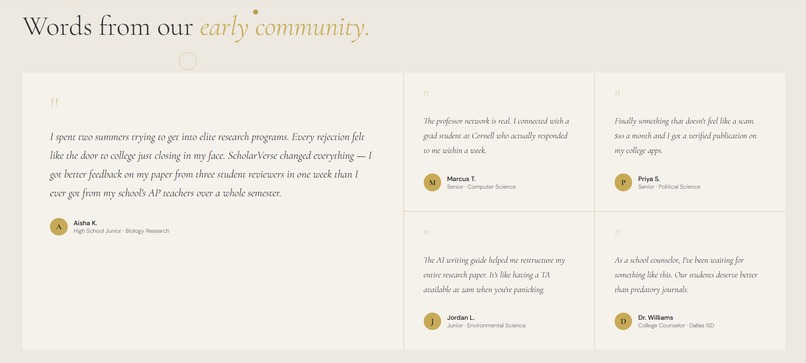
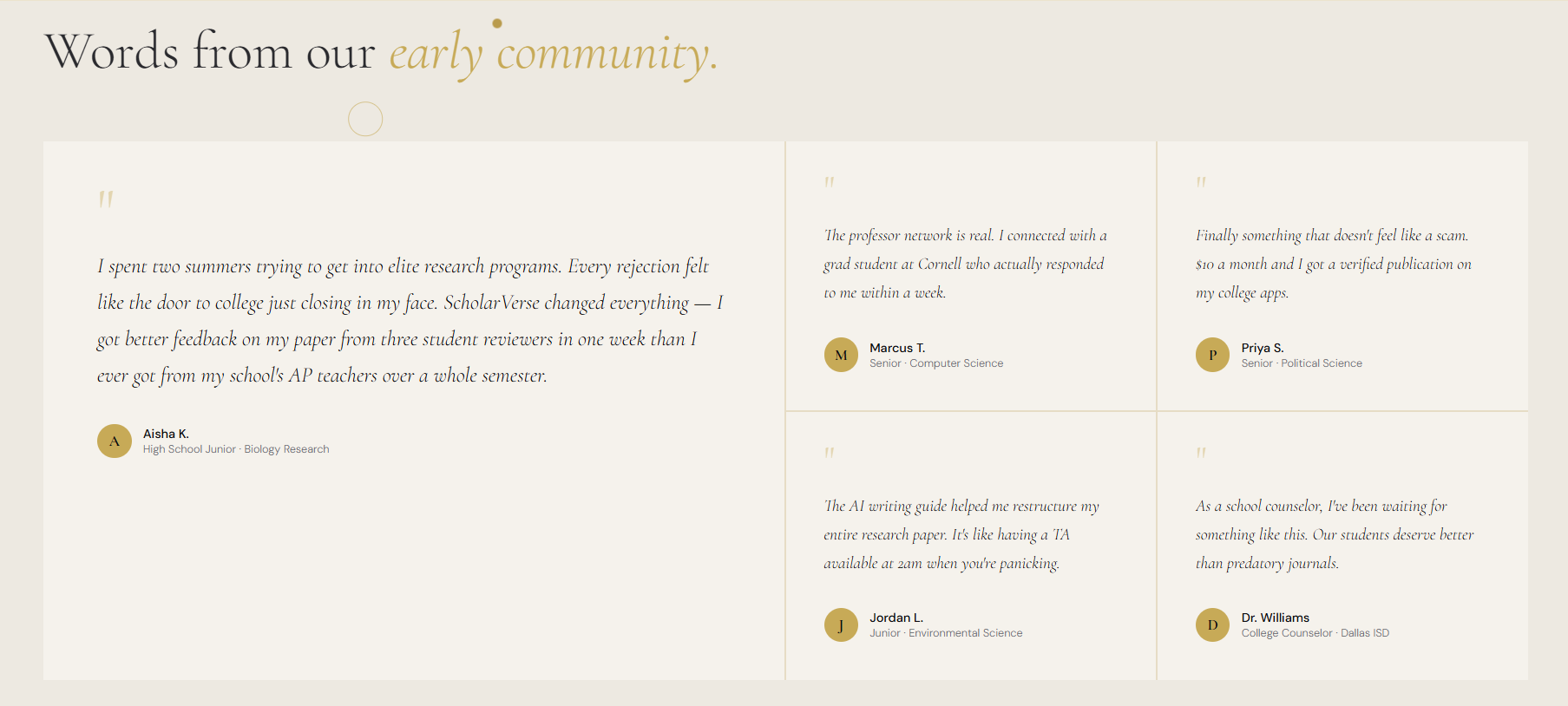
example testimonials
-
-
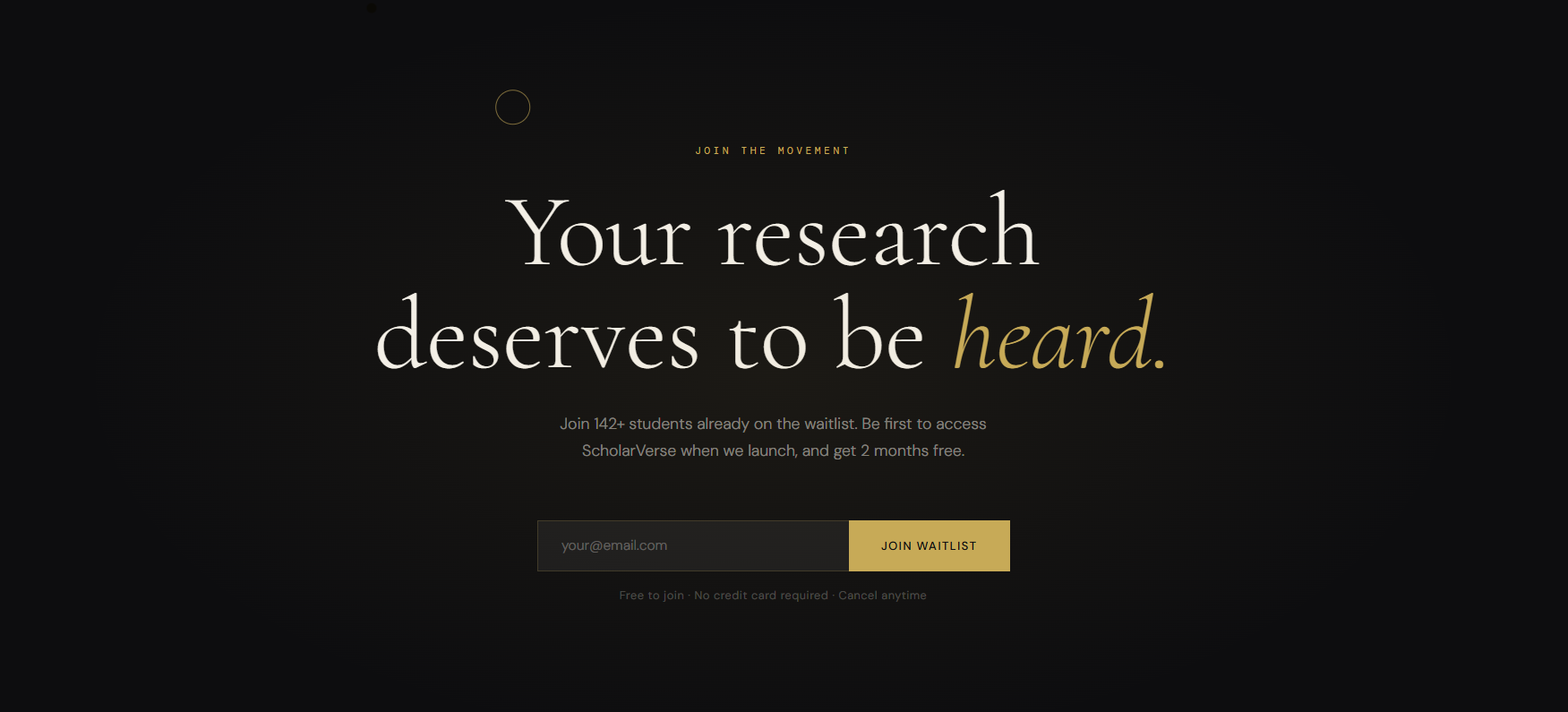
ScholarVerse: Project Story
Inspiration
Every year, hundreds of thousands of high school students sit down to work on research, not because they have to, but because they genuinely want to. They want something real to put on their college applications. They want to contribute something meaningful to a field they care about. They want to know if their ideas actually hold up.
And almost all of them hit the same wall.
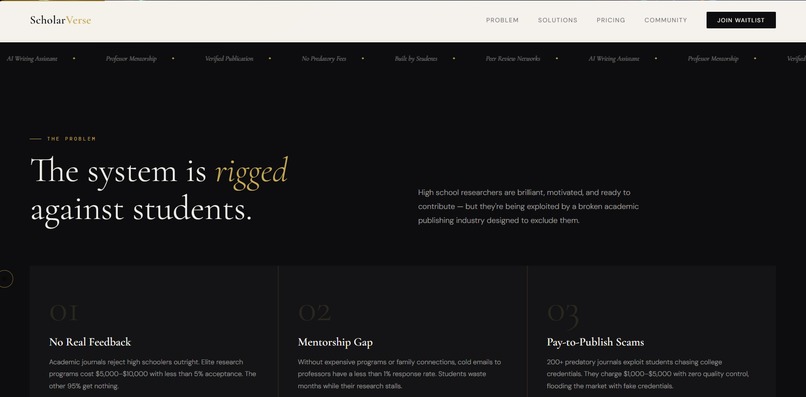
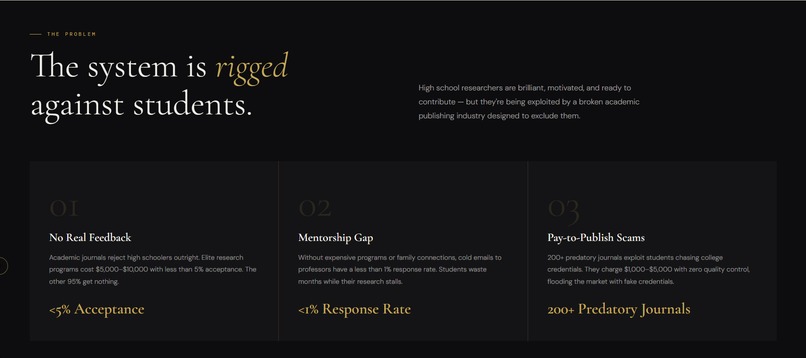
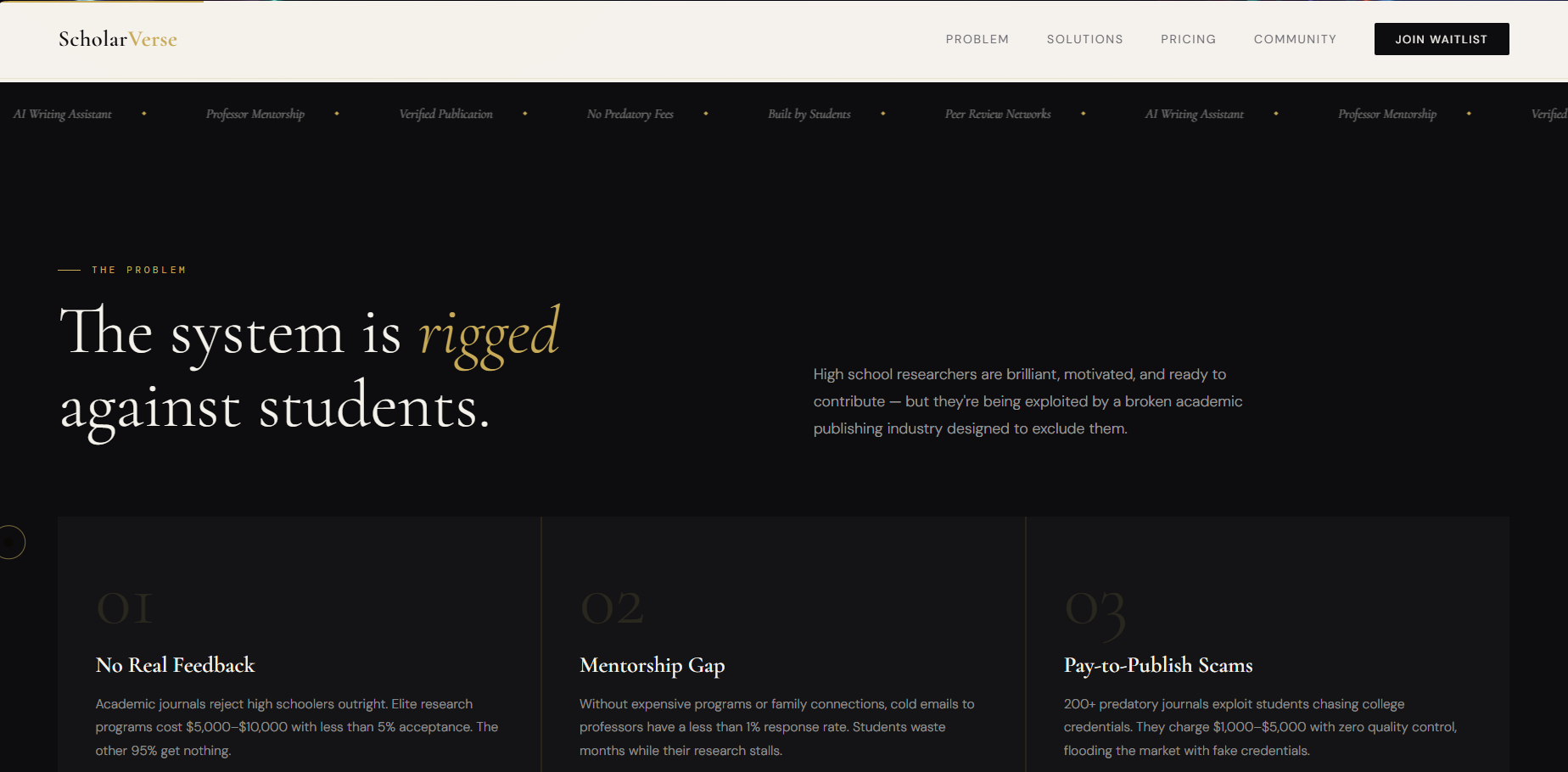
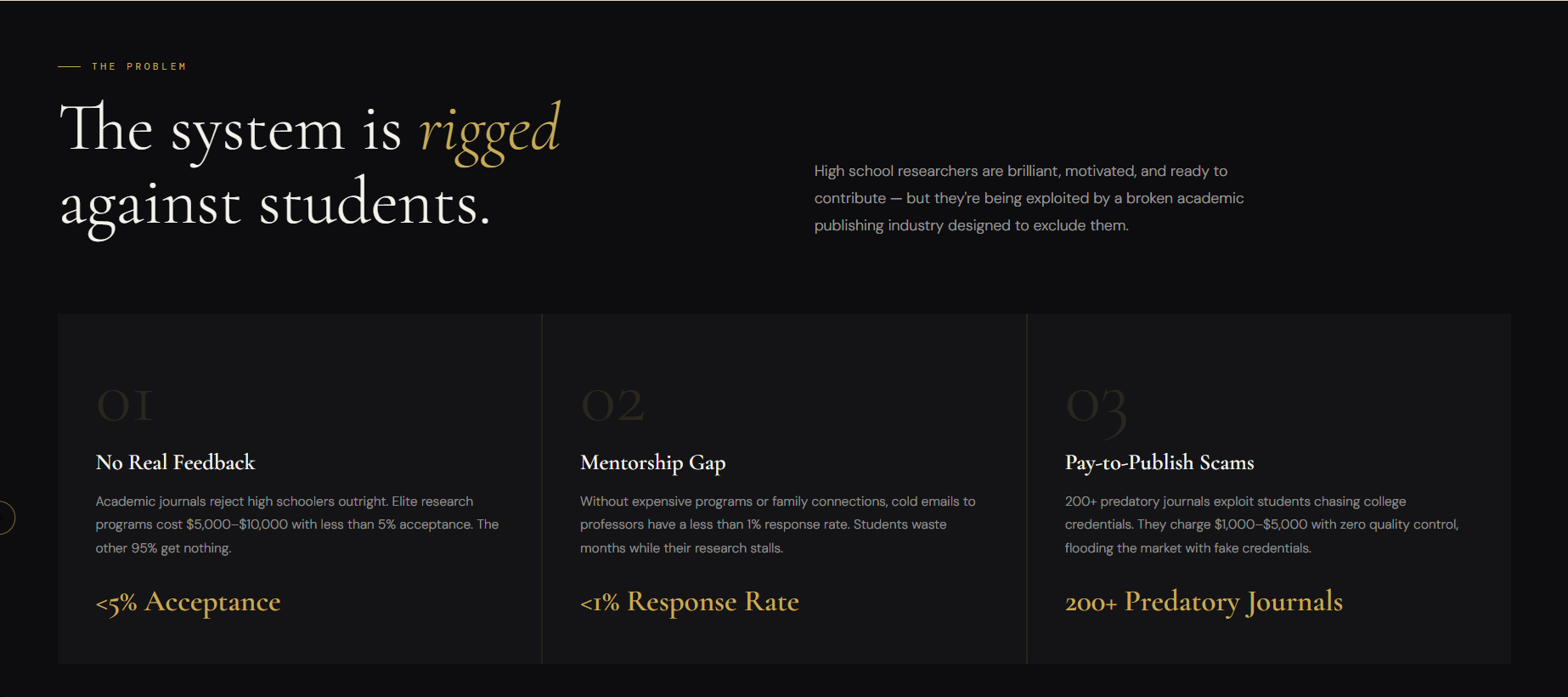
The legitimate research programs cost $5,00 to $10,000 and accept less than 5% of applicants. Cold emails to professors go unanswered, response rates sit below 1%. And then there are the "journals" that flood search results when a student types "how to publish high school research", offering a publication credit for $1,000, $2,000, sometimes $3,500. No real review. No feedback. Just a credential that looks real and means nothing.
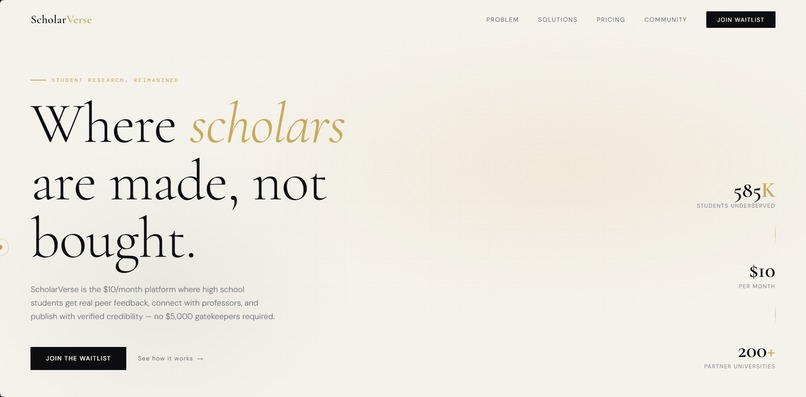
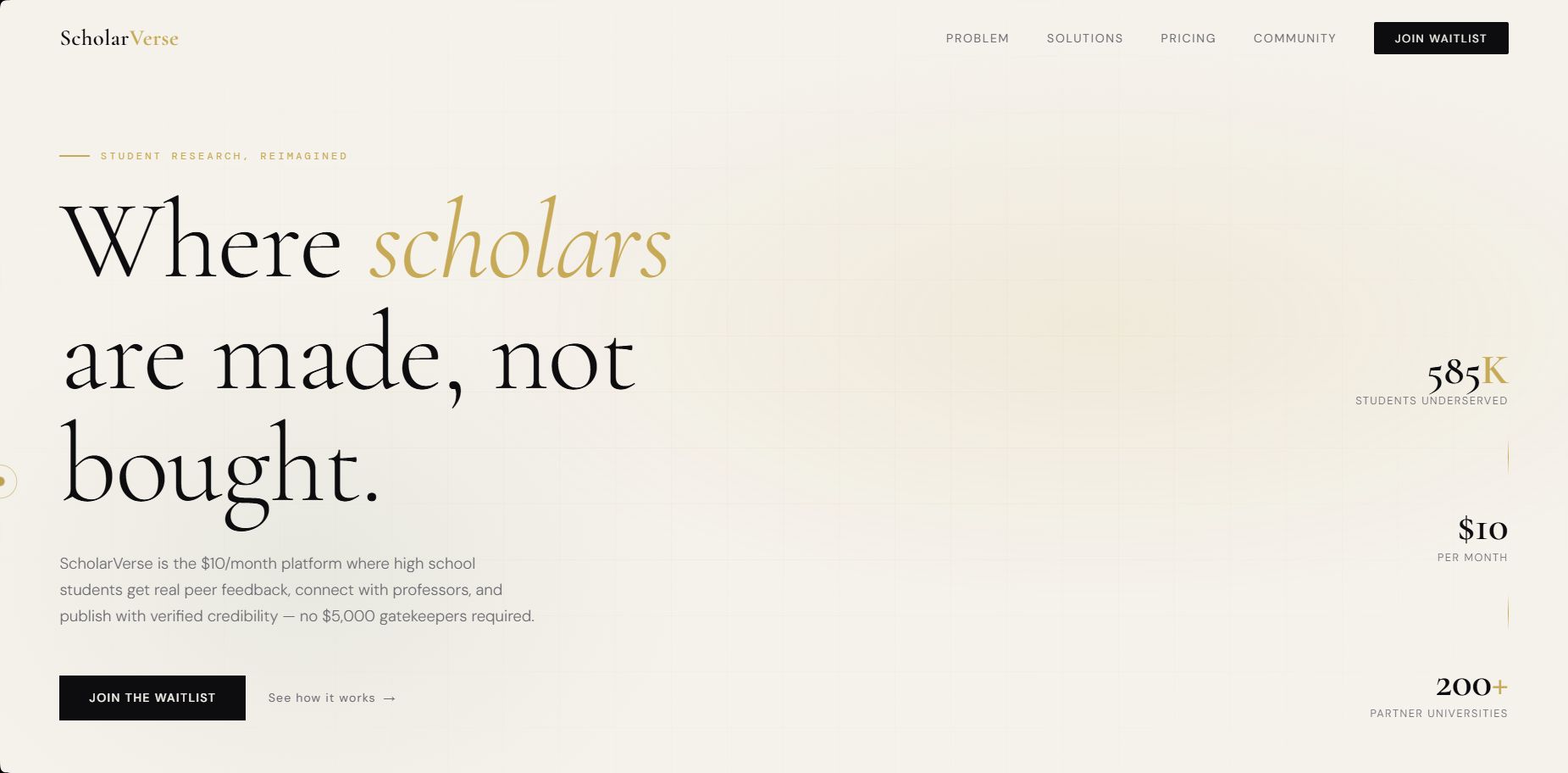
585,000 juniors and seniors in the US pursue serious research or advanced writing every year. Most of them are stuck with the same broken choice: pay a predatory journal for a fake credential, or get nothing at all.
That's the gap ScholarVerse was built to close. Students shouldn't have to choose between being exploited and being ignored.
What I Learned
The biggest thing I learned is that the problem isn't that students can't write good research. Most of them can. The real gap is verification, there's no affordable, credible way for a high schooler to prove their work is legitimate.
Predatory journals have figured out how to exploit exactly that gap. Over 200 of them have already been identified, and they specifically target high school students who are anxious about college applications and willing to pay almost anything for a credential that looks real. The academic publishing industry generates over $10 billion in annual revenue, built largely on gatekeeping that serves publishers, not researchers.
I also learned that mentorship has a distribution problem, not a supply problem. There are thousands of grad students and professors who genuinely want to work with motivated high school students. The problem is there's no trust infrastructure connecting them. Cold emails don't work. Expensive programs have a 5% acceptance rate. ScholarVerse is the infrastructure that was missing.
And I learned that peer review, done right, is a flywheel. Every new student who joins and reviews work makes the feedback better for everyone already there. The platform gets more valuable as it grows, which means unit economics improve with scale rather than deteriorating. Peer to peer means no paid reviewers and near zero marginal cost per user.
How We Built It
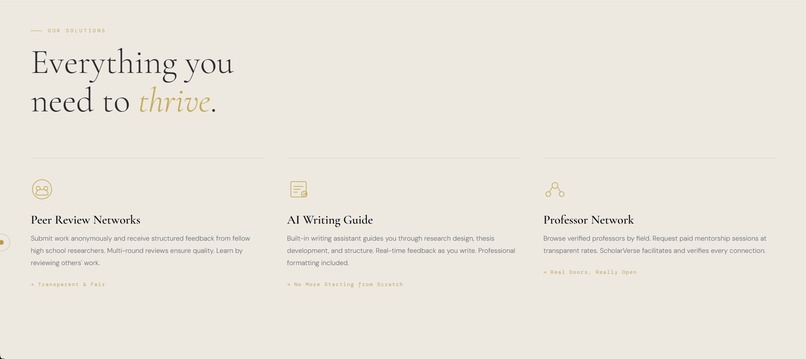
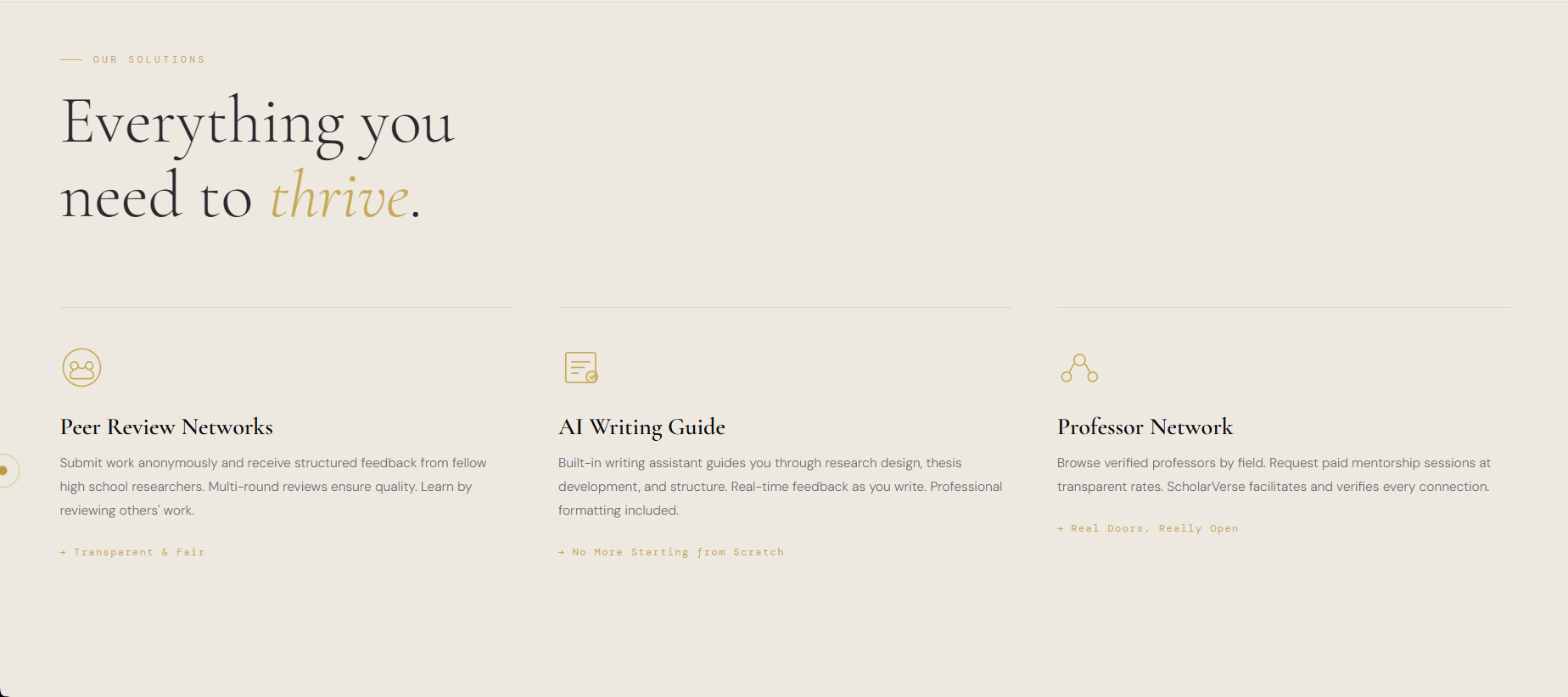
ScholarVerse maps directly to the three problems students face.
The feedback problem → Peer Review Networks
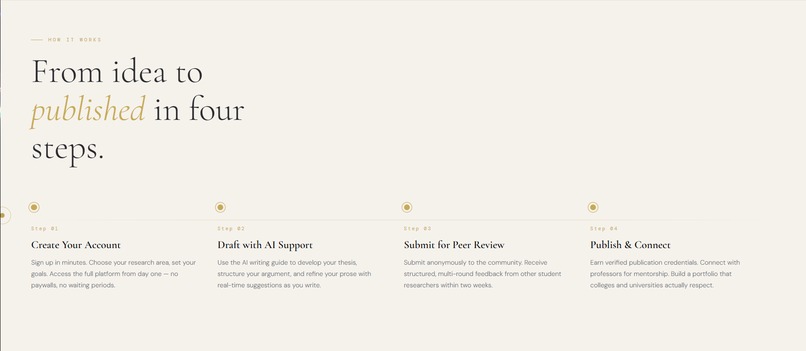
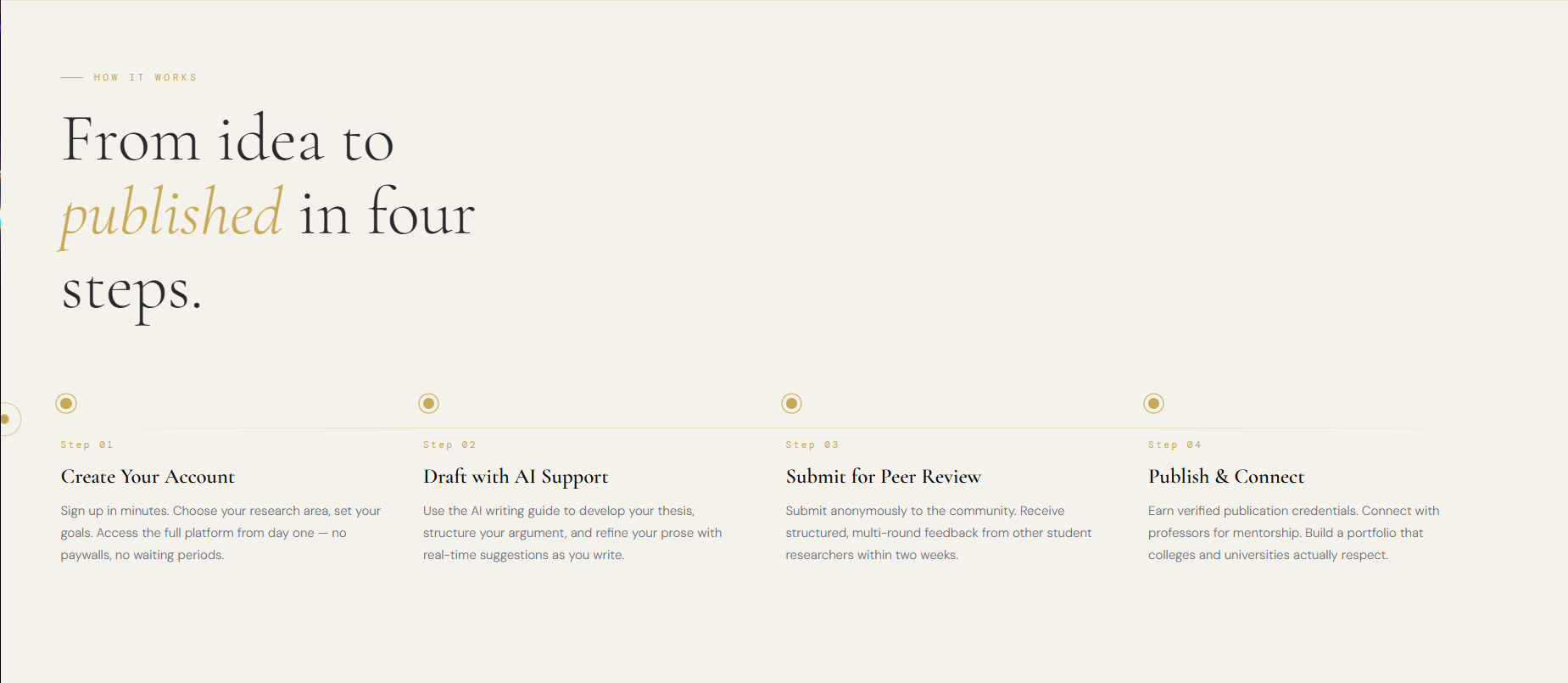
Students submit work anonymously. Other community members review it using a structured rubric, methodology, argument clarity, originality, citation quality. Multi round feedback ensures quality improves over time. Everyone learns by reviewing others' work. It's transparent, fair, and actually designed to make writing better, not just stamp it with approval.
The mentorship problem → Professor Network
A verified directory of professors and grad students, organized by field and research area. Students can browse, filter by topic, and request paid mentorship sessions at rates set by the mentor. ScholarVerse facilitates and verifies every connection and takes a 20% commission on sessions booked through the platform. No cold emails. No gatekeeping programs. No family connections required.
The credibility problem → AI Writing Guide + Verified Publication
A built in AI writing assistant guides students through the full research process, topic scoping, thesis development, structure, drafts, and revision. When a paper clears peer review, it earns a verified publication credential: not just a badge, but a full audit trail showing the review history, rubric scores, reviewer credentials, and revision count. Colleges can evaluate the process, not just the outcome.
The business model
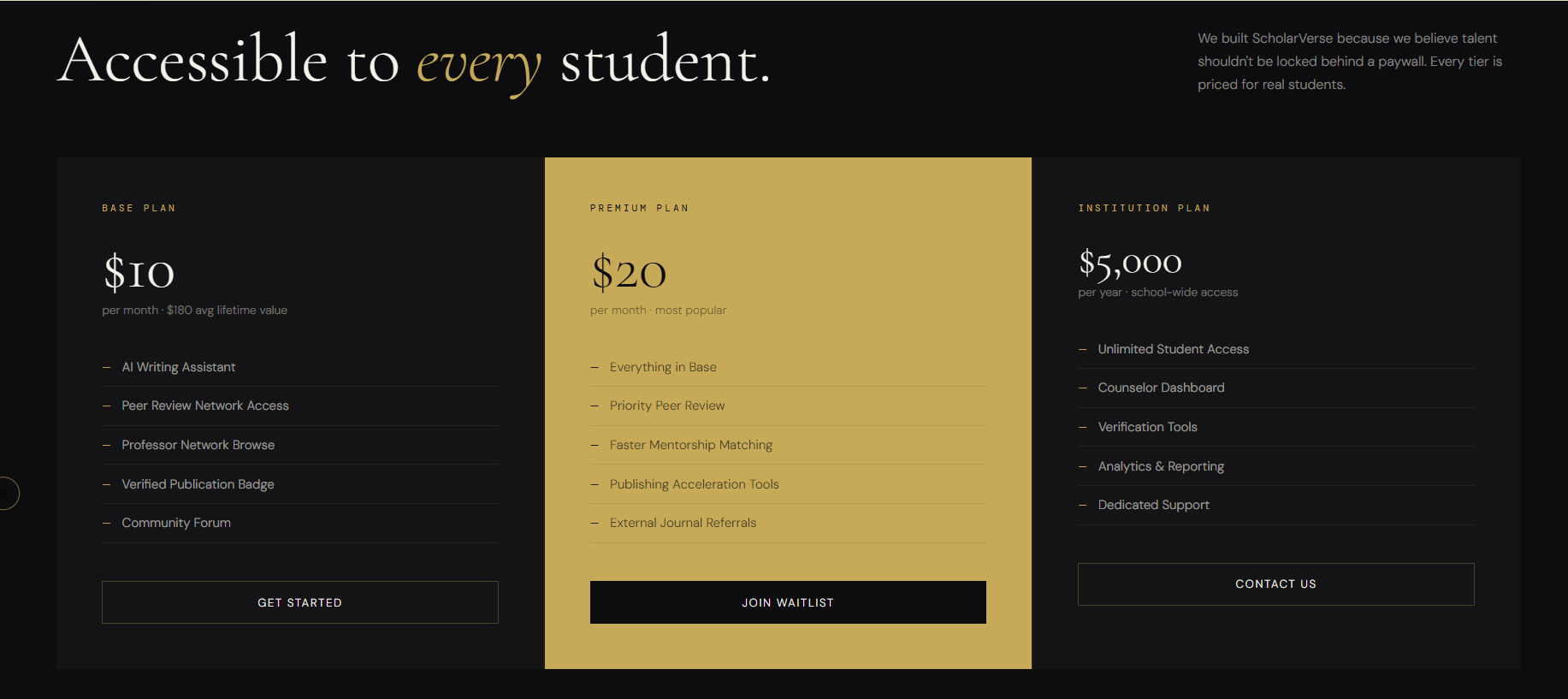
Three revenue streams built for sustainability:
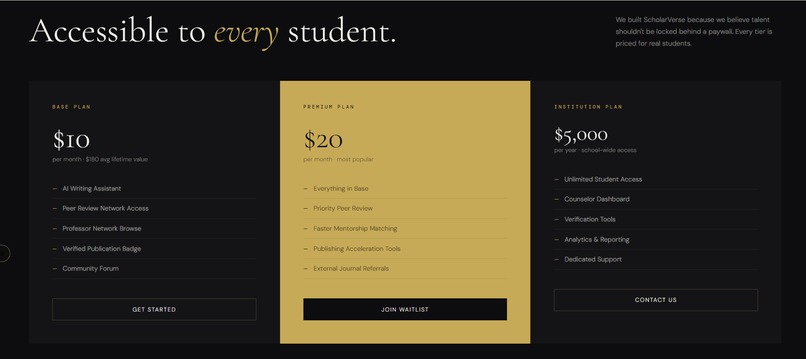
- Base plan: $10/month per student:- AI writing assistant, peer review access, professor network, verified publication badge
- Premium plan: $20/month:- priority review, faster mentorship matching, publishing acceleration tools, external journal referrals
- Institutional plan: $5,000/year per school:- site wide student access, counselor dashboard, and verification tools
On top of subscriptions, a 20% commission on mentorship sessions and a 10% fee on partner journal publication packages. Customer acquisition cost sits at $7.36, far below the $100 industry baseline because network effects drive word of mouth rather than paid advertising.
We're seeking $280,000 to build the platform and acquire the first 2,000 students.
Challenges
The cold start problem
A peer review platform with no users is useless. A professor network with no professors is useless. Getting both sides of a two sided marketplace to show up before you have critical mass is genuinely hard.
The approach: lead with the professor side first. Students will trust the platform when professors are already on it, credibility flows downward. Grad students have the most to gain: mentorship income, resume building experience, and access to motivated students they'd otherwise never find. Starting there builds the trust layer that makes the student side work.
Defining what "verified" actually means
If ScholarVerse is competing against predatory journals, it has to answer an obvious challenge: why should anyone trust this more than them?
The answer is transparency. A ScholarVerse publication credential includes the full review history, reviewer credentials, rubric scores, and revision count, publicly visible alongside every published paper. The credential isn't just "published." It's auditable. Colleges can see exactly what happened. That's something no pay to publish journal can offer, because their process doesn't hold up to scrutiny.
Making something students actually trust with their academic work
Students are cautious, and rightfully so. They've seen enough predatory journals to know that "affordable publication platform" can be a red flag. Building genuine trust means being radically transparent about how reviews work, who the reviewers are, and what the credential actually represents. That's a slower path than just launching and hoping, but it's the only path that leads somewhere real.
What's Next
- Beta launch with 500 students across 10 high schools in DFW and the Greater Toronto Area
- Professor onboarding targeting 50 verified mentors across STEM, humanities, and social sciences by Q3 2026
- ScholarVerse Index a public leaderboard of the most reviewed, highest rated student research by field, making serious student work discoverable for the first time
- $280,000 seed round to fund product development, professor partnerships, and first 2,000 student acquisitions

Log in or sign up for Devpost to join the conversation.