-
-
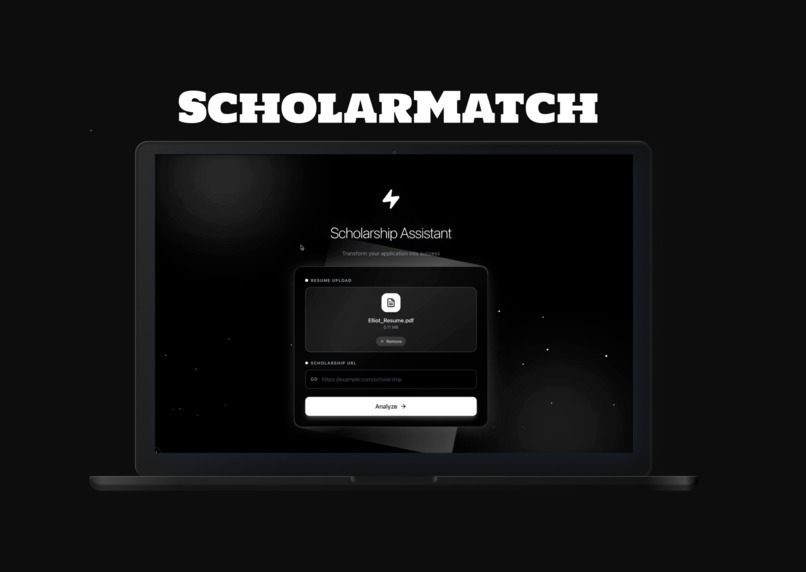
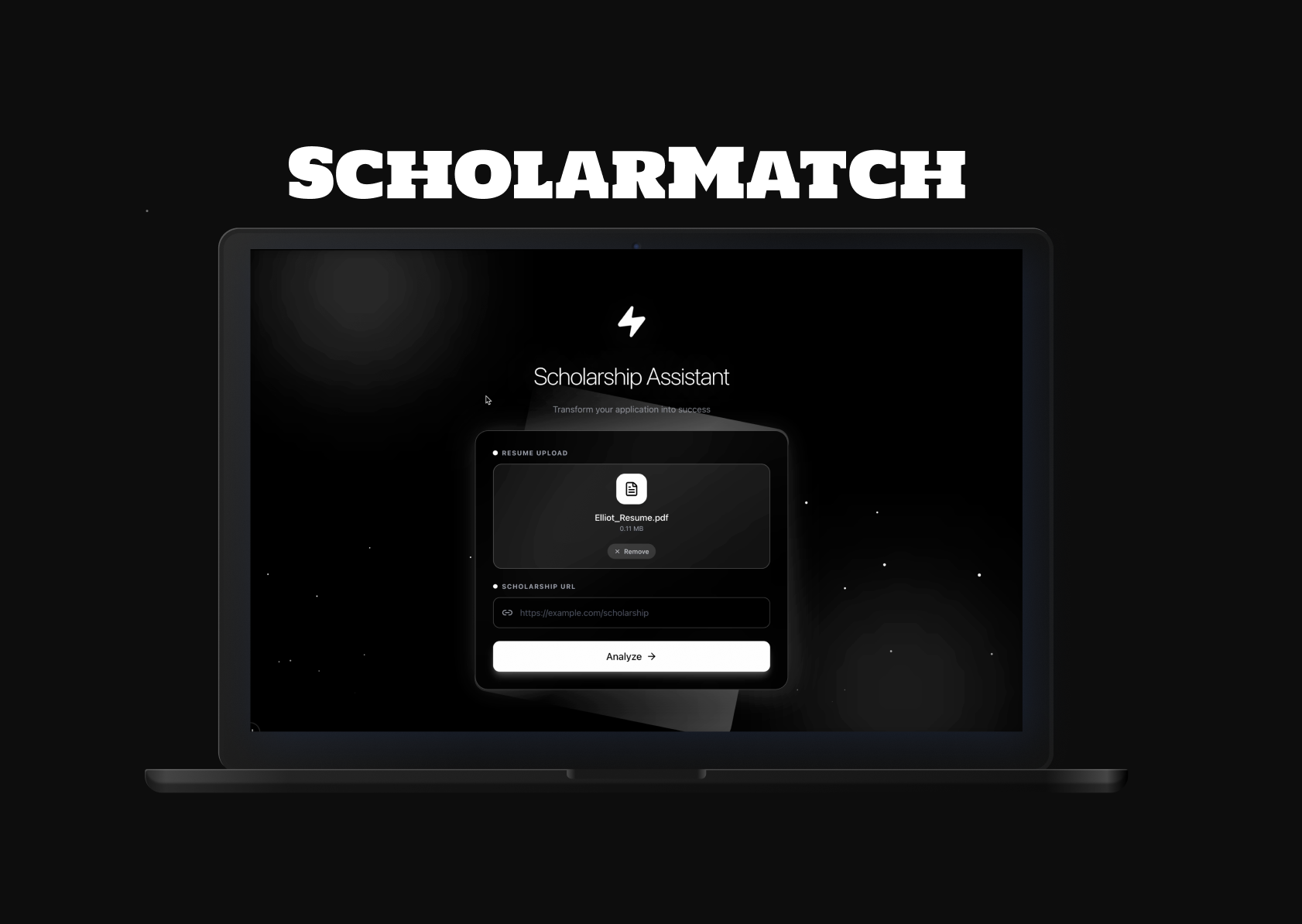
Enternace
-
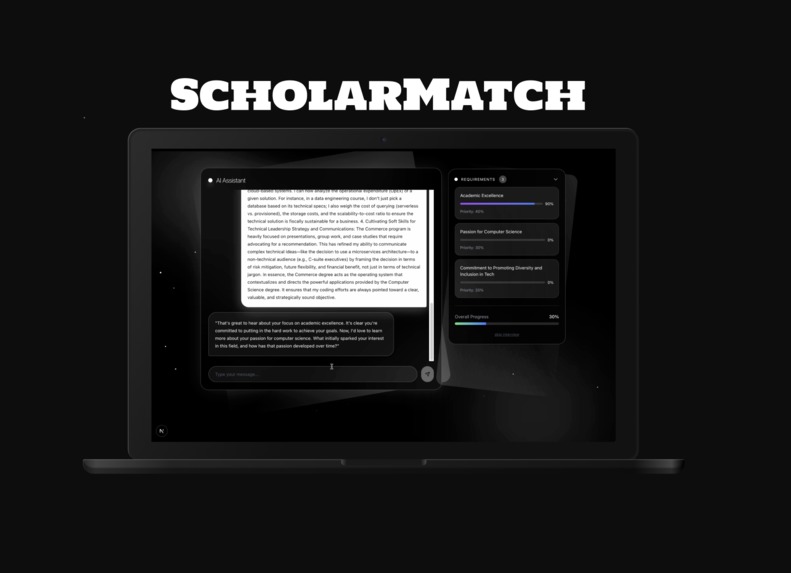
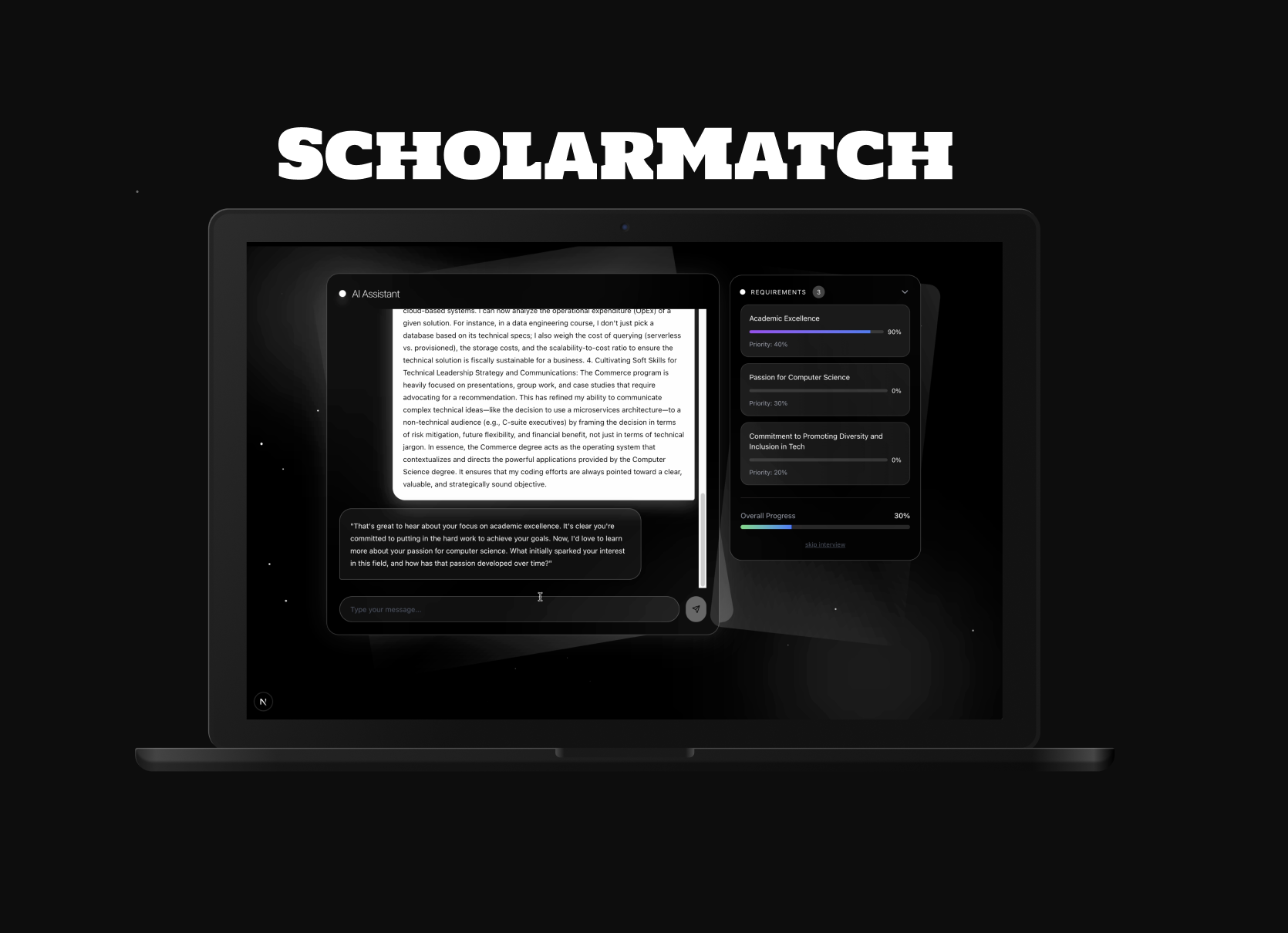
Asking user more story that we can use in application
-
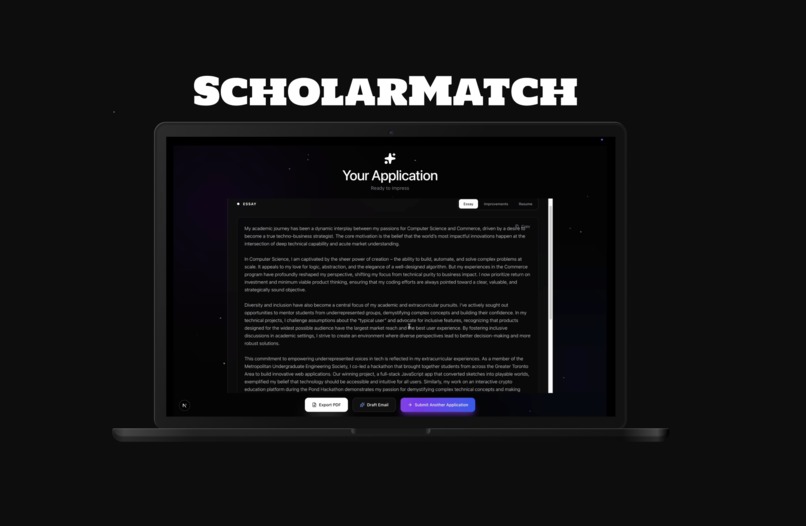
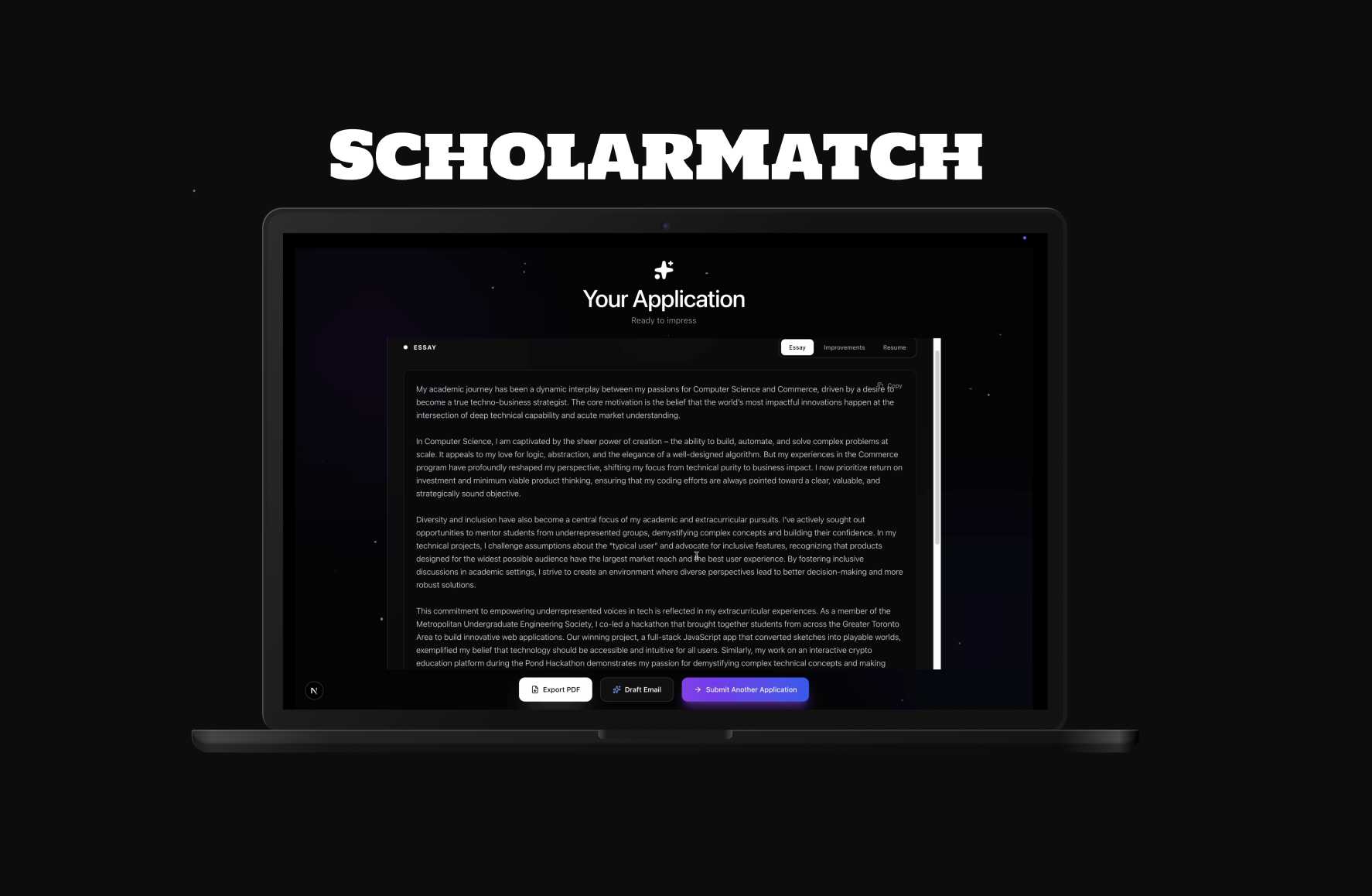
Application essay
-
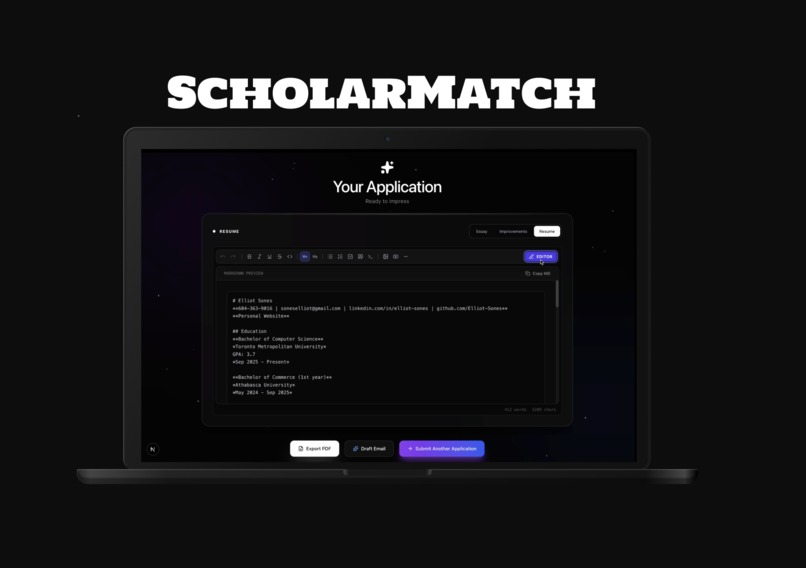
Enhanced resume
-
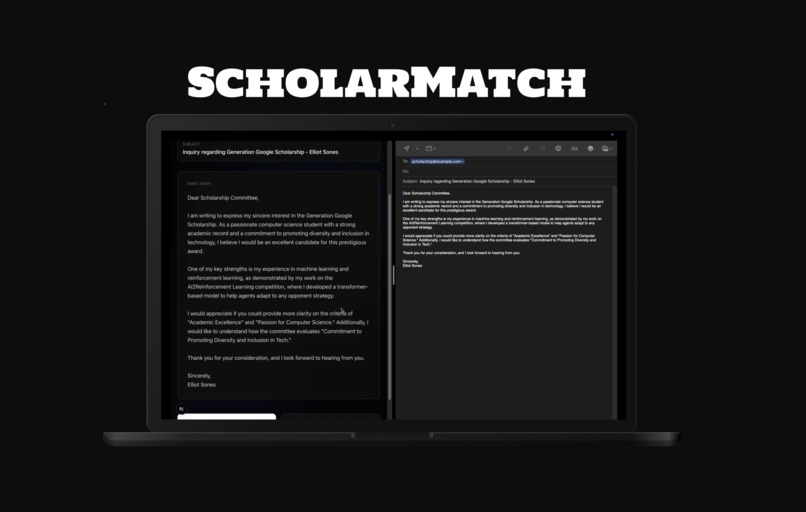
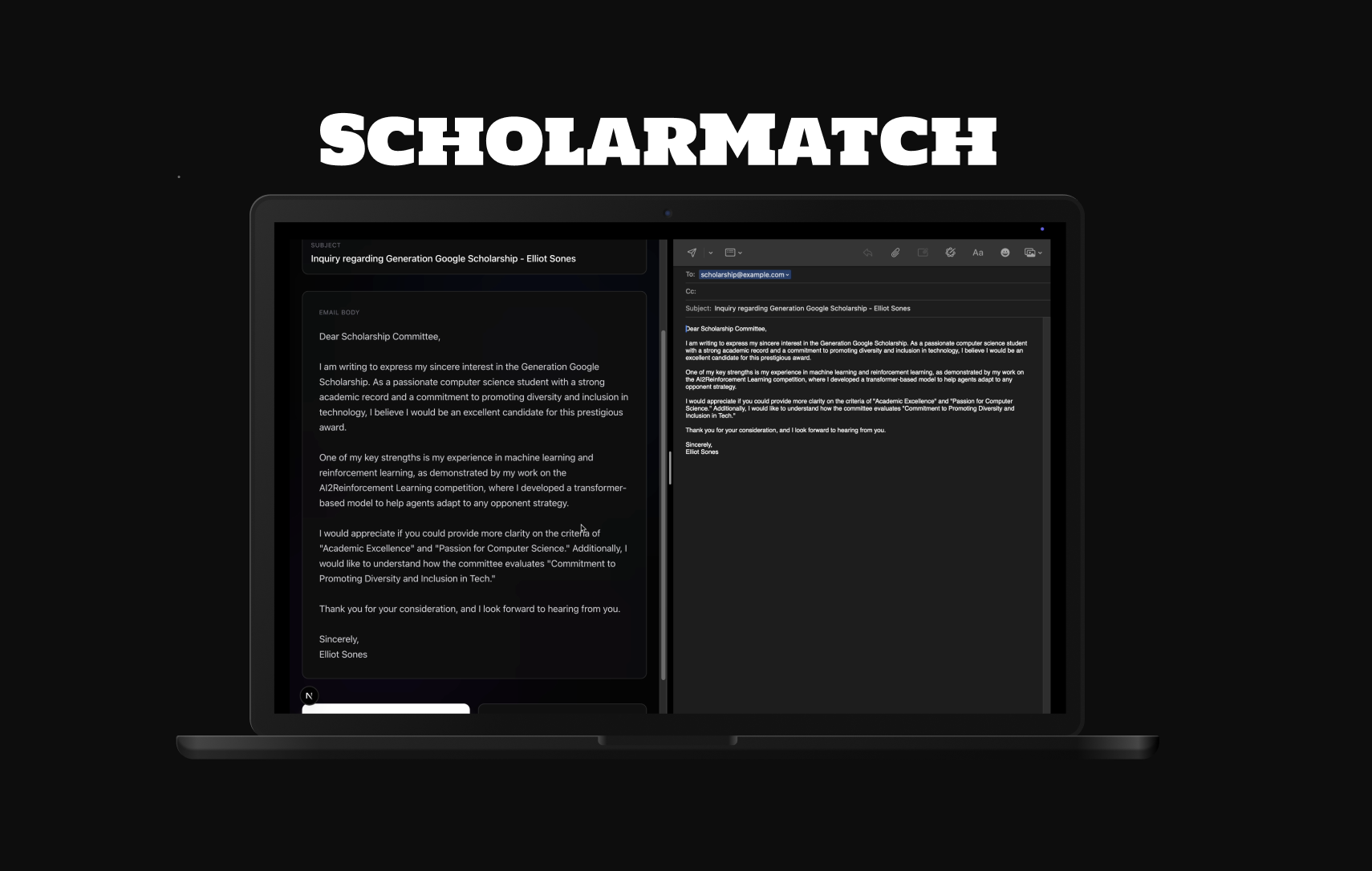
Out reach email for user
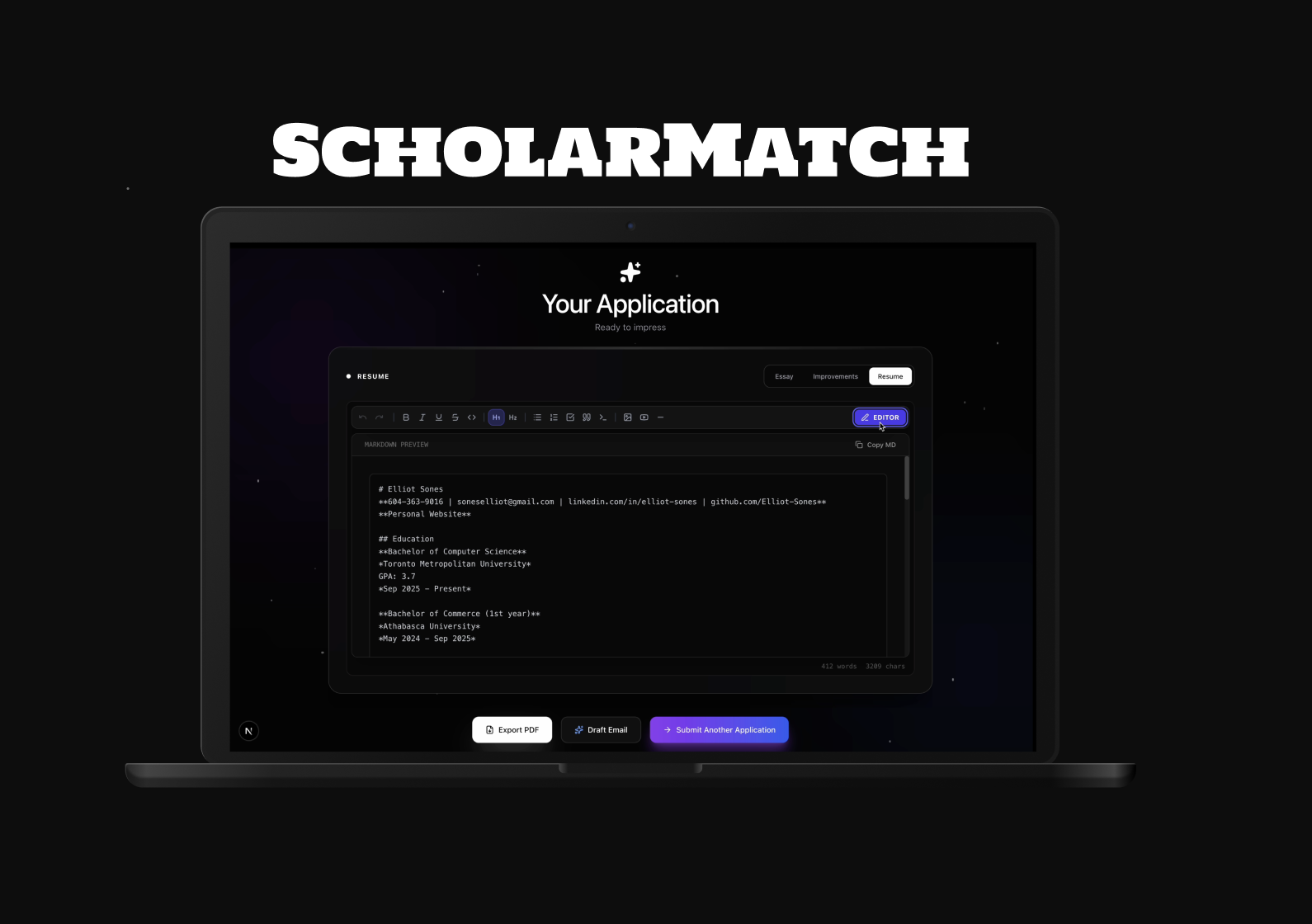
Inspiration:
Most students recycle the same generic essay across dozens of scholarships. Meanwhile, committees quietly optimize for very specific values buried in their mission statements and past winner bios.
We wondered: What if an AI could reverse-engineer what a committee really cares about, then adapt your story to fit—without making anything up?
That idea became ScholarMatch: a “Chameleon Engine” that reshapes real experiences to match the unique personality of each scholarship.
🧠 What it does
ScholarMatch is an agentic workflow that:
- Decodes the Scholarship – Scrapes the donor’s site, “About” page, and past winners to build a structured Value Profile.
- Profiles the Student – Ingests resumes and past essays into a vector database.
- Finds the Gaps – Compares values vs. experiences and, when something’s missing (e.g. “service” or “leadership”), interviews the student for a relevant story.
- Drafts a Tailored Essay – Generates a scholarship-specific essay using the organization’s tone and vocabulary.
- Automates Outreach – Identifies decision-makers and drafts a warm, personalized inquiry email.
How
⚙️ we built it
We used LangGraph to orchestrate 7 focused agents:
- Scout – Scraping (Firecrawl, Tavily) + contact discovery
- Profiler – PDF parsing + embeddings with ChromaDB
- Decoder – Criteria + tone extraction (Claude 3.5 Sonnet)
- Matchmaker – Semantic alignment between values and stories
- Interviewer – Human-in-the-loop Q&A for missing info
- Optimizer – Reorders resume bullets for this scholarship
- Ghostwriter – Final essay + outreach email
Frontend: Next.js + Tailwind CSS (glassmorphism UI).
Backend: FastAPI serving the LangGraph workflow via async endpoints.
🚧 Key challenges
- Avoiding “generic essay” mode → solved with an explicit Gap Analysis stage before writing.
- State & interruptions → used LangGraph’s
interrupt_beforeto pause for user answers, then resume with new context. - Messy websites → hardened the Scout agent to handle SPAs, PDFs, and legacy HTML.
🏆 What we’re proud of
- The Interviewer agent that asks laser-specific follow-ups instead of guessing.
- End-to-end flow: from decoding criteria → drafting essays → networking outreach.
- A fast RAG pipeline that makes the whole experience feel interactive, not batchy.
What we learned:
- Narrow, well-scoped agents beat one “do-everything” model.
- Upstream analysis quality (Decoder) determines downstream essay quality.
- LangGraph’s cyclic and conditional edges are ideal for human-in-the-loop workflows.
What’s next :
- Batch mode: one profile → dozens of applications.
- Alumni matching: surface past winners for mentorship.
- Mobile app: swipe through scholarships while the AI handles the paperwork.
Built With
- css
- docker
- firecrawl
- langgraph
- next.js
- tailwind
- tavily
- typescript


Log in or sign up for Devpost to join the conversation.