-

ScholarQuest
-
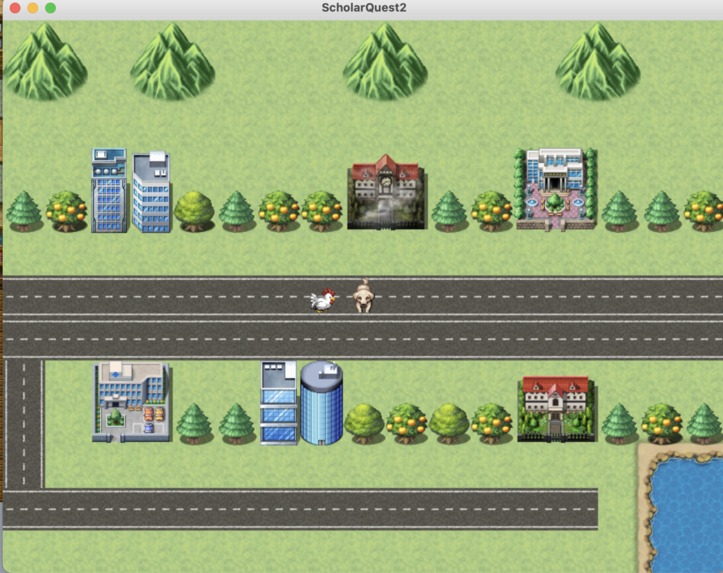
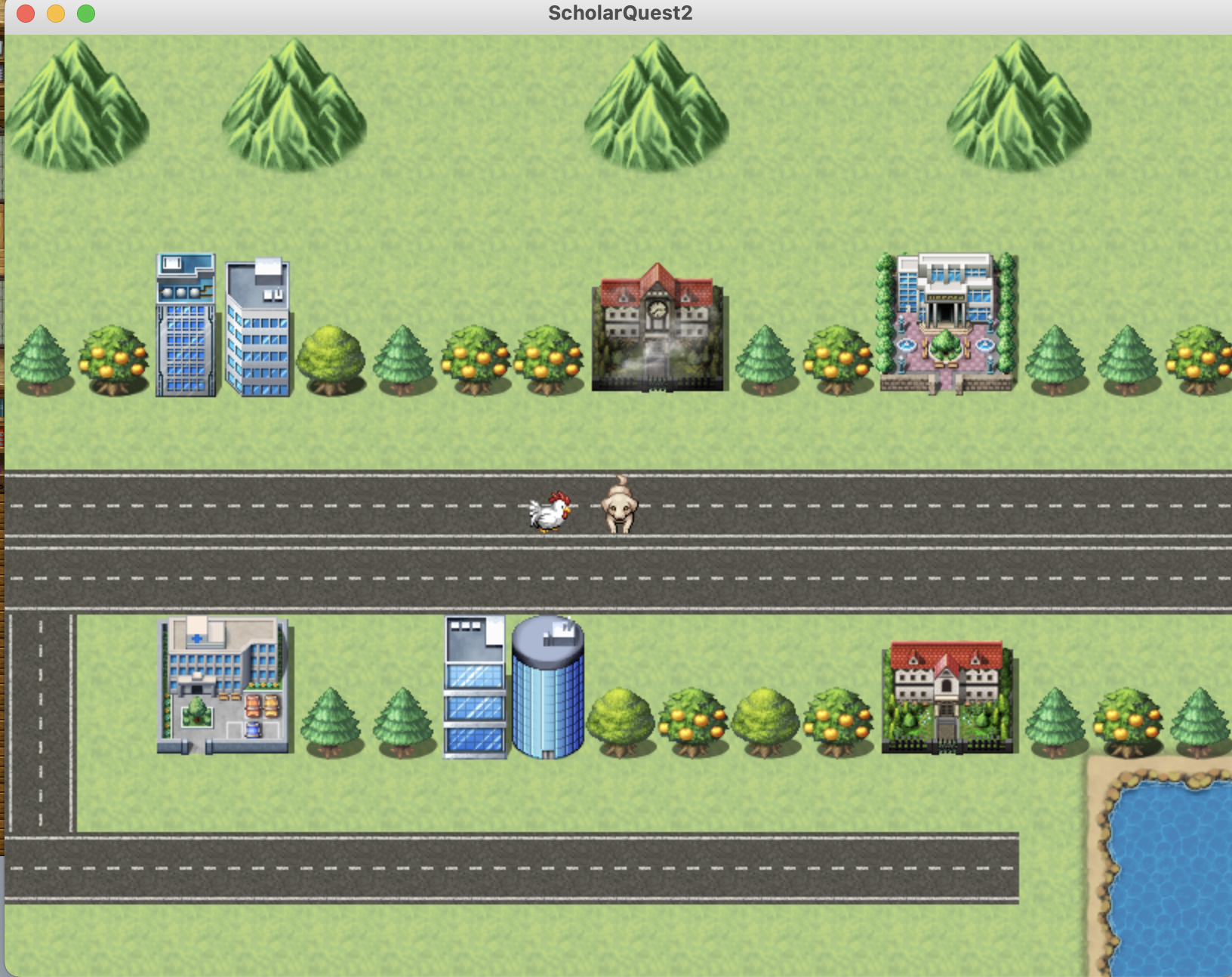
Game Scene-Map01
-
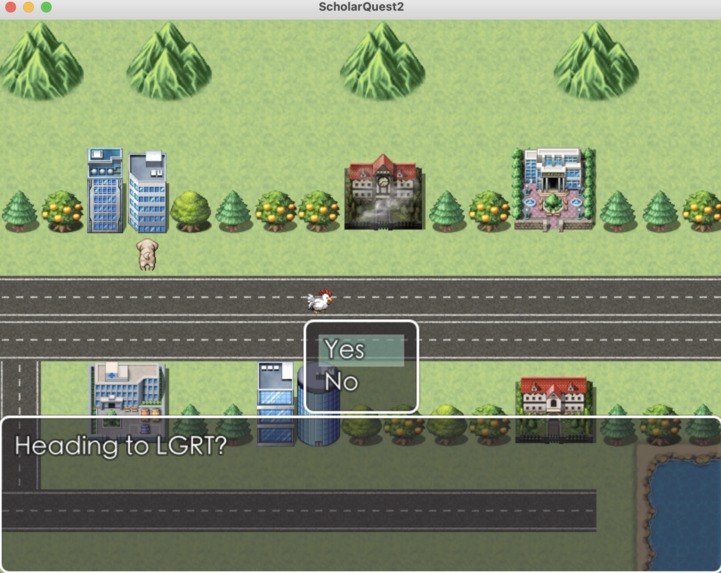
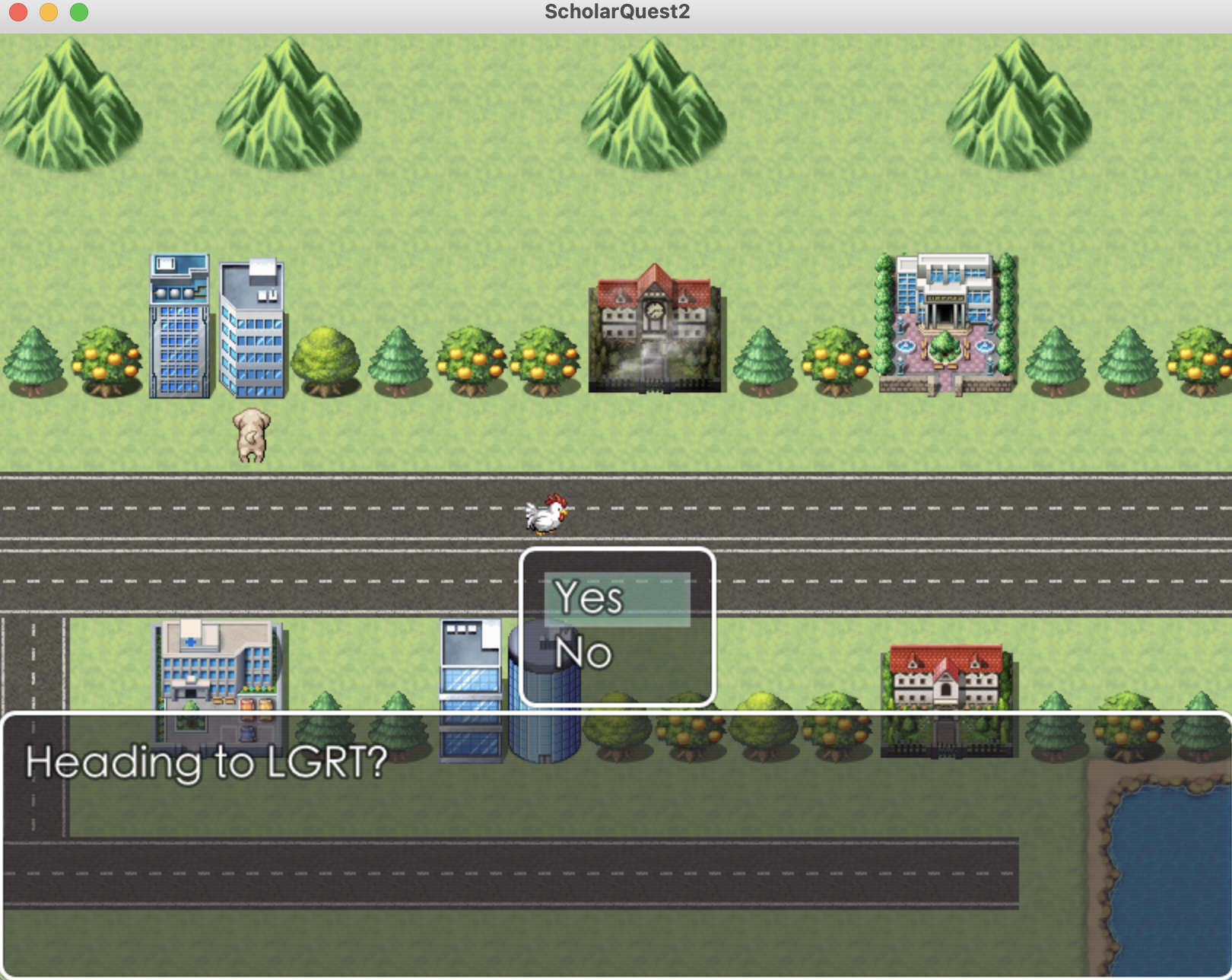
Game Scene-Map02
-
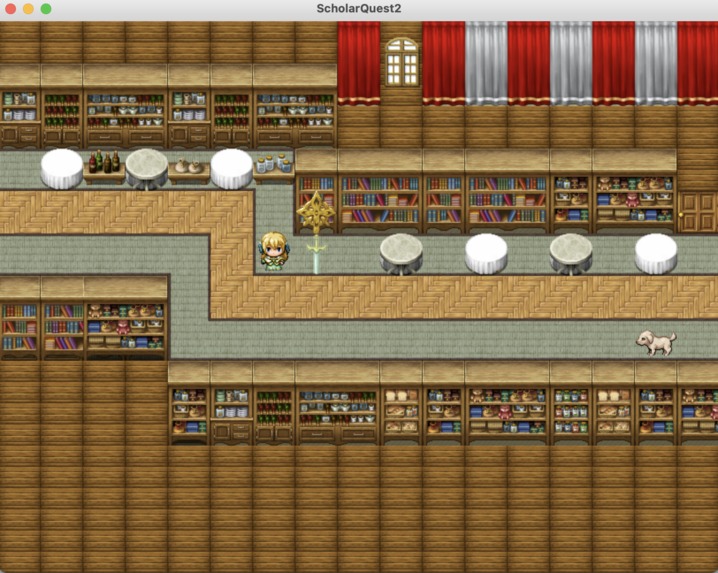
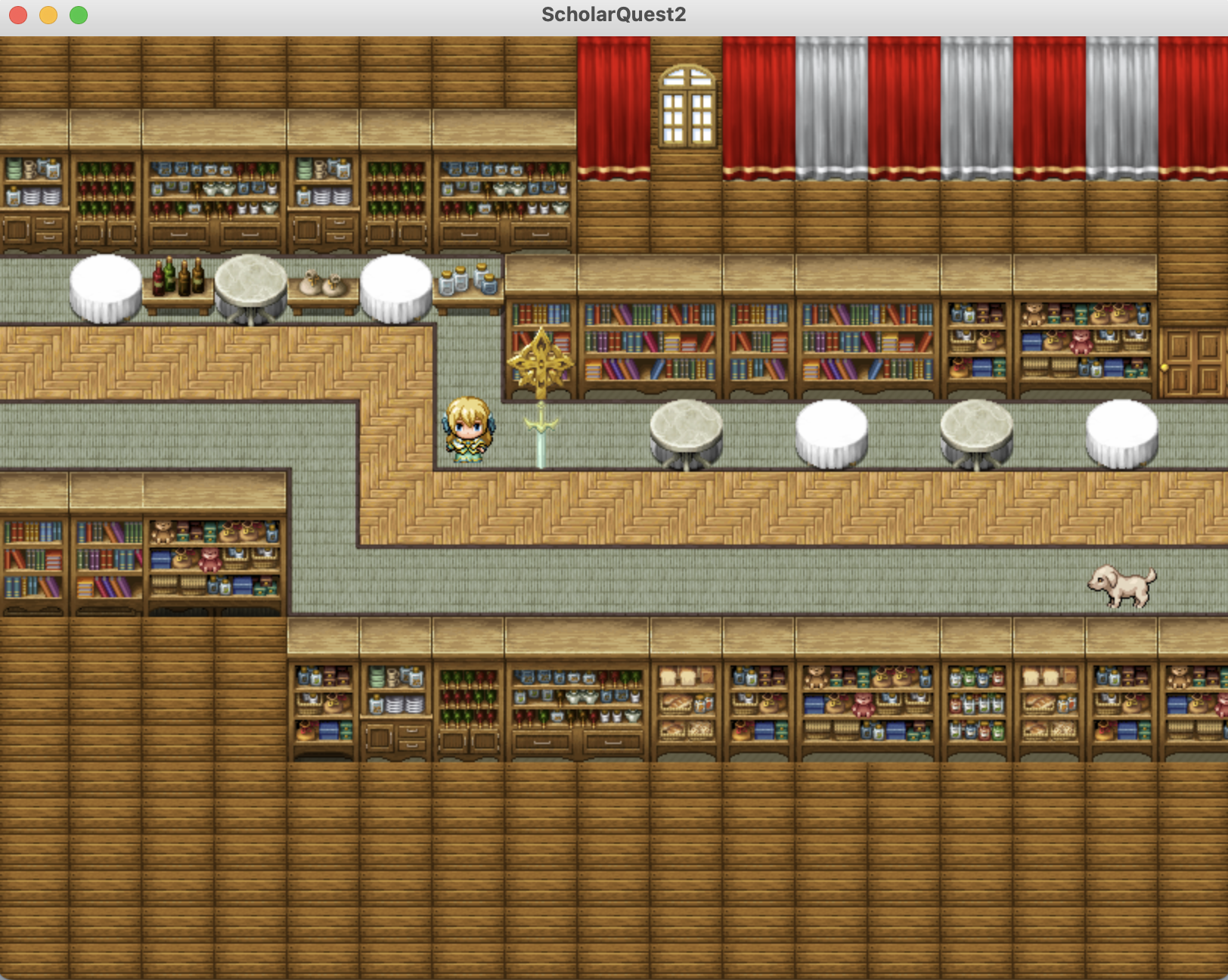
Game Scene-LGRT01
-
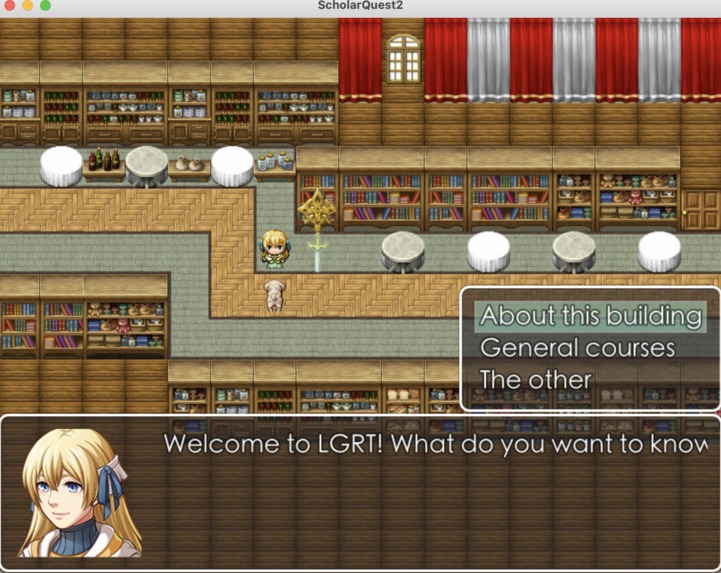
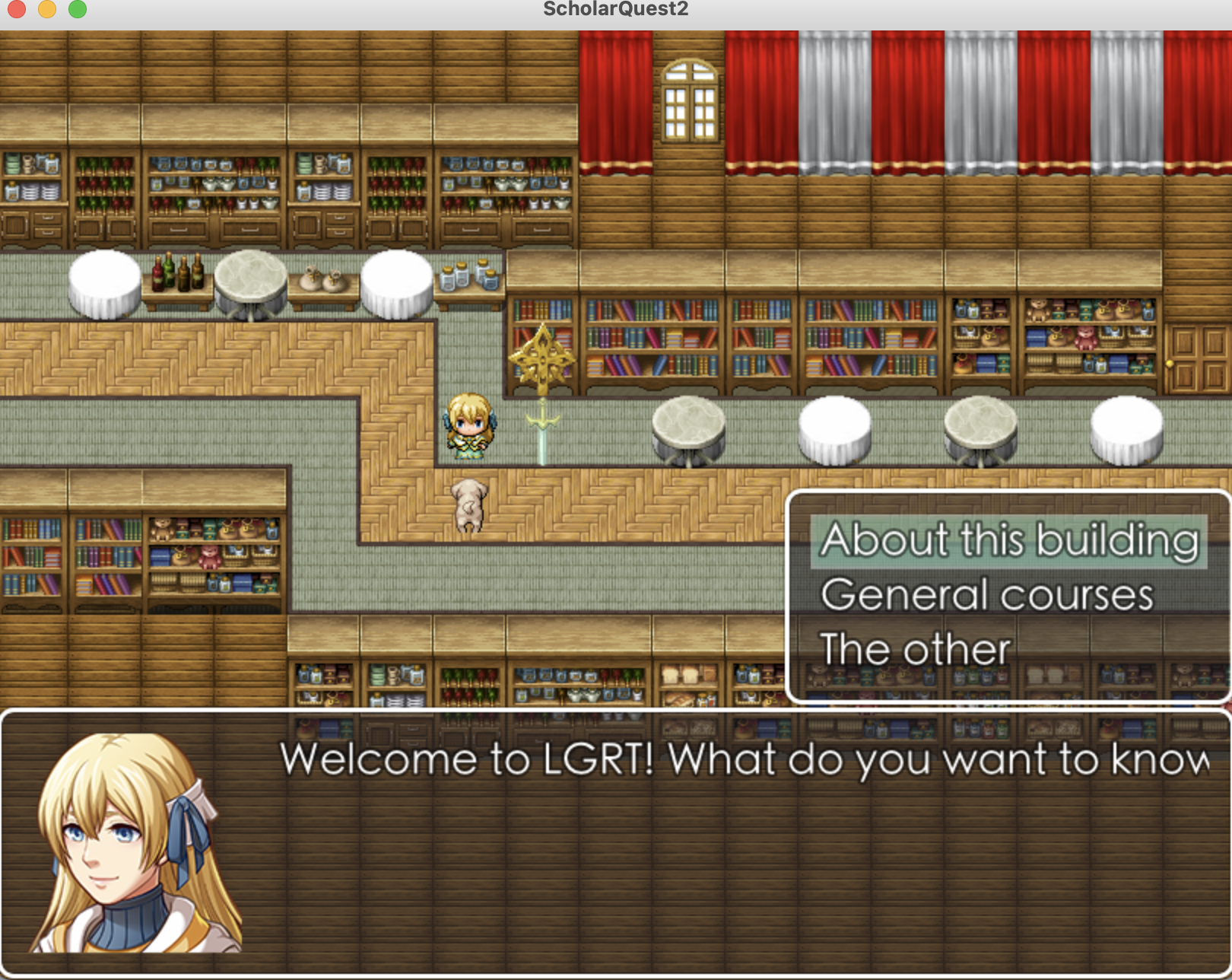
Game Scene-LGRT02

Inspiration
Both of us are game lovers, and we wanted to bring that passion into something useful for students. We are inspired by the fitness app on iPhone, where users earn a special badge or pin as a reward for completing challenges. We realized that the sense of achievement plays a significant role when facing challenges. Our idea was to create something similar for students—tracking their academic journey, from courses to assignments, events, and even how many cups of coffee they drink in a semester. This program would provide virtual badge rewards and help students stay motivated.
As undergraduates, we often feel confused about which GenEd requirements we’ve already satisfied. Accessing this information via Spire requires clicking through many buttons, and we often forget what we need to take once we close the window. This frustration led us to create a GenEd requirement list—a feature that allows students to easily track their progress without the hassle of navigating through different portals.
We also wanted to add an element of fun and exploration, similar to how people explore virtual worlds in games. Thus, we decided to model the project after Stardew Valley, where students could “explore” their campus in a game-like way, interacting with various campus features as part of their academic journey.
What it does
- Track their academic progress in real-time by visualizing completed courses, upcoming assignments, and even personal achievements like attending events and how many cups of coffee they drink during the semester.
- Earn virtual badges as rewards for completing academic challenges, encouraging students to stay motivated and engaged with their studies.
- Explore a RPG-style map of the UMass campus, designed using RPG Maker, where they can interact with various elements of their academic and extracurricular life, just like in games such as Stardew Valley.
- Track GenEd progress easily, eliminating the frustration of navigating Spire. Students can see which requirements they’ve already fulfilled and what they still need to complete.
How we built it
- Map Creation: We used RPG Maker to design an interactive campus map. Students can explore the campus, with each area representing different academic milestones or events.
- Real-time Data: We tried to integrate a scraper to fetch course and assignment data from Canvas, but due to API limitations, we pivoted to use the calendar.ics file from Canvas to grab and store this information.
- Backend Server: We built a server to handle requests, manage data storage, and test the flow of course and assignment information. The server helps facilitate interactions between the frontend and backend.
- GenEd Tracking: We integrated a feature to track GenEd progress based on the completed courses, so students can easily see their academic standing and make informed decisions about course registration.
Challenges we ran into
- API limitations: We initially attempted to fetch course and assignment data directly from Canvas using an API but encountered significant issues with API access, which prevented the scraper from working.
- Time constraints: With limited time during the hackathon, we struggled to finish the full map and complete all features. The unexpected errors further delayed our progress.
- Data Integration: Integrating real-time data from Canvas and the calendar.ics file posed a few challenges. Additionally, managing data flow between the frontend and backend required constant adjustments to ensure smooth functionality.
- Connecting JavaScript and JSON with RPG Maker: One of the major obstacles was that we couldn’t connect the JavaScript and JSON extension files with RPG Maker. This prevented us from fully implementing some of the key features, such as real-time data fetching and seamless interaction between the game world and academic data.
What we learned
- APIs: We learned the complexities of working with APIs, especially in handling real-time data and overcoming limitations.
- Server Development: Creating a server from scratch was an invaluable learning experience, especially in managing data between different parts of the application.
- JavaScript and JSON: We enhanced our skills in JavaScript for managing dynamic data and using JSON to structure and retrieve course and assignment information.
What's next for ScholarQuest
- Map Expansion: We plan to expand the RPG campus map, adding more locations and interactive elements.
- Complete GenEd Tracking: The GenEd requirement list will be fully integrated, allowing students to easily track their progress and make informed decisions about course registration.
- Routine Tracker: We want to add a feature to track students' routine and activities, like the number of miles walked or events attended throughout the semester.
- Improved Data Integration: We aim to enhance the integration with Canvas and other systems to provide more detailed and accurate course data in real-time.
- User Experience: We’ll continue to refine the interface and interactions to make it more user-friendly and engaging, with more opportunities for students to earn badges and rewards.
Built With
- api
- fetch
- html
- javascript
- json
- python
- rpgmaker
- scraper
- server
- vscode
- zip

Log in or sign up for Devpost to join the conversation.