-
-
Logo
-
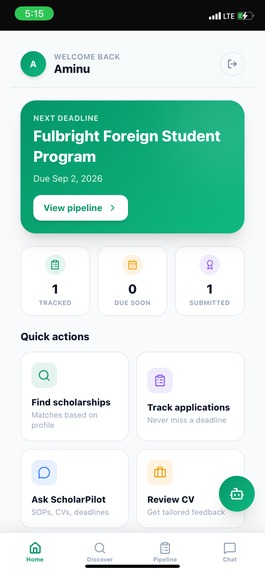
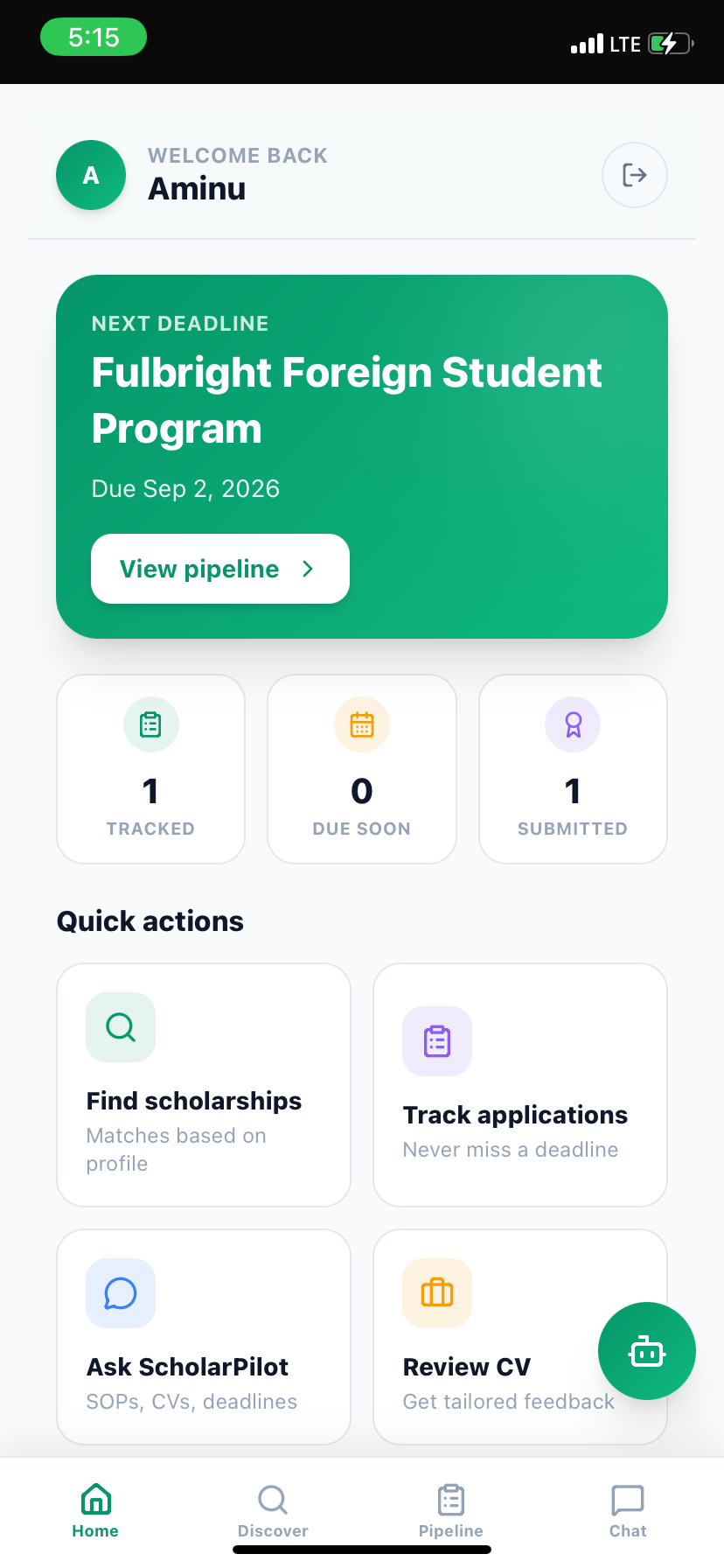
Home page
-
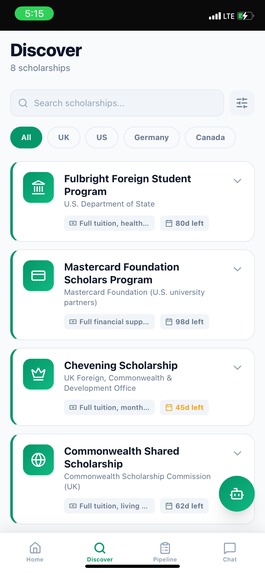
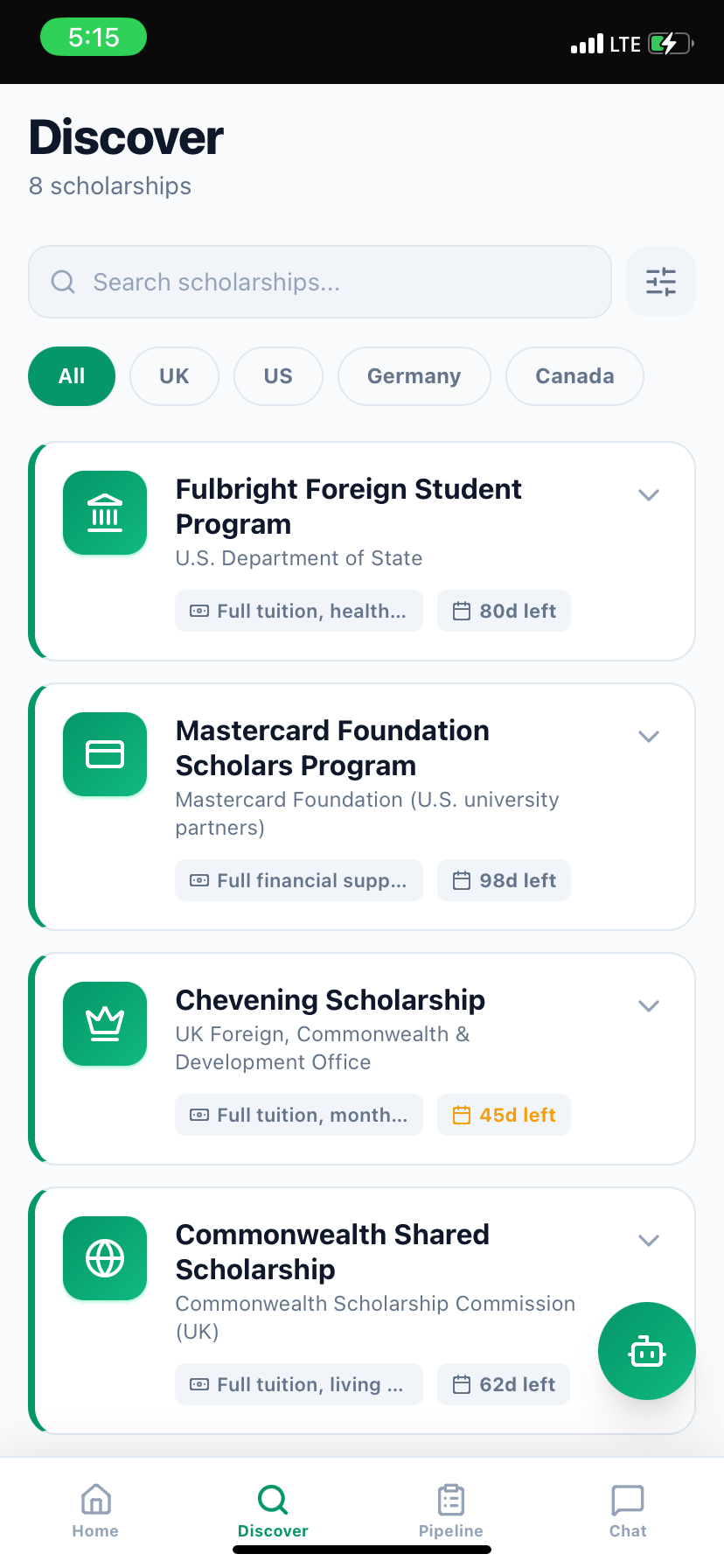
Discover page
-
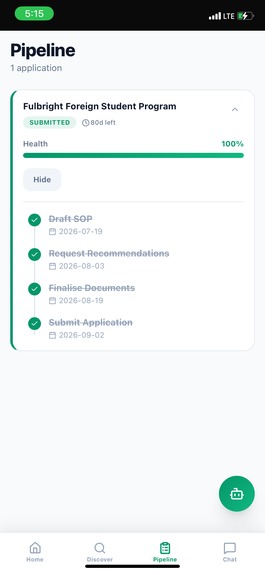
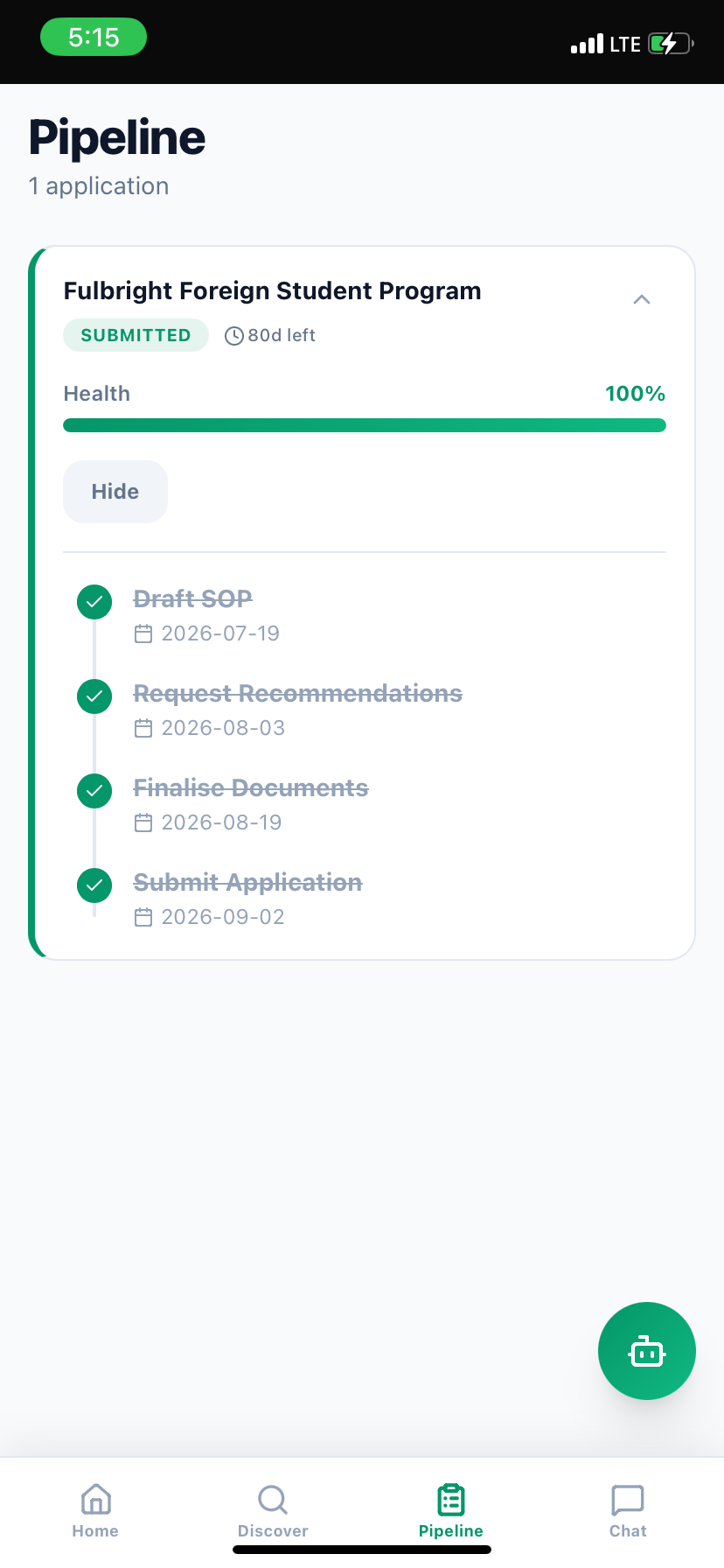
Pipeline page
-
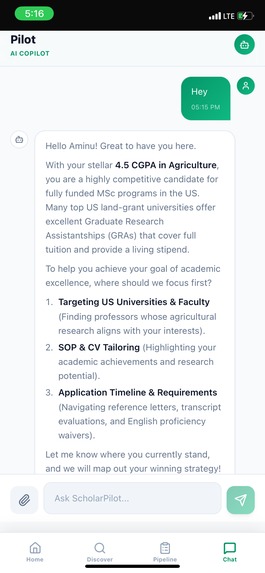
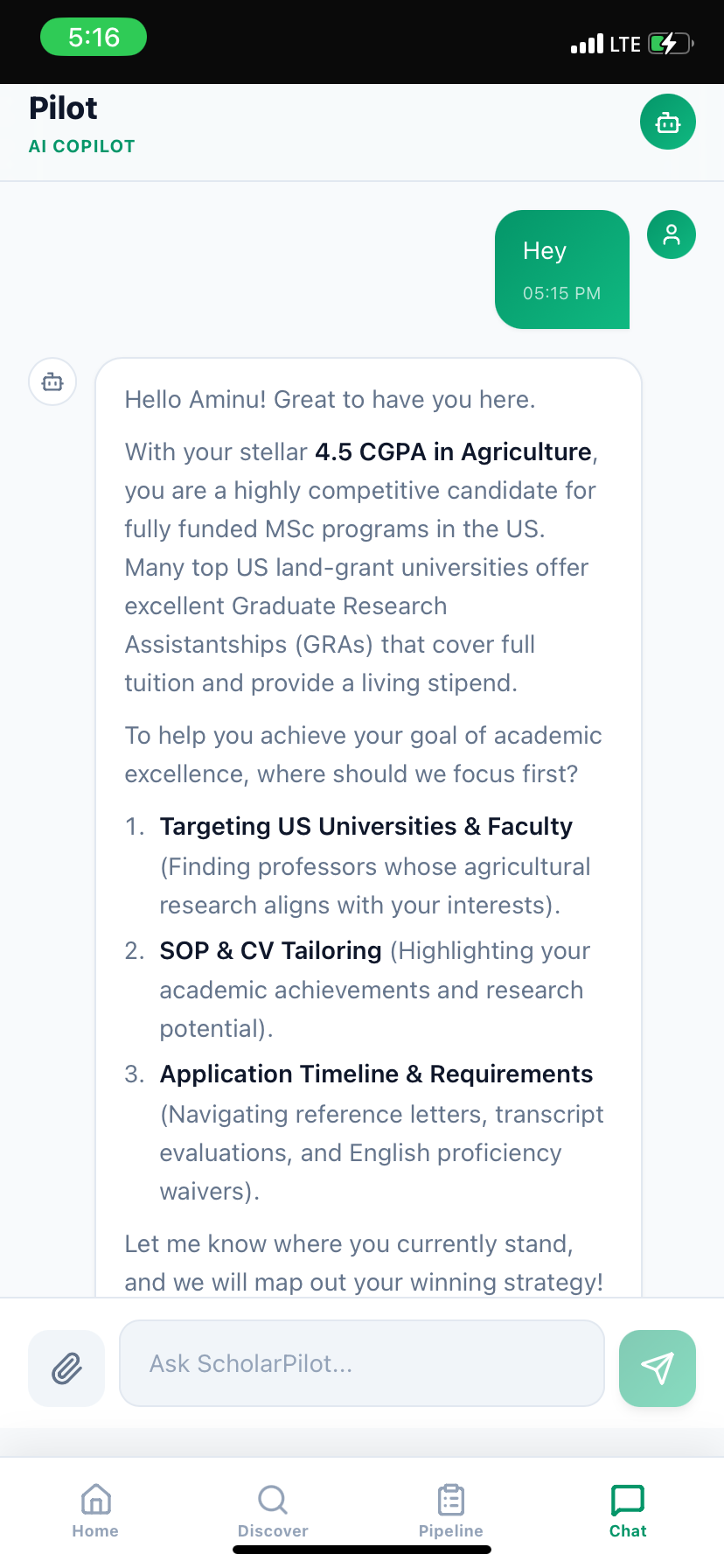
AI chat
-
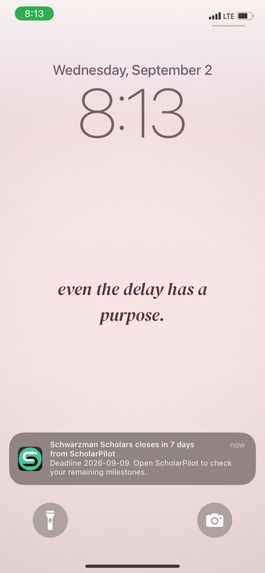
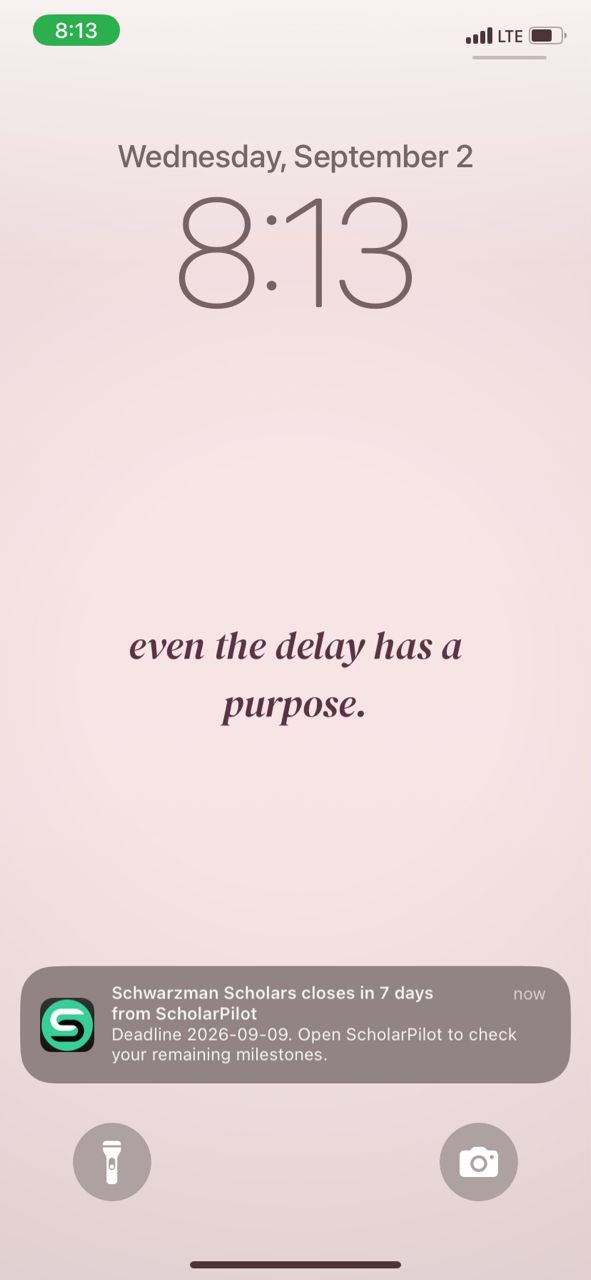
Deadline Reminder Notification
Inspiration
As an undergraduate from a financially constrained background, I spent countless hours searching for educational funding. I initially thought the hardest part would be standing out among thousands of applicants, but the real barrier was simply finding valid opportunities.
The online scholarship search experience is fundamentally broken. Platforms bombard students with information overload, endless redirects, and intrusive ads, yet lack meaningful eligibility filters. Over 50% of the listings I encountered were already expired. Even when I found valid opportunities, tracking documents and deadlines across multiple platforms became impossible. I realized that if the system was this broken for me, millions of under-resourced students were being systematically shut out of life-changing opportunities.
What it does
ScholarPilot is an AI-powered copilot that eliminates the barriers of the traditional funding search, transforming a chaotic process into a streamlined, accessible experience:
- Smart Discovery: Cuts through expired noise to surface only active, high-probability scholarships tailored to a student's unique academic profile.
- Intelligent Tracking & Reminders: Centralizes all applications in an ad-free dashboard, delivering timely push notifications so no deadline or document is ever missed.
- Deep-Dive Insights: Breaks down complex eligibility criteria and explicitly highlights what selection committees are looking for.
- Application Copilot: Guides students in tailoring their CVs and Statements of Purpose for specific opportunities, elevating their pitch while preserving their authentic voice.
How I built it
I engineered ScholarPilot with a strict focus on a frictionless user experience and robust data architecture. The frontend is built with Next.js, featuring a responsive, mobile-first progressive web design deployed on Vercel for high availability.
To power the intelligent filtering and Copilot features, I engineered a multi-agent matching pipeline incorporating user profile analytics and RAG (Retrieval-Augmented Generation) queries. This relies on the Qwen 3 Open-Source AI Model accessed via Featherless Inference, which extracts evaluation criteria and provides contextual feedback on application materials.
The user data, application state tracking, and push notification system are handled via Firebase (Firestore + Cloud Messaging). The active scholarship data bank is hosted on a Render Postgres database for scalable, fast access. While earlier iterations relied on mock data, integrating the Featherless API unlocked true, real-time AI inference for the final build.
Challenges I ran into
The primary hurdle was taming the chaos of unstructured, wildly inconsistent scholarship data across the web. Building a reliable data state architecture to filter out expired opportunities and accurately extract highly nuanced eligibility criteria required extensive prompt engineering and edge-case testing.
Balancing the Application Copilot was equally challenging. The goal was to build a system that acts as an active mentor—helping students articulate their own stories—rather than an essay generator that produces generic, recognizable AI text. Iterating on the multi-agent pipeline to preserve the student's authentic voice took significant refinement.
Accomplishments that I'm proud of
I am incredibly proud to have built a functional software solution that directly addresses a massive bottleneck for under-resourced students worldwide. Turning an overwhelming, ad-riddled process into a unified, intelligent dashboard is a major milestone.
Technically, successfully implementing the multi-agent AI Copilot stands out. Watching the system accurately extract judges' criteria and deliver highly actionable, personalized CV feedback proves how AI can be leveraged to make education genuinely accessible.
What I learned
Building ScholarPilot reinforced a crucial insight: AI's true power in the education sector isn't just generating text—it's structuring chaos. True accessibility isn't just about making resources free; it is about reducing cognitive load. By automating the tracking and filtering processes, software can help students redirect their energy toward crafting compelling applications that showcase their actual potential.
What's next for ScholarPilot
This initial deployment is just the foundation. The roadmap includes:
- Enhanced PWA & Mobile Capabilities: Expanding the progressive web app functionality into a fully native mobile experience for seamless, on-the-go deadline tracking.
- Automated Global Database: Scaling the data architecture with robust web-scraping to build a self-cleaning, continuously updated scholarship index.
- Community Mentorship: A peer-to-peer feature allowing past scholarship winners to share successful application data and strategies.
- Direct Portal Integration: Integrating directly with university and foundation endpoints to automate application submissions and status updates.
Built With
- ai
- firebase
- next.js
- render
- tailwind-css
- typescript
- vercel


Log in or sign up for Devpost to join the conversation.