-
-

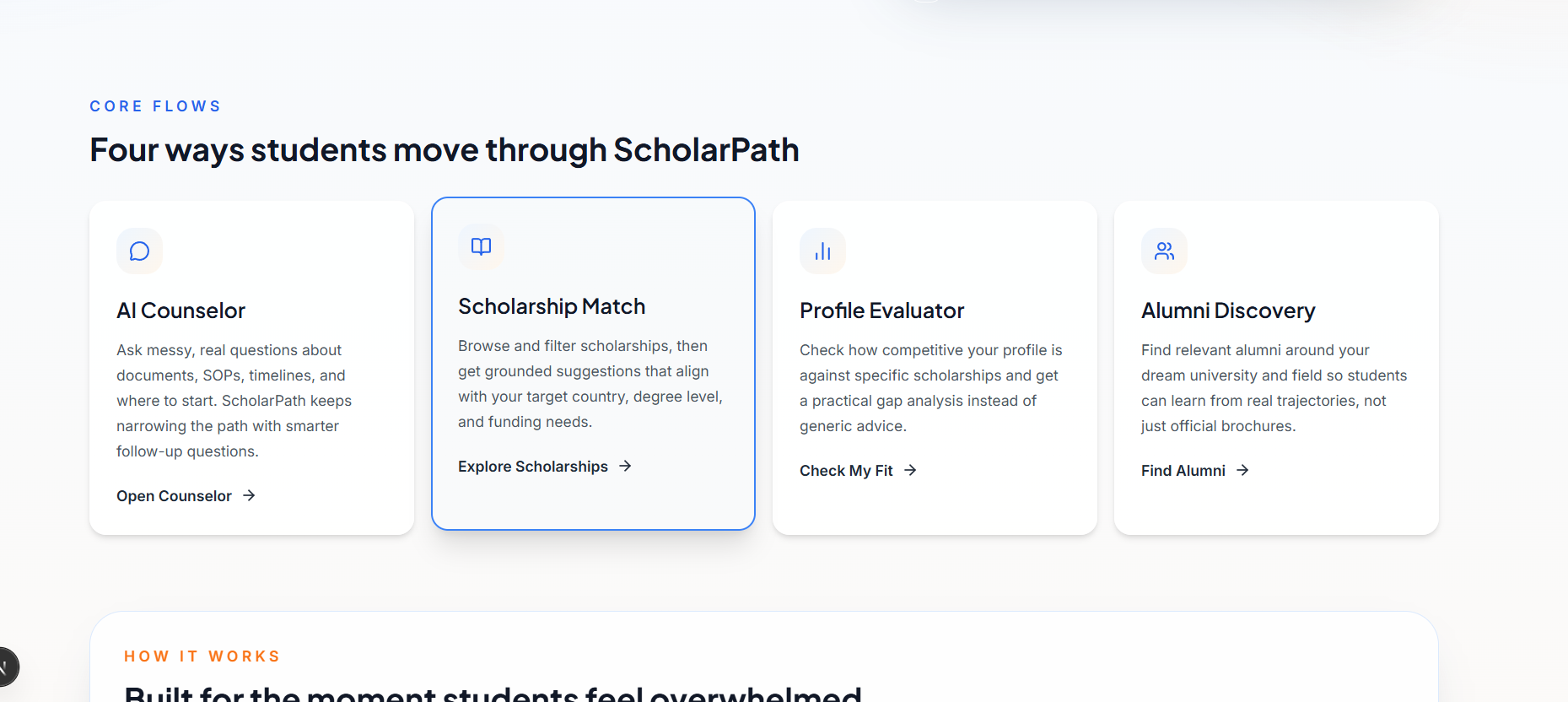
Landing page
-
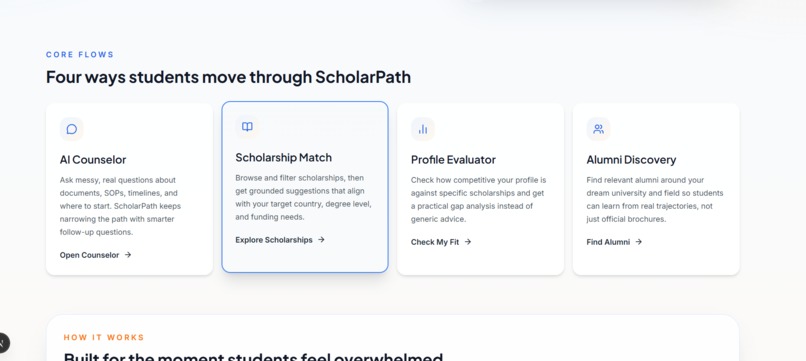
Descriptions of services
-
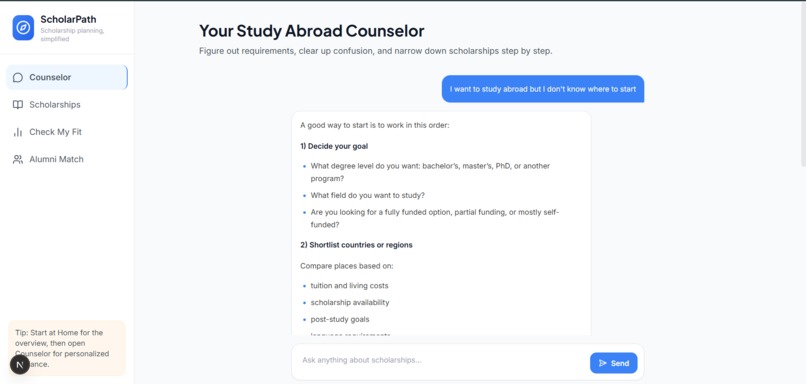
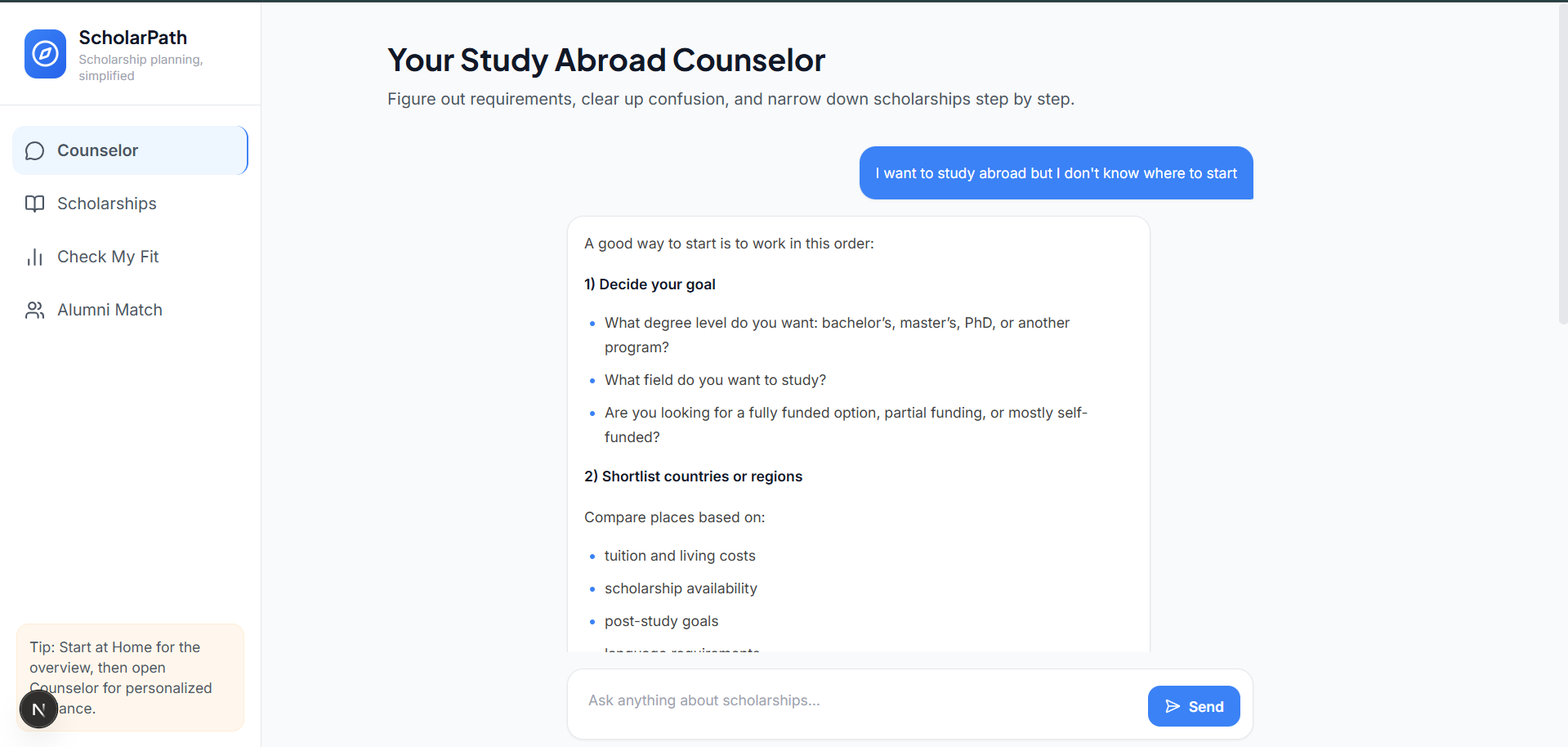
Scholarship advisor
-
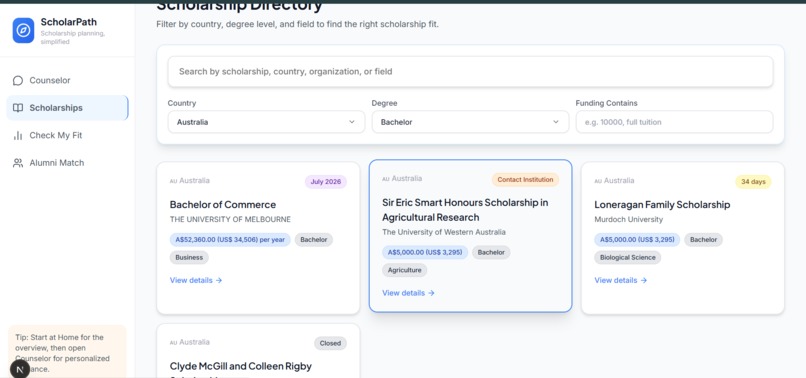
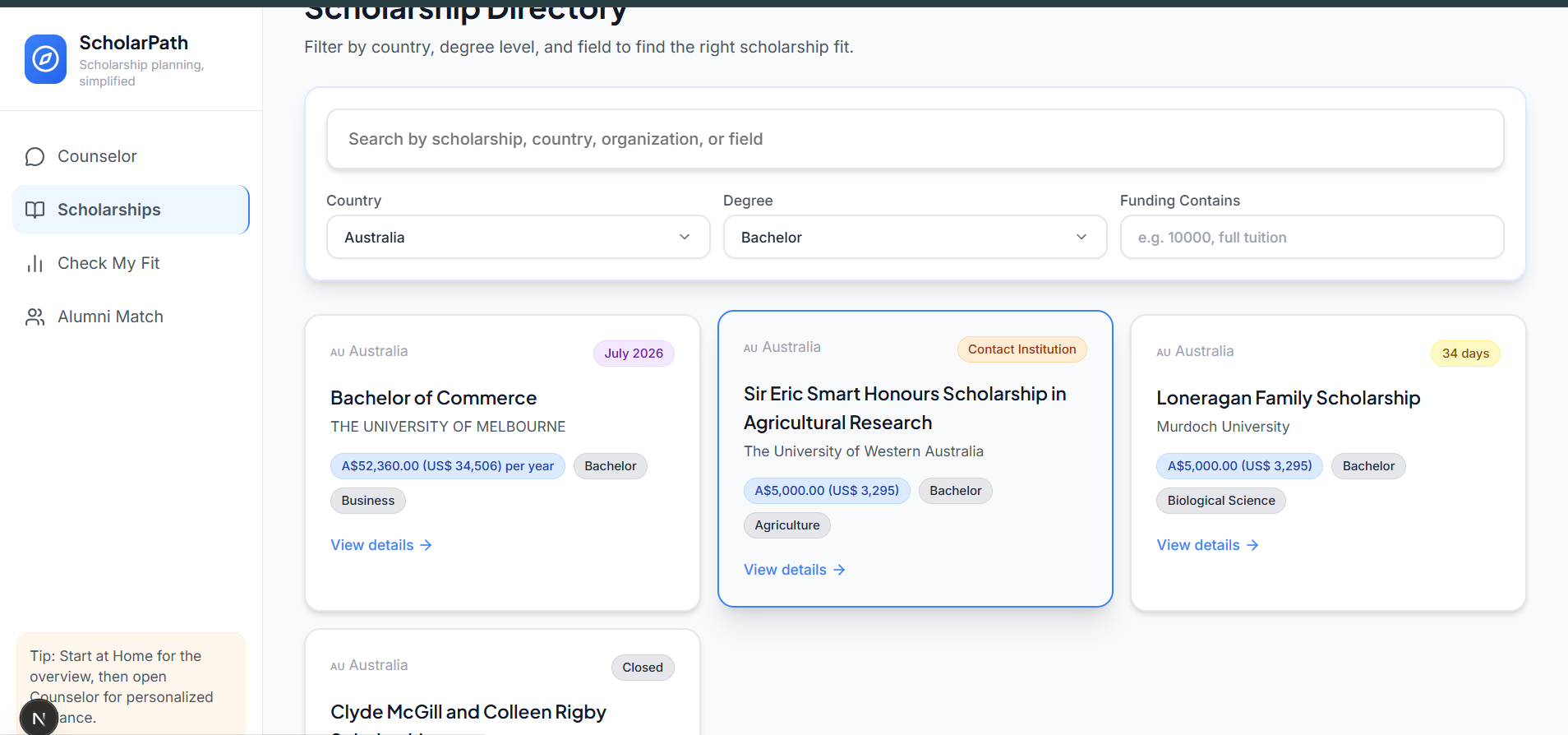
Central for gathering scholarship information
-
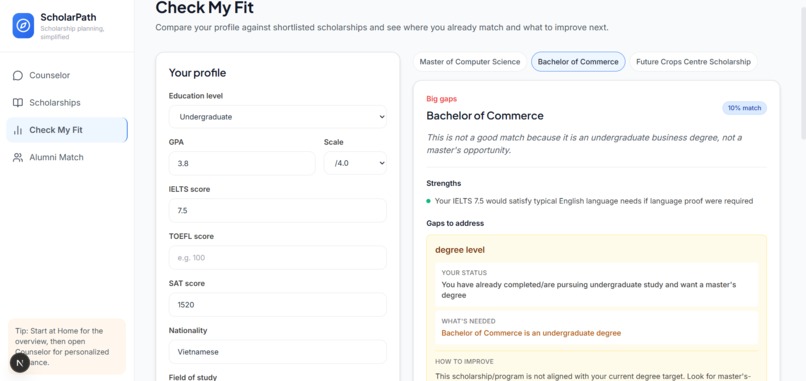
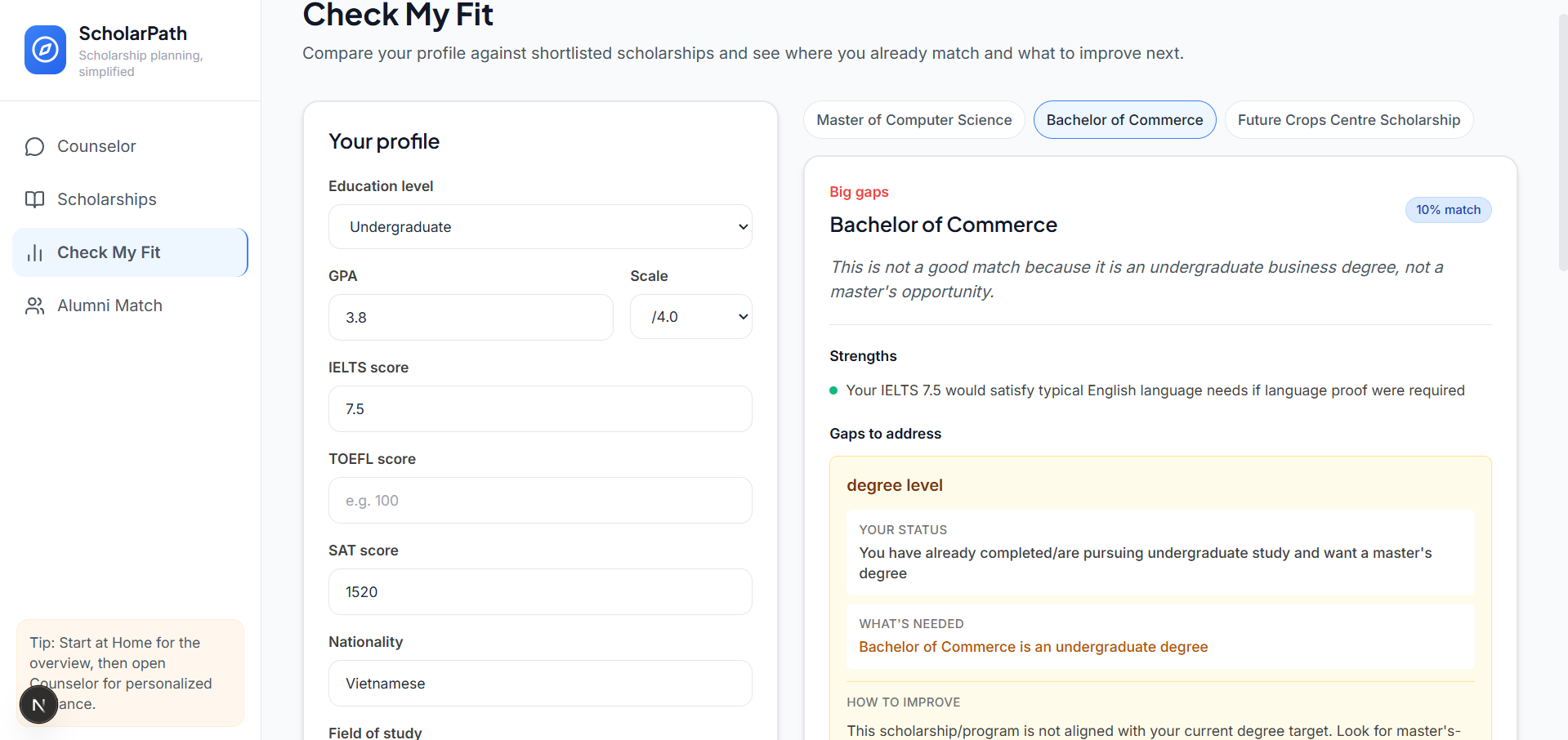
Evaluating how one's profile fit one
-
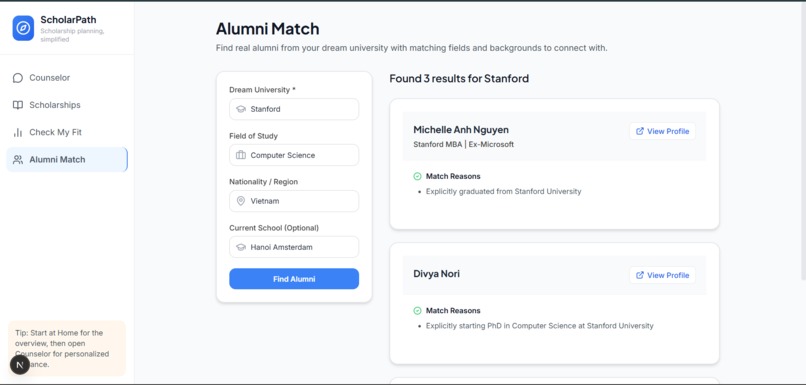
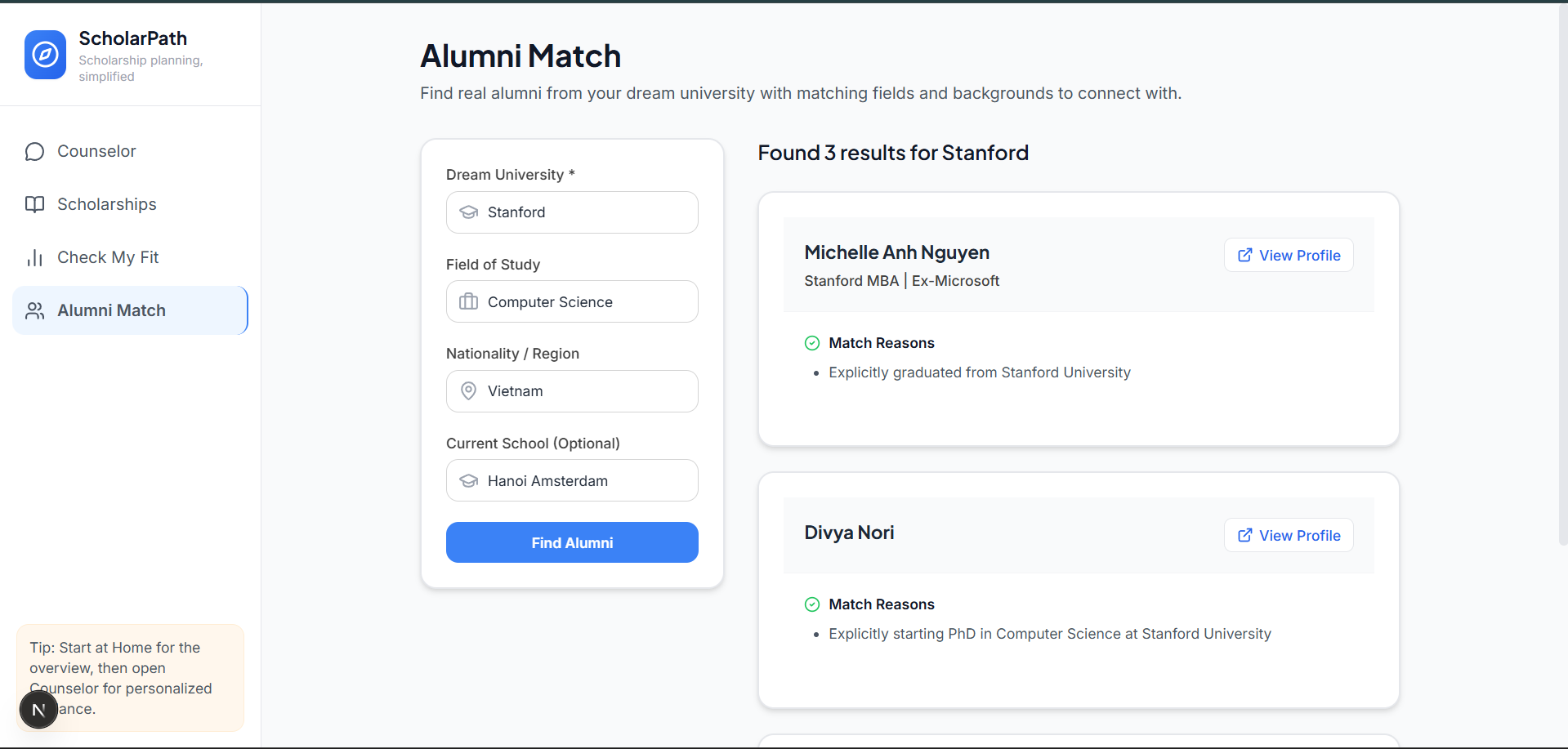
Finding alumni

Inspiration
Studying abroad is exciting, but for many students the process feels messy, scattered, and overwhelming. Information is spread across university websites, scholarship pages, forums, and social media, and students often do not even know what questions to ask first. We wanted to build something that acts like a supportive guide, helping students move from confusion to clarity.
What it does
ScholarPath is an AI study-abroad copilot. It helps students understand the application process, answer questions about requirements like SOPs, recommendation letters, and English certificates, discover scholarships that fit their goals, evaluate how strong their profile is for those opportunities, and connect with alumni for real-world guidance.
How we built it
We built ScholarPath using Next.js, TypeScript, and Tailwind CSS for a fast and responsive frontend experience. On the backend, we integrated OpenAI’s LLM APIs to power the conversational assistant and structured response generation.
A core part of our system is the scholarship data pipeline. We curated a list of reliable scholarship sources based on research and prior experience, then used tools like Interfaze and Exa to crawl and extract up-to-date scholarship information. The scraped data is cleaned, normalized, and stored in a local database to ensure consistency and fast retrieval.
For scholarship matching, we designed a structured evaluation pipeline on top of OpenAI models. Instead of relying on raw LLM output, we defined clear criteria—such as academic performance, language proficiency, extracurriculars, and eligibility constraints—and guided the model to score and rank opportunities accordingly. This improves both accuracy and transparency in recommendations.
Additionally, we implemented a profile evaluation flow and chat session storage, allowing the assistant to provide more personalized, context-aware guidance throughout the application process.
Challenges we ran into
One major challenge was reliability. A general chatbot can sound helpful while still giving vague or ungrounded answers, so we had to make the system more structured. We also had to balance different use cases in one experience: some students want quick explanations, while others want personalized scholarship recommendations. Another challenge was making the responses feel natural and readable, while still keeping them grounded in local data and validated logic.
Accomplishments that we're proud of
We are proud that ScholarPath goes beyond being just a chatbot. It can guide students step by step, personalize scholarship recommendations, evaluate a student's fit against opportunities, and support deeper decision-making with alumni-related guidance. We are also proud that we made the system more trustworthy by combining structured extraction, local knowledge, scholarship matching, and fallback web search instead of relying only on free-form AI responses. This is the result of getting advice from our friend who have insights about applying scholarships for going abroad.
What we learned
We learned that building a useful AI product is not just about calling a model. The real value comes from designing the flow around user needs, grounding responses with reliable data, and knowing when to ask better follow-up questions. We also learned that students do not always need answers immediately; often, they need help figuring out what they are actually unsure about.
What's next for ScholarPath
Next, we want to expand the knowledge base, improve retrieval with stronger RAG and embeddings, add richer alumni discovery and networking features, and make scholarship/profile matching even more precise. We also want to improve source transparency, track student progress over time, and turn ScholarPath into a true end-to-end companion for the full study-abroad journey.
Built With
- nextjs
- openai
- supabase
- tinyfish


Log in or sign up for Devpost to join the conversation.