-
-
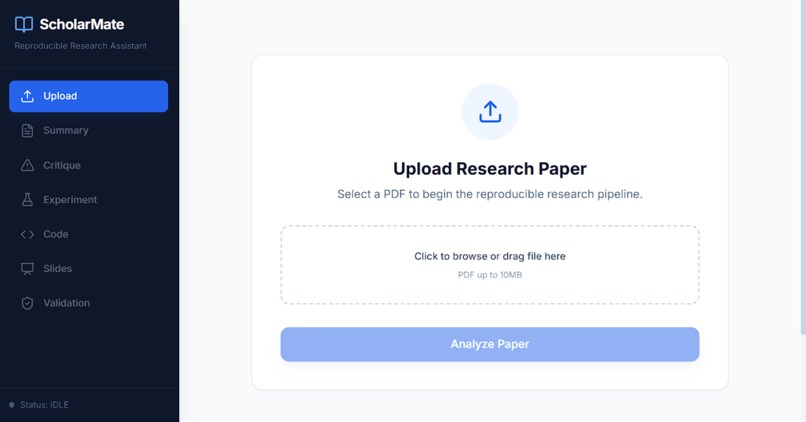
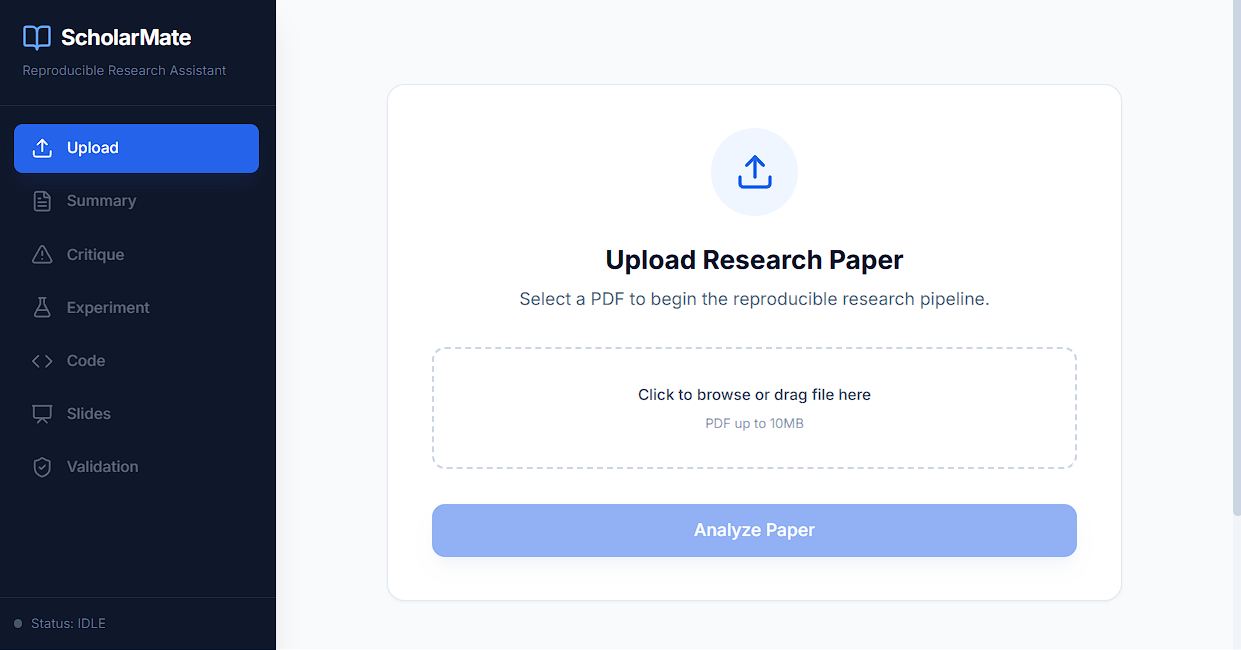
Screenshot-1: Home Page
-
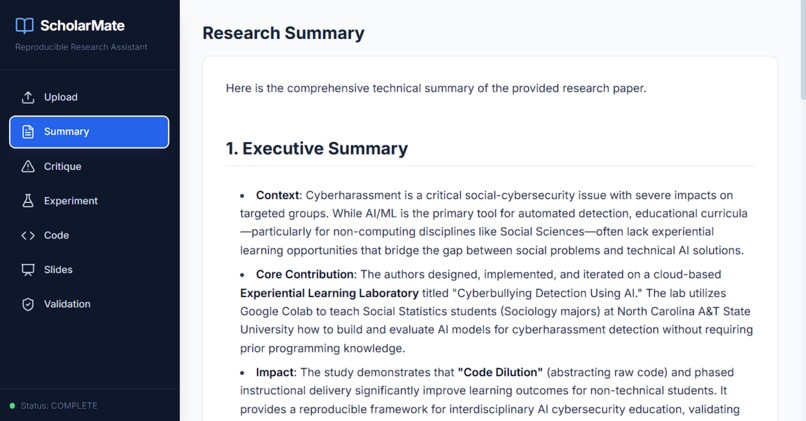
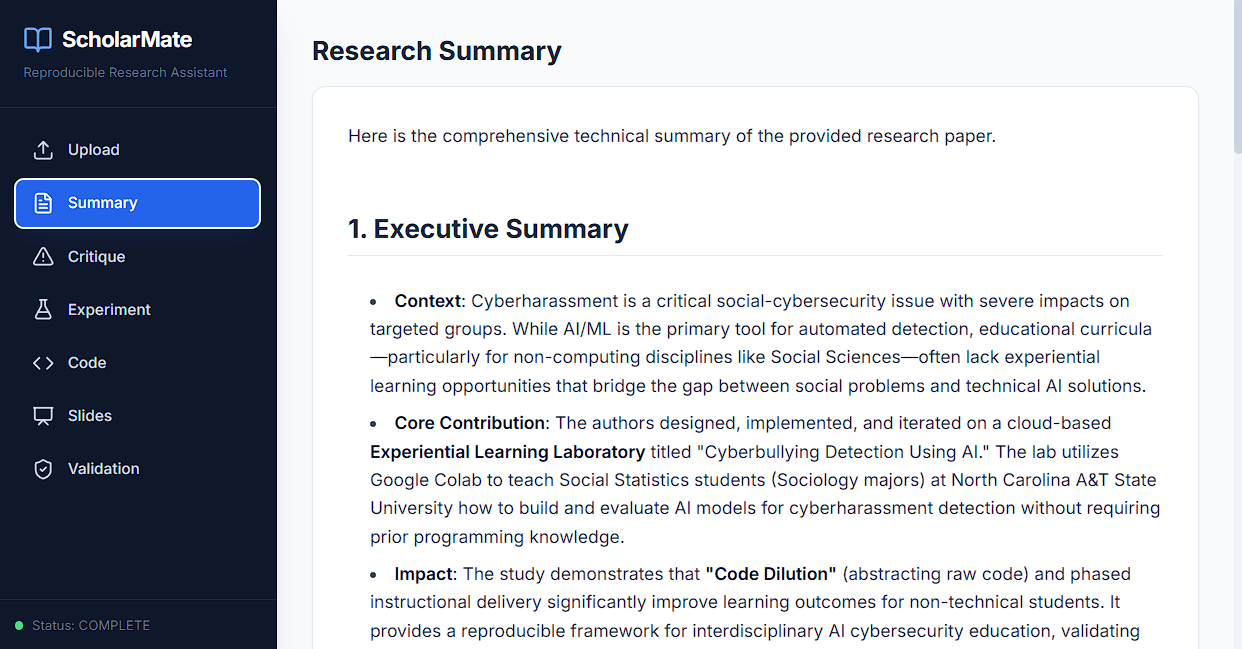
Screenshot 2: Research Summary
-
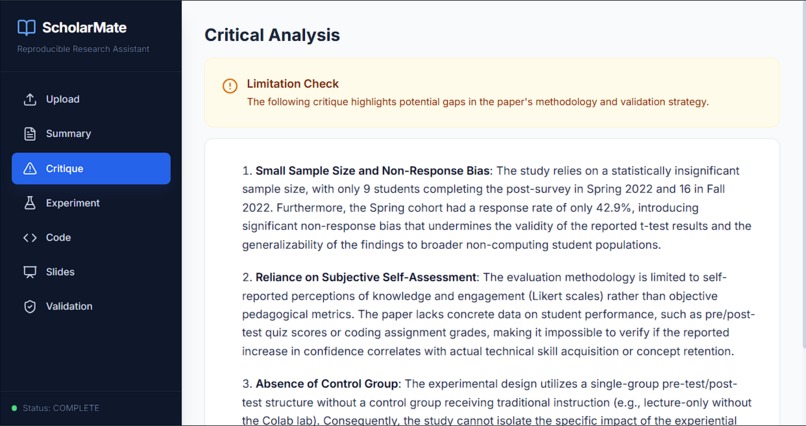
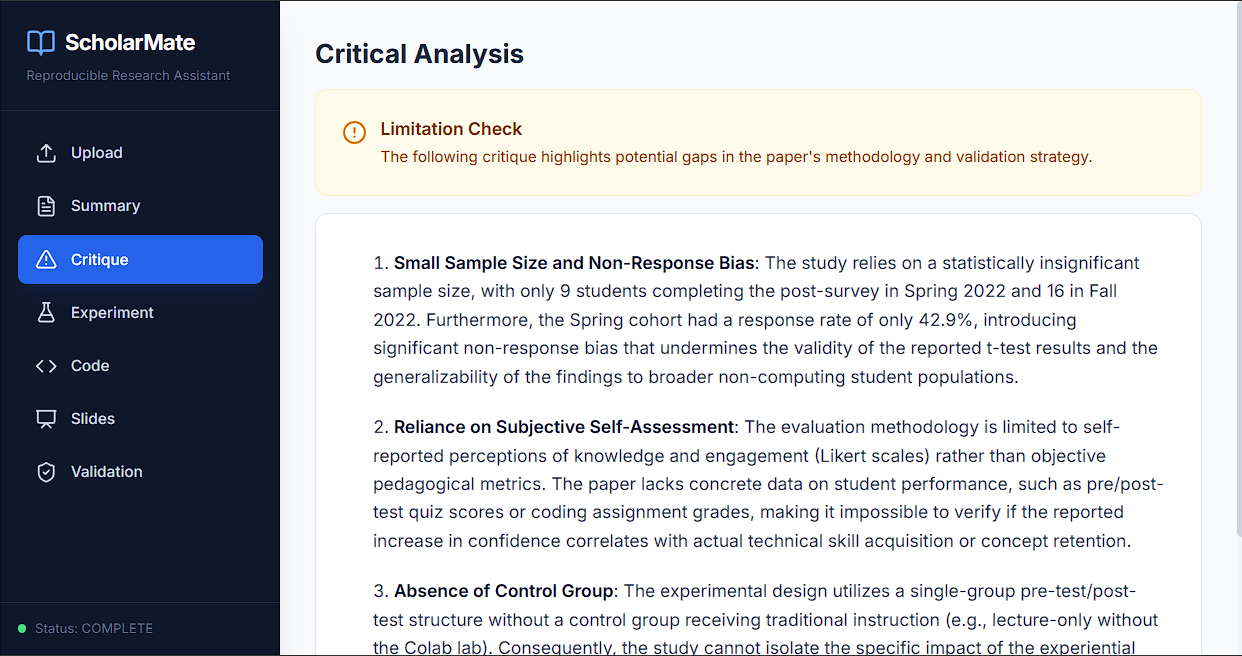
Screenshot 3: Crirtical Analysis
-
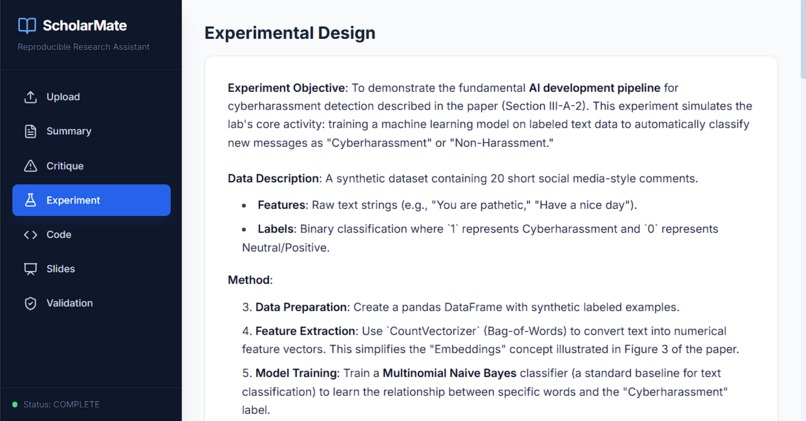
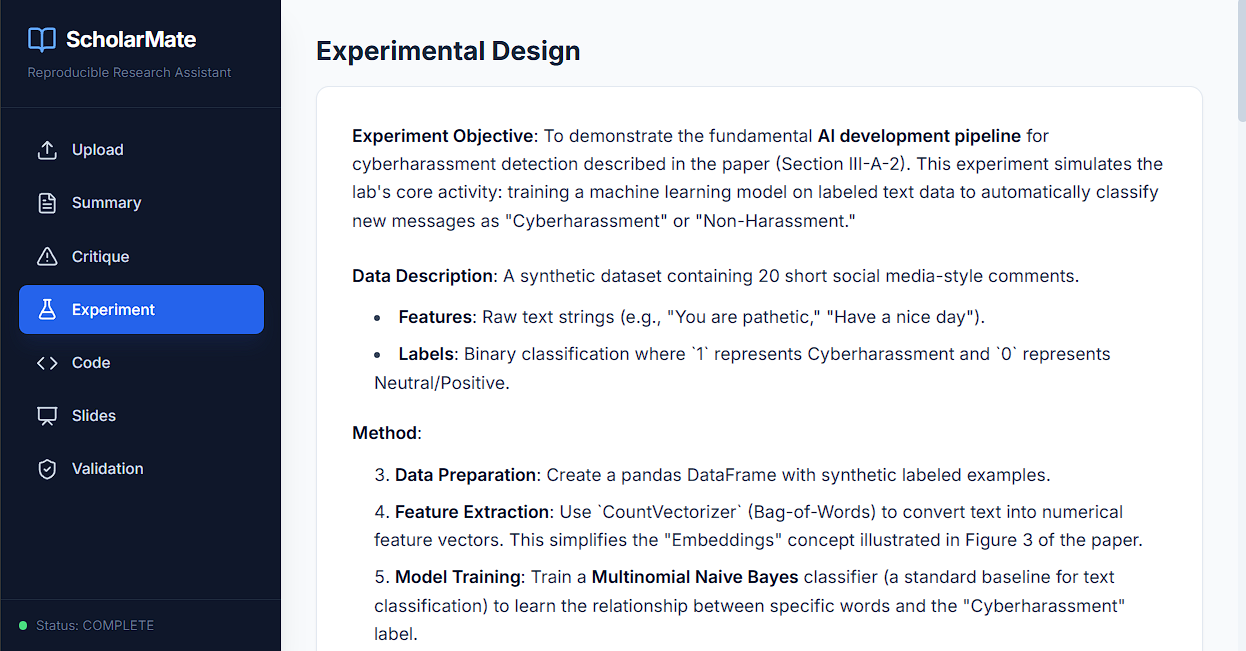
Screenshot 4: Experimental Design
-
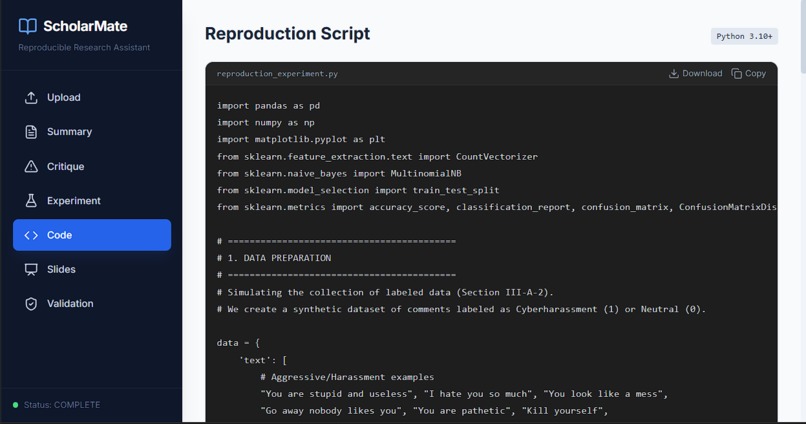
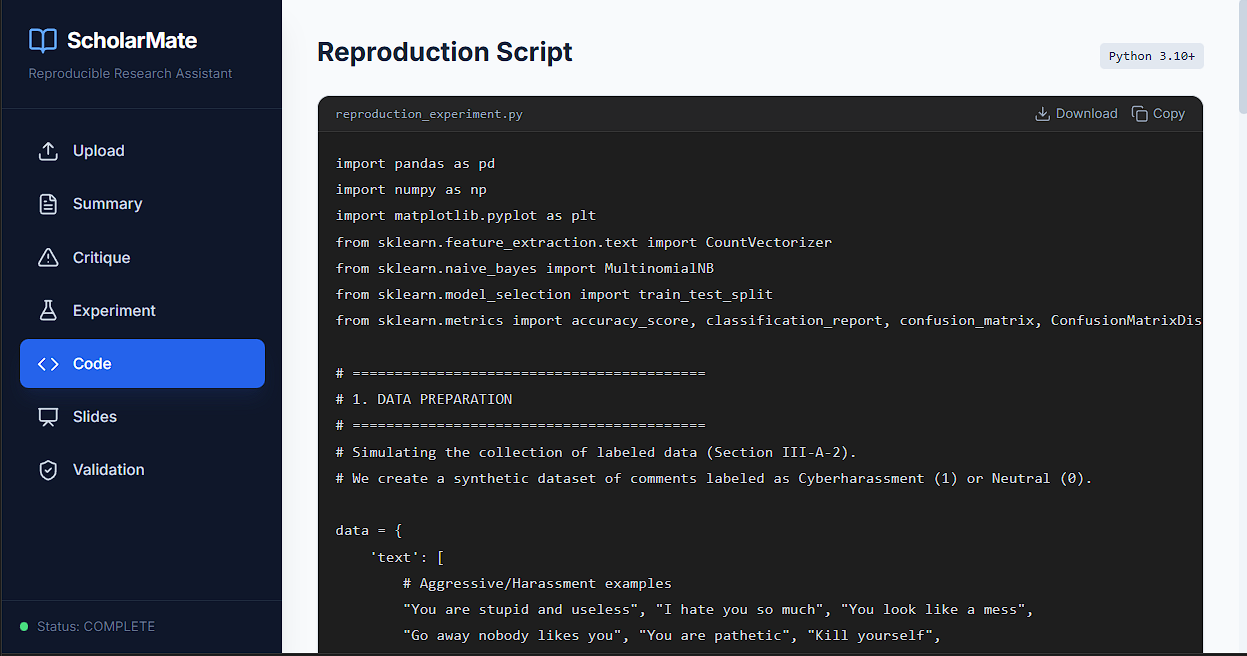
Screenshot 5: Reproduction Script
-
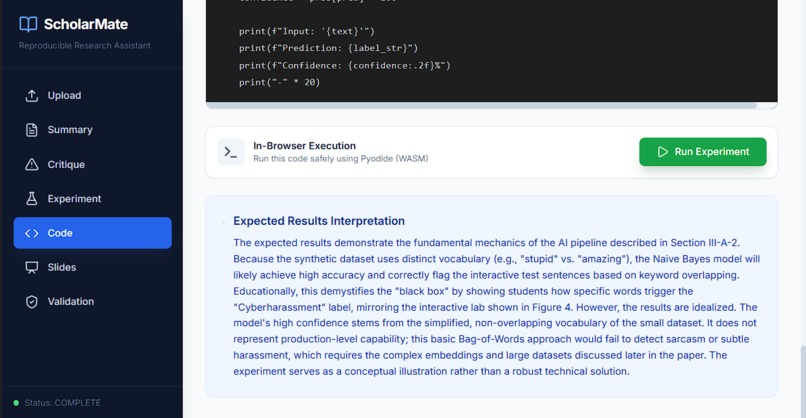
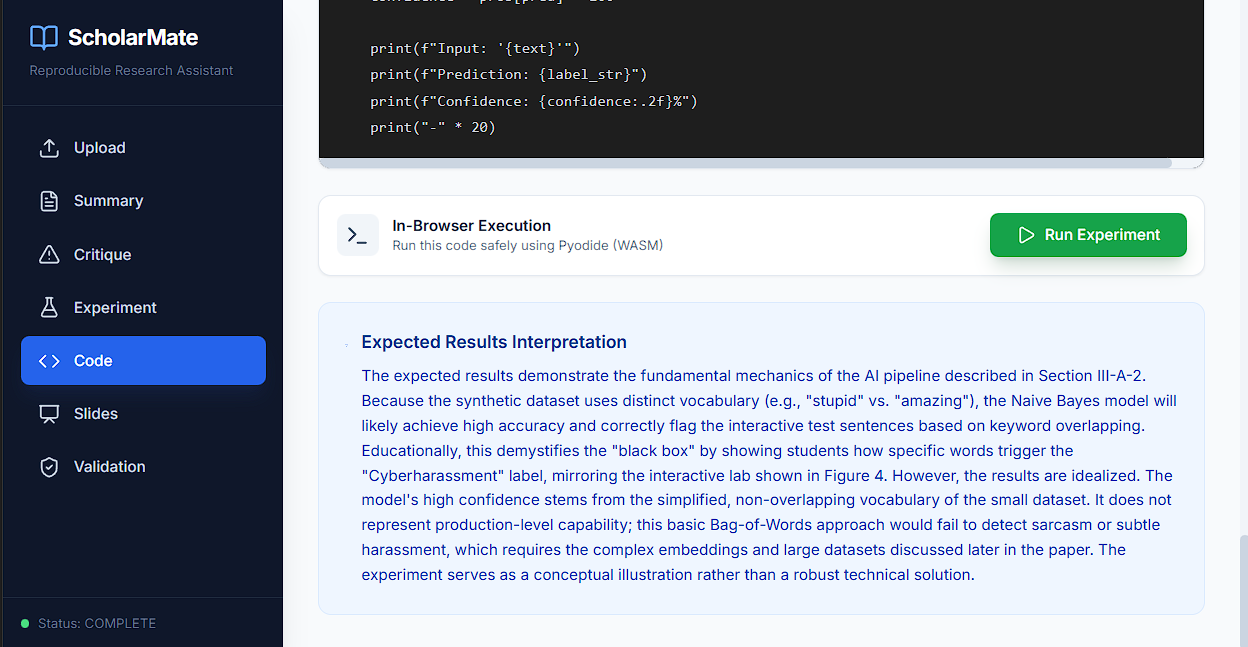
Screenshot 6: Run Experiment
-
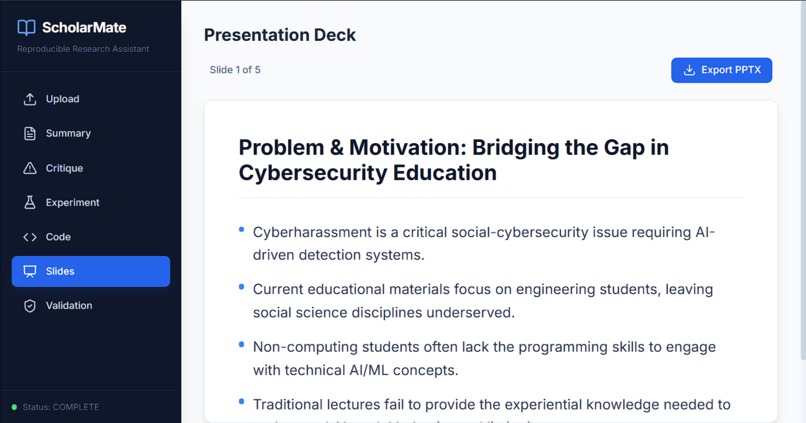
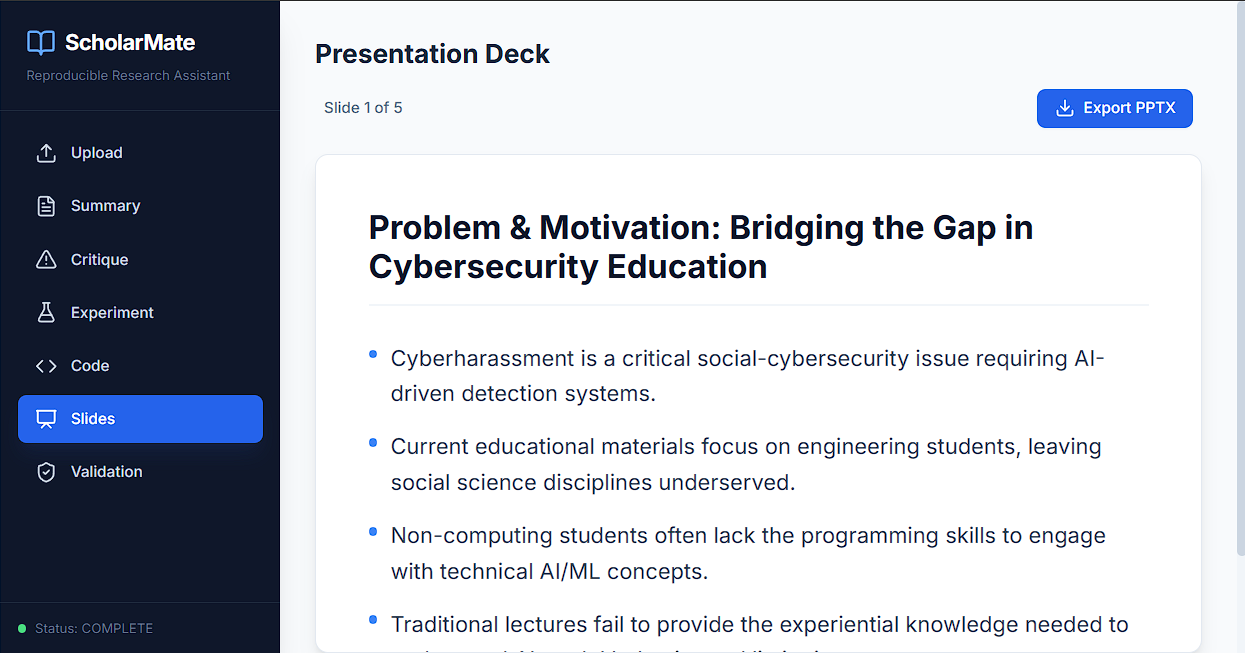
Screenshot 7: Presentation Deck
-
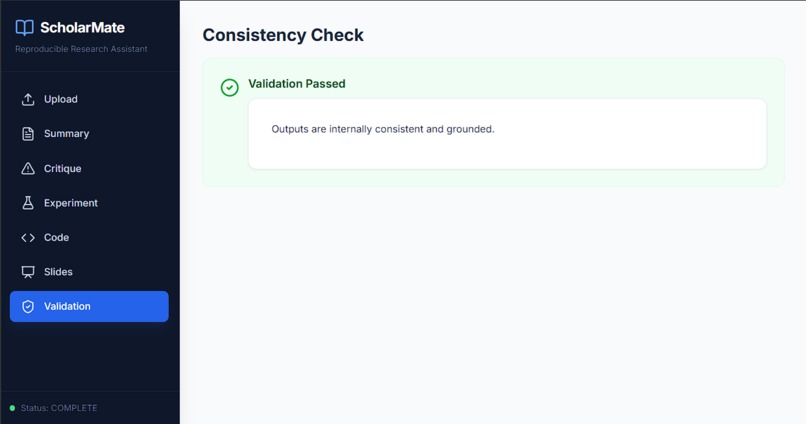
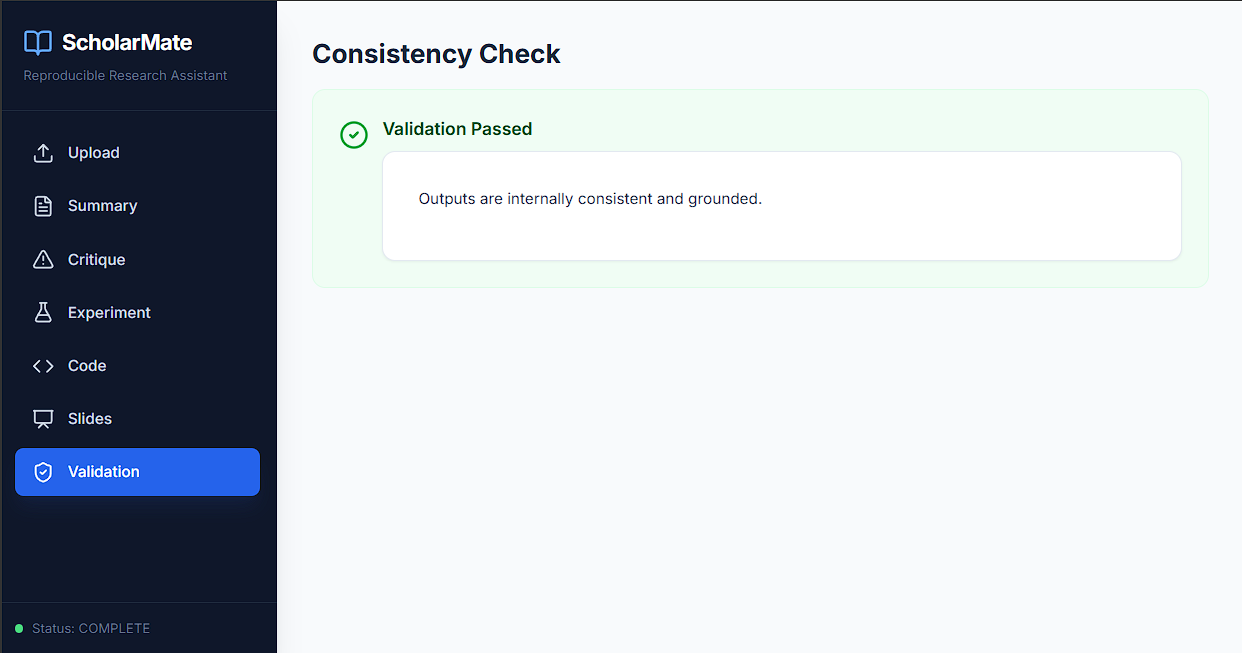
Screenshot 8: Consistency Check
Inspiration
Reading research papers is often a passive experience, especially for students and beginners. While papers explain what was done, they rarely make it easy to understand how to reproduce the results. I was inspired by the gap between reading a paper and actually running an experiment. ScholarMate was built to turn research from something you read into something you can run and explore.
What it does
ScholarMate transforms a research paper into an executable research workflow.
Given a PDF (and optionally a dataset), it automatically generates:
- A concise, grounded summary of the paper
- Three concrete technical limitations
- A reproducible mini-experiment with runnable Python code
- A short slide deck explaining the paper and experiment
The focus is on helping users move from understanding to experimentation in minutes.
How we built it
The system is built as a simple end-to-end pipeline:
- Extract text from the research paper
- Ground all reasoning using retrieval-augmented generation (RAG)
- Use Gemini 3 for structured reasoning and code generation
- Generate and validate runnable experiment code
- Export results and slides automatically
The backend is written in Python, with a minimal frontend for uploads and outputs. The architecture was intentionally kept simple to prioritize reliability and demo clarity.
Challenges we ran into
- Hallucinations from large language models were reduced by grounding responses with retrieved paper content.
- Ensuring generated code actually runs required tight constraints on libraries and runtime.
- Scoping the project was challenging — many features were cut to keep the core flow polished and working.
- Demo stability was critical, as even small failures could break trust.
Accomplishments that we're proud of
- Building a fully working end-to-end system within hackathon constraints
- Generating experiments that are lightweight, reproducible, and executable
- Creating a clear, judge-friendly demo that shows real output, not mockups
- Designing a system that goes beyond chat and delivers tangible artifacts
What we learned
- Retrieval grounding dramatically improves trust and quality
- Smaller, well-executed features outperform complex, unfinished ideas
- Multimodal reasoning unlocks new ways to interact with research
- Clear demos and storytelling matter as much as technical depth
What's next for ScholarMate — From Paper to Reproducible Research
Next, ScholarMate could expand to:
- Support multiple papers for comparative analysis
- Add citation-aware experiment validation
- Integrate notebook execution environments
- Enable collaborative research workflows
The long-term vision is to make research papers truly executable and accessible to everyone.


Log in or sign up for Devpost to join the conversation.