-
-
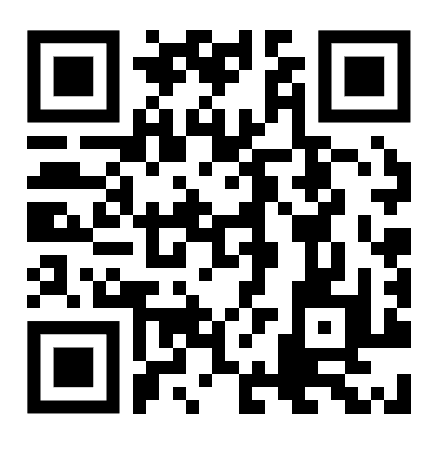
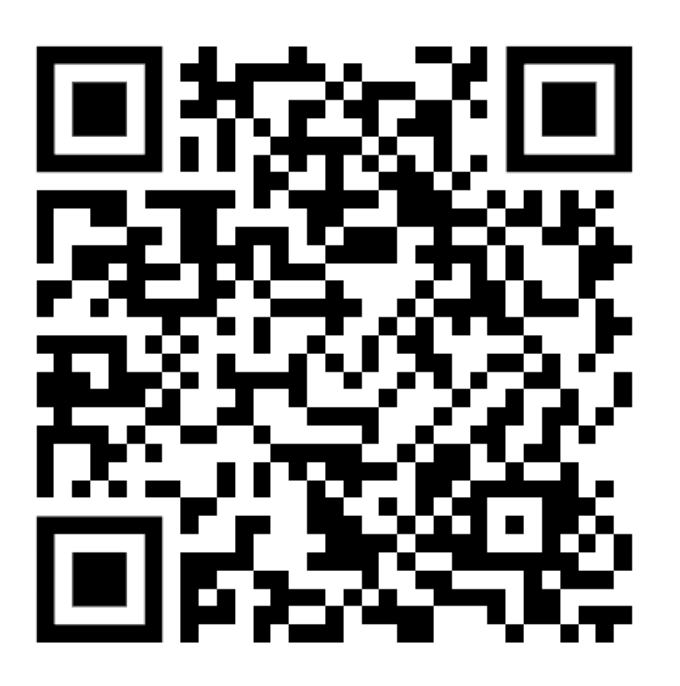
QR code: a backup in case the second one does not work.
-
QR code: in order to access a demo version of the app
-
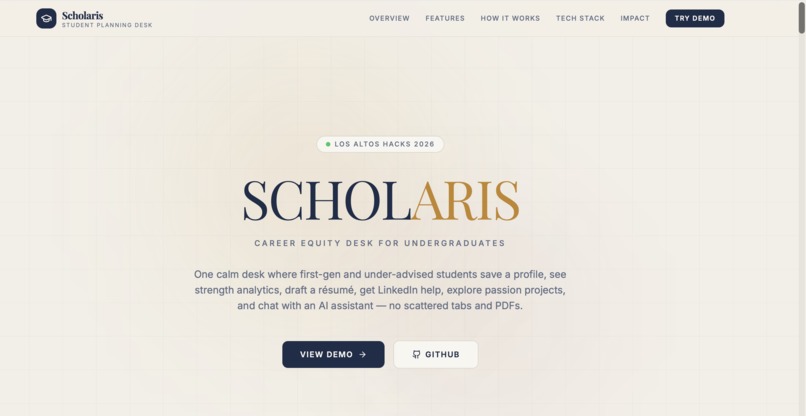
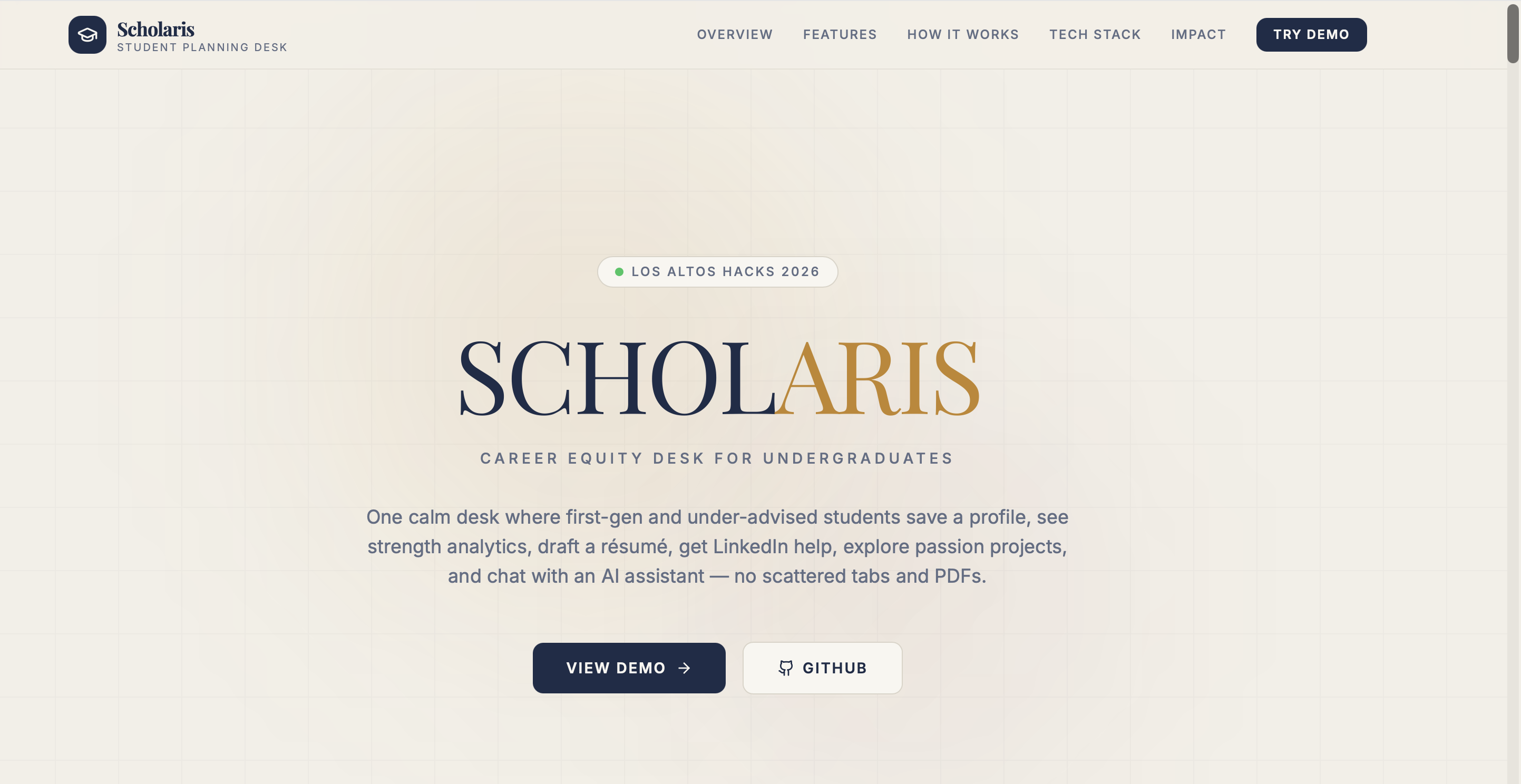
Website: Scholaris Website Launch Front Page
-
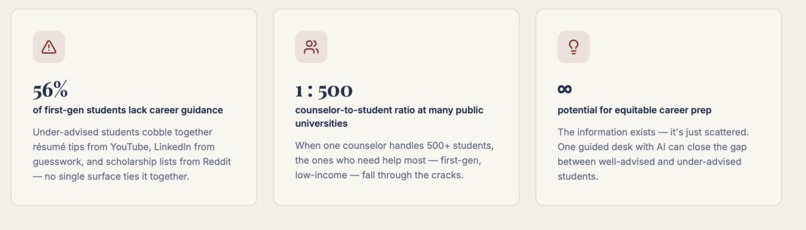
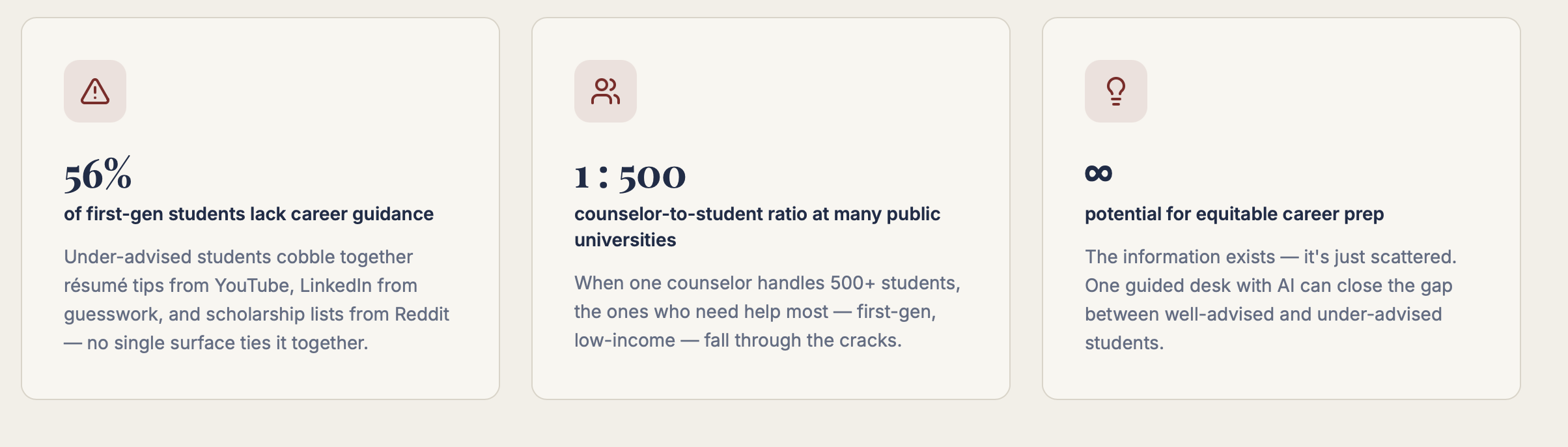
Website: Analysis on First Gen Students and Lack of Counselors
-
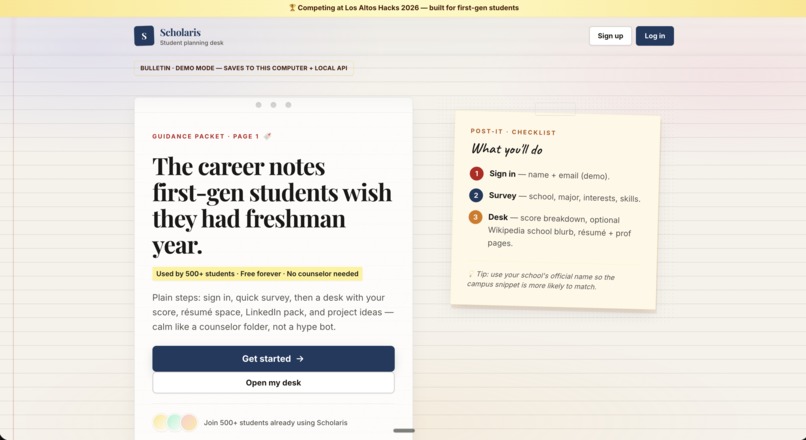
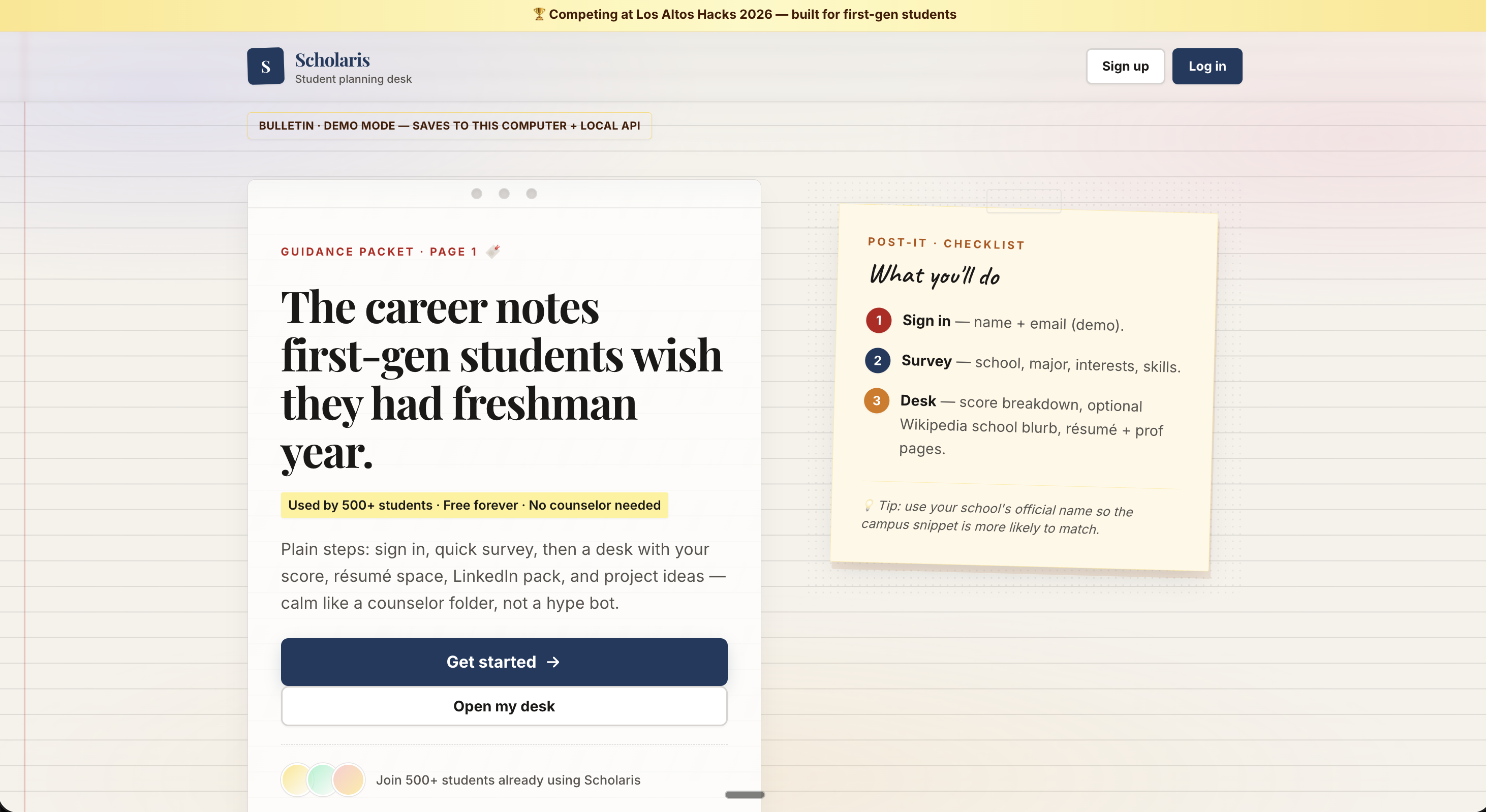
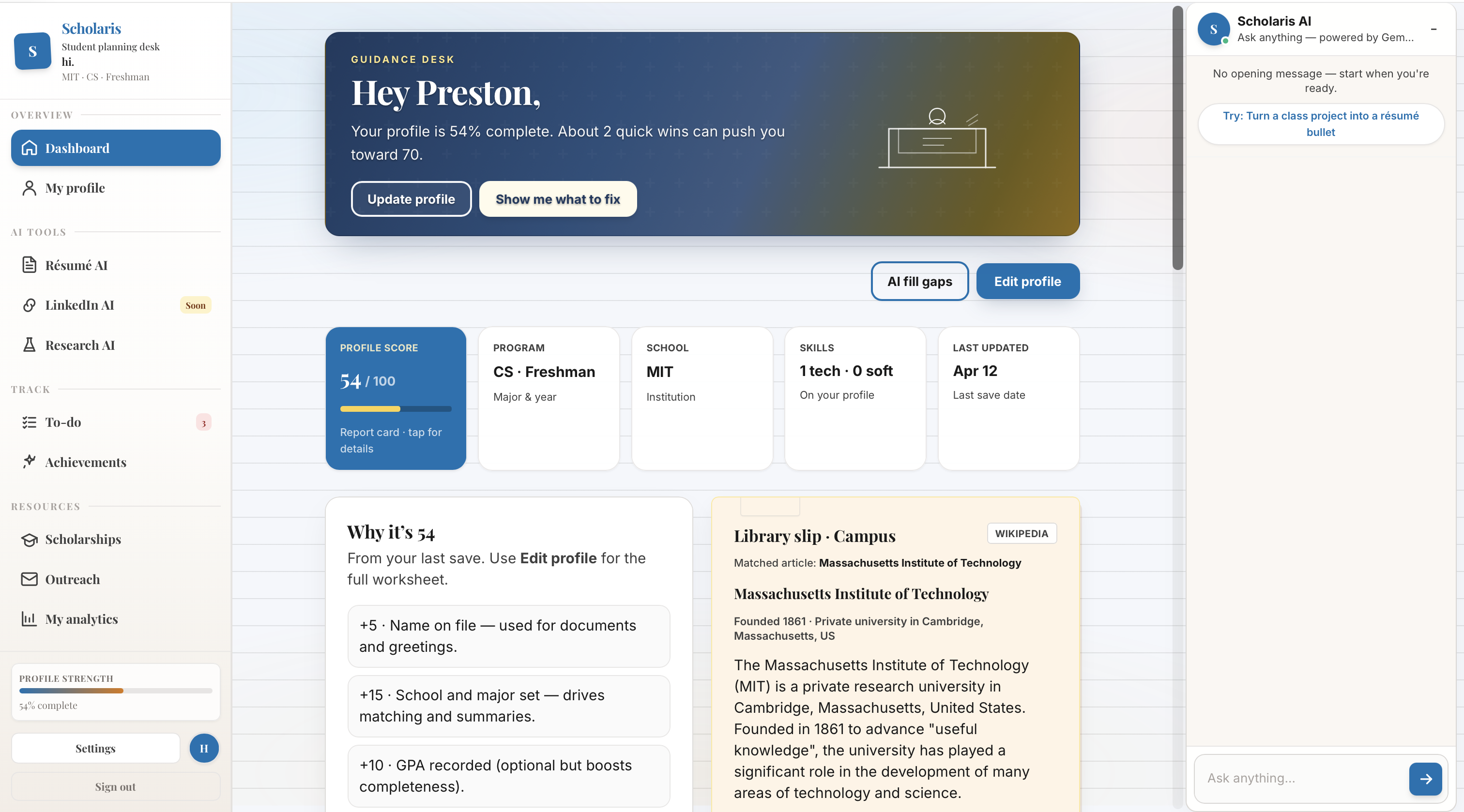
Introductory Page: Introduces the user with the features of the app.
-
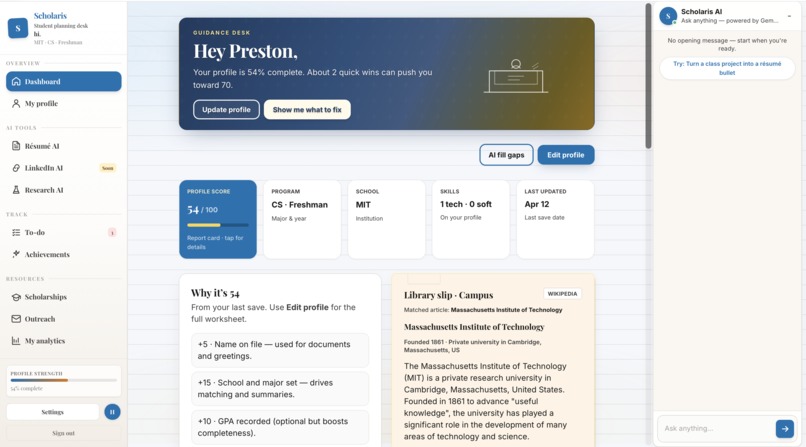
Main Page: Shows most of the data of the app to the student in front of them.
-
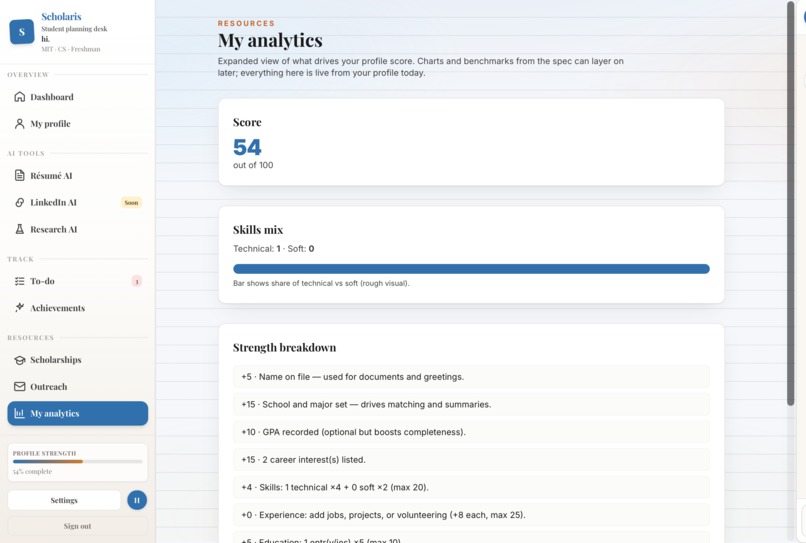
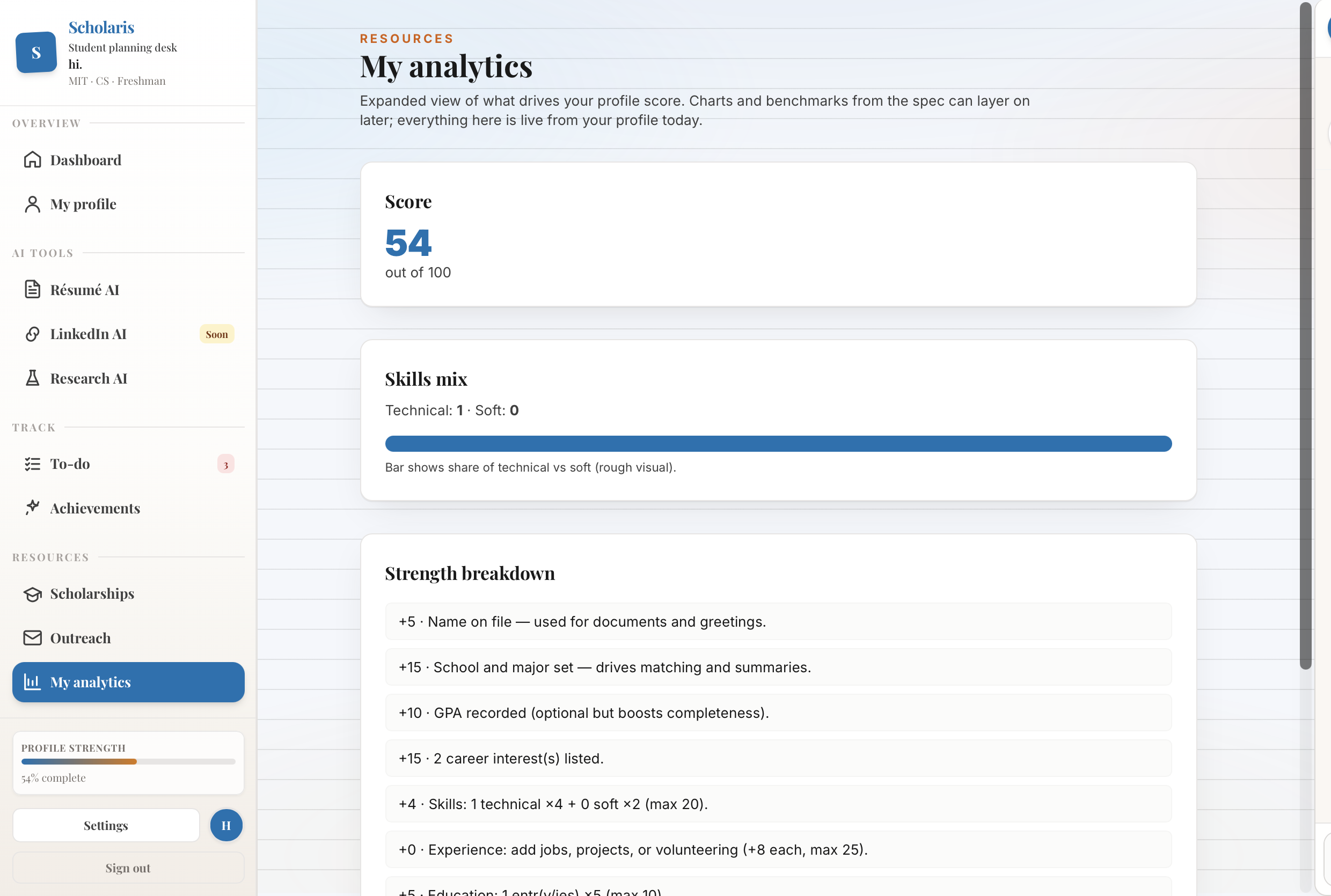
Analytics: allows you to analyze your score and compare in college admissions
-
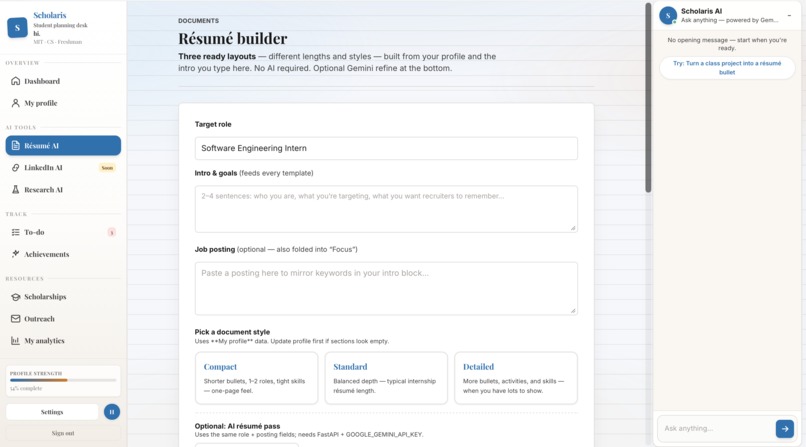
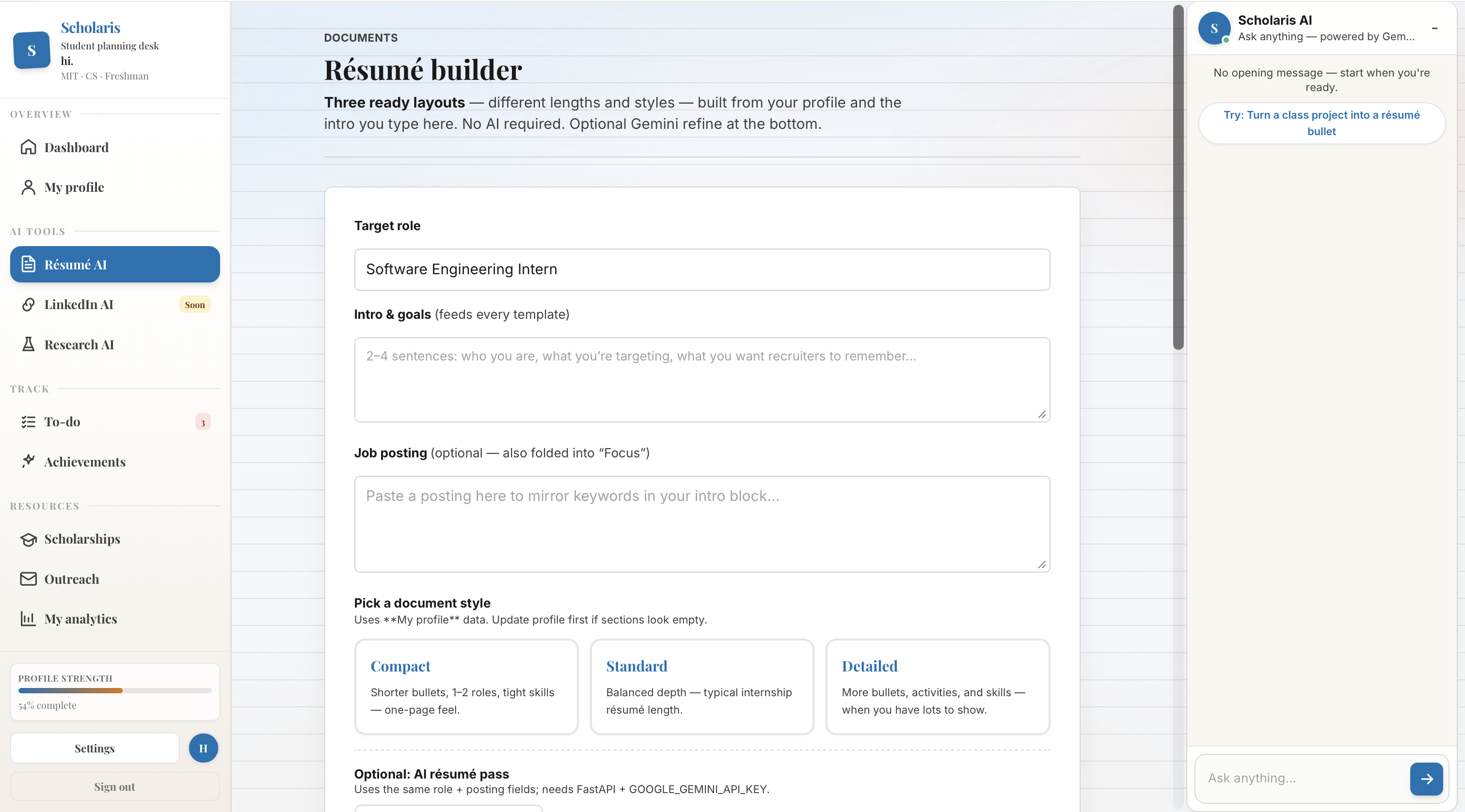
Resume AI: Allows you to create good resumes based on your experiences and past knowledge.
-
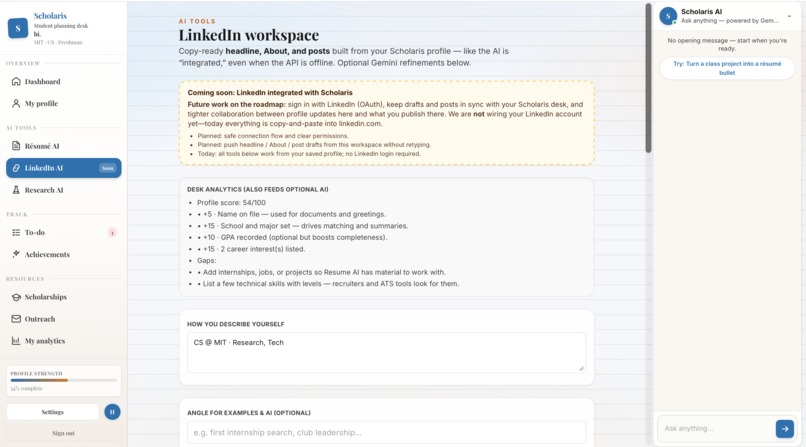
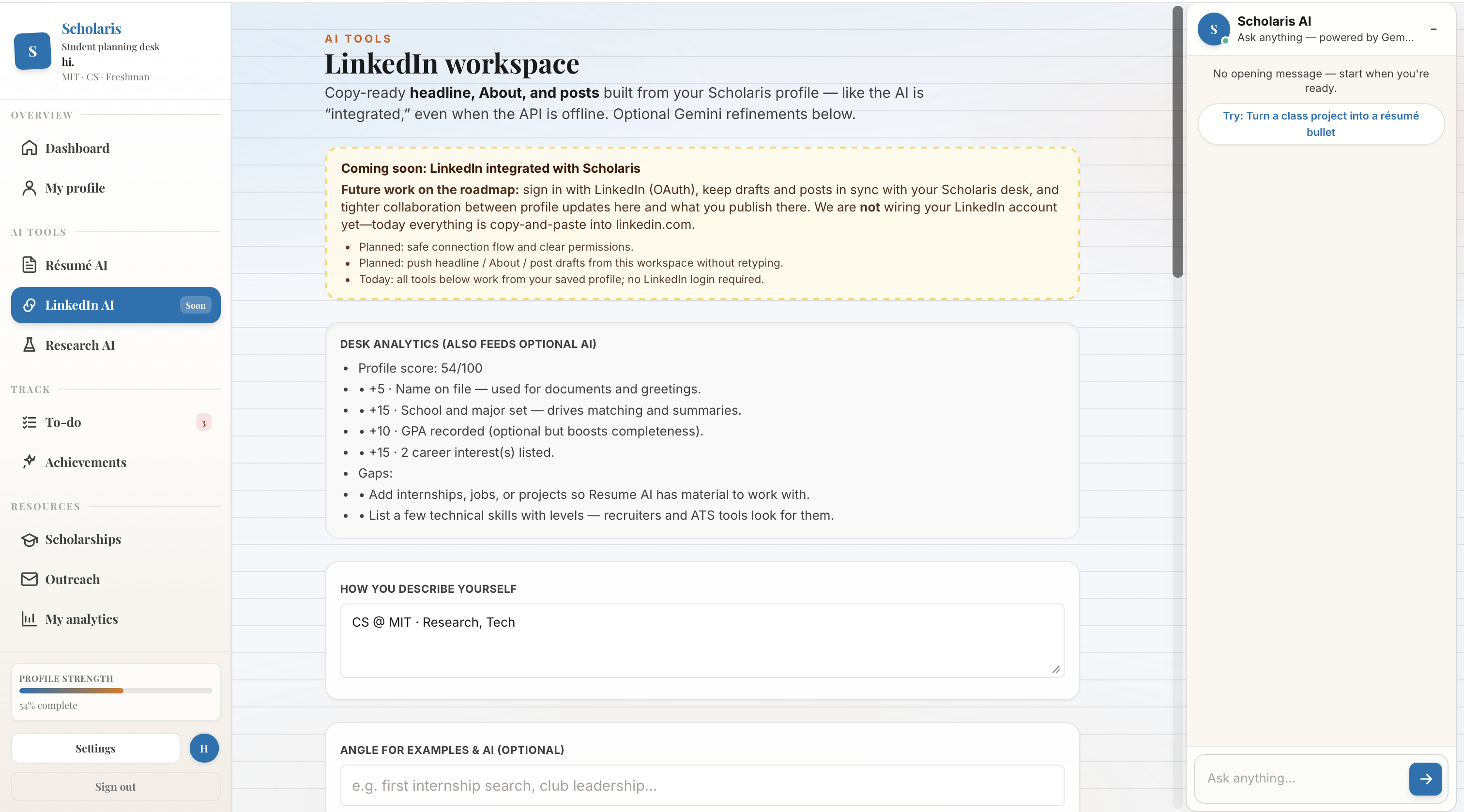
LinkedIn AI: An AI that allows you to draft and update your bios in LinkedIn
-
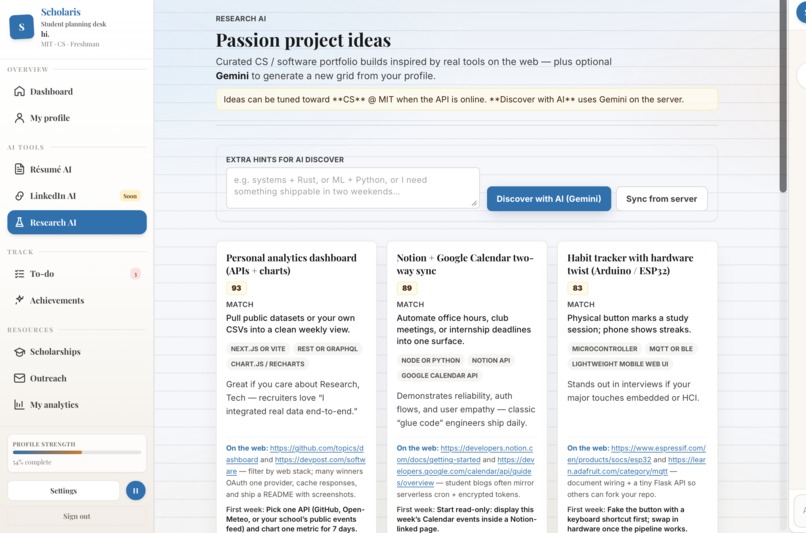
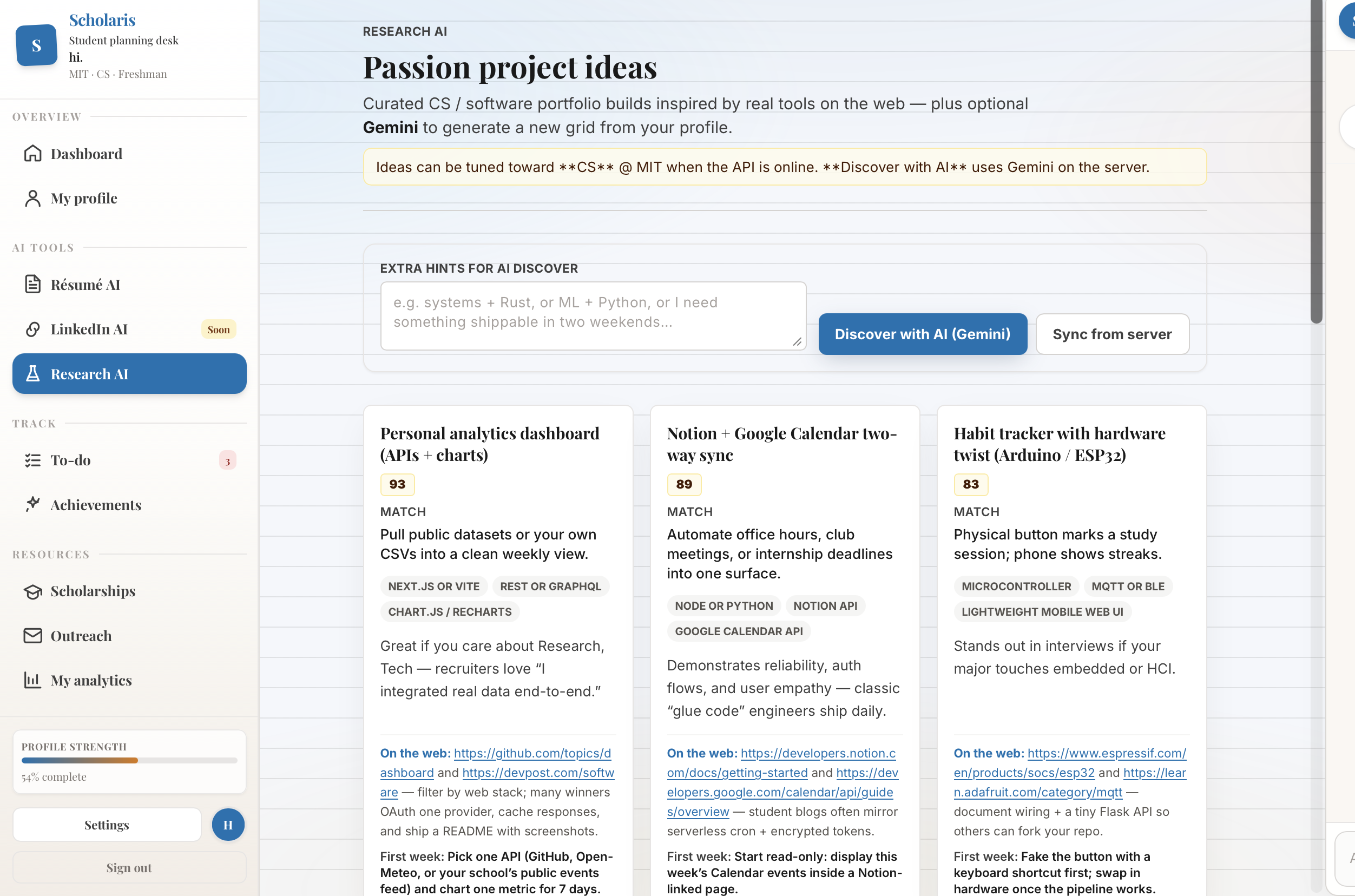
Passion Project Ideas: A generator for ideas you can do for passion projects to improve your application.
-
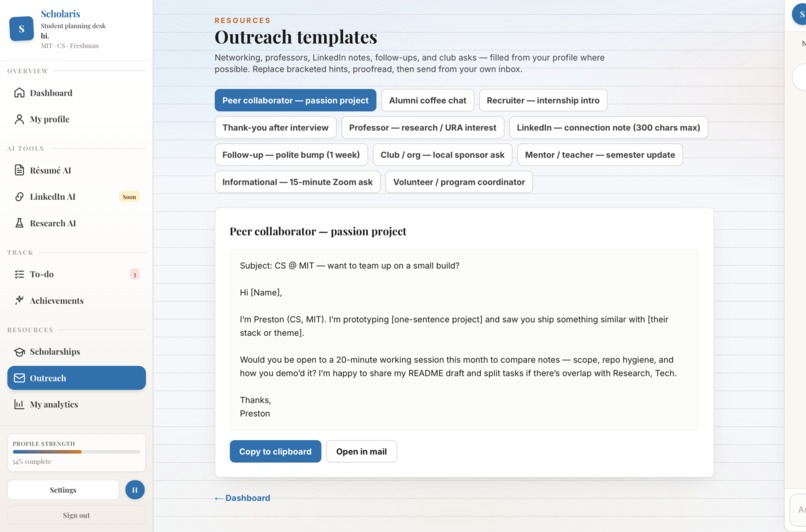
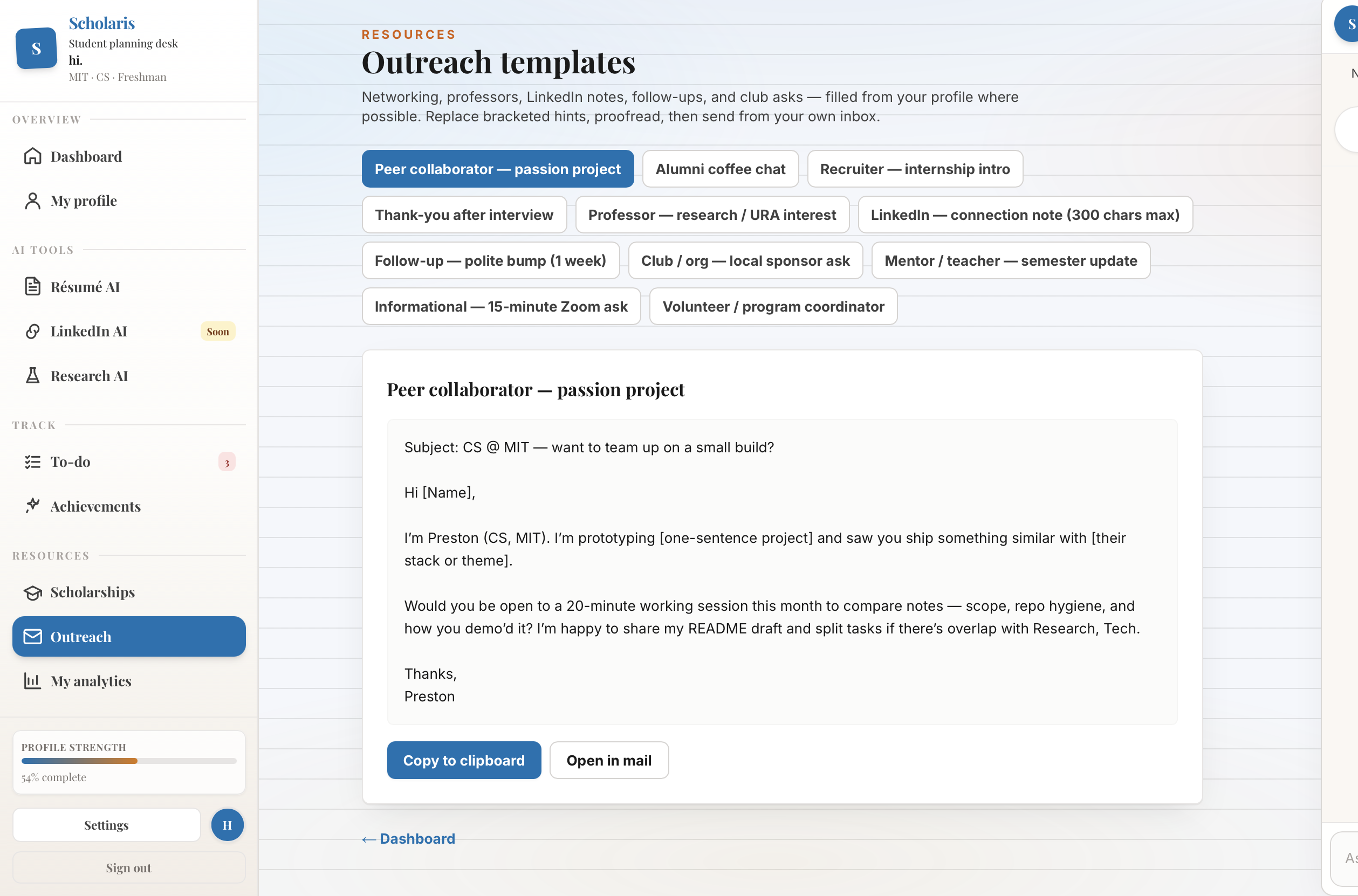
Outreach templates: They allow you to be able to outreach and expand your networking portfolio.
-
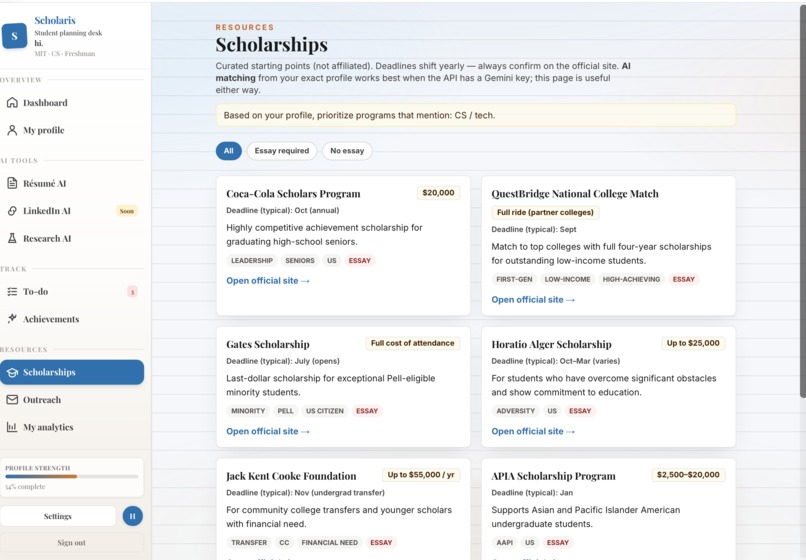
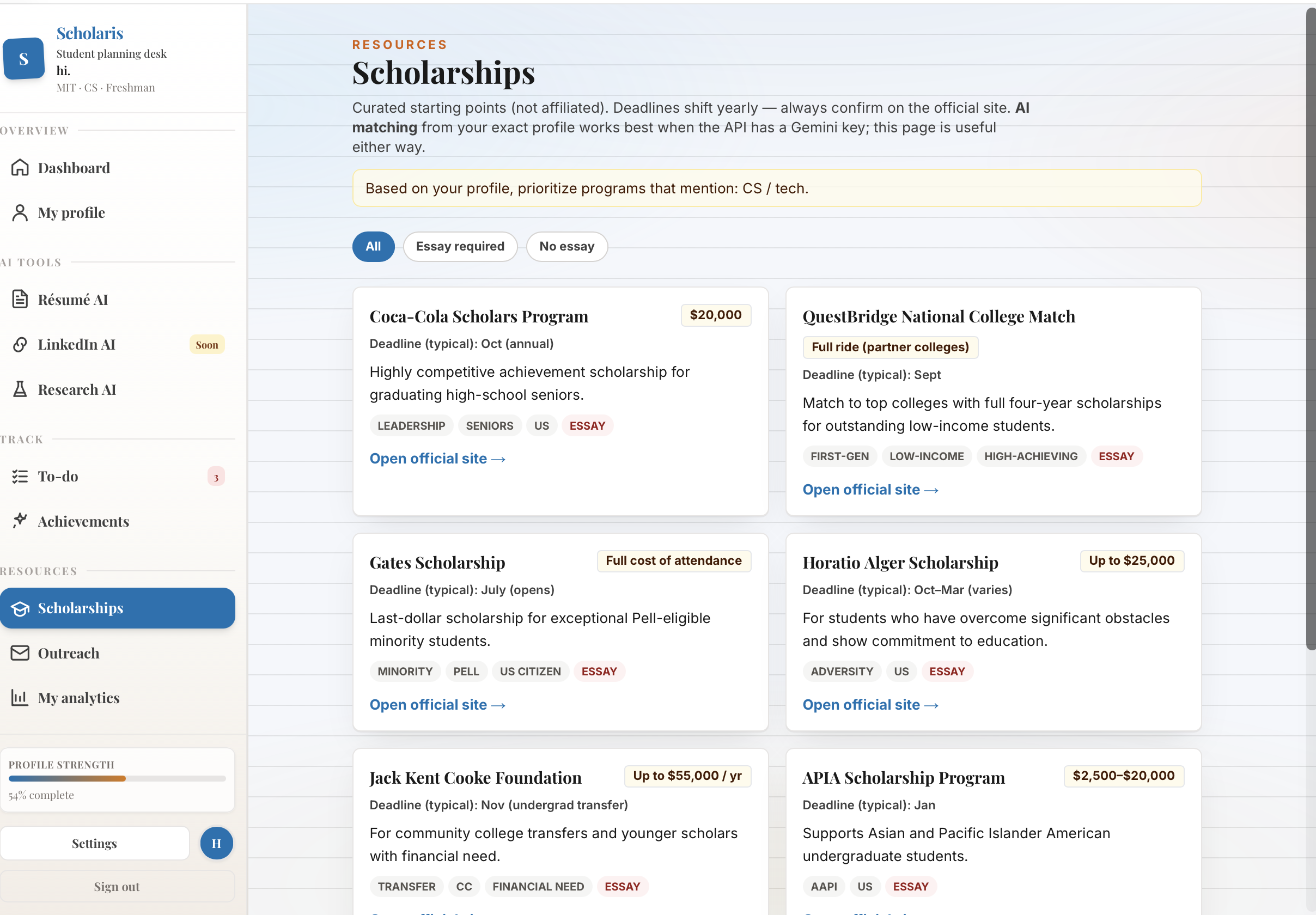
Scholarships: A match here for scholarships and opportunities that students can find.
-
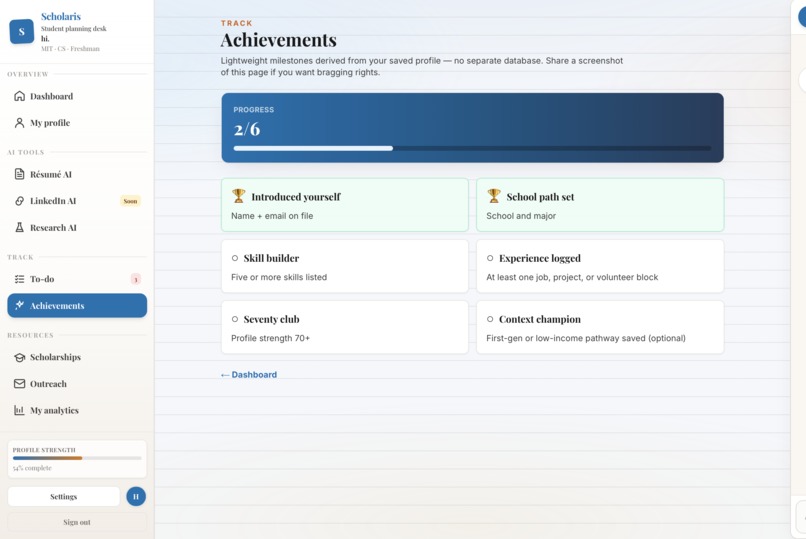
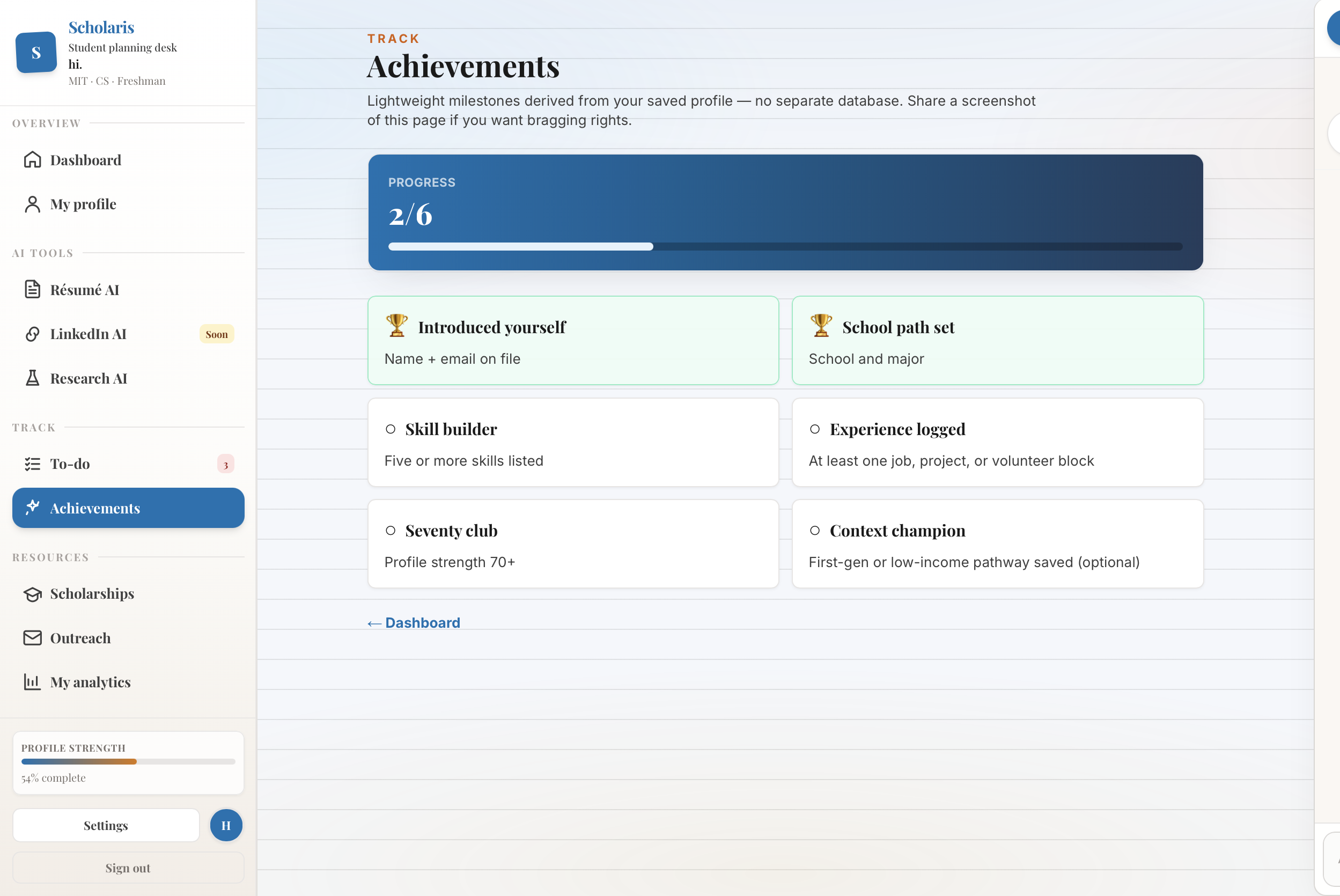
Achievements: A scoreboard of achievements and checklists the student can do in order to track their progress
-
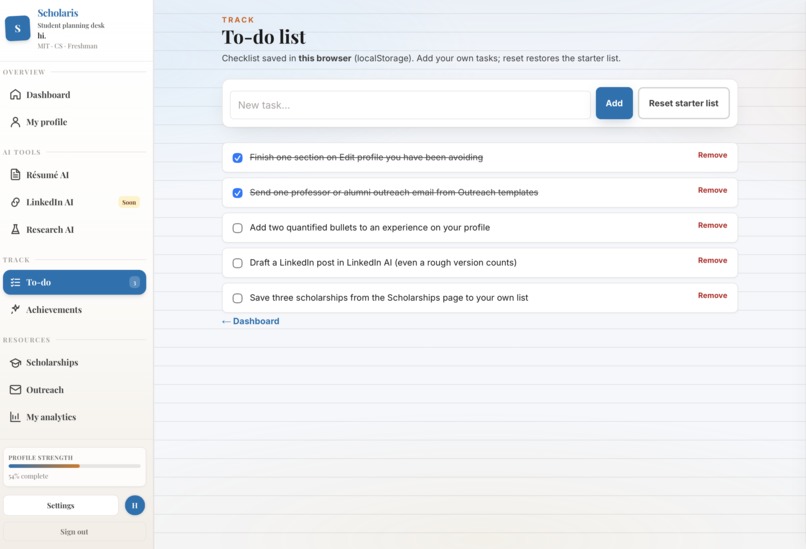
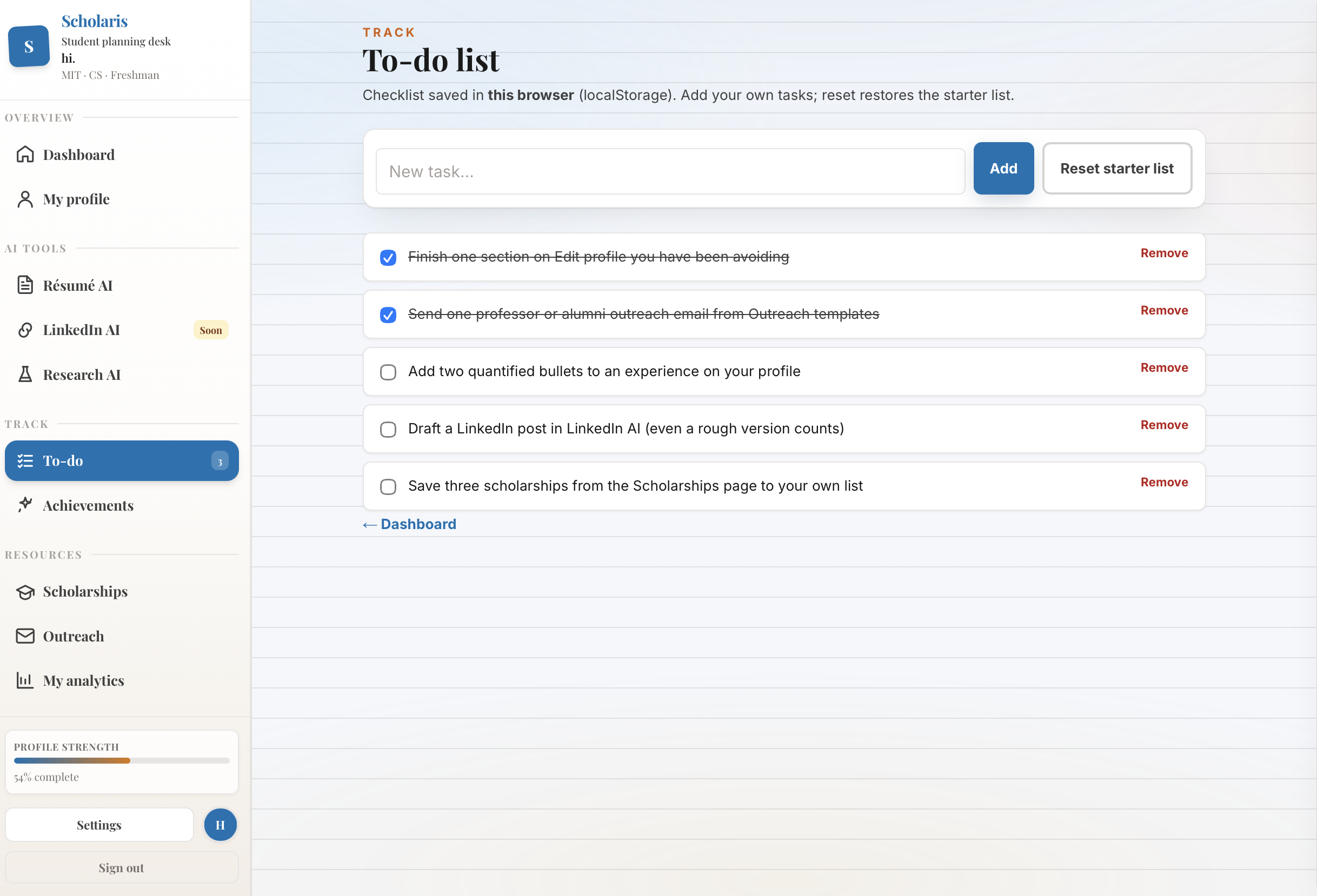
To-do list: Tells you exactly what you need to do in order to accomplish your dreams and get to your dream college
-
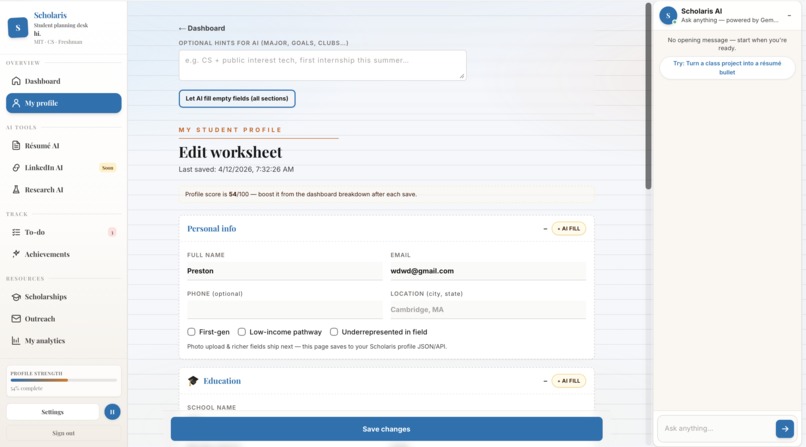
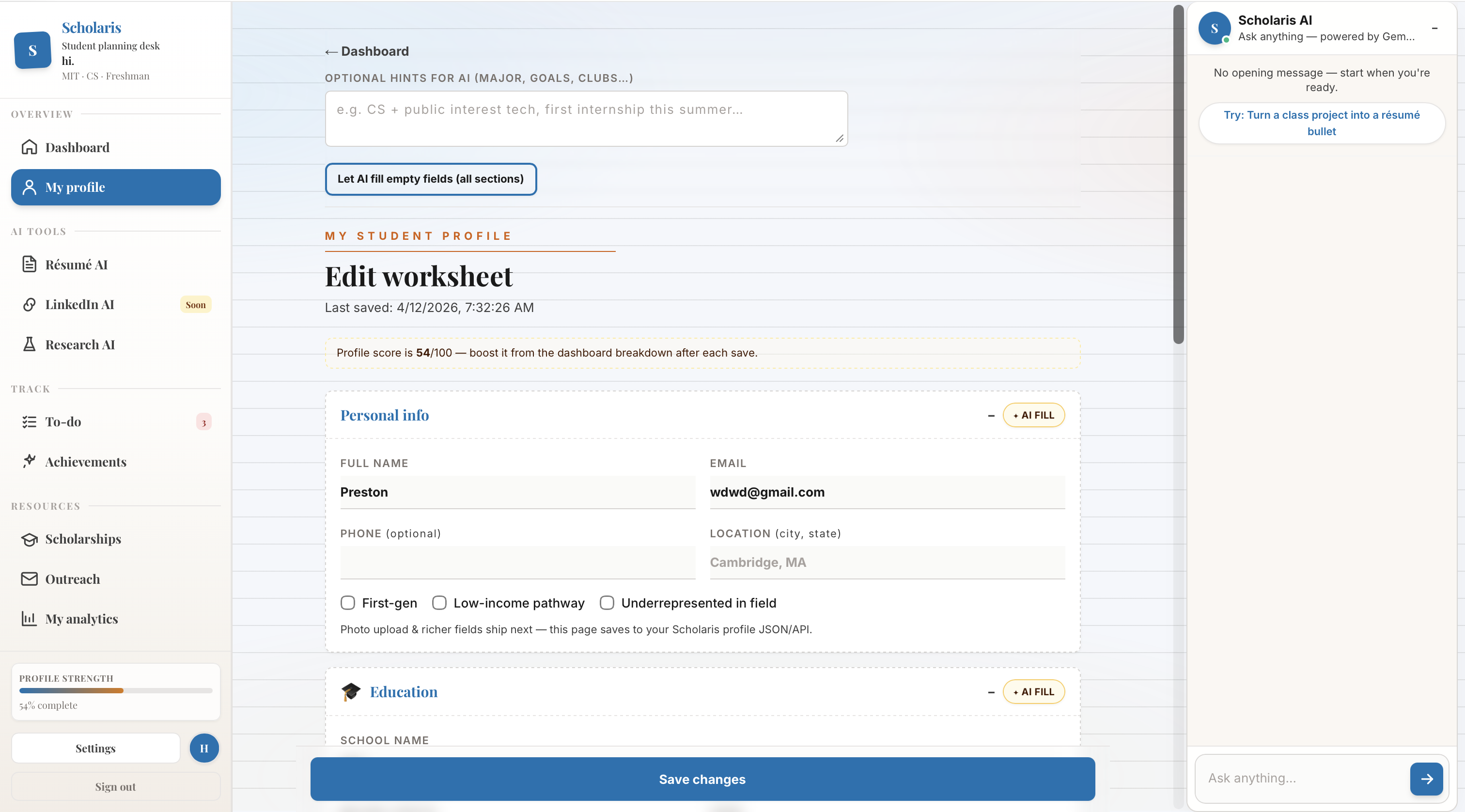
Edit Worksheet: A worksheet that allows you to edit any information about yourself.
Inspiration
They assume you have parents who went to college, a counselor who knows your name, a network of alumni to cold-call, and enough free time to figure out what a CNAME record is. First-generation students don't have any of that.
We built Scholaris because we've lived it. Figuring out how to write a resume, how to email a professor, how to even know what opportunities exist — none of it is written down anywhere. You either know someone who knows, or you miss it entirely. Our application gives students who are unable to afford a counselor, or do not have the same amount of resources that a normal student has.
What it does
Scholaris is an AI-powered career equity platform built for first-generation and underrepresented high school and college students — giving them the same strategic advantage that privileged students get from family connections, prep school counselors, and expensive career coaches.
Builds your profile through a guided onboarding survey — school, major, interests, skills, experience — and stores everything in MongoDB Atlas so every tool gets smarter as you add more
Generates a tailored resume in one click, with ATS-optimized bullets pulled directly from your profile. Paste a job description and it rewrites your bullets to match
Creates your LinkedIn presence — headlines, About section, skill recommendations, and post drafts for any milestone (new project, hackathon win, transfer acceptance)
Matches you with professors doing research aligned with your interests, then writes you a personalized cold email referencing their actual work — so you can break into research without knowing anyone
Runs an AI assistant powered by Gemini that remembers your full profile, answers career questions, and updates your data in real time when you share new information
Surfaces scholarships, nudges, and quick wins so you always know the single most impactful thing you can do next
How we built it
We used different types of languages in VS Code, a programming system which included HTML, CSS, JavaScript, TSX, and other programming languages, which are combined in order to create the interactive systems. We also used other variables along with different systems in order to post and host the website on the public server. Other things and languages that we used were package.json and other languages, which further help enhance other aspects of the project. We also use APIs for our AI in order to enhance the process of using our website.
Challenges we ran into
MongoDB caused a lot of trouble due to how it was throwing up a lot of errors since Mongo DB is complicated to integrate in Vercel as well as linking it to Render in the process of us trying to post the website on to a host called .tech for everyone to use. We spent four hours troubleshooting the code and working manually to fix all issues and ensure the website ran smoothly, even when live and posted.
Accomplishments that we're proud of
For the first time, we did manage to post it, which is something that we have never done before in a hackathon. We are very proud of all the features we integrated, which work seamlessly with each other to improve the experience.
What we learned
We learn many different languages, along with how to use different services such as Render or MongoDB or other things, which will help us in the future to develop even better apps. We learned how to integrate Mongo DB properly and integrate Vercel and Render for the API keys as well as for the tech domain. We learned how to integrate general AI with Gemini API key as well as efficient execution and structure in React.
What's next for ScholarisApp
We plan to add firstly, the integration between Linkedln and Scholaris as we can extract more information and data that allows for more opportunities when our Gen AI researches different connections and jobs connected to the user's passion and major, allowing for higher potential in internships and connections. We also plan to have a larger database for large scale users as well as mroe agentic AIs integrated through different categories to indiviually and efficiently research ideas such as the passion project ideas, research projects and cold emails.
Built With
- .tech
- fastapi
- geminiapi
- javascript.
- json
- mongodb
- package.json
- python
- react
- render
- tailwindcss
- typescript
- vercel


Log in or sign up for Devpost to join the conversation.