Inspiration
Scientific research is growing rapidly, but finding reliable papers, understanding complex studies, and writing literature reviews remain time-consuming challenges for students and researchers. Generic AI tools can sometimes generate inaccurate citations or unsupported information.
I started ScholarHub AI with a vision to make trustworthy academic research more accessible, efficient, and intelligent for everyone, regardless of their institution or geographical location.
What it does
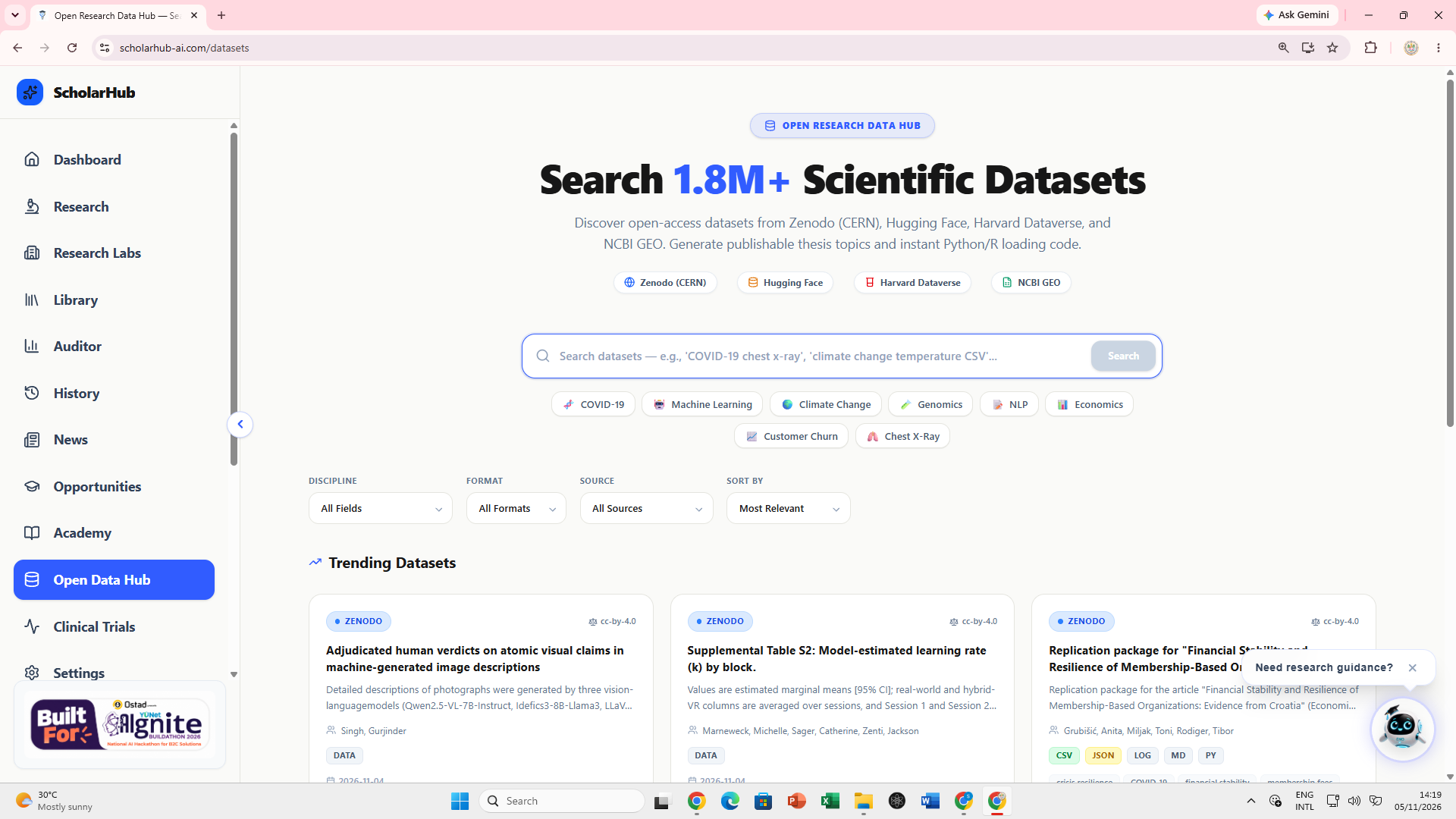
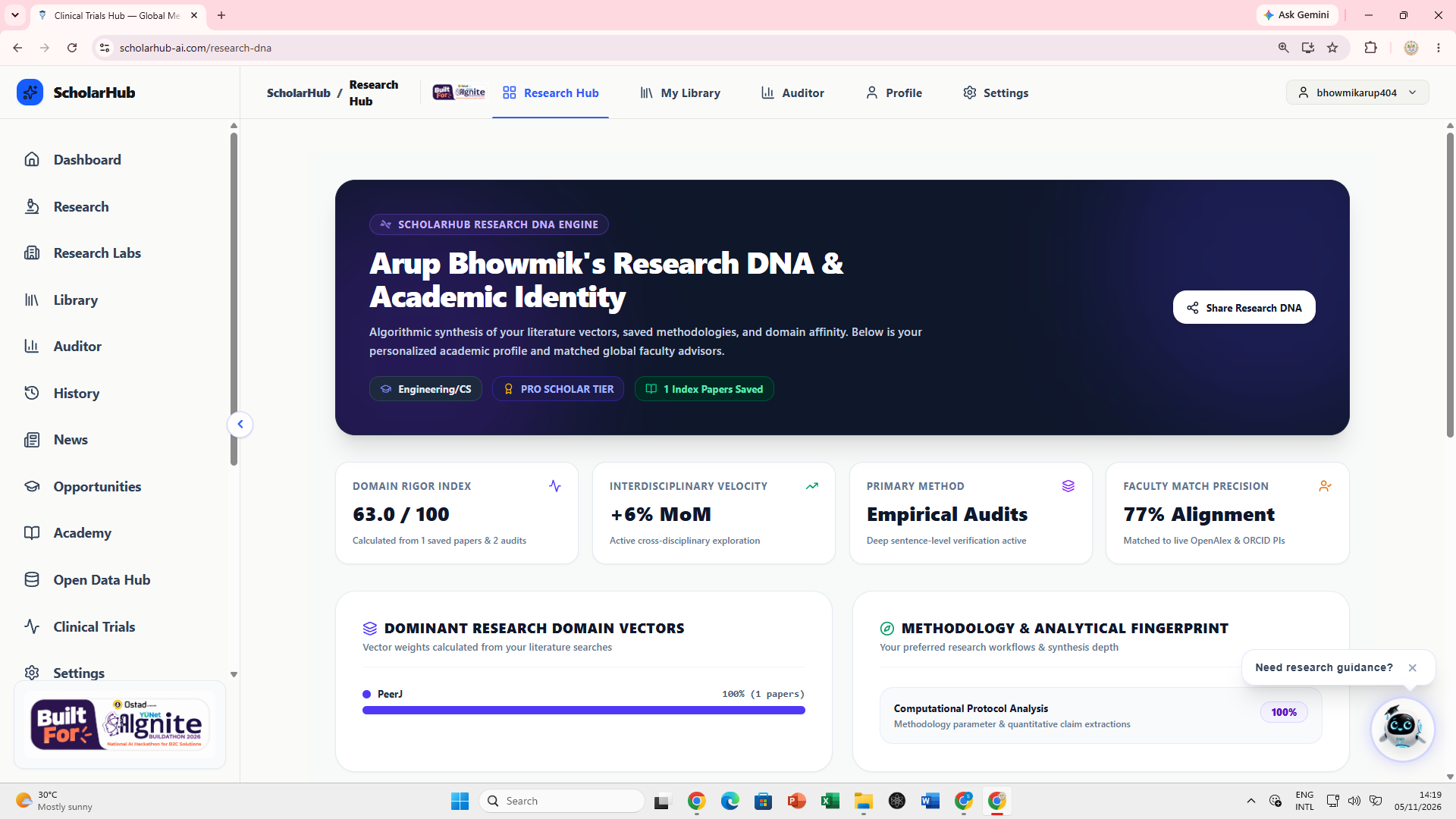
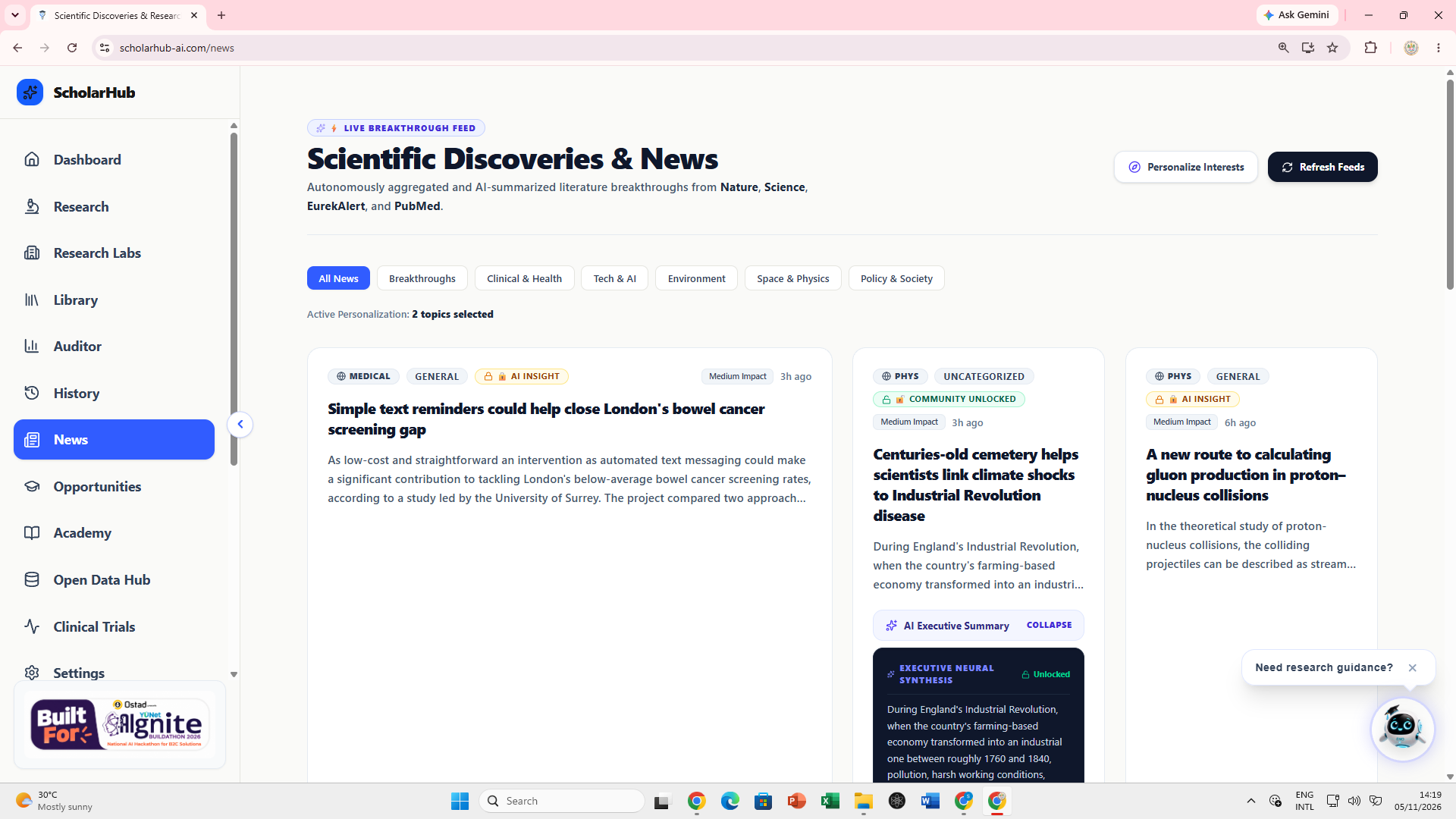
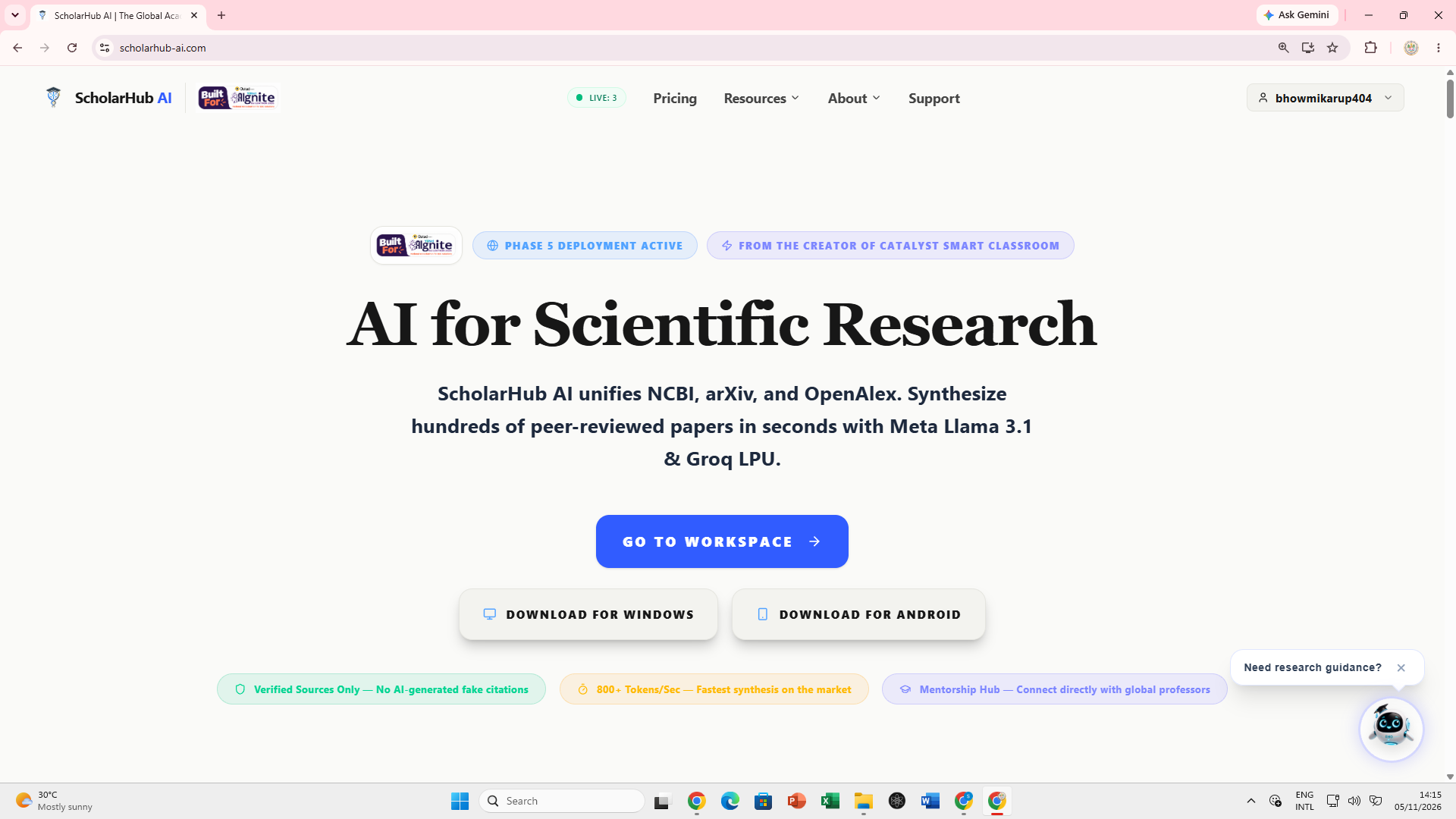
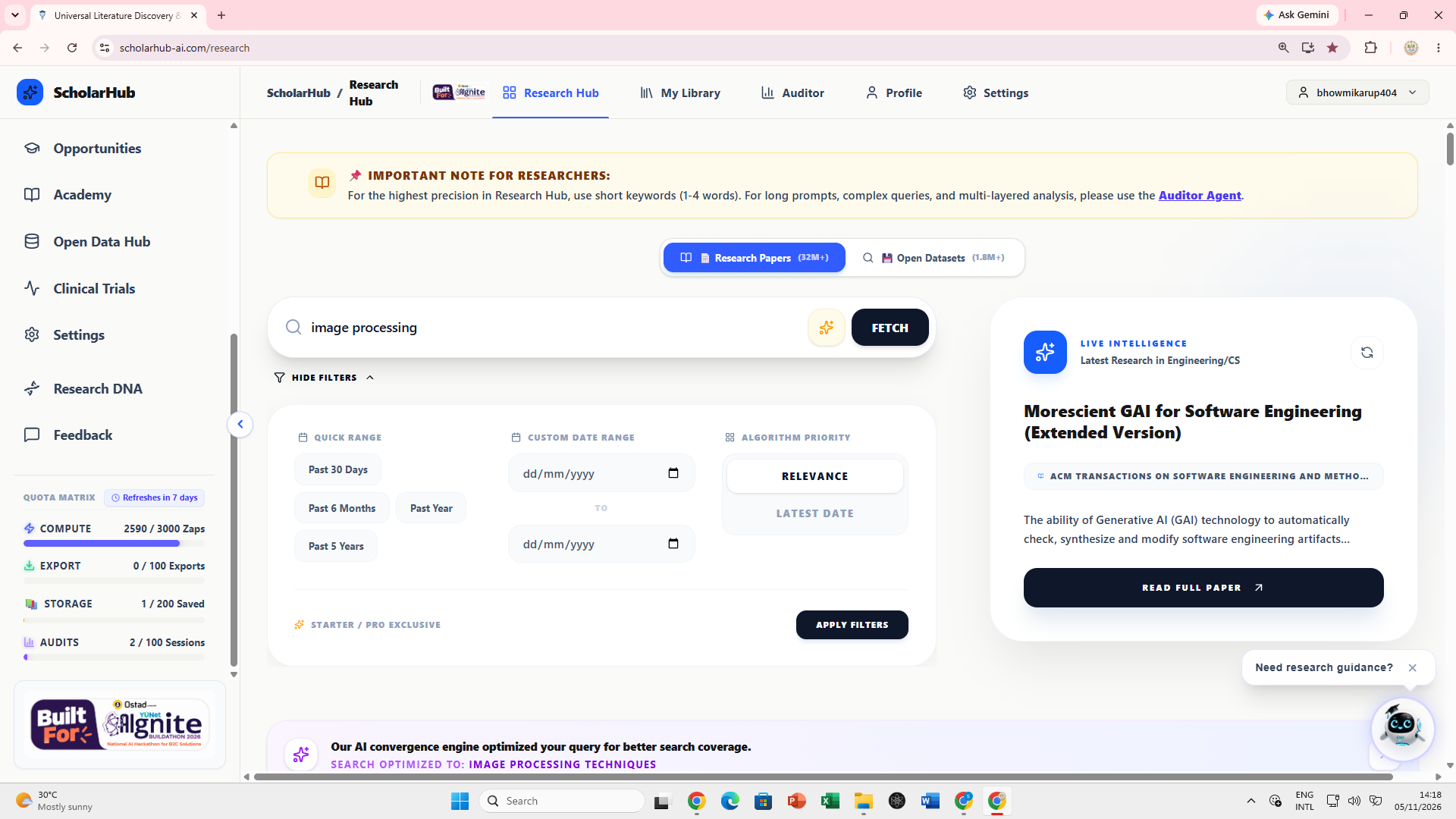
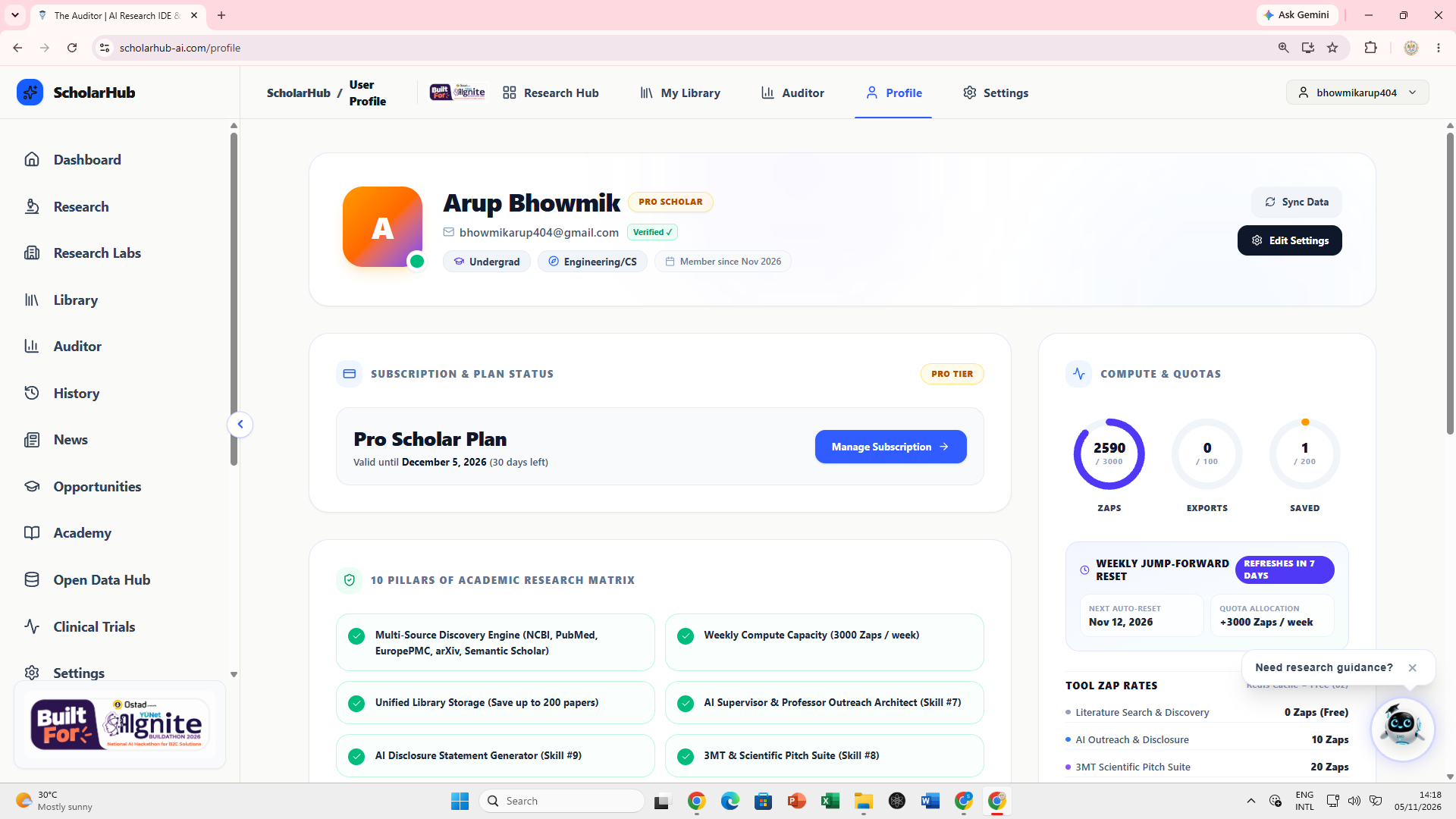
ScholarHub AI is an AI-powered academic research platform that brings multiple research resources into one unified ecosystem.
Key features include:
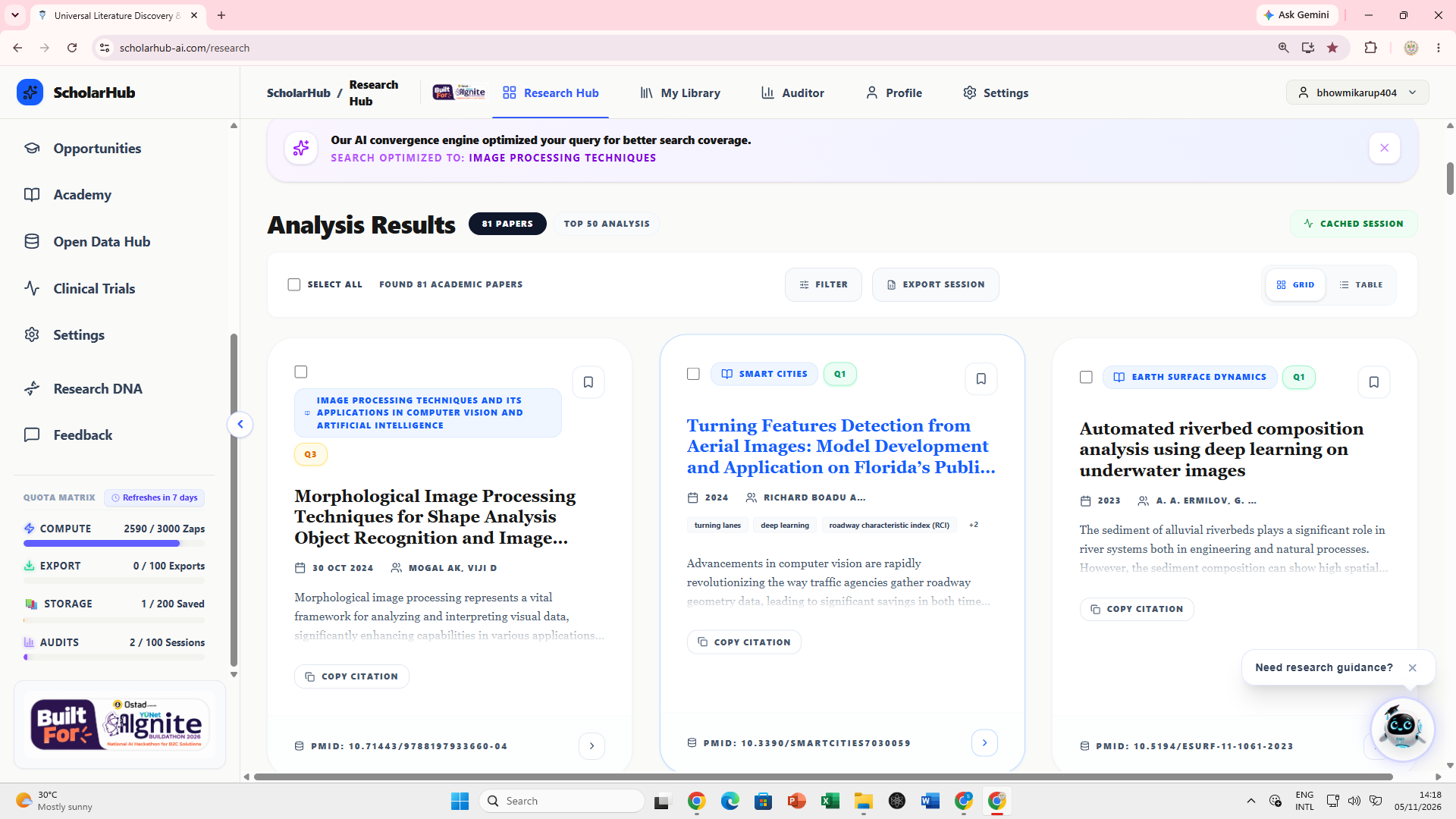
- Unified research discovery across NCBI, PubMed, arXiv, and OpenAlex.
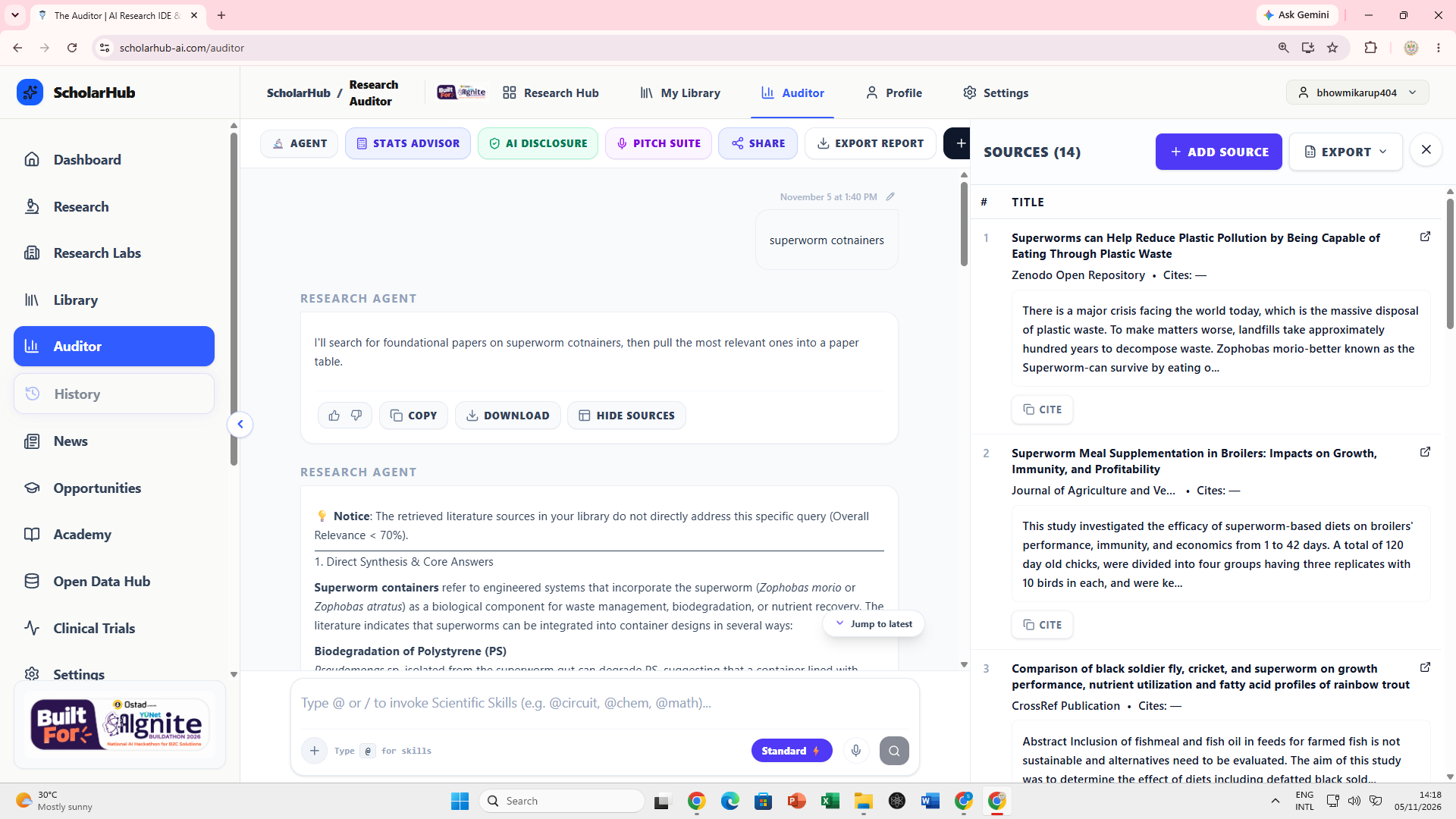
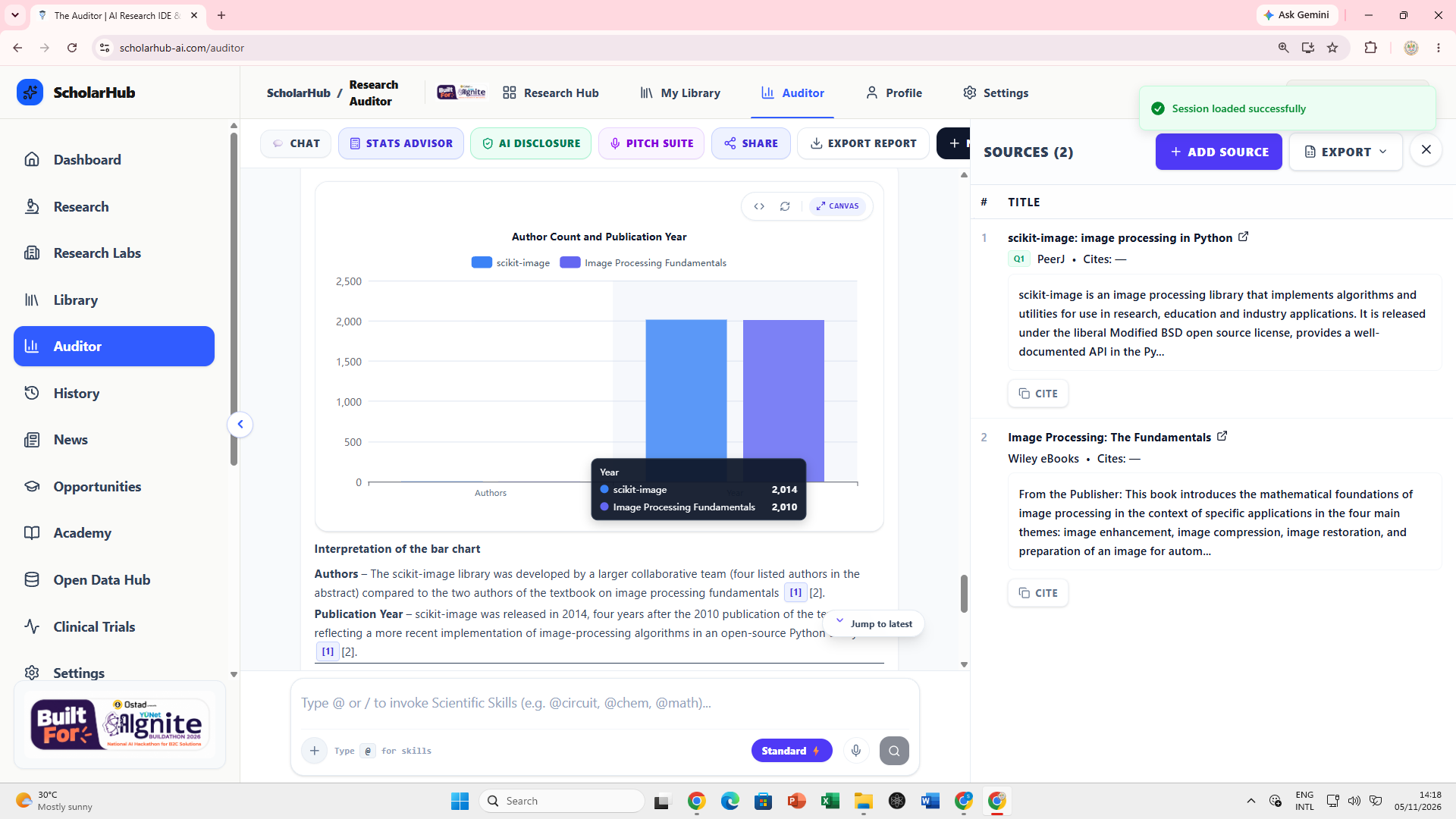
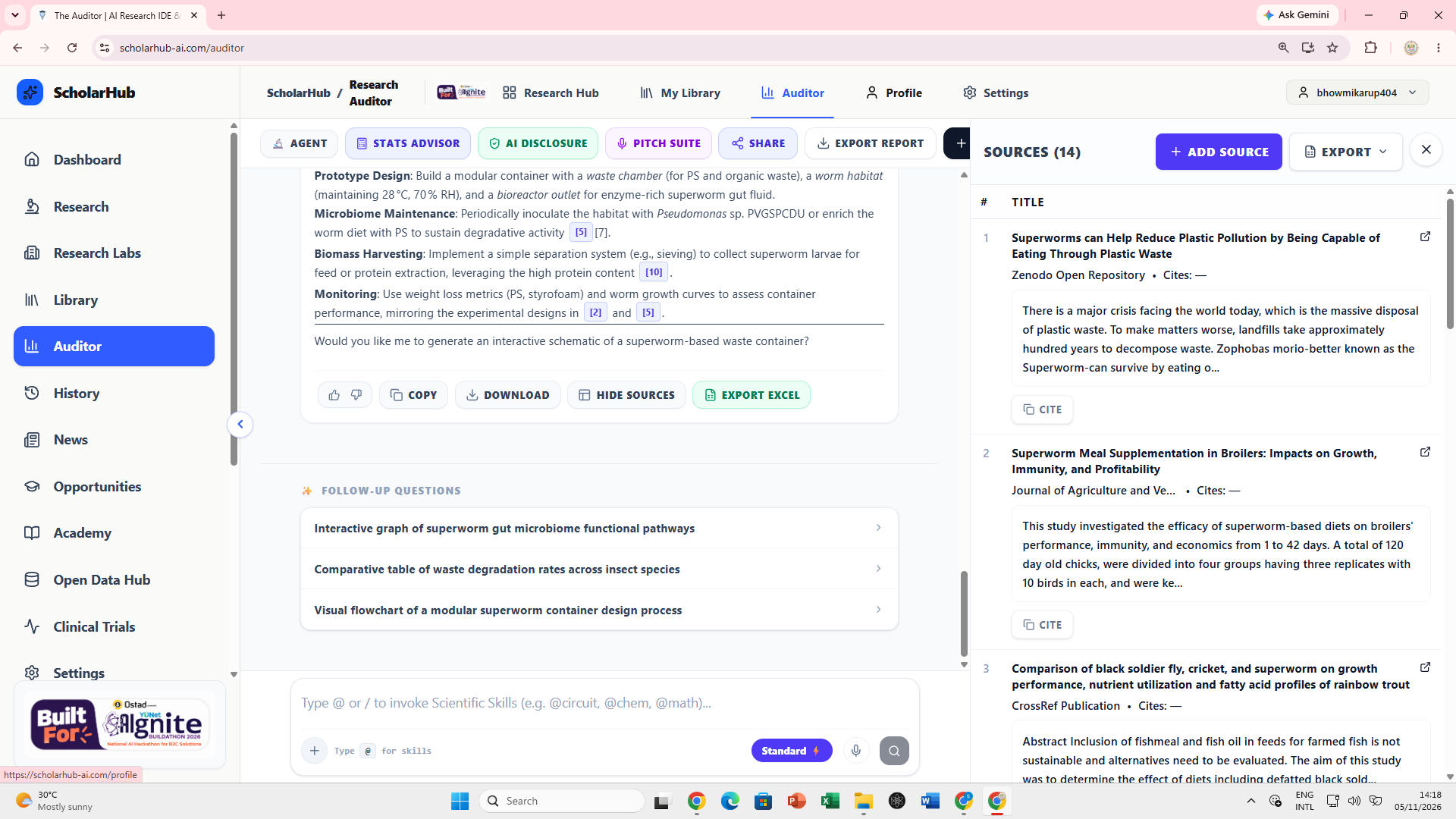
- AI-powered paper analysis and literature synthesis.
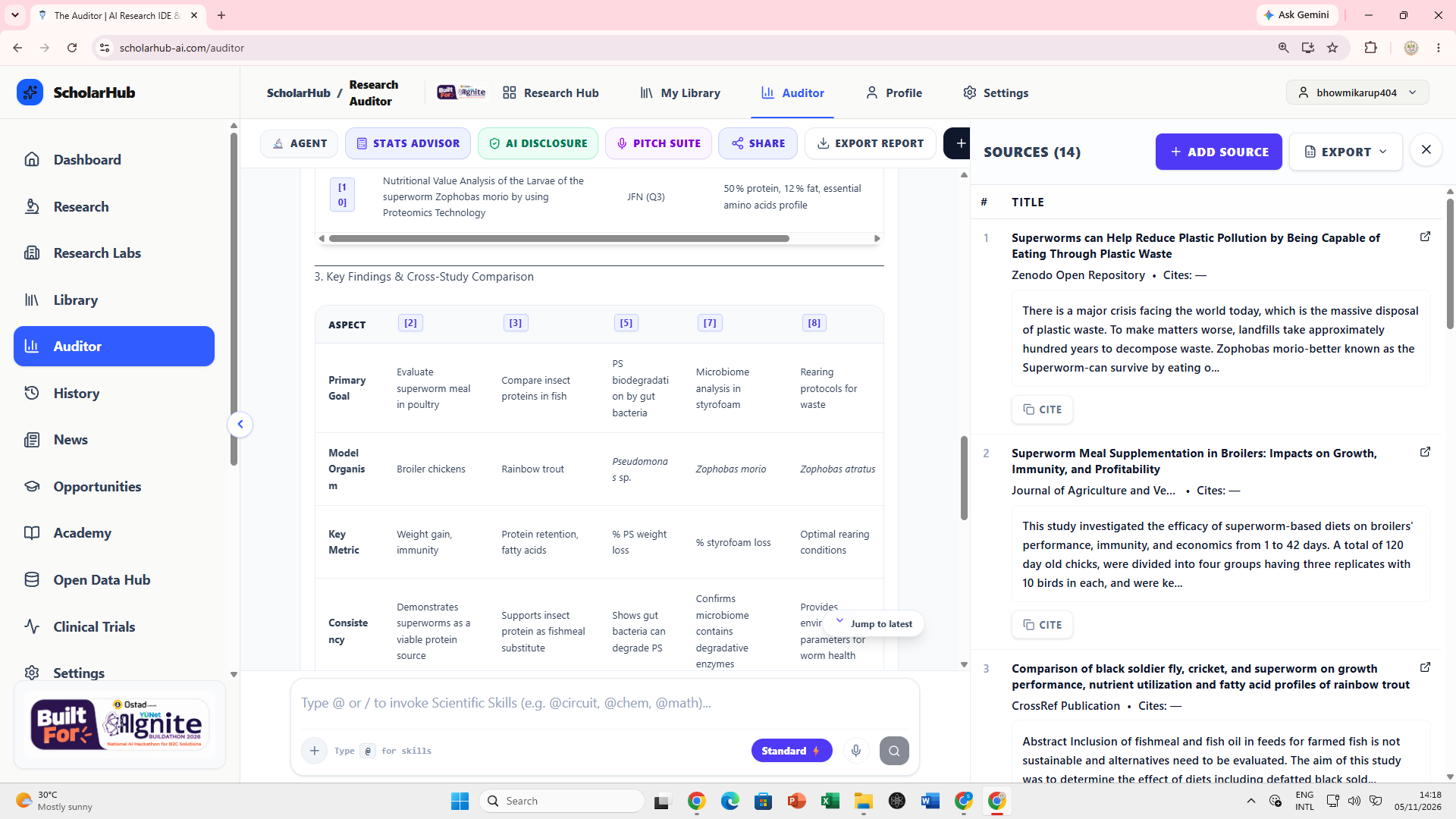
- Source-grounded answers with traceable citations.
- Automated literature review generation and research gap discovery.
- PDF analysis, including charts and figures.
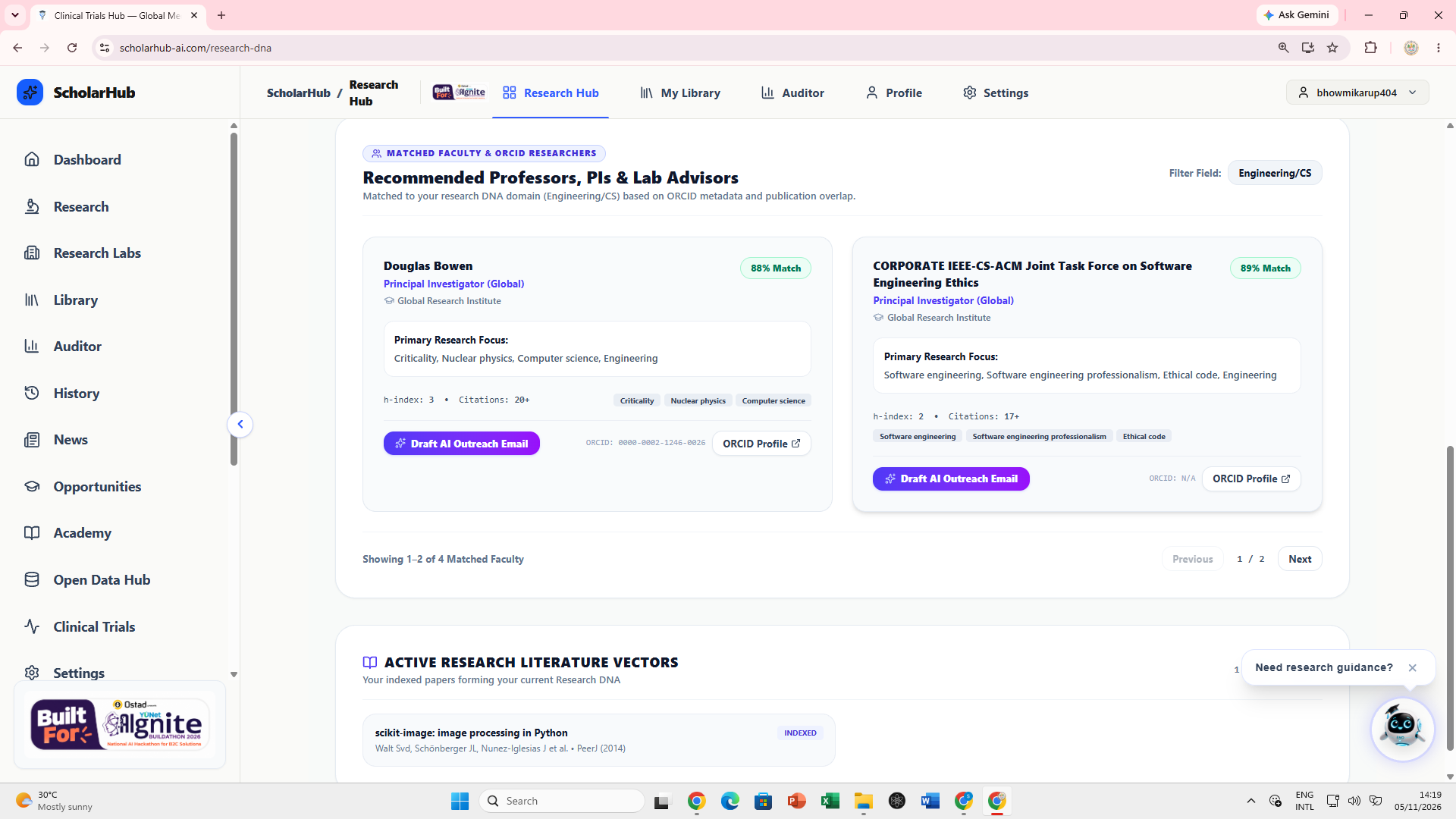
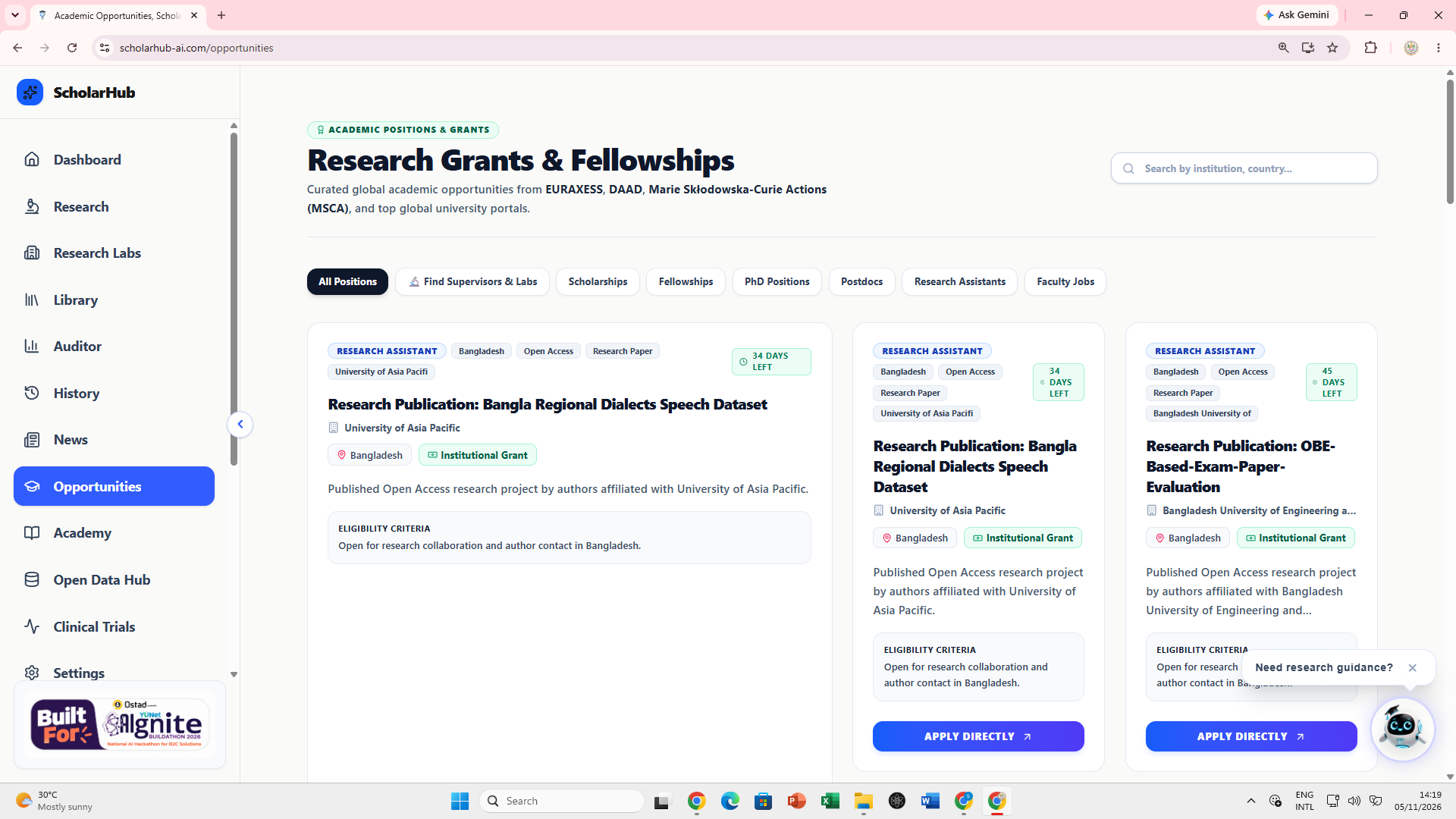
- Global scholarship, PhD, and research opportunity discovery.
- Guided research learning through an AI-powered academy.
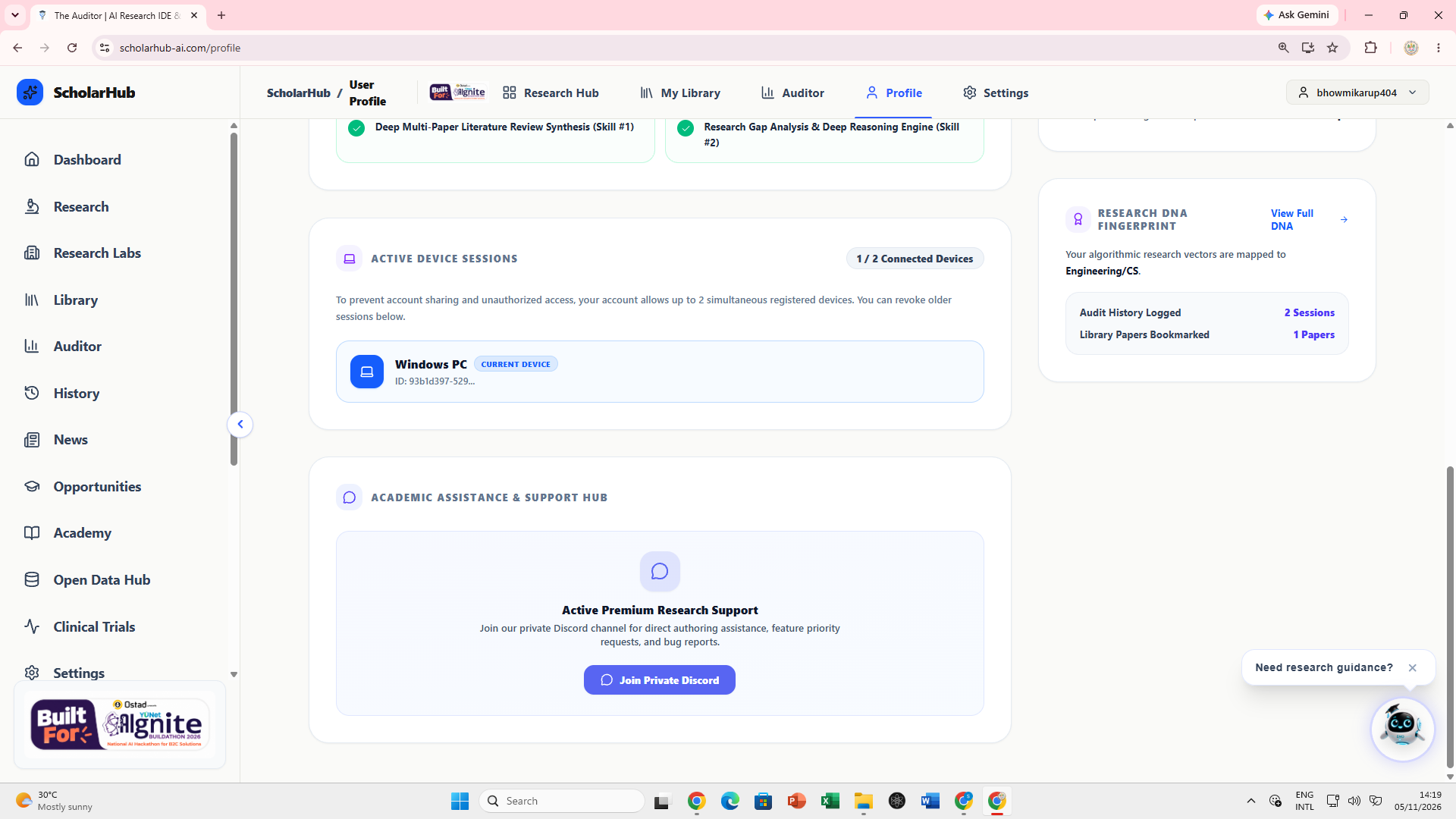
- Research verification and shareable audit reports.
How we built it
We built ScholarHub AI by integrating academic research databases with AI-powered reasoning and document analysis workflows.
Our platform connects research sources such as NCBI, PubMed, arXiv, and OpenAlex. We use Meta Llama 3.1 with Groq-powered inference for fast research synthesis and analysis.
We also integrate academic journal quality information through Scimago (SJR) to help users evaluate research credibility.
The goal is to create a unified research environment where discovery, analysis, learning, and verification work together.
Challenges we ran into
One of our biggest challenges was bringing information from multiple academic databases into a consistent research experience.
Other challenges included:
- Improving the reliability of AI-generated research summaries.
- Maintaining citation accuracy and source traceability.
- Processing complex academic PDFs and extracting meaningful information.
- Balancing response speed, research quality, and infrastructure costs.
- Making advanced research workflows accessible to beginners.
Accomplishments that we're proud of
We are proud to have developed a multi-feature academic research ecosystem that goes beyond traditional AI chatbots.
Some key accomplishments include:
- Integrating multiple global academic research sources.
- Building AI-powered research synthesis workflows.
- Developing literature review and research verification capabilities.
- Creating scholarship and academic opportunity discovery features.
- Expanding access through web, desktop, and mobile experiences.
Most importantly, we have turned our vision of a unified AI-powered research hub into a working platform.
What we learned
Building ScholarHub AI taught us that developing AI products is not just about generating intelligent responses. Trust, source transparency, data quality, usability, and reliability are equally important.
We also learned how challenging it is to combine multiple data sources, AI models, and research workflows into one seamless experience.
What's next for ScholarHub AI
Our vision is to make ScholarHub AI a globally accessible research ecosystem.
Our future goals include:
- Expanding academic database integrations.
- Improving research accuracy and citation verification.
- Developing more advanced AI research agents.
- Strengthening global academic collaboration and mentorship.
- Expanding scholarship and funding opportunity discovery.
- Building a larger community of students, researchers, and academic institutions.
We believe access to quality research should not be limited by geography, institutional affiliation, or resources.
ScholarHub AI — Making Research Smarter, Faster, and More Accessible.
Built With
- api
- cloud
- css
- gemini
- infrastructure
- next.js
- node.js
- openai
- oracle
- postgresql
- python
- react
- supabase
- tailwind
- typescript
