-
-
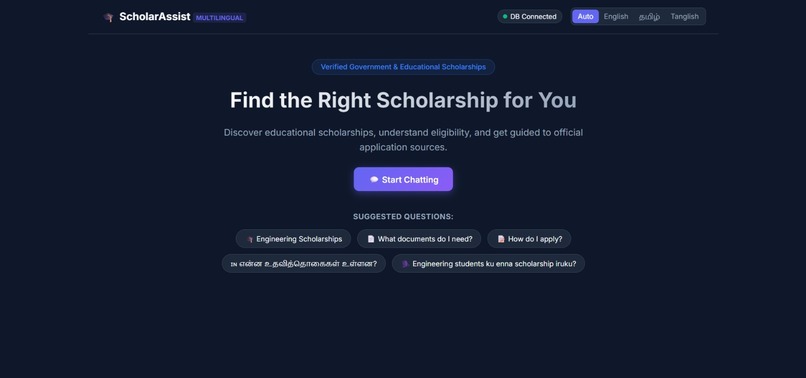
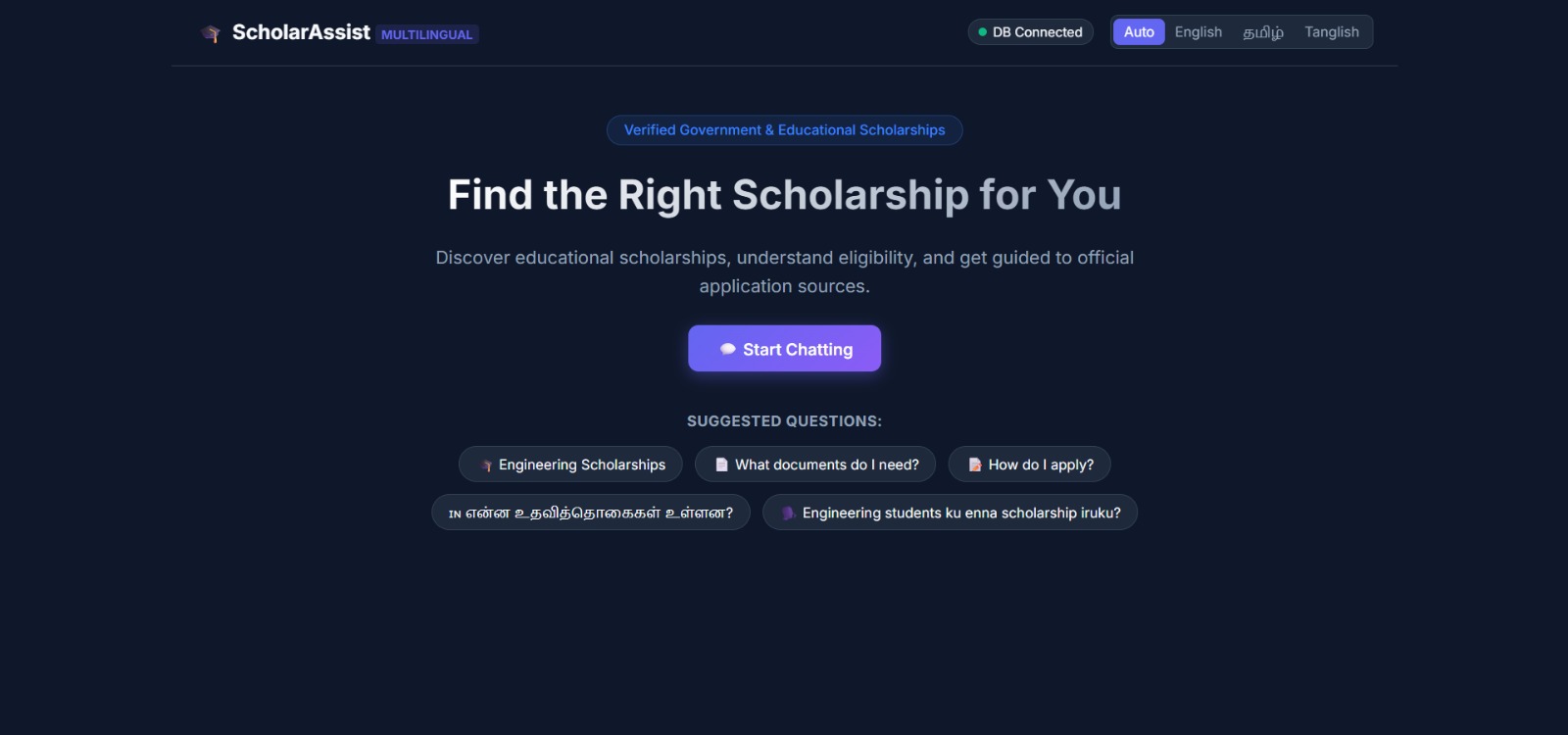
HOME PAGE
-
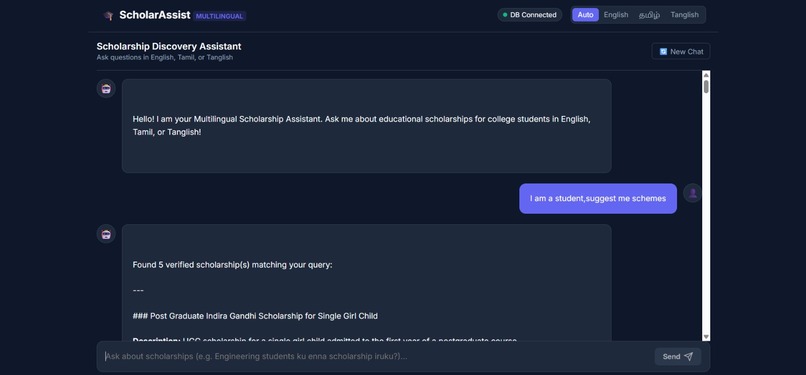
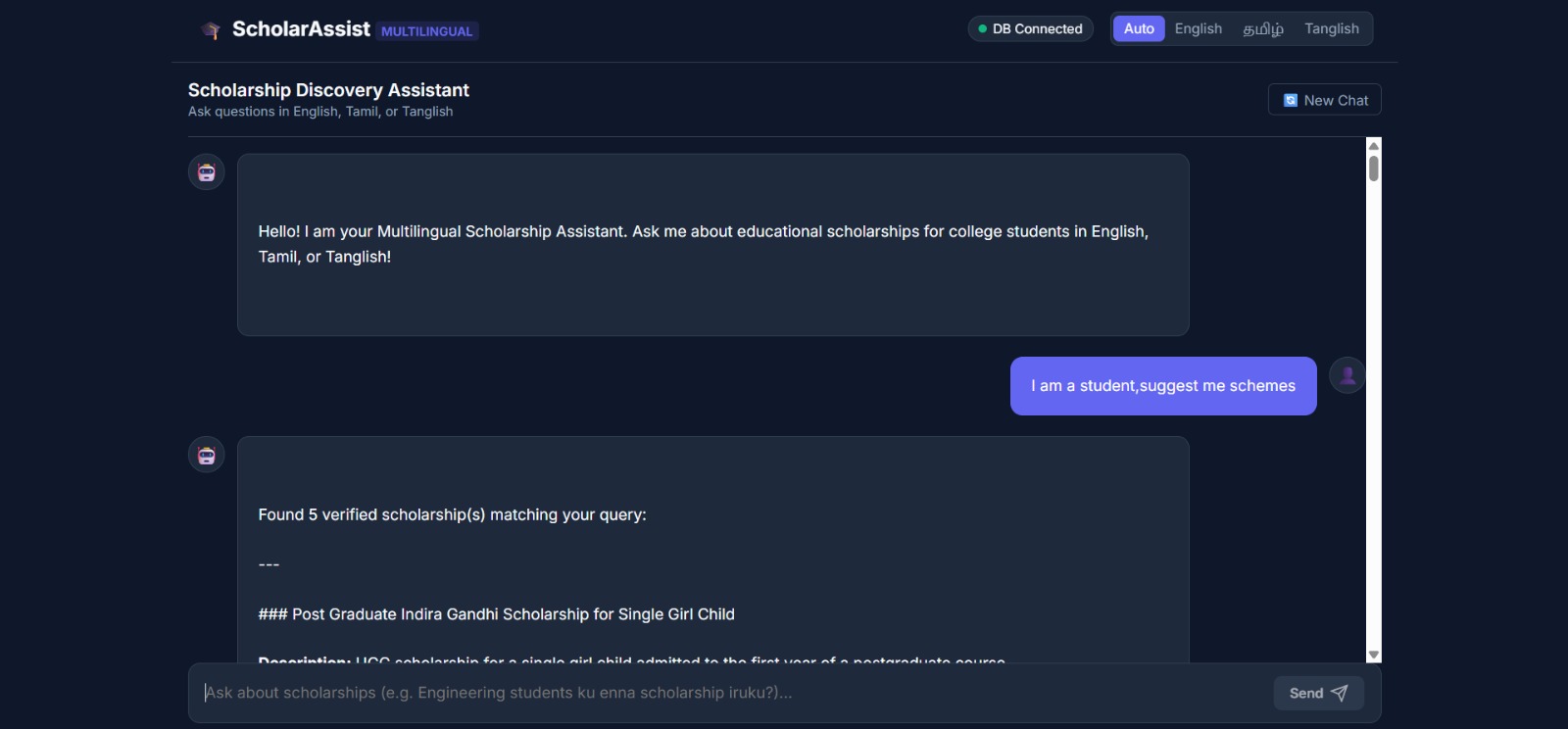
CHATBOT
-
-
-
-
-
-
-
Inspiration
ScholarBot started with a problem we experienced ourselves.
As college students, we knew that government scholarships existed, but we were not really sure which ones we were eligible for, what documents were needed, or how to apply. I personally had this doubt, and when I discussed it with my friends, I realized that many of them had the same problem.
That made us think:
“If we are college students and still don't know what scholarships we can apply for, how many other students might be missing out?”
We found that scholarship information is available online, but finding the right information can still be confusing. Students may have to search through different websites, understand eligibility conditions, and figure out the application process on their own.
So we thought, why not make scholarship discovery as simple as having a conversation?
That idea became ScholarBot.
What it does
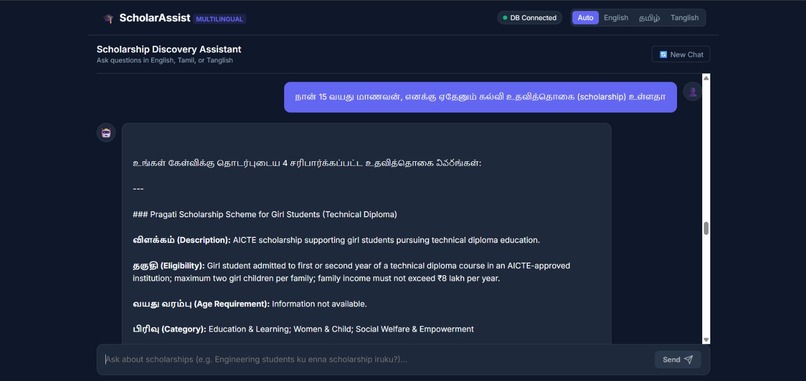
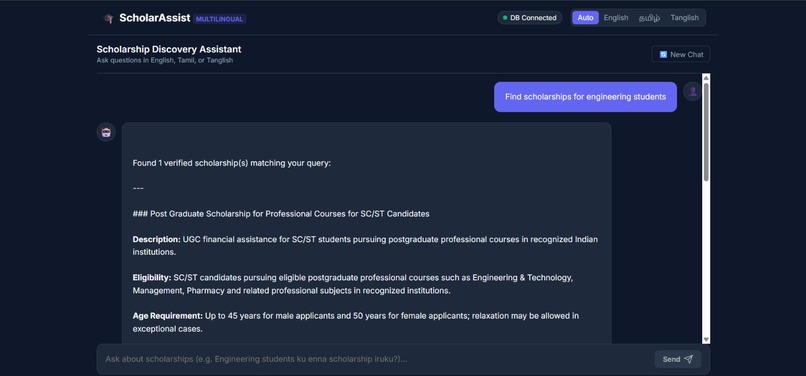
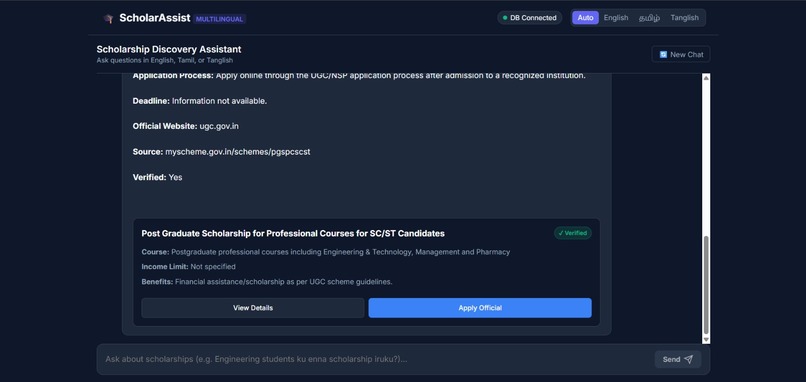
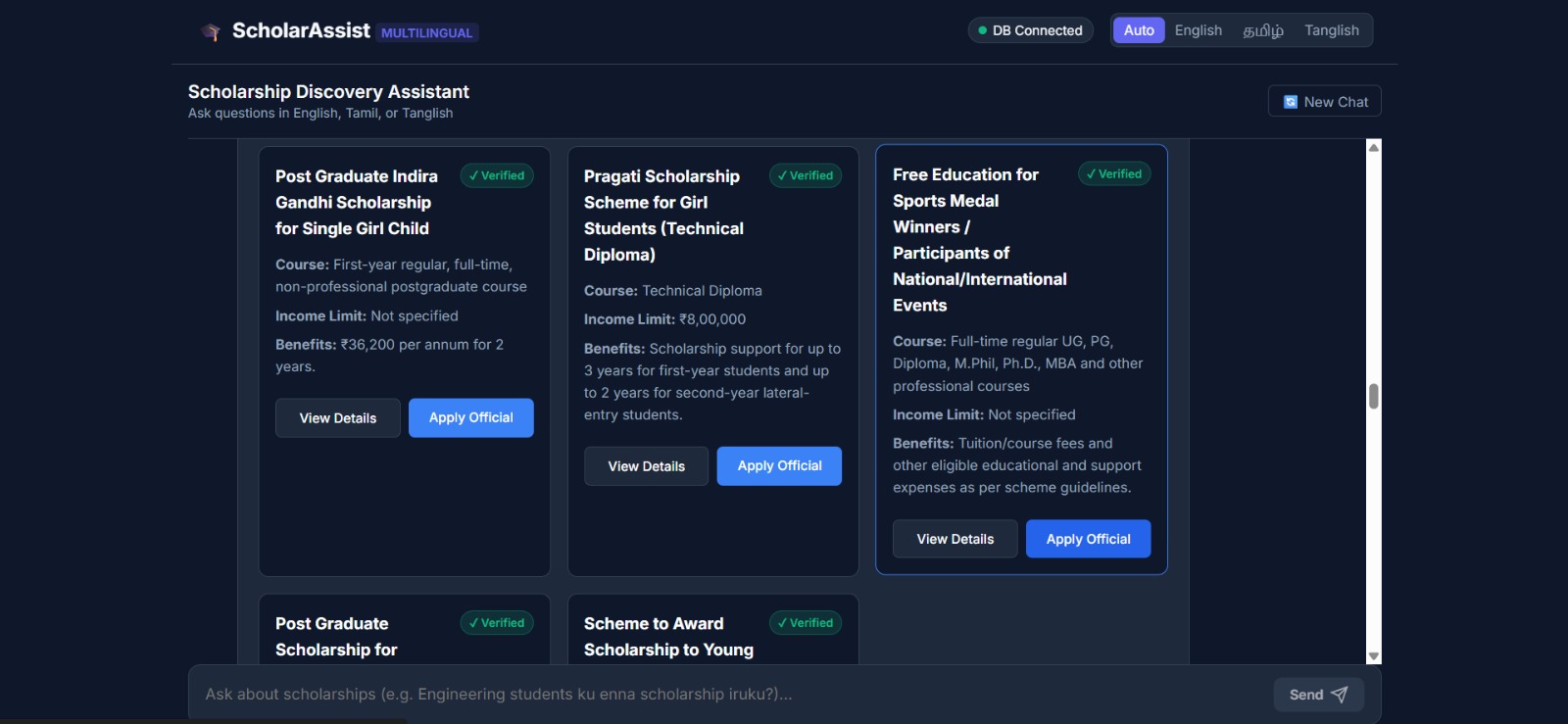
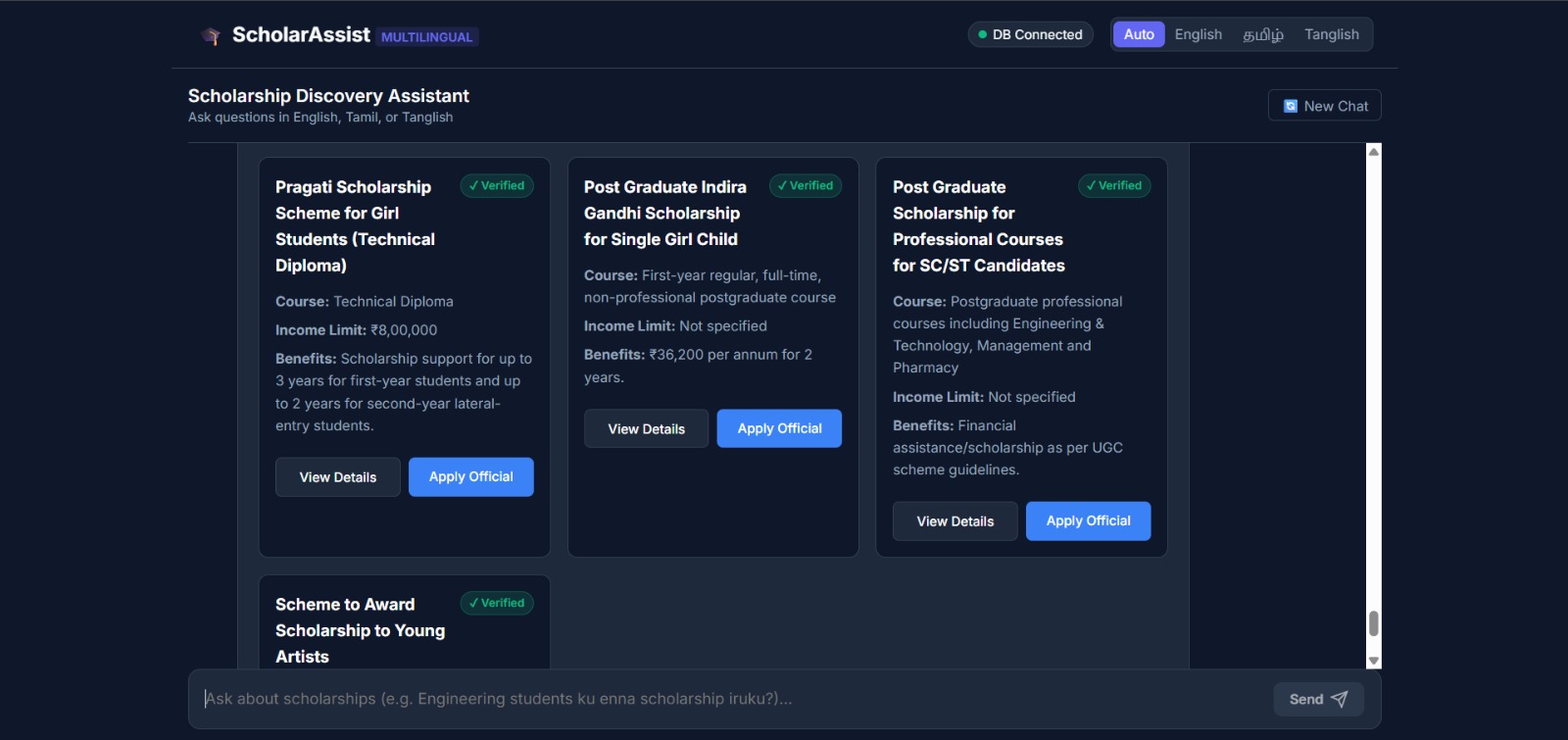
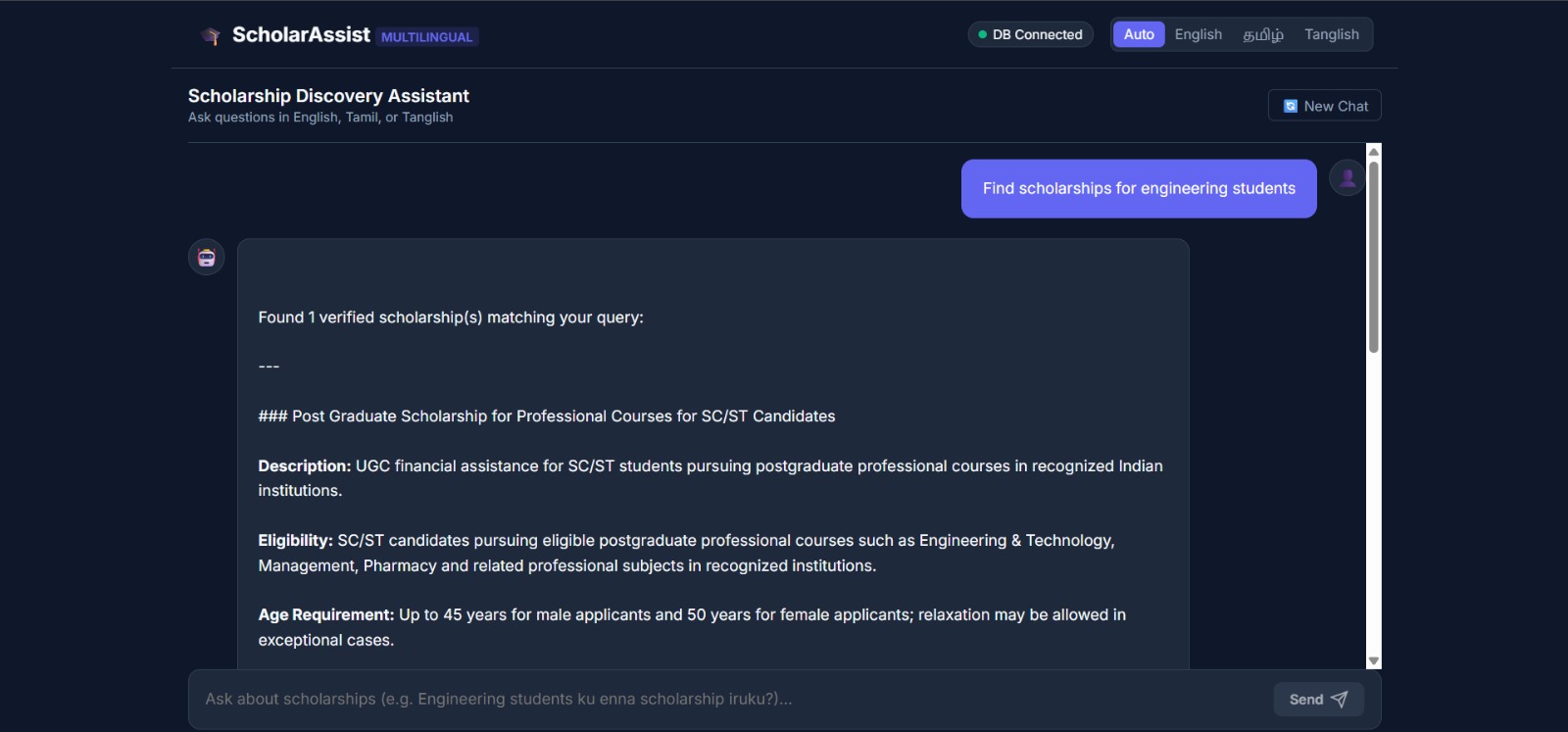
ScholarBot is a multilingual chatbot designed to help college students discover and understand government scholarships.
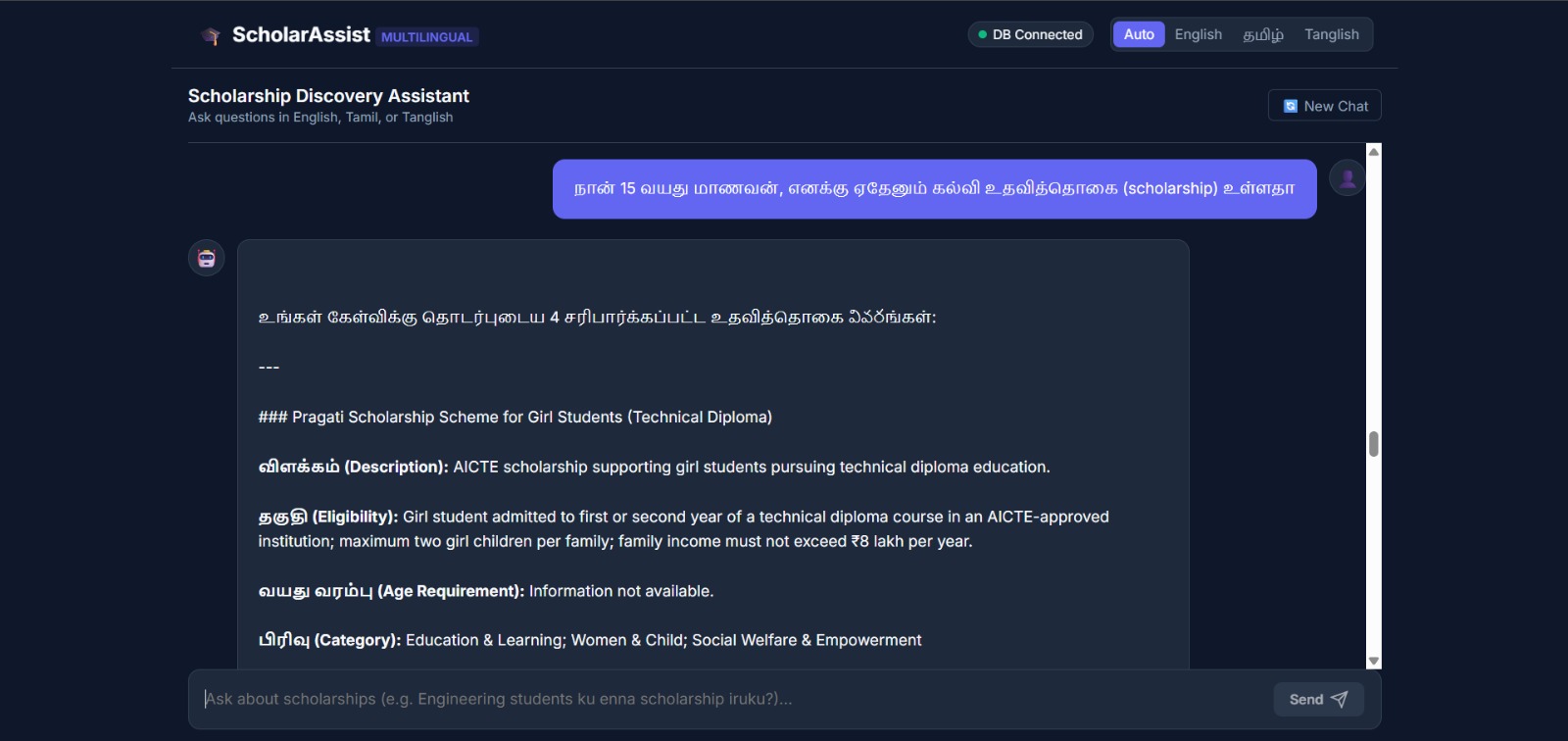
Students can ask questions naturally in English, Tamil, or Tanglish.
For example:
“Naan BC category. Enakku enna scholarship available?”
or
“இந்த scholarship-க்கு என்ன documents தேவை?”
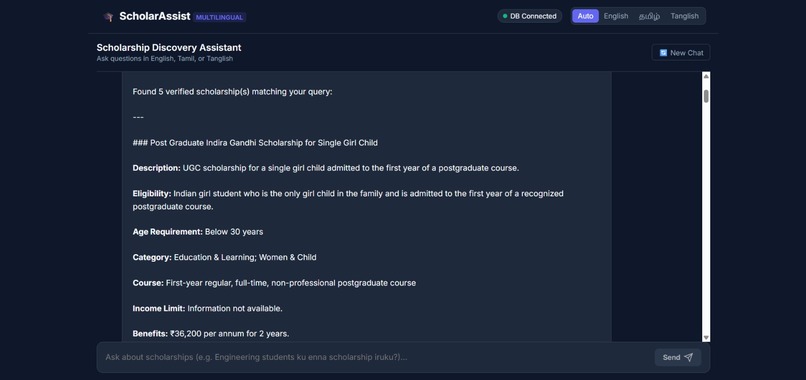
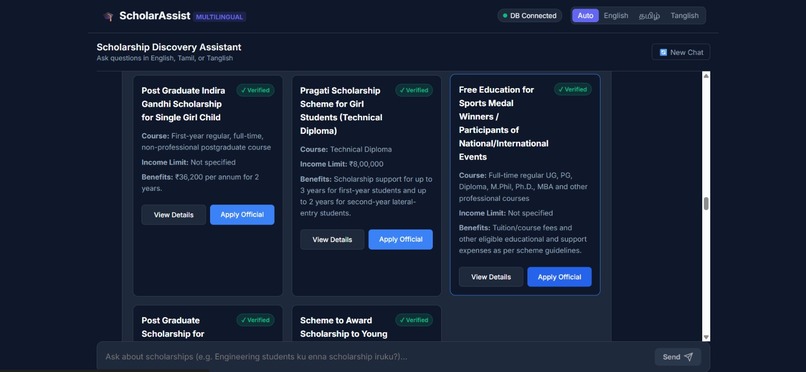
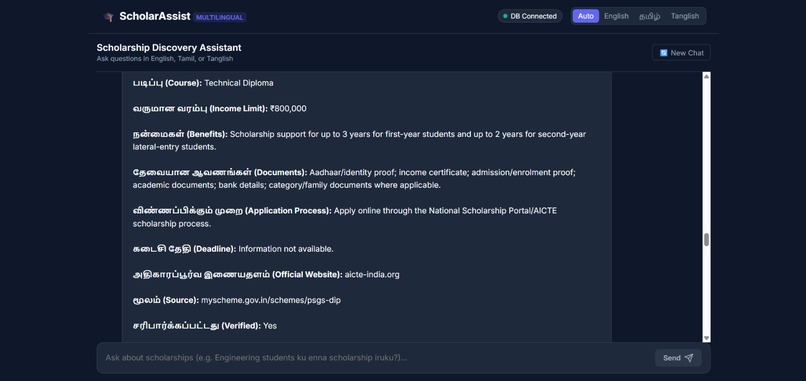
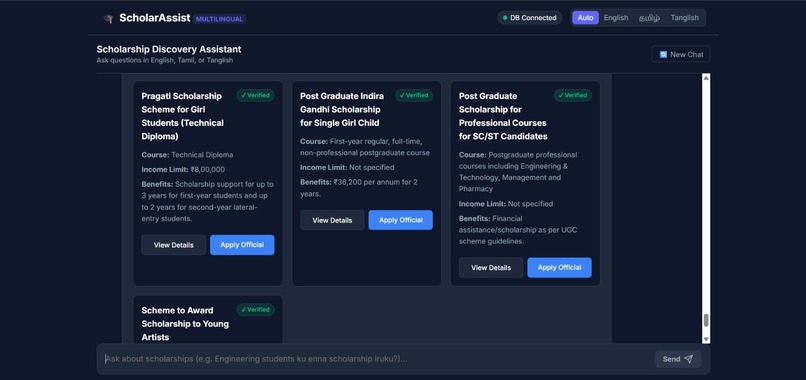
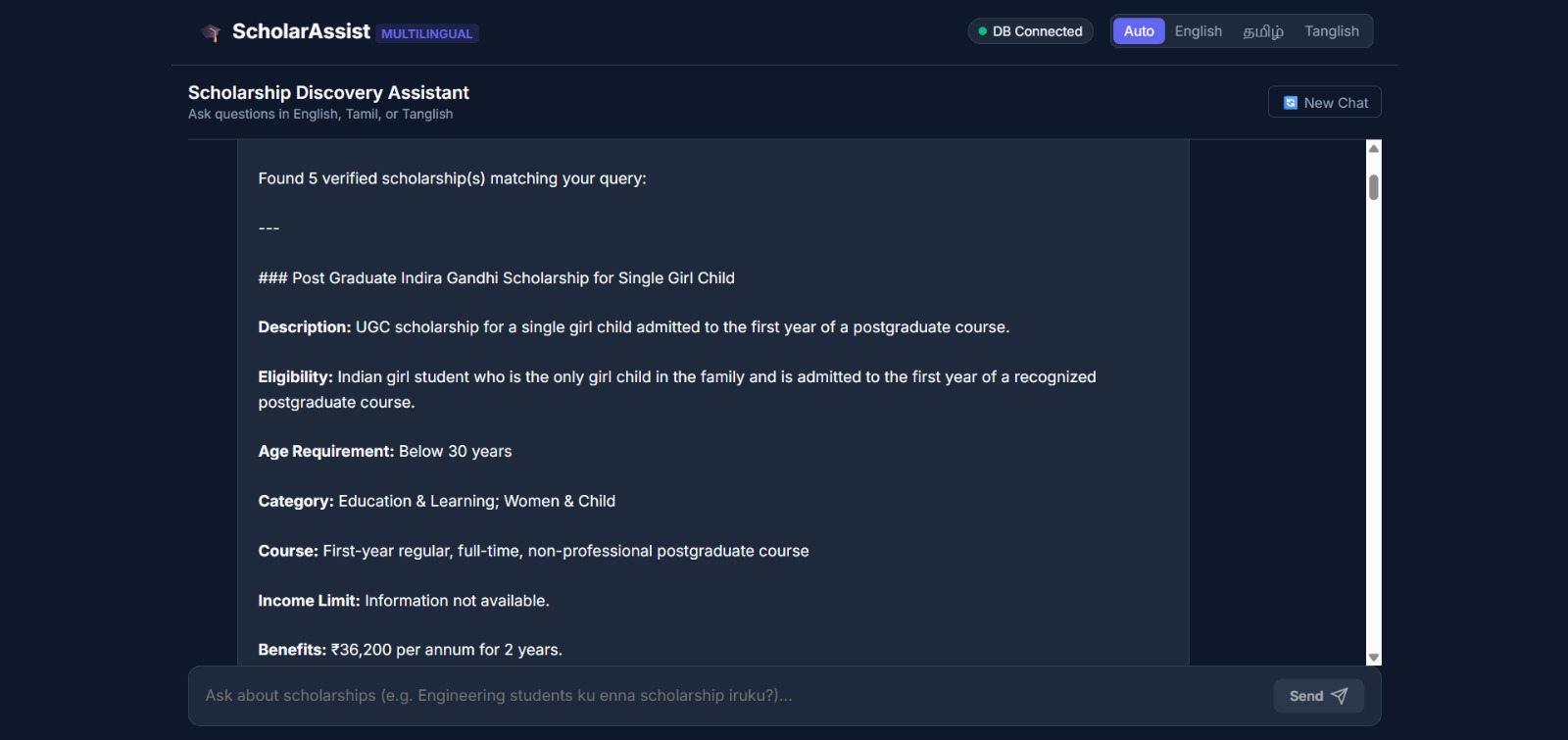
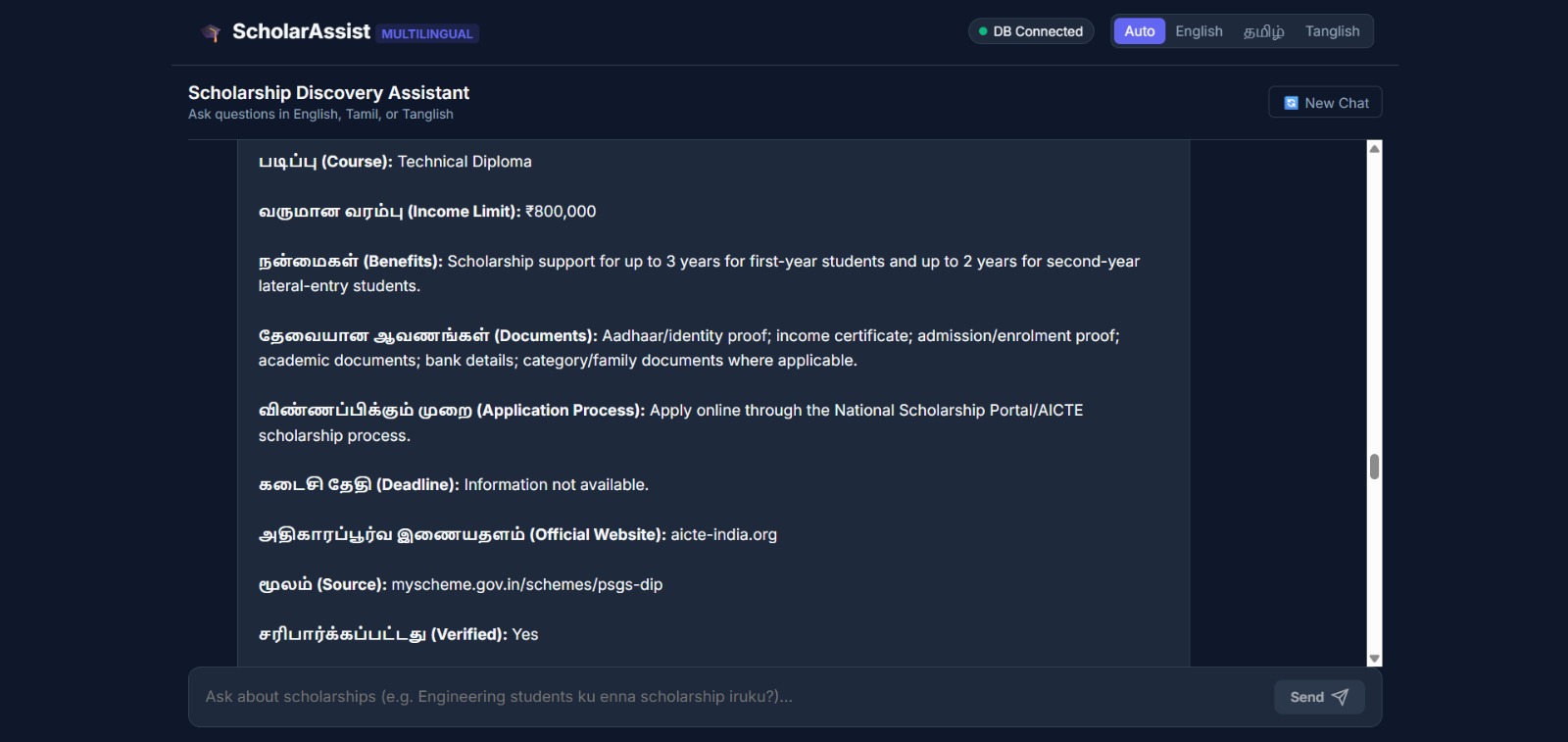
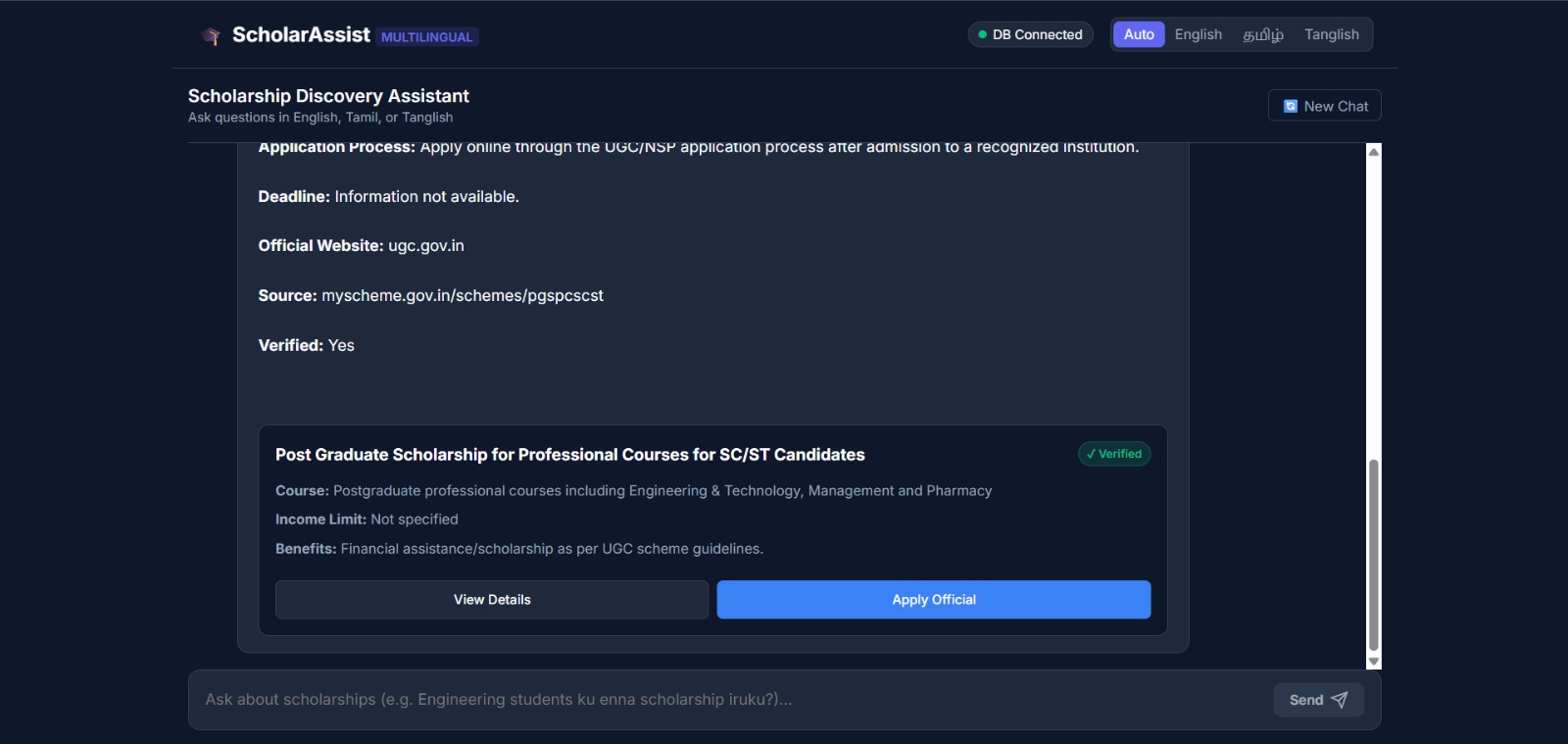
ScholarBot searches its scholarship database and provides relevant information such as:
- Eligibility
- Benefits
- Required documents
- Application process
- Deadlines
- Official application links
We also built an eligibility engine that can compare a student's details, such as category, course, age, and income, with the eligibility information stored in the database.
This means ScholarBot is not just answering:
“What scholarships are available?”
It can also help answer the more useful question:
“Which scholarships might be relevant to me?”
Another important part of ScholarBot is reliability. We use our scholarship database as the source of truth. If verified information is not available, the system is designed to say that it could not find the information instead of making up an answer.
How we built it
We built ScholarBot step by step, starting with a reliable database-driven foundation.
The student enters a question through the chatbot. The system processes the query, searches the PostgreSQL scholarship database, and retrieves relevant information. When the student provides eligibility details, the eligibility engine compares those details with the available scholarship criteria.
The basic flow is:
Student Query
      ↓
Query / Language Understanding
      ↓
Scholarship Database Search
      ↓
Eligibility Matching
      ↓
Relevant Scholarship Information
      ↓
Response in English / Tamil / Tanglish
      ↓
Official Application Link
AI and language processing are used to make the interaction more natural. Instead of forcing students to use exact keywords, the system is designed to understand the intent behind their questions.
For example:
“Enakku degree padikka scholarship iruka?”
and
“What scholarships are available for my degree?”
can represent the same intent even though they are written differently.
Our current technology stack includes:
- Python
- FastAPI
- PostgreSQL
- HTML
- CSS
- JavaScript
- Natural Language Processing
- Multilingual processing
- Eligibility matching logic
- Git/GitHub
We have also designed the architecture so that more advanced components such as semantic search, multilingual embeddings, and Retrieval-Augmented Generation can be added as the project evolves.
Challenges we ran into
One of our biggest challenges was getting all the different parts of the application to work together.
We had to deal with database connections, environment configuration, backend APIs, frontend-backend communication, and making sure the scholarship data was retrieved correctly.
Building the eligibility engine was another challenge. Different scholarships have different requirements. Some may depend on income and category, while others may also consider course, age, or other conditions. We had to design the matching logic carefully without making assumptions about eligibility.
Multilingual interaction was also challenging, especially with Tanglish.
For example, the same Tamil question can be typed in several different ways using English letters. There is no single standard spelling, so making the system understand these variations is an important part of making it useful.
The biggest challenge was balancing intelligence with accuracy.
We wanted ScholarBot to feel smart, but we didn't want it to confidently give students incorrect scholarship information.
Accomplishments that we're proud of
We are proud that we were able to turn a problem we personally experienced into a working prototype.
We built a complete flow from the student's question to scholarship retrieval and eligibility matching instead of creating only a chatbot interface.
We are especially proud of three things:
Multilingual interaction — Students can communicate in English, Tamil, or Tanglish.
Eligibility assistance — The eligibility engine helps connect student profiles with relevant scholarship criteria.
Trust-focused design — The scholarship database is treated as the source of truth, reducing the risk of AI-generated misinformation.
For us, the most satisfying part is that ScholarBot is not just something we imagined. We can actually ask it a question and see it retrieve scholarship information from our database.
What we learned
This project taught us that building an AI application is not simply about connecting an AI model and asking it to generate answers.
We learned how to work with PostgreSQL, build APIs using FastAPI, connect frontend and backend components, implement eligibility logic, and design a system around real user needs.
We also learned a lot about multilingual interaction.
Tamil and Tanglish made us think differently about how people actually communicate with technology. Users don't always use perfect sentences or exact keywords. A useful system needs to understand the intention behind the question.
Most importantly, we learned about responsible AI.
It is easy to make a chatbot that gives an answer.
It is much harder to make one that knows when it should not give an answer.
That became one of the core ideas behind ScholarBot.
What's next for ScholarBot
ScholarBot is just the beginning.
Our next goal is to make the system smarter without compromising its reliability.
We plan to add semantic search and multilingual embeddings so that the chatbot can understand the meaning behind queries more effectively, even when students use different words or mixed languages.
We also plan to integrate Retrieval-Augmented Generation (RAG) so that conversational responses can be generated using retrieved and verified scholarship information.
Other planned improvements include:
- More advanced personalized eligibility matching
- Automatic scholarship updates
- Deadline and notification alerts
- Admin-based scholarship verification
- More government scholarship sources
- Improved Tamil and Tanglish understanding
Our long-term vision is simple:
A student should not have to spend hours searching different websites just to find out whether financial support is available to them.
With ScholarBot, we want to make that journey as simple as:
Ask. Discover. Check. Apply
Built With
- ai
- api
- artificial
- chatbot
- css
- database
- eligibility
- fastapi
- github
- html
- intelligence
- javascript
- machine-learning
- matching
- multilingual
- natural-language-processing
- postgresql
- python
- rest

Log in or sign up for Devpost to join the conversation.