-
-
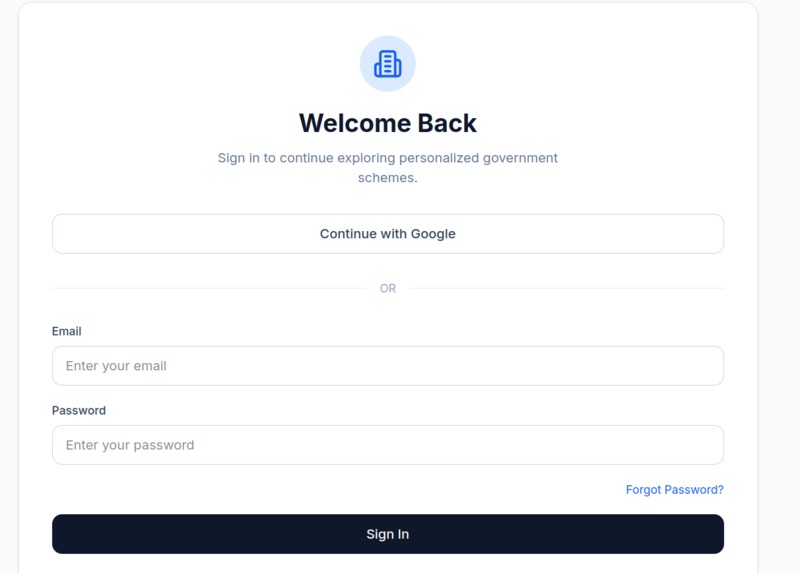
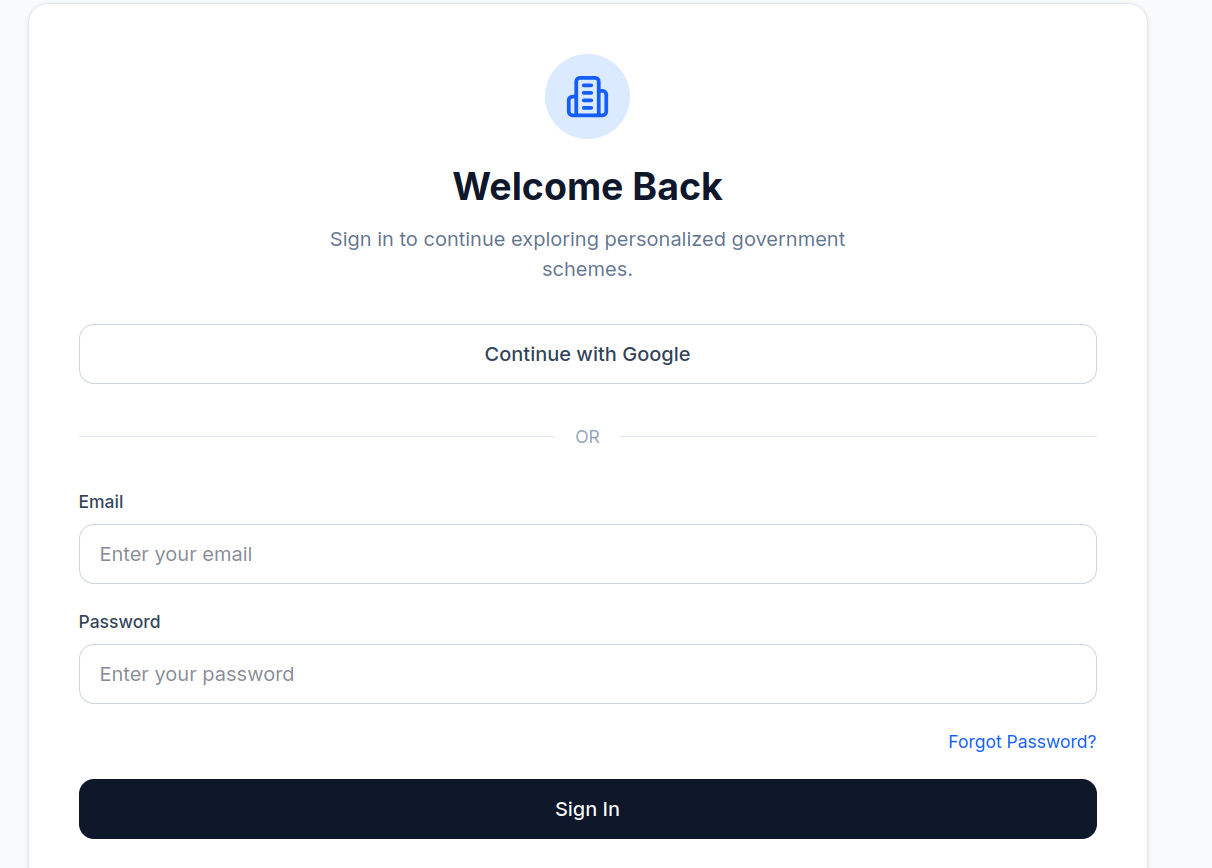
User Authentification
-
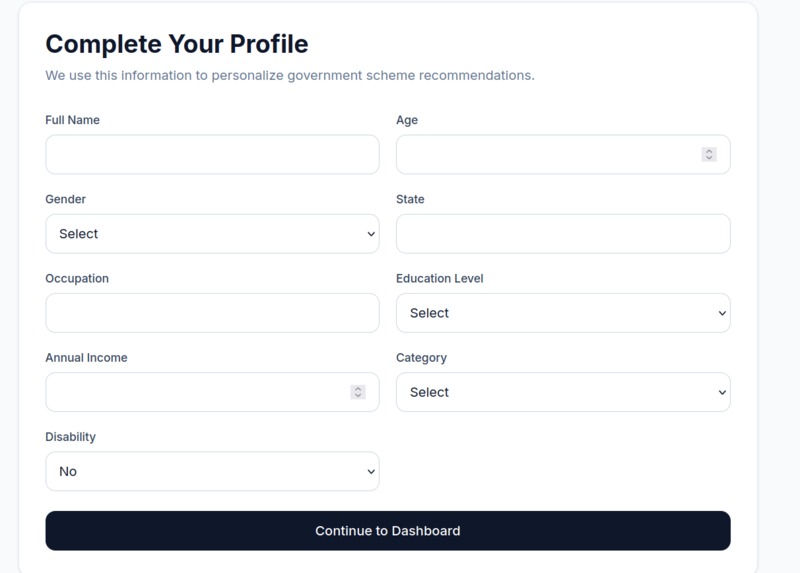
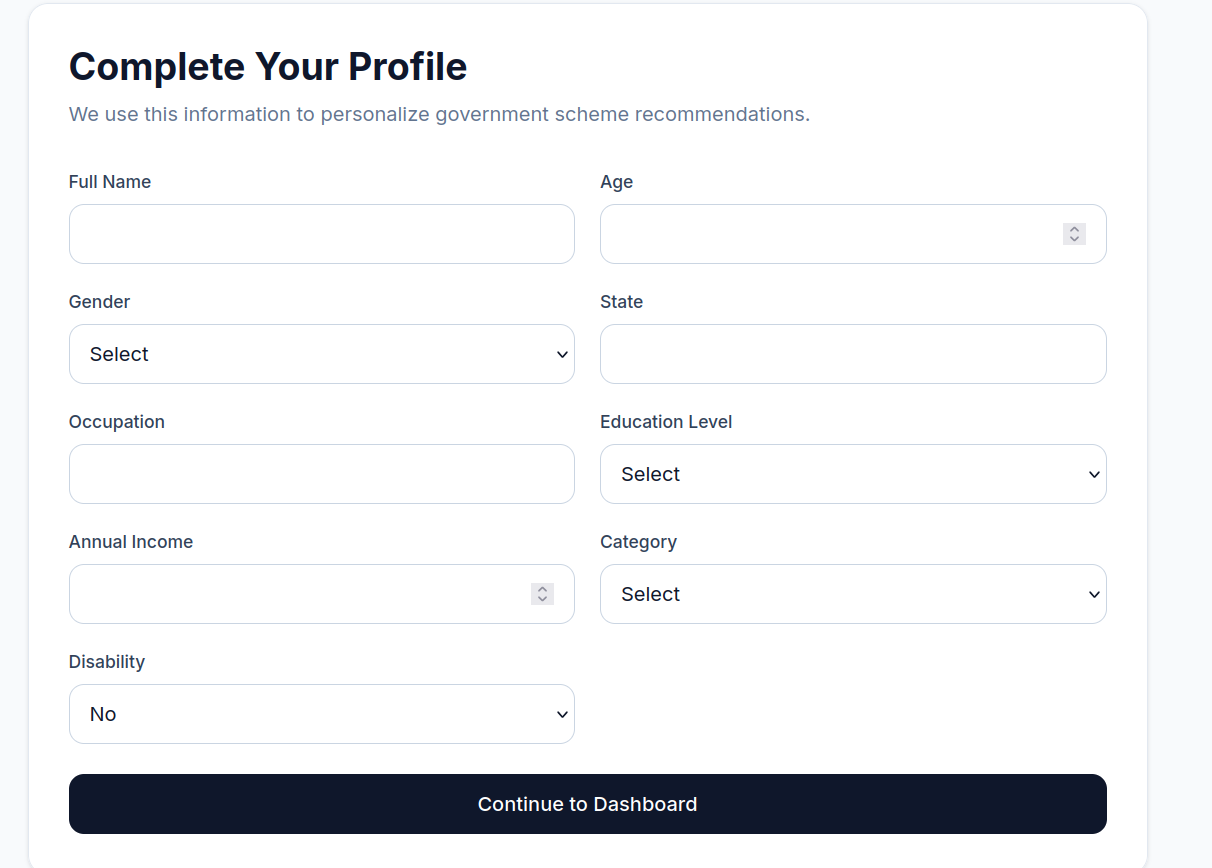
Profile Creation
-
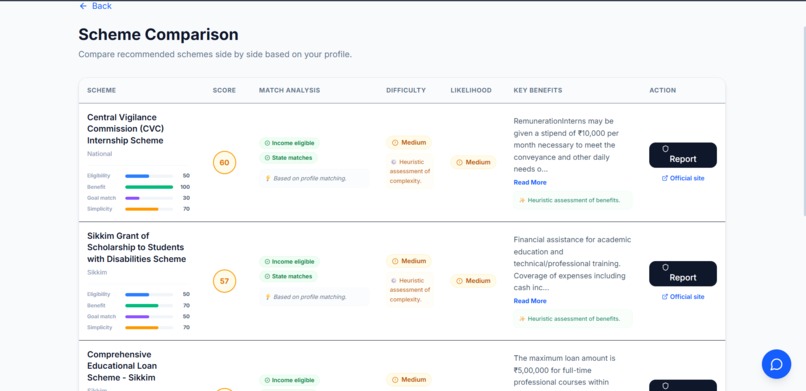
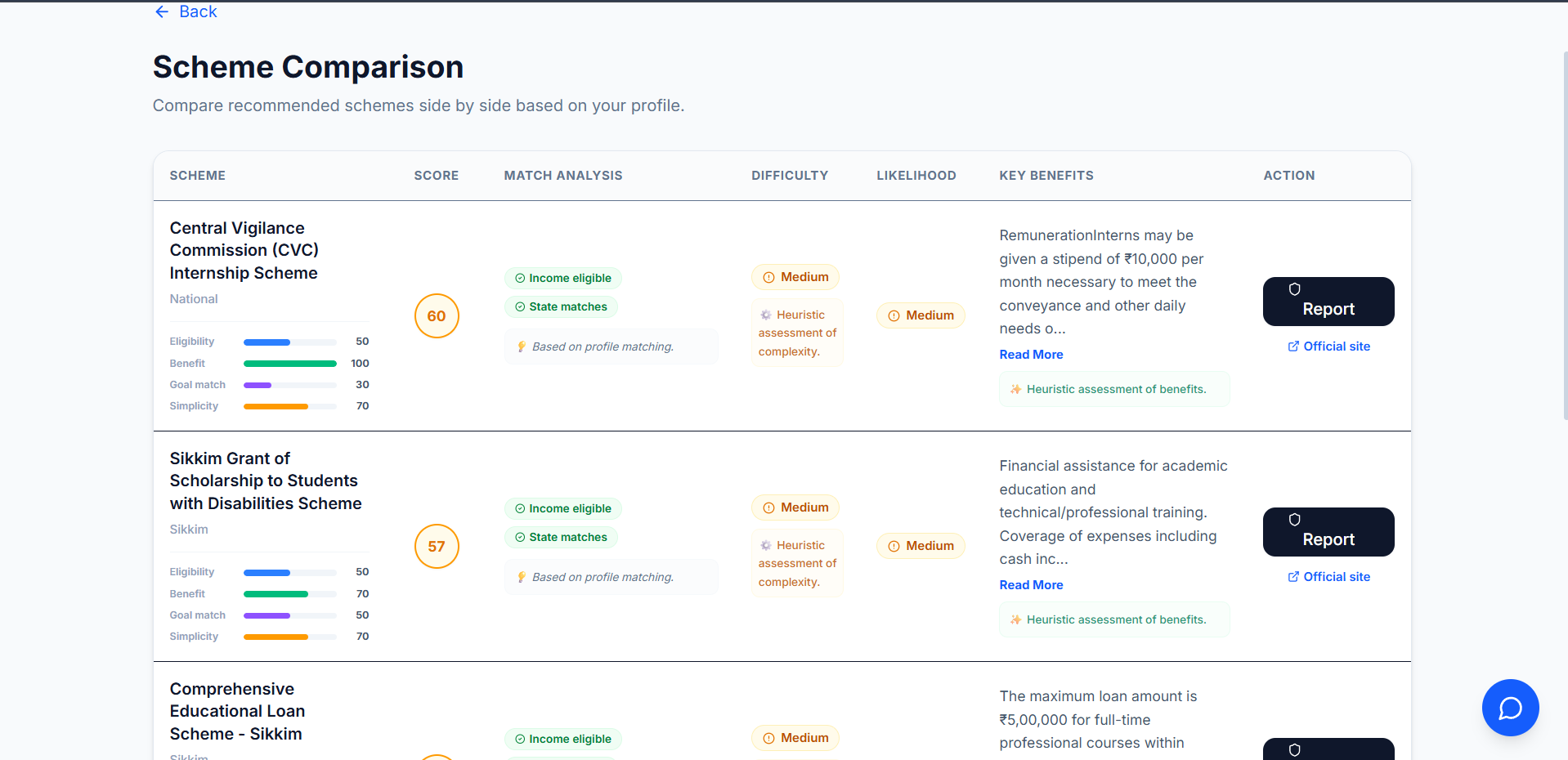
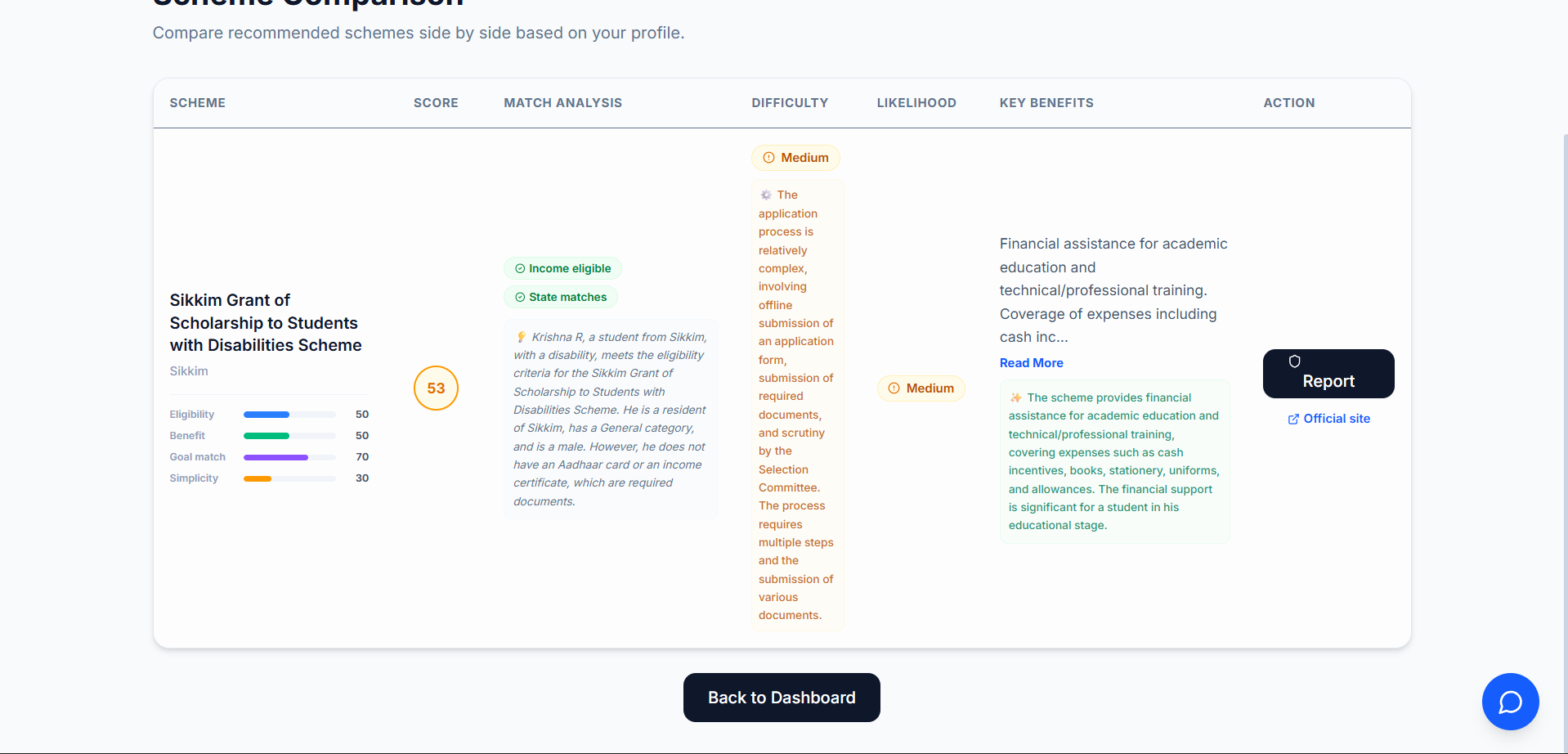
Overall Comparison table
-
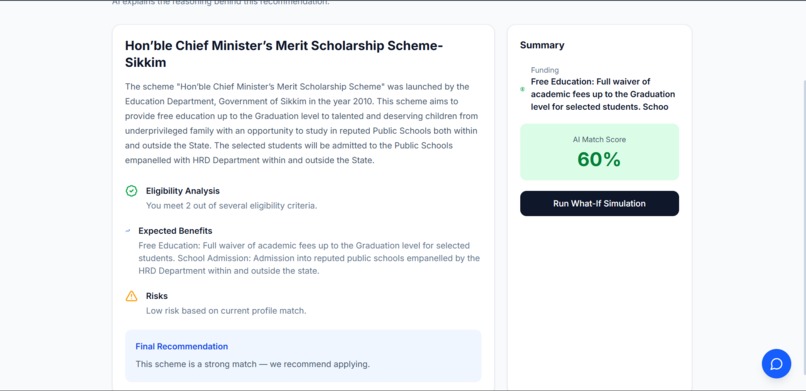
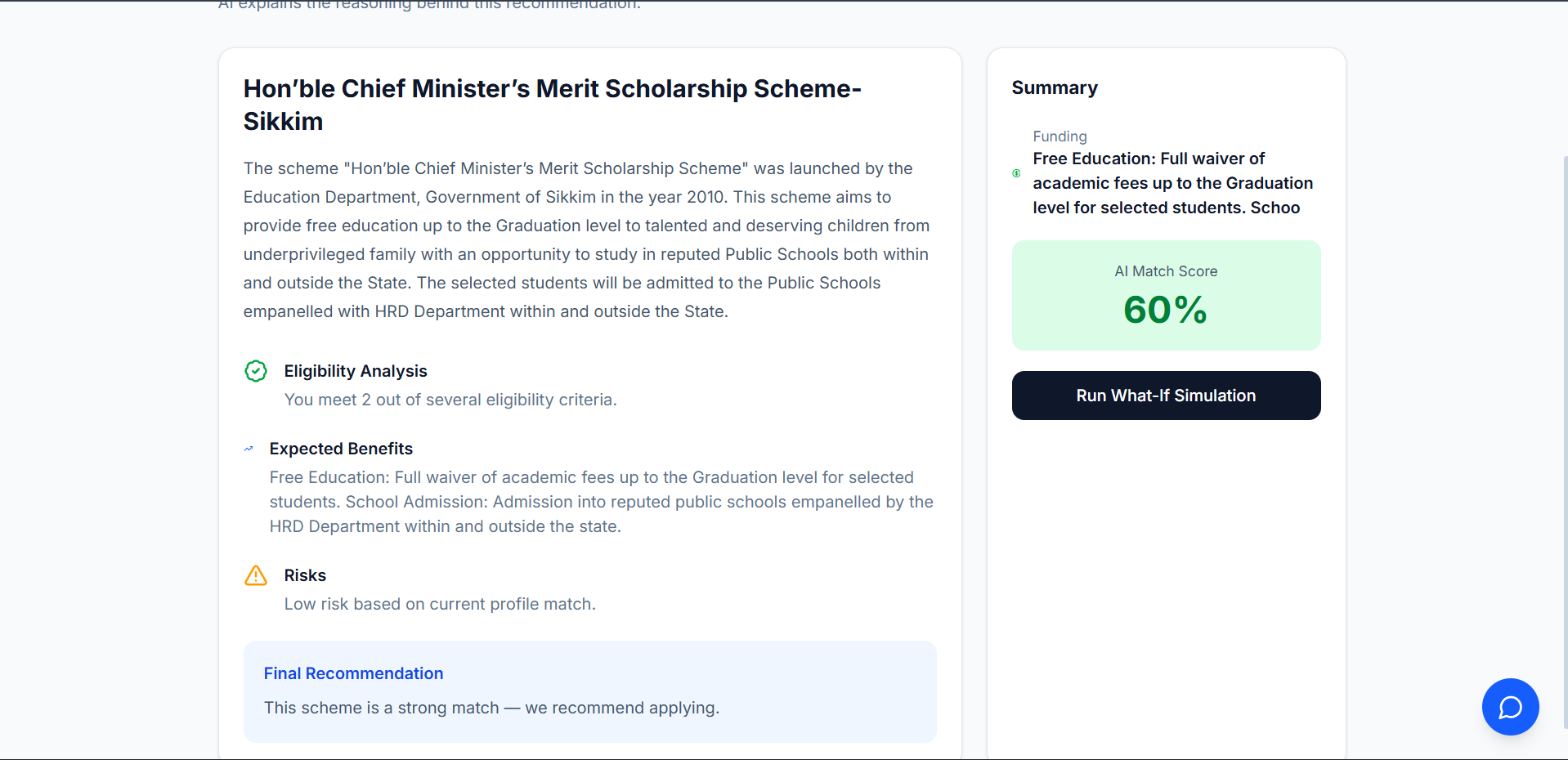
detailed report
-
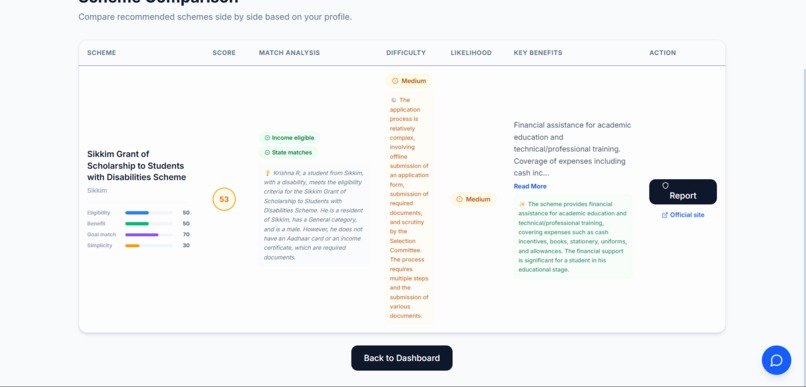
comparison matrix
-
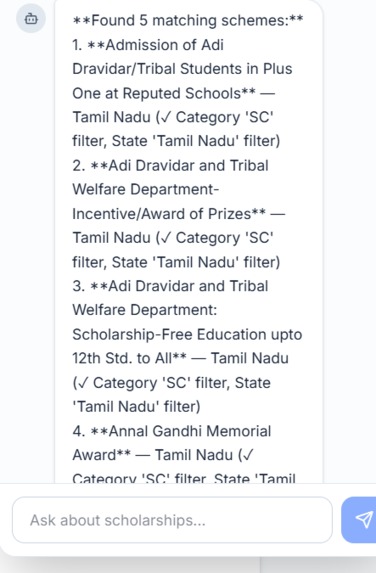
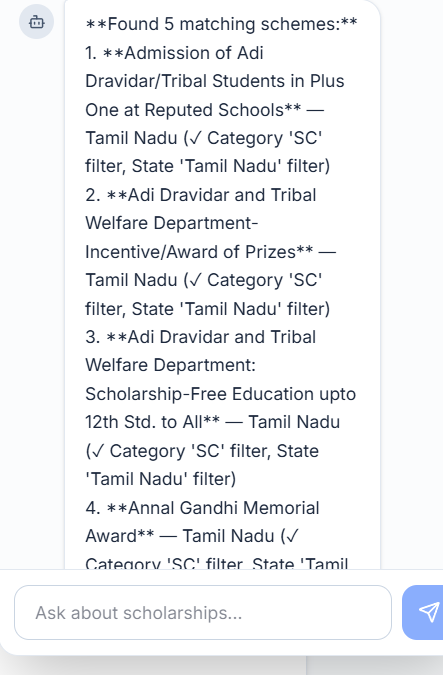
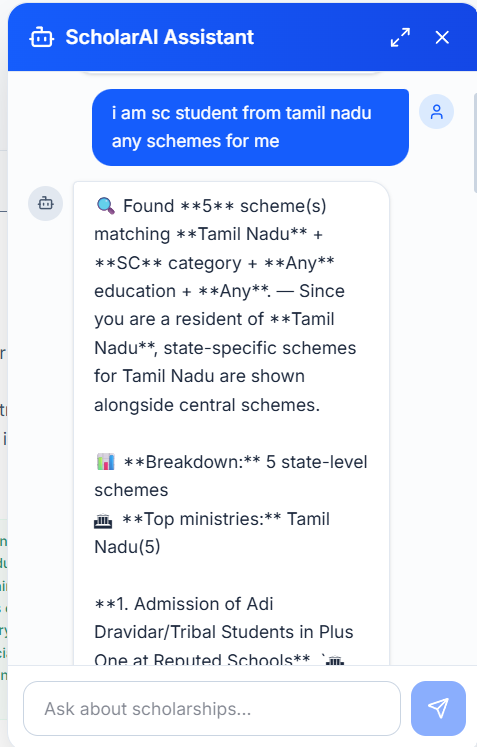
rag chatbot answer
-
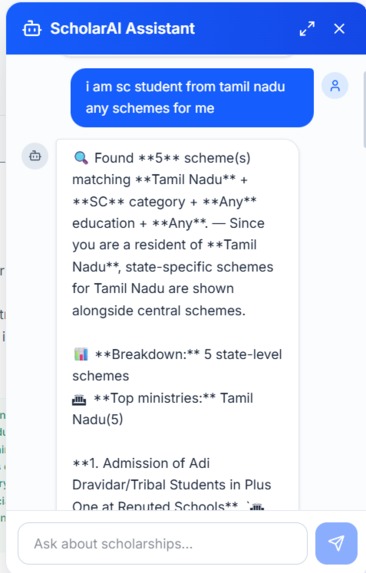
rag chatbot
-
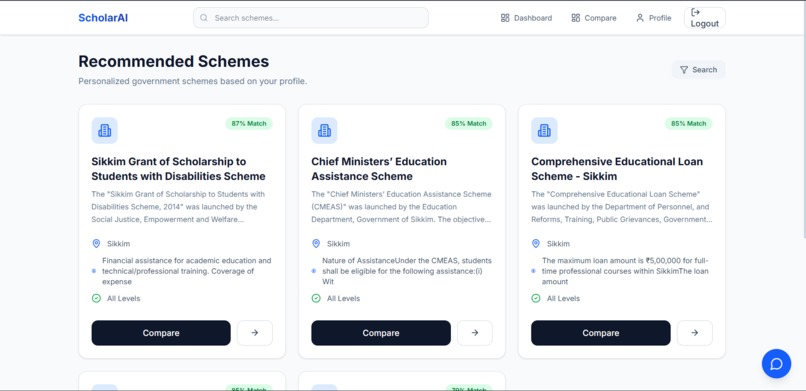
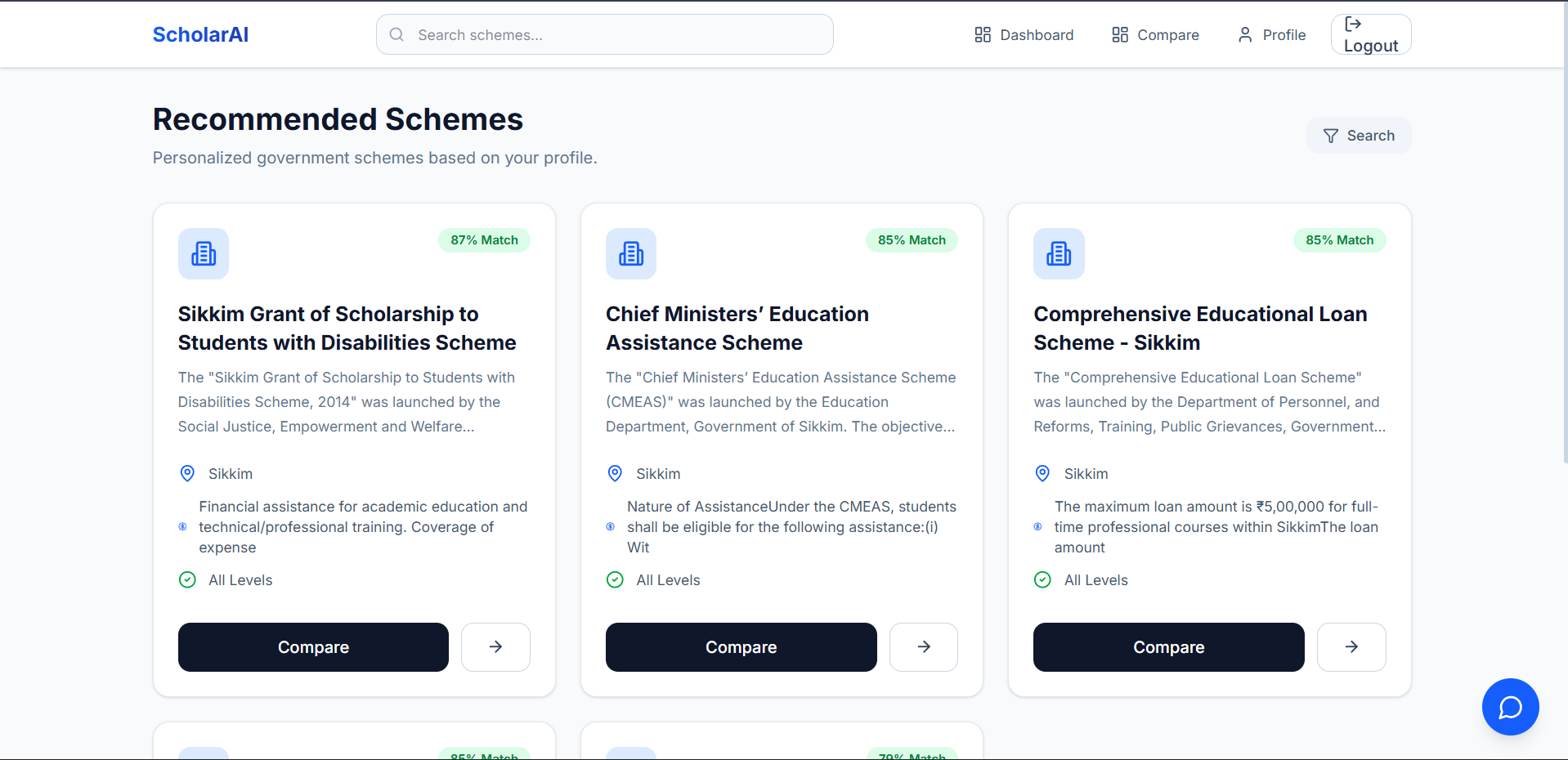
dashboard
Inspiration
India offers more than 4,700 government schemes designed to support students. However, most students do not know which schemes they are eligible for. As a result, they often apply for scholarships they do not qualify for, receive rejections, and never understand why. To address this challenge, the Government of India launched MyScheme, a centralized platform that provides information about these programs. While it is a valuable initiative, navigating thousands of schemes manually remains difficult. Students must compare complex eligibility criteria such as family income, age, state of residence, GPA, field of study, and category against thousands of available opportunities. Our inspiration was to build an AI-powered Decision Intelligence platform that automates this tedious process. Instead of manually searching through thousands of schemes, students simply provide their information, and our platform analyzes their profile, determines their eligibility, explains the reasoning behind each recommendation, and suggests the government schemes that best match their needs. Our goal is to help students save time, reduce unsuccessful applications, improve transparency, and ensure they never miss opportunities they deserve.
What it does
ScholarAI
ScholarAI is an intelligent navigation platform for Indian government schemes. Here is the workflow:
1. Profile Creation
The student enters their profile:
- Name
- State
- Income
- GPA
- Field of study
- Goals
## 2. Eligibility Analysis Our AI analyzes the profile against 4,700+ schemes and automatically filters the eligible ones. ## 3. Smart Comparison Displays eligible schemes side by side with key criteria: - Benefits
- Required documents
- Difficulty
- Alignment scoring
## 4. AI Decision Report Generates a personalized report explaining: - Recommended schemes (with explanations)
- Advantages and disadvantages
- Risks and considerations
- Detailed next steps
## 5. What-If Simulator Allows students to simulate different scenarios: - Different income levels
- Change of state
- Other profile adjustments
This helps see how eligibility changes dynamically. ## Impact Students discover ₹50,000–₹100,000 in scholarships they were not aware of before.
How we built it
ScholarAI Architecture
Backend Architecture
SQLAlchemy Models
StudentProfileSchemeSchemeComparisonDecisionReport### API Endpoints (8 total)- Create student profiles
- Eligibility checking
- Scheme comparison
- AI report generation
- (plus supporting endpoints for full workflow) ### Scoring System The scoring is based on the following weights:
- Income → 25%
- Age → 20%
- State → 20%
- Category → 15%
- GPA → 15%
- Field of Study → 5% ### Data Policy
- Zero mock data
- All data comes from PostgreSQL ## Database (Supabase PostgreSQL) Main tables:
student_profiles→ stores student profilesschemes→ 4,700+ government schemesscheme_comparisons→ eligibility resultsdecision_reports→ AI-generated reports ## AI / RAG System (Gemini + pgvector) ### Embeddings- Conversion of schemes into vector embeddings ### Vector Search
- Intelligent retrieval of the most relevant schemes ### LLM Analysis (Gemini)
- Generates smart recommendations
- Performs contextual analysis of student profiles ### Rule-Based Filtering
- Pre-filters by:
- income
- state
- age
- Reduces LLM cost and improves efficiency ## Data Pipeline ### Web Scraping
- Selenium used to extract data from myscheme.gov.in ### Data Normalization
- Standardization of 4,700+ schemes ### Storage
- PostgreSQL via Supabase ## Team Division ### Backend
- Farida (Backend)
- David ( Backend) ### Frontend
- Mohammed ( UI/UX) ### AI / RAG
- Krish ( embeddings, pgvector, GroqCloud, RAG system) ### Data Engineering
- Utkarsh ( web scraping + data normalization) ### Leadership
- Farida (overall project coordination)
Challenges we ran into
1. Network Issues (Niamey, Niger)
Problem: Unstable connection to Supabase Cloud "Network is unreachable" Solution: Use local SQLite during development. David will set up Supabase Cloud for production
2. Mock Data vs Real Data
Problem: Endpoints were returning hardcoded mock data instead of real database data. Solution: Implement SQLAlchemy ORM models connected to a real database instead of using mock data.
3. ORM Integration Complexity
Challenge: Properly integrating SQLAlchemy ORM into FastAPI endpoints
Solution: Create separate models (StudentProfile, Scheme, SchemeComparison) with proper relationships
4. Database Abstraction
Challenge: Ability to switch between SQLite (dev), local PostgreSQL, and Supabase Cloud without changing code
Solution: Use SQLAlchemy as a database-agnostic layer only the DATABASE_URL changes
5. Time Management
Deadline: June 21, 23:59 ET (less than 48 hours) Challenge: Coordinating 5+ developers across backend, frontend, AI, and data pipeline Solution: Focus on MVP, clear task division, and daily sync meetings
6. Docker Setup (Supabase Local)
Problem: Docker image pull failure due to network issues Solution: Pivot to SQLite local development and let David handle Supabase Cloud setup
Accomplishments that we're proud of
Backend MVP Completed (48 Hours)
Backend MVP Completed
- 3 ORM models with relationships
- 8 functional and tested API endpoints
- Zero mock data — production-ready
- Database abstraction (SQLite → PostgreSQL → Supabase)
- Full Swagger documentation
## Professional Architecture - Clean separation of concerns (models, schemas, endpoints, database)
- Dependency injection for database sessions
- Robust error handling
- Transparent scoring system (5 weighted criteria)
## Team Coordination - Git workflow using feature branches
- GitHub permissions management
- Clear API documentation for frontend integration
- Responsive communication (FR/EN translations)
## Technical Depth - RESTful API design
- SQLAlchemy ORM patterns
- Pydantic validation
- Database migration readiness
- Production-ready error handling
## Platform Impact - Students discover scholarships worth ₹50,000–₹100,000
- Automated eligibility checking across 4,700+ schemes
- AI-powered recommendations with explainability
- Informed decision-making via decision reports
- Scenario simulation for what-if analysis
What we learned
SQLAlchemy ORM Mastery
- Models are database-agnostic
- Relationships and foreign keys
- Session management and dependency injection
- Migrations and schema design
# FastAPI Best Practices - Proper endpoint structure
- Dependency injection for database sessions
- Pydantic for request/response validation
- Swagger auto-documentation
# Database Design - Normalized schema design
- JSONB for flexible data (criteria, reasons, improvements)
- Proper indexing strategy
- Foreign key relationships
# System Architecture - Separation of concerns (API layer, service layer, data layer)
- Multi-agent considerations
- Scalability thinking
# Soft Skills Learning ## Team Coordination - Division of labor with clear responsibilities
- Effective communication across time zones
- GitHub workflow and pull request reviews
- French/English bilingual documentation
## Time Management - Prioritization under pressure
- MVP vs polish tradeoff
- Handling blockers creatively (network issues → SQLite pivot)
## Problem-Solving - Database abstraction patterns
- Graceful degradation (local development without Docker)
- Iterative development
# Professional Insights - Real-world applications require thoughtful database design
- API design is critical for frontend integration success
- Clear documentation saves hours of debugging
- Early endpoint testing helps catch issues quickly
What's next for ScholarAI
Expansion
- Support for other countries with similar government scheme systems
- Government partnerships for official integration
- Mobile application (iOS/Android)
- Browser extension for myscheme.gov.in
# Monetization - Premium features (priority recommendations, expert consultation)
- B2B partnerships with educational institutions
- Government API integrations
# Impact Metrics - Track scholarships awarded through ScholarAI
- Collect and showcase student success stories
- Measure billions of rupees unlocked for deserving students
# Vision ScholarAI aims to become the de facto standard for navigating government schemes in India and beyond, using AI to democratize access to financial opportunities.

Log in or sign up for Devpost to join the conversation.