-
-
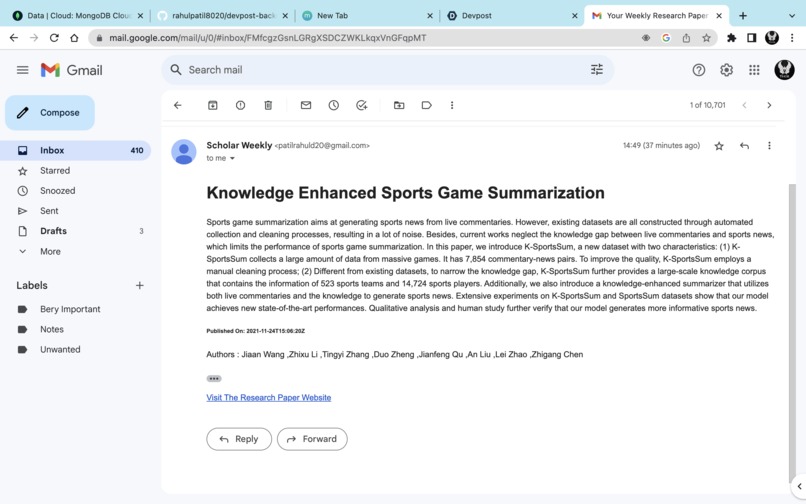
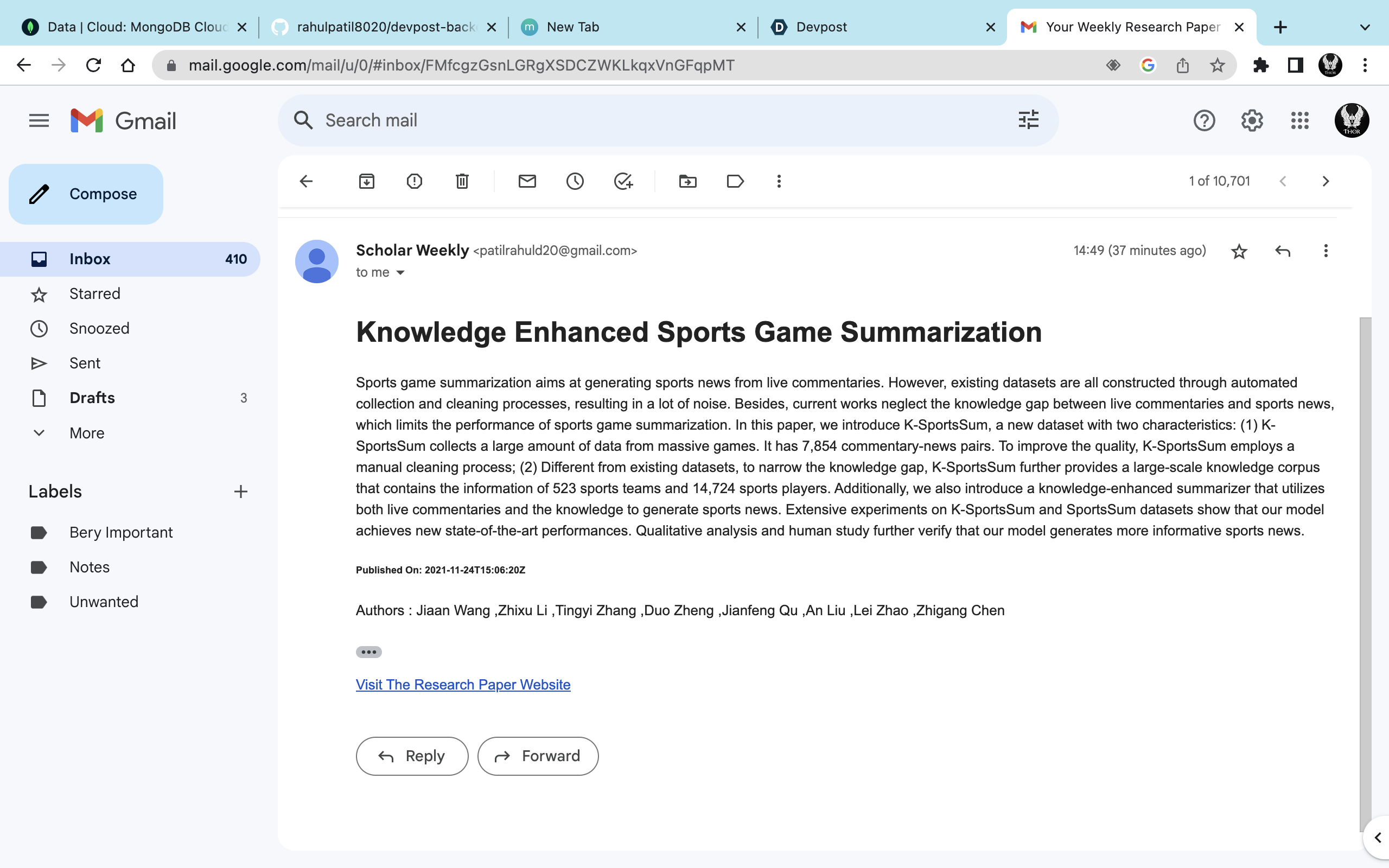
An email sent by scholar weekly.
-
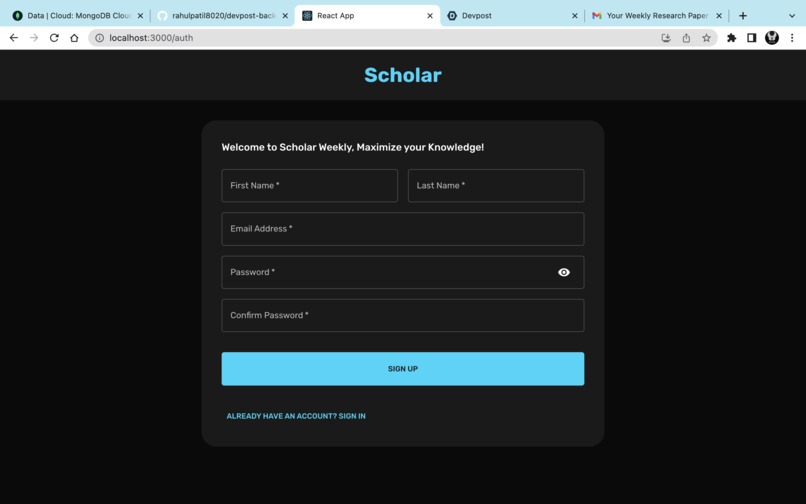
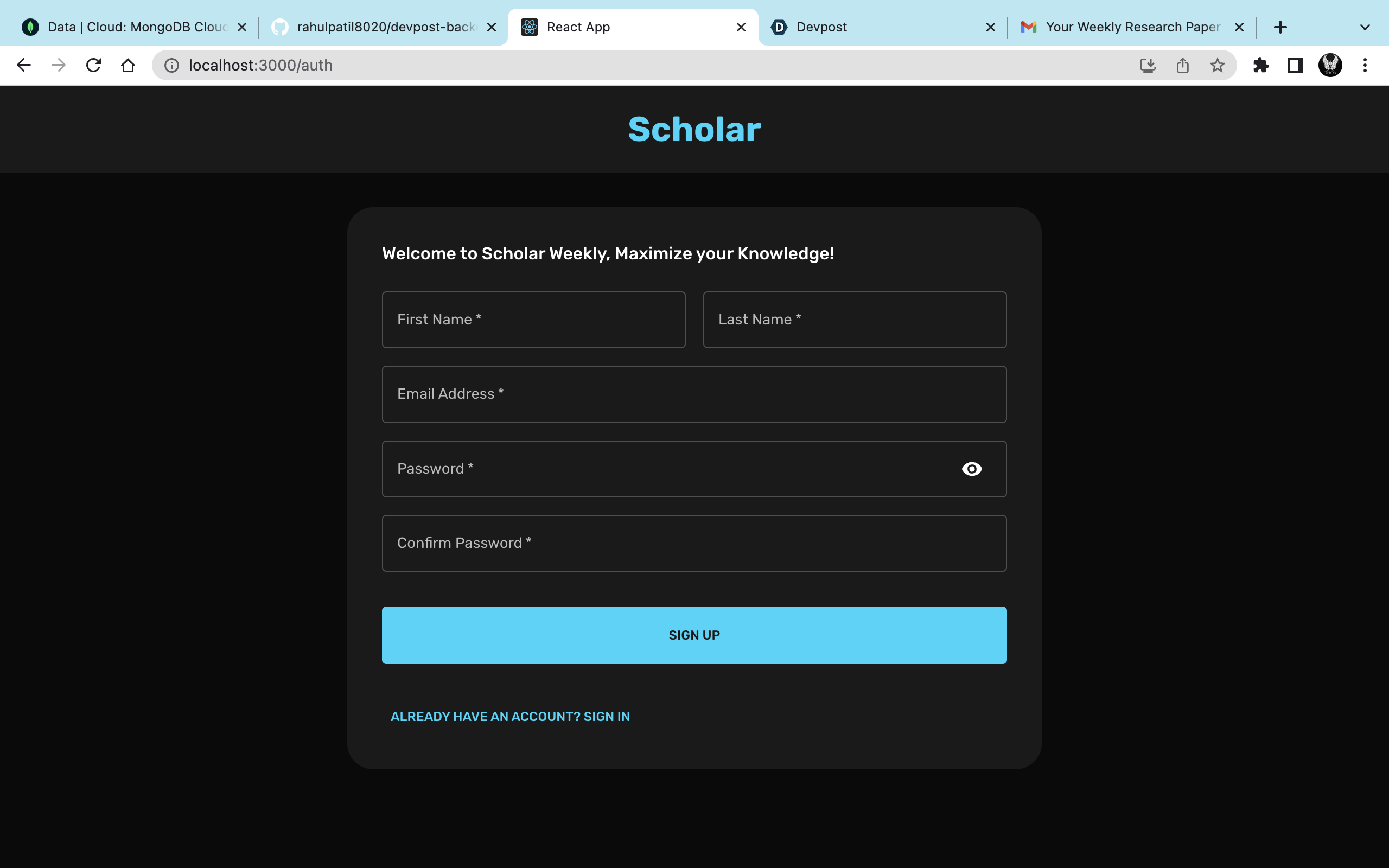
Sign up screen.
-
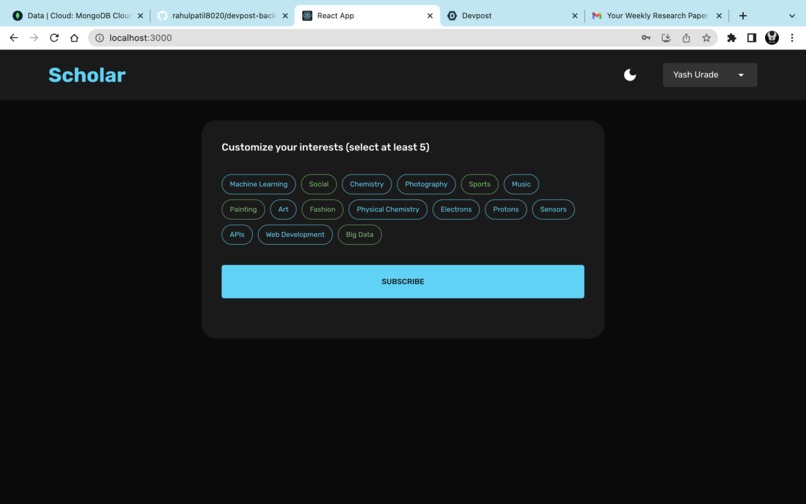
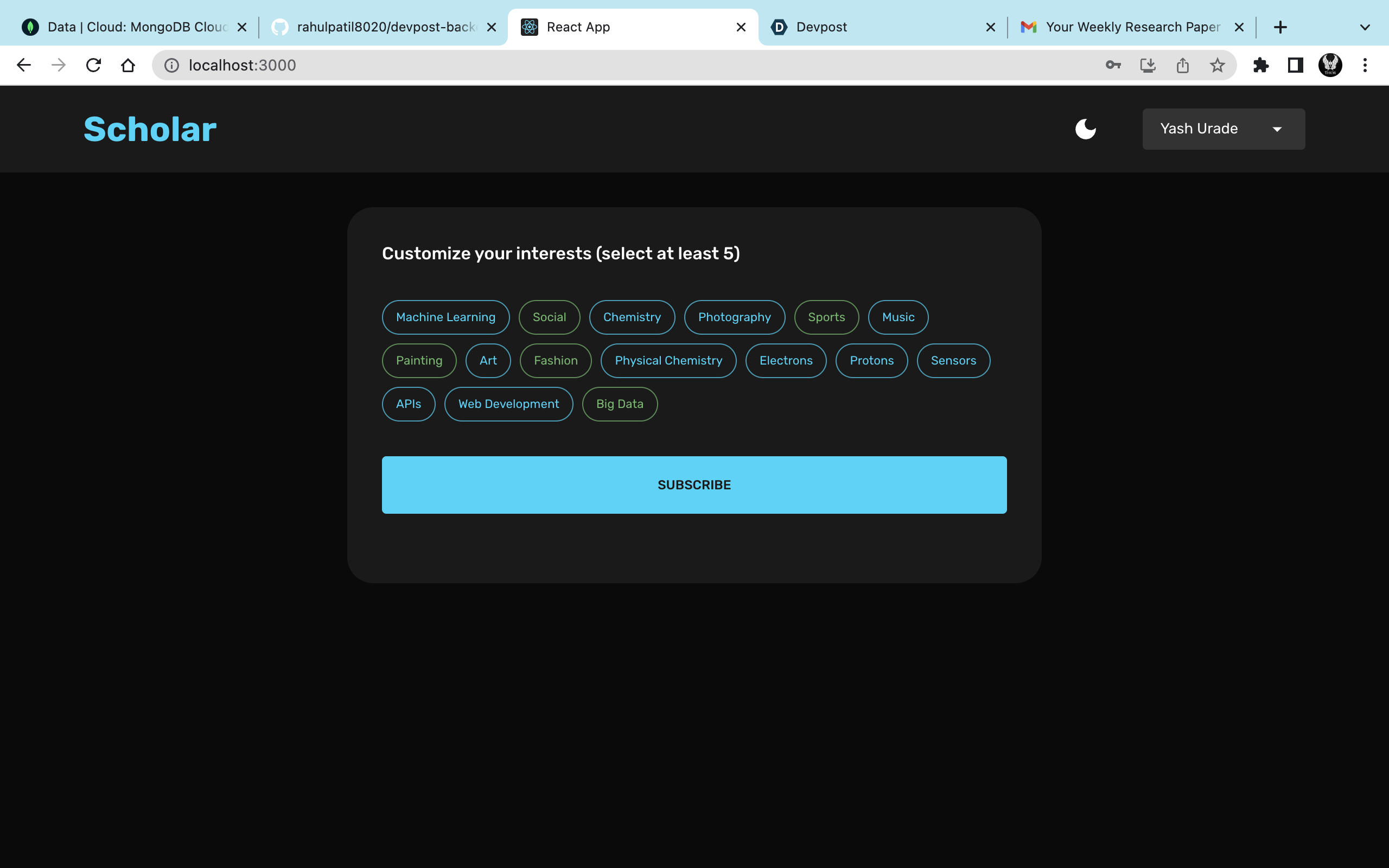
Select Interests
-
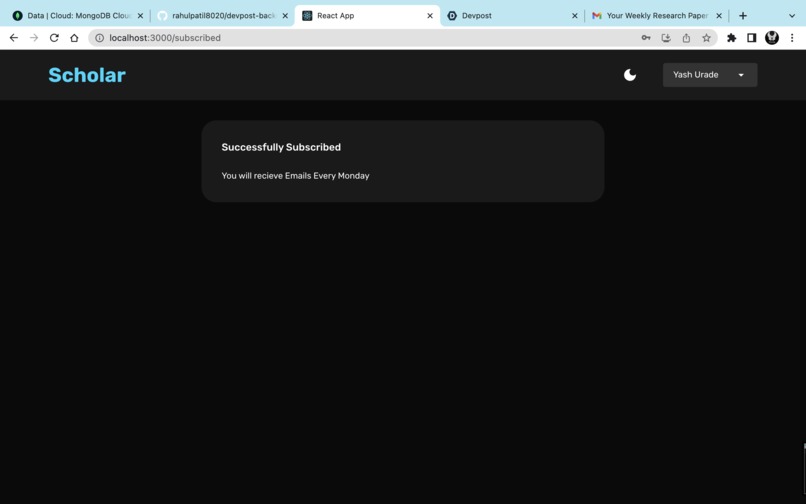
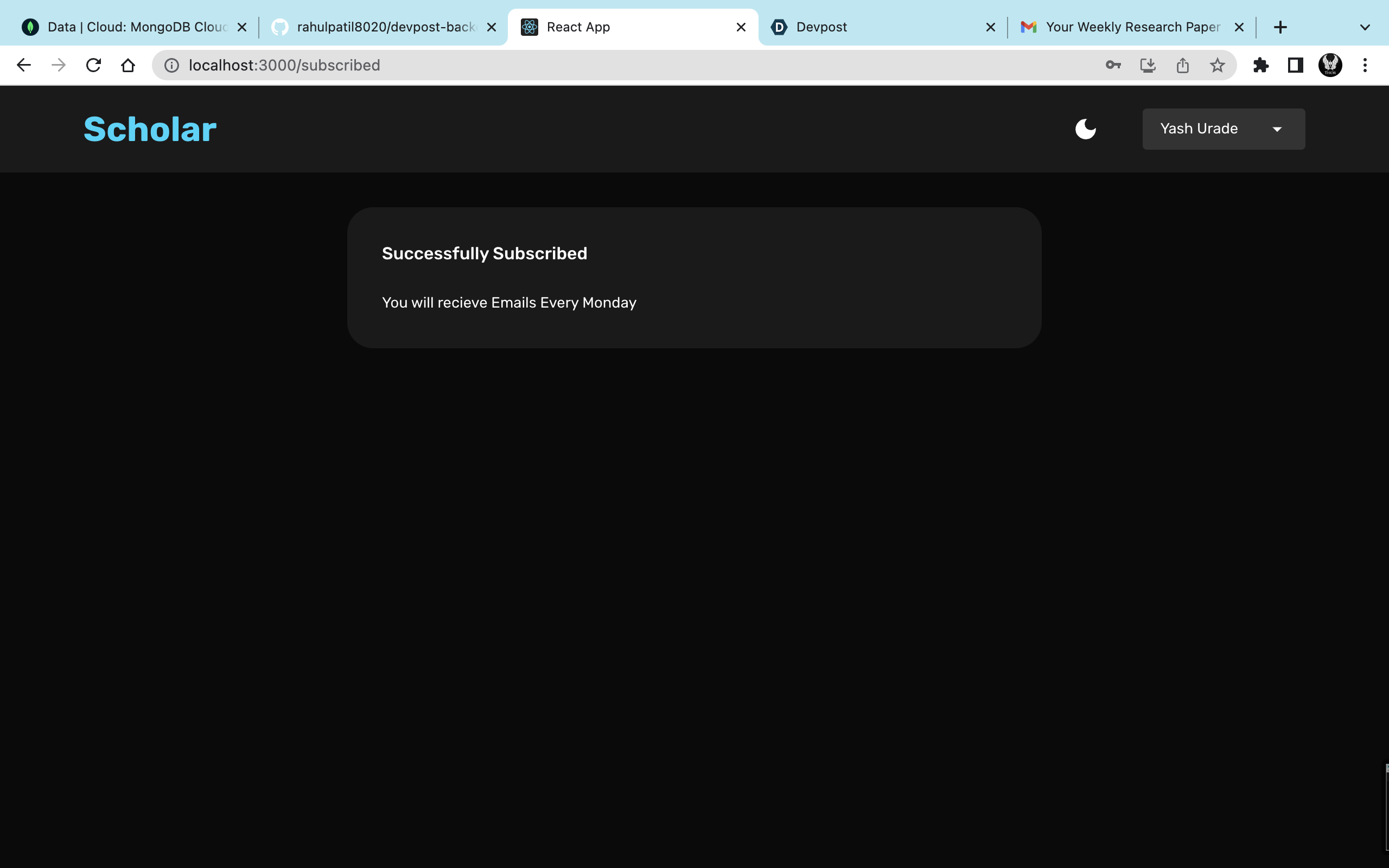
Subscribed Successfully
-
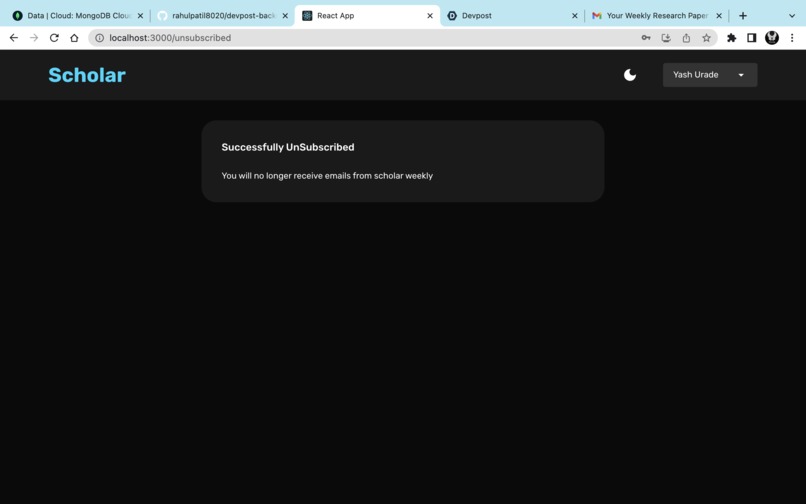
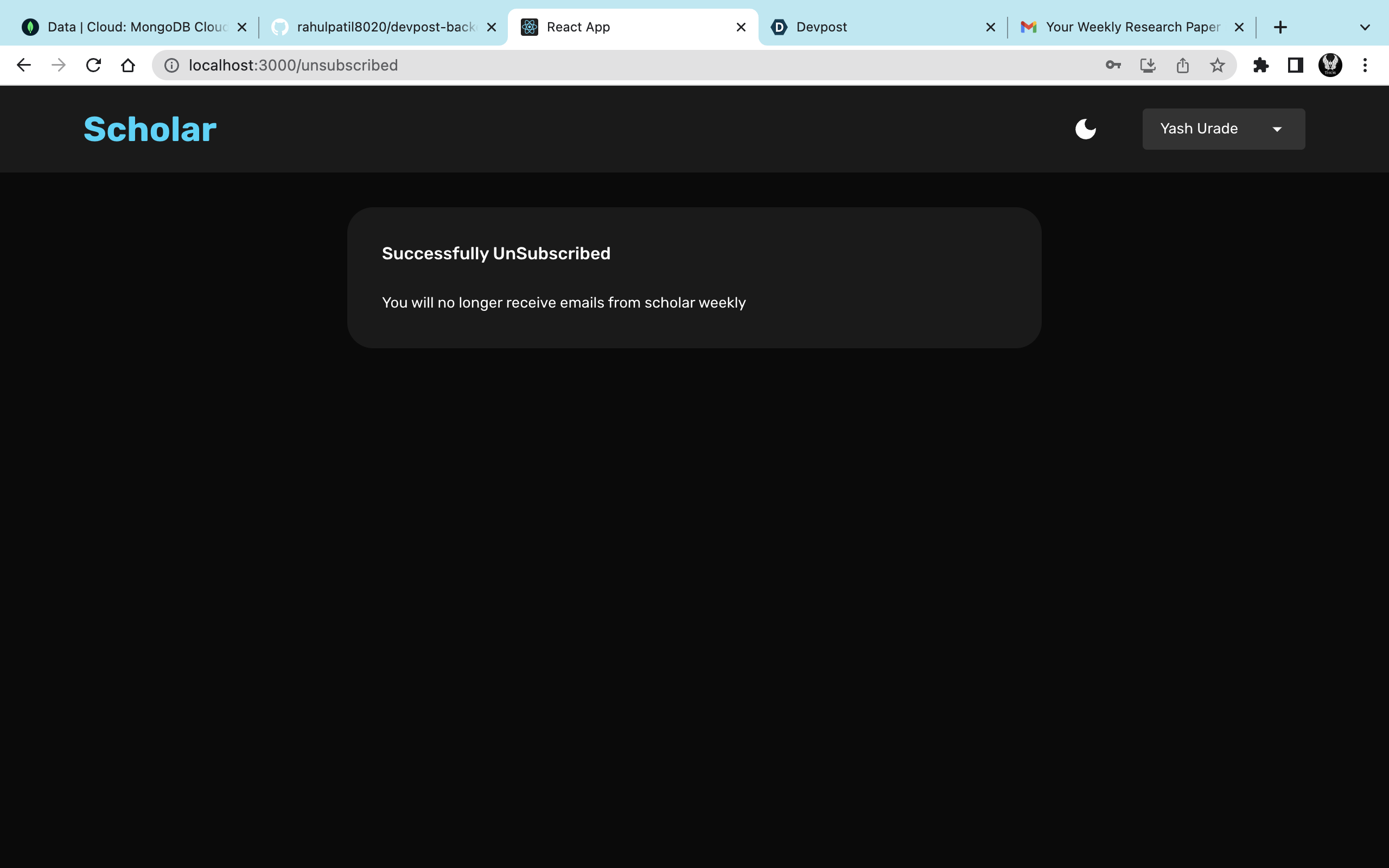
Unsubscribed Successfully
Inspiration
As a master's student, I have to study research papers on a regular basis. I've always found it exhausting to find the research papers I can refer to in my research. Also, many people like to read research papers but are sometimes reluctant to look for them online. So scholar weekly is the perfect solution for them.
What it does
You have to visit the website and sign in with your email. Afterward, you can select your interests from a pool of interests and subscribe to weekly emails. You will receive research papers based on your interests every Monday. You can unsubscribe at any time.
How I built it
I used React.js to build the front-end application. For the backend, I used Node.js and Express.js. I am storing the user information in MongoDB (NoSQL Database). I am using the Arxiv API which is made free by Cornell University to get the research papers. After that, I am using googles Gmail API to send emails to the subscribed users.
Challenges I ran into
I used the Gmail API for the first time. So setting up the OAuth2 was a little complicated for me. Dealing with XML data which is returned by the API call took some effort.
Accomplishments that I'm proud of
I developed the application in a short amount of time. I was able to use different APIs efficiently.
What I learned
I learned state management using redux/toolkit. Using different API services provided by Google was a key learning point.
What's next for Scholar Weekly
The queries to the Arxiv API can be optimized in order to get even more relevant research papers. Instead of MongoDB, a key-value pair database like Redis which is really fast can be used to store the information. The backend code can be made more efficient to reduce the load on the server.


Log in or sign up for Devpost to join the conversation.