-
-
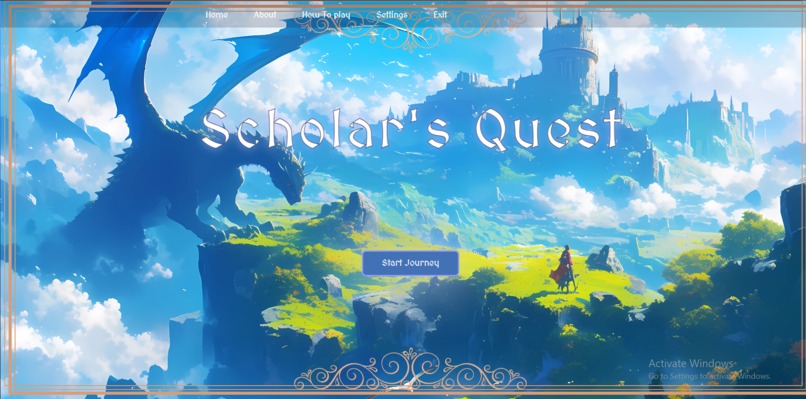
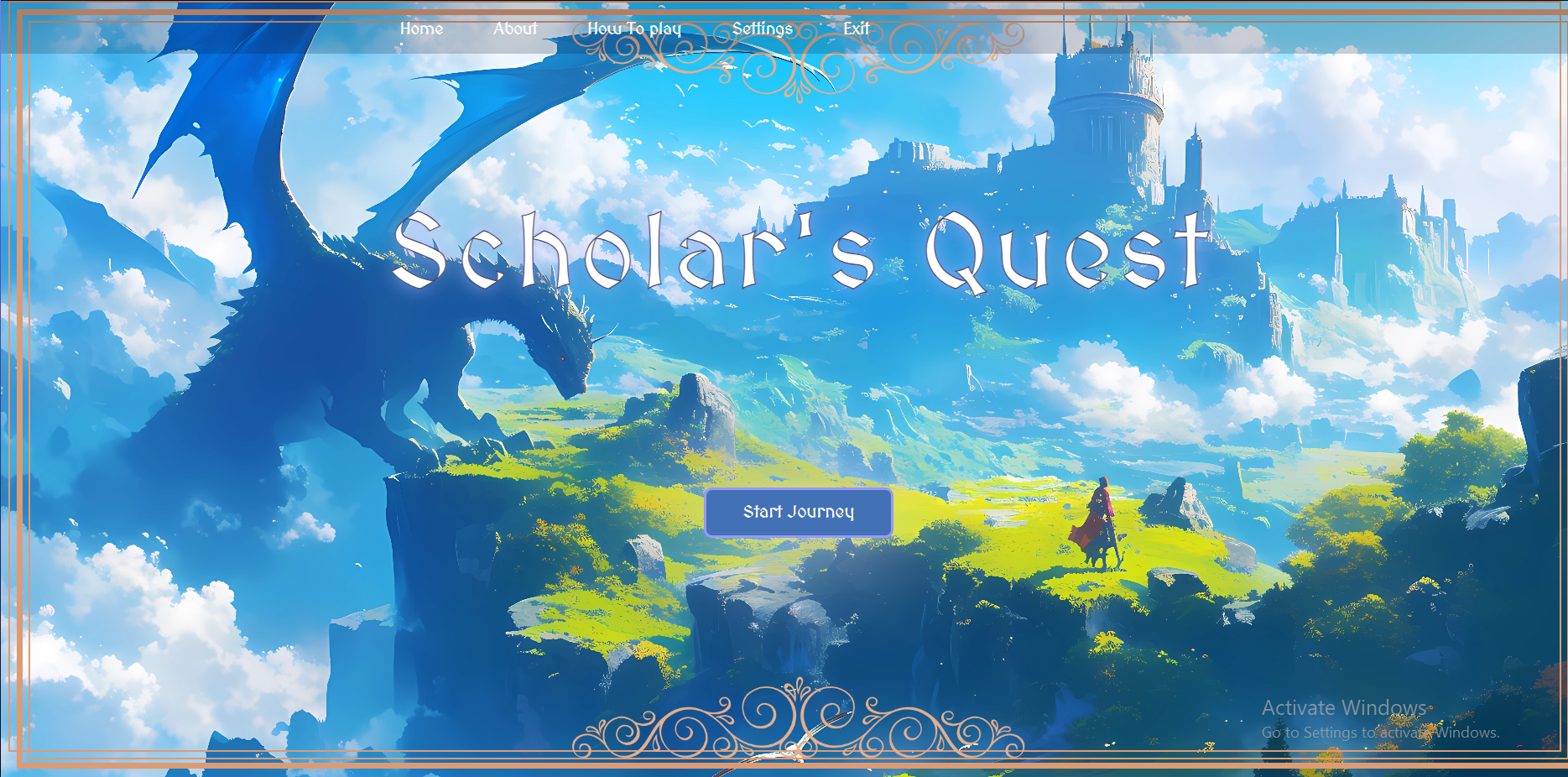
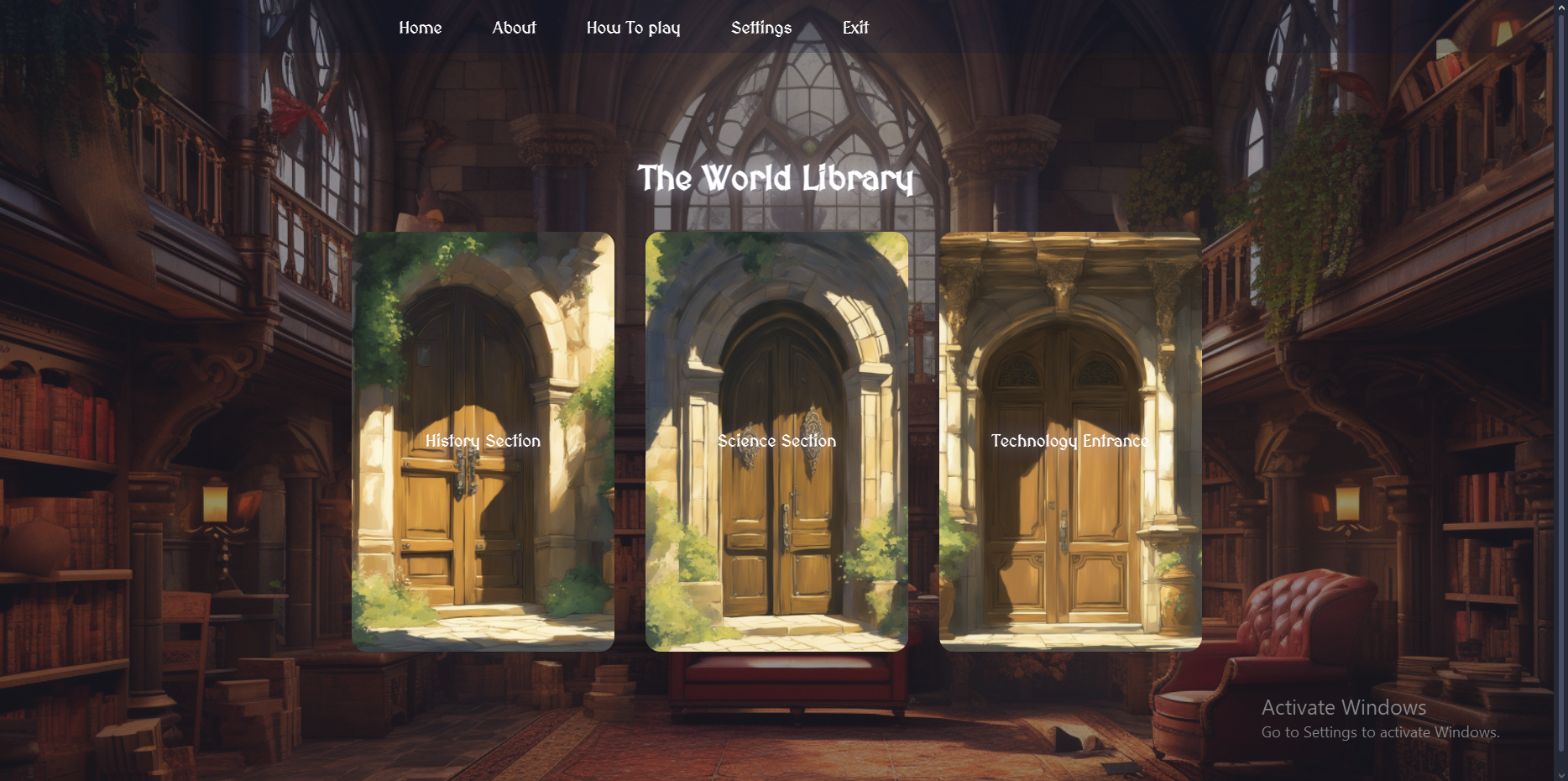
Home Screen
-
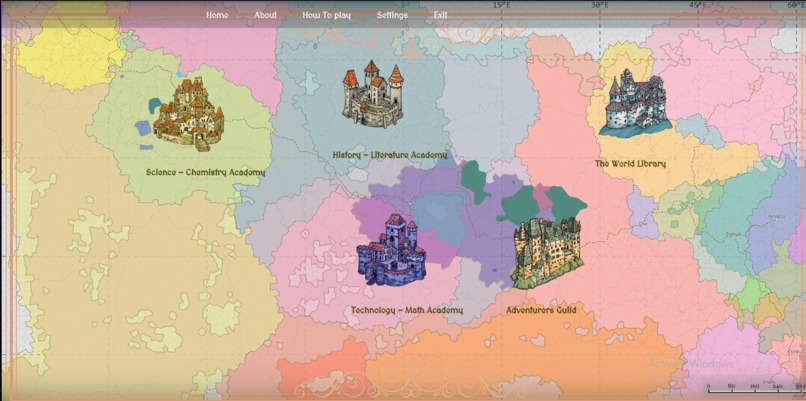
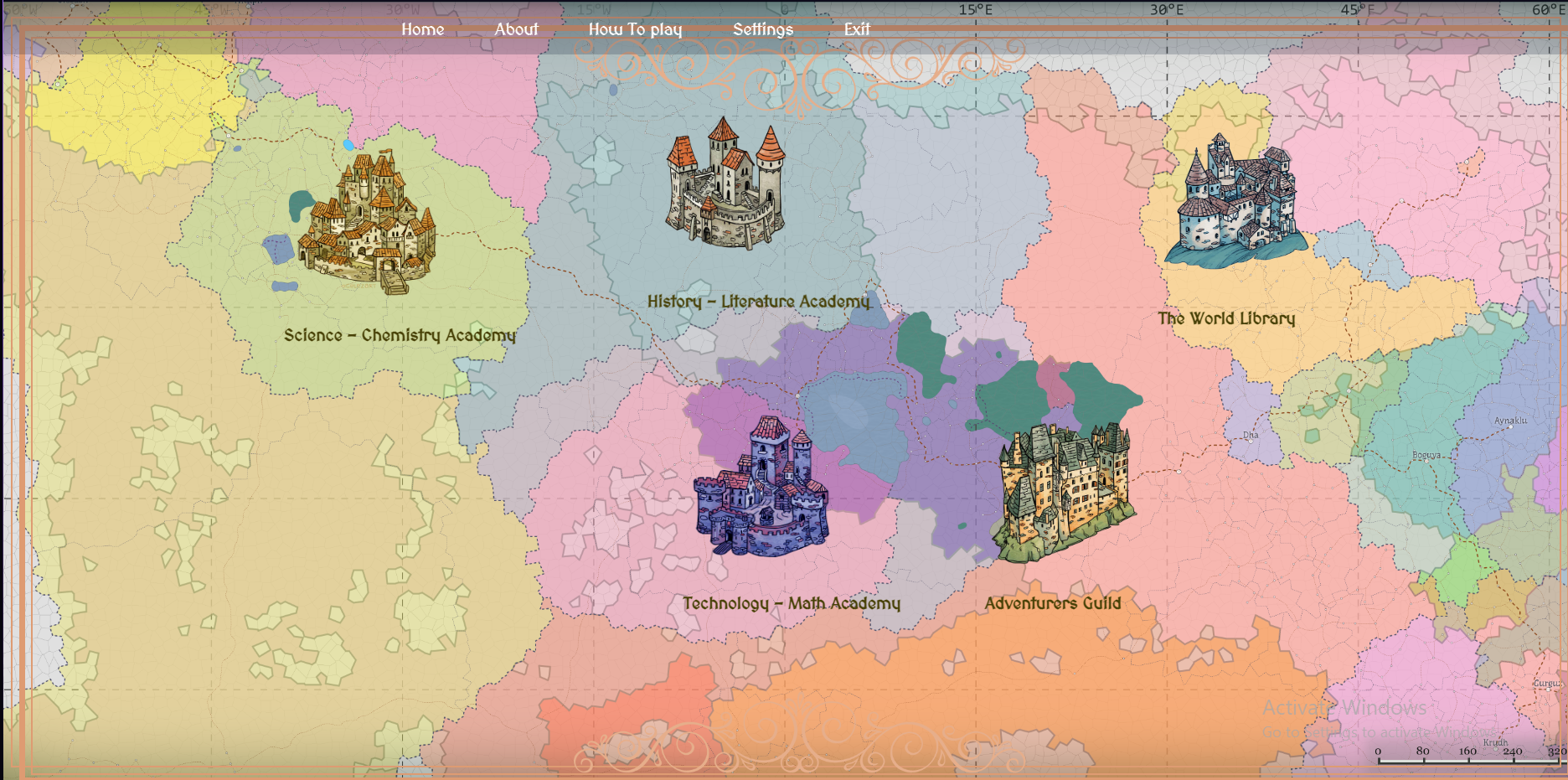
World Map
-
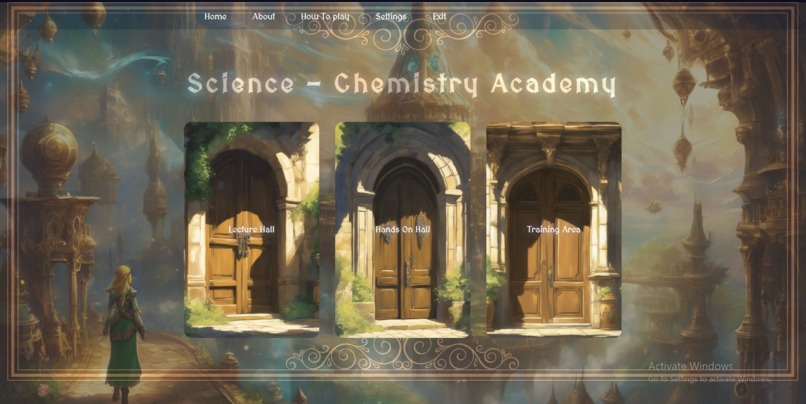
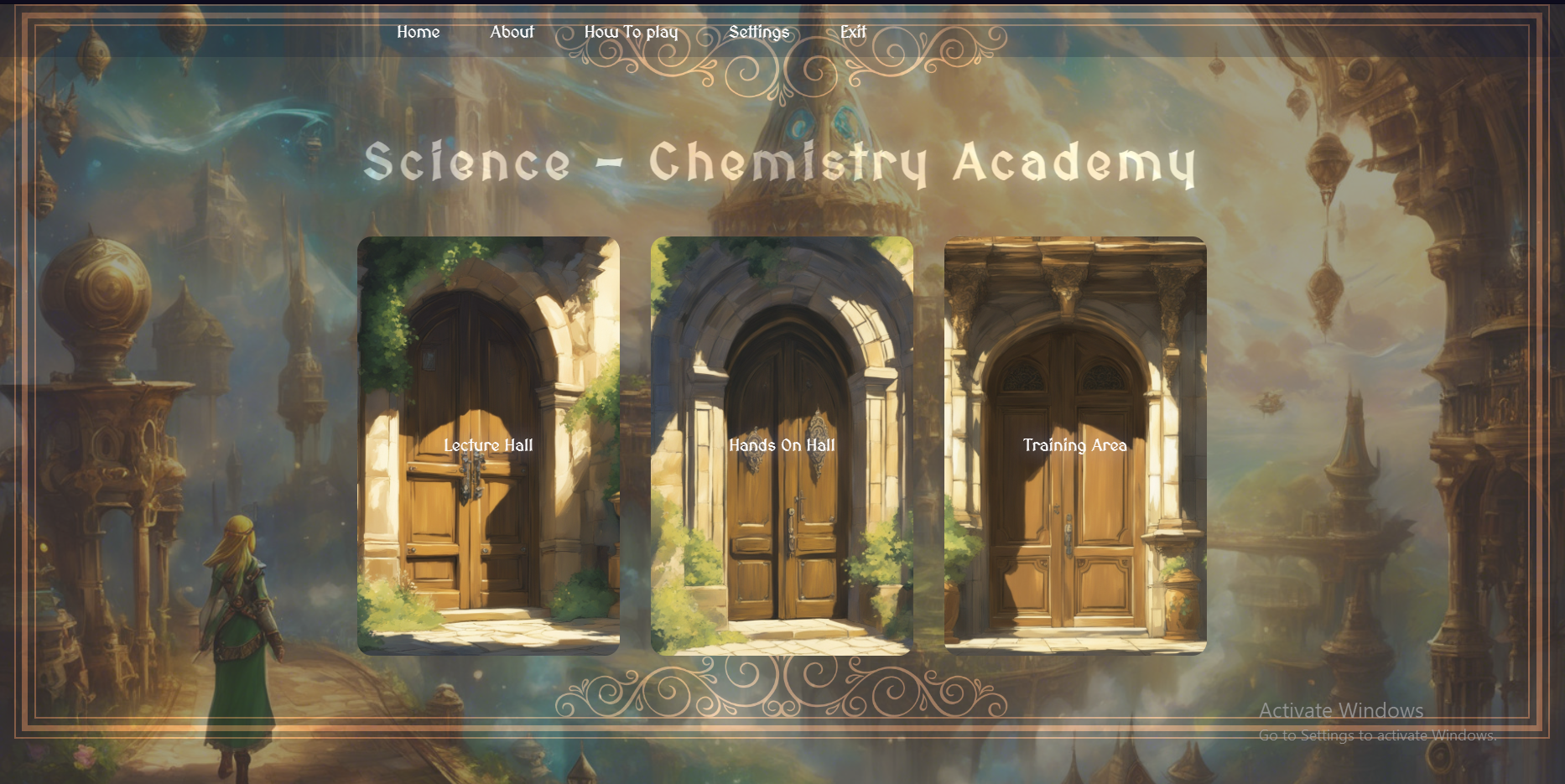
Sci - Chem Academy
-
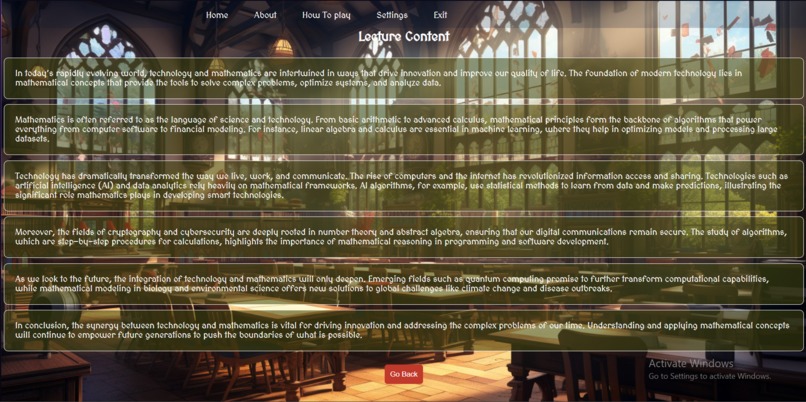
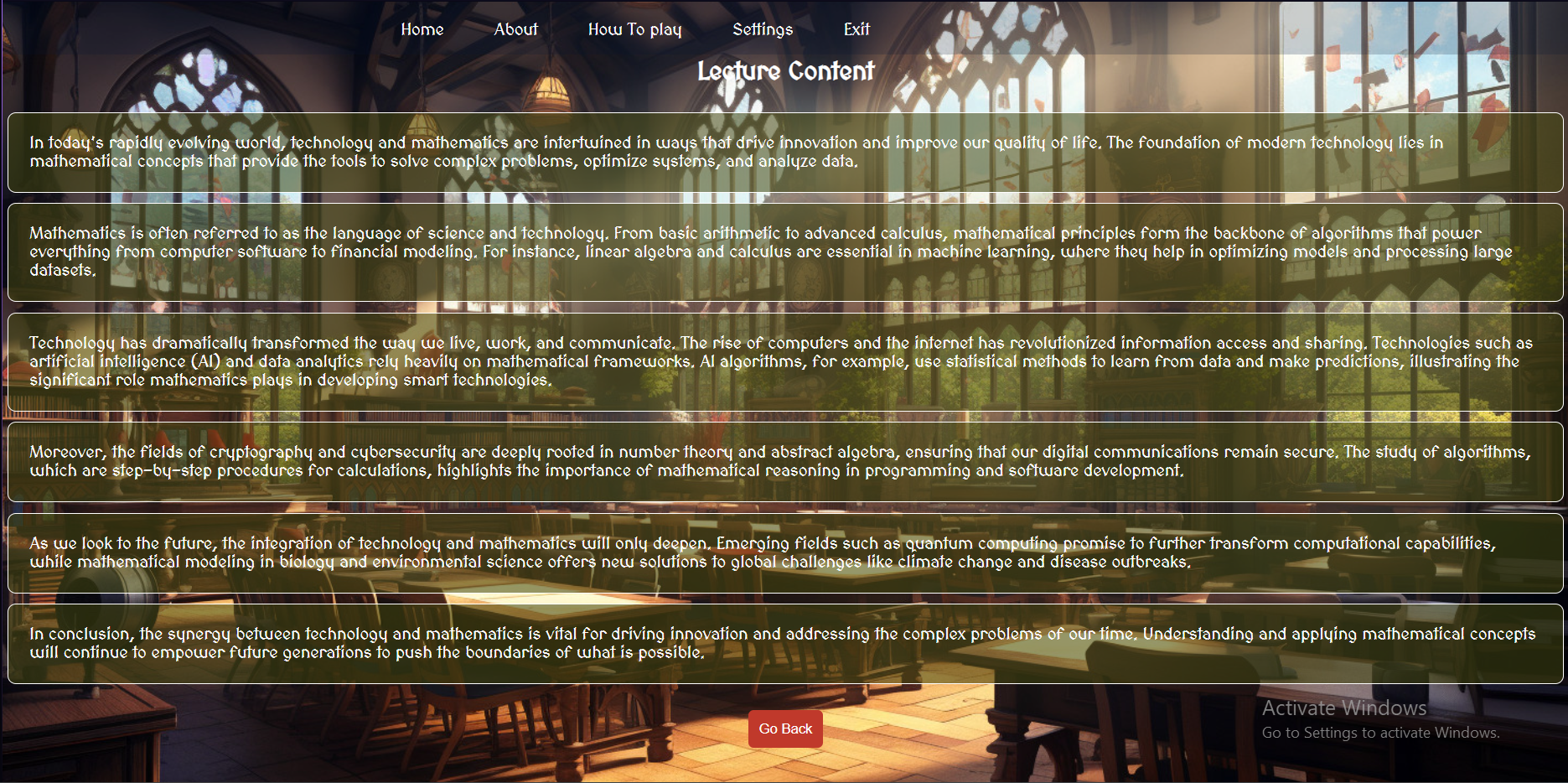
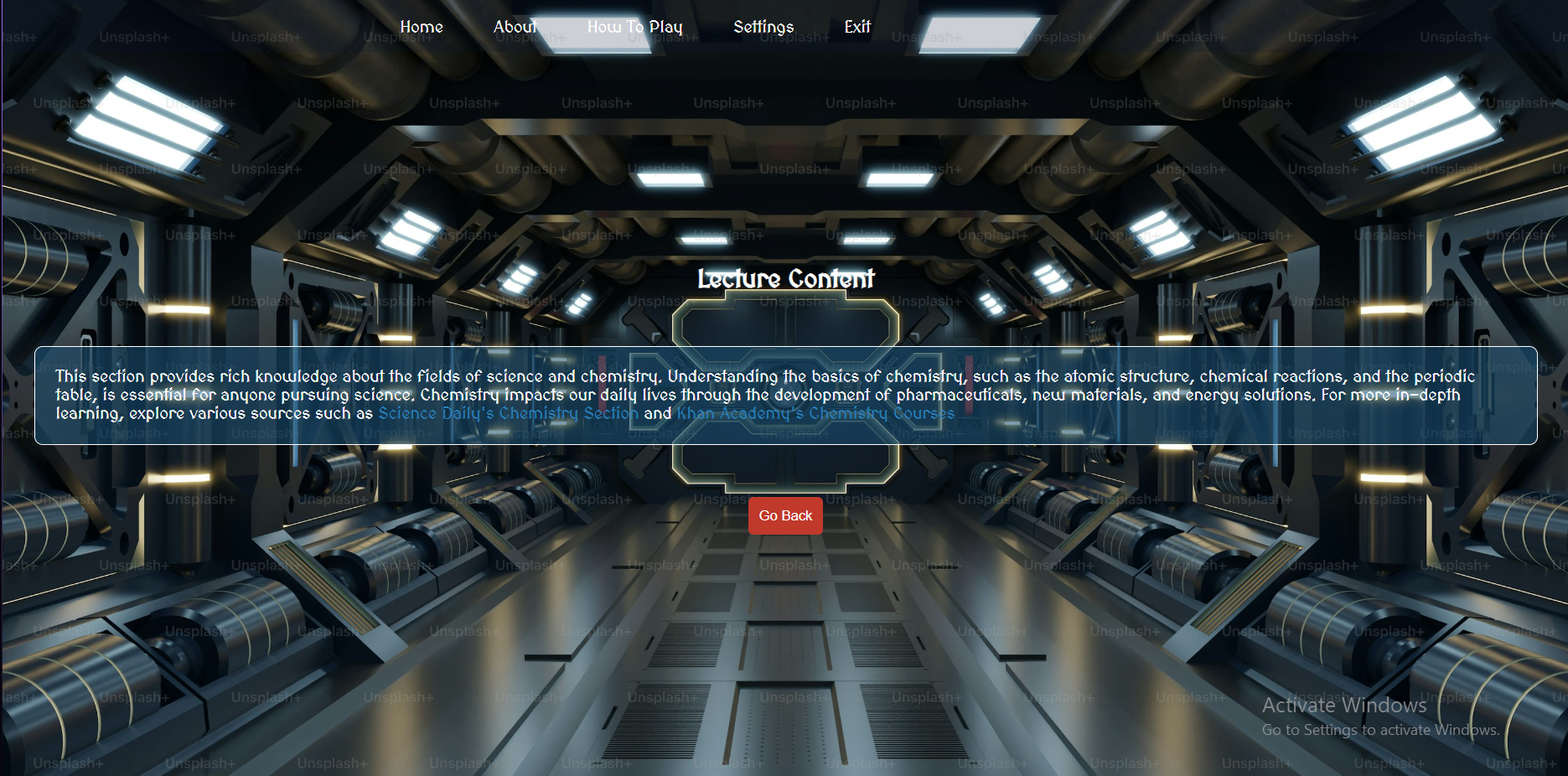
Lecture Hall
-
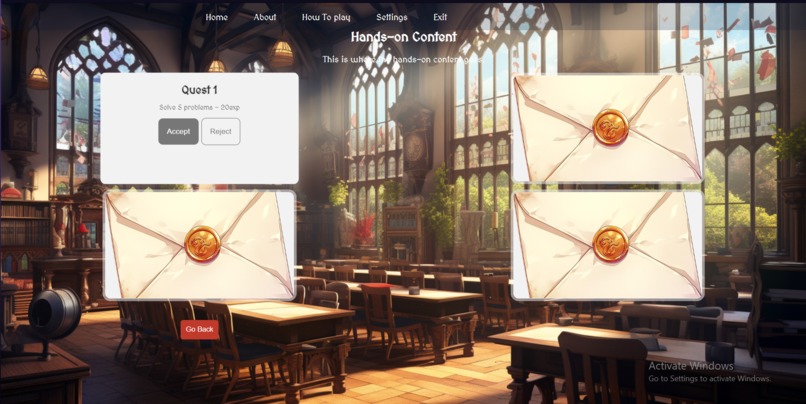
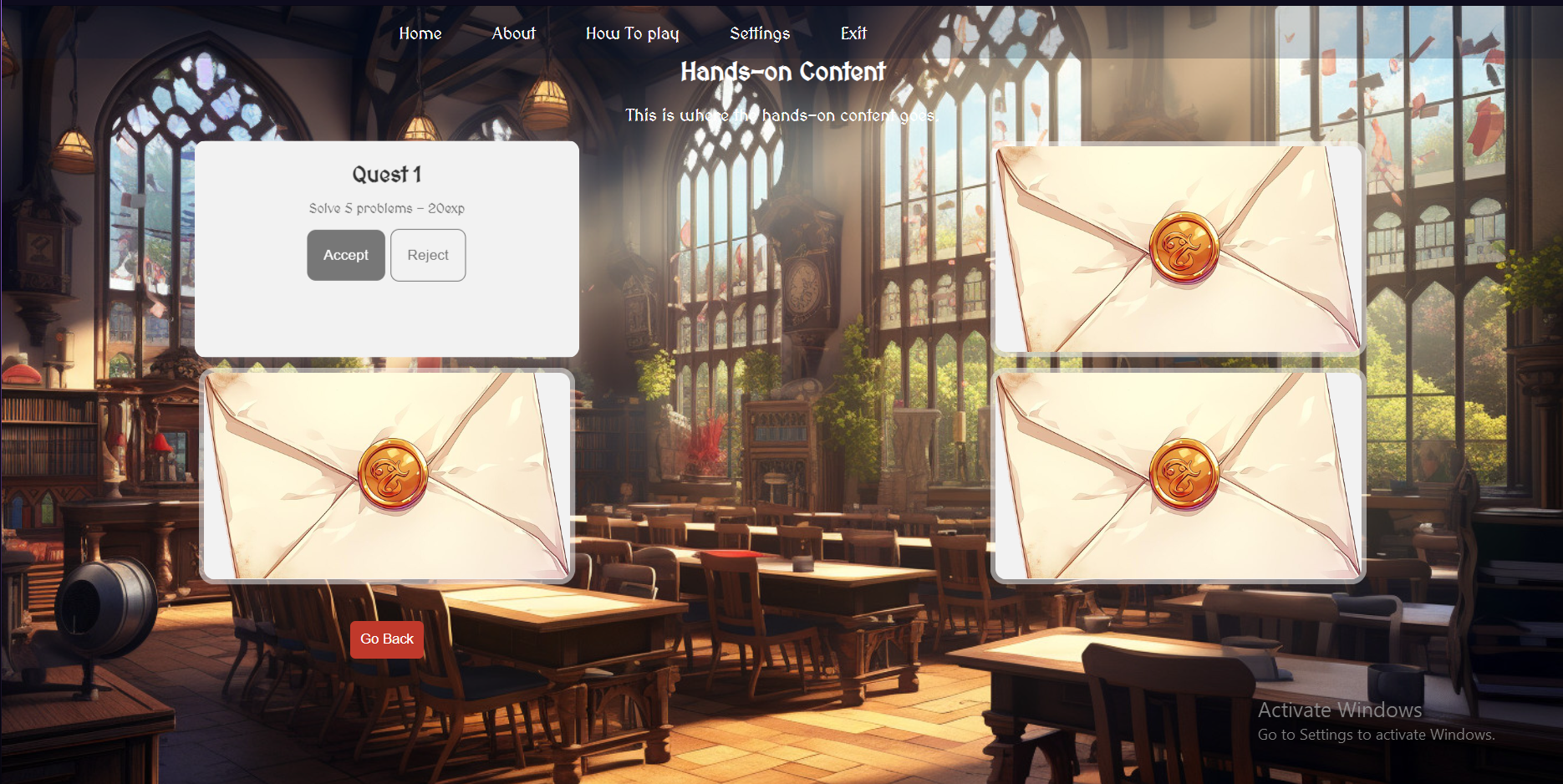
Hands on Hall
-
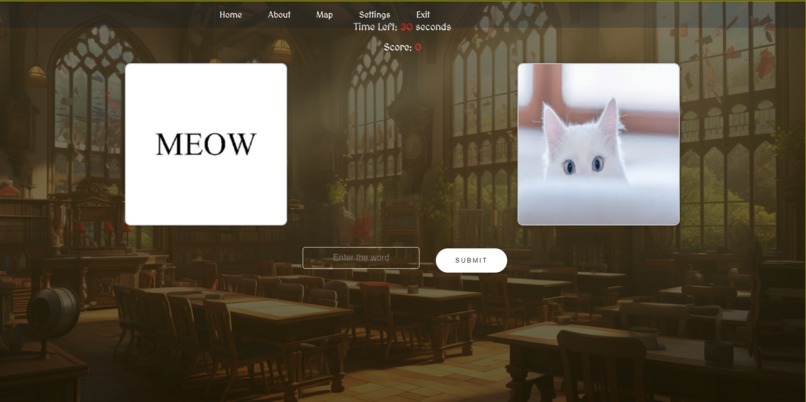
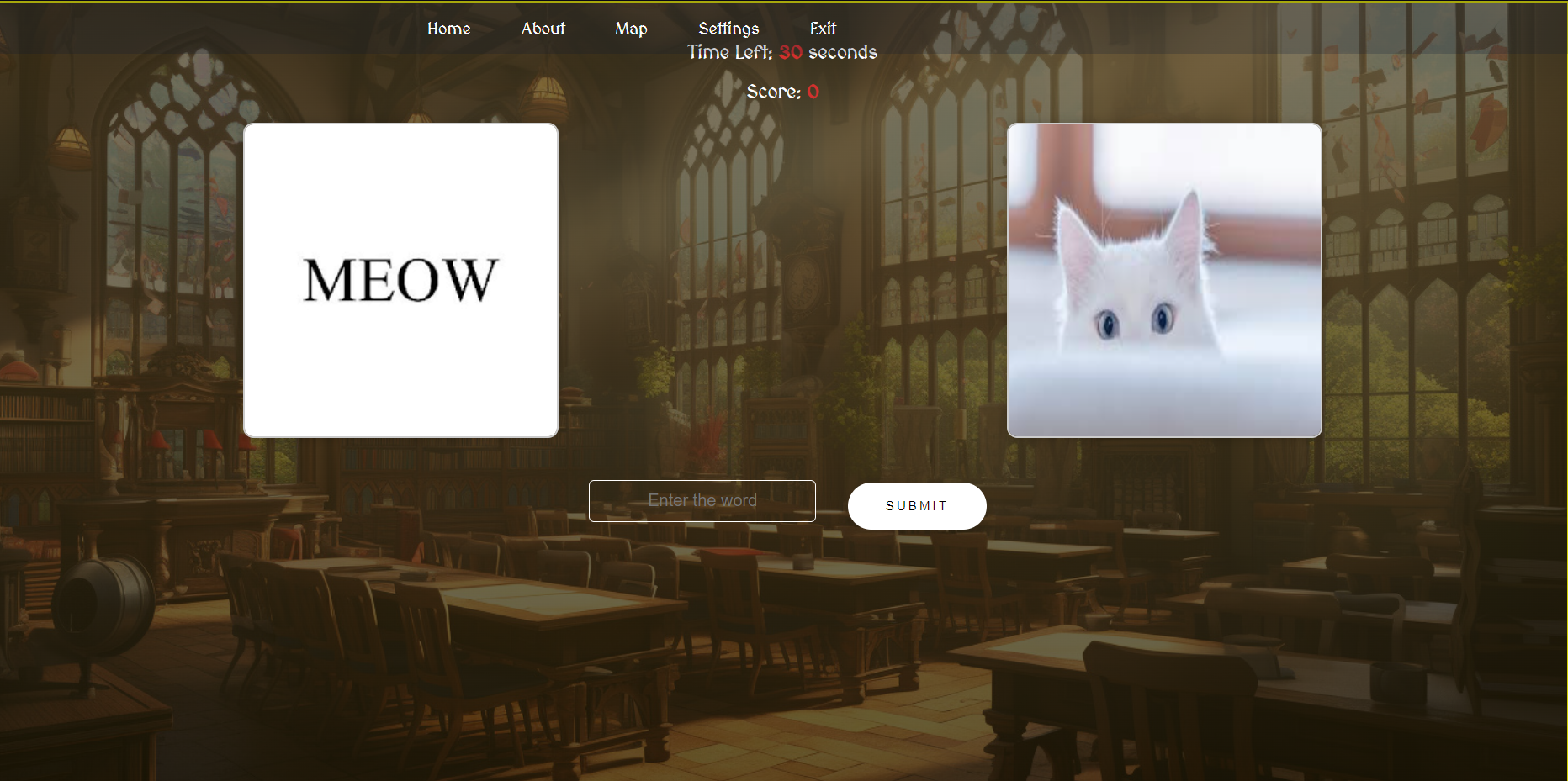
Training Hall [2pics 1 word Game]
-
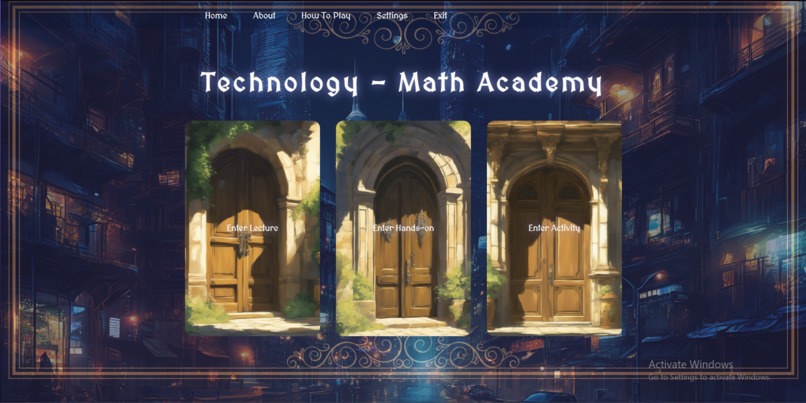
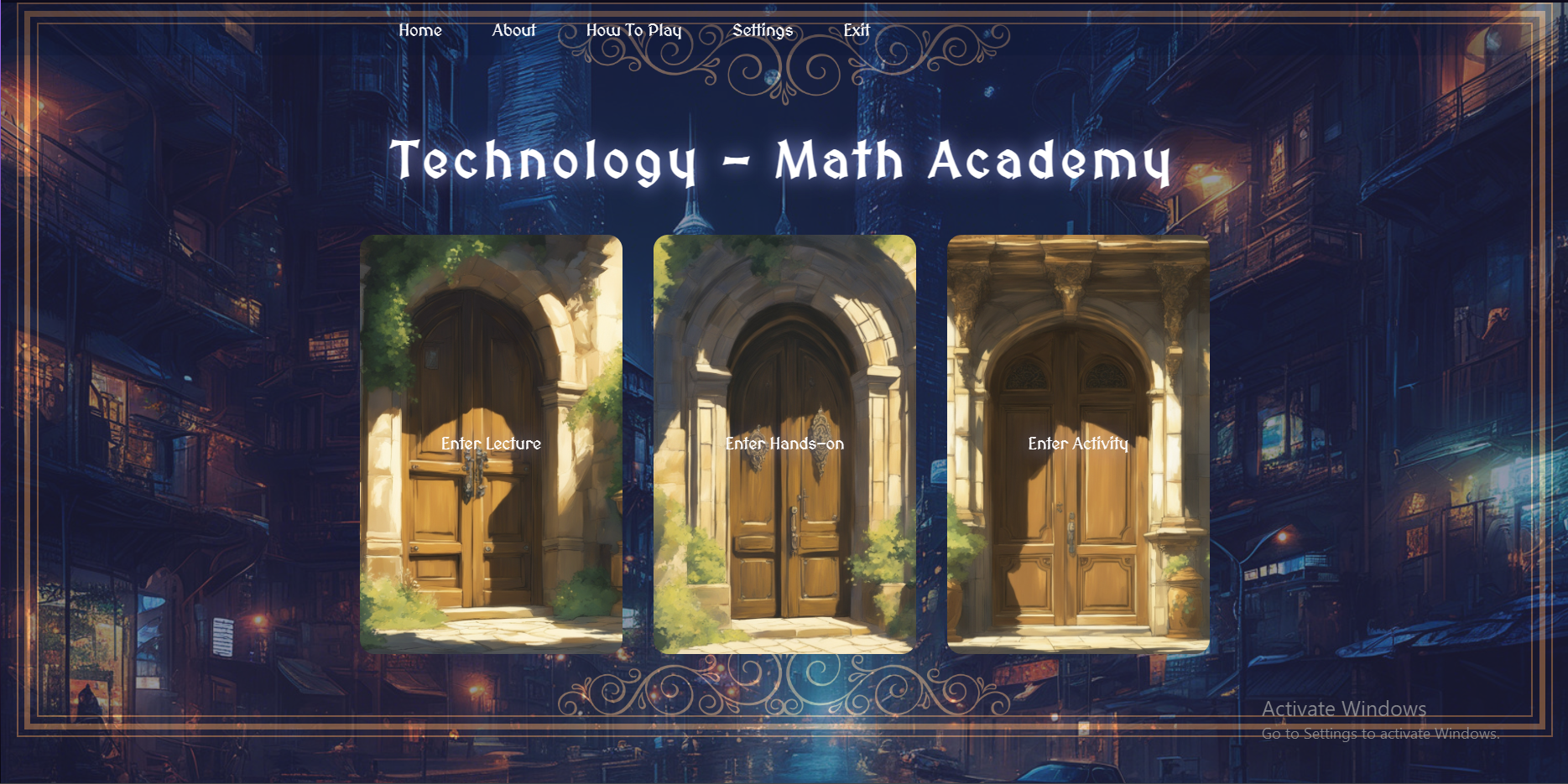
Tech - Math Academy
-
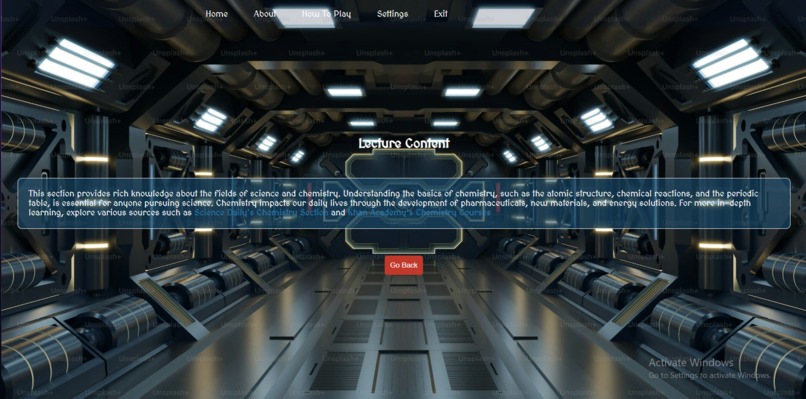
Lecture Hall
-
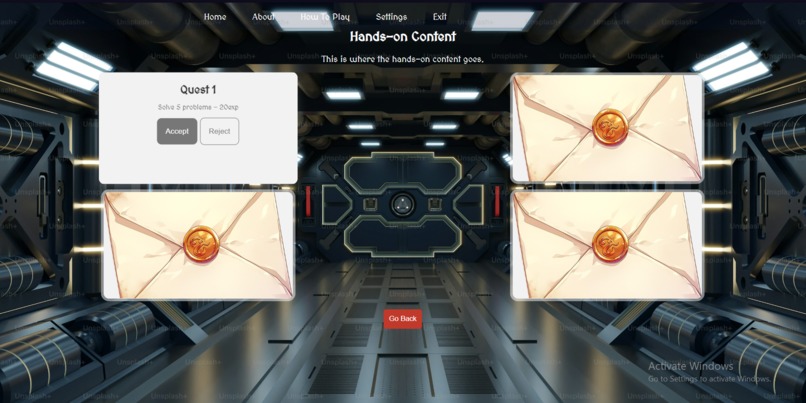
Hands On Hall
-
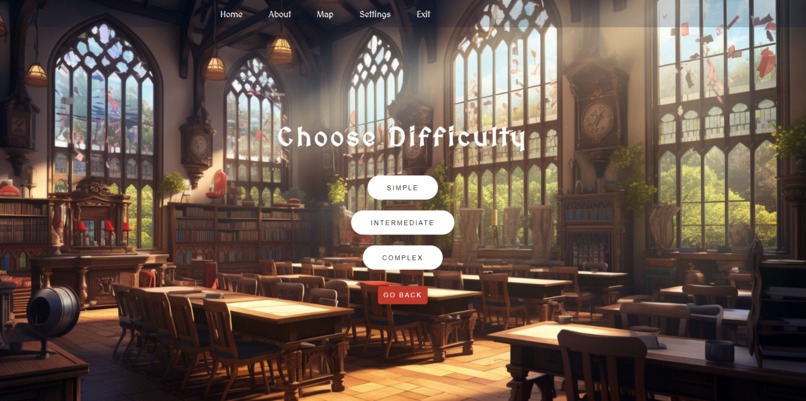
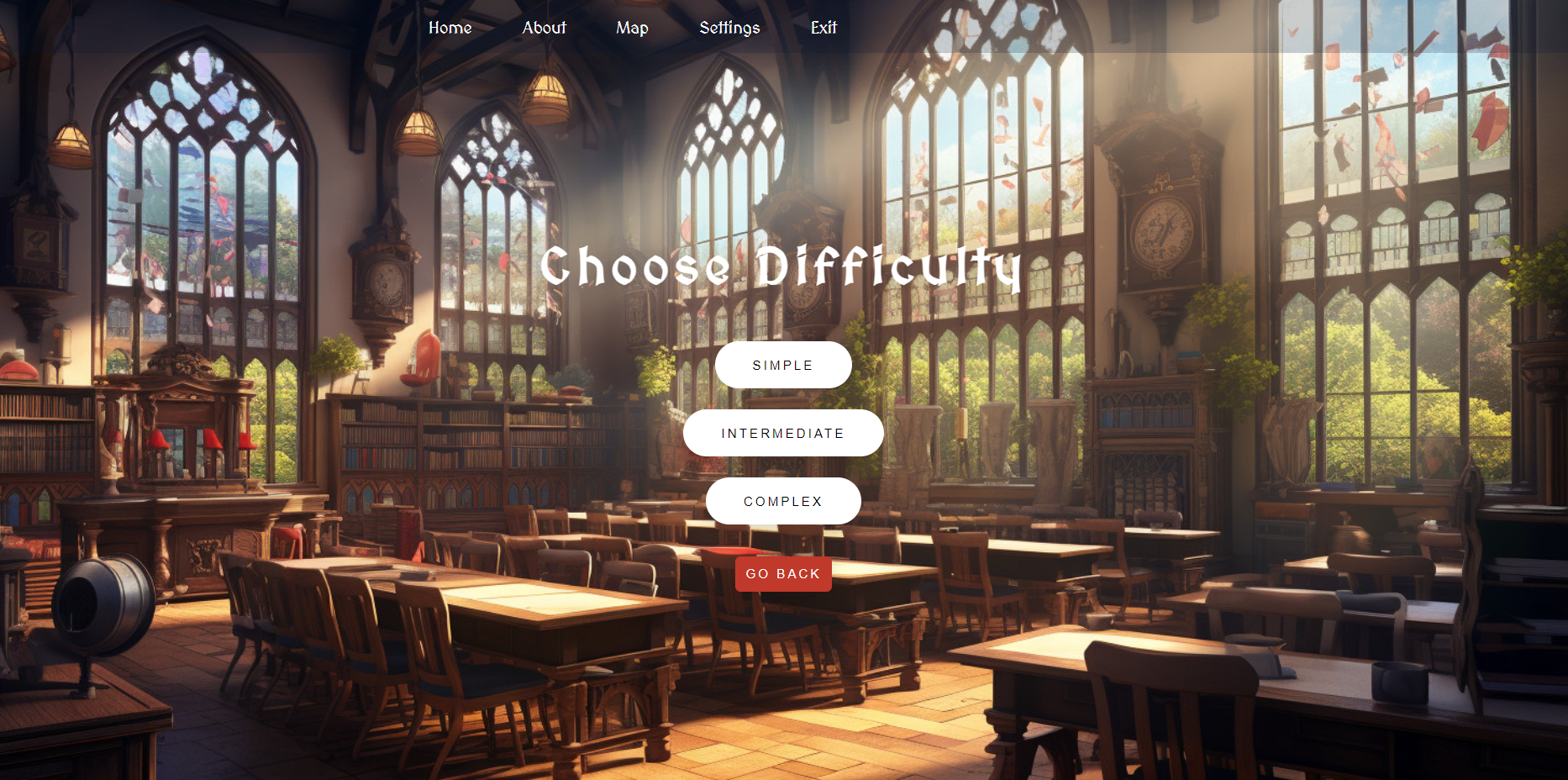
Difficulty Option
-
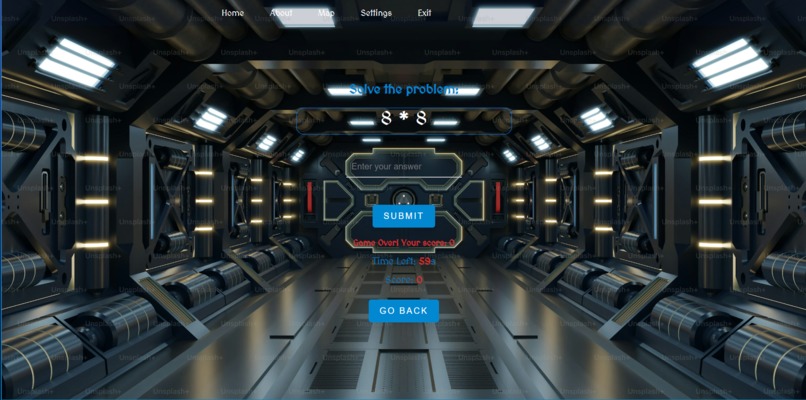
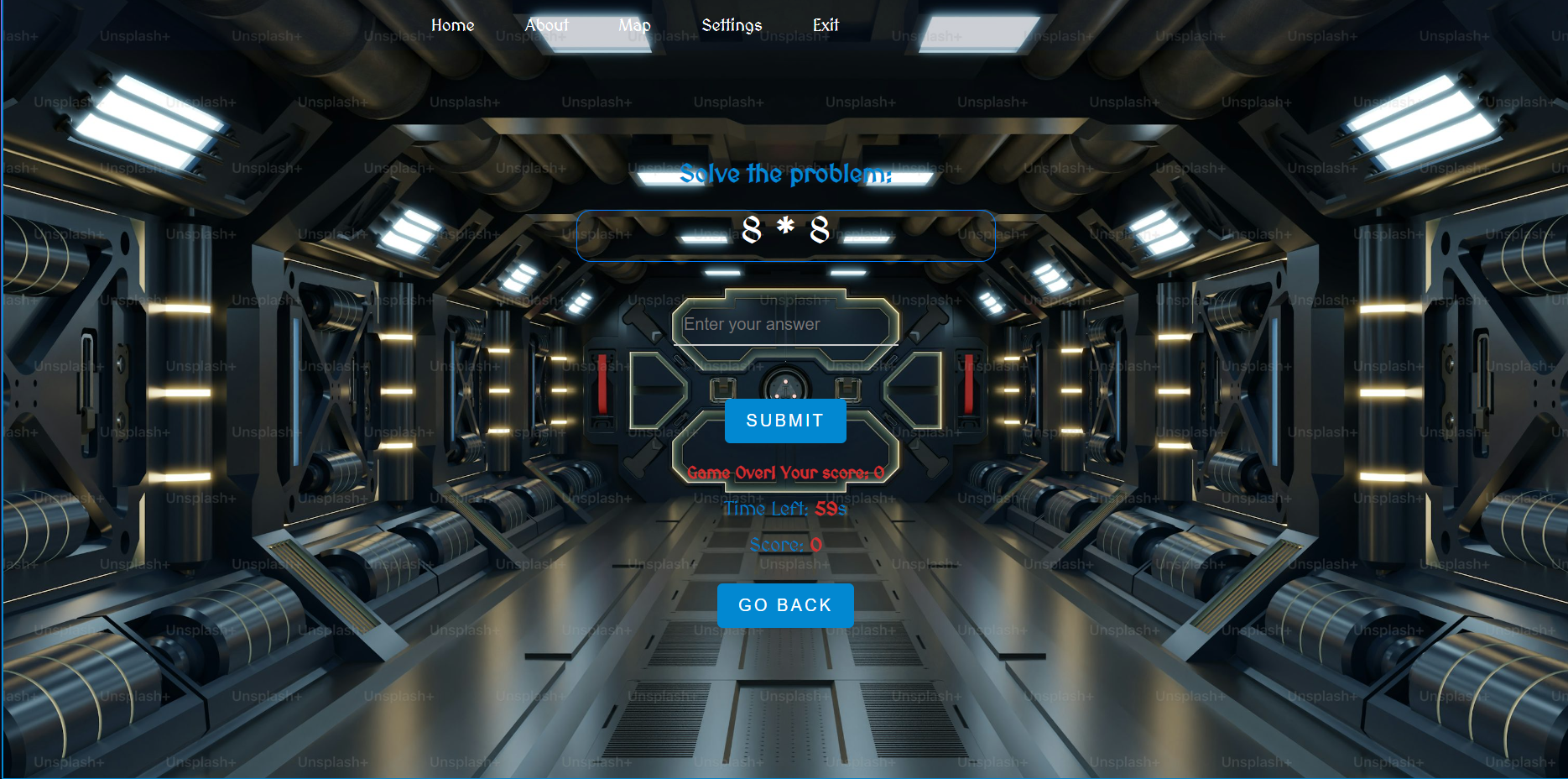
Training Hall [Problem Solving]
-
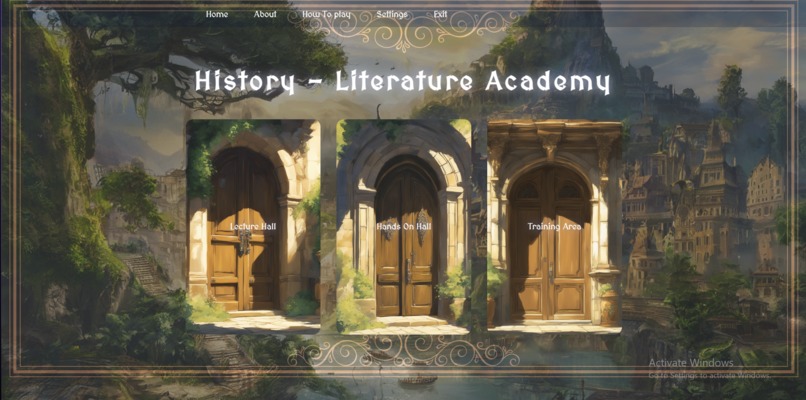
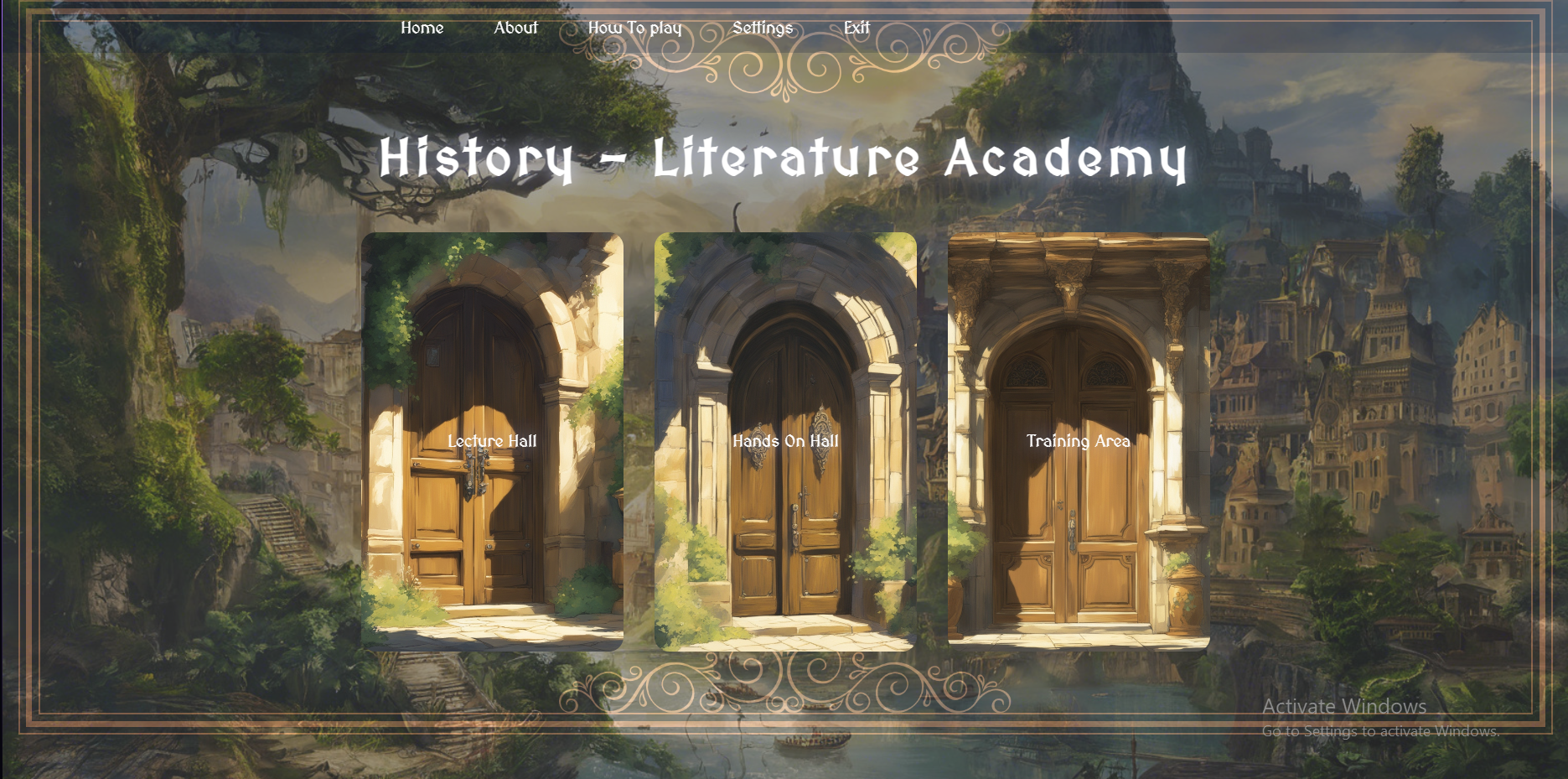
Hist - Lit Academy
-
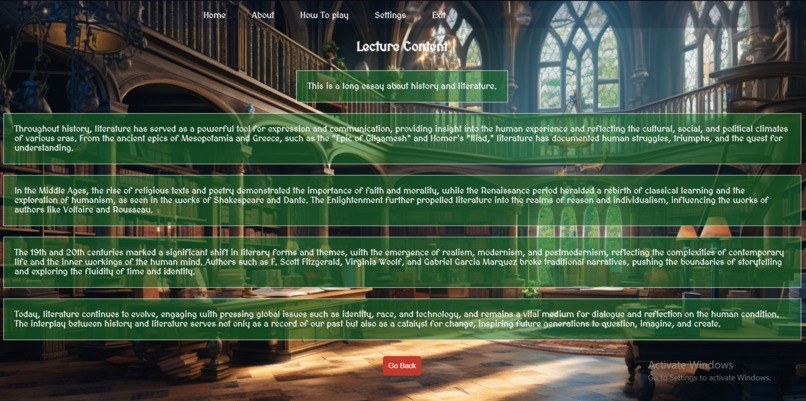
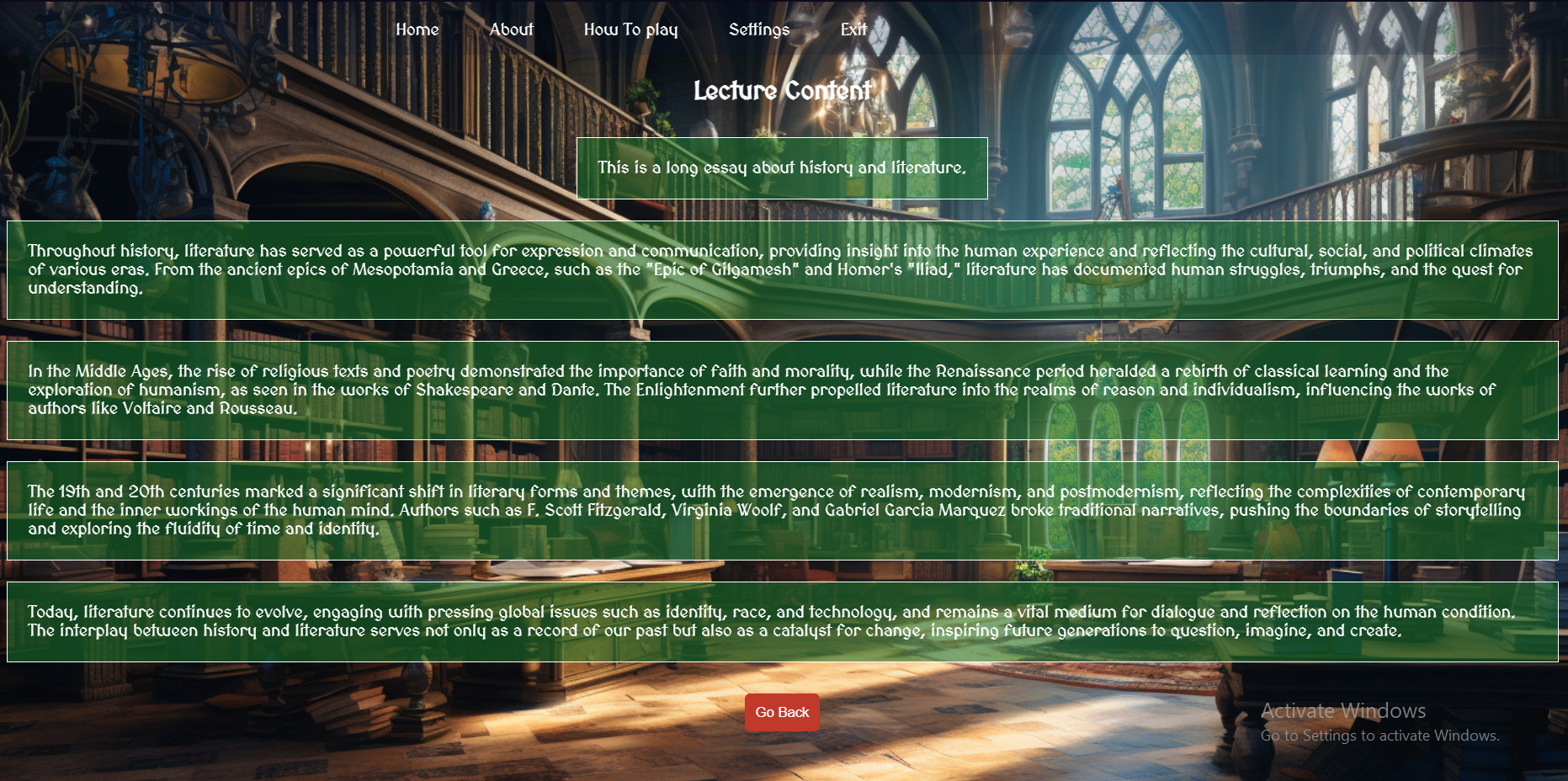
Lecture Hall
-
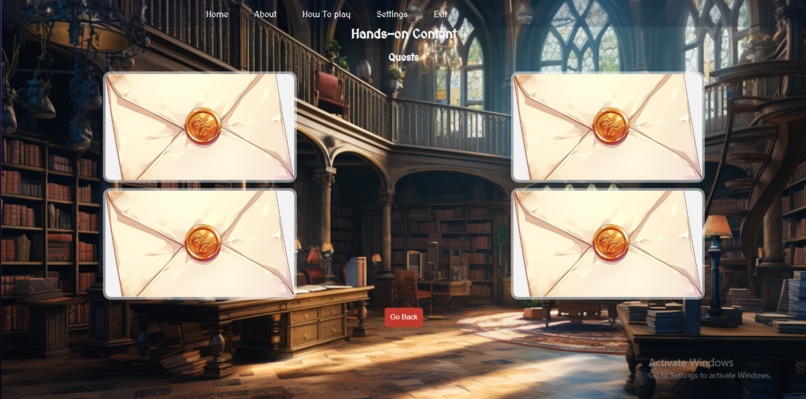
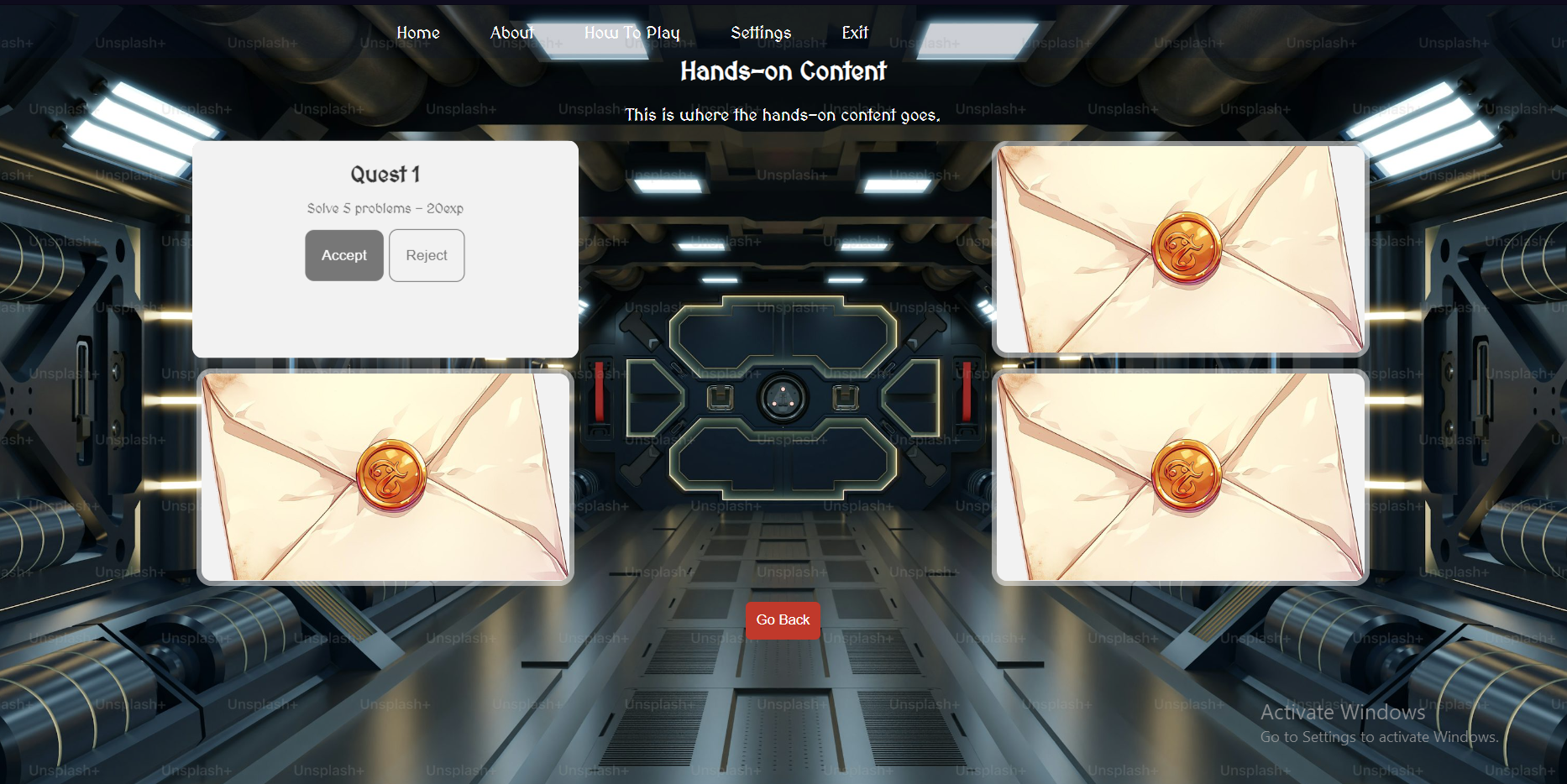
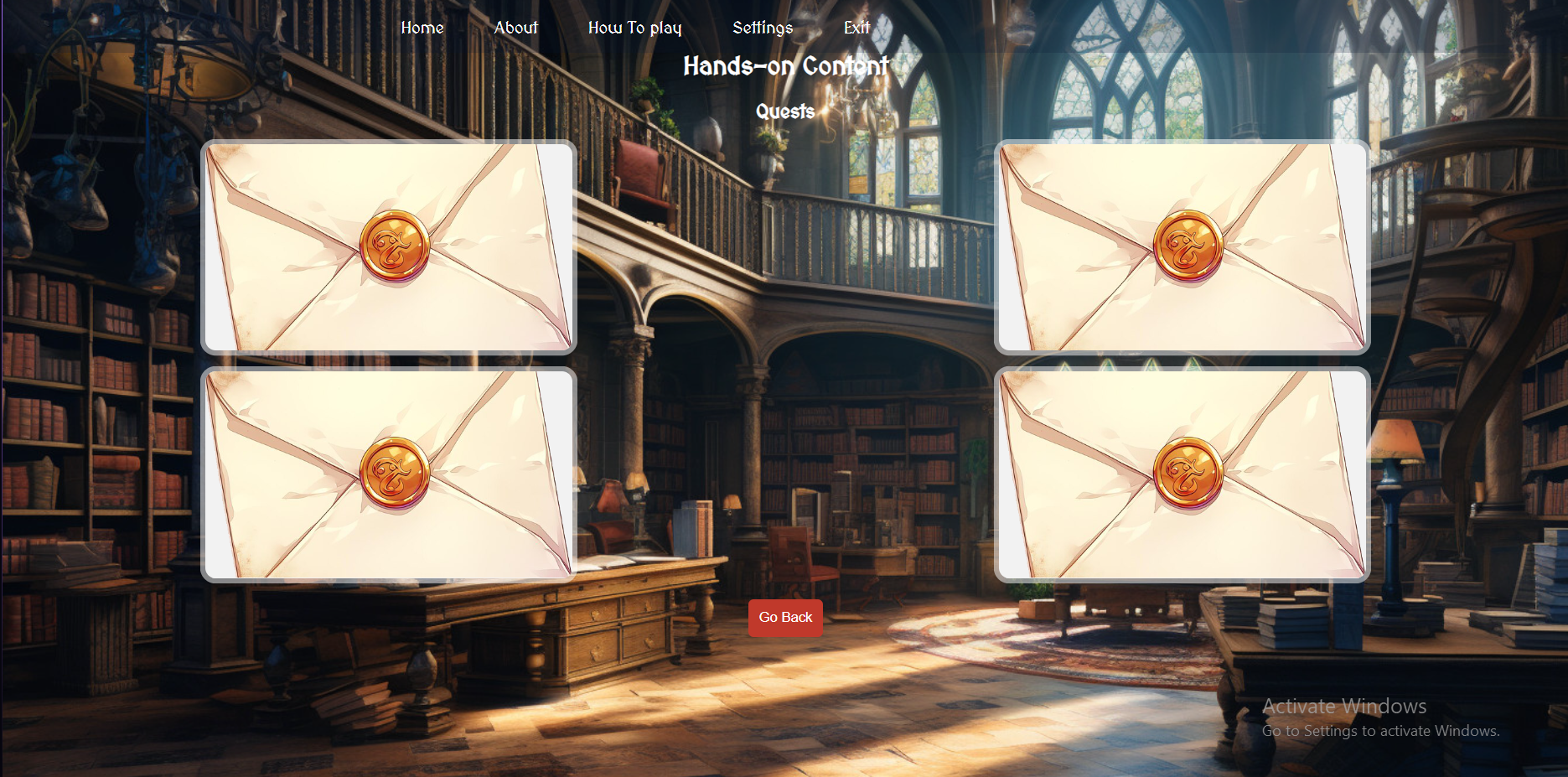
Hands On Hall
-
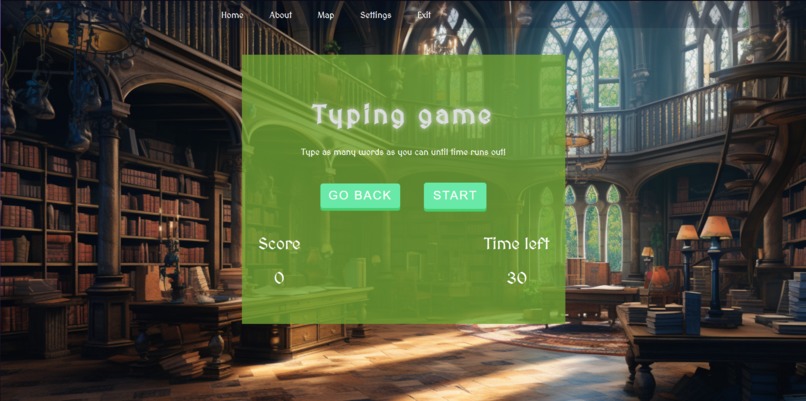
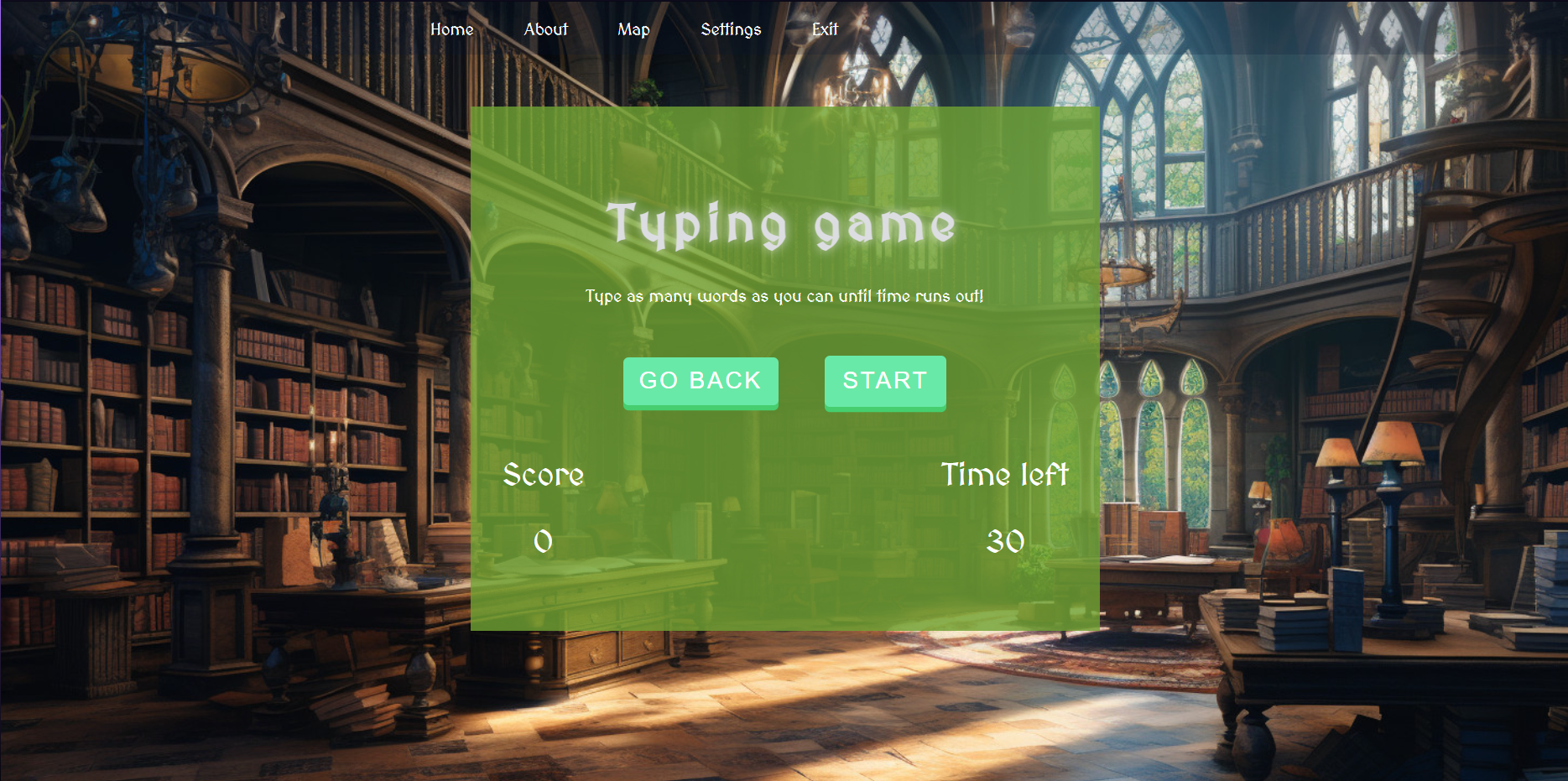
Training Hall [Typing Game]
-
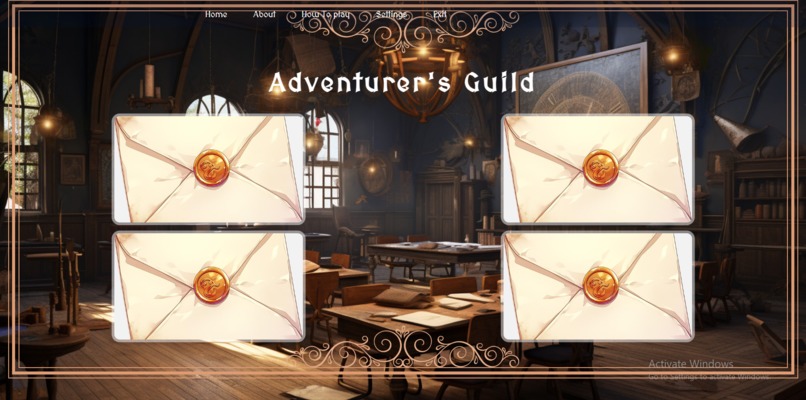
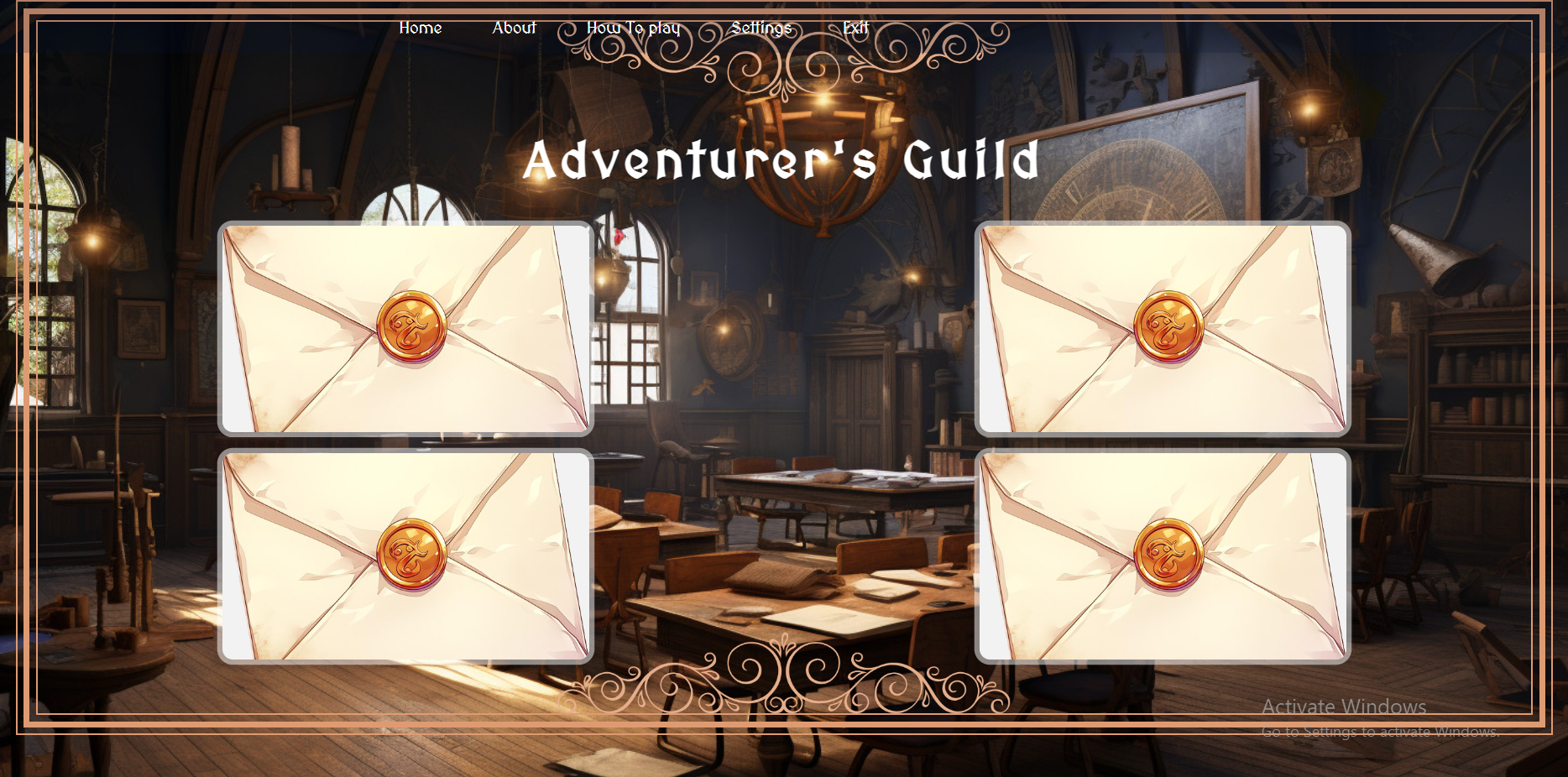
Adventurers Guild
-
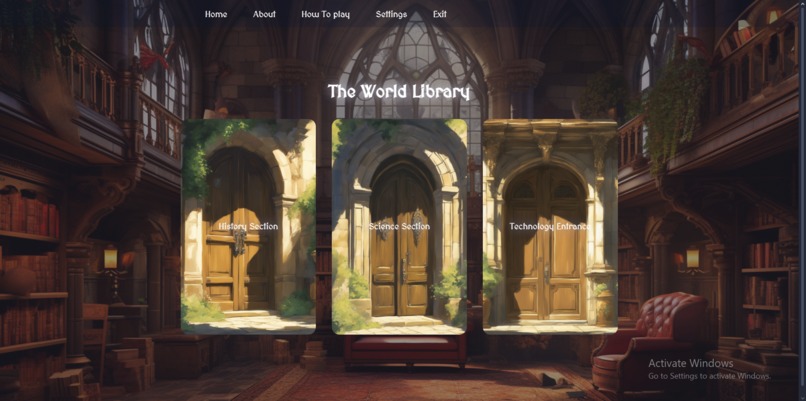
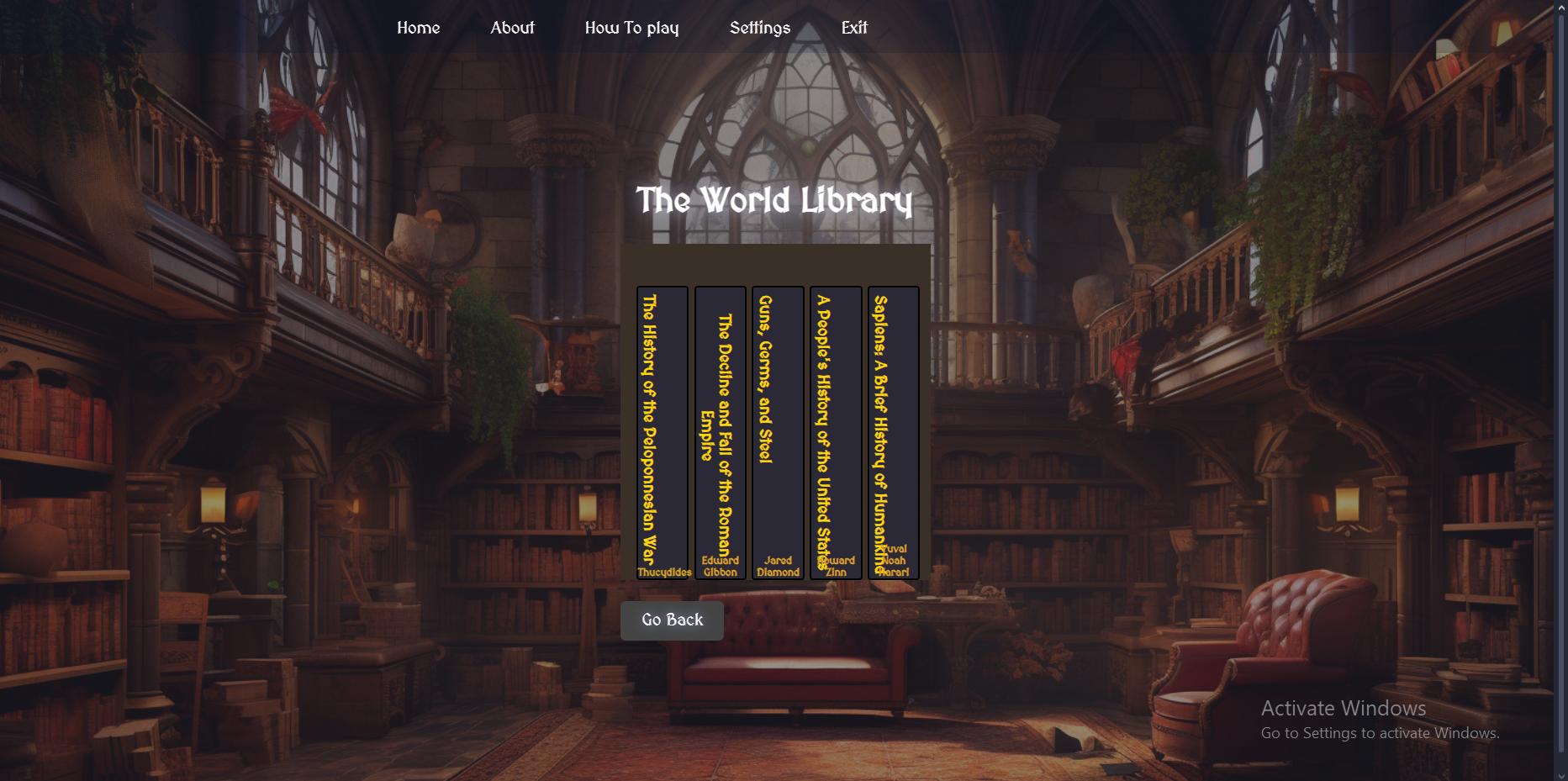
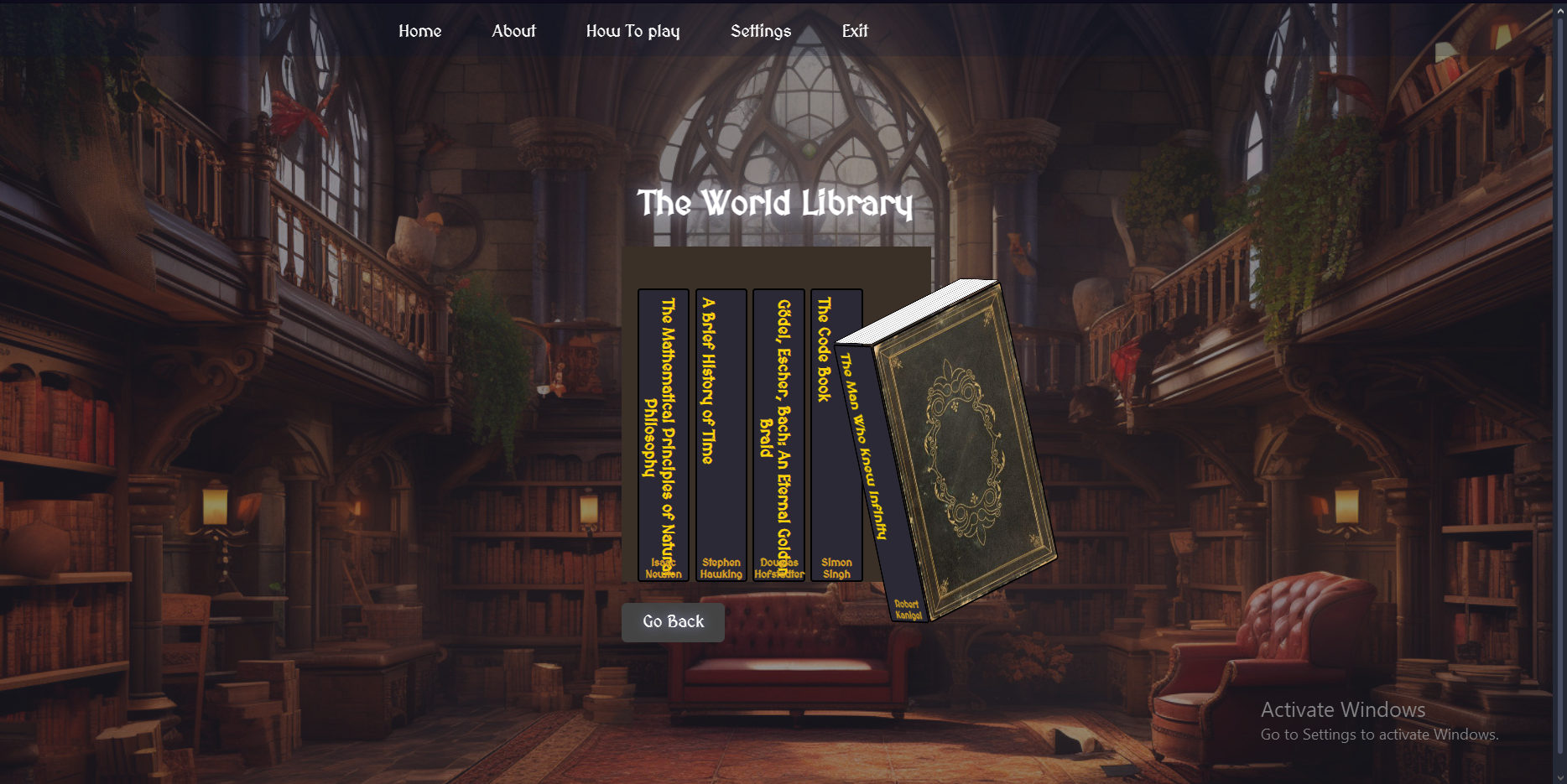
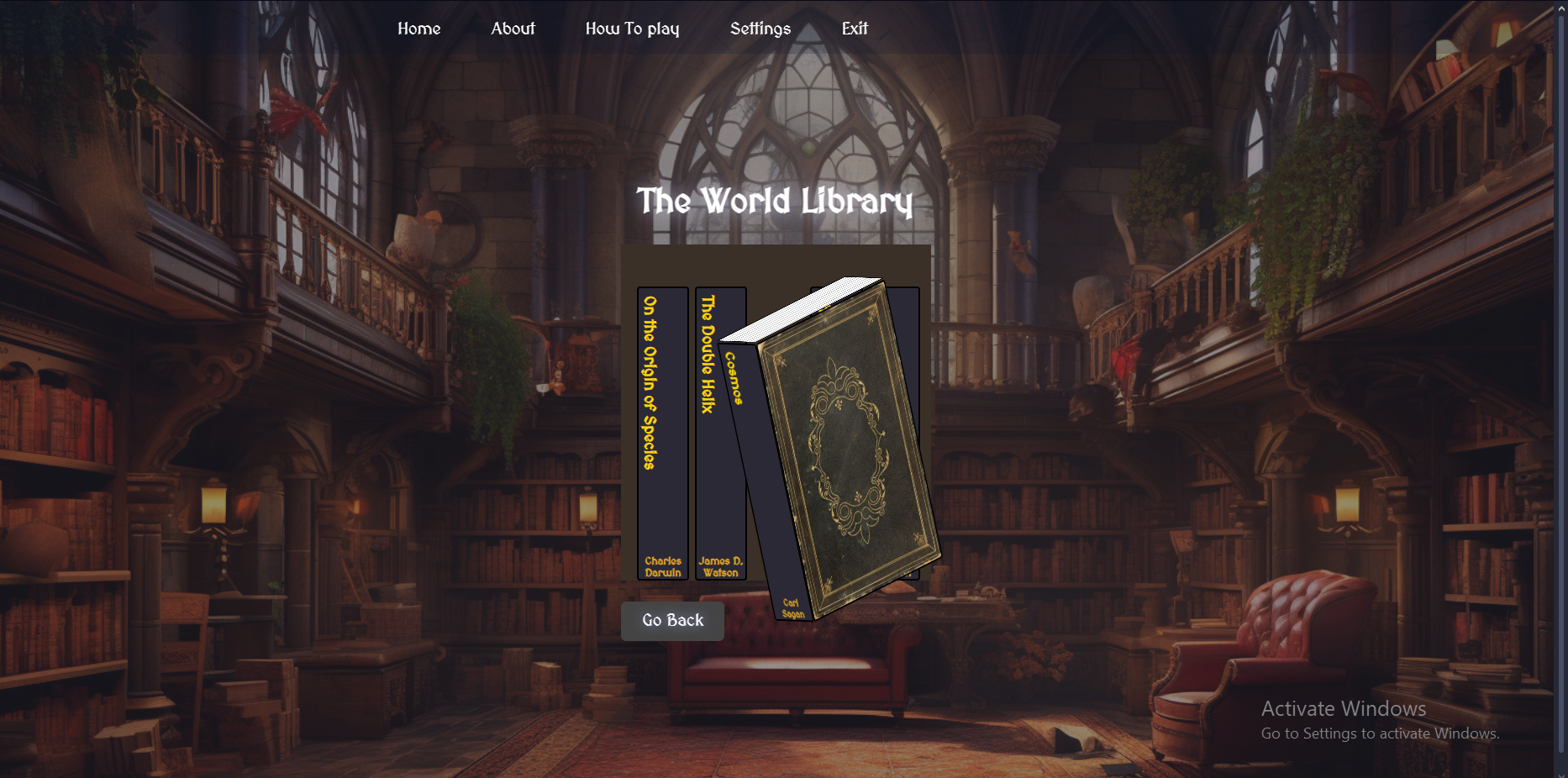
The World Library
-
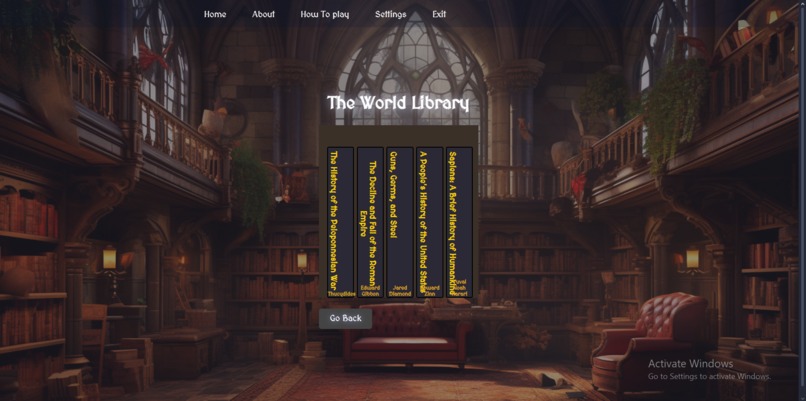
Bookshelf's
-
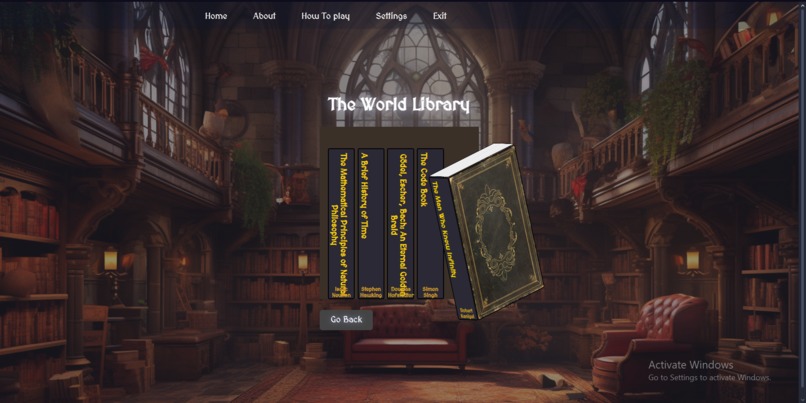
Bookshelf's
-
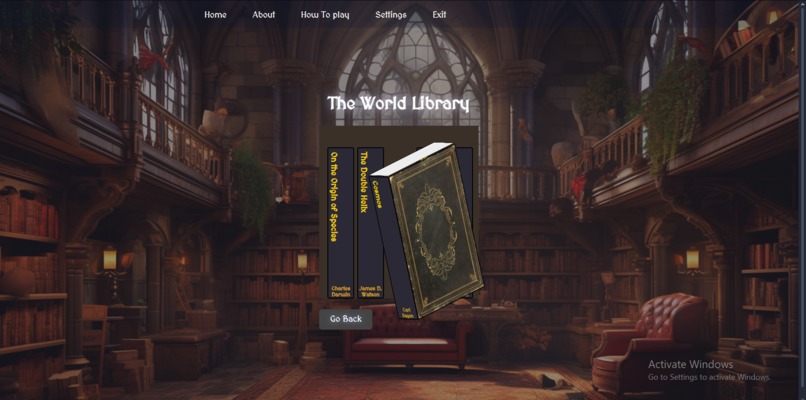
Bookshelf's
Inspiration
The concept for Scholar's Quest was inspired by manhwas like The Infinite Mage, Magic Academy’s Genius Blinker, and others that feature fantasy schools. These stories helped me shape the idea of creating an educational game for students, the target audience of this prototype. Scholar's Quest uses the engaging themes of fantasy to make learning more captivating. By incorporating gamification, I aim to improve students' focus and interest in core subjects like science and chemistry, technology and mathematics, and literature and history—topics that are crucial from elementary through high school.
What it does
Scholar's Quest teaches students through interactive challenges. Each academy in the game focuses on a specific subject and includes three key areas to engage students:
- Lecture Hall: Here, students receive instructional content and background information on the subjects they are about to explore.
- Hands-on Hall: This is where students actively engage in subject-related activities and challenges, applying what they’ve learned in a practical way.
- Training Hall: In this area, students can practice and refine their skills through continuous exercises and mini-games, allowing them to progress at their own pace.
Each academy has its own unique challenges:
- Science and Chemistry: Enhances scientific thinking through puzzles like "2 Pics 1 Word."
- Technology and Mathematics: Promotes problem-solving and logical thinking with runic math battles.
- Literature and History: Improves typing speed and word recognition with word-based challenges.
Beyond the academies, there are two additional key locations in the game:
The World Library: This serves as a knowledge hub where players can access detailed information and research not only from the three academies but also from a wide range of other subjects. It allows students to dive deeper into any topic they are interested in, fostering a love for independent learning.
The Adventurers Guild: At the Adventurers Guild, players can take on quests and challenges that push their learning further. These quests are designed to test students’ understanding and help them build confidence in their skills. By completing guild challenges, players can gain experience, level up, and unlock new abilities, all while solidifying what they’ve learned in the academies.
The game uses fantasy elements to make learning feel like an adventure, where students can level up, gain experience, and apply their knowledge in hands-on activities.
How I built it
I developed Scholar's Quest using a mix of front-end and back-end tools:
- Frontend: HTML, CSS, JavaScript, and Tailwind for styling and smooth interactions.
- Backend: JSON for managing game data and custom JavaScript for handling player progression, battles, and real-time updates.
- Design: I created game assets using Photoshop and incorporated open-source fonts and graphics to build an engaging fantasy world.
Gameplay mechanics: The battle logic and game modes, like math-based rune casting and typing combat, were coded in JavaScript. I used a map generator to create key locations, including the academies, World Library, and Adventurer's Guild. The project required coffee-fueled nights and lots of perseverance, I’m really Tired now.
Challenges I ran into
As the sole developer of Scholar’s Quest, I encountered several challenges:
Timeframe changes: The hackathon's sudden shift in schedule forced me to speed up development and cut down on certain features I initially planned.
Balancing commitments: Managing schoolwork, household chores, and game development simultaneously was a tough balancing act.
Lack of time: Limited time led to sleep deprivation, and I had to prioritize finishing essential parts of the game.
Technical limitations: I faced restrictions with Chrome not allowing local JavaScript files, which slowed down testing and implementation.
Art design: I had initially planned to create the game’s artwork myself, but due to time constraints, I couldn't complete this and had to use placeholders.
Concept adjustments: Many original features and ideas had to be trimmed or simplified to fit the tight schedule, which was a tough call but necessary to deliver a working prototype.
Accomplishments that I'm proud of
Despite these challenges, I’m proud of several accomplishments:
- Finished within the hackathon: I successfully completed the core game within the hackathon timeframe.
- Pushed my limits: Working solo required me to push my limits in coding, time management, and problem-solving.
- Expanded my skills: I gained valuable experience in game development, balancing both front-end and back-end tasks, and learned how to adapt to unexpected challenges quickly.
What I learned
This experience taught me the importance of:
- Backup planning: Always have a backup plan for unexpected changes or obstacles, especially in a fast-paced event like a hackathon.
- Collaboration: Next time, I’ll reach out for help from friends or teammates to better manage workload and ensure a smoother process.
- Time management: Better preparation and prioritization will help me focus on the most important features without scrambling at the last minute.
What's next for Scholar's Quest
In the future, I plan to continue expanding Scholar’s Quest with several exciting features:
- Adding concept art illustrations to enhance the visual appeal.
- Introducing dungeons for more immersive quests.
- Developing PvP modes, where students can challenge each other.
- Creating character classes for each academy (e.g., Scientist and Chemist in Science and Chemistry, Developer and Physicist in Technology and Mathematics, Writer and Historian in Literature and History).
- Implementing buffs, debuffs, EXP, and counters for a more strategic experience.
- Developing training grounds where students can practice and improve their skills.
- Expanding the game map by opening more locations to explore.
Impact
Scholars Quest is designed to offer an engaging and educational experience that addresses the challenges students face today, particularly the decreasing attention span, which makes traditional learning methods less effective. By incorporating gamification, the game transforms education into something enjoyable and visually appealing, capturing students' focus in a way conventional methods often fail to do.
Scholars Quest provides an accessible platform for students to enhance their skills in science, technology, literature, and history, regardless of where they are—whether at home, in school, or on the go. The game’s interactive and visually rich environment makes learning not only more fun but also more effective, motivating students to delve deeper into their studies through adventure-based gameplay.
Team Information
I’m James, the sole developer behind Scholar’s Quest. I handled everything from coding to design. Though the journey was tough, I’m proud of what I’ve achieved, and I’m excited for the potential future of the game.
Built With
- art
- css
- editing
- html
- javascript
- json
- photoshop
