-
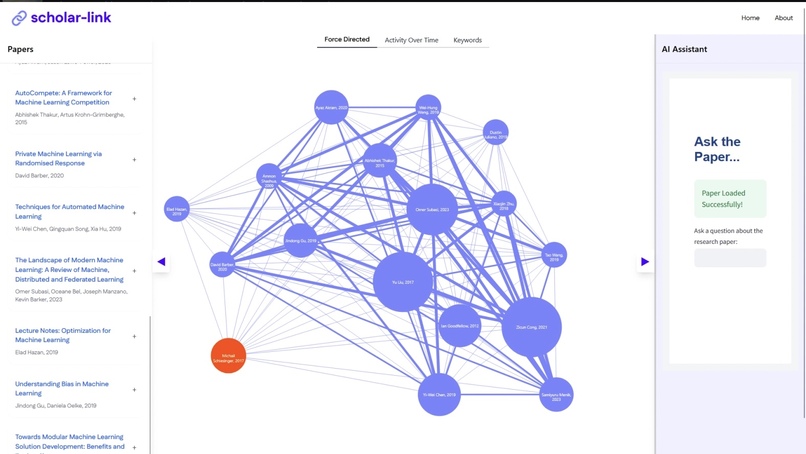
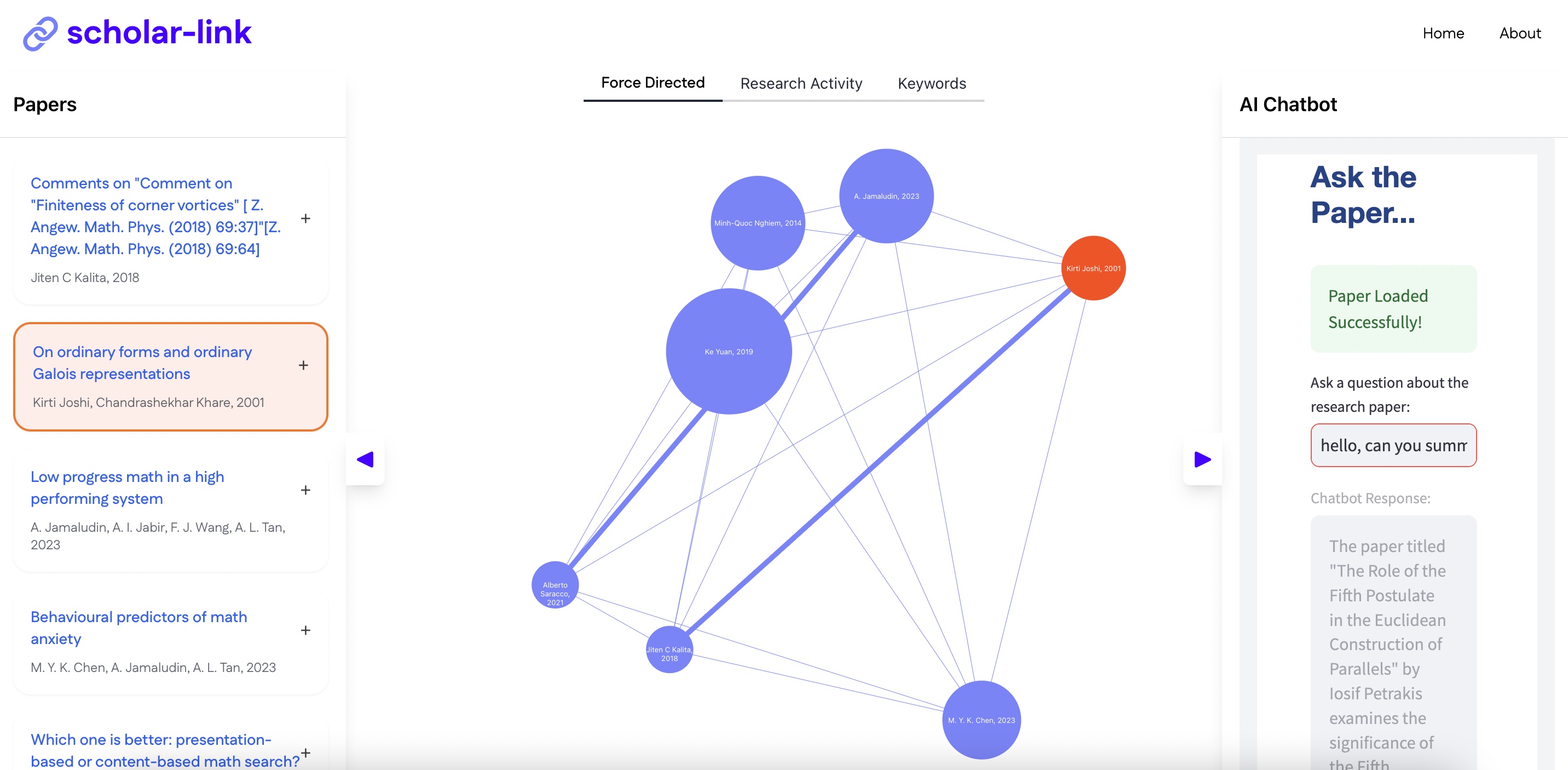
Graph highlight!
-
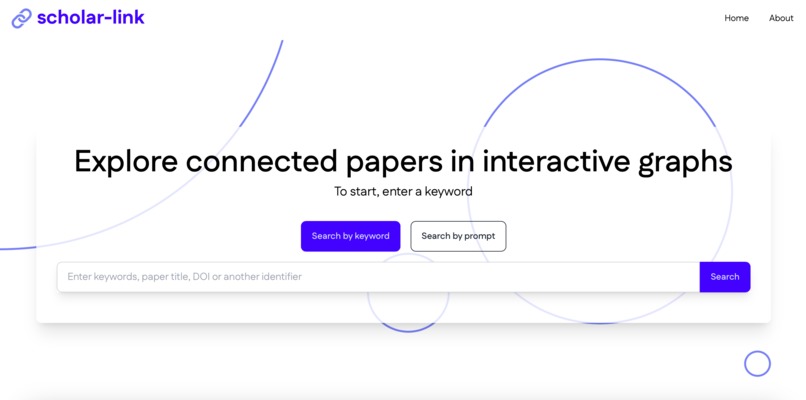
Browse research
-
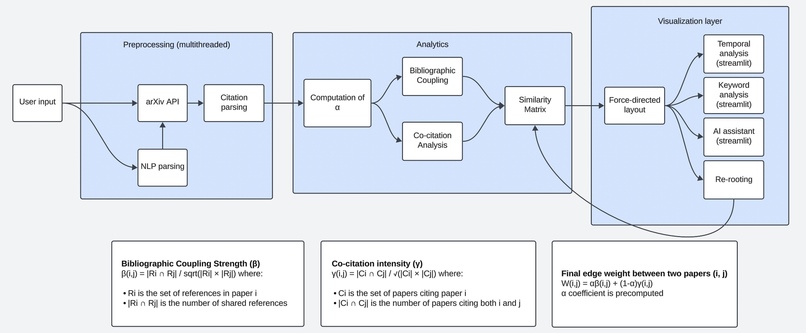
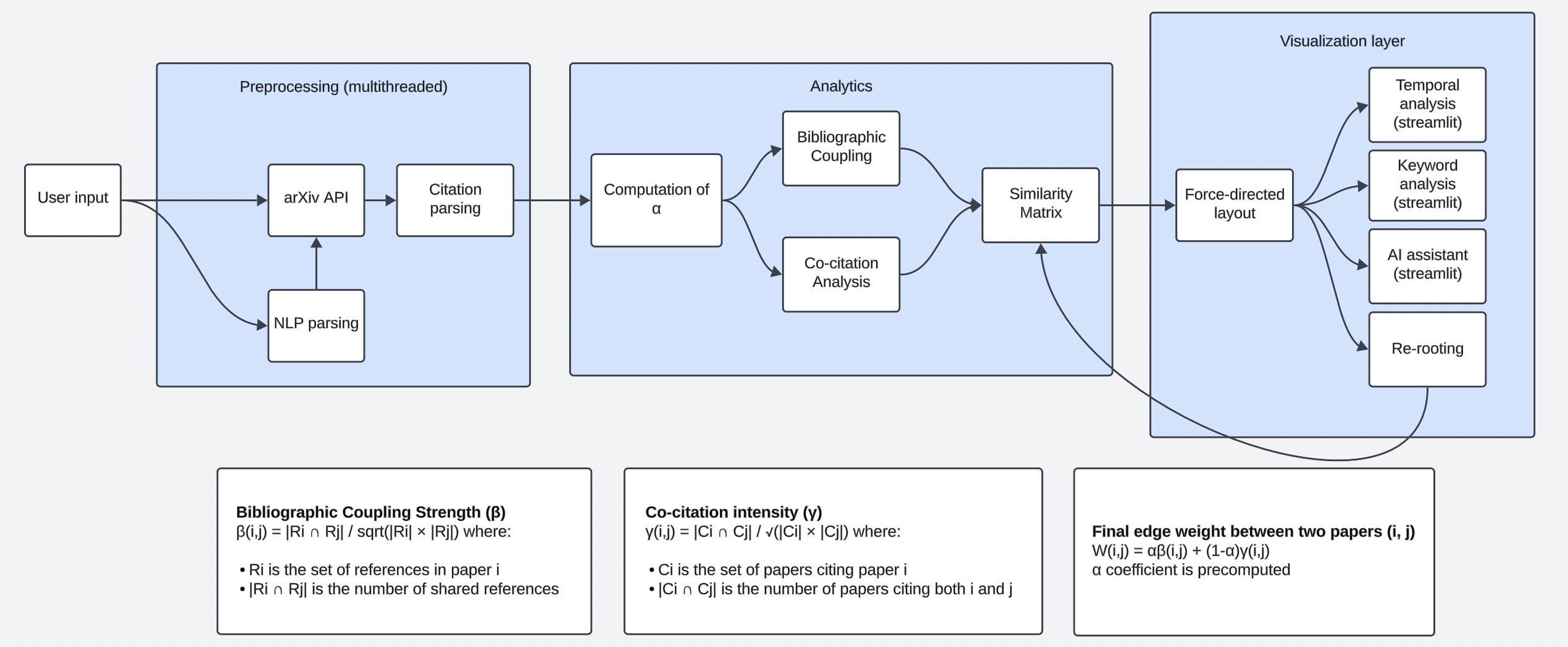
Architecture and pipelines
-
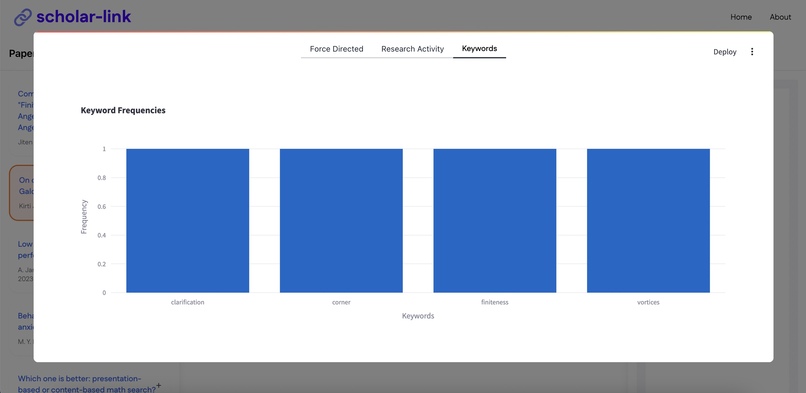
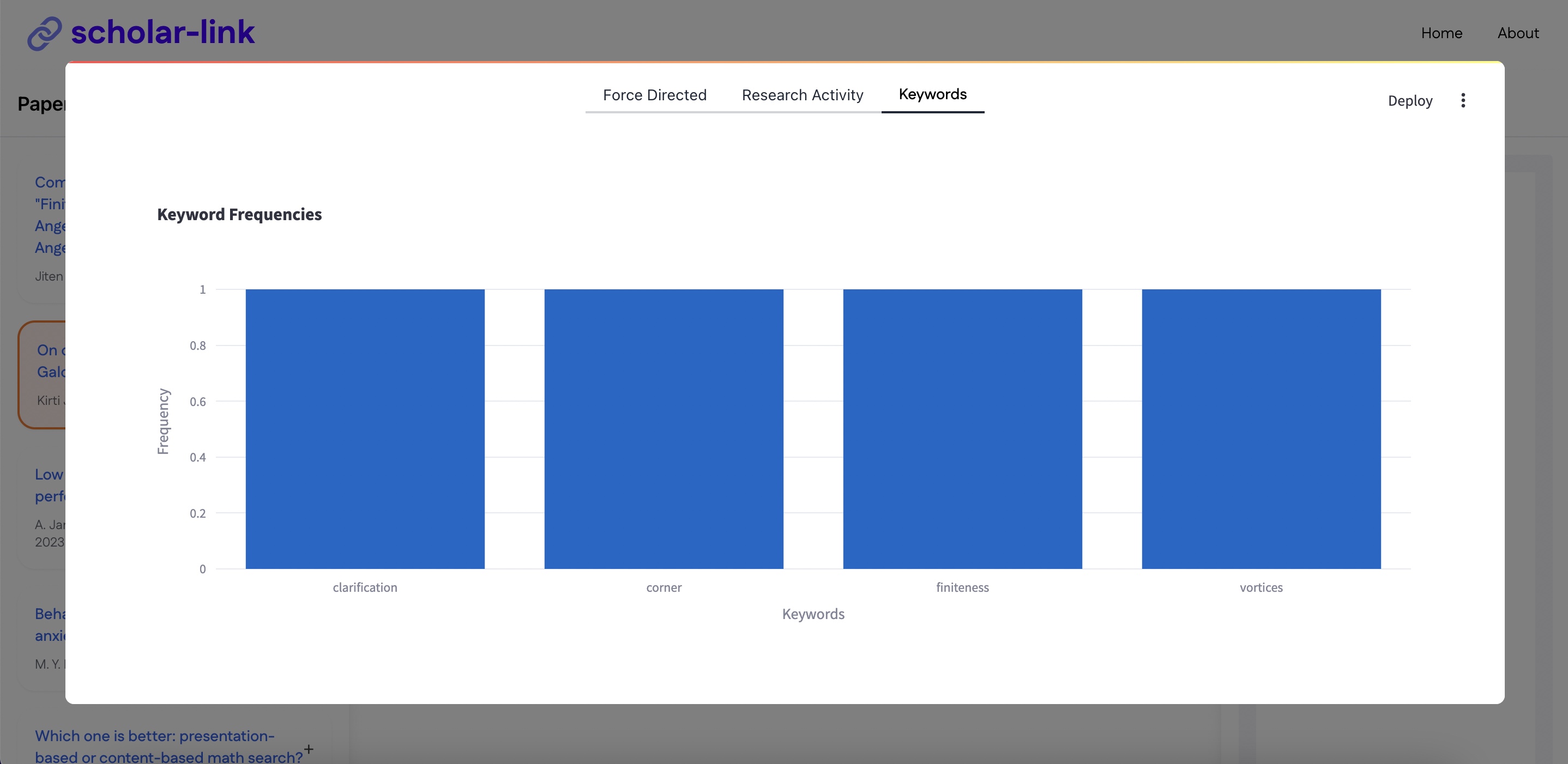
Keyword analysis
-
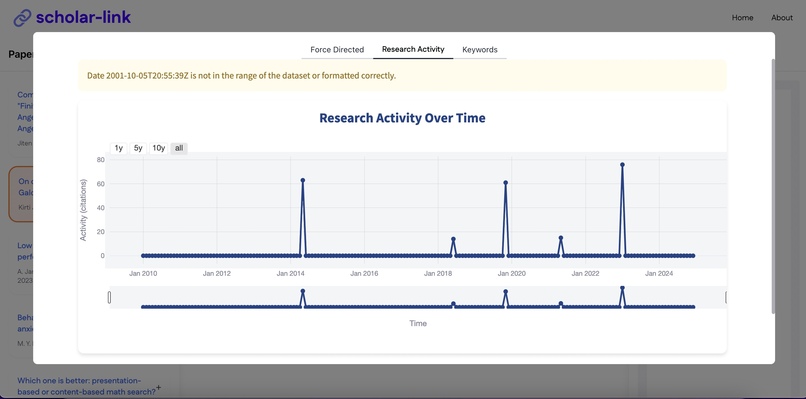
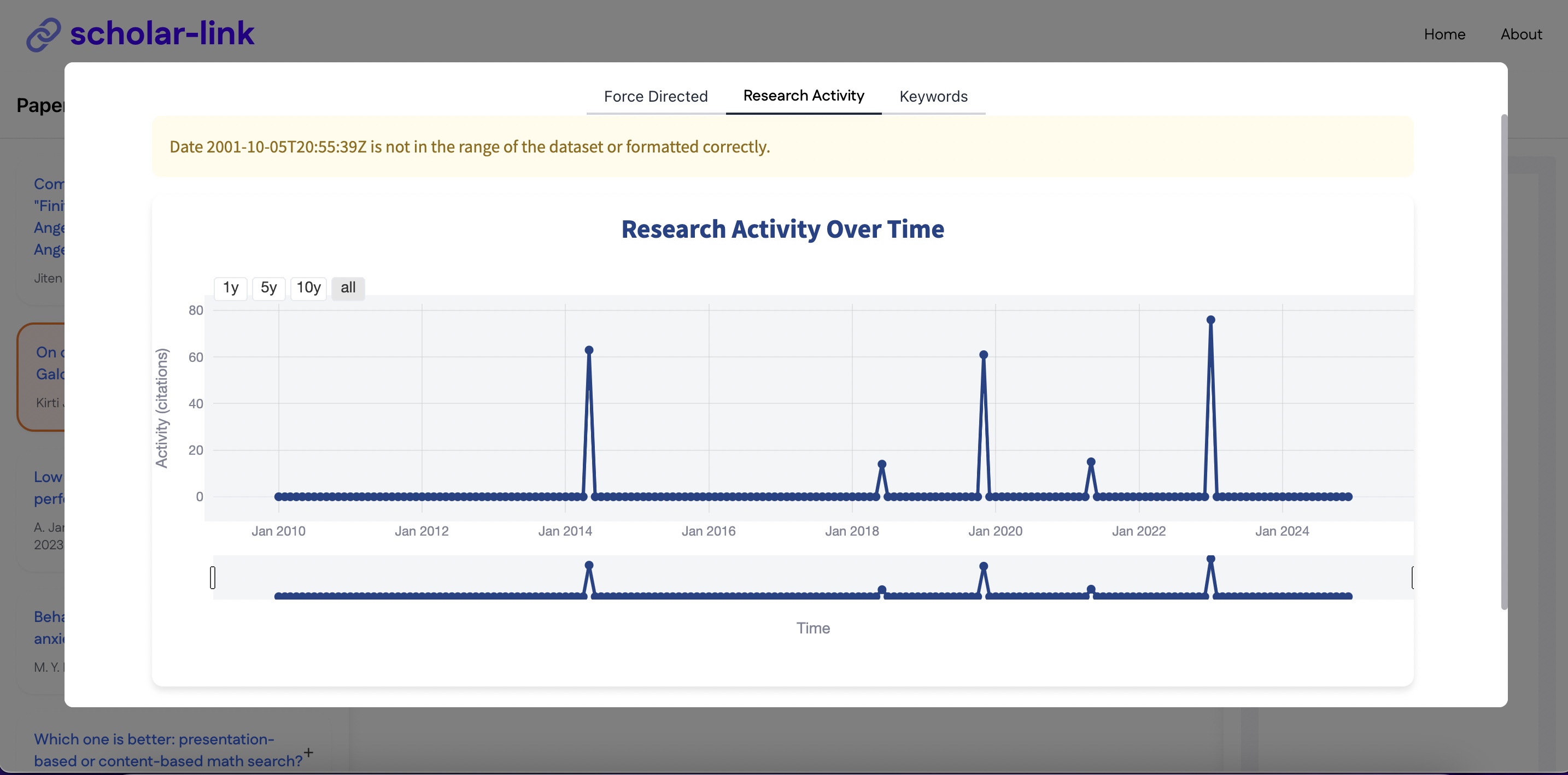
Historical trend analysis
-
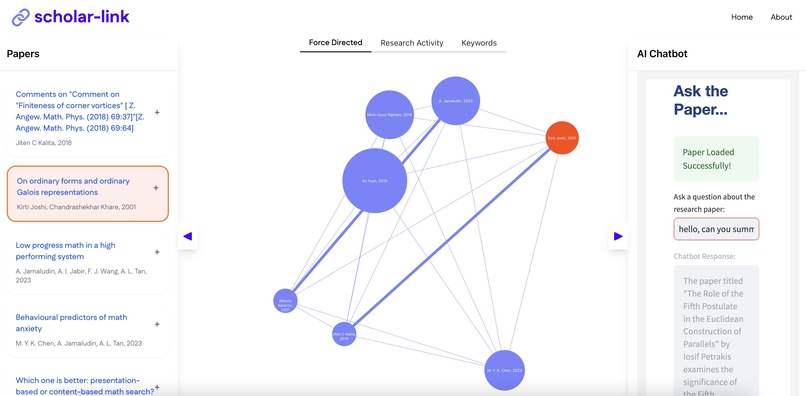
Chatbot
Inspiration
The volume of academic literature is exploding. In machine learning alone, the number of papers on arXiv doubles every 24 months. As former research interns, we've experienced firsthand the overwhelming challenge of sifting through hundreds of dense, complex papers to find relevant information. This process is not just time-consuming; it's a significant bottleneck in the research workflow, particularly in fast-moving fields like machine learning. We realized that the tools researchers use to navigate this sea of information haven't kept pace with the exponential growth of published research.
What it does
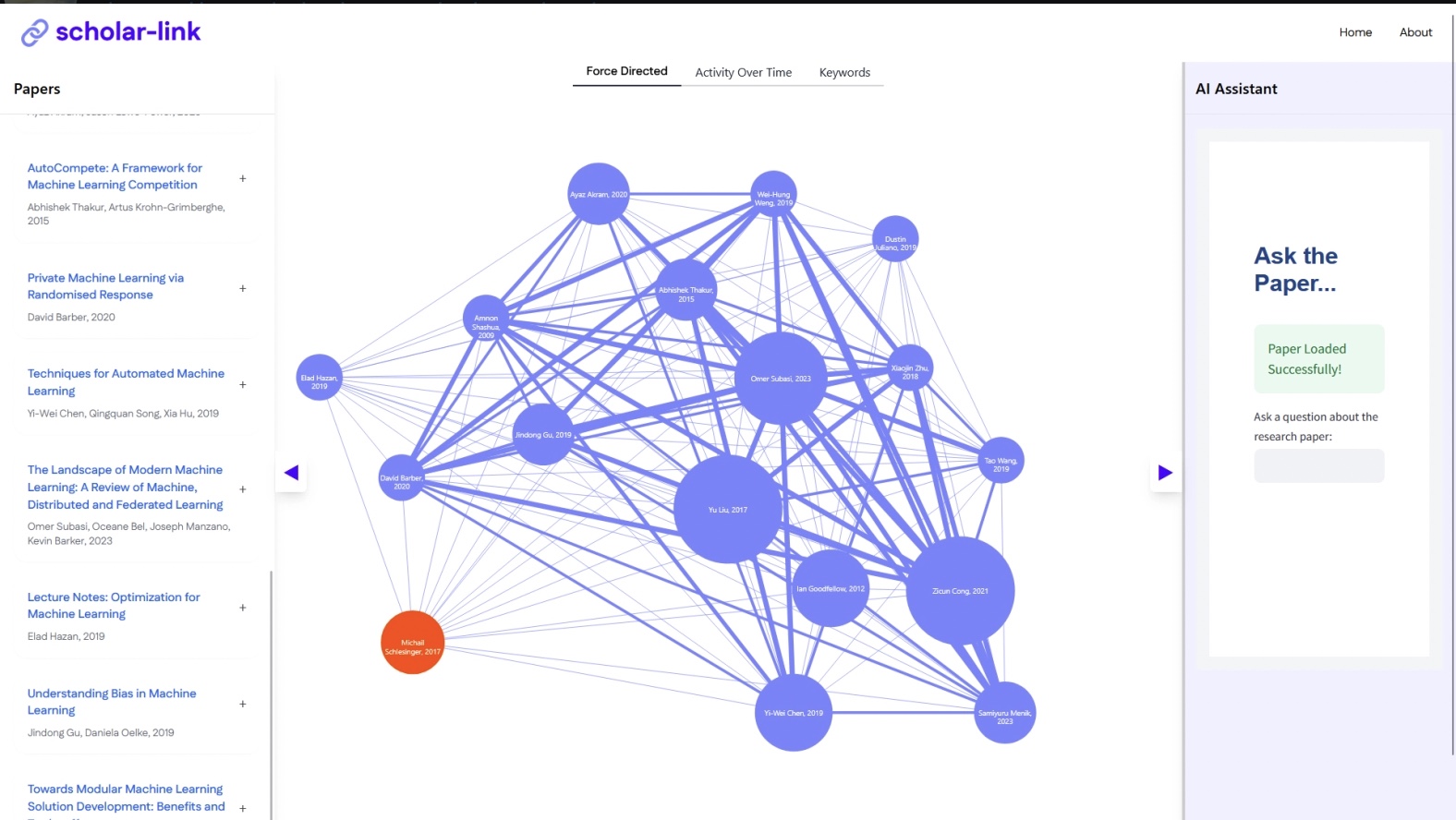
Scholar-Link is a groundbreaking tool that revolutionizes how researchers interact with scientific literature. At its core, it creates a visual force-directed graph of research papers, leveraging the principles of co-citation and bibliographic coupling to reveal hidden connections and trends.
Key features include:
- Interactive Visual Graph: Papers are represented as nodes, with connections based on co-citation (papers cited together) and bibliographic coupling (papers sharing references). This allows researchers to visually explore the landscape of their field, finding inspiration or papers they might otherwise miss
- Trend Analysis: Keyword and time/activity analysis in a graphical representation allows researchers to easily spot emerging trends and hot topics in their field.
- AI-Powered Insights: Our specialized AI Chatbot can quickly skim through papers, providing concise summaries of key points, methodologies, and findings
- Customizable Filters: Researchers can filter the graph based on various parameters like publication date, citation count, or specific keywords.
How we built it
We built Scholar-Link using a combination of cutting-edge technologies and novel applications of established bibliometric principles:
- Natural Language Processing: We implemented advanced NLP algorithms to analyze paper content, extract key information, and generate summaries.
- Graph Theory: We applied complex graph algorithms to create and optimize the force-directed graph based on co-citation and bibliographic coupling data.
- Front-end Development: We created an intuitive, responsive user interface using modern web technologies to ensure a smooth user experience.
- Back-end Infrastructure: We built a scalable backend to handle large volumes of data and real-time graph computations, leveraging concurrency and multithreading to boost performance
- Data Collection: We developed robust web scraping tools to gather paper metadata from various academic databases and repositories.
Challenges we ran into
- Data Volume: Handling and processing the sheer volume of academic papers was a significant challenge. A lot of time and effort was spent figuring out multithreading to optimize processing
- Graph Optimization: Ensuring the graph produced correct results, even with massive amounts of nodes, required complex optimization algorithms
- AI Accuracy: Implementing an AI summarizer that could accurately capture the essence of complex academic papers across various fields was particularly challenging.
What we learned
This project deepened our understanding of bibliometrics, graph theory, and natural language processing. We also gained invaluable insights into the needs and pain points of researchers across various disciplines.
What's next for Scholar-Link
We're excited about the potential of Scholar-Link to transform academic research.
Our next steps include:
- Expanding our database to cover more academic fields and publications.
- Further optimizing our algorithms to analyze larger datasets and deliver more comprehensive results
- Incorporating machine learning to provide personalized paper recommendations.
- Developing collaboration features to allow researchers to share and annotate graphs.
- Creating APIs to integrate our tool with existing research management software.
- Exploring applications in other knowledge-intensive fields beyond academia, such as patent analysis or market research.
Scholar-Link is more than just a tool; it's a new way of seeing and understanding the vast landscape of human knowledge. We're committed to continually improving and expanding our platform to meet the evolving needs of researchers worldwide.
Built With
- arxiv
- bert
- flask
- natural-language-processing
- python
- react
- streamlit
- tailwindcss
- transformer


Log in or sign up for Devpost to join the conversation.