Inspiration
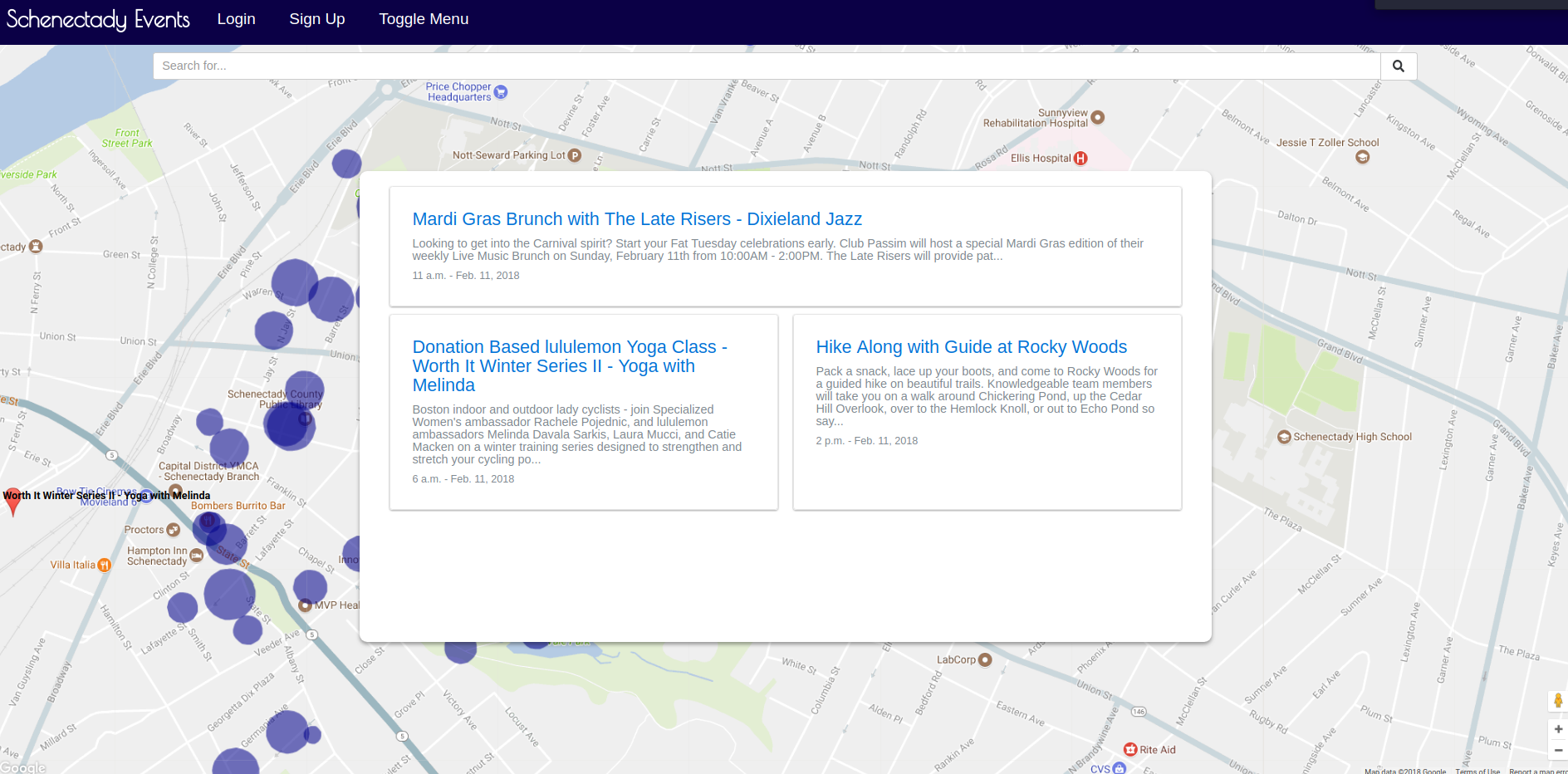
Community events are an integral part of modern cities, both as a way to connect to others and build the culture of your town. However, these events often slip by unnoticed, either due to them being detailed on cafe bulletin boards or social networks like Facebook which not everyone has access to. This project attempts to remedy this by having a communal board for these events which is easily searchable. This also combines pedestrian traffic data to provide an appoximation of how popular these events actually are, and perhaps even reveal to people events they weren't even aware of just because of the sudden congregation of people in a certain location.
What it does
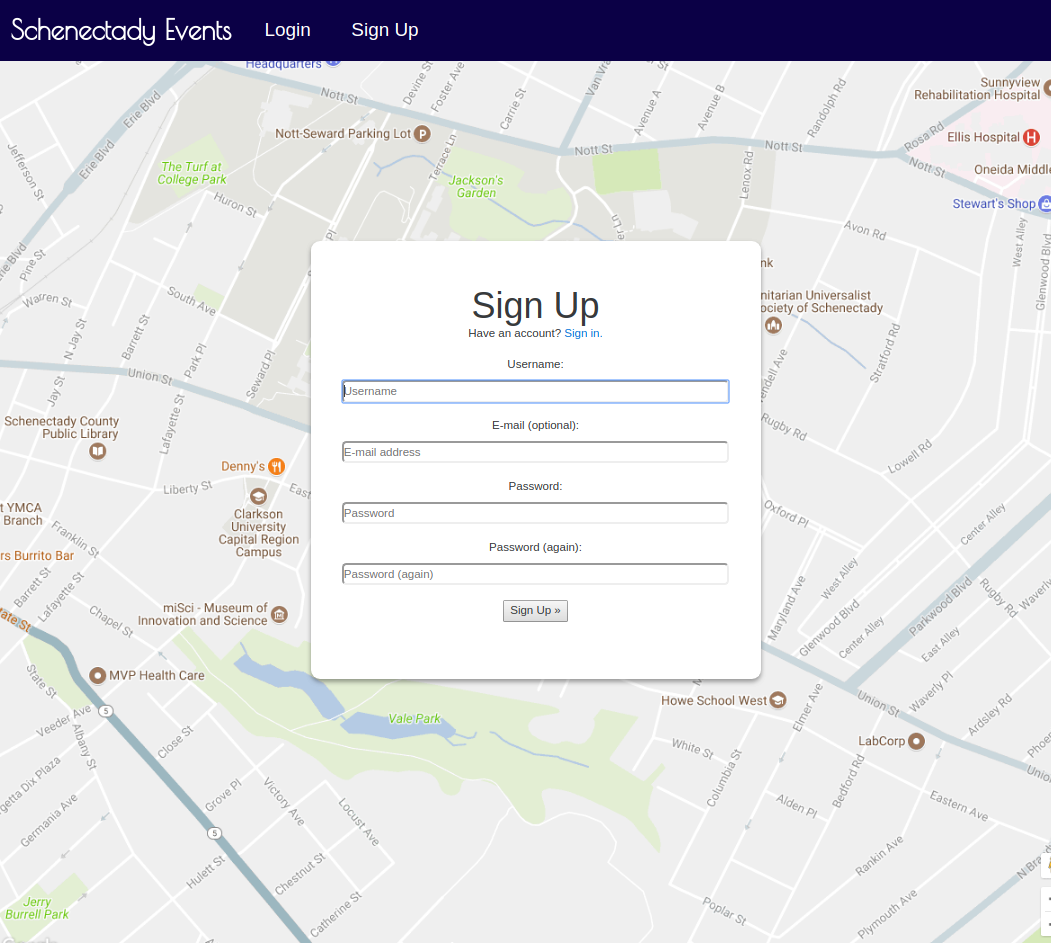
Residents of the town can create an account and post events, which can then be modified or detailed. They can also search for events by keywords, or parooze the town for upcoming events based on location.
How I built it
This project exists thanks to Django and Google Maps. Django, and it's popular third party options such as the near-flawless django-allauth, makes it easy for people to register accounts and contribute to a database. Google Maps allows for attractive and easy displaying of this data.
Challenges I ran into
This was my first Hackathon, so one of the major challenges was time allocation. In addition, this is far and away the most interaction I've ever had with javascript, which I have managed to eschew in the past thanks to Django and some modern CSS trickery. Compounding the technical hurdles to development was my, now clearly, foolish choice to switch to the newest version of Django, 2.0, with no prior experience in this version. While it was by and large the same, easily two hours were spent troubleshooting changes from the old version and breaking ingratiated Django 1.14 habits.
Accomplishments that I'm proud of
I'm pleased with the simplicity and appearance of the website, despite it lacking all the features I had originally planned.
What I learned
I learned a great deal about interaction with the Google Maps API, and how to integrate it with both JSON and Django models. I can turn JSON into Django-readable data, and display it with ease. I also learned about many of the interesting new features in Django 2.
However, like all first Hackathons, the biggest lessons I learned were regarding my own gaps in knowledge and planning strategies. I spent far too much time brain storming in the initial hours of this project before I ultimately returned to my original idea, and I now know how to better conduct my work under such constraints.
What's next for SchenectadyEventTracker
I do like this application, and plan on extending it in the future, in part because of how frequently I miss events on my campus. First, I need better searching, including searching by dates. Secondly, I want to build out user profiles so that people can get recommendations for events. Third, I want to apply some of my Machine Learning from my concentration to this data, and potentially match people with things they stastically would likely like, but haven't considered. I'd also like to extend people's ability to respond to posts and things along those lines, if only to facilitate the answering and asking of questions. I'd also like to make permanent attactions such as local businesses more prominent, as was my original goal. Most of all, I'd like to work with real (this was done with dummy data) and more robust data on pedestrians, as there are doubtlessly many interesting conclusions which can be drawn from these patterns.
