-
-
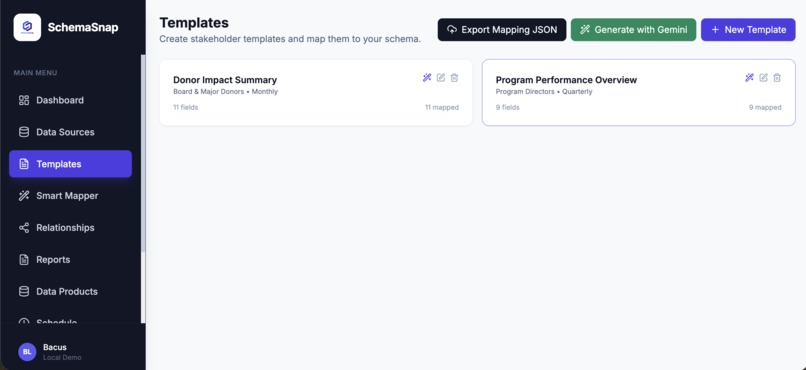
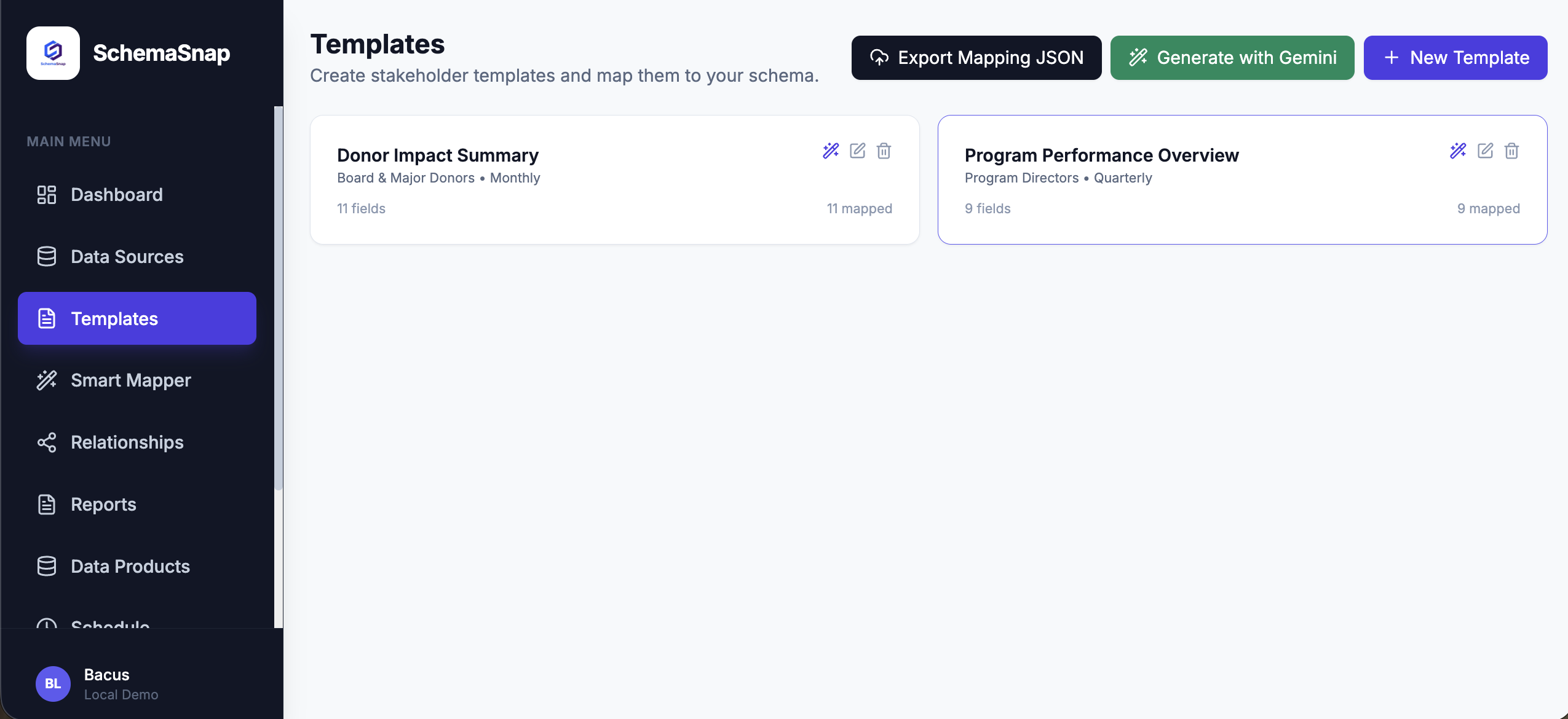
template
-
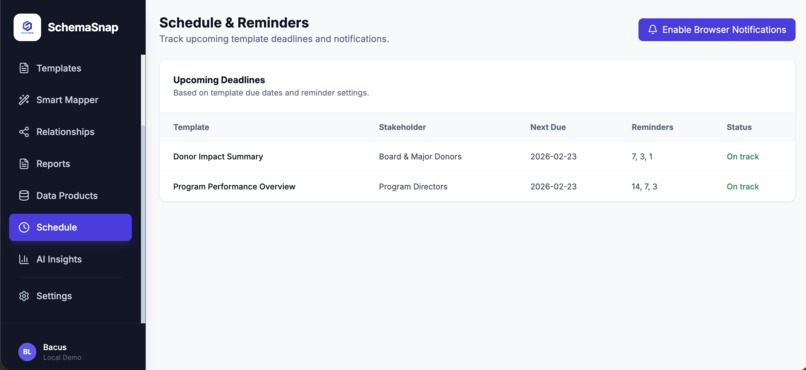
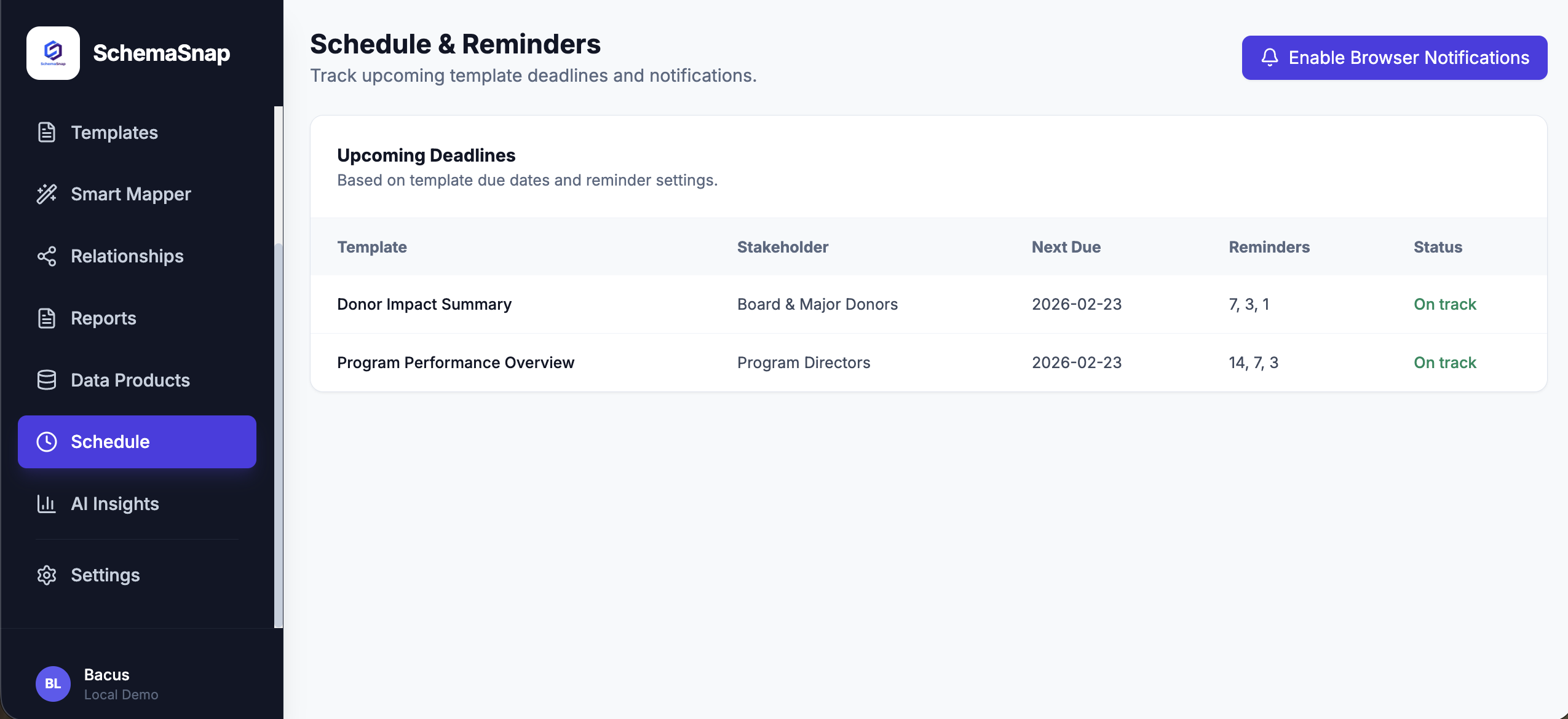
schedule
-
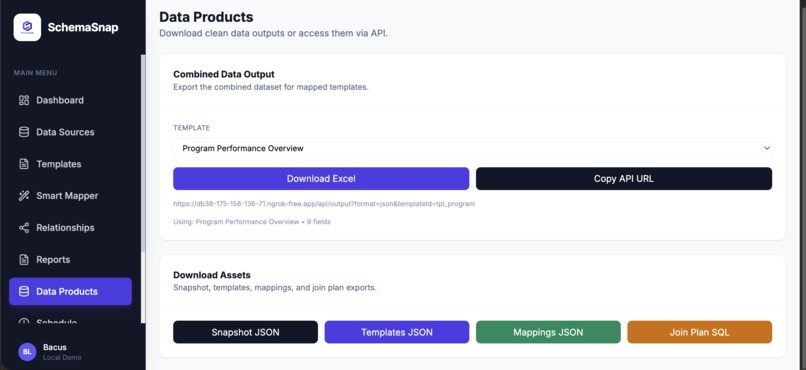
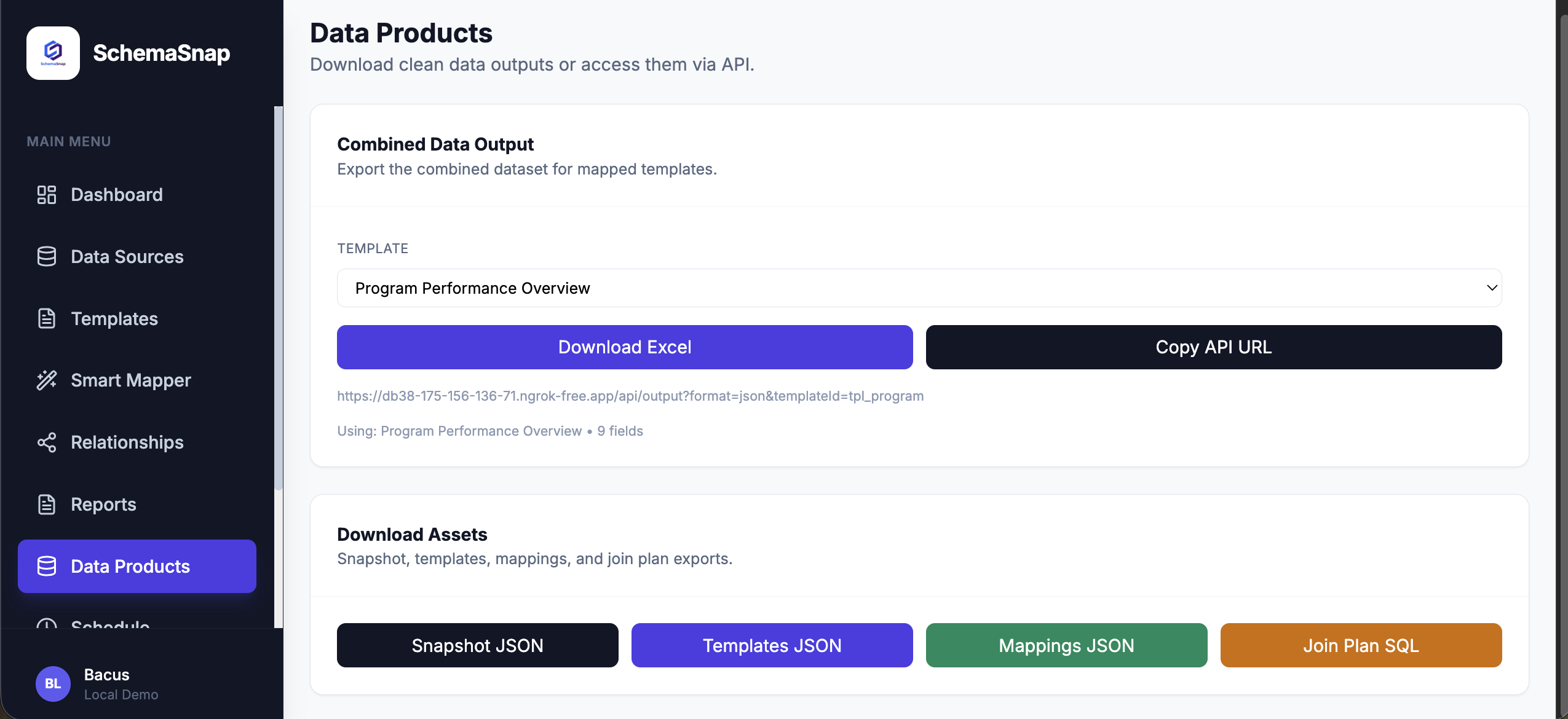
data products
-
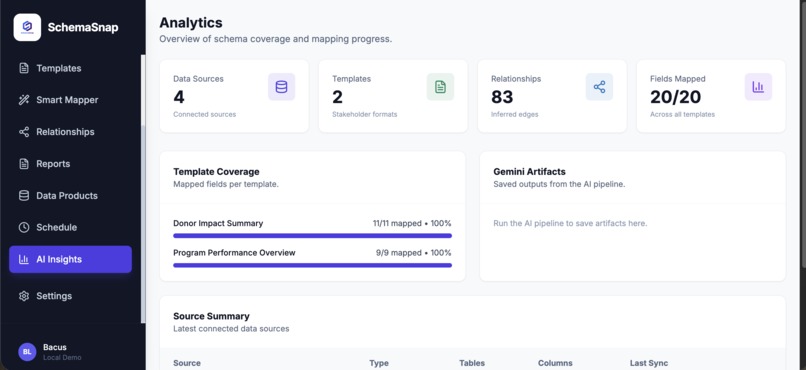
AI insight
-
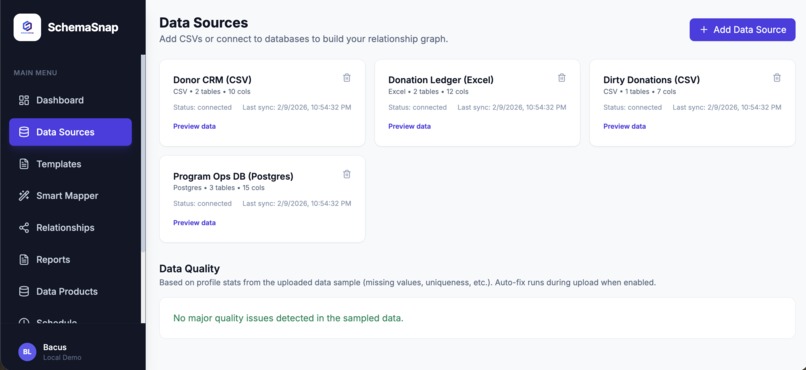
data source
-
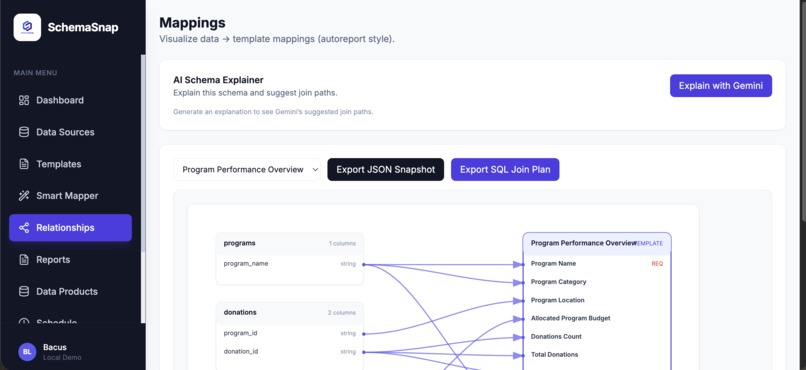
relationships
-
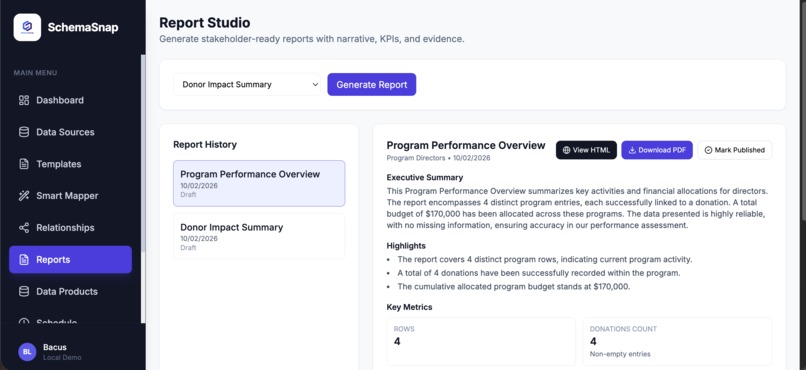
reports
-
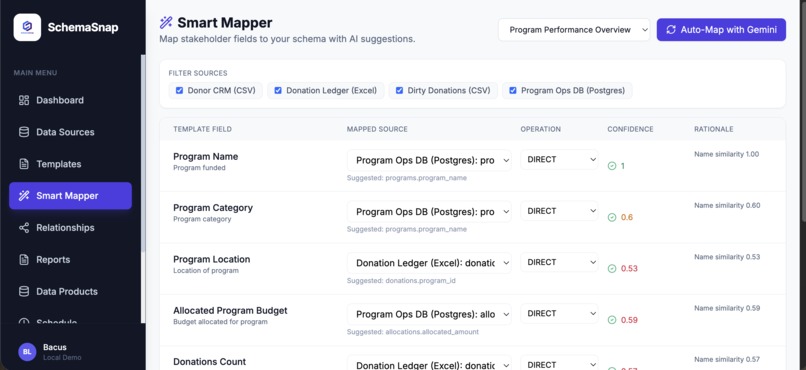
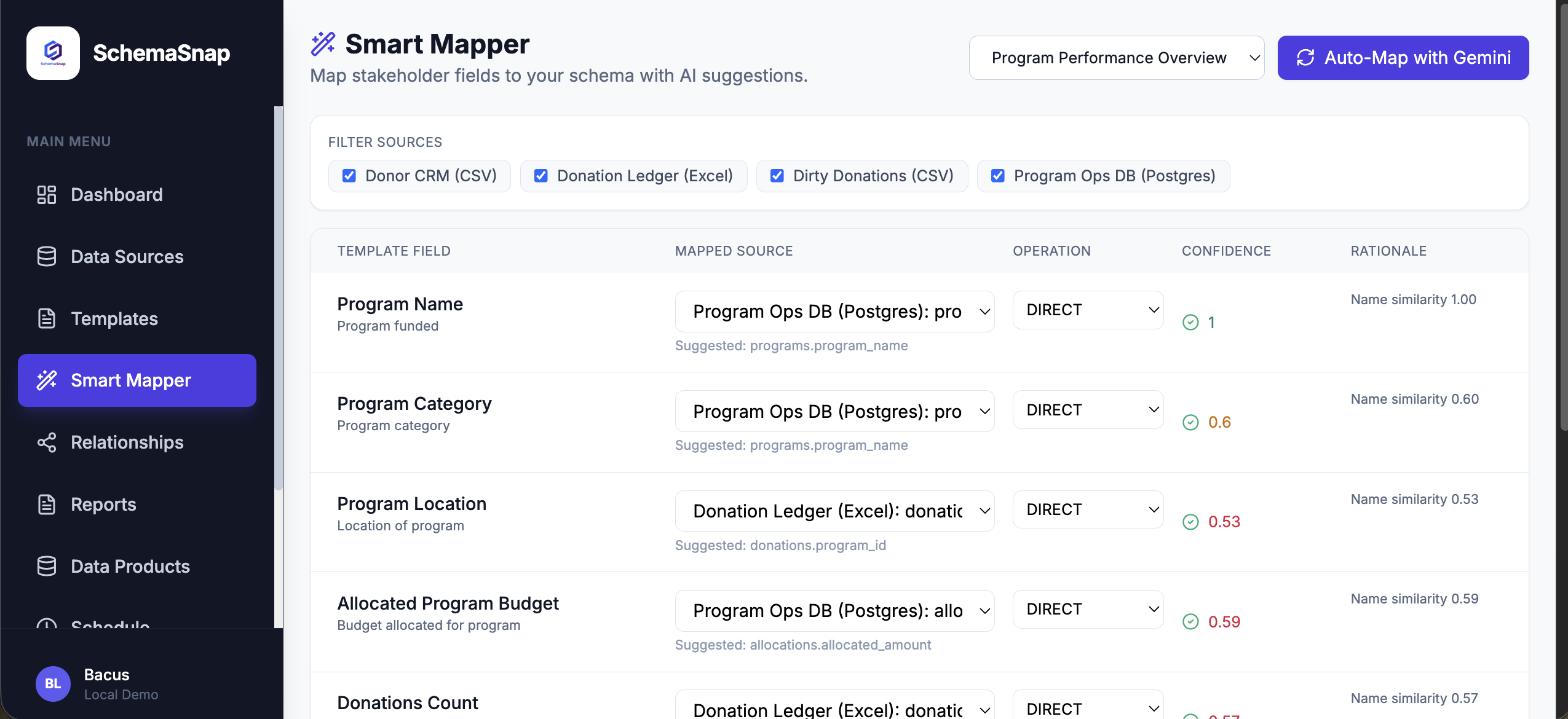
smart mapper
-
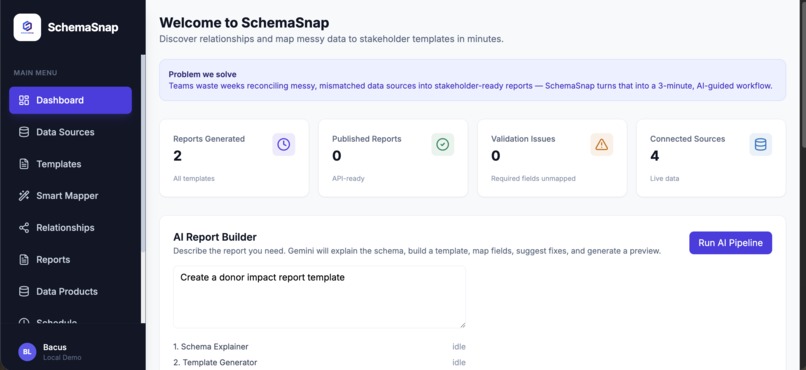
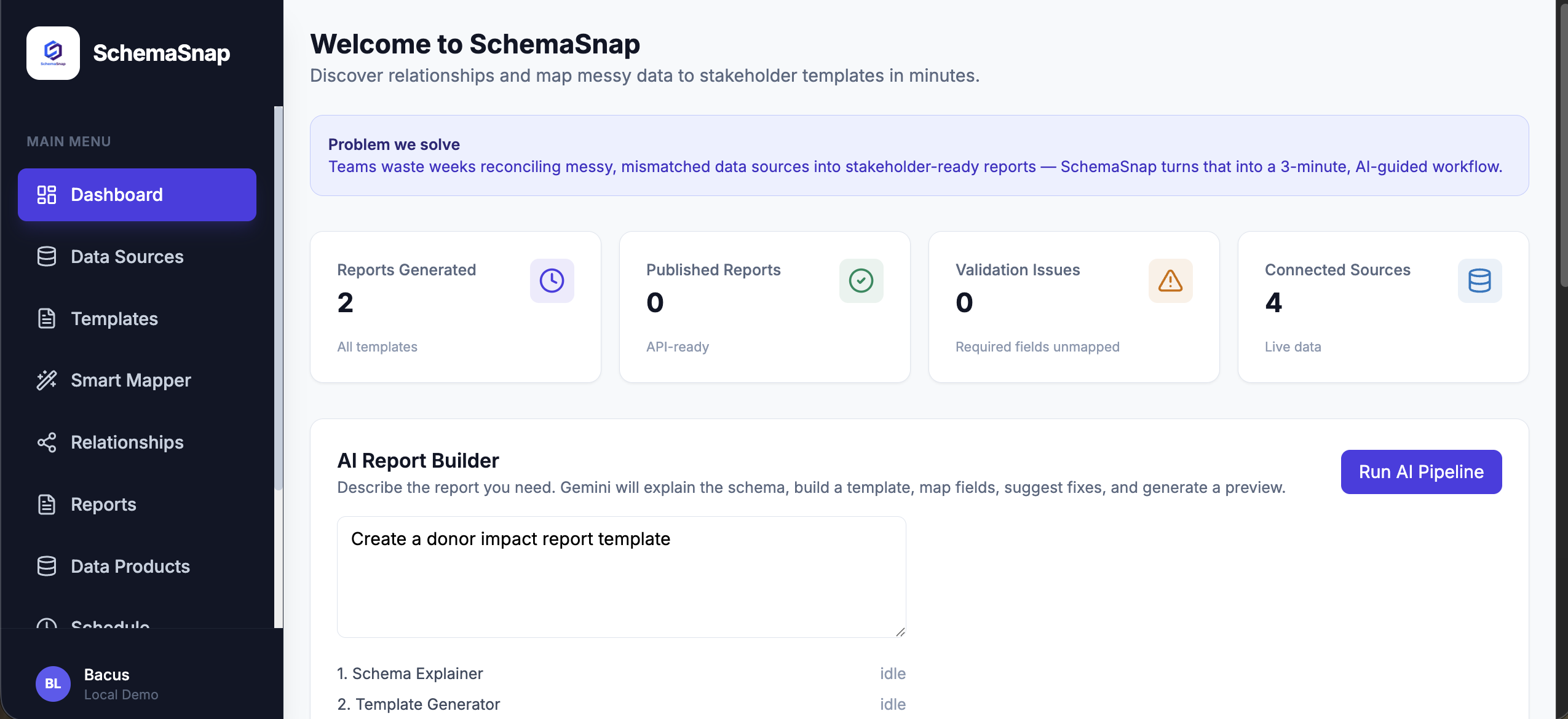
dashboard
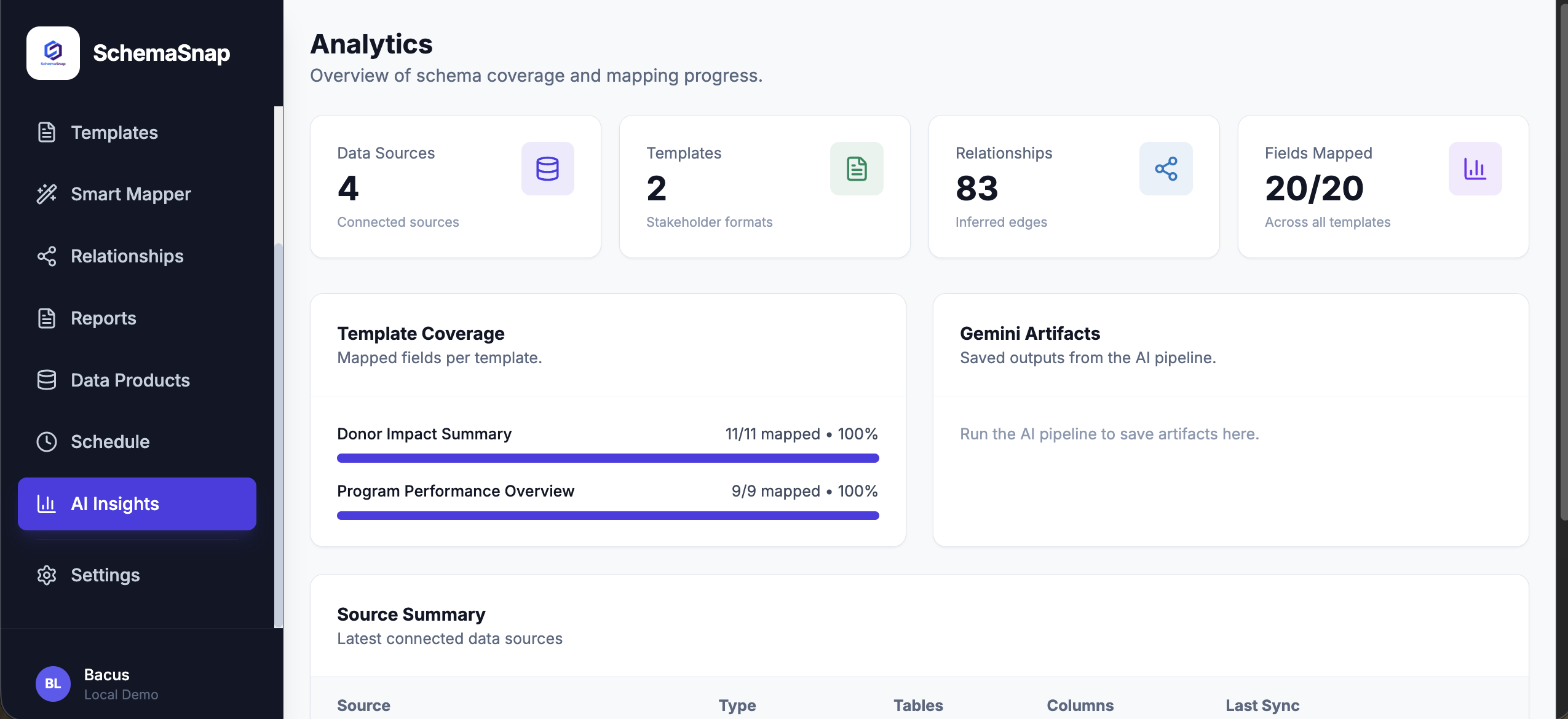
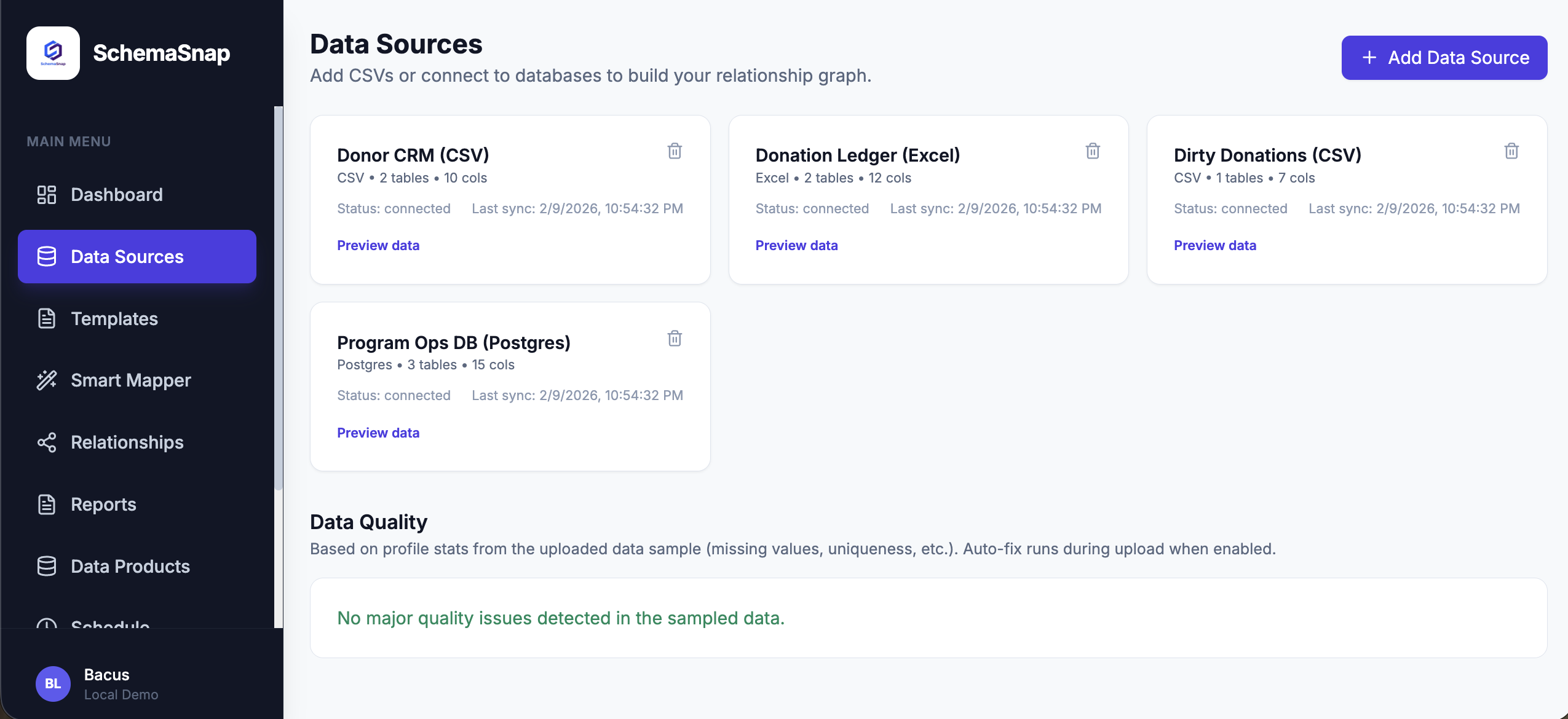
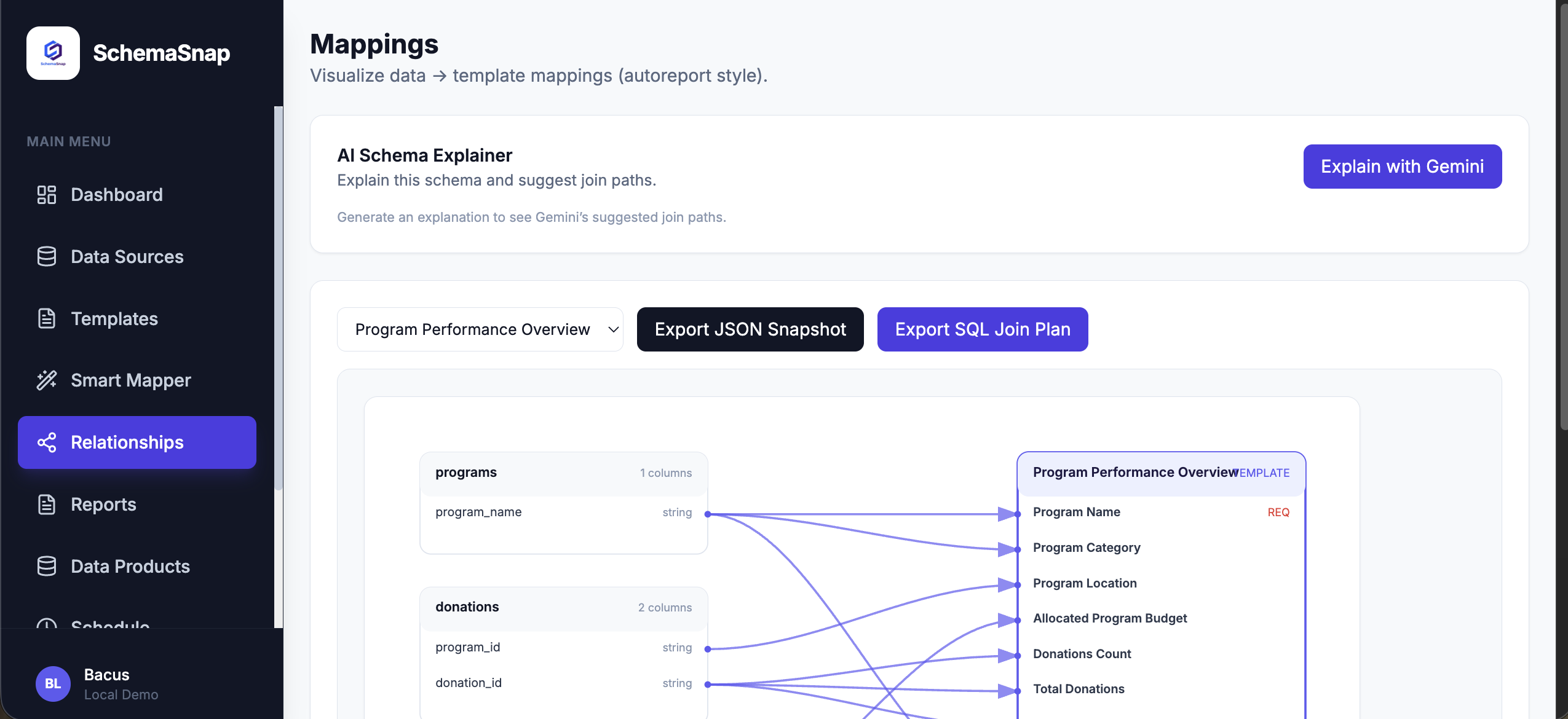
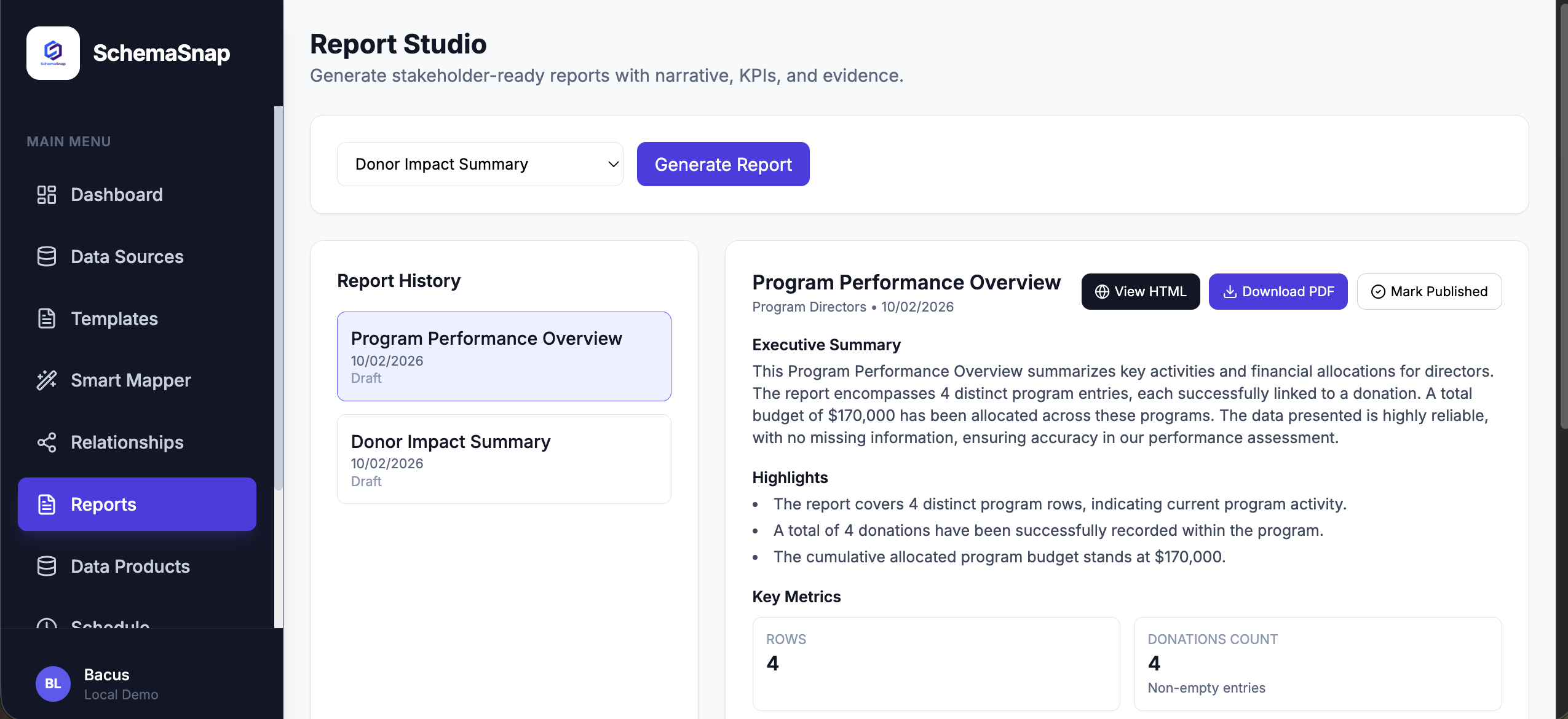
Inspiration
I kept seeing the same bottleneck. Teams have data in CSVs and databases, but turning that into a report for leadership takes days of manual mapping and cleanup. I wanted a faster way to go from messy schemas to a report you can actually send to stakeholders.
What it does
SchemaSnap ingests CSV, Excel, SQL, and database sources, infers relationships, and auto‑maps fields to report templates. It fixes common data issues, then produces a stakeholder‑ready report with governance details plus a data product export in API or Excel form.
How we built it
I built a full pipeline that starts with ingestion and schema inference, then uses Gemini for mapping suggestions and narrative generation with heuristic fallbacks for reliability. The frontend presents Report Studio and Data Products separately, so users can ship a report and also share clean outputs.
Challenges we ran into
• Real data is messy, with missing IDs, duplicates, and outliers. • Schema names are inconsistent, so mapping needs both AI and rules. • I had to keep the experience fast and clear even when model calls take time.
Accomplishments that we're proud of
• Auto‑mapping from messy schemas into report templates. • A report layout that includes period, freshness, lineage, and exceptions. • Clean data exports and an API endpoint from the same pipeline. • A working end‑to‑end demo that feels enterprise‑ready.
What we learned
The real value is trust and speed. People care about where numbers come from and whether the data is clean. Adding lineage, definitions, and quality signals makes the report feel credible.
What's next for SchemaSnap
• More report templates across industries. • Deeper charting and variance analysis. • Stronger governance features like approvals and versioning. • Optional persistence on a production database for multi‑team use.
Built With
- cloudflare
- fixes
- gemini
- mysql
- node.js
- postgresql
- react
- sqlite
- tailwind
- typescript
- vite

Log in or sign up for Devpost to join the conversation.