-
-
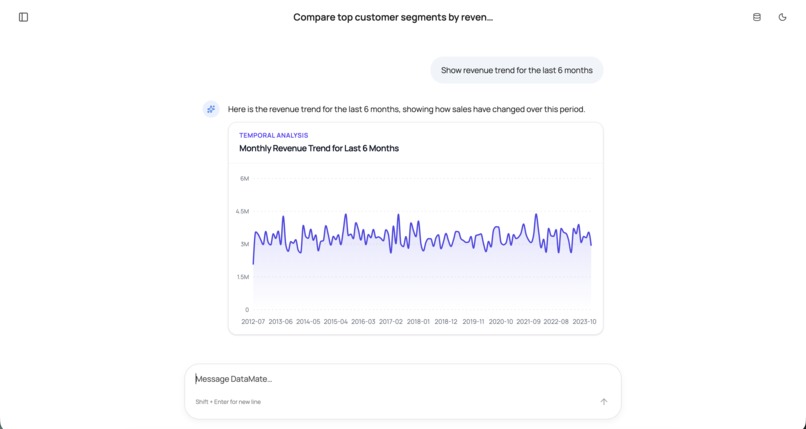
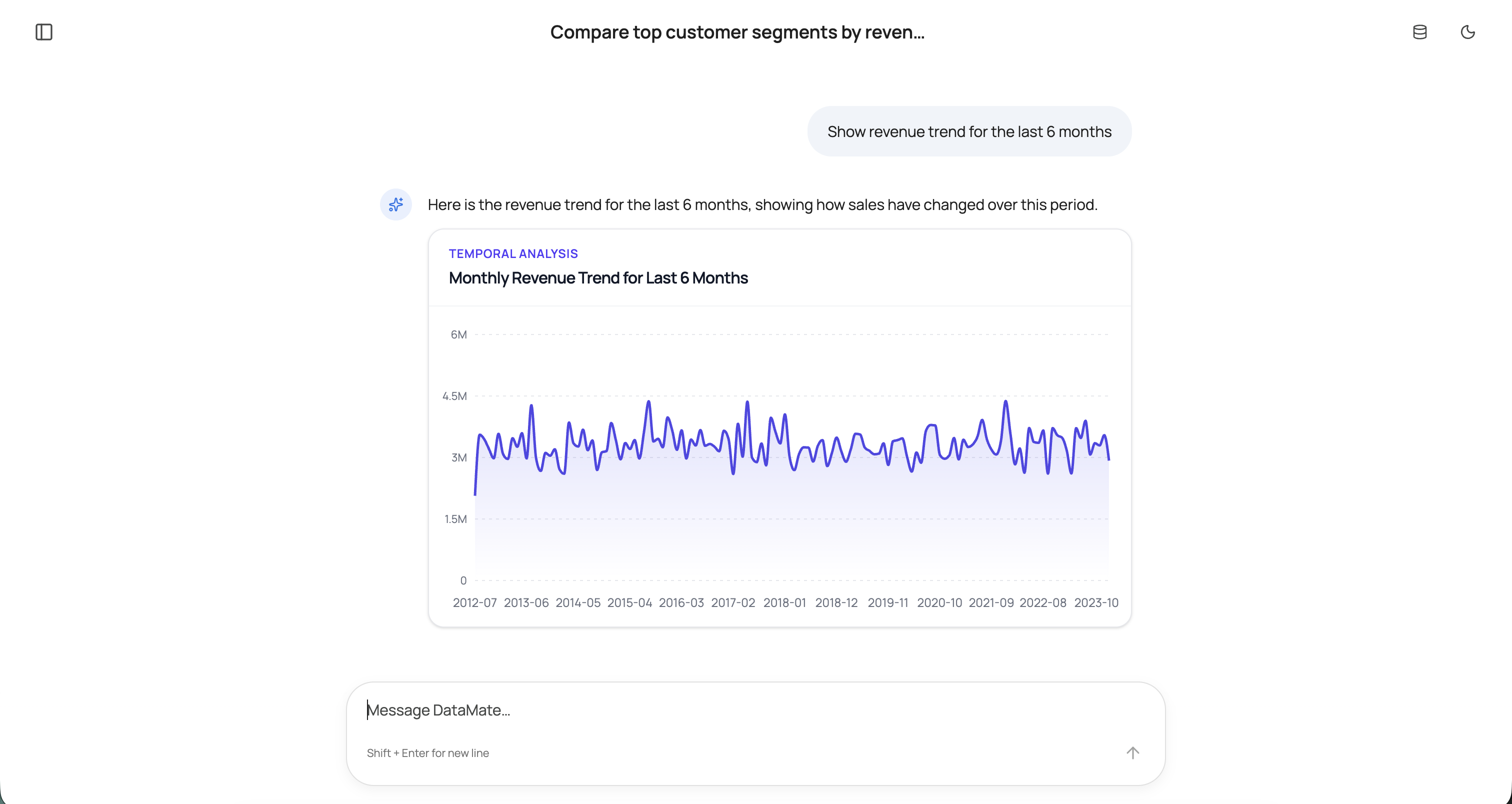
Example 2
-
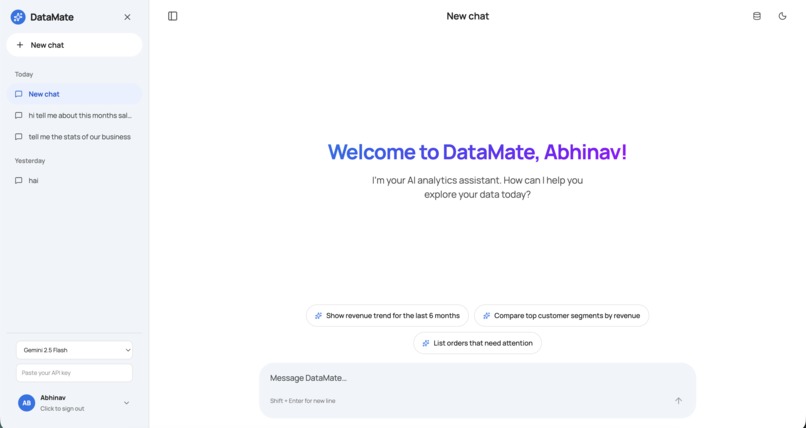
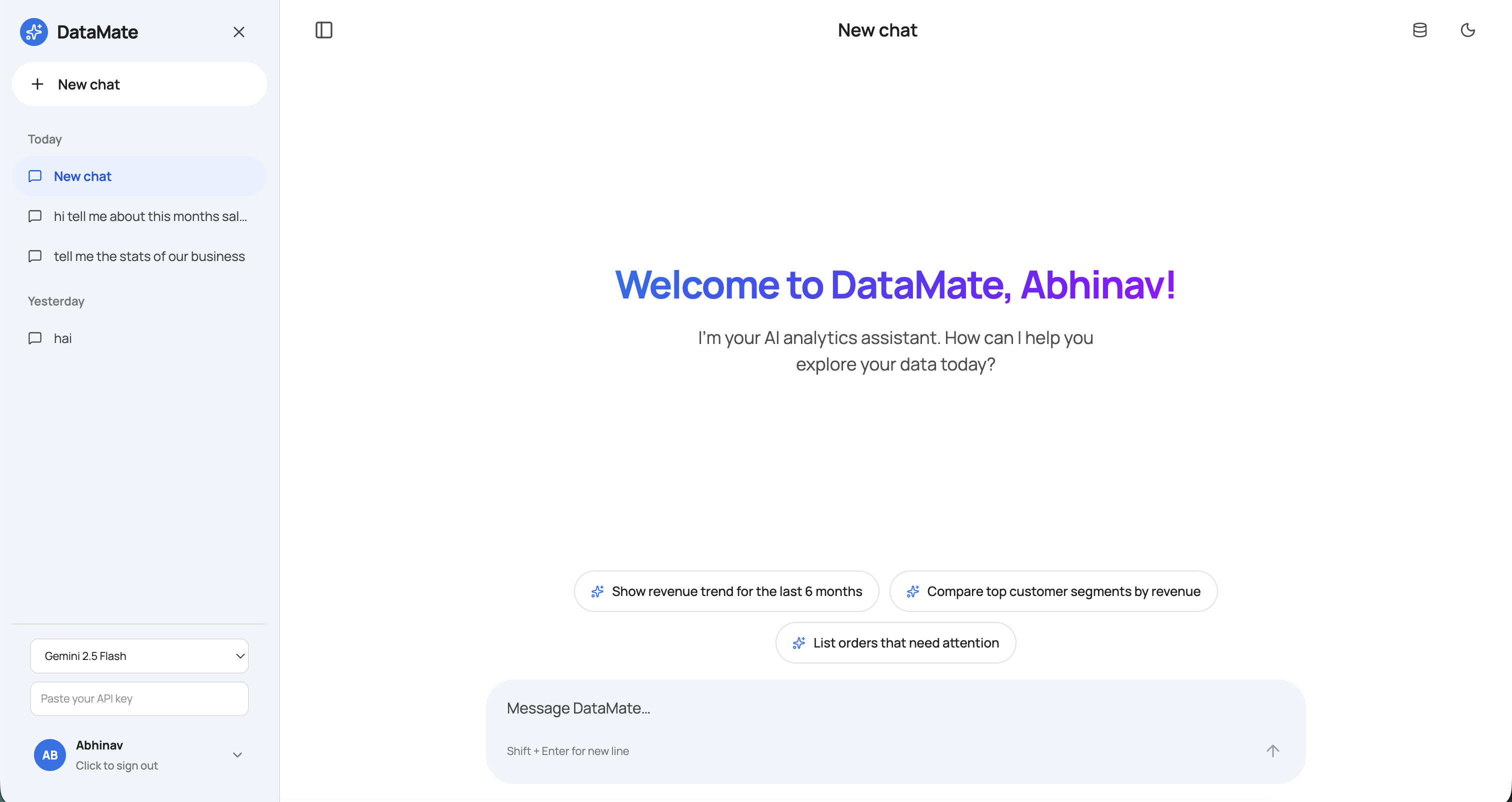
Chat Interface LightMode
-
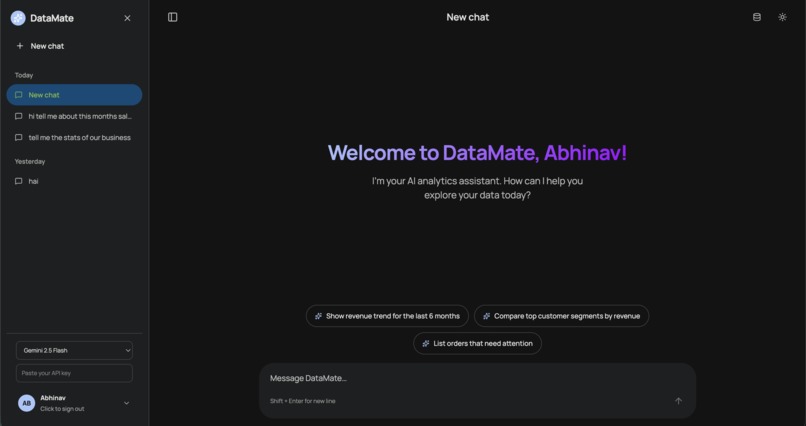
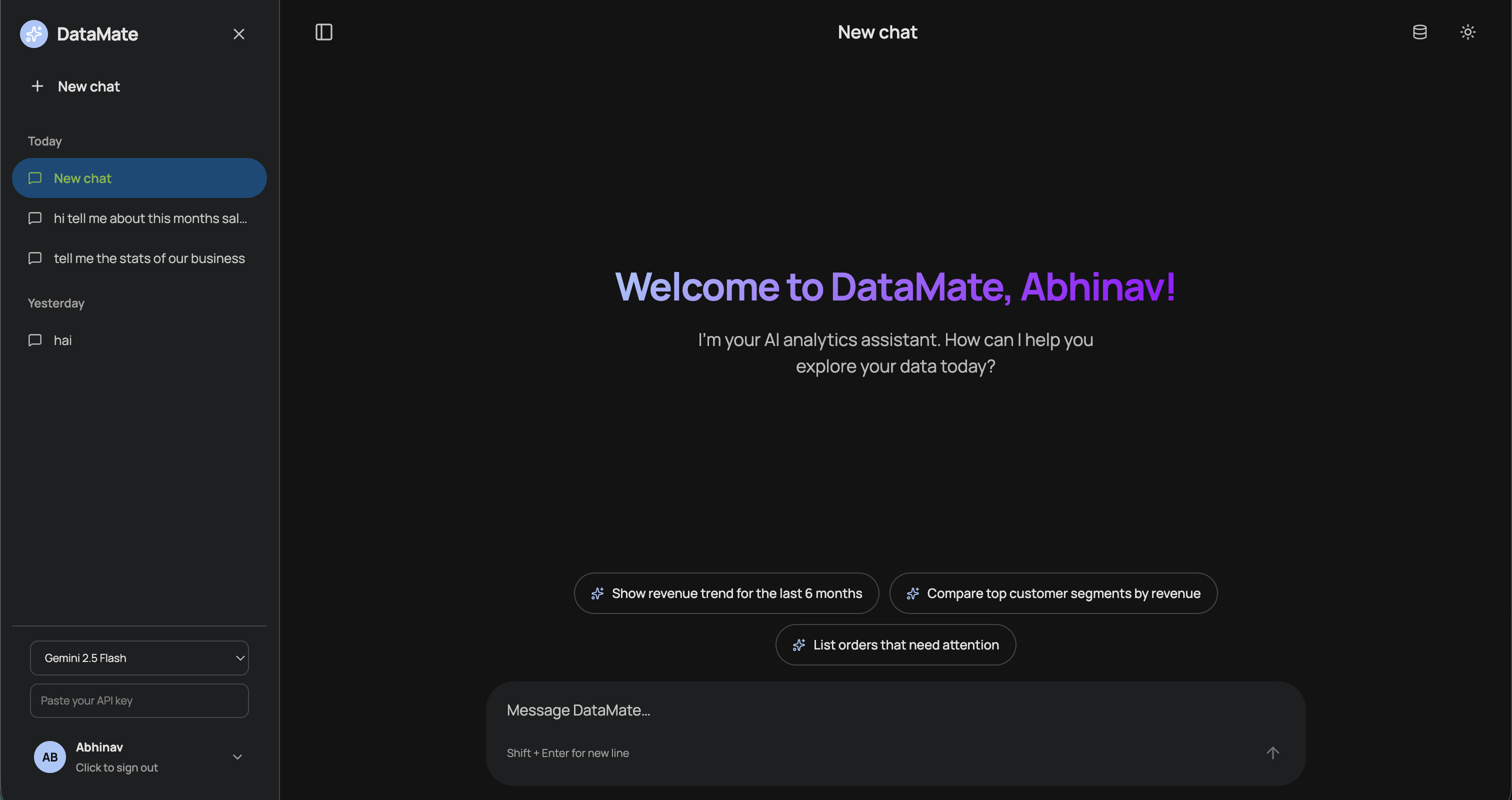
Chat Interface DarkMode
-
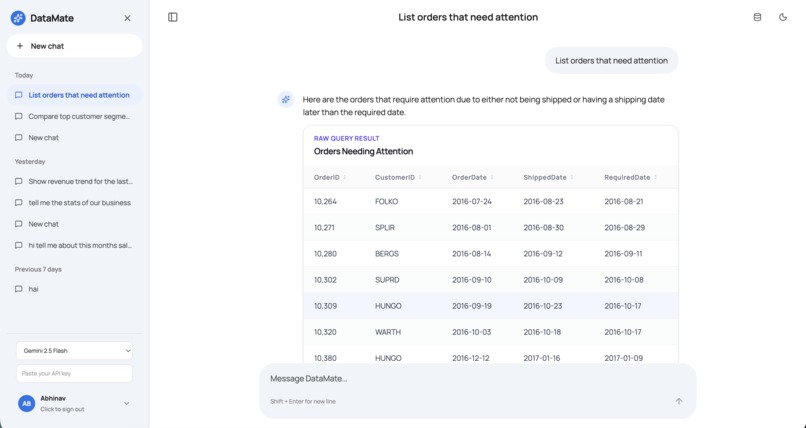
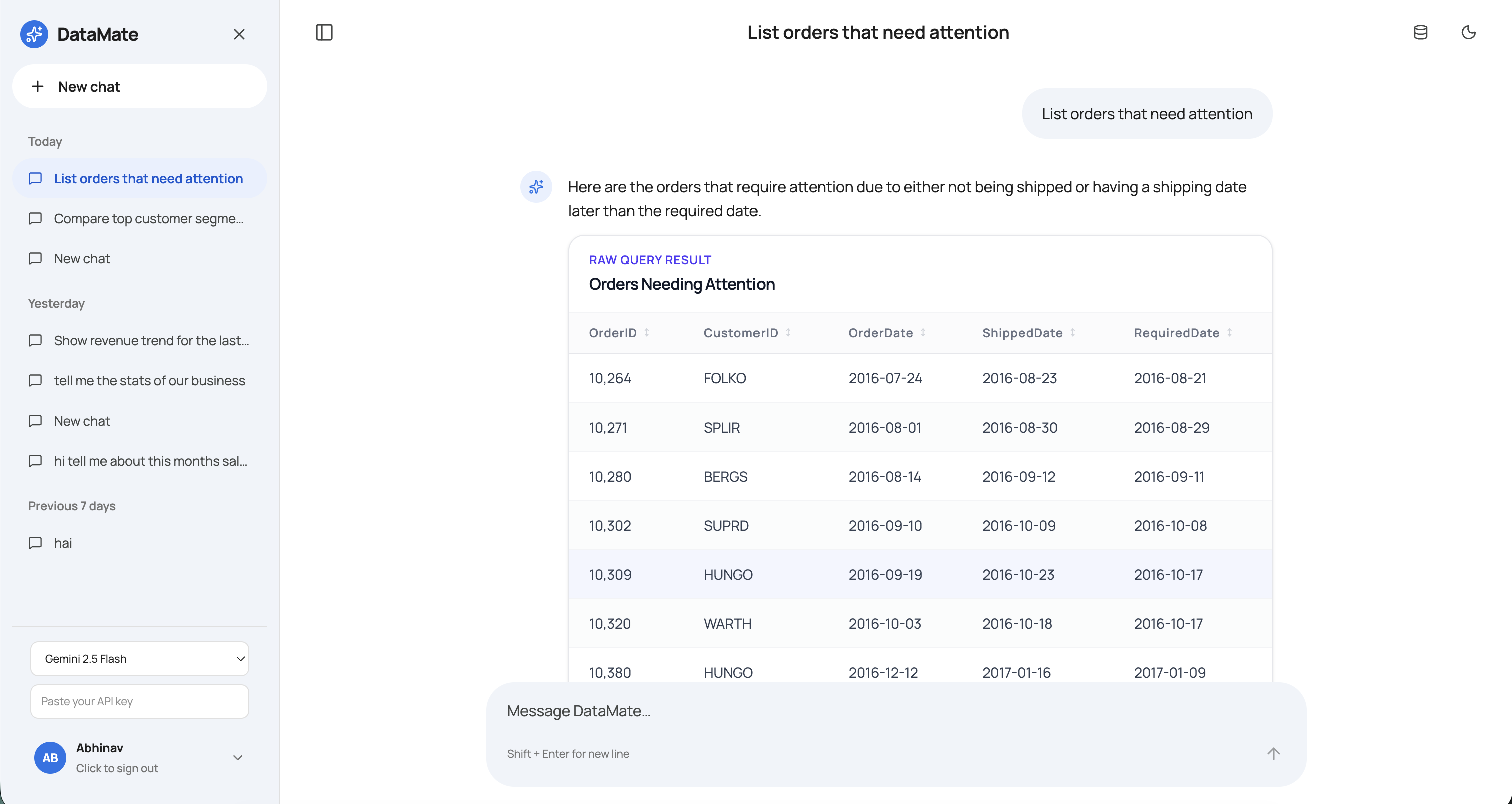
Example 3
-
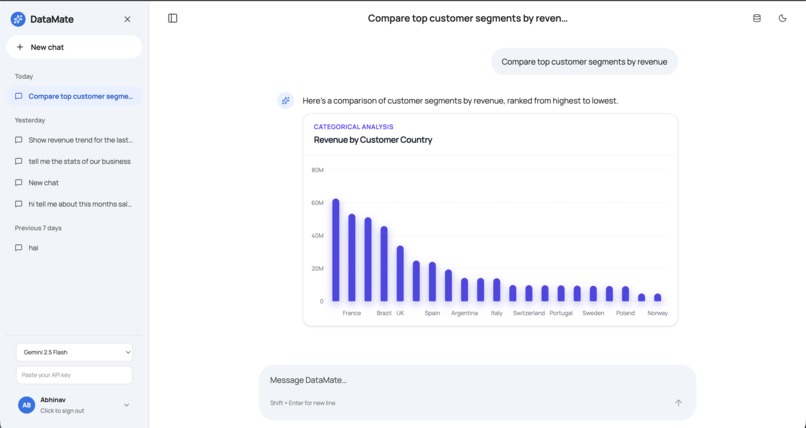
Example 1
-
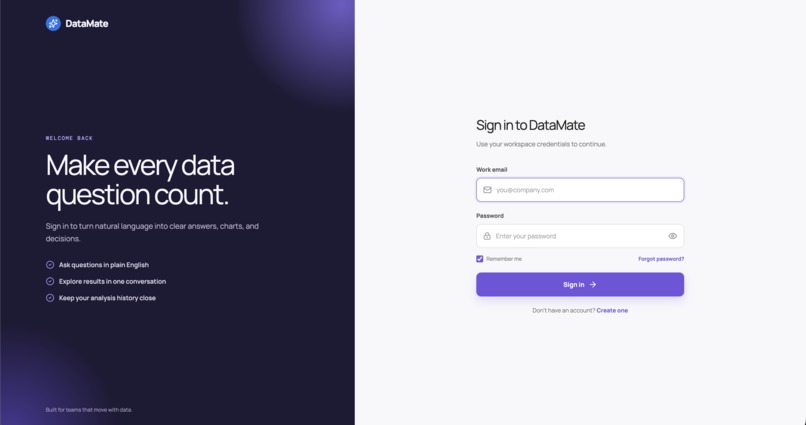
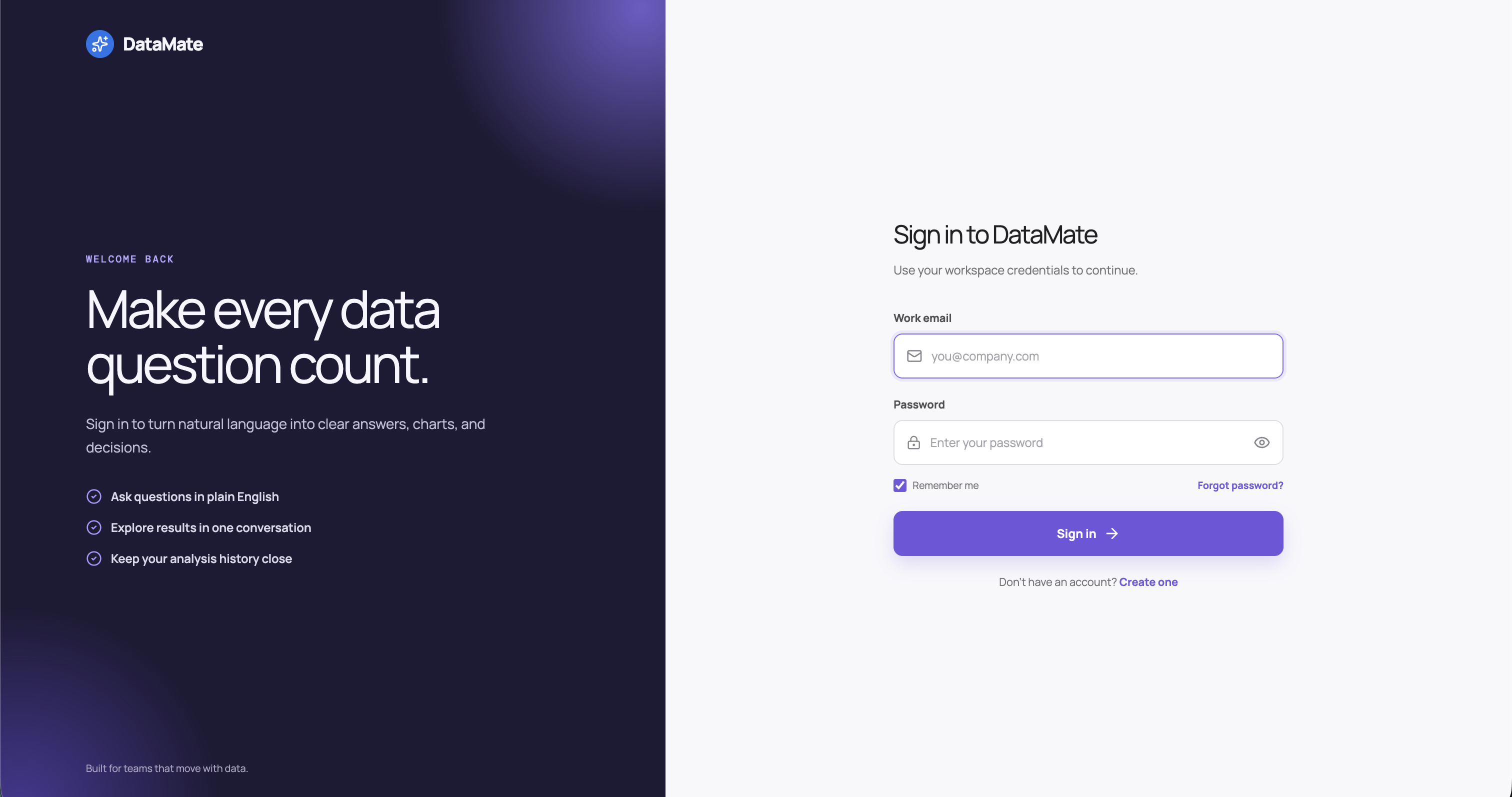
Login Page
-
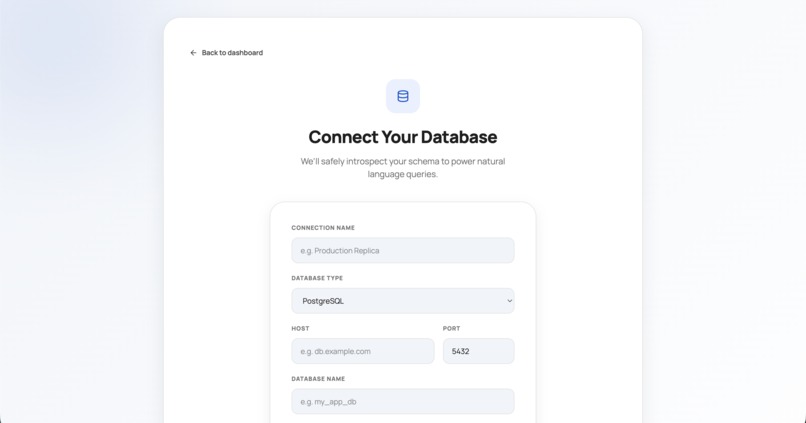
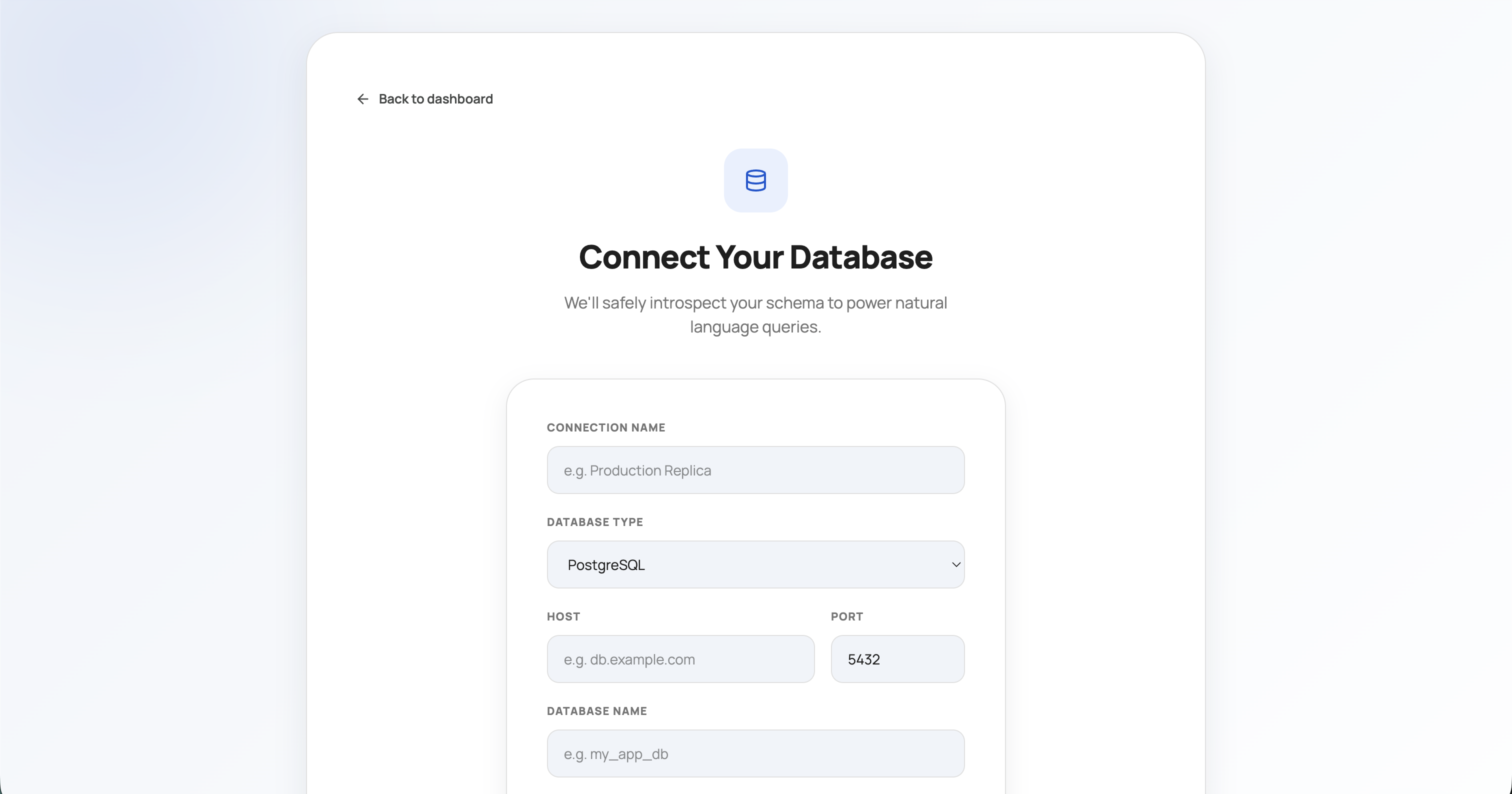
Add Custom DataBase
-
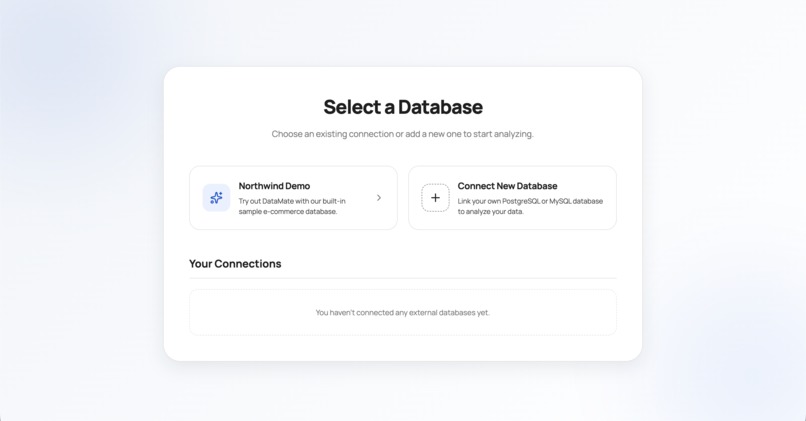
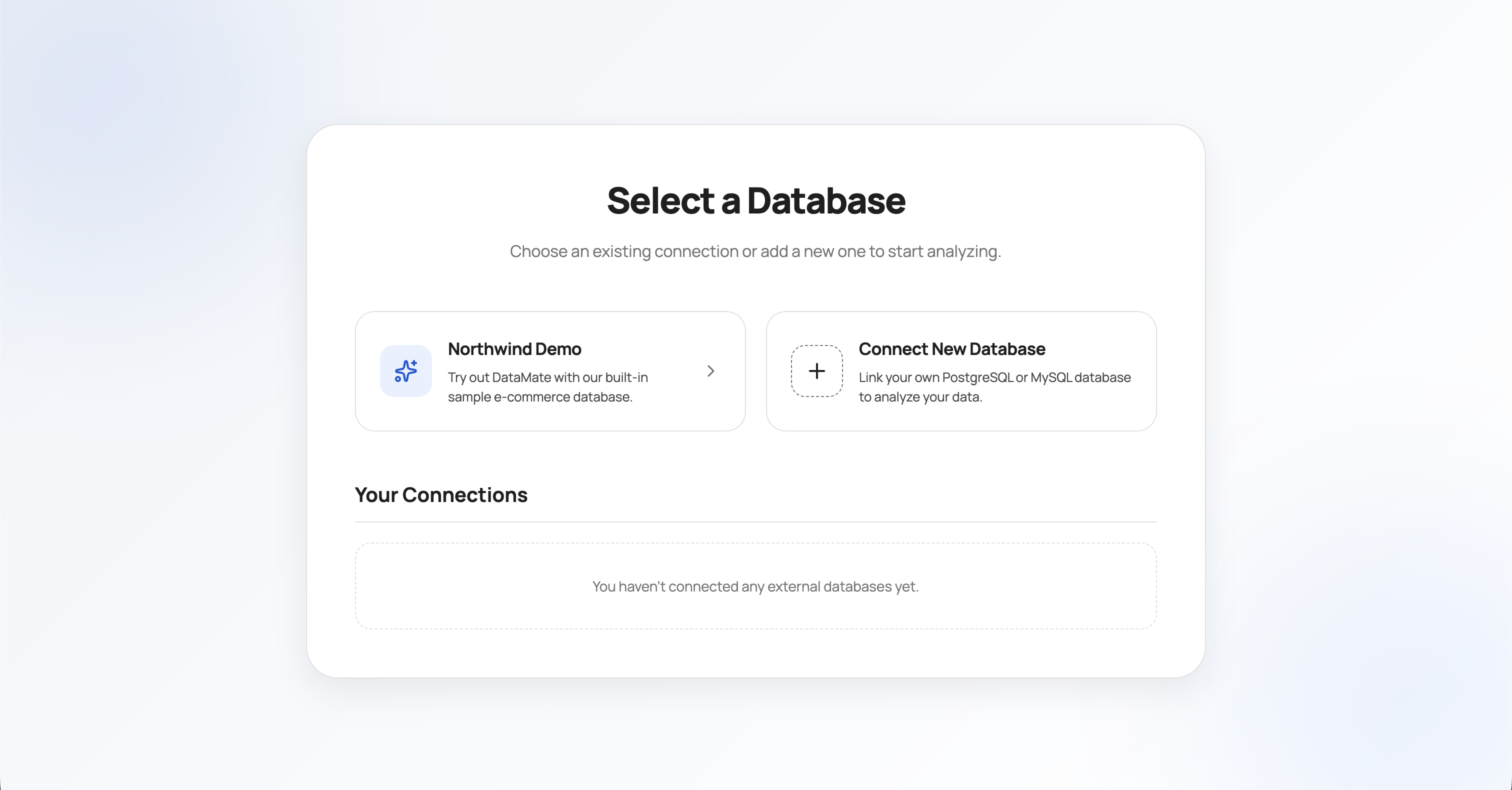
DataBase Selection
Inspiration
In today's fast-paced world, data is everything. However, accessing and analyzing that data is often bottlenecked by complex BI tools or the need to write complex SQL queries. We realized that non-technical team members—whether in marketing, sales, or management—often struggle to get quick answers to their data questions. We built DataMate to democratize data analytics by allowing anyone to "talk" to their database naturally, transforming plain English into actionable, beautifully rendered insights in seconds.
What it does
DataMate is an intelligent, AI-driven database assistant. Users can securely connect their own databases (PostgreSQL, MySQL, or use our built-in demo) and immediately start asking questions in natural language. Behind the scenes, DataMate analyzes the database schema, understands the relationships, and accurately translates the user's request into precise SQL.
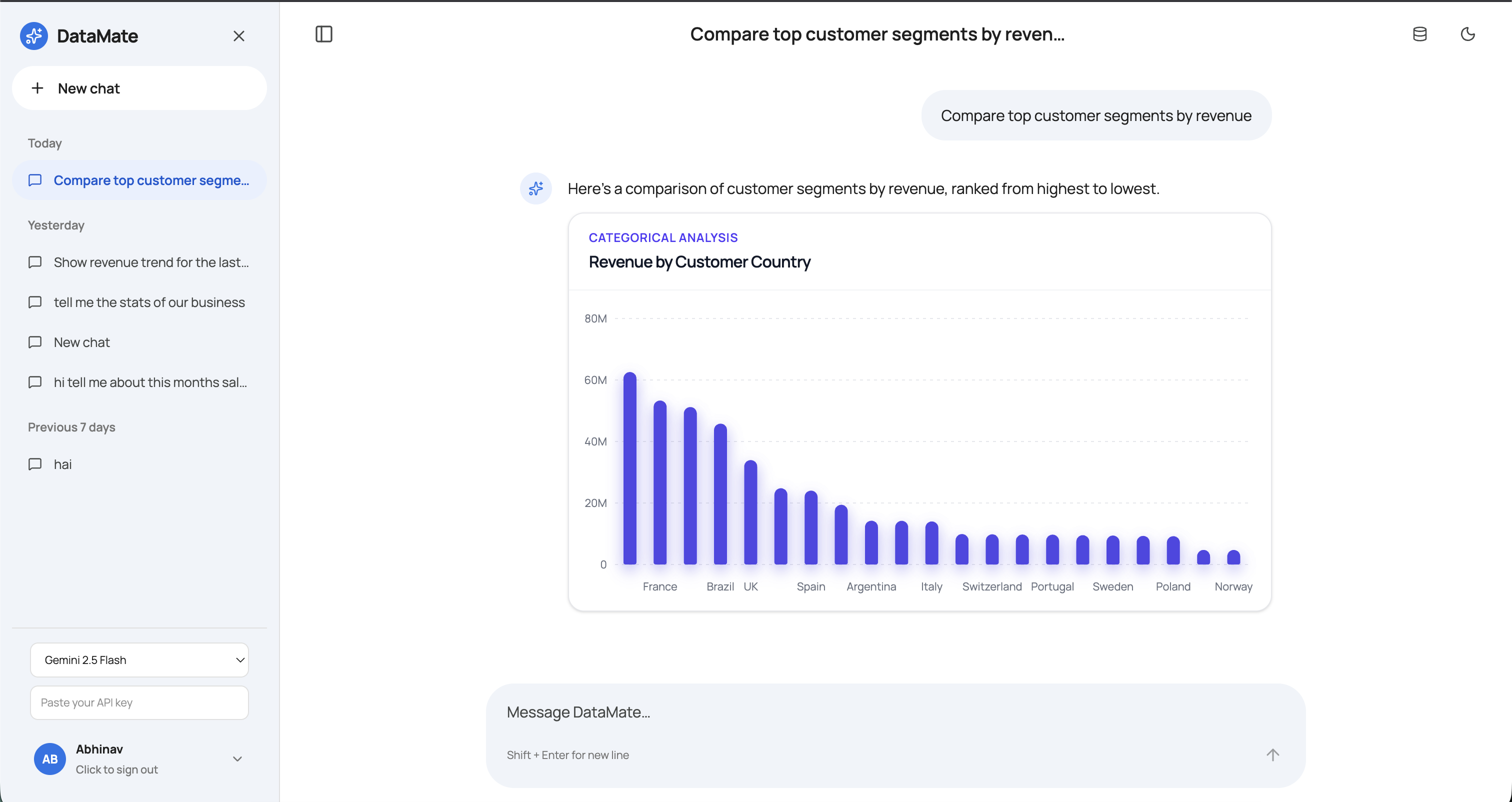
But it doesn't just stop at returning data rows. DataMate intelligently determines the best way to visualize the answer, dynamically rendering sleek, glassmorphic Data Tables, Temporal Area Charts, or Categorical Bar Charts right in the chat workspace.
How we built it
- Frontend: We built a highly responsive, premium UI using React and Vite. We focused heavily on modern aesthetics—implementing dynamic CSS variables to seamlessly adapt to system Light/Dark modes, subtle micro-animations, and glassmorphic overlays. For our dynamic visualizations, we utilized Recharts.
- Backend: The core engine is built with Python and FastAPI. It handles secure database connections, schema introspection, and executing read-only SQL.
- AI Integration: We leveraged powerful LLMs (like Gemini 2.5 Flash) to handle the Natural Language to SQL translation. The backend dynamically feeds the LLM the user's specific database schema as context, ensuring highly accurate queries and structured UI directives.
Challenges we ran into
- Hallucinations & Security: Ensuring the AI only wrote valid, read-only SQL without hallucinating columns was tough. We solved this by using strict schema introspection and prompt engineering to tightly constrain the model. Let \( P(V|C) \) be the probability of a valid query given context \( C \)—optimizing this required extensive iterative refinement!
- Dynamic Visualization Rendering: Bridging the gap between unpredictable AI responses and deterministic UI components was challenging. We engineered a strict JSON schema for the AI to follow (using a
ui_directive), which allows the frontend dispatcher to flawlessly render the correct chart type. - UI/UX Polish: Handling responsive charts, such as ensuring large numbers like "100,000" didn't overflow the fixed Y-axis boundaries, required custom formatting logic. We also had to ensure the app felt instantly responsive and premium across both light and dark themes.
Accomplishments that we're proud of
- We successfully built a pipeline that goes from a user's raw thought \(\rightarrow\) LLM inference \(\rightarrow\) SQL execution \(\rightarrow\) beautiful UI rendering, all in a matter of seconds.
- We're incredibly proud of the UI design. We avoided basic templates and instead crafted a customized, adaptive, and visually stunning interface that feels like a premium, enterprise-grade product.
- The robustness of the schema analysis means users can plug in completely unseen databases and it "just works."
What we learned
- We gained a deep understanding of how to tightly couple Large Language Models with traditional software architectures to create reliable, non-flaky tools.
- We learned advanced React UI patterns and how to manage complex state transitions when dealing with asynchronous, multimodal AI data streams.
- We learned that presentation is just as important as the data itself—beautiful charts drastically improve the perceived value of the insights.
What's next for DataMate
- Broader Database Support: Expanding integrations to support Snowflake, BigQuery, MongoDB, and more.
- Collaborative Dashboards: Allowing users to "pin" their favorite AI-generated charts into a live, shared team dashboard.
- Proactive Insights: Upgrading the agent to not just answer questions, but proactively alert users to anomalies (e.g., "Hey, I noticed revenue dipped 15% this week in the EU region.").
Built With
- chatgpt
- codex
- css
- fastapi
- html5
- javascript
- node.js
- openai
- react


Log in or sign up for Devpost to join the conversation.