Inspiration
Universities and schools always face a headache: teachers, rooms, and groups clash when schedules are made by hand. We wanted to build something that could quickly create fair, conflict-free schedules with just a CSV file.
What it does
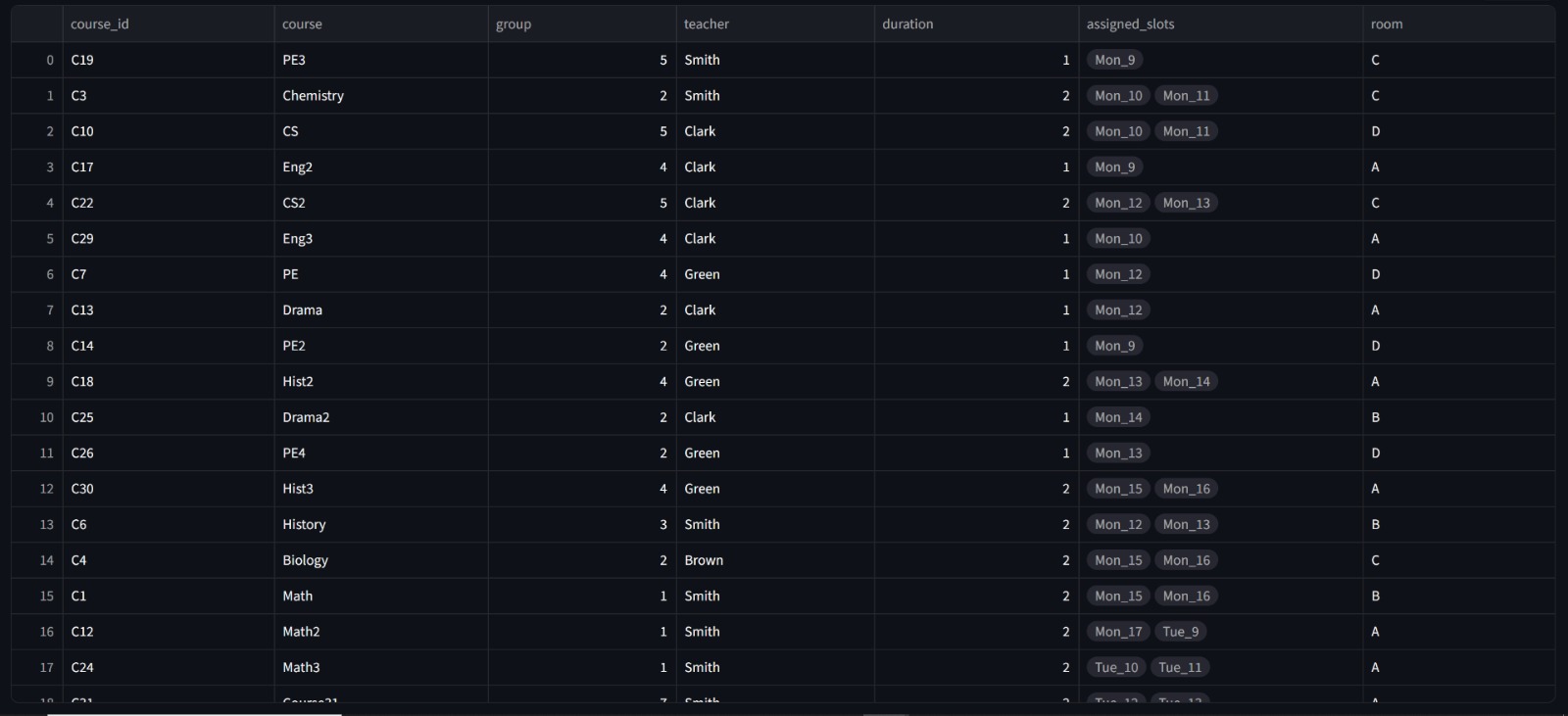
Schedulr takes a list of courses, teachers, groups, and rooms, then automatically builds a timetable without clashes. It makes sure no teacher, group, or room is double booked, and gives you a clean schedule to view or download.
How we built it
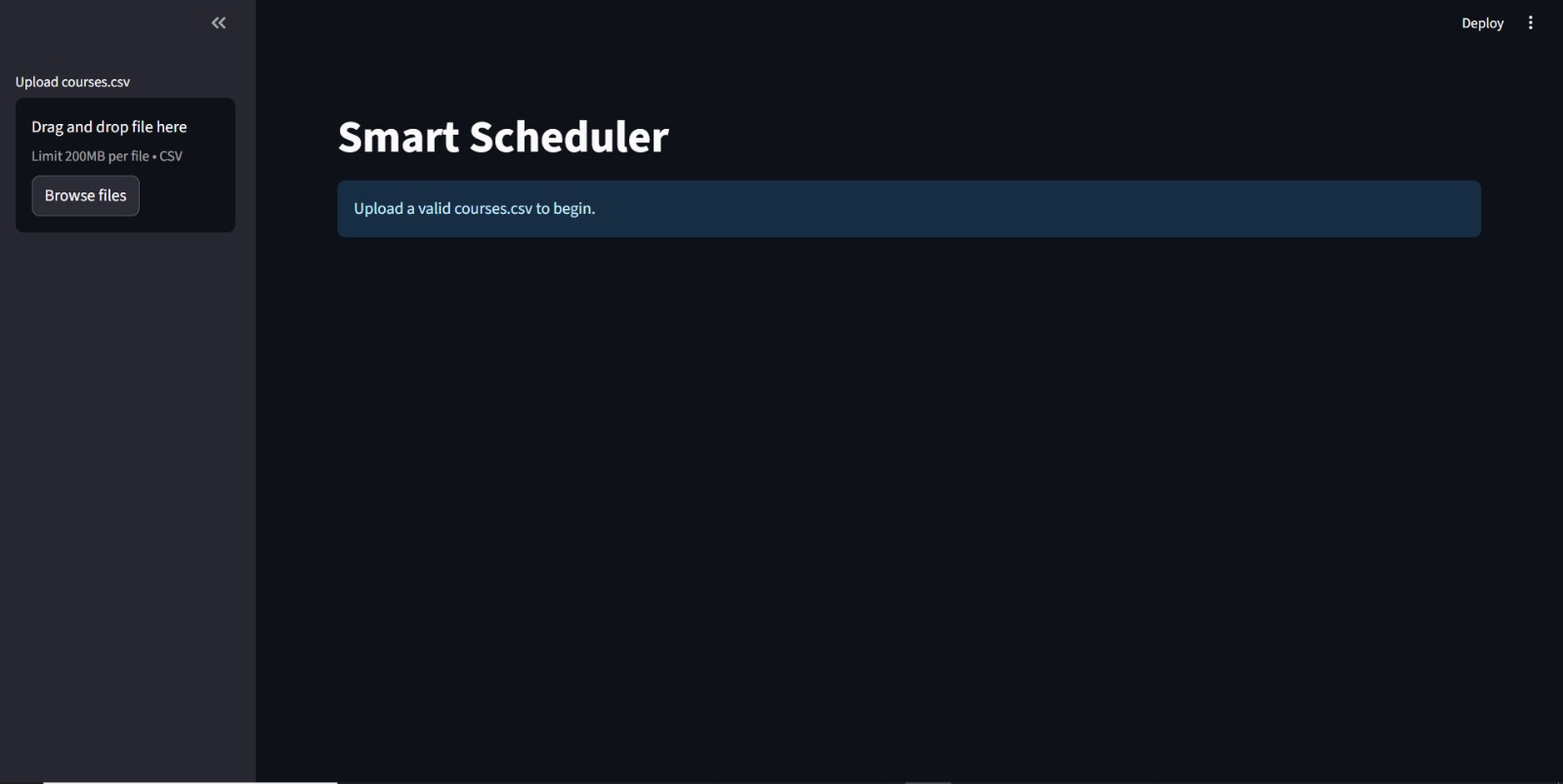
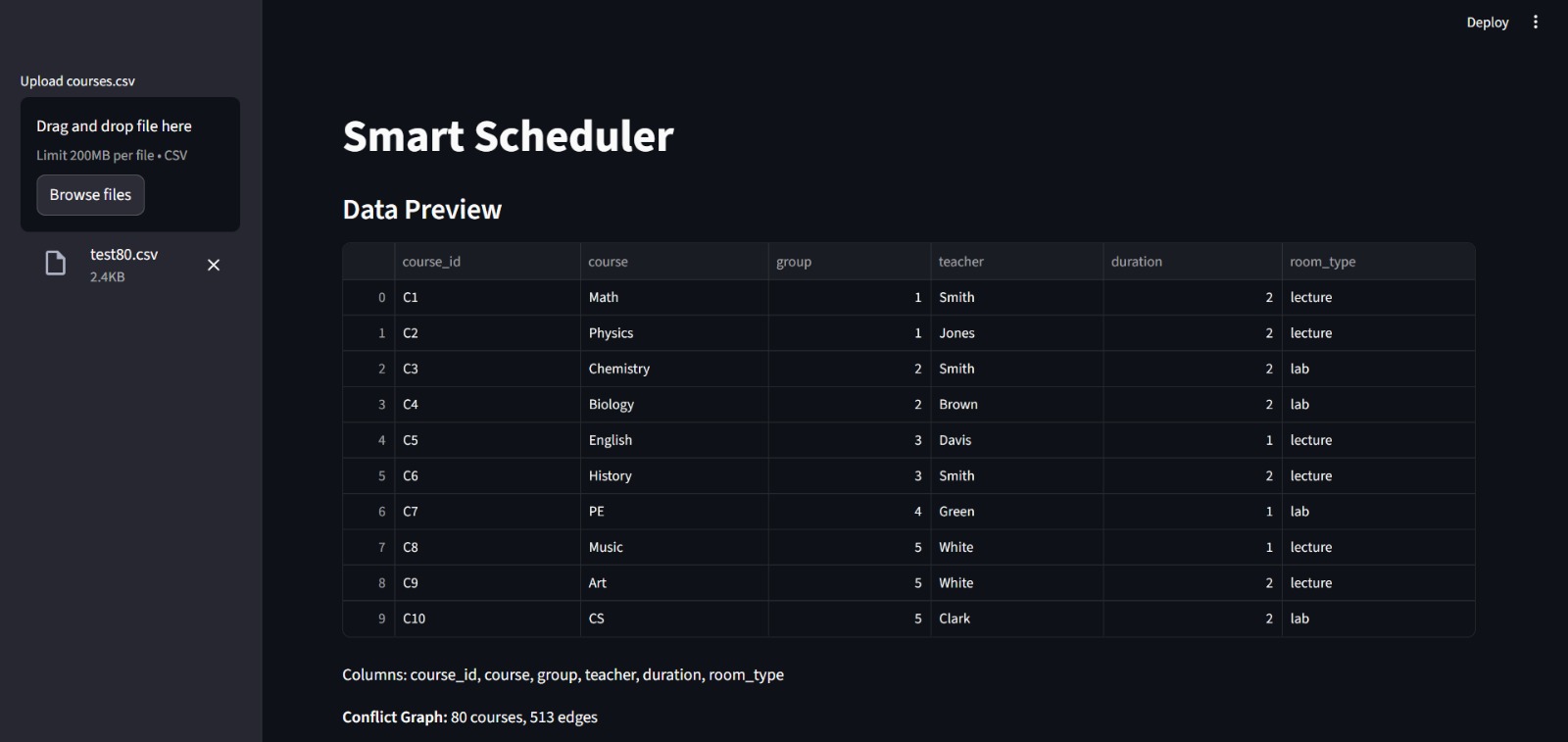
We used Python, Streamlit, Pandas, and NetworkX. The courses are loaded from CSV, a conflict graph is built, then a greedy algorithm assigns time slots and rooms. Finally, the schedule is shown in a web app with download options.
Challenges we ran into
Handling multiple constraints like teachers, groups, and room types at once Designing the scheduling algorithm so it’s fast and still fair Building a simple UI so anyone (not just coders) can upload data and get results
Accomplishments that we're proud of
Built a working scheduling system from scratch during the hackathon Created an easy-to-use Streamlit interface Made schedules that actually avoid conflicts automatically
What we learned
How to model real-world scheduling problems as graphs Balancing algorithm efficiency with user-friendly design Working fast as a team under hackathon deadlines
What's next for Schedulr
Smarter algorithms (like genetic algorithms or ILP for more optimal schedules) Support for custom constraints (preferred times, room capacity, etc.) Export to calendar apps like Google Calendar or Outlook Deploying Schedulr so schools can actually use it in real life


Log in or sign up for Devpost to join the conversation.